
Setting the Record Straight: How to Communicate a Strict Guest List Without the Awkwardness
You've carefully counted every seat, balanced the budget, and finalized your venue's capacity—and then a guest casually mentions they're bringing their new boyfriend, their kids, or a college friend you've never met. It's one of the most common (and most stressful) wedding planning headaches. The good news: there's a graceful, kind way to hold your guest list firm without damaging relationships or making anyone feel unwelcome.
Start With Your Invitations—They Do the Heavy Lifting
Your first and most powerful tool is the invitation itself. Address each envelope with surgical precision: list only the names of the people who are invited. Instead of writing "The Johnson Family," write "Mr. and Mrs. David Johnson" or "David, Sarah, and Emma Johnson" if the children are included. This signals clearly who is—and isn't—on the guest list before anyone even opens the envelope.
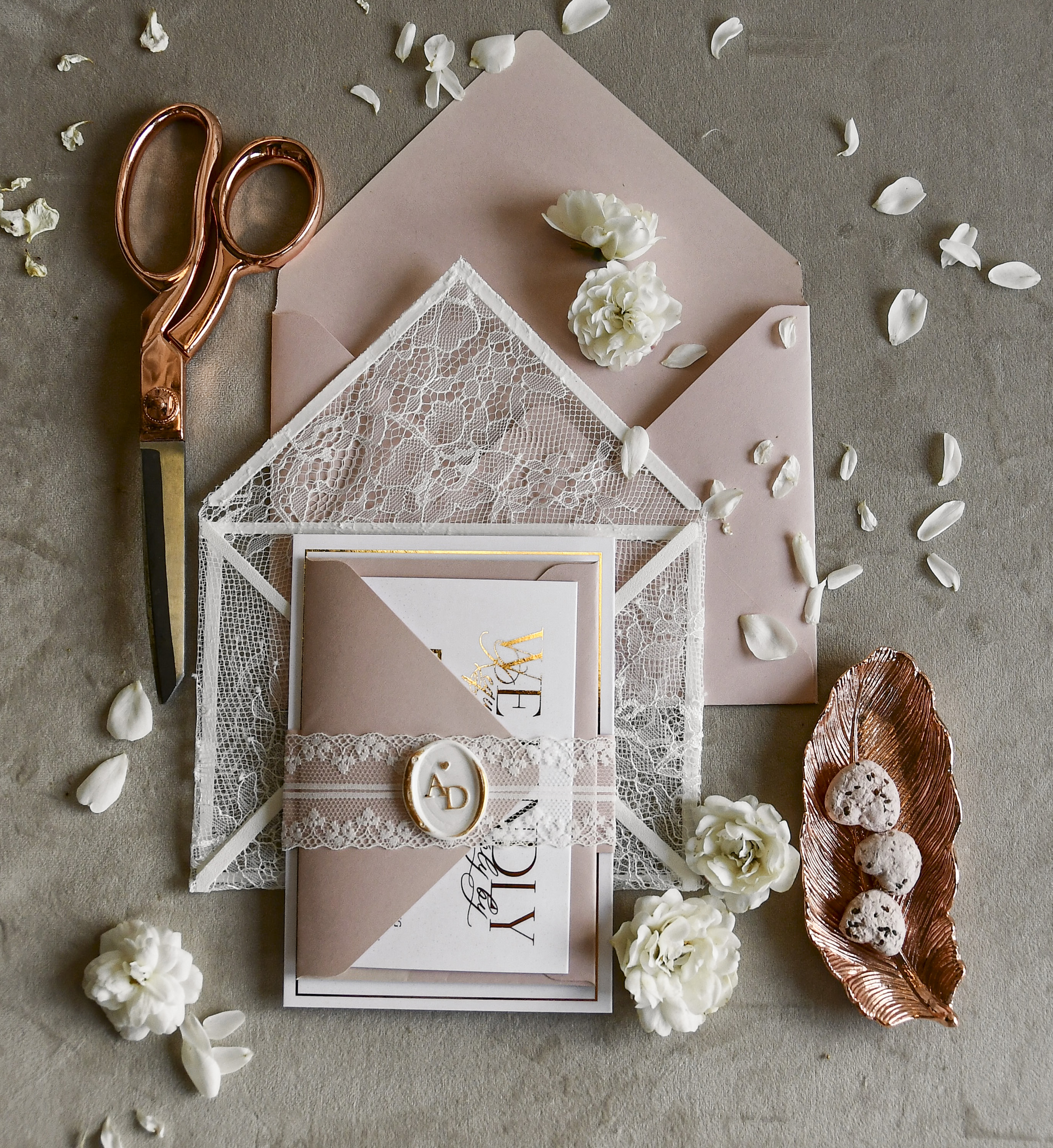
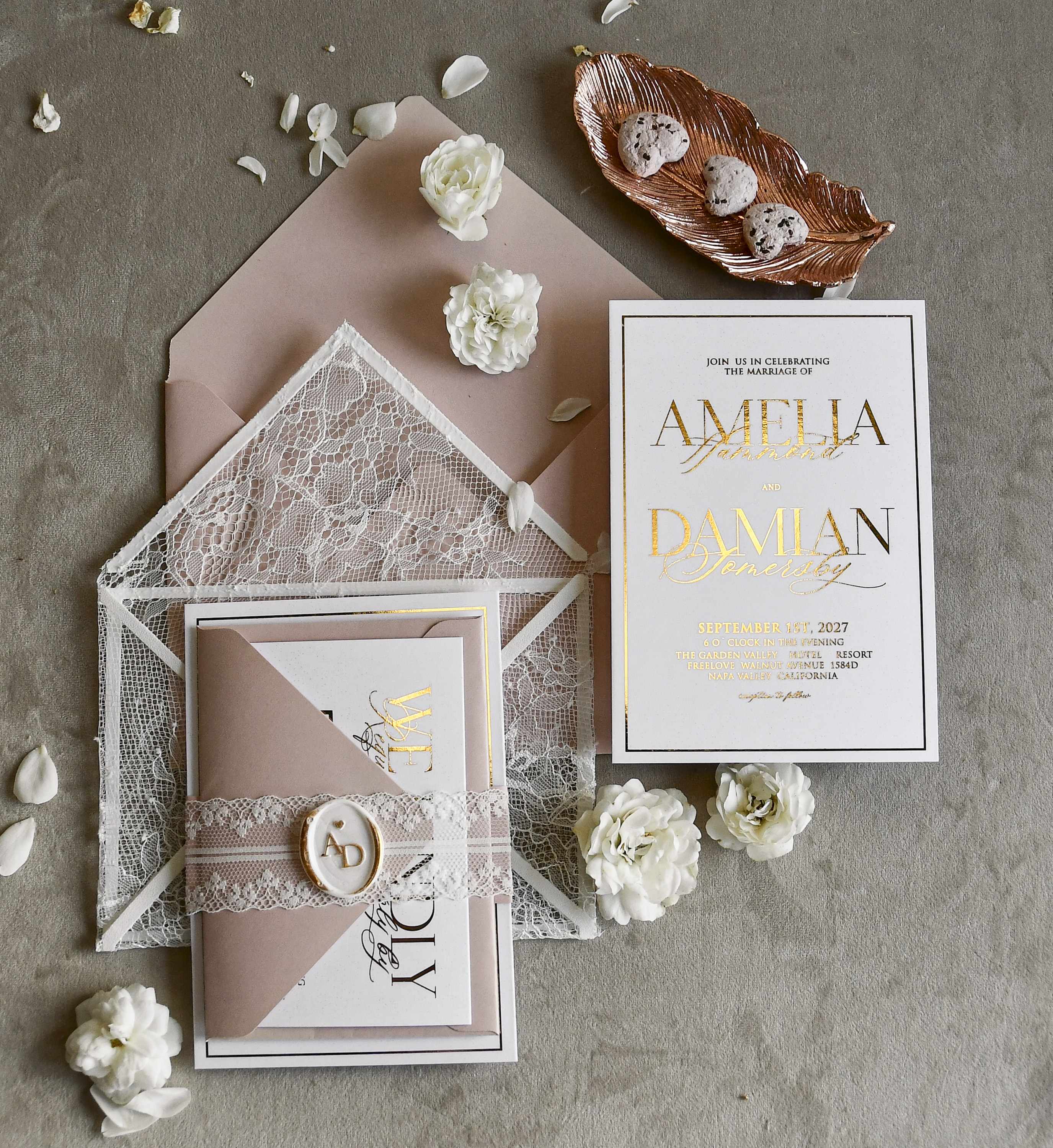
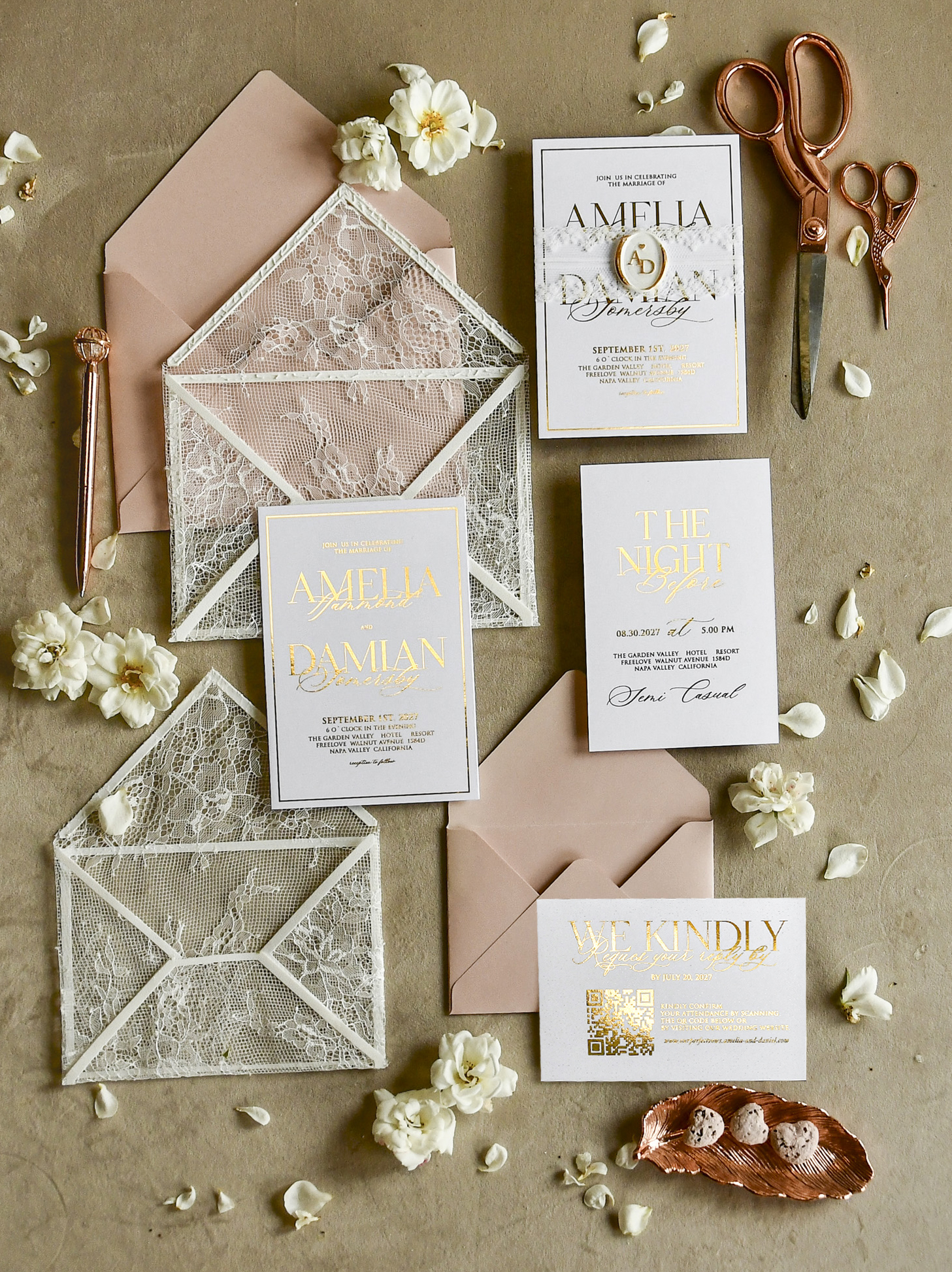
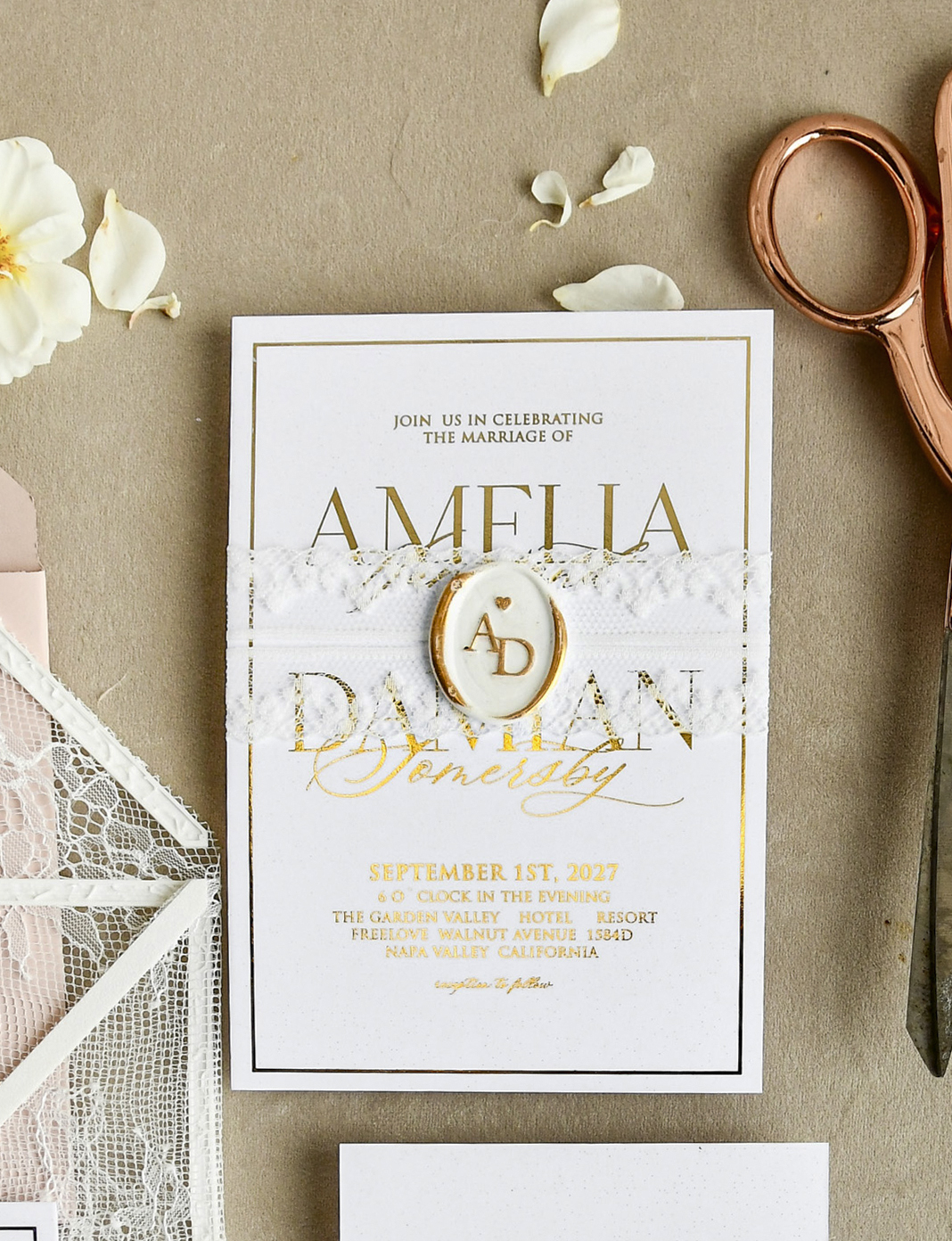
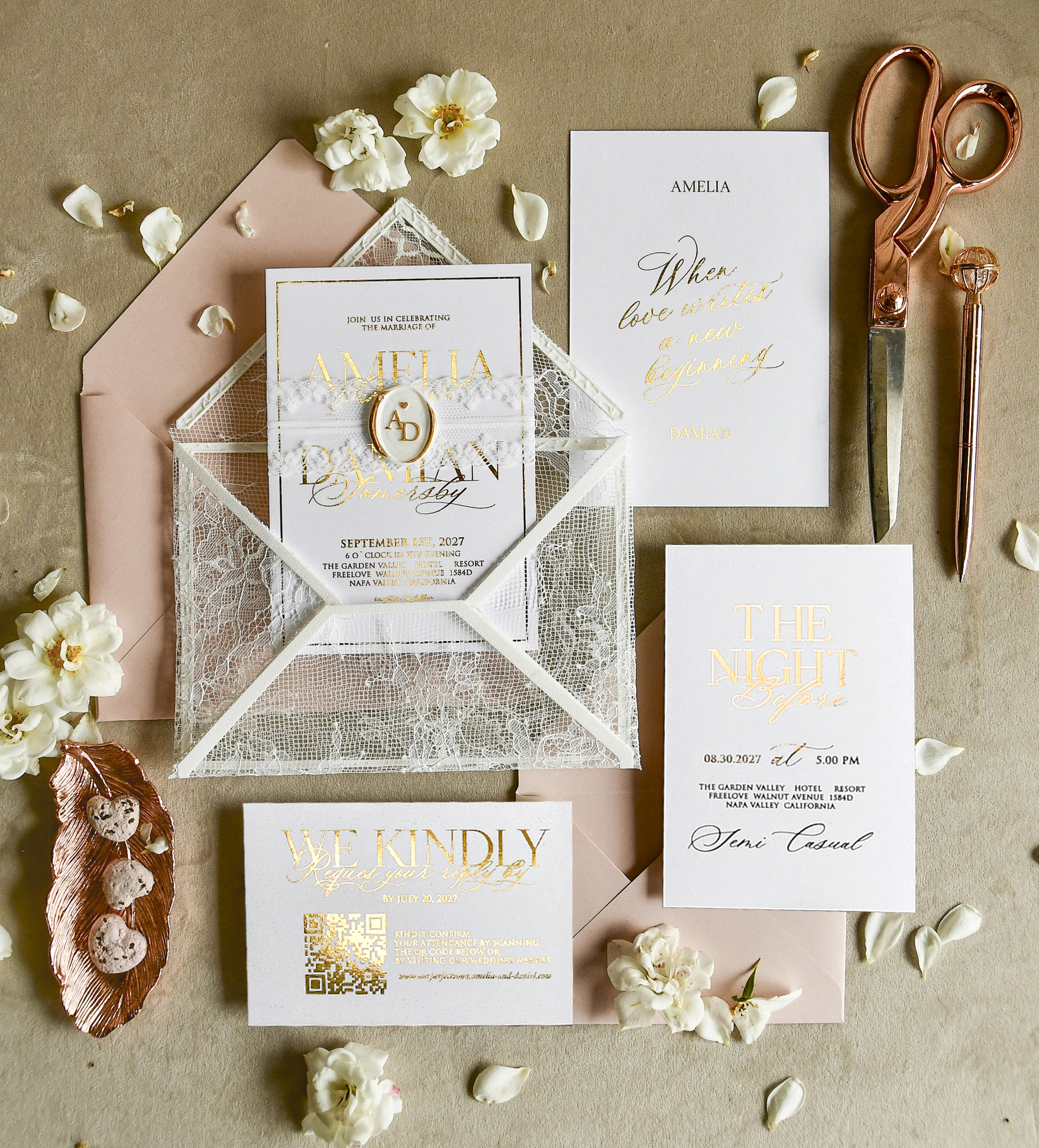
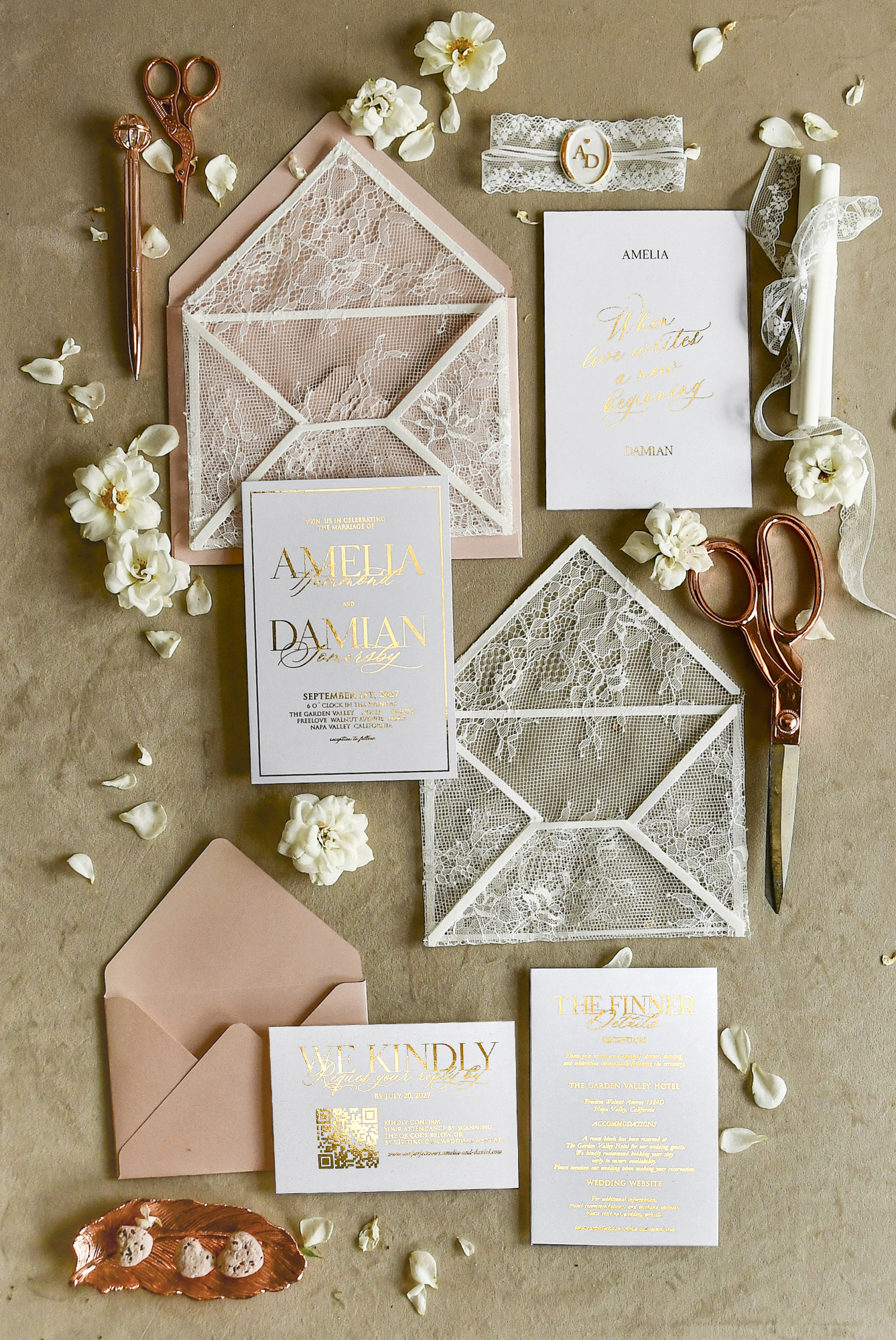
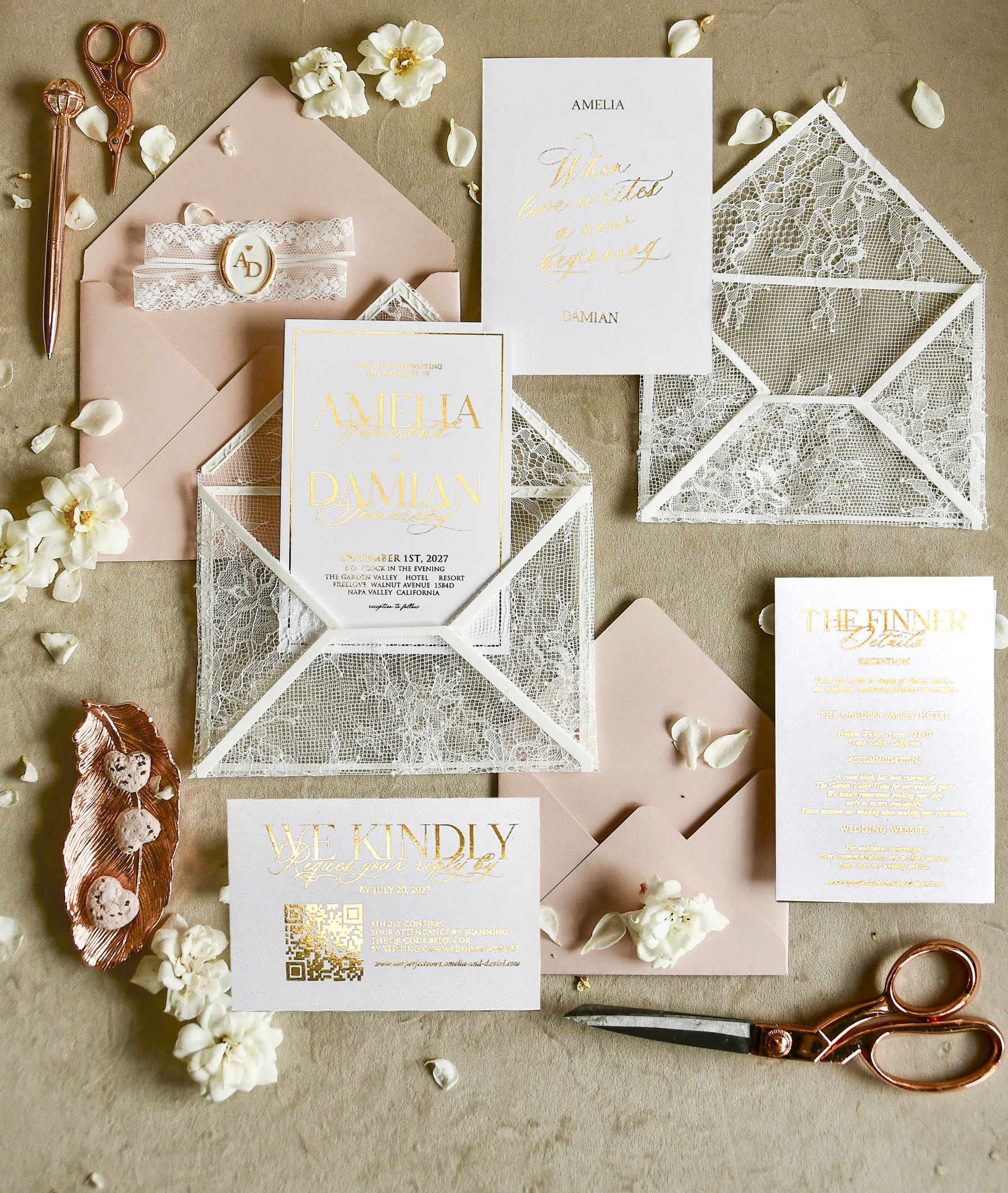
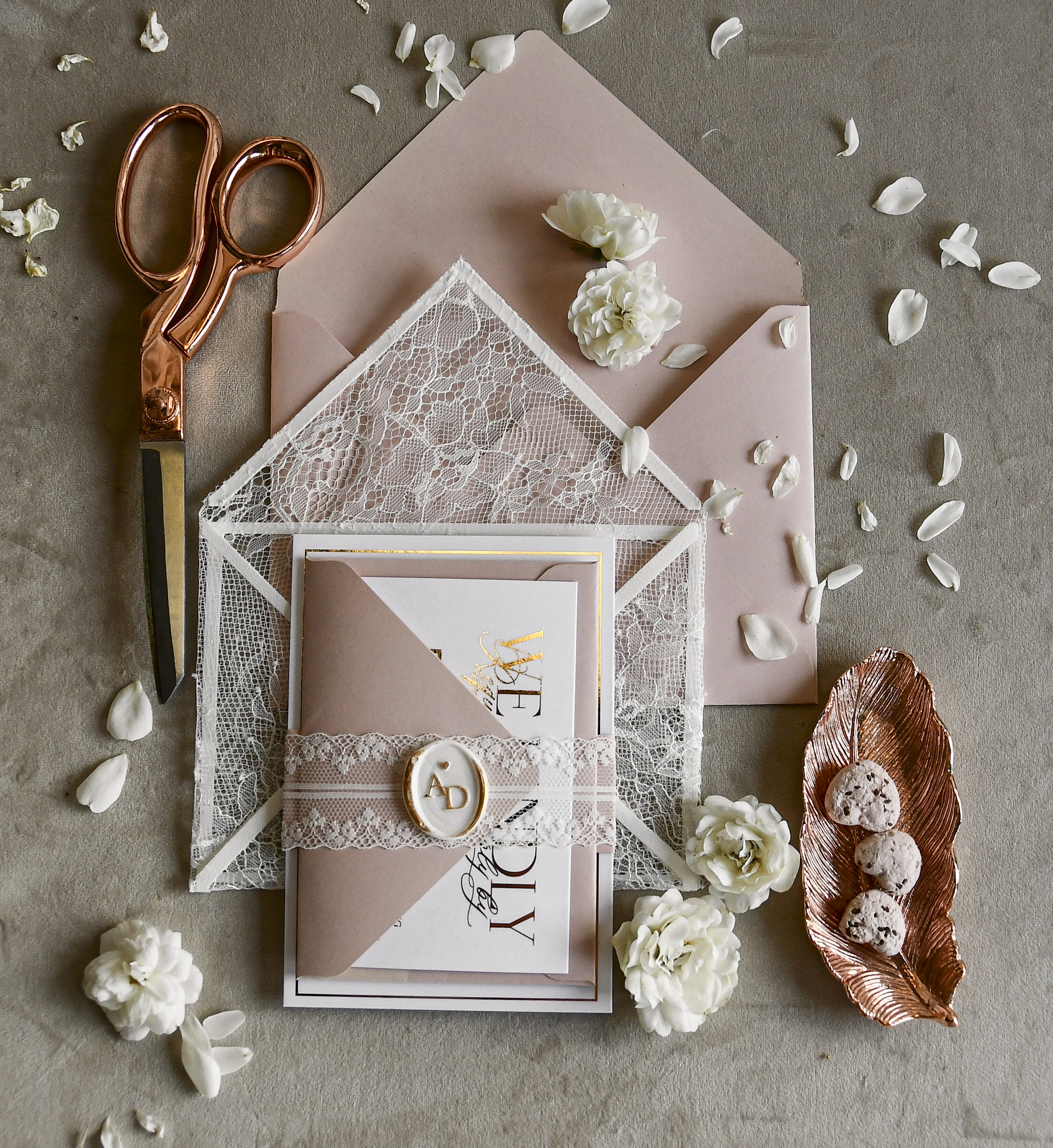
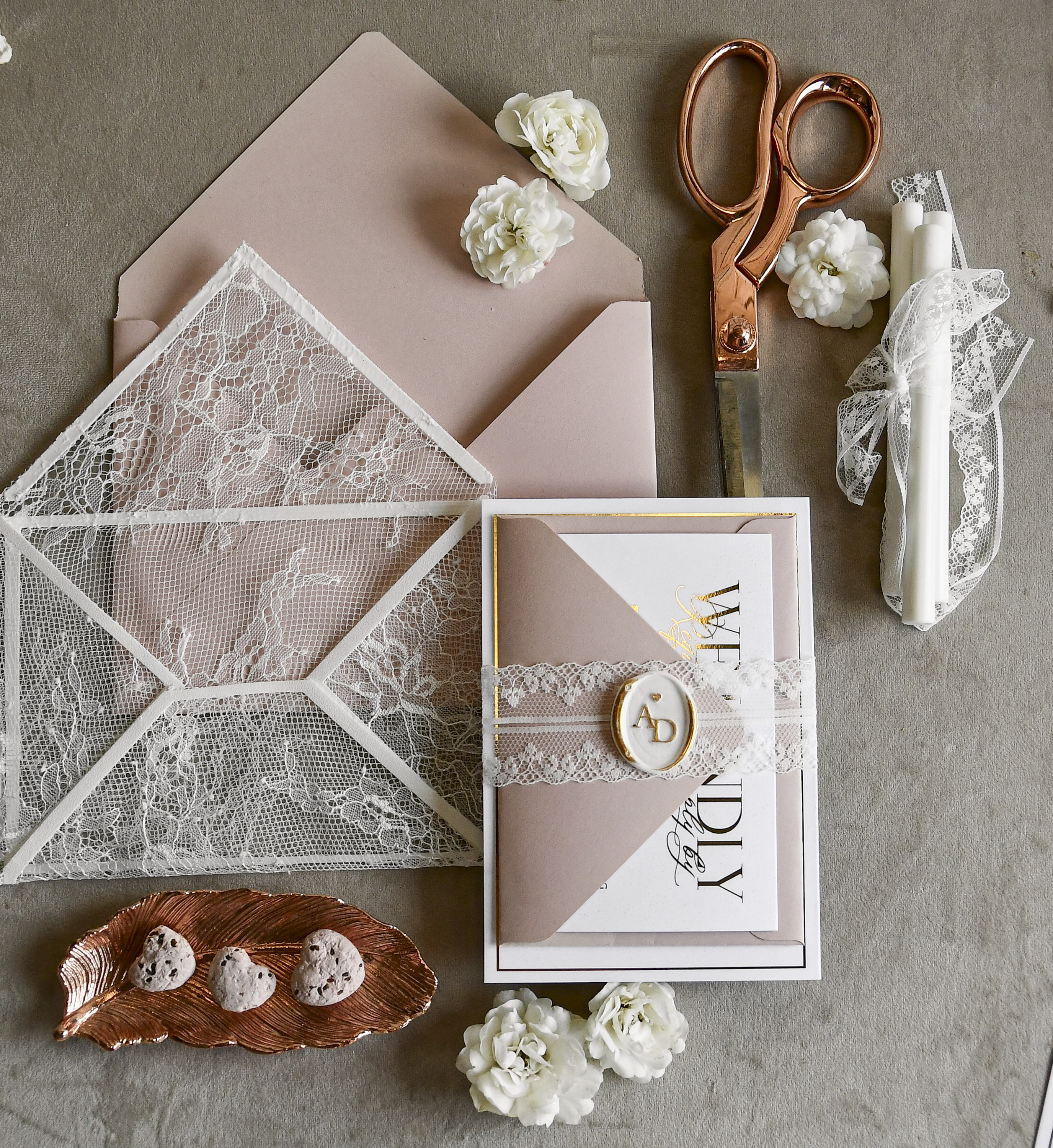
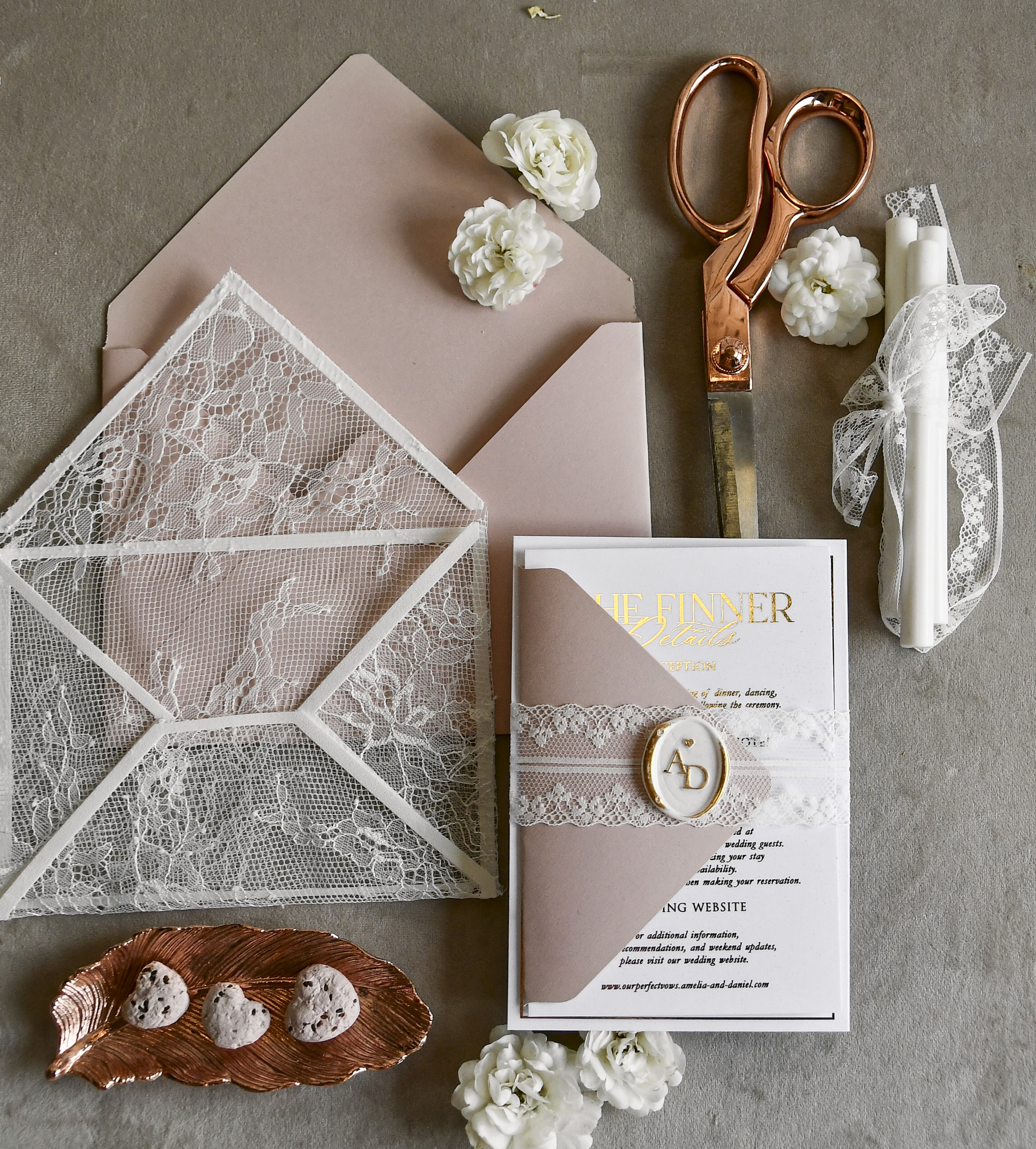
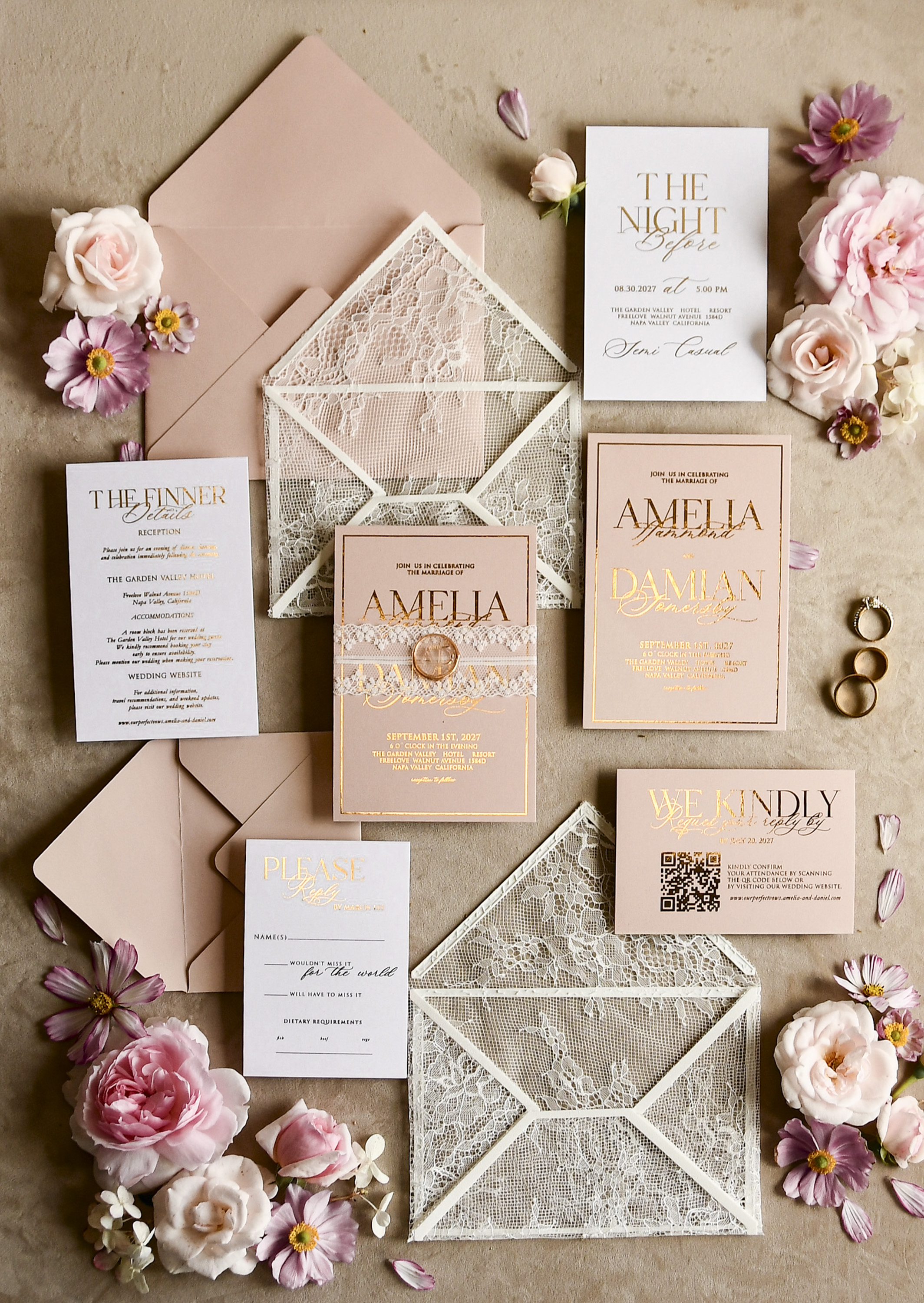
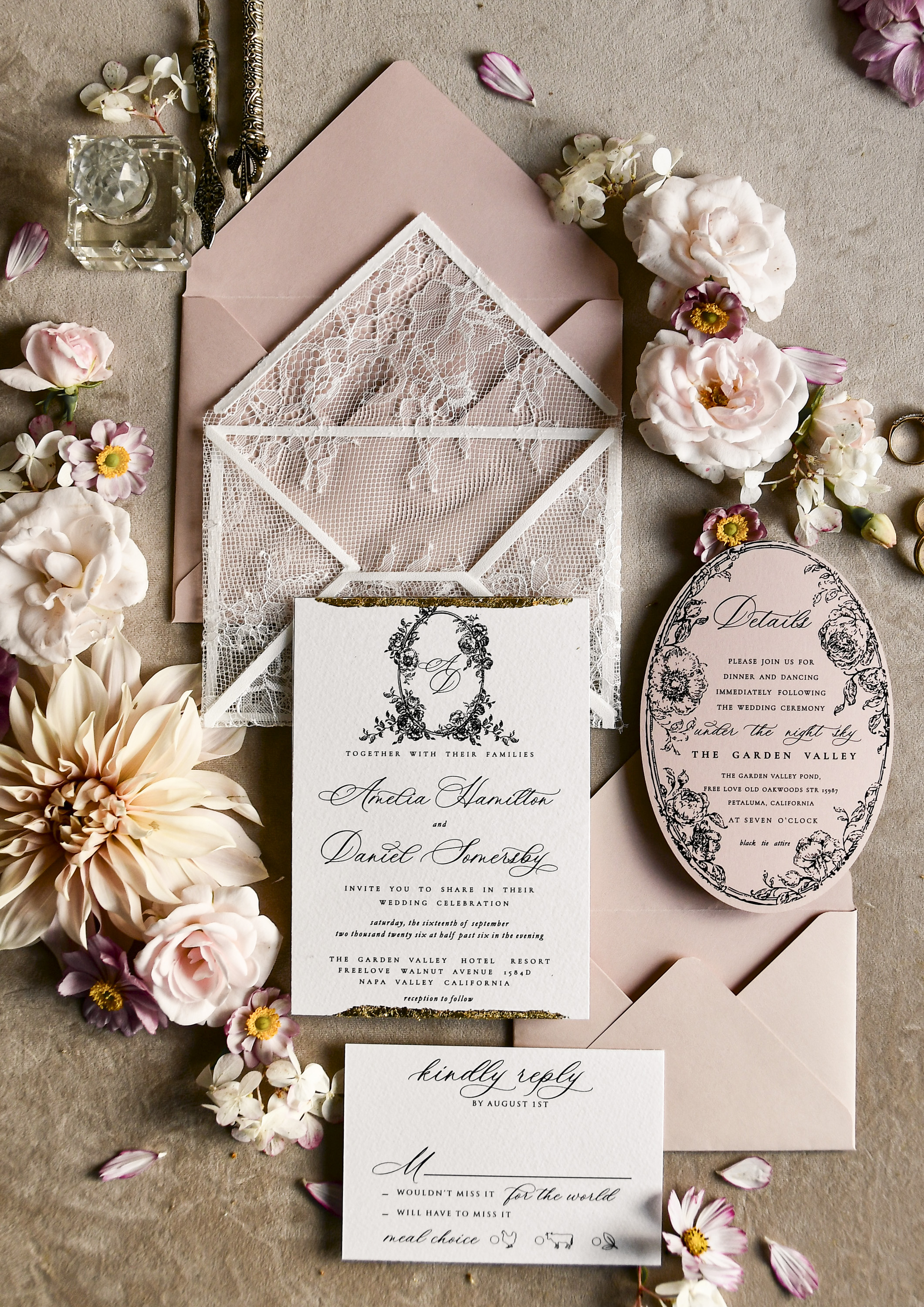
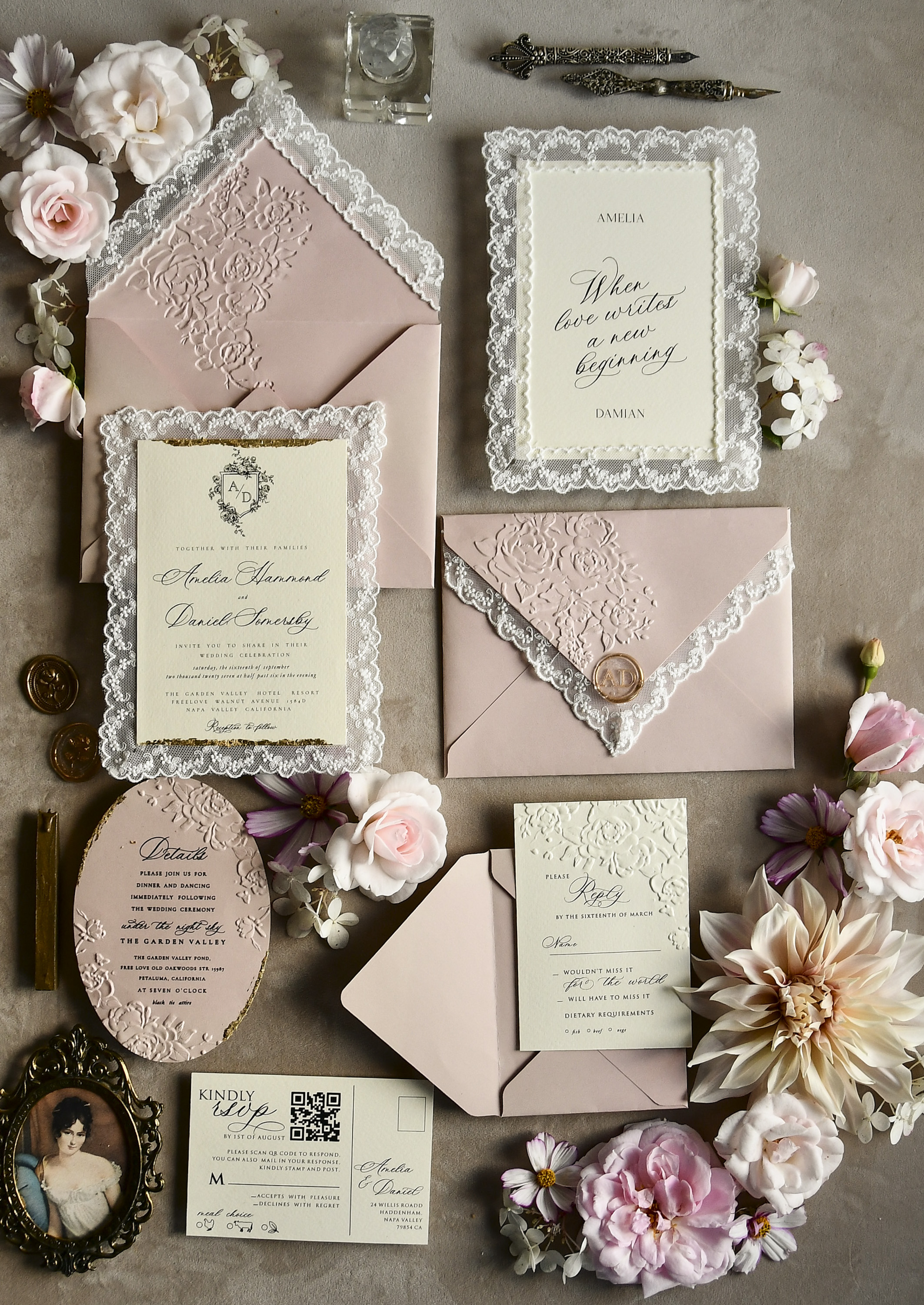
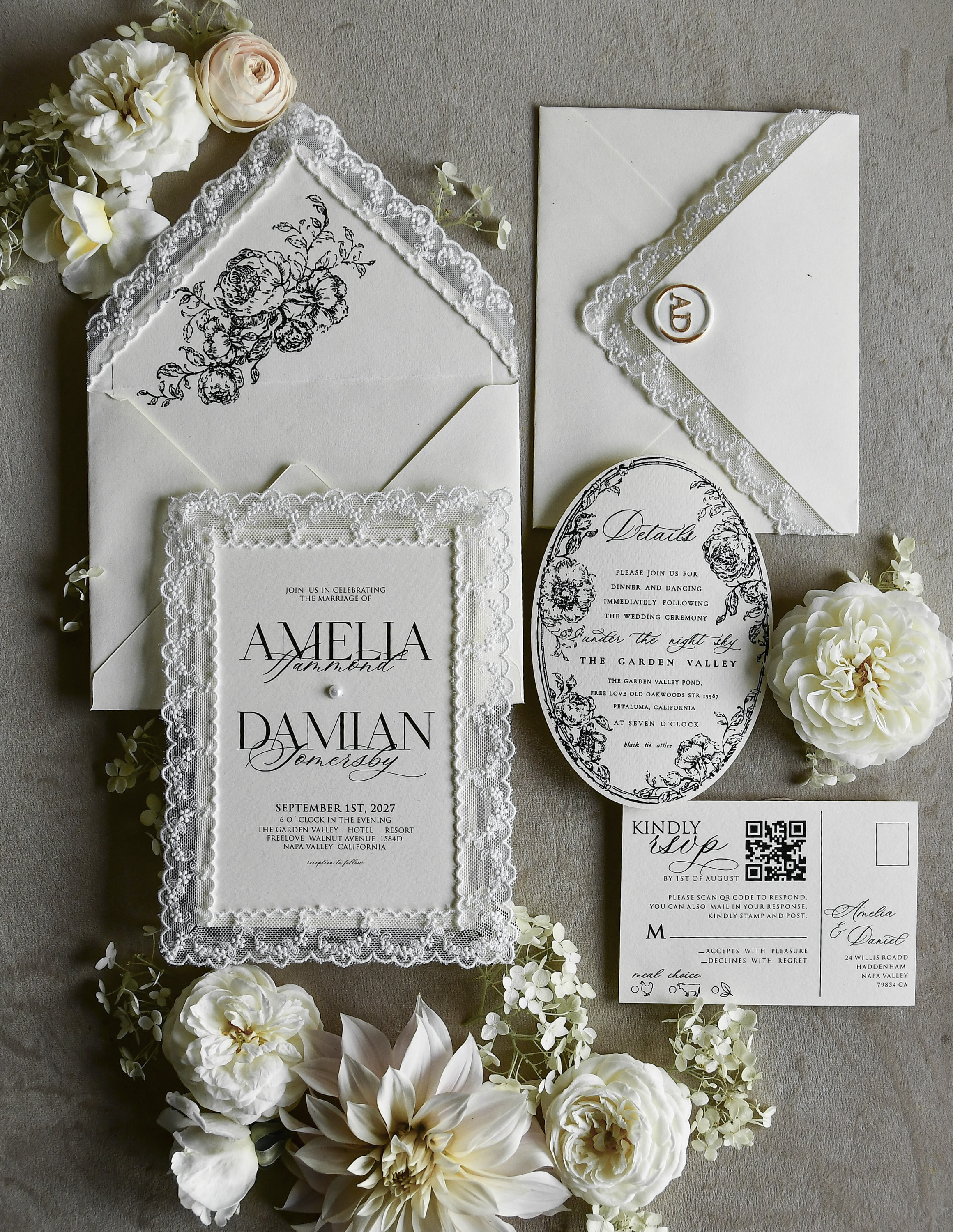
The inner envelope (a classic feature of formal wedding stationery) is especially useful here. It lets you write exactly who is invited—"David and Sarah"—making it unmistakably clear. Our 01/lacenvD/z vintage lace wedding invitations follow this traditional suite format beautifully, giving you the elegant structure you need to communicate your guest list with clarity and style.
Your RSVP card can also do some quiet enforcing. Add a line that reads: "We have reserved ___ seat(s) in your honor" and fill in the number. Guests who see "2" pre-filled understand immediately that plus-ones aren't in the picture.
What to Say When Someone Asks Anyway
Even the clearest invitation won't stop every question. When a guest reaches out—by text, phone, or in person—about bringing someone extra, keep your response warm but firm. You don't need to over-explain or apologize excessively. A simple script that works:
- For a plus-one request: "We're so touched you want to celebrate with us! Unfortunately, we're working with a strict venue capacity and our guest list is completely finalized. We can't wait to celebrate with you though!"
- For uninvited children: "We love your kids so much, but we've decided to keep our celebration adults-only to stay within our venue's limit. We hope you can still make it—it wouldn't be the same without you!"
- For a vague 'we're coming' situation: "Just a heads-up—the venue has a hard cap on attendance, so we're only able to accommodate the guests listed on the invitation. We've reserved [number] seats for you specifically!"
The key is to cite an external reason—venue capacity, catering headcount, fire code—rather than making it feel personal. It shifts the conversation from "we don't want your guest" to "our hands are tied."
Enlist a Trusted Buffer (When You Need One)
If the guest in question is a family member or someone likely to push back, consider asking a parent, sibling, or wedding planner to help communicate the message. Sometimes hearing "the venue truly cannot accommodate anyone beyond the list" from a third party lands more gently than hearing it directly from the couple. This is especially helpful when navigating complicated family dynamics where you don't want the conversation to feel like a personal rejection.
Let your buffer know your exact boundaries ahead of time so they can answer follow-up questions confidently. Give them the same talking points: venue capacity, finalized catering numbers, fire safety limits. Consistency matters—if guests hear the same reason from multiple people, it reinforces that the decision is genuinely out of your hands.
Timing and Follow-Through Matter
Ideally, you want to address unauthorized plus-ones before your RSVP deadline—typically 6 to 8 weeks before the wedding. Once catering and seating charts are locked in, last-minute additions become logistically impossible and even more awkward to refuse.
If someone RSVPs for more people than you invited, call them (don't text) and address it directly but kindly: "Hey, I wanted to give you a quick call—it looks like there may have been a mix-up on the RSVP. We have you down for [number], but our venue only has [number] seats reserved for your party. I just wanted to sort it out before we finalize the seating chart!" Framing it as a potential "mix-up" gives the guest a graceful exit and keeps the tone collaborative rather than confrontational.
After the conversation, update your master list immediately and flag the guest as confirmed so no confusion carries forward to your coordinator or caterer.
A Note on Consistency and Fairness
Whatever rules you set, apply them uniformly. If one cousin can't bring a plus-one, no cousin should get a plus-one—unless there's a clear, defensible distinction (like married couples versus new daters). Guests talk to each other, and perceived favoritism causes far more hurt feelings than a firm, evenly applied rule ever will. Decide your criteria early—married or engaged couples get plus-ones, everyone else doesn't, for example—and stick to it across the board. Your future self will thank you.
Frequently Asked Questions
Yes—your wedding website is a great place to gently note that seating is limited and the guest list is finalized. A simple line like "Due to venue capacity, we are only able to accommodate invited guests" sets expectations before anyone even asks.
Have your wedding coordinator or a trusted family member handle it at the door so you're not pulled away. They can politely explain that seating is at capacity and, if possible, offer to add the extra guest to a future celebration like a brunch or casual get-together.
It's generally considered too blunt to state this explicitly on the invitation itself. Instead, address envelopes precisely and use the "seats reserved" line on your RSVP card—these communicate the same message in a more graceful, traditional way.
Sympathize genuinely, but hold your boundary—their travel planning doesn't obligate you to change your guest list. You can say: "I'm so sorry for any confusion—our guest list and seating were finalized based on the invitation, and we truly aren't able to make exceptions without affecting other guests."
Send invitations 6 to 8 weeks before the wedding for local guests, and 10 to 12 weeks for destination weddings. This gives guests enough time to make arrangements while keeping your RSVP window tight enough to manage last-minute surprises.
Note it on your wedding website and spread the word through parents in your families early—ideally when save-the-dates go out. Wording like "adult reception to follow" on the invitation suite also signals the policy without spelling it out bluntly.
See This Design Up Close
You May Also Like
More Wedding Planning Guides
- → Keeping the Peace: Your Wedding Survival Guide for Feuding Divorced Parents
- → Extra Guests at Your Wedding: How to Prevent and Handle Uninvited Additions
- → When Guests RSVP for More People Than You Invited: A Calm Action Plan
- → Small Weddings: Permission Granted (and Here's How to Do It Right)
- → What to Put on a Wedding Invitation: Every Detail You Need
- → How to Decide Whether an Estranged Sibling Belongs on Your Guest List
- → When the Guest List Expands: Who Covers the Cost of Extra Attendees?
- → When to Send Your RSVP Reminder (And Exactly How to Do It)
- → Uninvited Plus-Ones and Tag-Alongs: How to Keep Your Guest List Intact
- → When Family Feuds Threaten Your Wedding Plans: A Practical Peacekeeper's Guide
- → Inviting an Estranged Brother or Sister: Finding Clarity Before You Seal the Envelope
- → Cousins, Invites, and Hard Choices: A Practical Guest List Guide