
Who's Really Getting Married? Managing Parent Friend Requests on Your Guest List

You're deep in guest list planning when your mom slides over a list of 15 names — her book club, your dad's old college roommates, neighbors you haven't seen since middle school. Sound familiar? Parent friend requests are one of the most common wedding planning friction points, and they can quietly balloon your headcount and your budget before you even realize it. Here's how to handle it with clarity, fairness, and as little drama as possible.
Start With Your Numbers, Not the Negotiation
Before any conversation about who gets an invite, lock down your total guest count. Work backward from your venue capacity and your budget per head. Once you know your hard ceiling — say, 120 guests — divide that number intentionally. A common starting framework is thirds: one-third for your side, one-third for your partner's side, and one-third for both sets of parents combined.
Having a concrete number to point to changes everything. Instead of saying "we don't want your friends there," you can say "we only have 40 spots for both families combined, and here's how we're dividing them." That's a boundary backed by logistics, not feelings — and it's much easier to hold.
Decide If Parents Are Contributing Financially
Money and guest lists are directly connected. If your parents are contributing significantly to the wedding budget, it's reasonable — and honestly expected — that they'll want some say in the guest list. A good rule of thumb: financial contribution earns proportional input, not unlimited access.
If your parents are covering 30% of costs, offering them roughly 30% of available spots is fair. If they're not contributing financially, it's completely appropriate to give them a smaller, fixed allocation — perhaps 5 to 10 names — and hold that line kindly but firmly. Setting this expectation early, before invitations are ordered, prevents resentment on all sides.
Have the Conversation Early and In Person
Don't let this fester until you're already addressing envelopes. Sit down with your parents — separately from your in-laws if needed — and walk them through your vision and your constraints. Be warm but specific:
- Tell them the total count and why it's fixed (venue, budget, intimacy).
- Give them their allocation upfront so they can prioritize rather than add endlessly.
- Acknowledge their perspective — many parents genuinely see this as a milestone they want to share with their community, and that's not unreasonable.
- Offer alternatives if needed, like a post-wedding celebration or a casual brunch where their wider circle can be included without affecting your wedding guest list.
Coming to this conversation with empathy and a clear plan makes it far less likely to turn into a standoff.
Keep the Process Consistent Across Both Families
Whatever rules you set for one set of parents, apply to the other. If your mom gets 8 spots for her friends, your future mother-in-law gets 8 spots too. Consistency is your best protection against accusations of favoritism, and it keeps both families feeling respected even when they don't get everything they want.
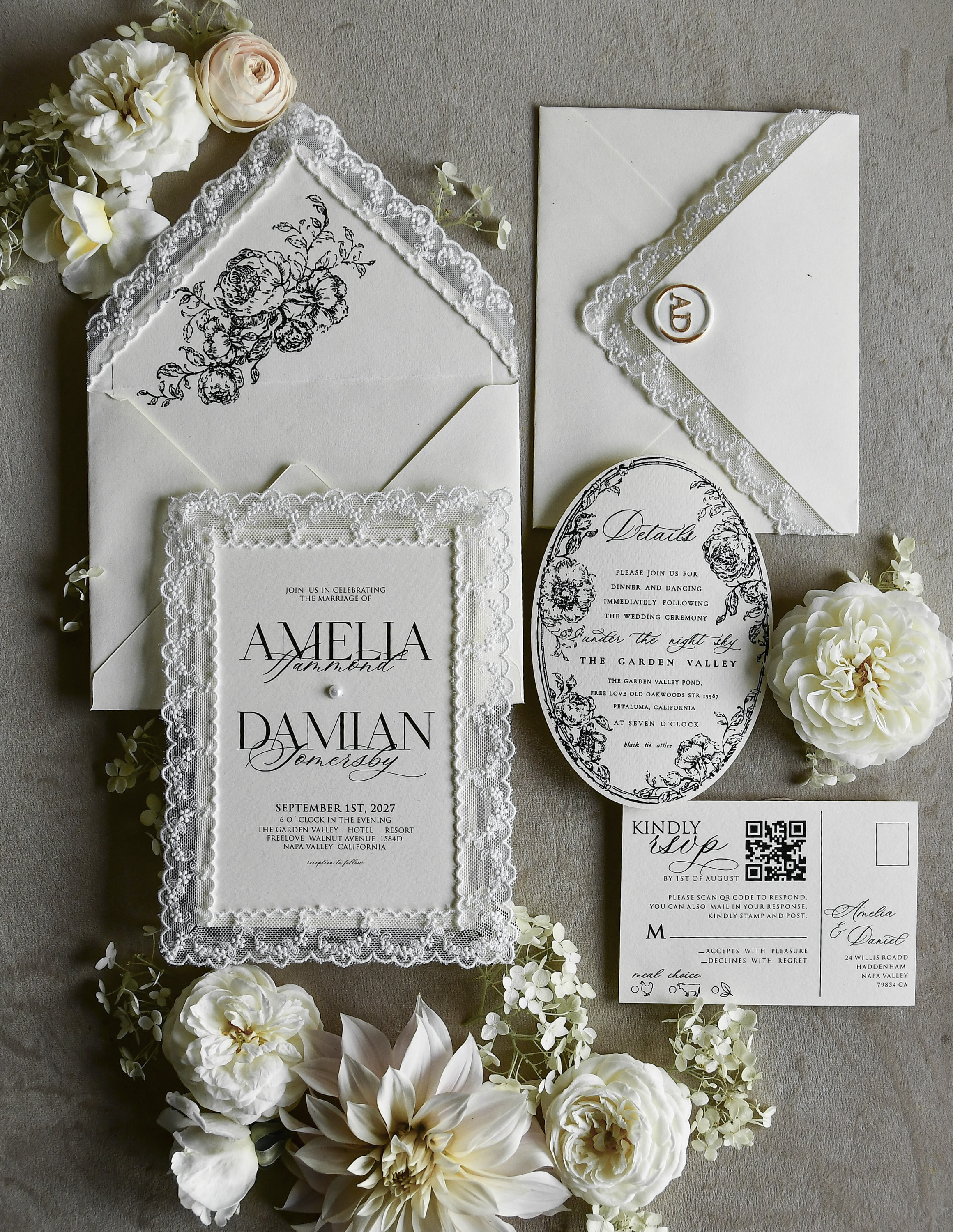
When it comes time to send invitations, presentation matters too. A beautiful, cohesive invitation — like the vintage lace designs from Margo&Bees' 03/lacenvD/z collection, starting at $8.50 — sets a tone of care and intentionality that helps guests of every generation feel genuinely welcomed, whether they're your college friends or your parents' longtime neighbors.
What to Do When They Push Back
Some parents will accept the limit gracefully. Others will push. If that happens, try these approaches:
- Repeat the constraint, not the preference. "We only have room for X guests total" is harder to argue with than "we just don't want a big wedding."
- Ask them to prioritize. If they give you 20 names and you can only take 8, ask them to identify their closest 8. Most parents can do this when they have to.
- Involve your partner. Each partner should take the lead with their own parents. It's more effective and prevents the in-law dynamic from becoming adversarial.
- Hold firm on the final number. Adding "just a few more" to keep the peace almost always leads to regret — in the form of a larger bill, a more crowded venue, or a day that doesn't feel like yours.
Your wedding guest list is one of the first big decisions you'll make as a couple. How you navigate it — together, with clear communication and mutual respect — sets a healthy tone for handling family dynamics long after the day is over. The goal isn't to win; it's to plan a wedding that genuinely reflects you, while honoring the people who raised you.

Frequently Asked Questions
A common guideline is to give each set of parents a fixed allocation of 5 to 10 guests, adjusted based on your total headcount and whether they're contributing financially. The key is to set the number before the conversation starts and apply it consistently to both families.
Financial contribution earns input, not unlimited control. If your parents are funding the wedding, it's fair to give them a proportionally larger share of the guest list, but you and your partner should still have final say over the total count and overall vision.
You're not obligated to, but it can help preserve family harmony if you have the space. If your parents have a close friend who has been part of their life for decades, that relationship may matter enough to include — use your judgment based on your capacity and your relationship with your parents.
Blame the venue or budget rather than personal preference — it's less hurtful and completely honest. Something like, "We'd love to include everyone, but we're truly at our limit with the venue" keeps the conversation logistical rather than emotional.
Absolutely — a post-wedding brunch, backyard gathering, or casual dinner lets your parents celebrate with their wider circle without affecting your wedding day headcount. Many couples find this is a great compromise that leaves everyone feeling included.
As early as possible — ideally when you first start planning, well before invitations are ordered or a venue is booked. Setting expectations early prevents the painful situation of having to remove names from a list your parents already consider final.
See This Design Up Close















You May Also Like



More Wedding Planning Guides
- → Staying Sane When Family Tensions Rise Before Your Big Day
- → The Estranged Family Dilemma: Making Peace With Your Wedding Guest List
- → Missing RSVPs: The Exact Waiting Game You Should Play
- → Wedding Invitation Timing: The Insider's Guide to Sending on Schedule
- → Handling Family Boycott Threats Over Your Wedding Guest List
- → The Teen Plus-One Dilemma: A Practical Guide for Couples
- → What To Do When Guests Leave You On RSVP Read
- → When an RSVP Changes at the Last Minute: A Calm, Practical Guide for Couples
- → Your Wedding, Your Choice: Deciding Whether to Include an Estranged Sibling
- → Is Skipping Kids on Your Wedding Guest List Ever Considered Rude?
- → Feuding Divorced Parents at Your Wedding: A Practical Peace Plan
- → Small Weddings, Big Meaning: Your Guide to Celebrating Intimately
- → Should You Skip Paper and Send Digital Wedding Invitations?
- → The Uninvited Guest Question: How to Respond Without Regret
- → Missing RSVPs: The Right Way to Follow Up With Silent Guests
- → The Smart Couple's Guide to Wedding Childcare and Kids' Entertainment
- → Uninvited Plus-Ones and Tag-Alongs: How to Keep Your Guest List Intact
- → When Family Feuds Threaten Your Wedding Plans: A Practical Peacekeeper's Guide
- → Inviting an Estranged Brother or Sister: Finding Clarity Before You Seal the Envelope
- → Cousins, Invites, and Hard Choices: A Practical Guest List Guide