
More Guests or a More Meaningful Wedding? Here's How to Decide
It's one of the most common dilemmas engaged couples face: do you cast a wide net and invite everyone you know, or do you keep the list tight and pour your budget into an exceptional experience? There's no universal right answer — but there is a right answer for you. Understanding how guest count affects every corner of your wedding will help you make a decision you'll feel confident about long after the last dance.
Why Guest Count Is the Single Biggest Budget Driver
Your guest list doesn't just affect the catering bill — it touches nearly every line item in your budget. Venue capacity, per-plate costs, bar packages, florals, seating, cake servings, and yes, your stationery order all scale directly with headcount. As a rough benchmark, most US couples spend between $150 and $300 per guest on average when you factor in everything.
That means inviting 150 guests instead of 75 could cost you an additional $11,000–$22,000. That's money that could otherwise go toward a stunning venue upgrade, a live band, a honeymoon, or a down payment. Before you finalize your list, run the numbers honestly — knowing the real cost per head changes the conversation fast.
What You Actually Gain With a Smaller Guest List
Couples who choose intimacy over size consistently report feeling more present on their wedding day. When you're not working the room greeting 200 people, you actually get to eat your dinner, linger at your tables, and have real conversations. A smaller wedding also allows you to:
- Upgrade the experience — better food, a higher-end venue, or live entertainment
- Personalize every detail — custom menus, thoughtful favors, handwritten notes
- Reduce logistical stress — fewer moving parts, smaller vendor teams, easier coordination
- Spend more meaningfully — your per-guest investment goes further when the list is curated
A beautifully set table for 50 close friends and family often feels far more special than a ballroom packed with acquaintances and distant coworkers.
What You Gain With a Larger Guest List
A big wedding has its own kind of magic. If you come from a large family or a tight-knit community, a small wedding can genuinely feel like it's missing something — or worse, create lasting hurt feelings among people who expected to be included. There's real joy in a full dance floor, in seeing childhood friends reconnect, in celebrating surrounded by every person who has shaped your life.
A larger wedding also distributes the emotional weight of the day. With more guests, there's more energy, more laughter, and more people carrying the celebration forward — which can actually take pressure off the couple. If your families are large and deeply involved, a bigger guest list may be the path of least resistance and the most joy.
How to Make the Decision Without the Guilt
Start by writing two separate lists: your must-invite guests (immediate family, closest friends — the people you'd call first with big news) and your nice-to-have guests (extended family, coworkers, old acquaintances). The must-invite list is your baseline. Everything above it is a budget decision, not an obligation.
Next, set your budget ceiling and divide by your realistic per-guest cost. That number tells you how many guests your budget can genuinely support without cutting corners on the things that matter to you. If your must-invite list already exceeds that number, you'll need to either increase the budget or have honest conversations with family about expectations.
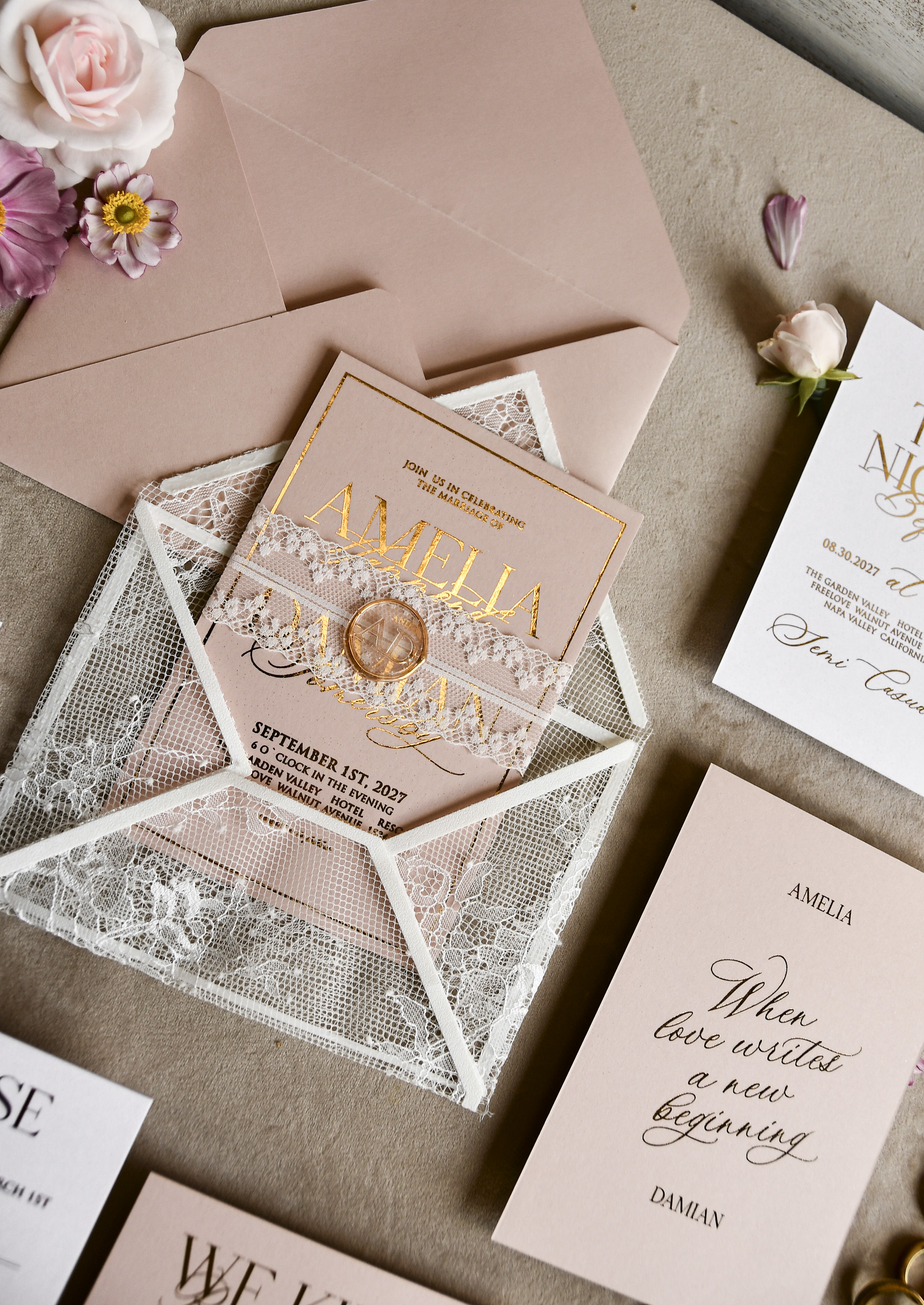
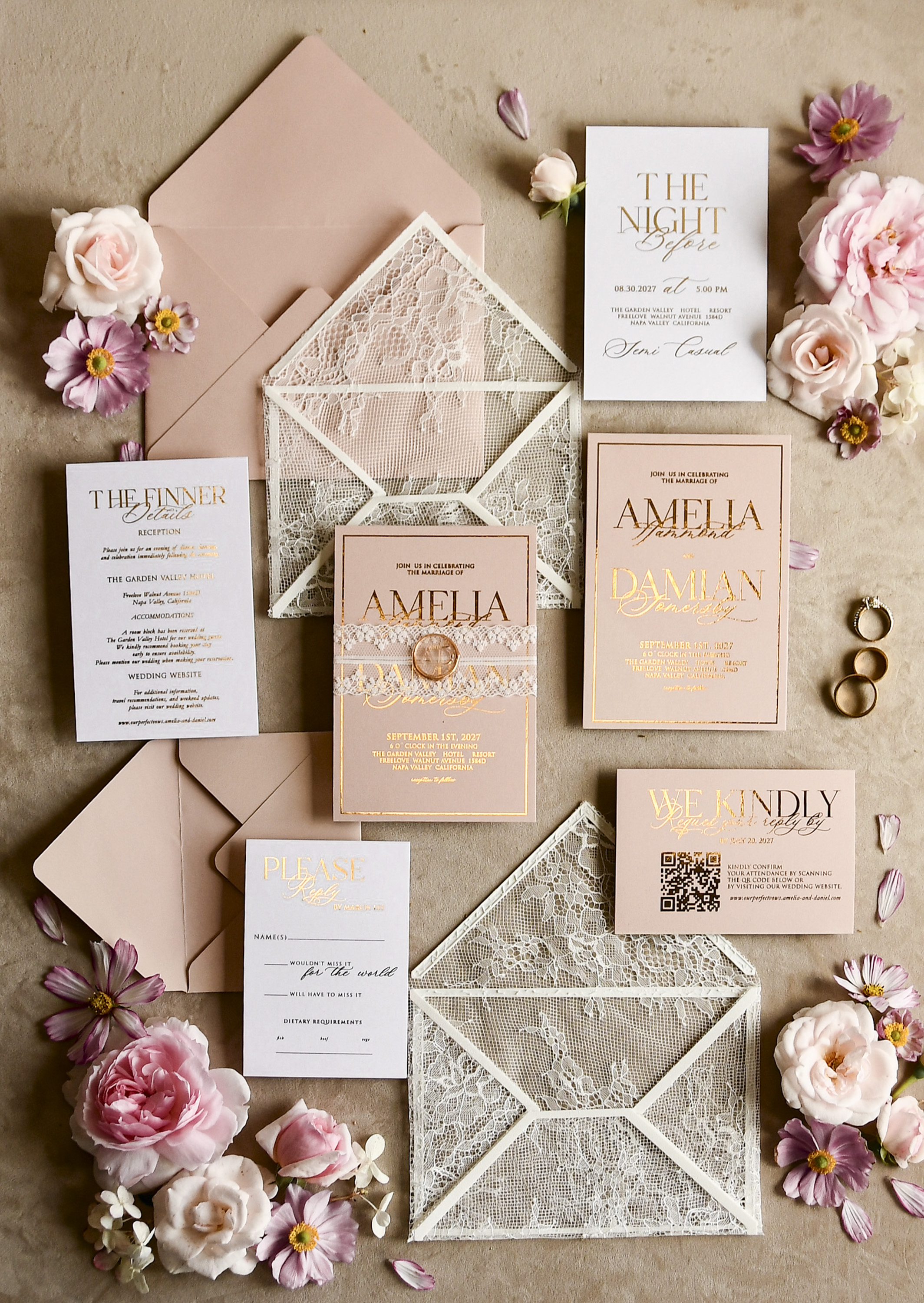
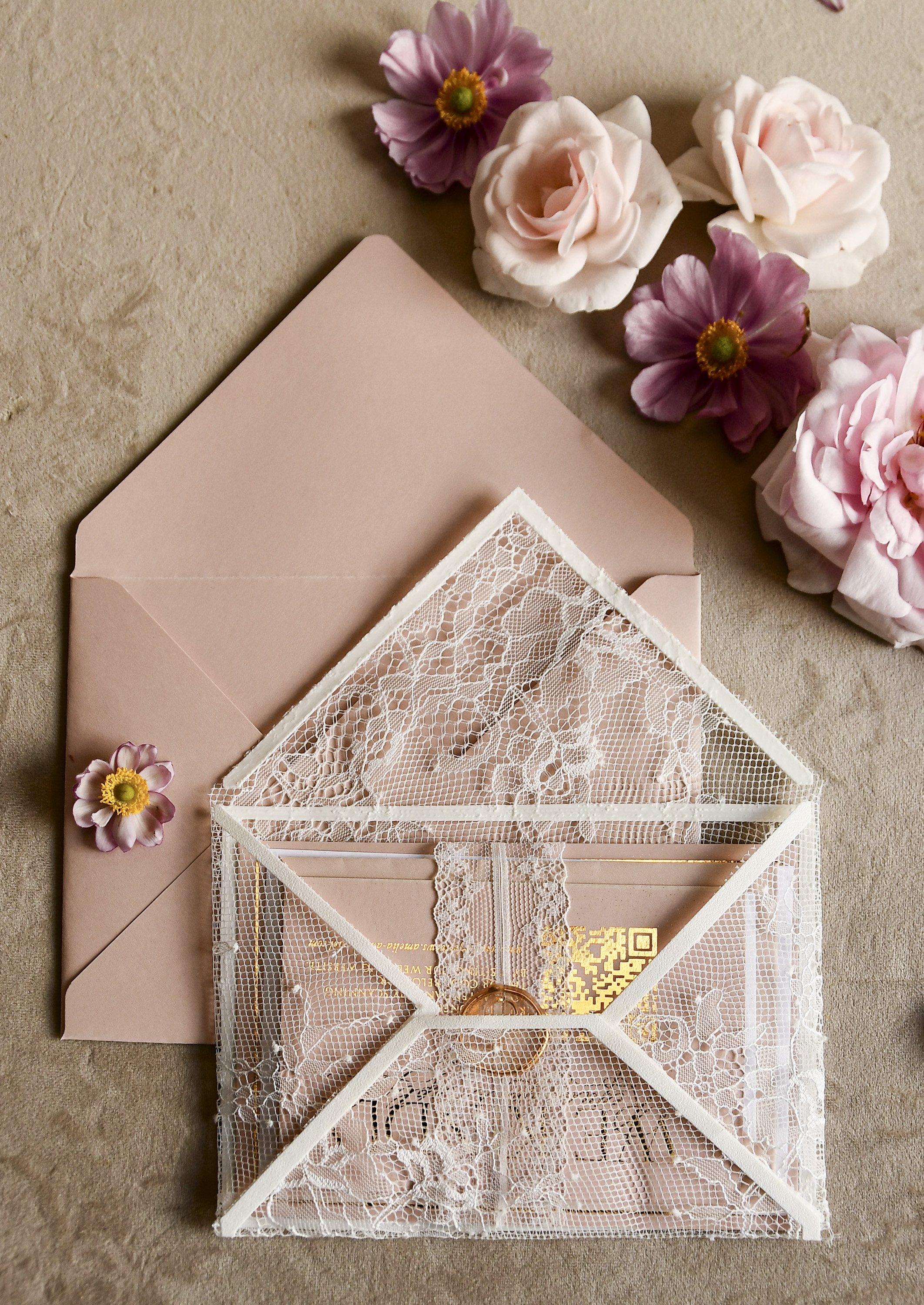
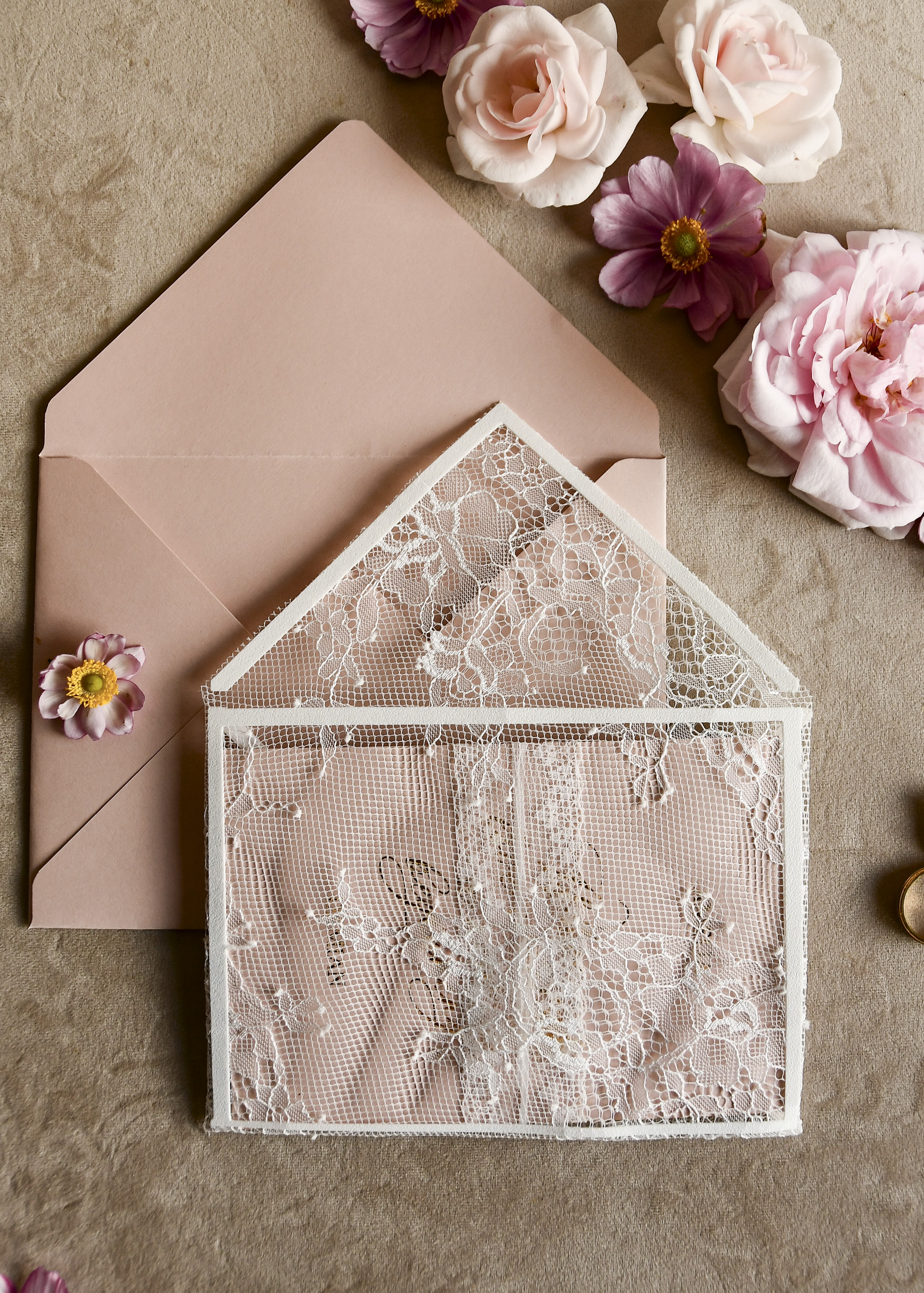
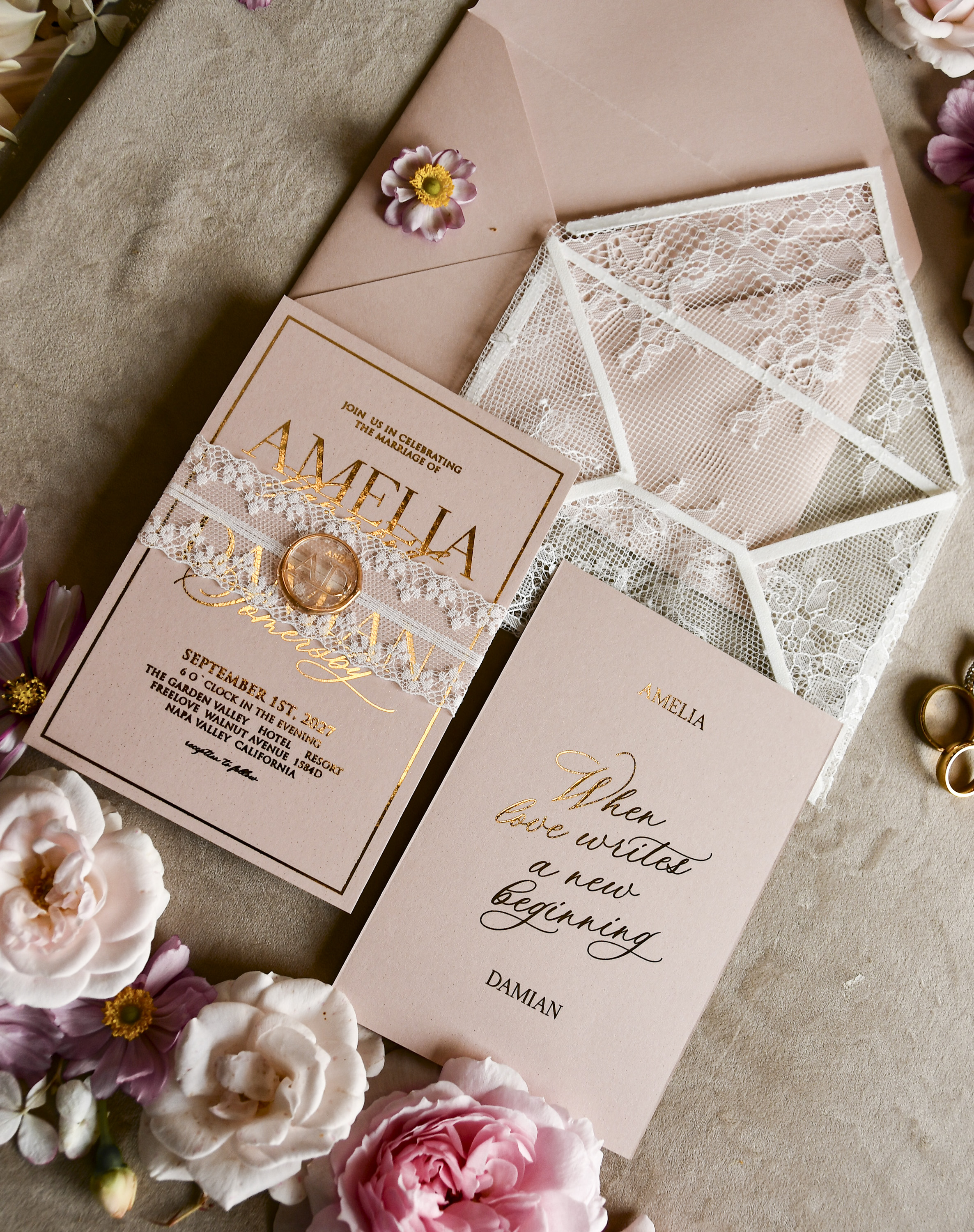
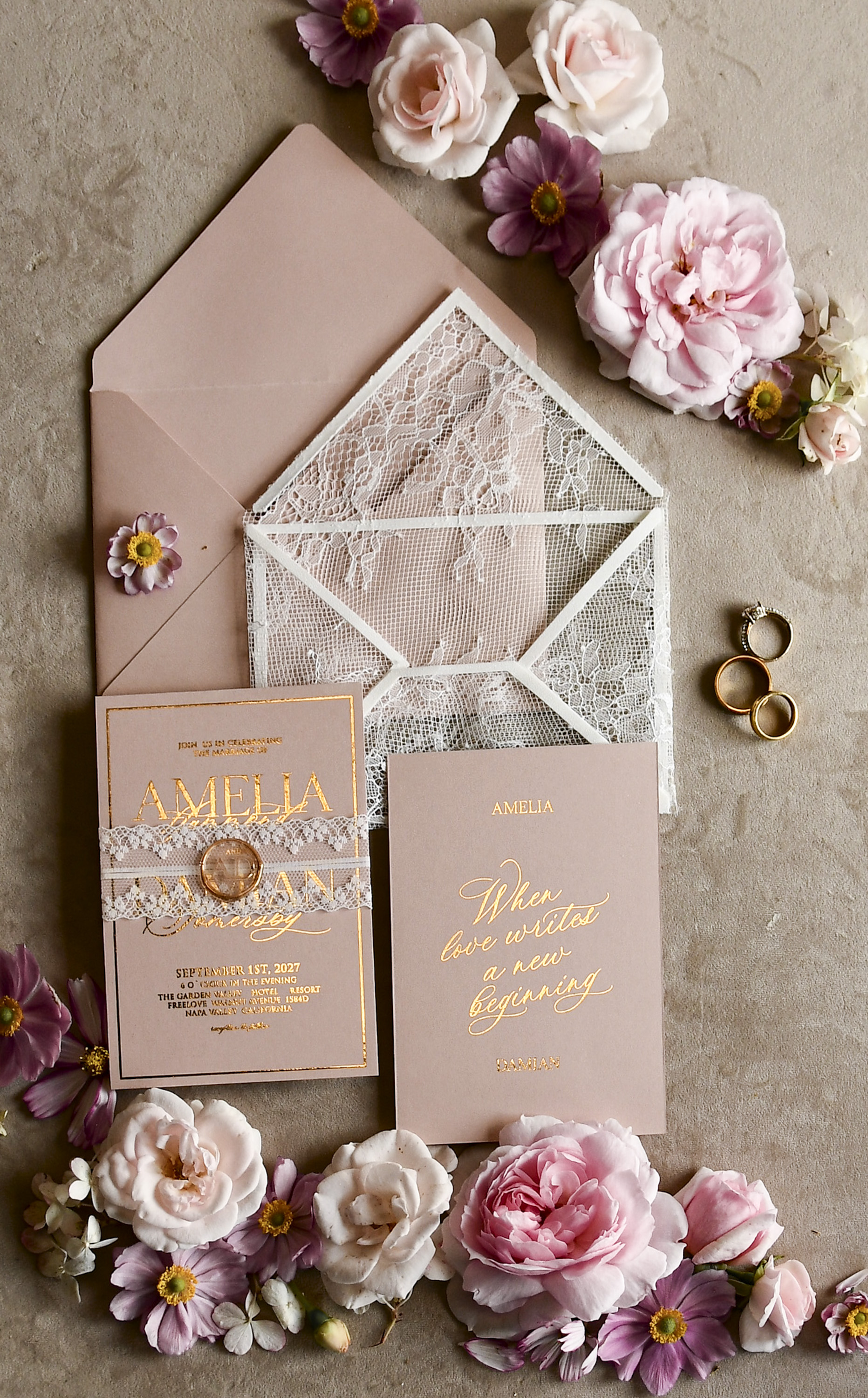
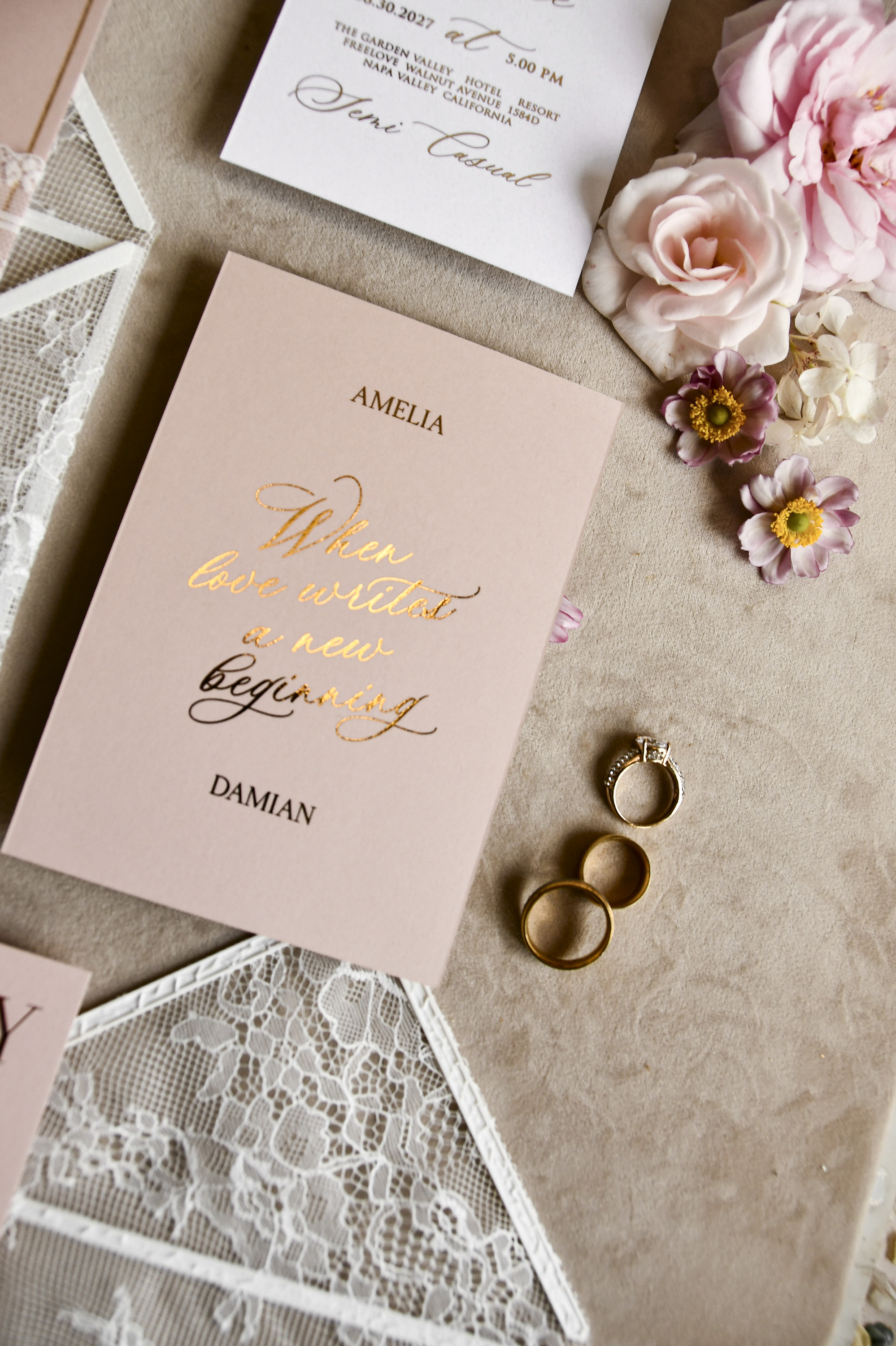
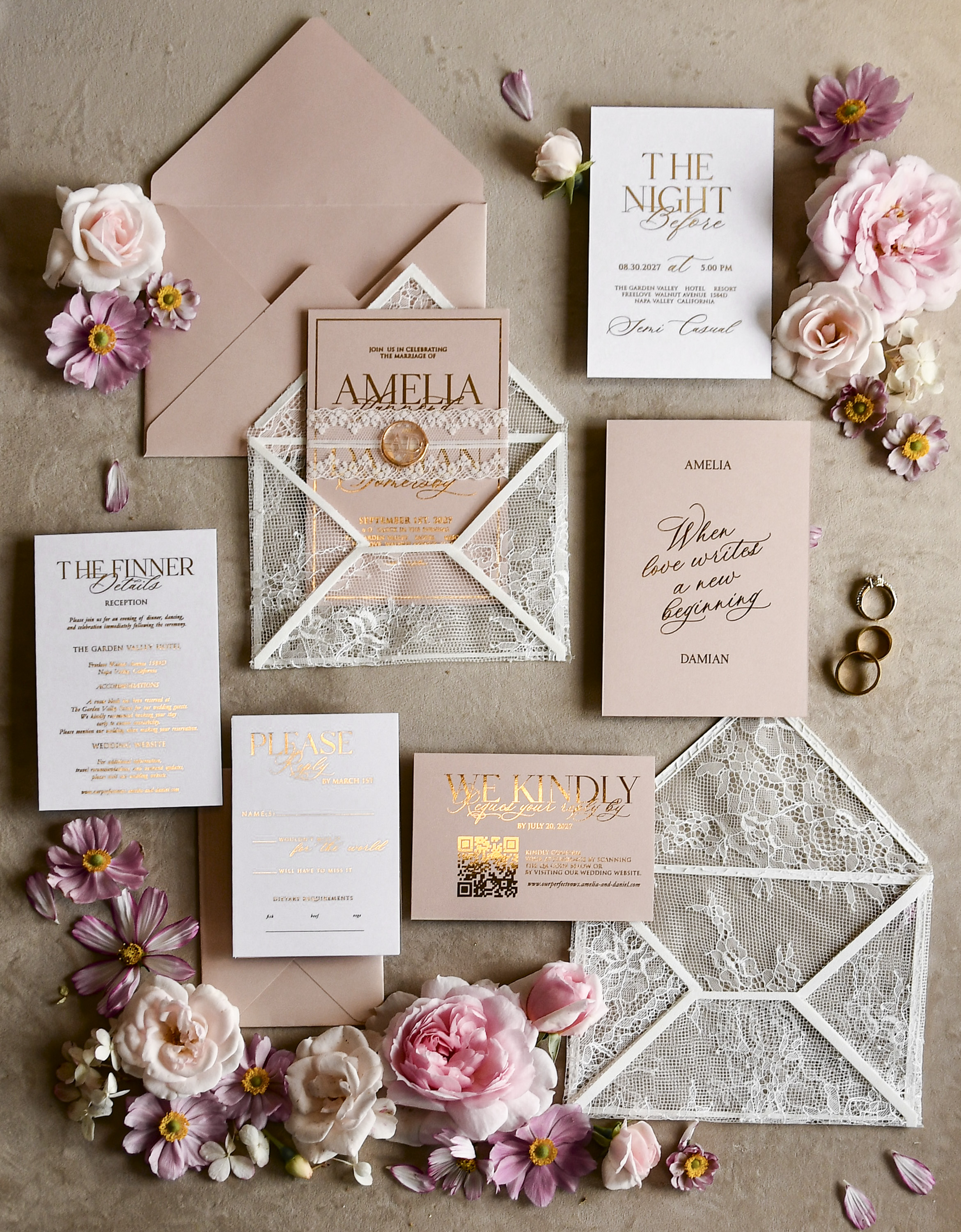
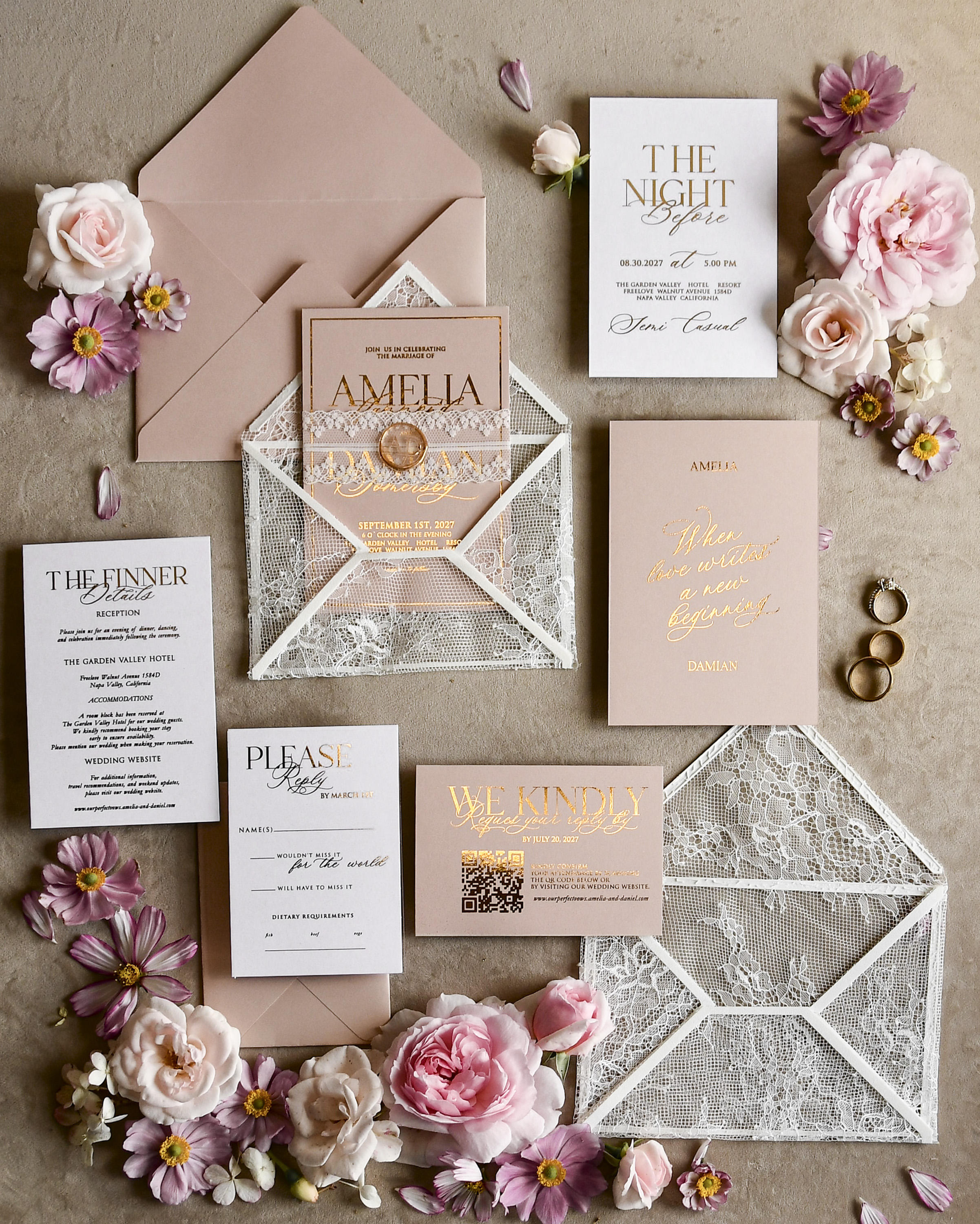
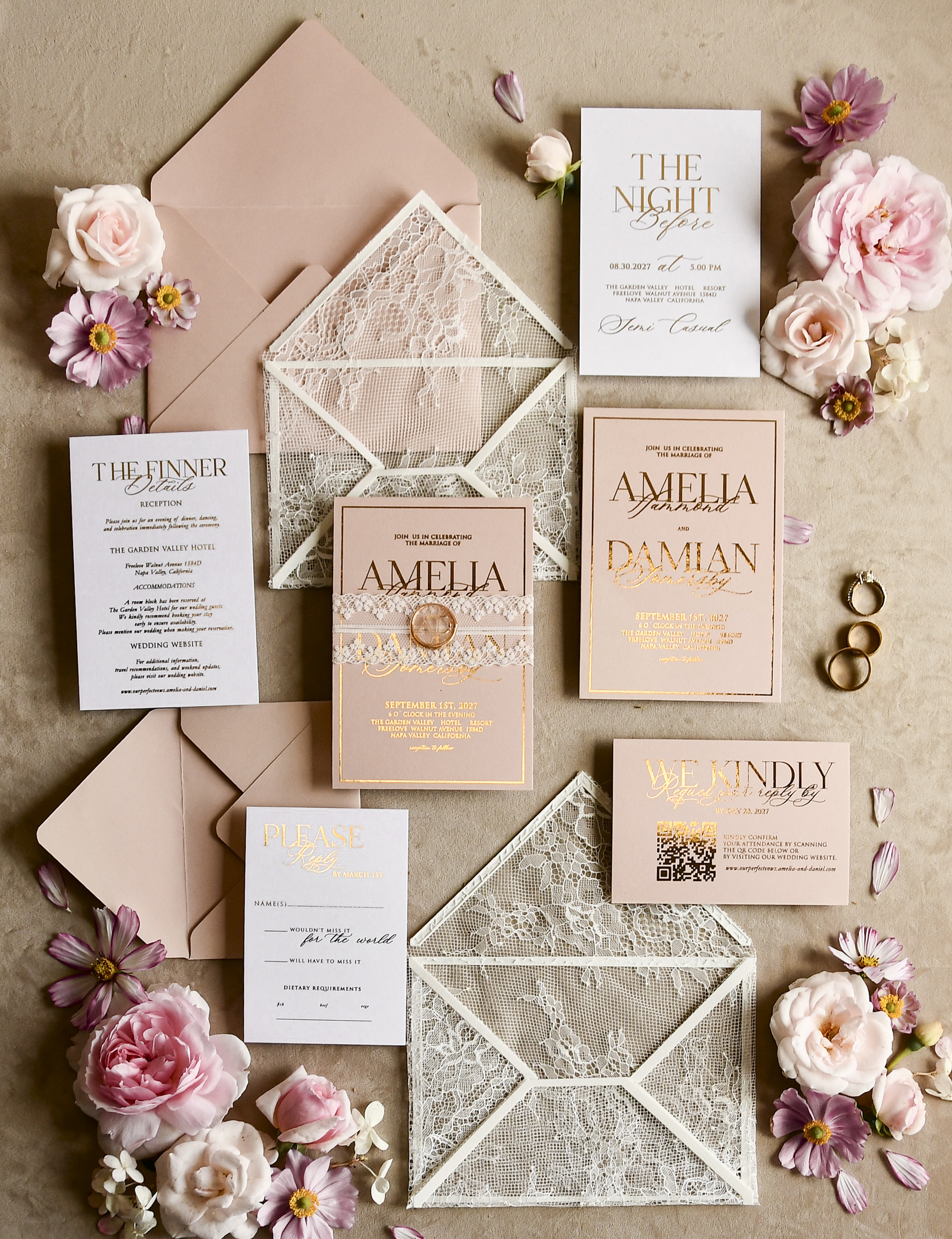
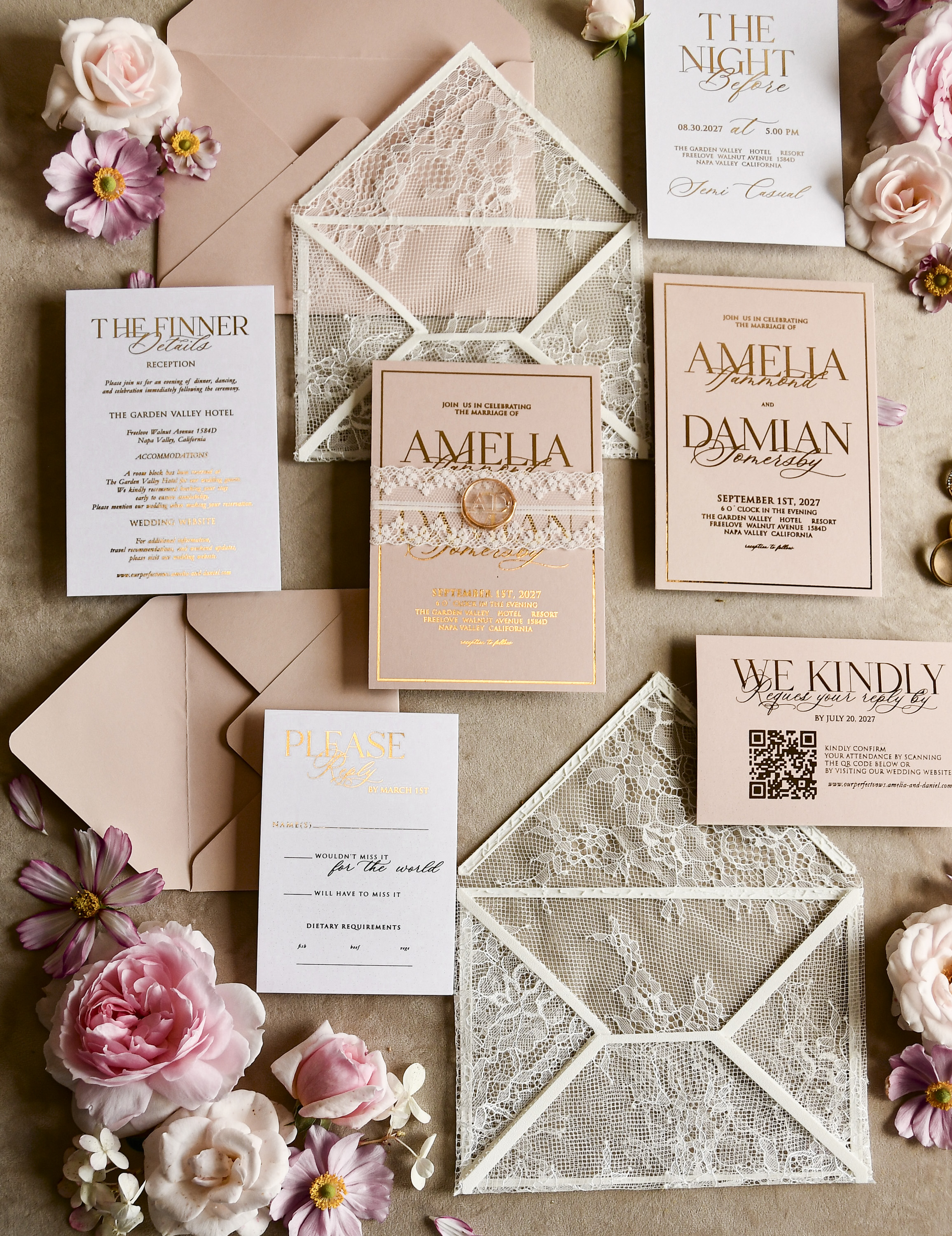
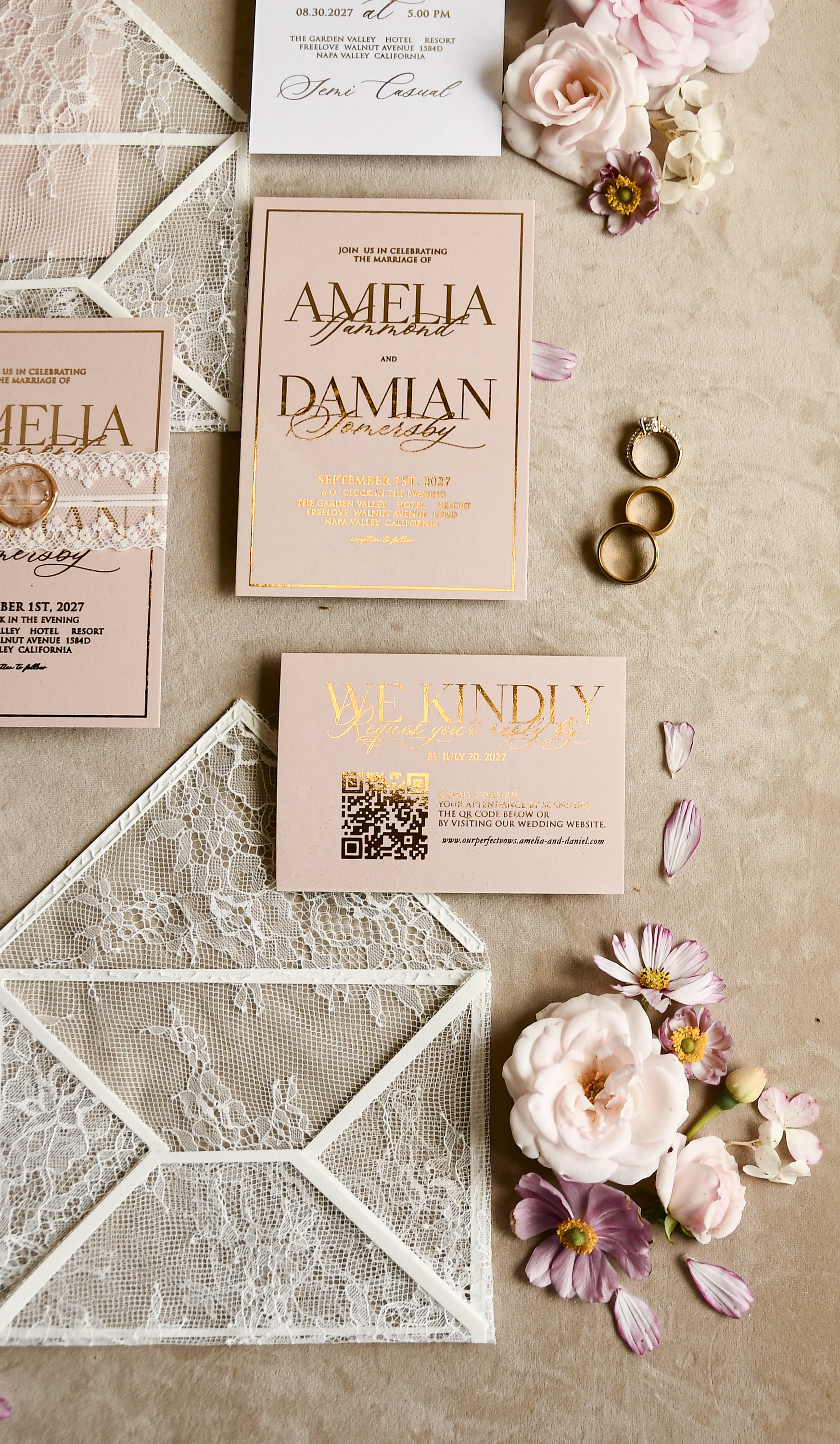
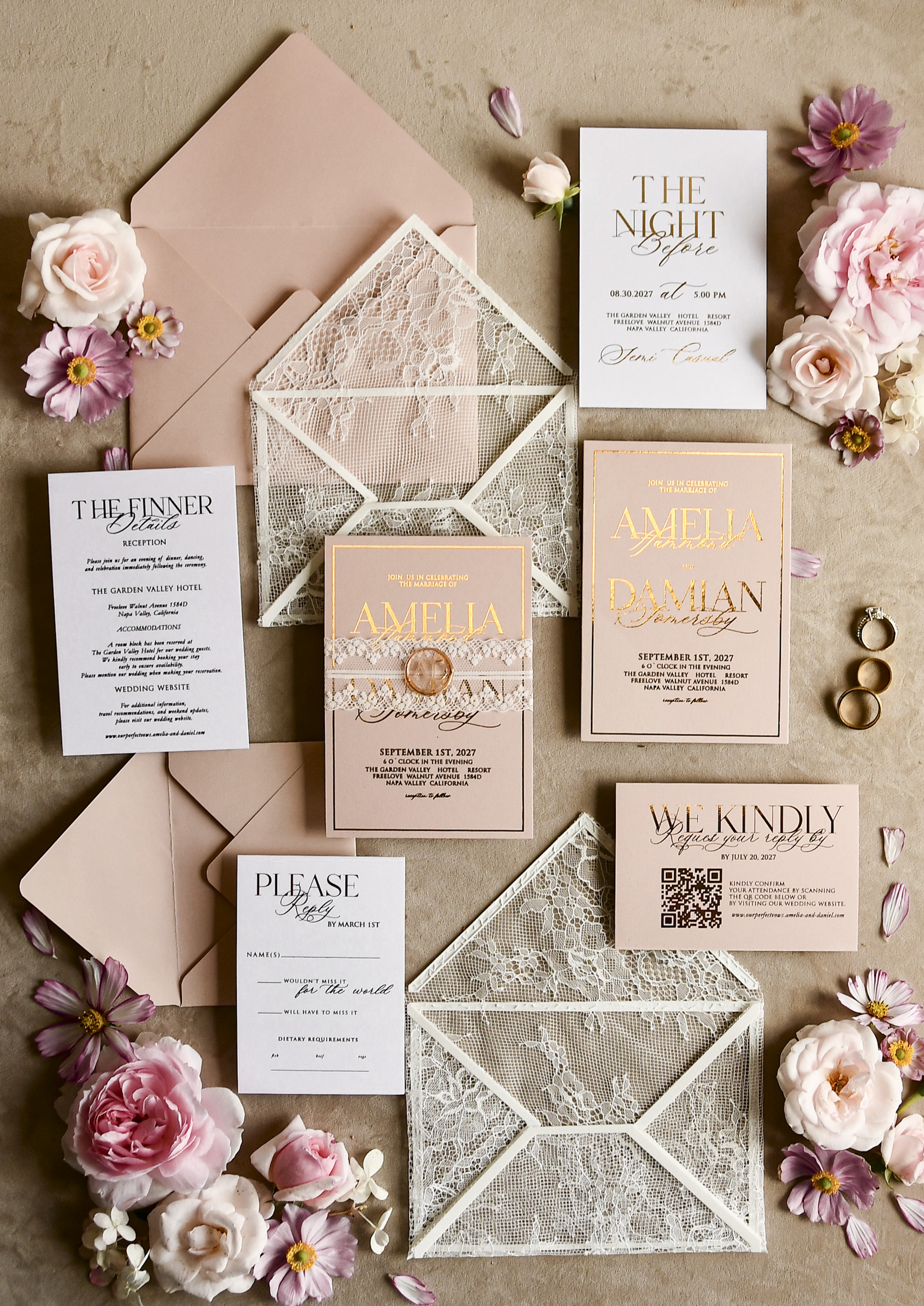
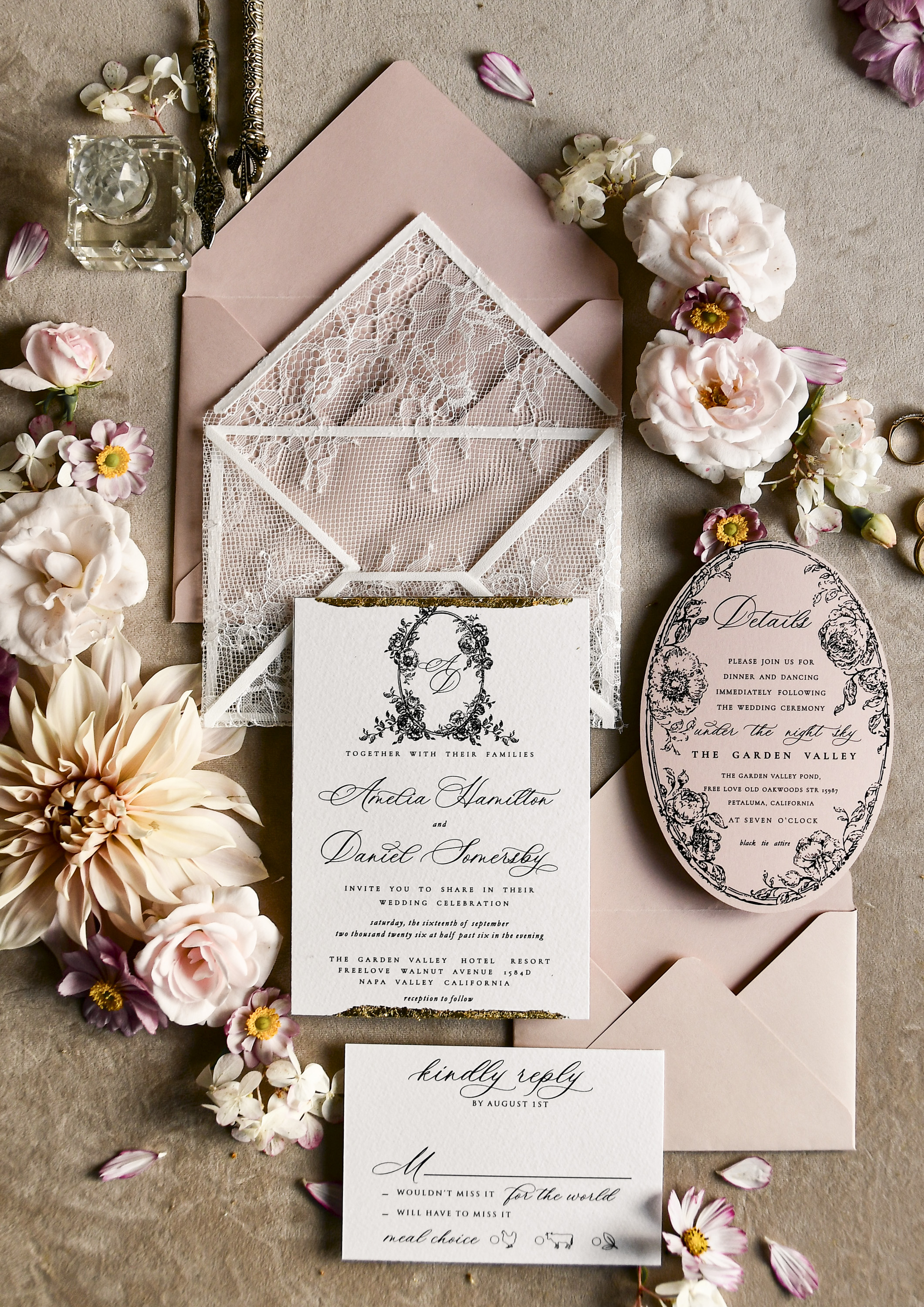
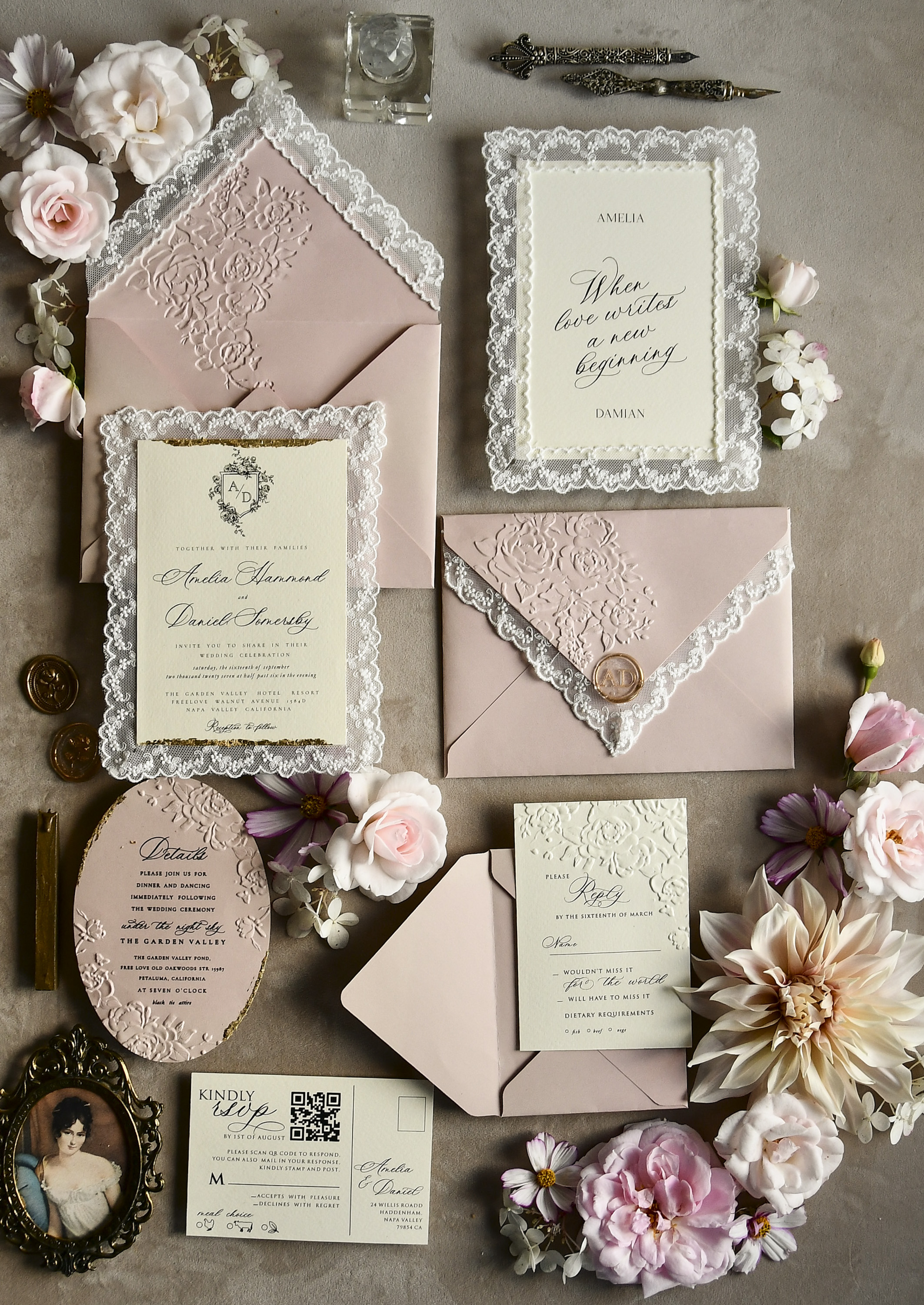
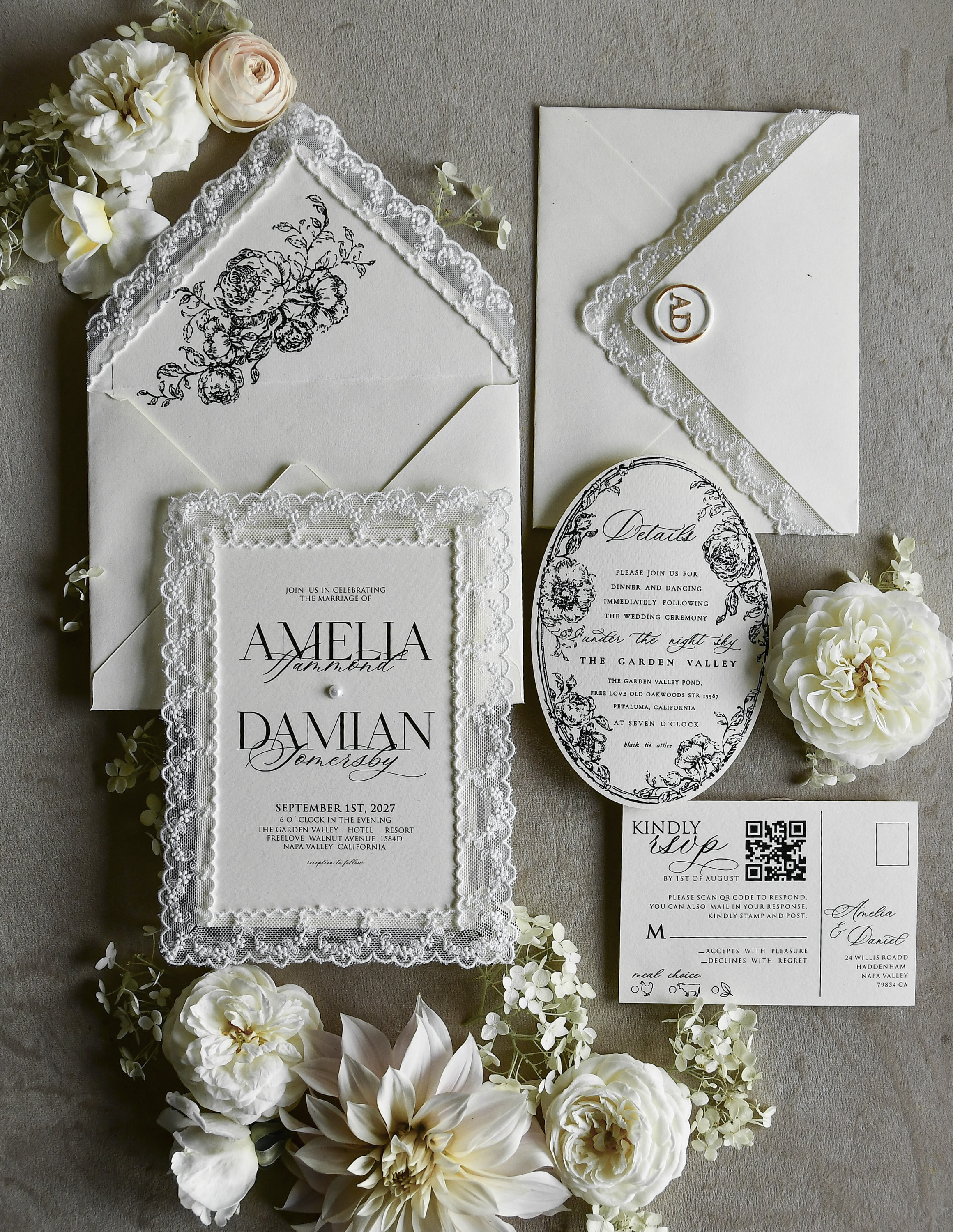
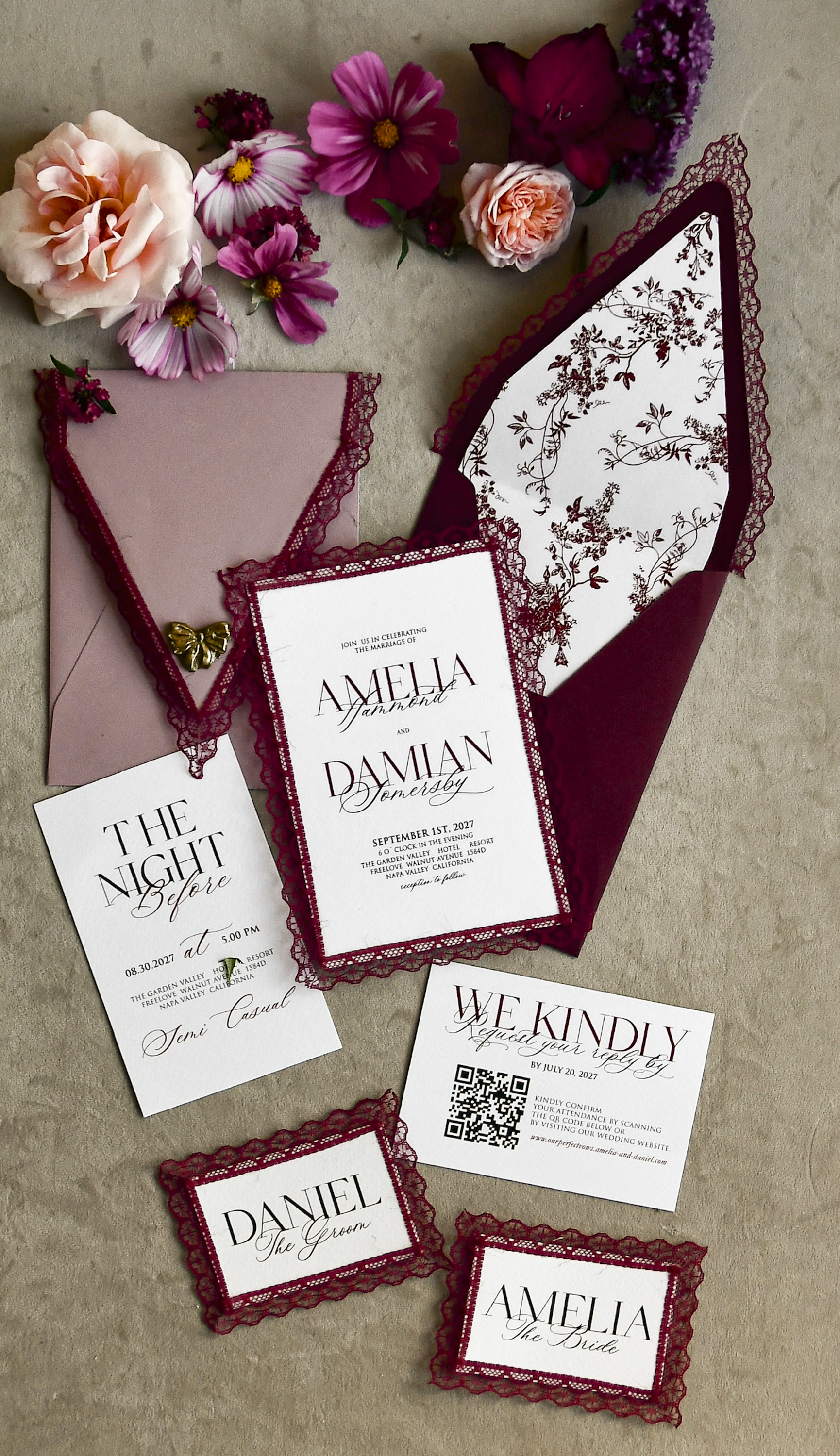
One practical tip: your invitations set the tone for the entire event. Whether you're hosting 40 or 140, choosing stationery that reflects your wedding's aesthetic — like the romantic, vintage-inspired 02/lacenvD/z wedding invitation — signals to guests exactly what kind of celebration they're walking into. A well-designed invitation for an intimate gathering feels just as special as one for a grand affair.
A Simple Framework for Couples Who Are Still Torn
If you're genuinely stuck, ask yourselves these questions together:
- When we picture our wedding day, what do we see? A packed room or an intimate gathering?
- What will we regret more — leaving someone off the list, or compromising on the experience?
- Who is funding the wedding? If parents are contributing, their guest expectations deserve a conversation.
- What does our venue realistically hold? Sometimes the venue makes the decision for you.
There's also a middle path many couples overlook: a tiered approach. Host a smaller ceremony and reception for your inner circle, then throw a casual celebration party a few weeks later for the broader crowd. You get intimacy on the day itself and inclusivity over time — and your vintage lace invitations can be reserved for the people at your side when it counts most.
Frequently Asked Questions
Most US couples spend between $150 and $300 per guest when accounting for catering, bar, venue, florals, cake, and stationery. In major cities like New York or Los Angeles, that figure can climb to $400 or more per person.
Be honest but kind — a simple 'We're keeping our wedding very small, just immediate family and a few close friends' is usually enough. Avoid over-explaining or making promises about a future party unless you genuinely plan to host one.
Yes, in the US a guest count under 75 is generally considered an intimate or small wedding. Micro-weddings typically refer to 20 guests or fewer, while elopements are usually just the couple and a witness or two.
There's no obligation to invite coworkers unless you have a genuine friendship outside the office. A good rule of thumb: if you wouldn't stay in touch if you left the job, they don't need to be on the list.
It's possible but requires significant trade-offs — think buffet-style catering, a non-Saturday date, a non-traditional venue, or a dry wedding. Be realistic about what you're willing to compromise before committing to a large headcount.
For a standard US wedding, mail invitations six to eight weeks before the date. If you're hosting a destination wedding or marrying during a holiday weekend, send them ten to twelve weeks out so guests have time to make travel arrangements.
See This Design Up Close
You May Also Like
More Wedding Planning Guides
- → Wedding Invitations: When the Clock Runs Out and What to Do About It
- → The Smartest Way to Get Your Wedding Invitations Into Guests' Hands
- → When a 'Yes' RSVP Turns Into an Empty Chair: What Couples Should Know
- → Guest List Too Long? Here's Exactly Where to Start Cutting
- → When Mom's Guest List and Yours Don't Match: A Practical Guide
- → Cutting Your Wedding Guest List Kindly and Confidently
- → The Art of Ceremony-Only Invitations: A Kind and Practical Guide
- → Plus-One or Not? How to Handle New Boyfriends and Girlfriends on Your Guest List
- → Skip the Stamp: A Practical Guide to Online RSVPs for Your Wedding
- → Wedding Invitation Essentials: What to Include and How to Say It
- → Save the Date vs. Wedding Invitation: What Each Card Actually Does
- → When Your Fiancé Wants a Family-Free Wedding: Finding Common Ground
- → Uninvited Plus-Ones and Tag-Alongs: How to Keep Your Guest List Intact
- → When Family Feuds Threaten Your Wedding Plans: A Practical Peacekeeper's Guide
- → Inviting an Estranged Brother or Sister: Finding Clarity Before You Seal the Envelope
- → Cousins, Invites, and Hard Choices: A Practical Guest List Guide