
Wedding Invitation Essentials: What to Include and How to Say It
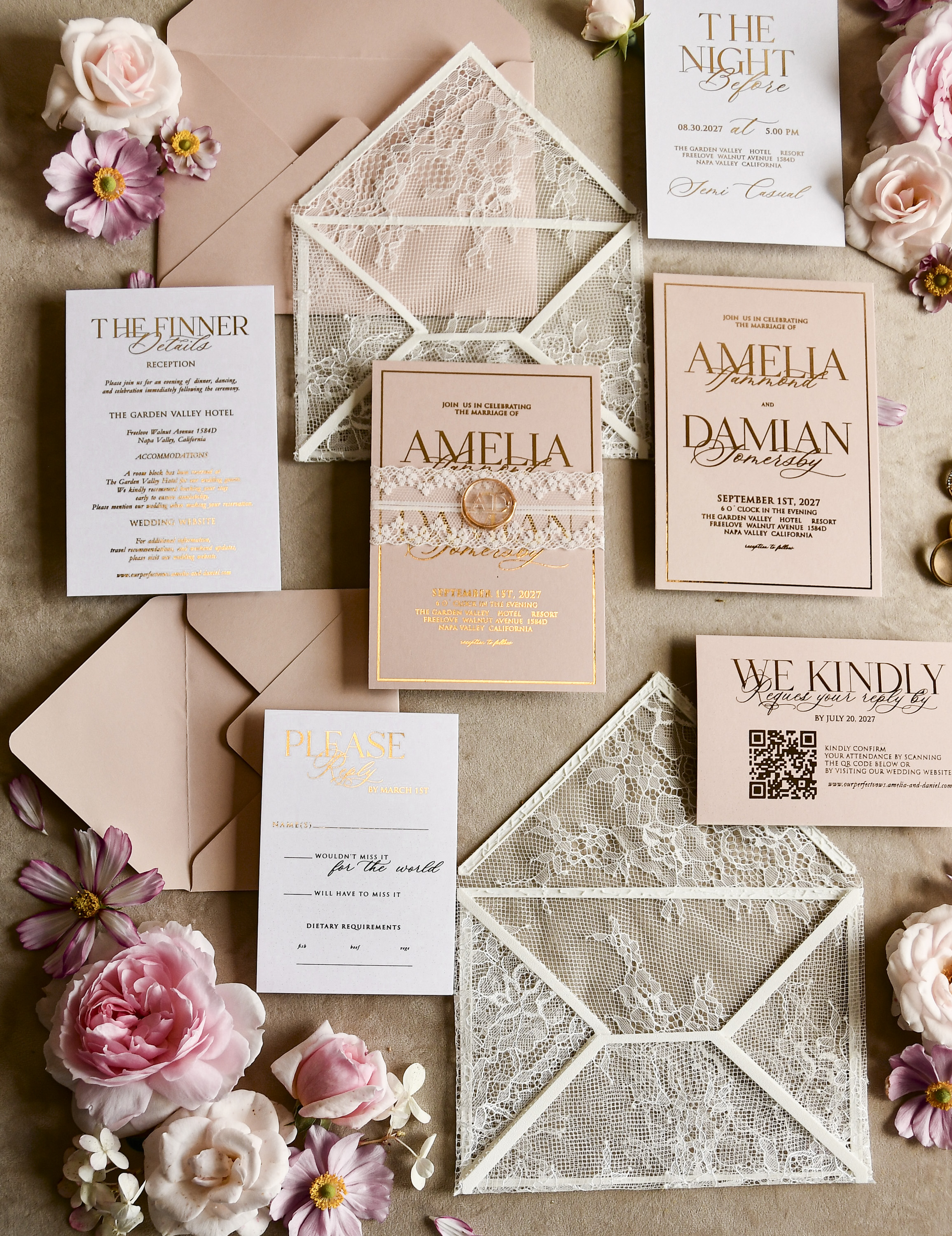
Your wedding invitation does more than announce a party—it sets the tone for your entire celebration and gives guests everything they need to show up confidently. Get the details right and your guests will feel informed, excited, and welcomed before they even RSVP. Miss something important and you'll spend weeks fielding phone calls. Here's a clear, practical breakdown of every piece of information a wedding invitation should include, plus tips on how to word it well.
The Non-Negotiables: Core Details Every Invitation Must Have
No matter your wedding style or budget, every invitation needs these five essentials:
- The couple's names. List them clearly and prominently. Tradition puts the host names first (e.g., "Together with their families, Emma Johansson and Marcus Webb"), but modern couples often simply lead with their own names.
- The date. Spell out the day and date formally—"Saturday, the fourteenth of June, two thousand and twenty-six"—or write it simply as "Saturday, June 14, 2026." Both are correct; choose the style that matches your invitation's tone.
- The ceremony time. State the time guests should be seated, not just the start time. Adding "ceremony begins promptly at four o'clock" discourages late arrivals.
- The ceremony venue name and full address. Include the street address even if the venue is well known locally. Out-of-town guests will thank you.
- A request line. This is the classic phrasing that asks guests to join you—"request the honor of your presence" (traditionally used for religious ceremonies) or "invite you to celebrate with them" (great for secular or casual weddings).
Host Lines and Names: Who Is Officially Inviting Whom
The host line acknowledges who is hosting (and often, who is paying for) the wedding. Common formats include:
- Parents hosting: "Mr. and Mrs. David Johansson and Mr. and Mrs. Robert Webb request the honor of your presence…"
- Couple hosting: "Together with their families, Emma Johansson and Marcus Webb invite you to celebrate their marriage…"
- All families co-hosting: List both sets of parents, then the couple's names.
If one set of parents is deceased or not involved, it's completely acceptable to simply omit them from the host line. Keep it honest and comfortable for your family situation.
Reception Details and Additional Logistics
If your ceremony and reception are at the same venue, a simple line like "Reception to follow" is all you need. If they're at different locations, include the reception venue name and address on a separate details card (also called an enclosure card) rather than crowding the main invitation.
Other logistics worth communicating—either on the invitation itself or on enclosure cards—include:
- Dress code. Guests genuinely appreciate guidance. Common options: Black Tie, Black Tie Optional, Cocktail Attire, Garden Party, or Casual. Place this in the lower right corner of the invitation or on a details card.
- RSVP instructions. Include a deadline (typically three to four weeks before the wedding) and a method—a response card with a return envelope, a wedding website URL, or an email address.
- Wedding website. List the URL on a small enclosure card rather than on the main invitation itself, which keeps the primary design clean.
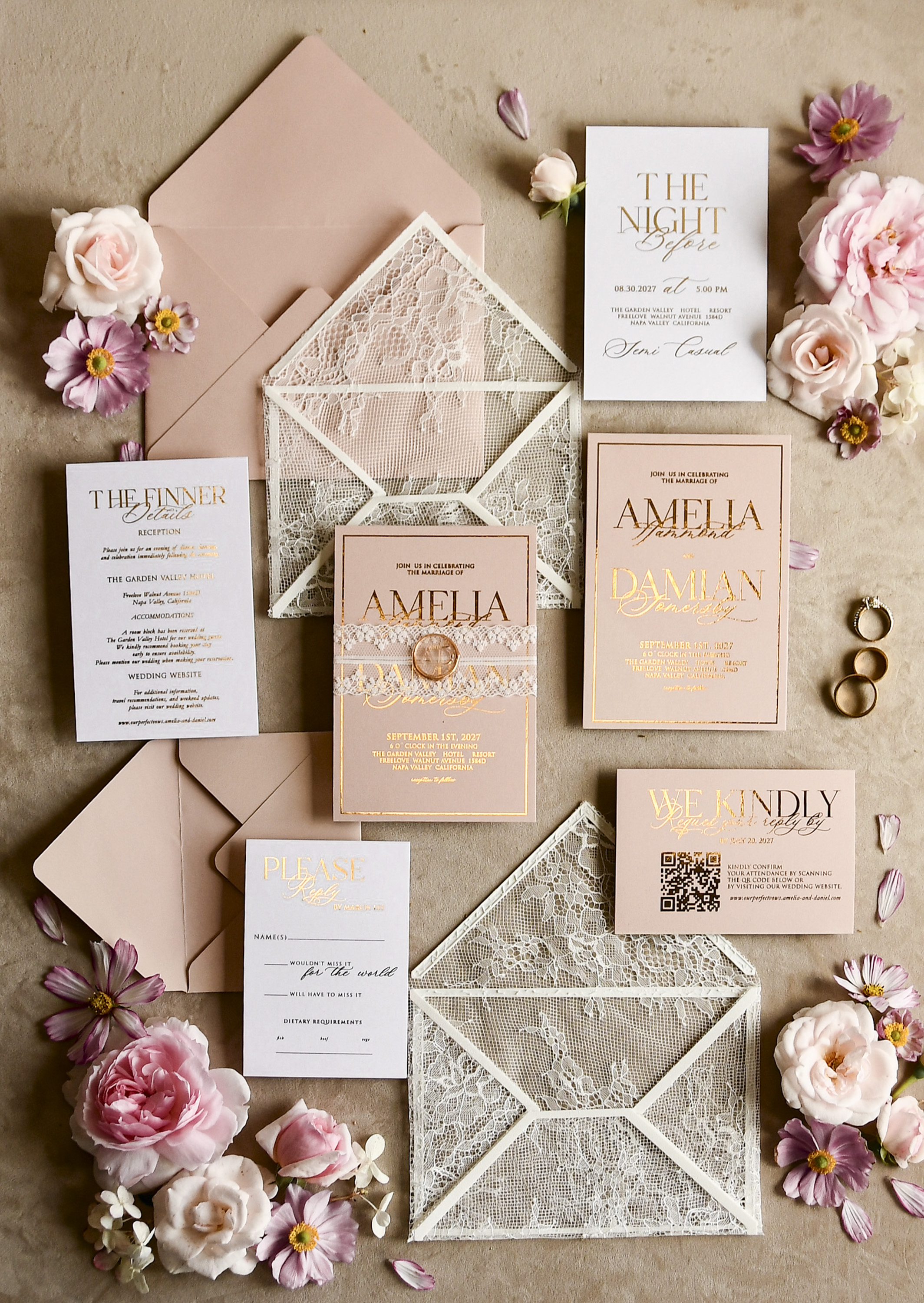
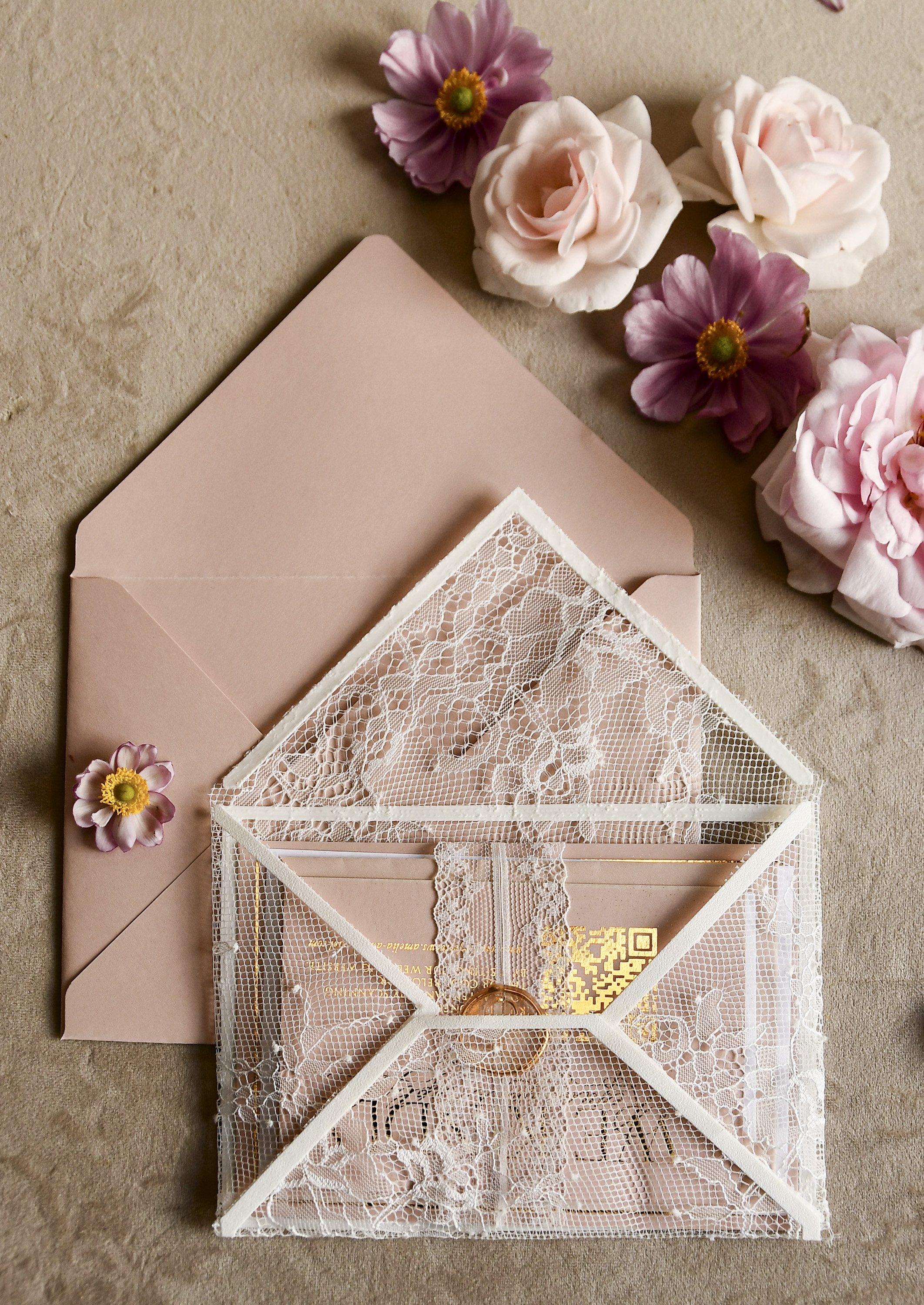
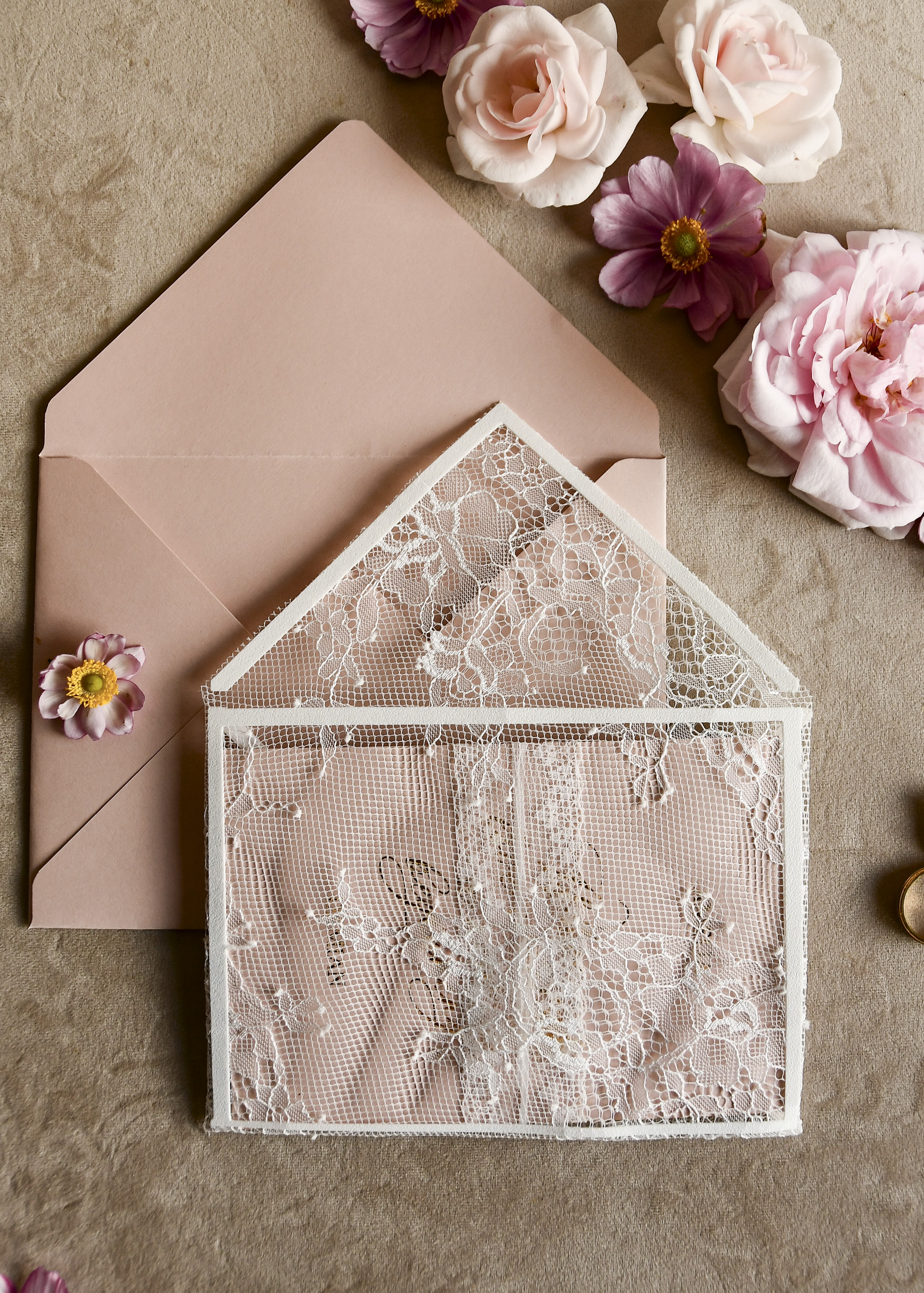
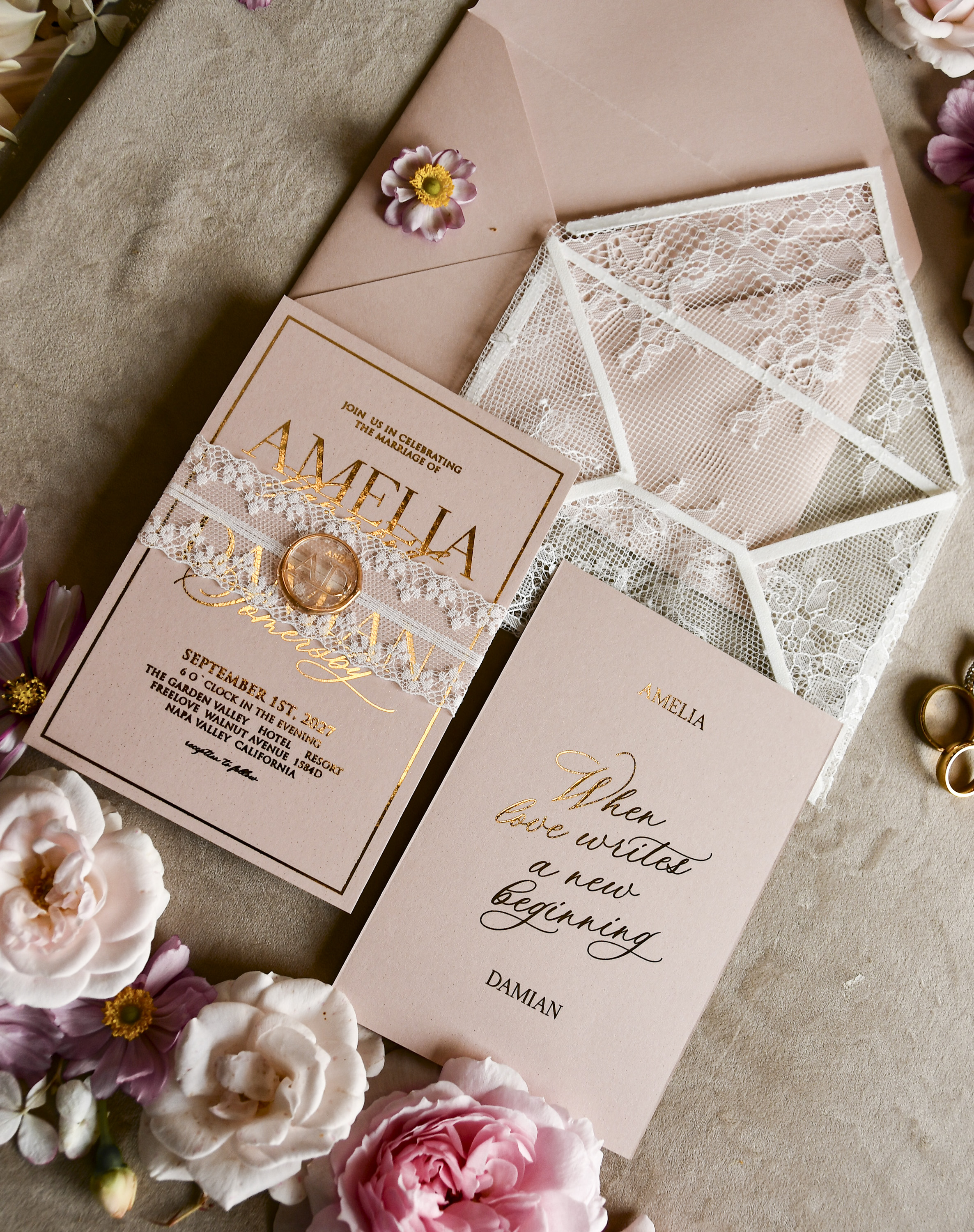
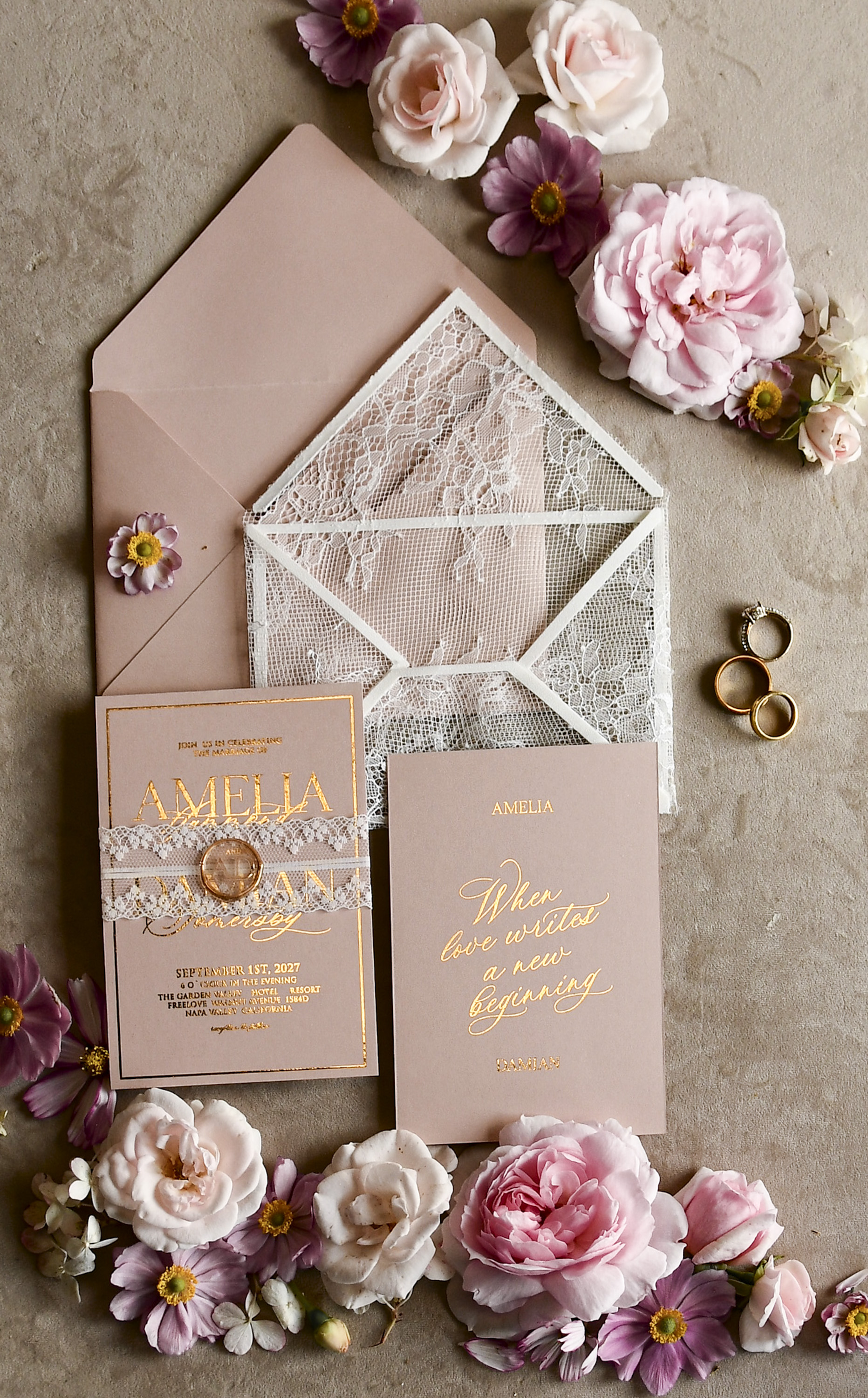
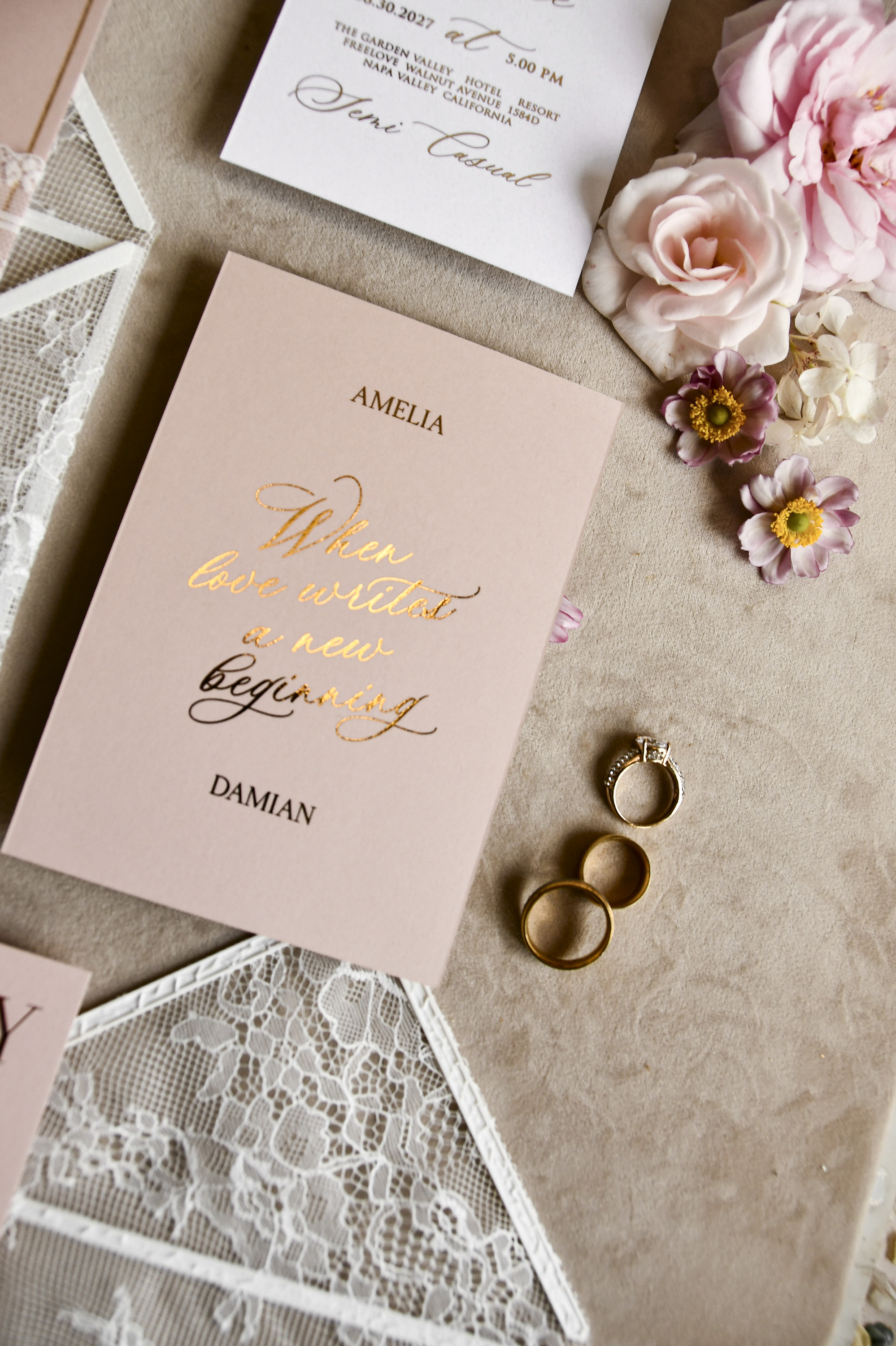
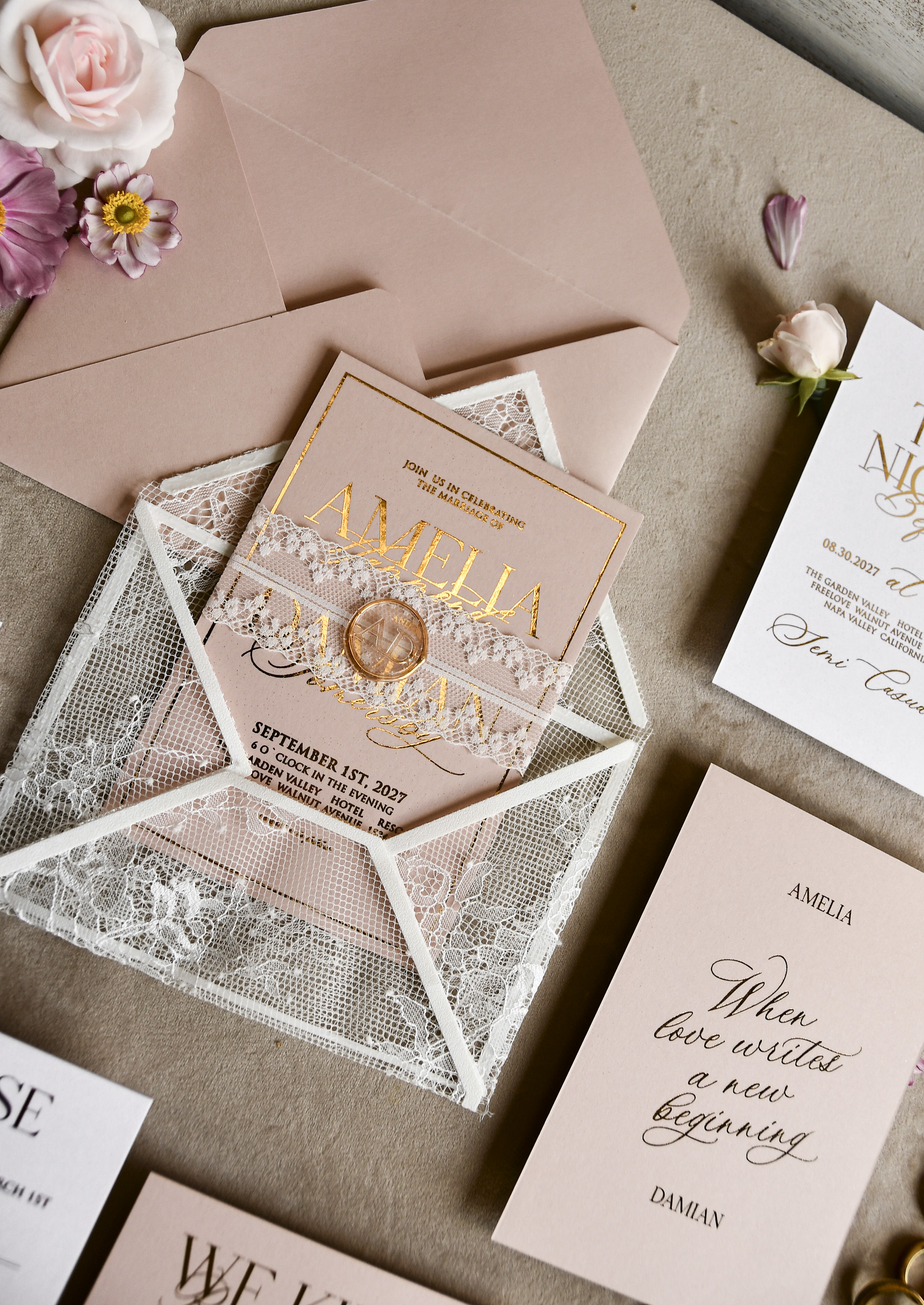
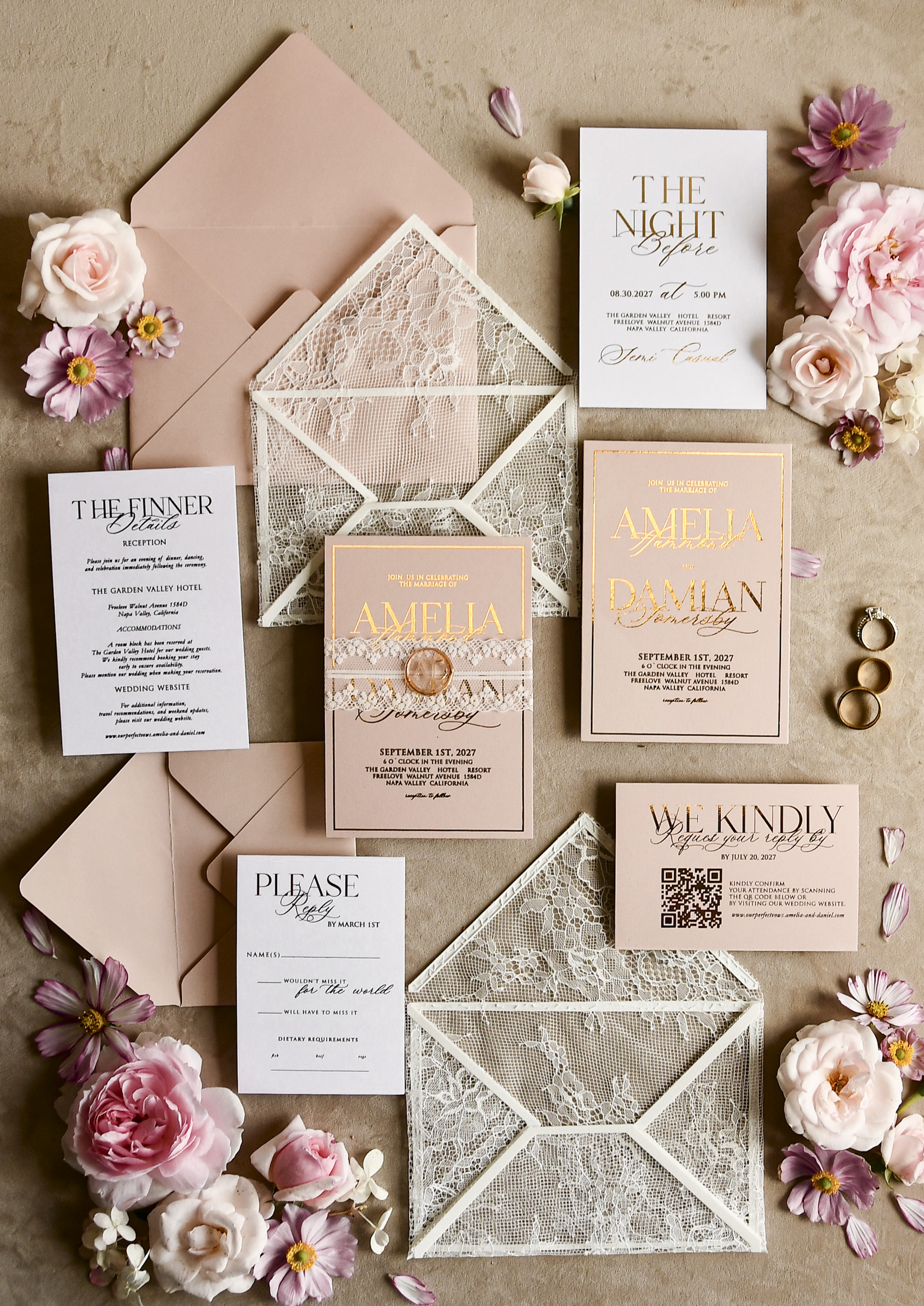
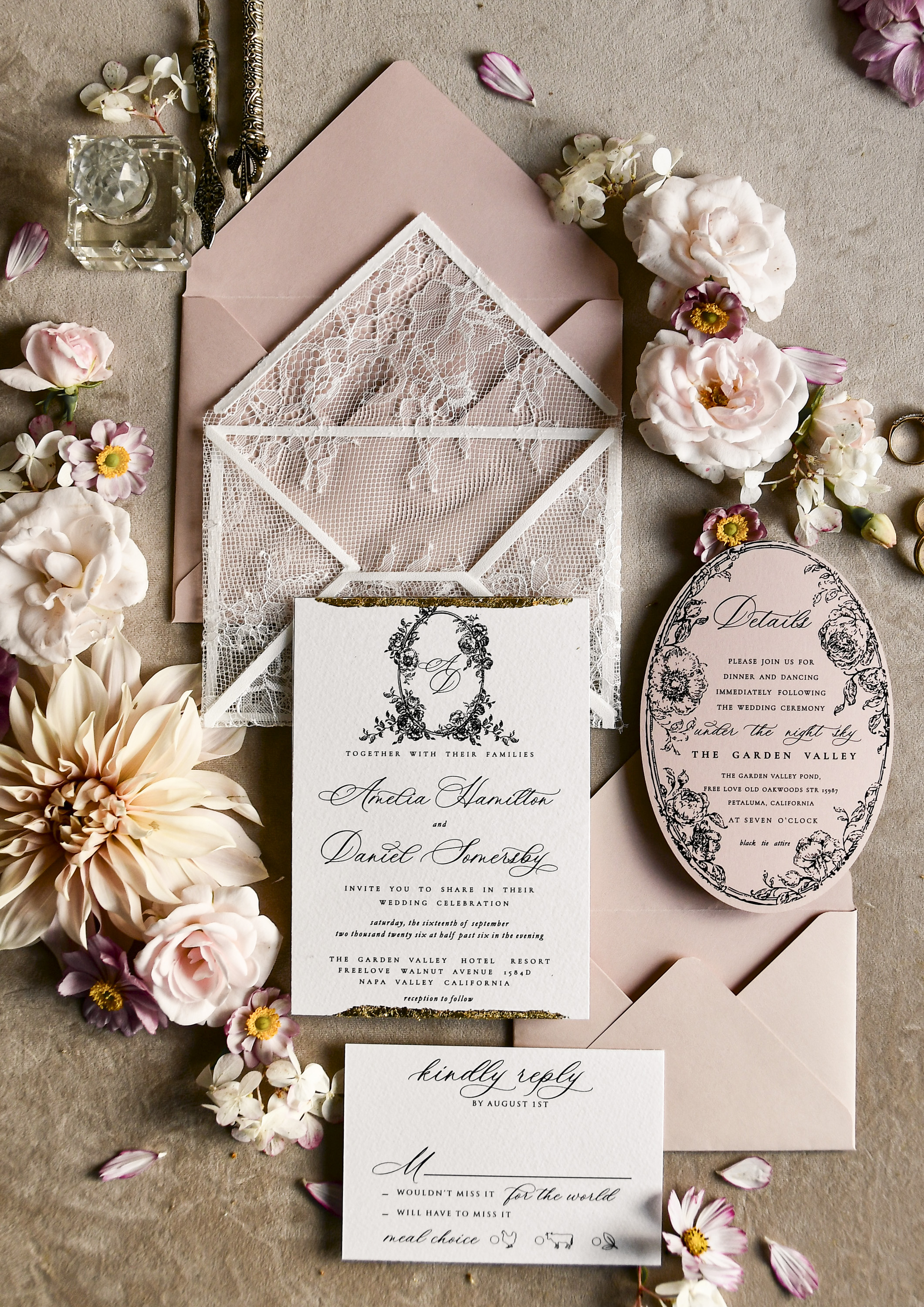
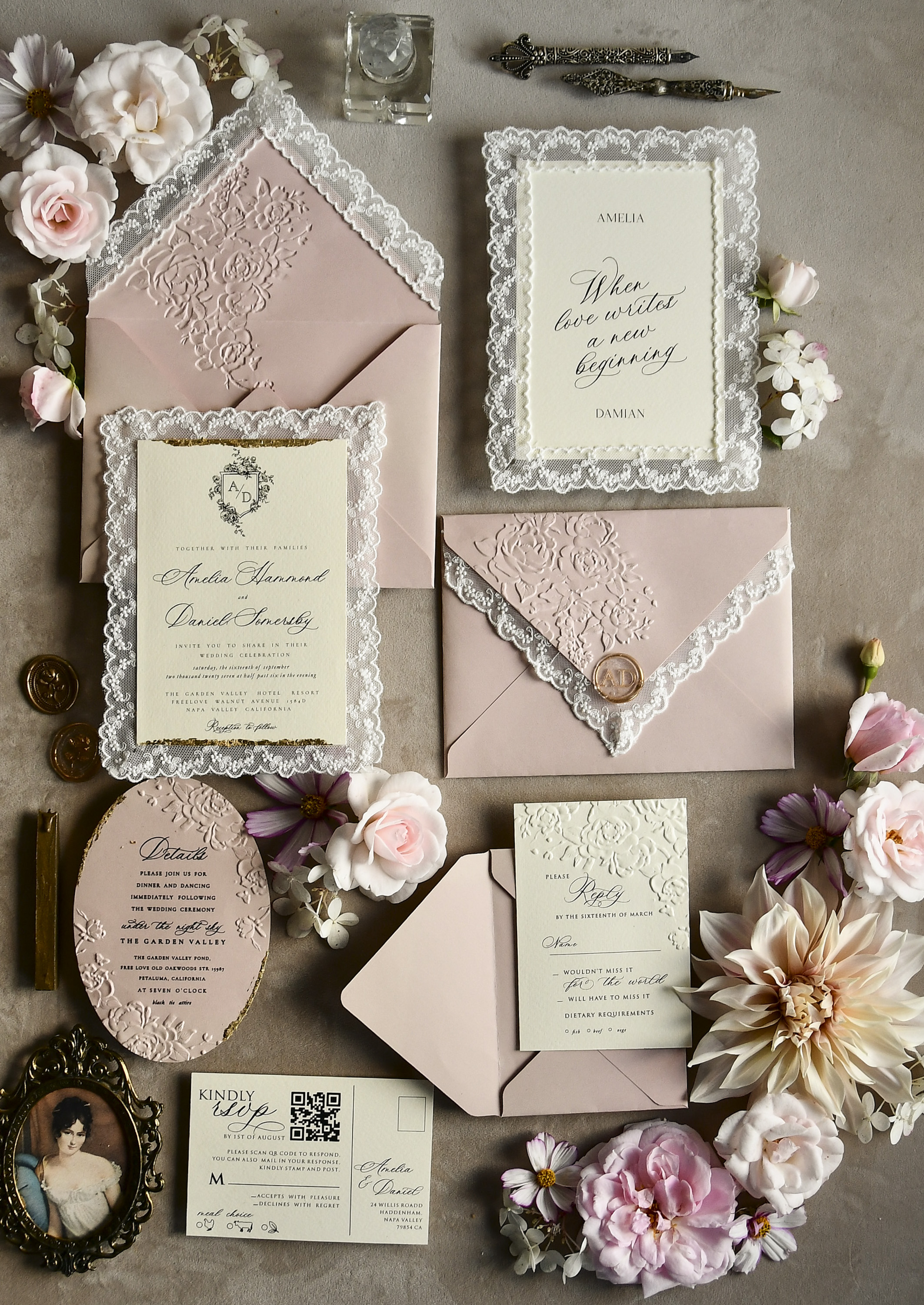
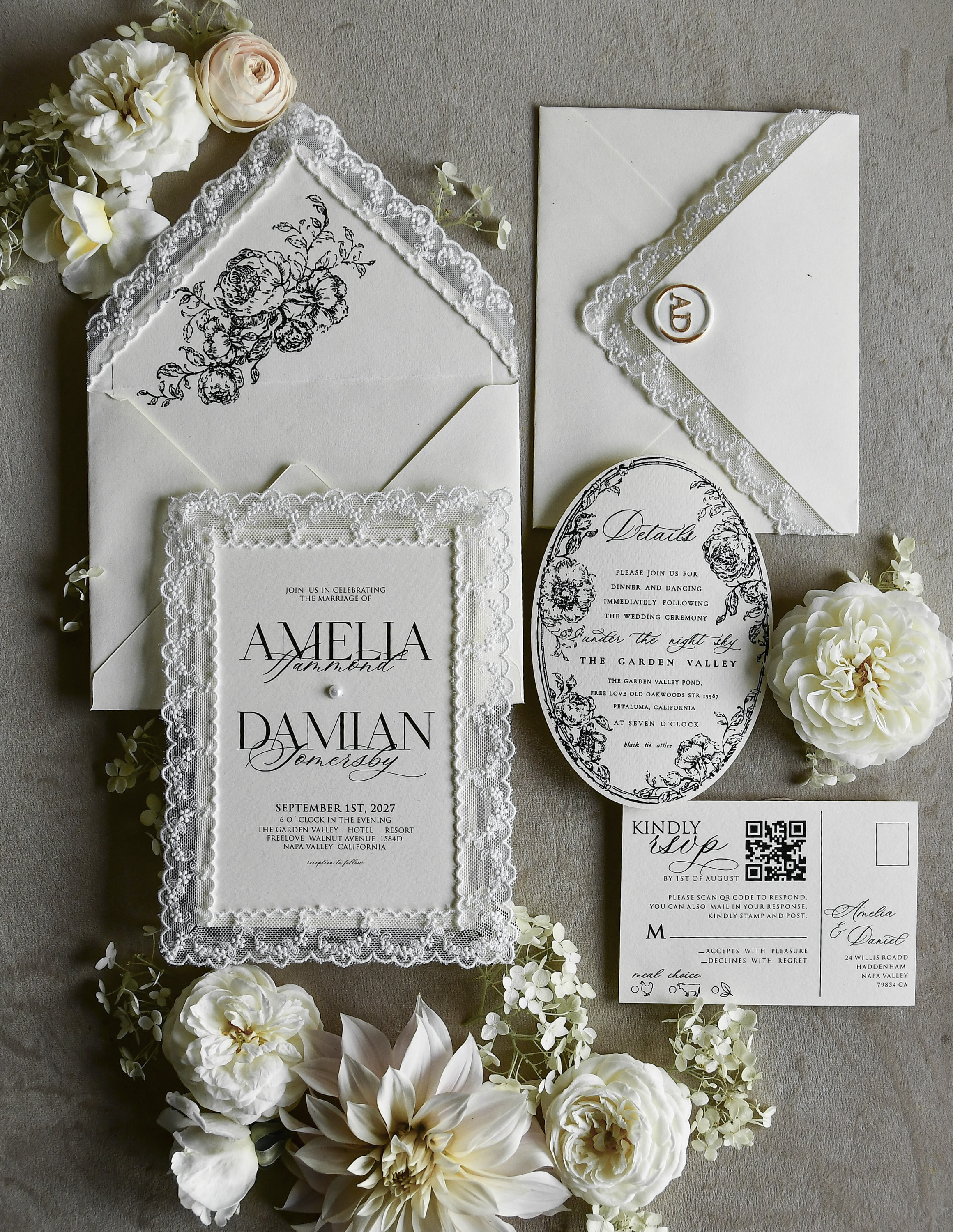
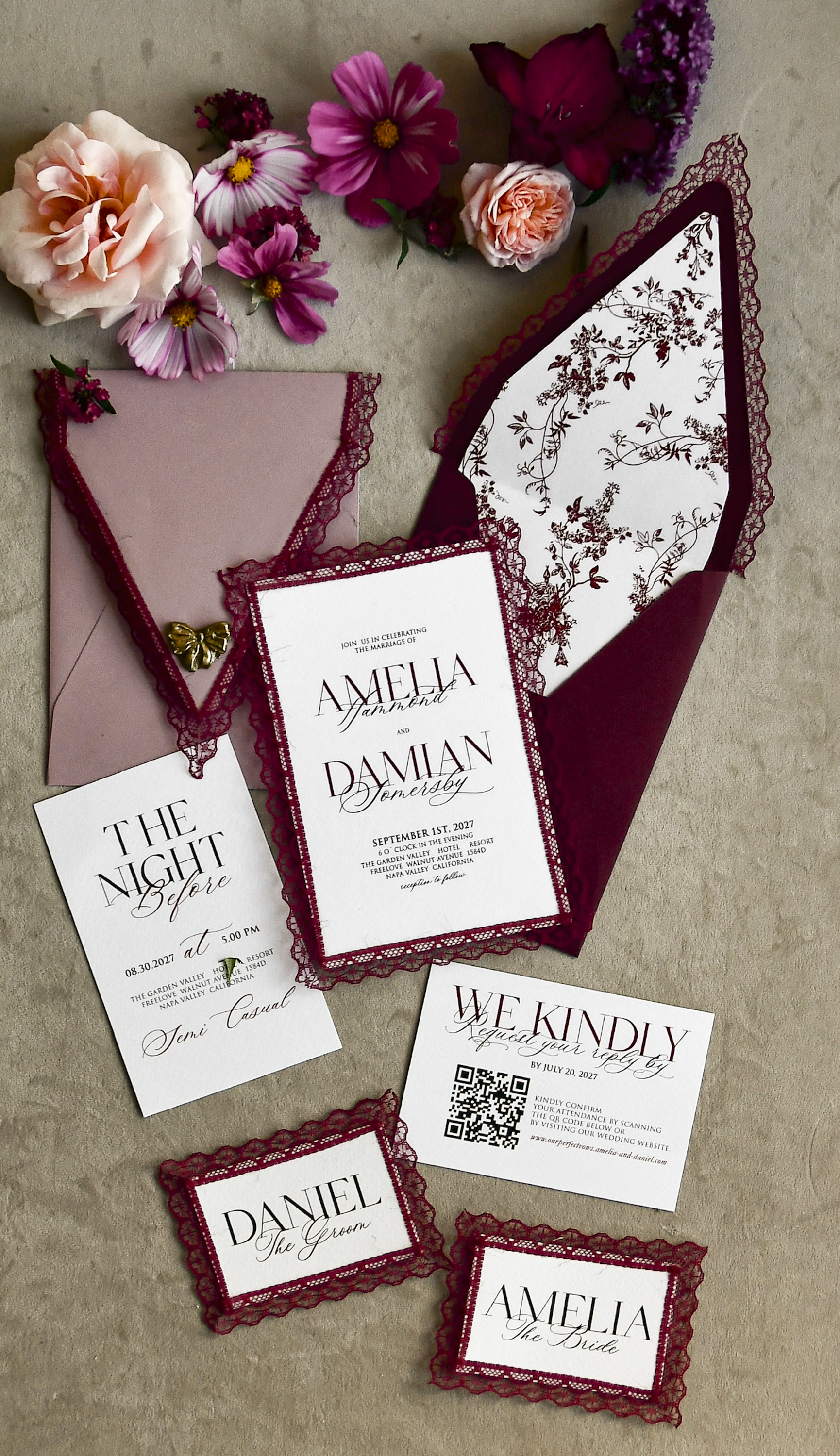
Our vintage lace wedding invitation style, 02/lacenvD/z, is a beautiful choice if you want a design that feels timeless and romantic while leaving plenty of space for all these details to breathe elegantly on the page.
What You Can Leave Off the Main Invitation
Less is often more when it comes to the invitation itself. These details belong on enclosure cards or your wedding website—not on the main invite:
- Hotel room block information and accommodation details
- Directions or parking instructions
- Registry information (never list a registry on the invitation itself—it's considered impolite by traditional etiquette)
- Meal choice selections (handle these on the RSVP card)
- Children's attendance policy (address this through word of mouth or your website)
Keeping the main invitation clean and focused makes it feel special rather than like a logistics memo.
Timing: When to Order and Send Your Invitations
Plan your invitation timeline carefully to avoid last-minute stress:
- Order invitations at least 10–12 weeks before your wedding date to allow for design, printing, and any revisions.
- Address and assemble envelopes two to three weeks after receiving your order.
- Mail invitations six to eight weeks before the wedding (eight to twelve weeks for destination weddings or holiday weekends).
- Set your RSVP deadline three to four weeks before the wedding so you have time to follow up with non-responders and give a final headcount to your caterer.
If you're ordering a design like 02/lacenvD/z, which is available starting at $10.00, order a small proof first so you can confirm all your wording looks exactly right before committing to the full print run.
Frequently Asked Questions
Yes, always include the full street address, city, and state—even for well-known venues. Out-of-town guests and GPS apps need a complete address, and it saves you from fielding questions later.
Dress code is typically noted in the lower right corner of the invitation, or on a separate details enclosure card. Keep the wording brief—just the dress code name, such as "Cocktail Attire" or "Black Tie Optional."
No—traditional etiquette considers it impolite to include registry details on the invitation itself. Share registry information on your wedding website, and let close family members spread the word by word of mouth.
Yes, especially for casual or budget-conscious weddings. Simply include a line like "Kindly reply by May 1 at weddingwebsite.com" or provide an email address. A separate RSVP card is more formal but not required.
"Request the honor of your presence" is traditional phrasing historically reserved for ceremonies held in a house of worship. "Invite you to celebrate" or similar casual phrasing works beautifully for any secular, outdoor, or non-religious venue.
List the ceremony details on the main invitation and include a separate details or enclosure card with the reception venue name, address, and start time. This keeps the main invitation clean while ensuring guests have all the information they need.
See This Design Up Close
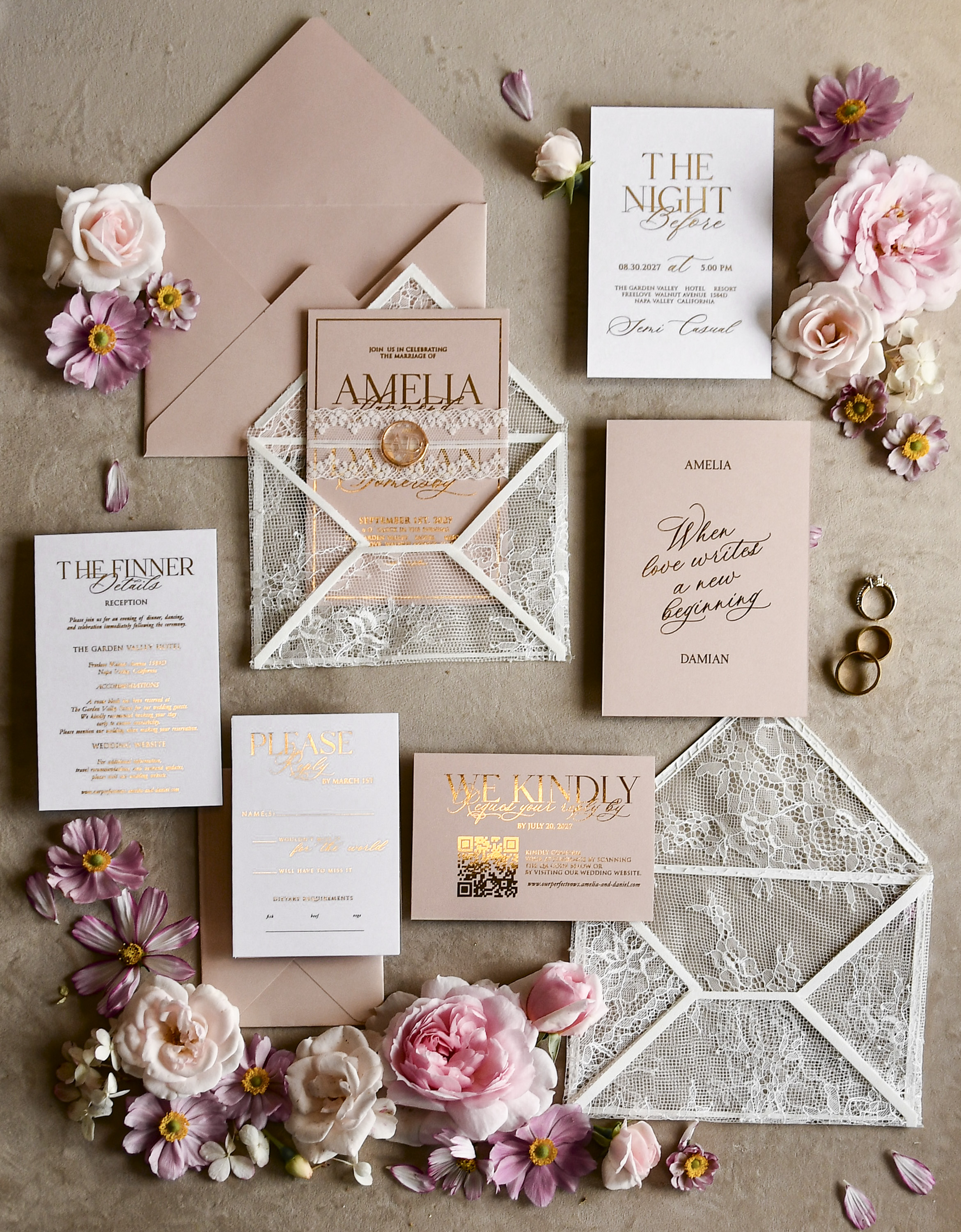
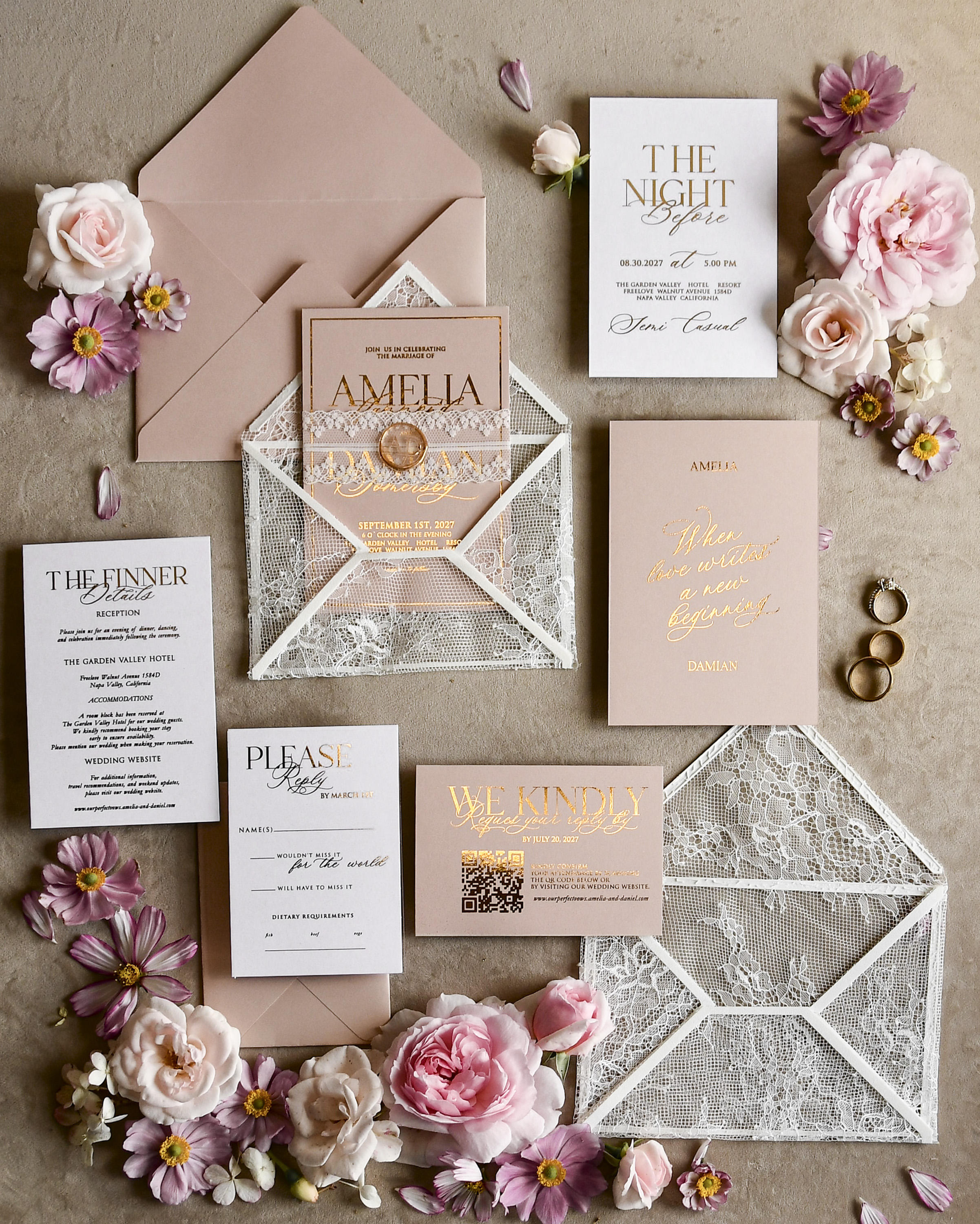
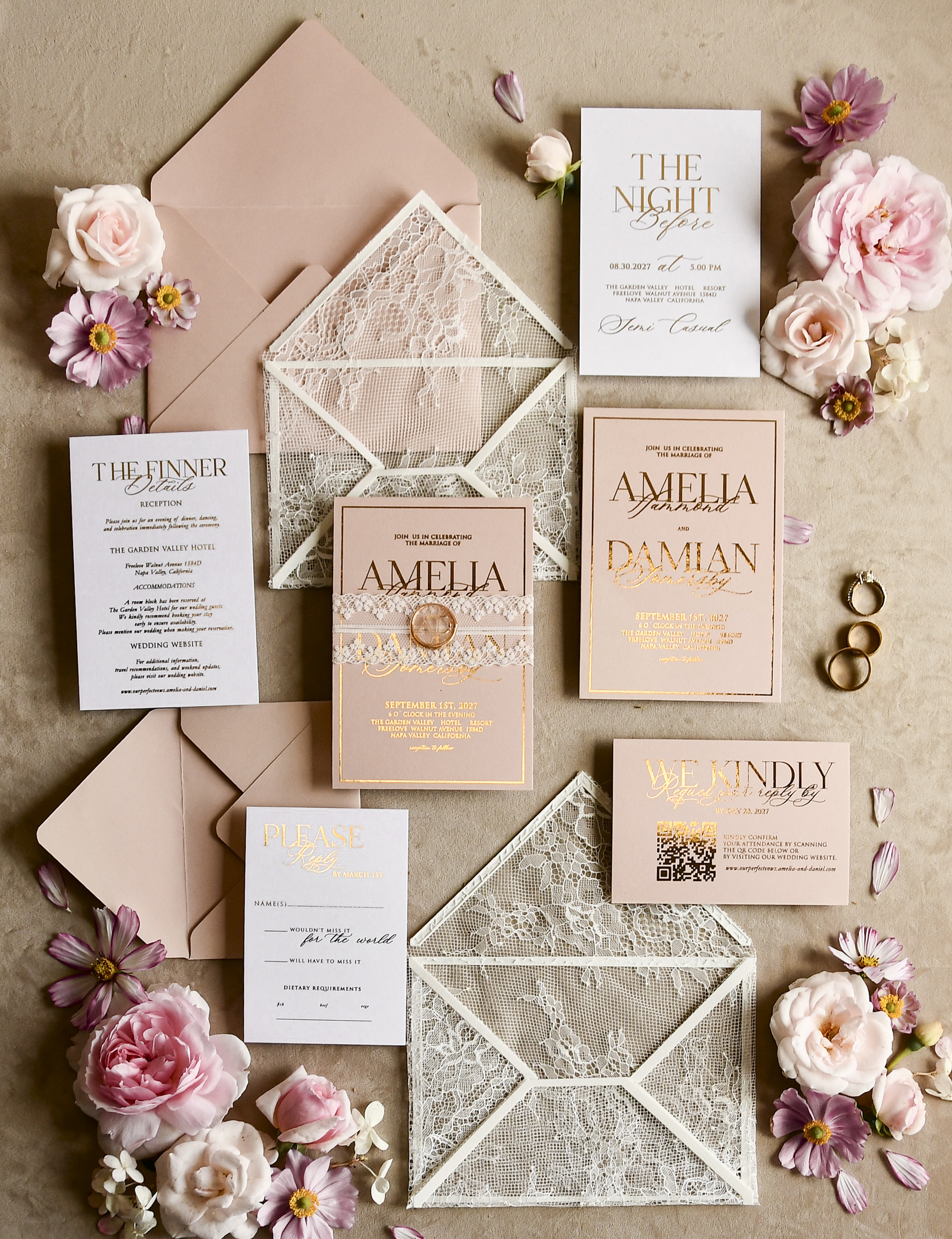
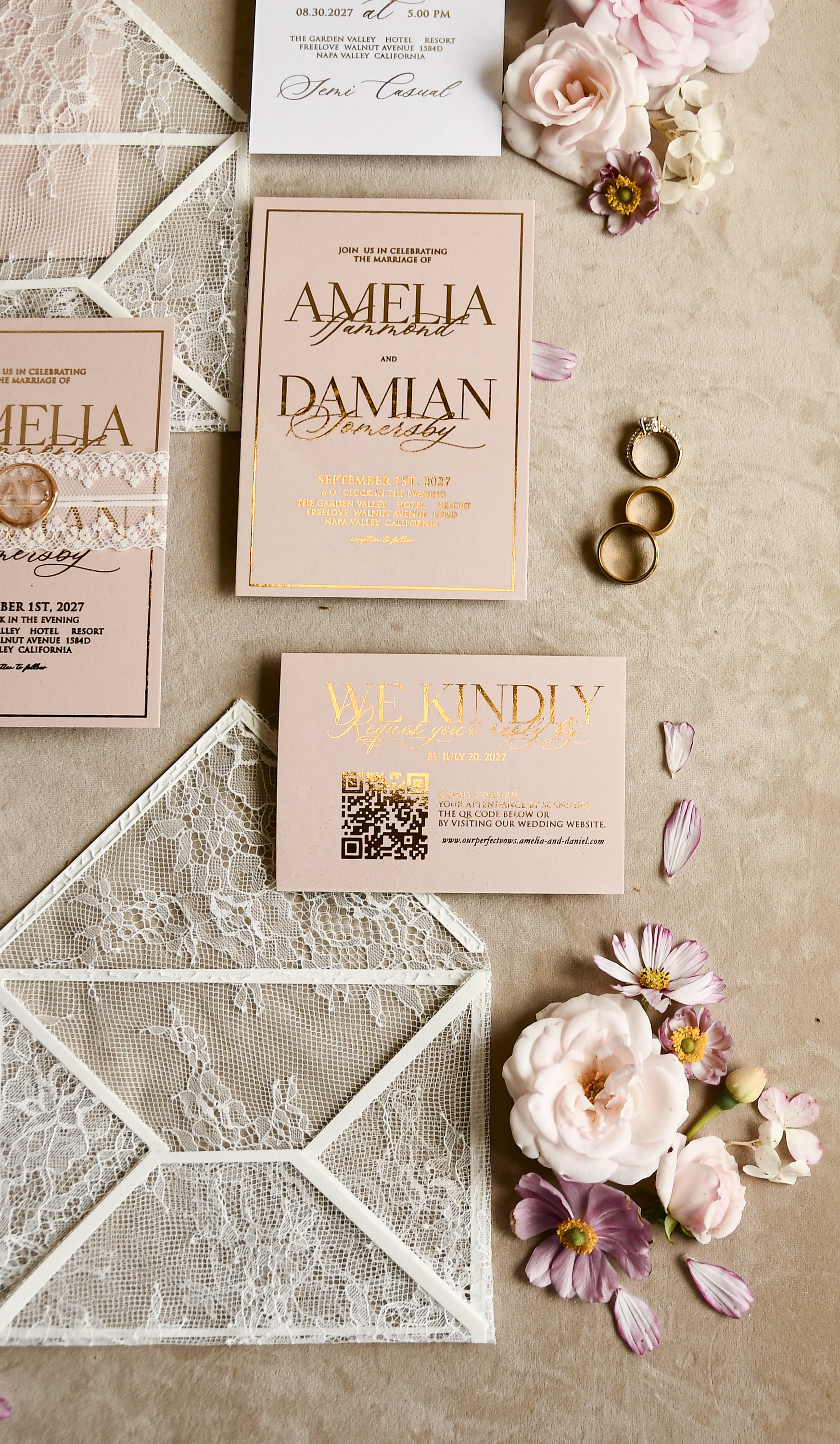
You May Also Like
More Wedding Planning Guides
- → Wedding Invitations: When the Clock Runs Out and What to Do About It
- → The Smartest Way to Get Your Wedding Invitations Into Guests' Hands
- → When a 'Yes' RSVP Turns Into an Empty Chair: What Couples Should Know
- → Guest List Too Long? Here's Exactly Where to Start Cutting
- → When Mom's Guest List and Yours Don't Match: A Practical Guide
- → Cutting Your Wedding Guest List Kindly and Confidently
- → More Guests or a More Meaningful Wedding? Here's How to Decide
- → The Art of Ceremony-Only Invitations: A Kind and Practical Guide
- → Plus-One or Not? How to Handle New Boyfriends and Girlfriends on Your Guest List
- → Skip the Stamp: A Practical Guide to Online RSVPs for Your Wedding
- → Save the Date vs. Wedding Invitation: What Each Card Actually Does
- → When Your Fiancé Wants a Family-Free Wedding: Finding Common Ground
- → Uninvited Plus-Ones and Tag-Alongs: How to Keep Your Guest List Intact
- → When Family Feuds Threaten Your Wedding Plans: A Practical Peacekeeper's Guide
- → Inviting an Estranged Brother or Sister: Finding Clarity Before You Seal the Envelope
- → Cousins, Invites, and Hard Choices: A Practical Guest List Guide