
Family Affair or Adults-Only? How to Navigate the Kids-at-Your-Wedding Question
Few wedding decisions spark more family debate than this one: do you welcome children to your celebration, or keep it adults-only? There is no universally right answer, and that is actually good news. The choice belongs entirely to you and your partner. What matters is making a clear, consistent decision early — and communicating it gracefully so guests can plan without confusion or hurt feelings.
Start With the Factors That Matter Most to You
Before you can decide, you need to weigh a few practical and personal considerations:
- Budget: Each child typically counts as a seat, a meal, and a place card. If your venue has a per-head cost, inviting thirty kids adds up fast.
- Venue and vibe: A candlelit evening reception in a historic ballroom feels very different from an outdoor afternoon garden party. Some settings are naturally more child-friendly than others.
- Your guest list makeup: If most of your close family and friends have young children, an adults-only policy may feel exclusionary — or may prevent key people from attending at all. On the other hand, if only a handful of guests have kids, the impact of either decision is smaller.
- Your own preferences: Some couples genuinely love the idea of children running around on the dance floor. Others envision an elegant, relaxed evening. Both visions are valid.
Sit down together and rank these factors honestly. Your answers will usually point you toward a clear direction.
Common Policies and How to Apply Them Consistently
Once you have a direction, commit to a policy and apply it without exceptions. Inconsistency is where hurt feelings are born. Here are the most common approaches:
- All children welcome: Invite every child connected to every invited guest. This is the most inclusive option and the easiest to communicate.
- Immediate family only: You might welcome nieces, nephews, and your own children while politely excluding the children of friends or coworkers. Be prepared to hold this line firmly — even for a close friend who asks for an exception.
- No children under a certain age: Some couples invite children over five or over ten, recognizing that older kids can handle a long event more gracefully. This is a reasonable middle ground.
- Adults only: A fully child-free wedding is completely acceptable. Many guests with young children actually appreciate the excuse for a rare night out.
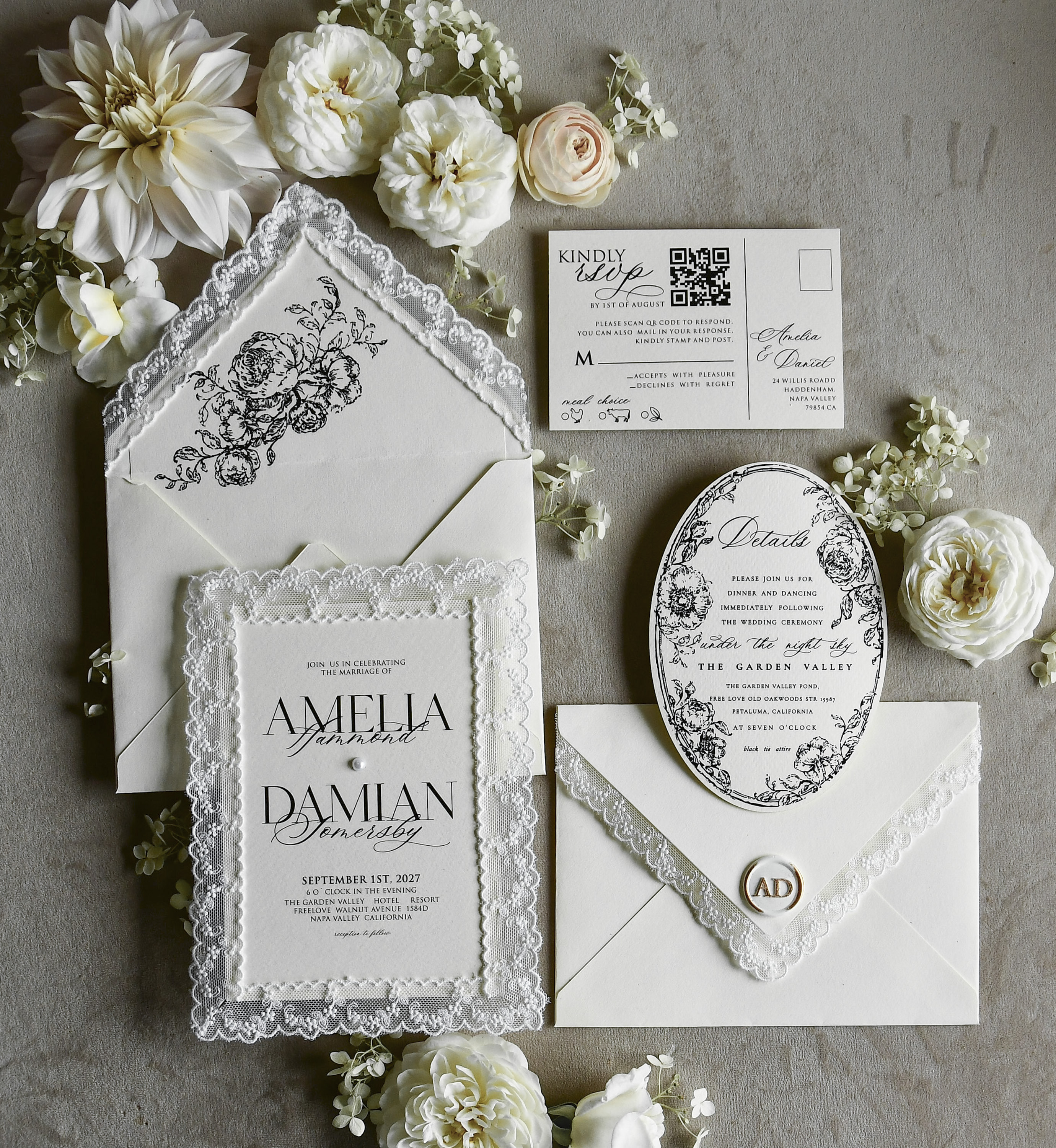
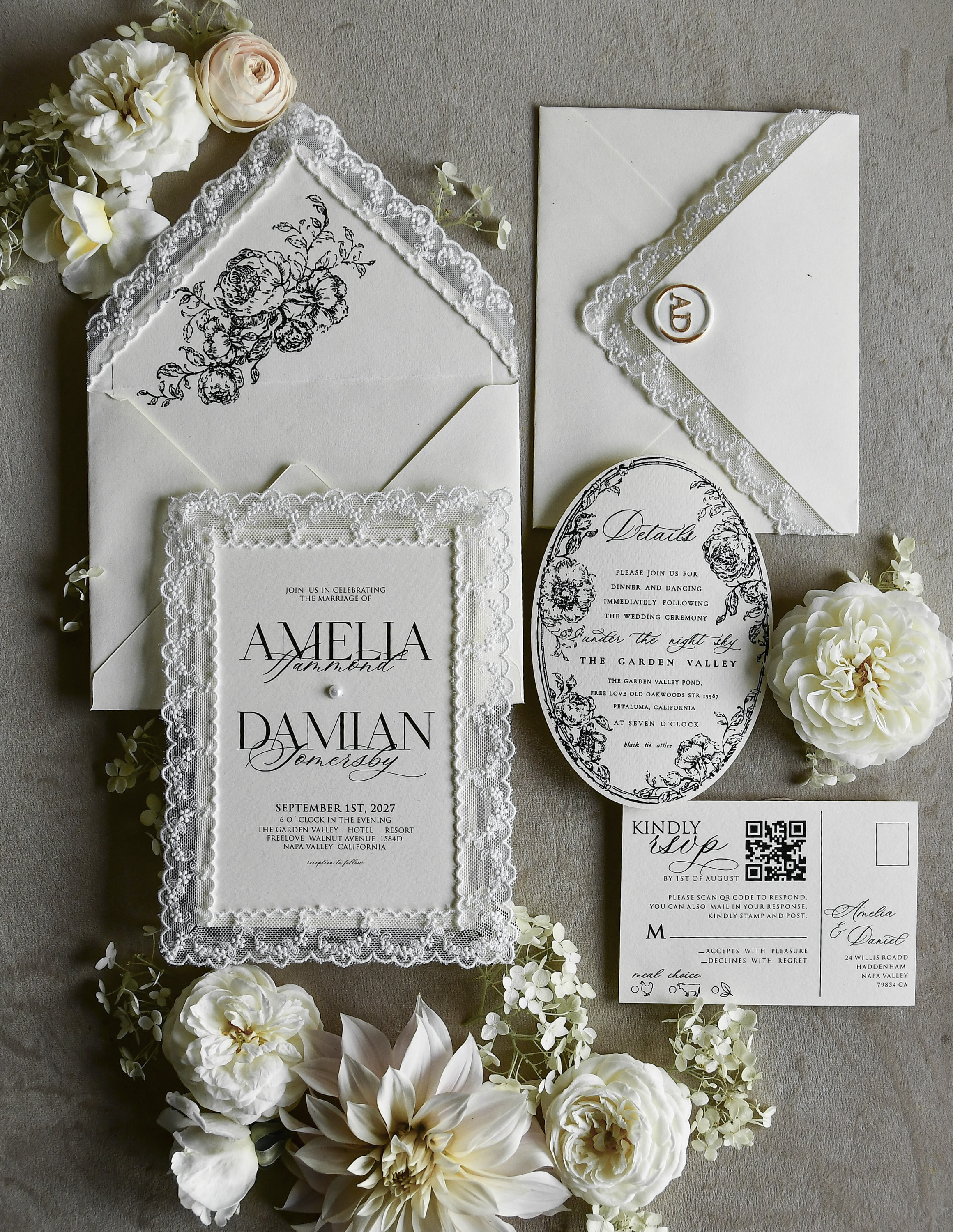
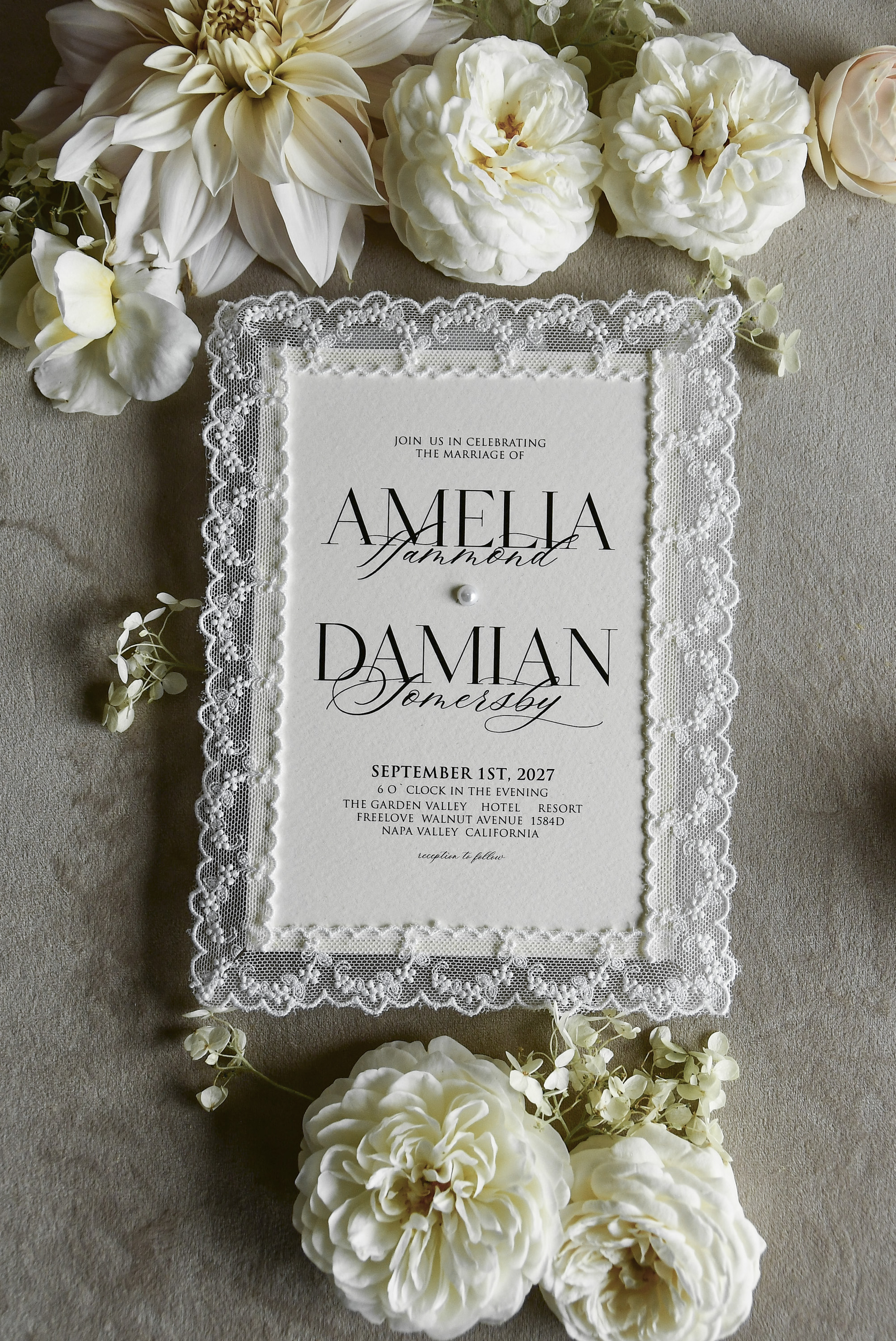
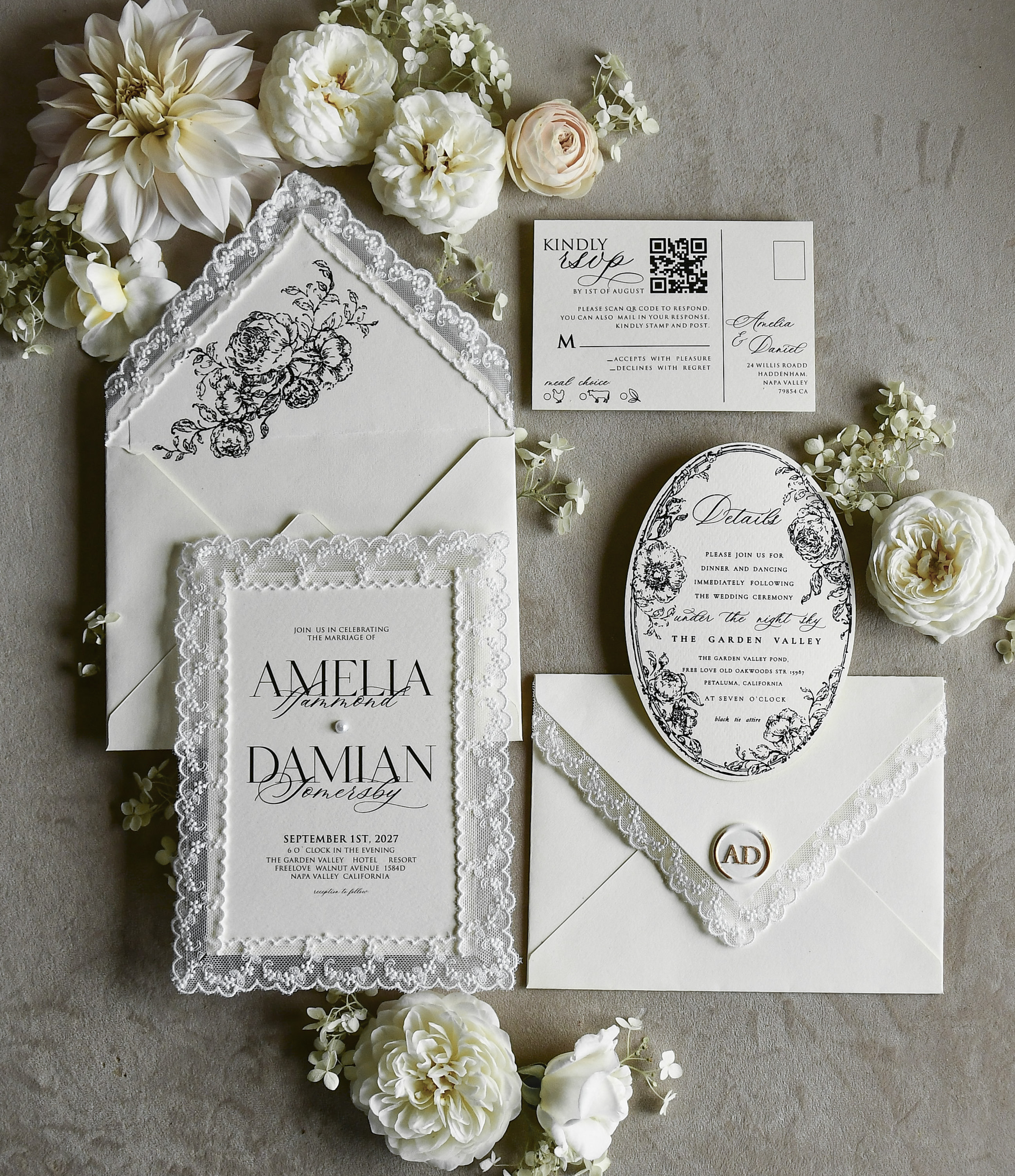
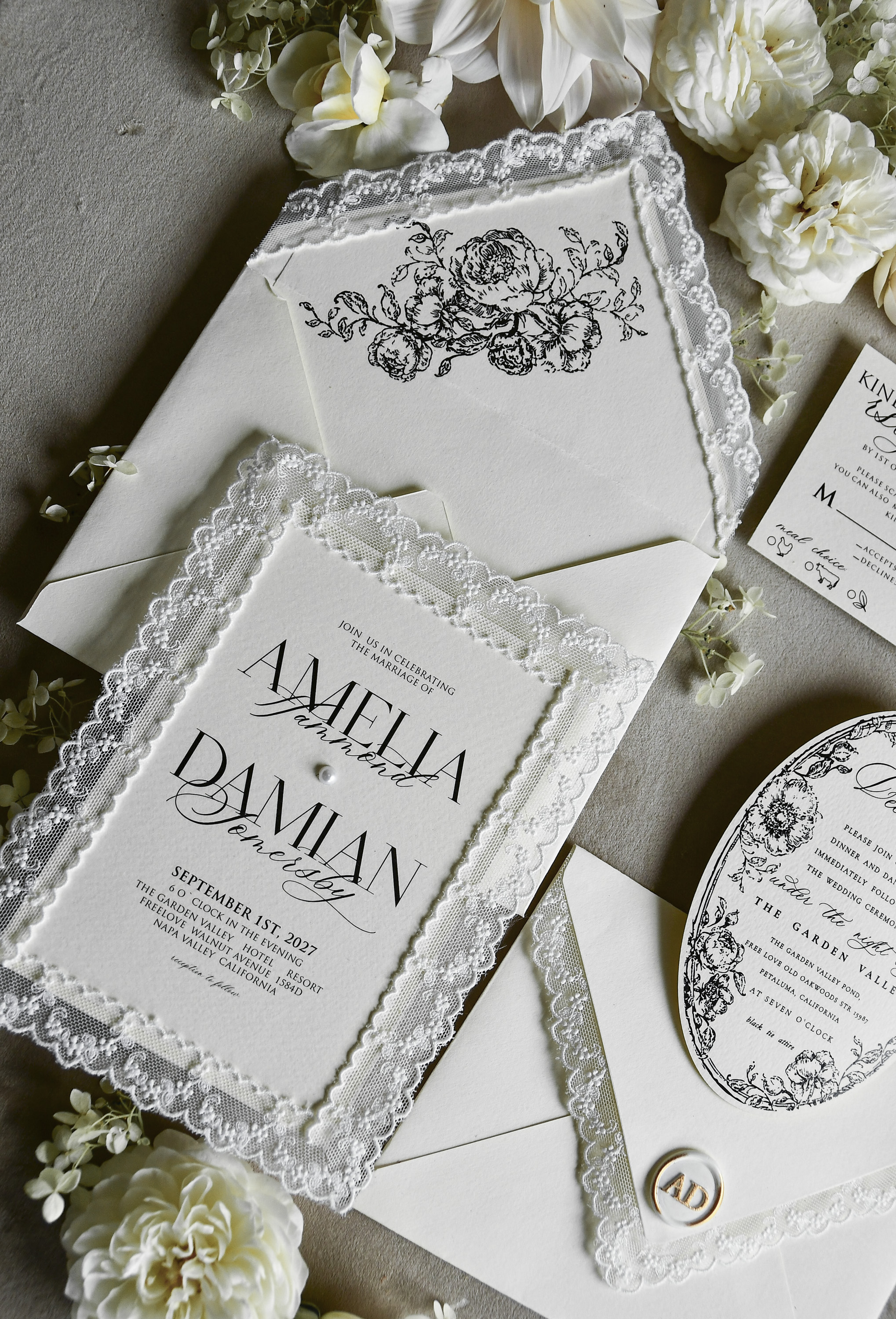
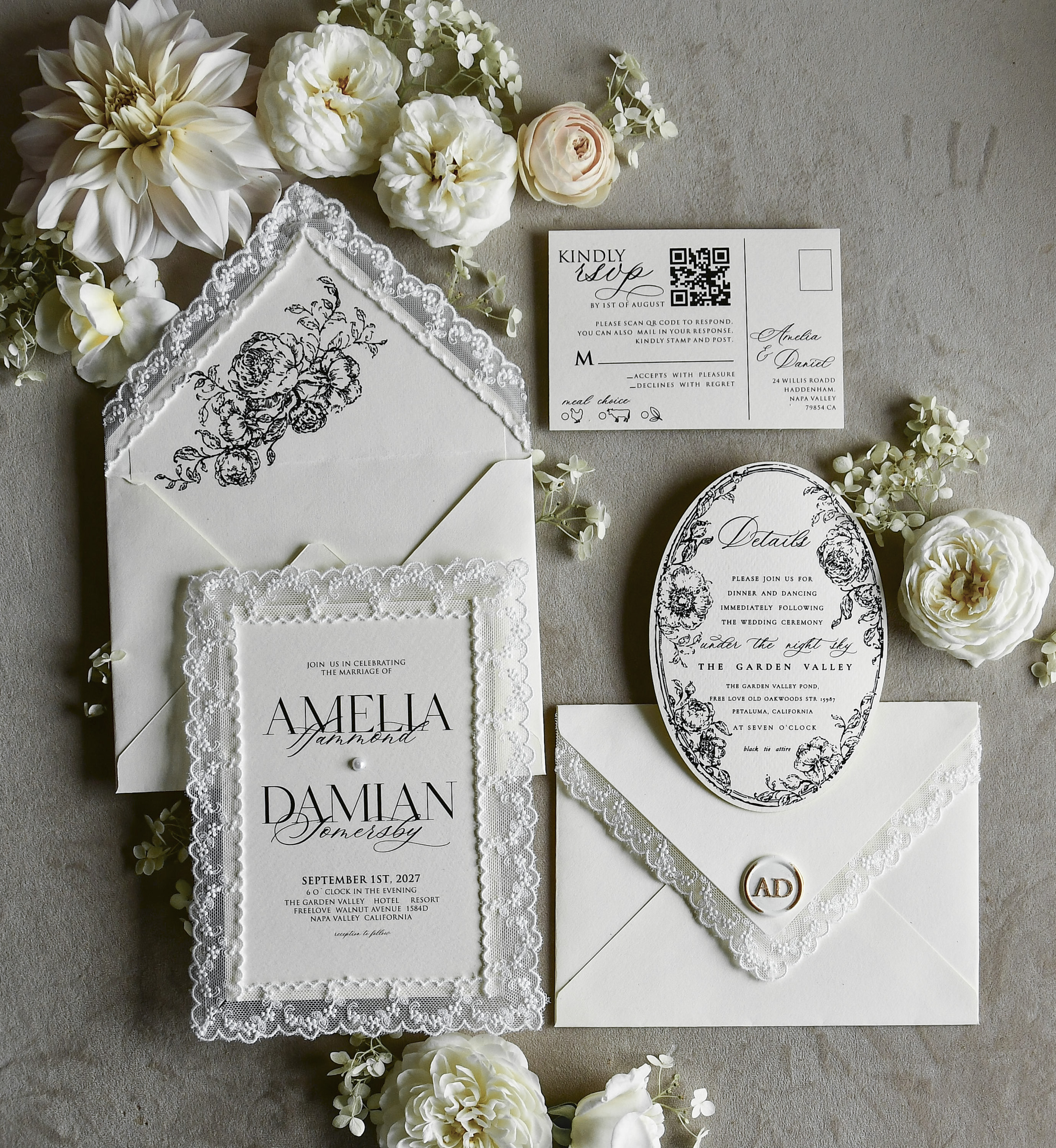
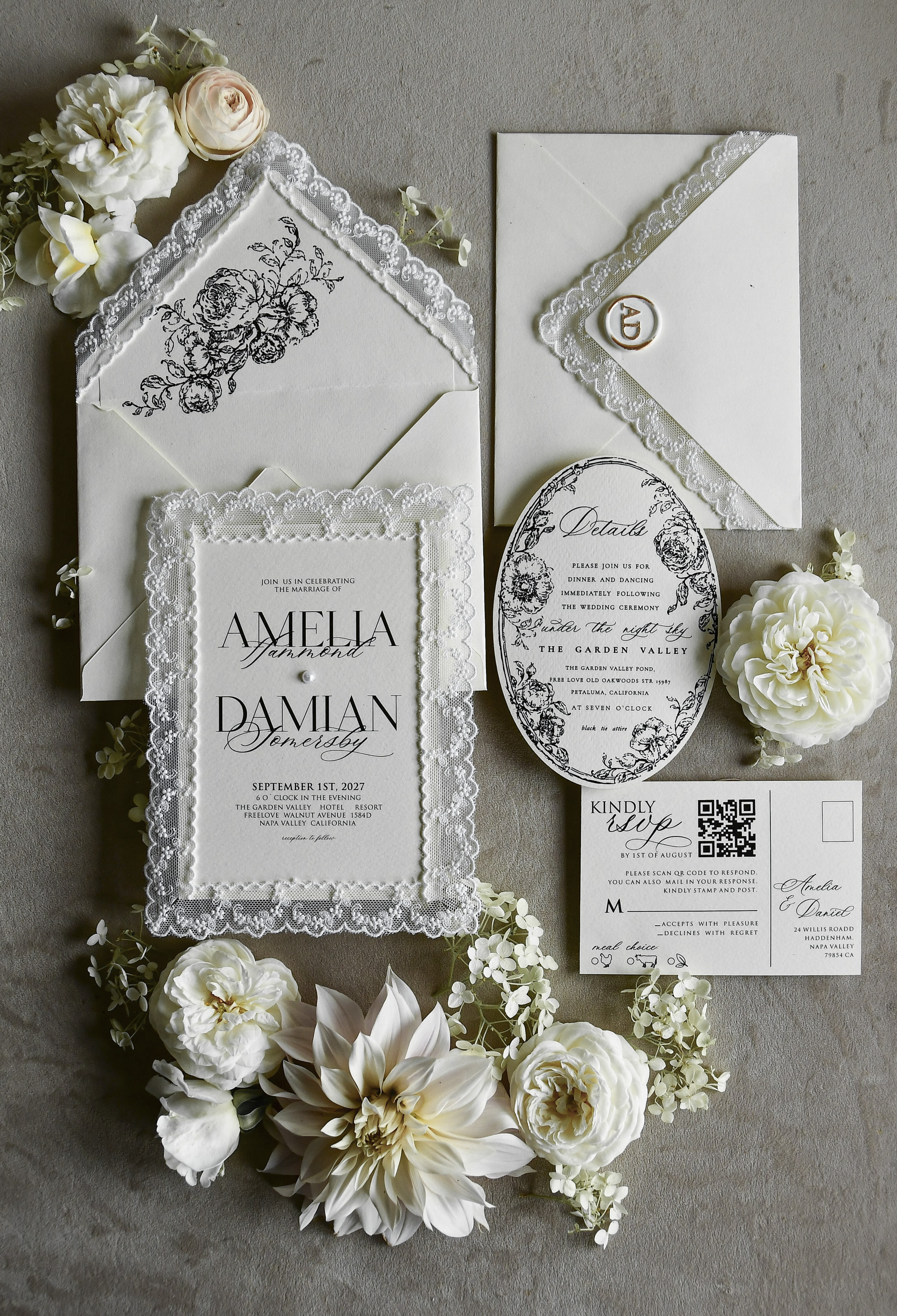
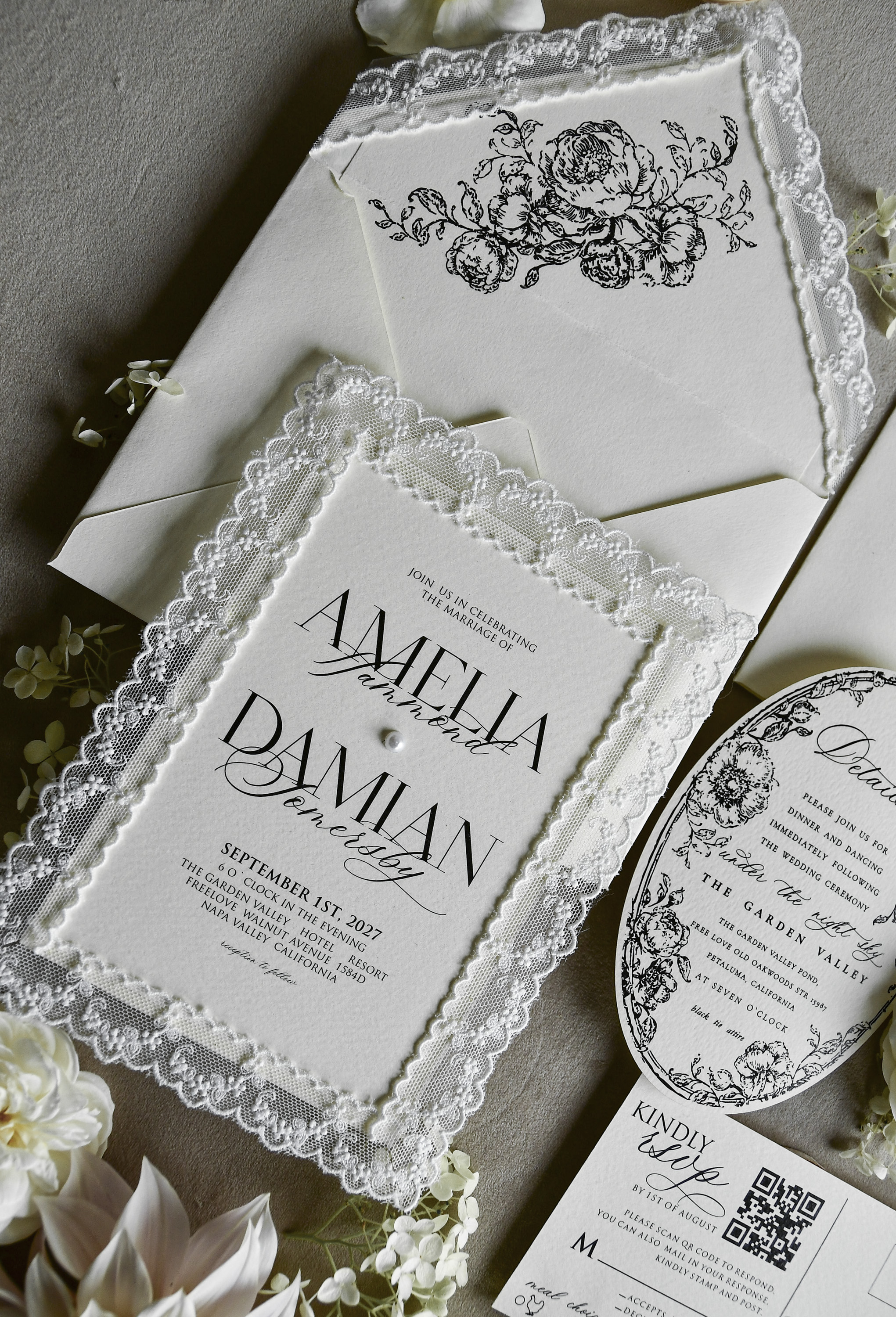
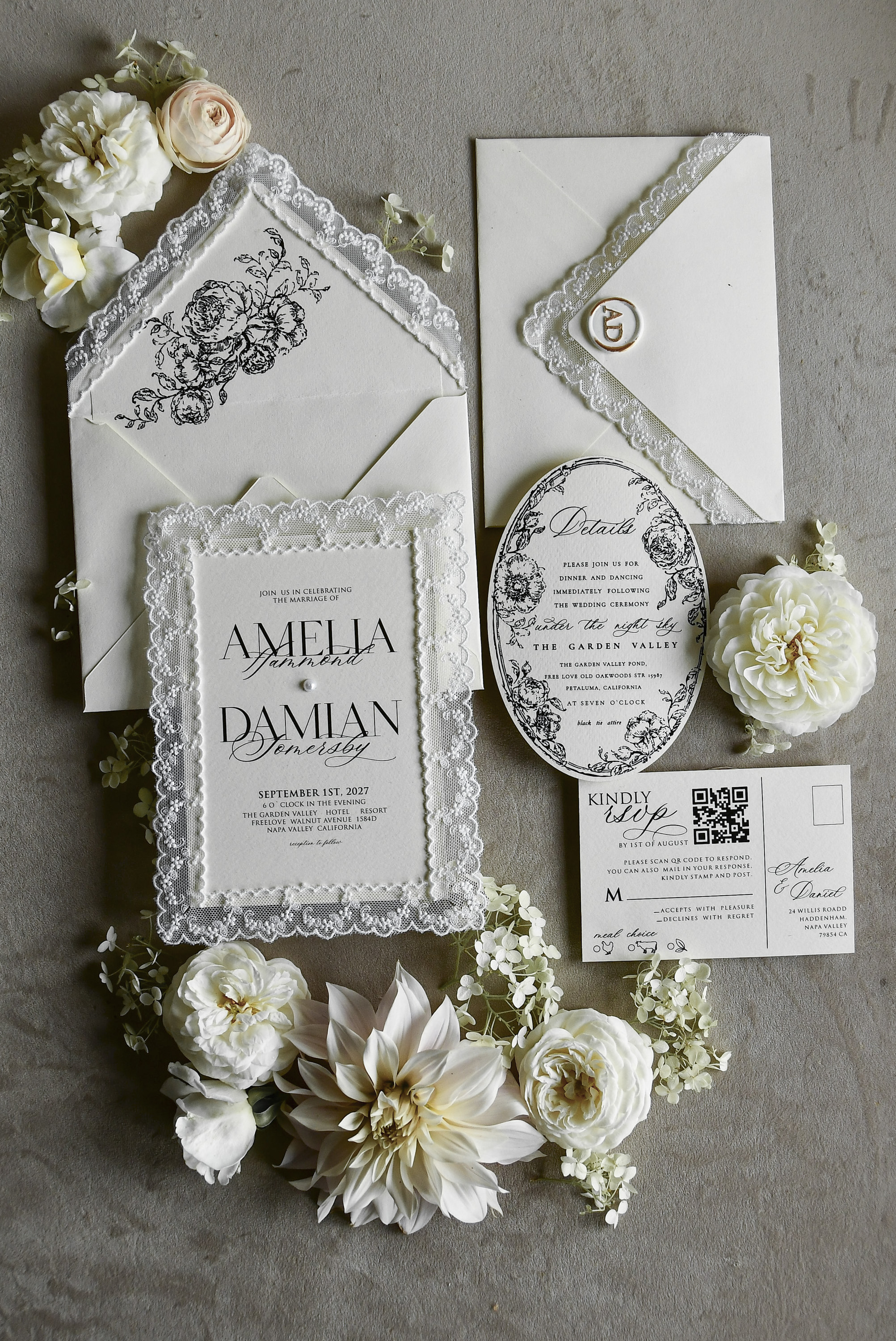
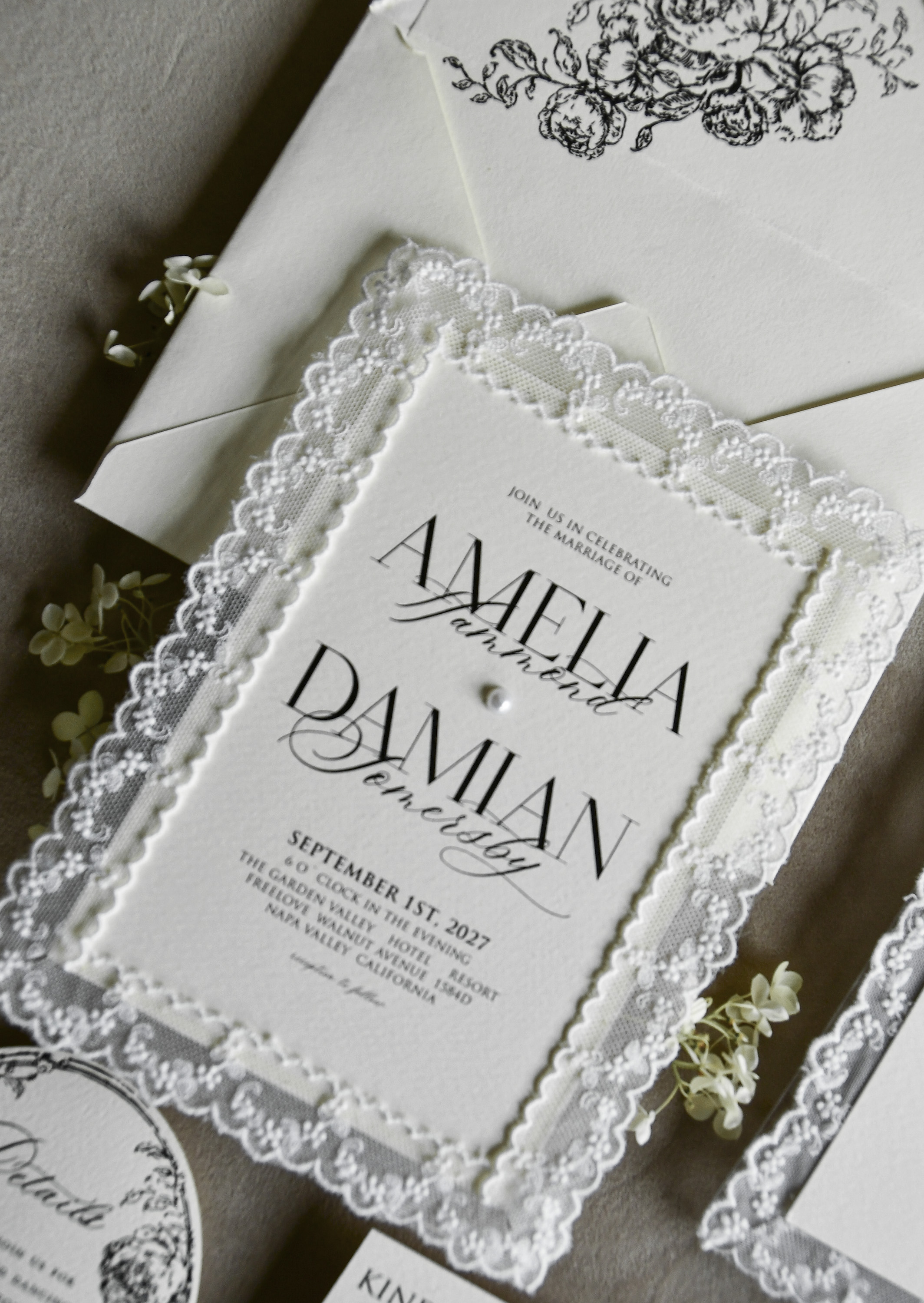
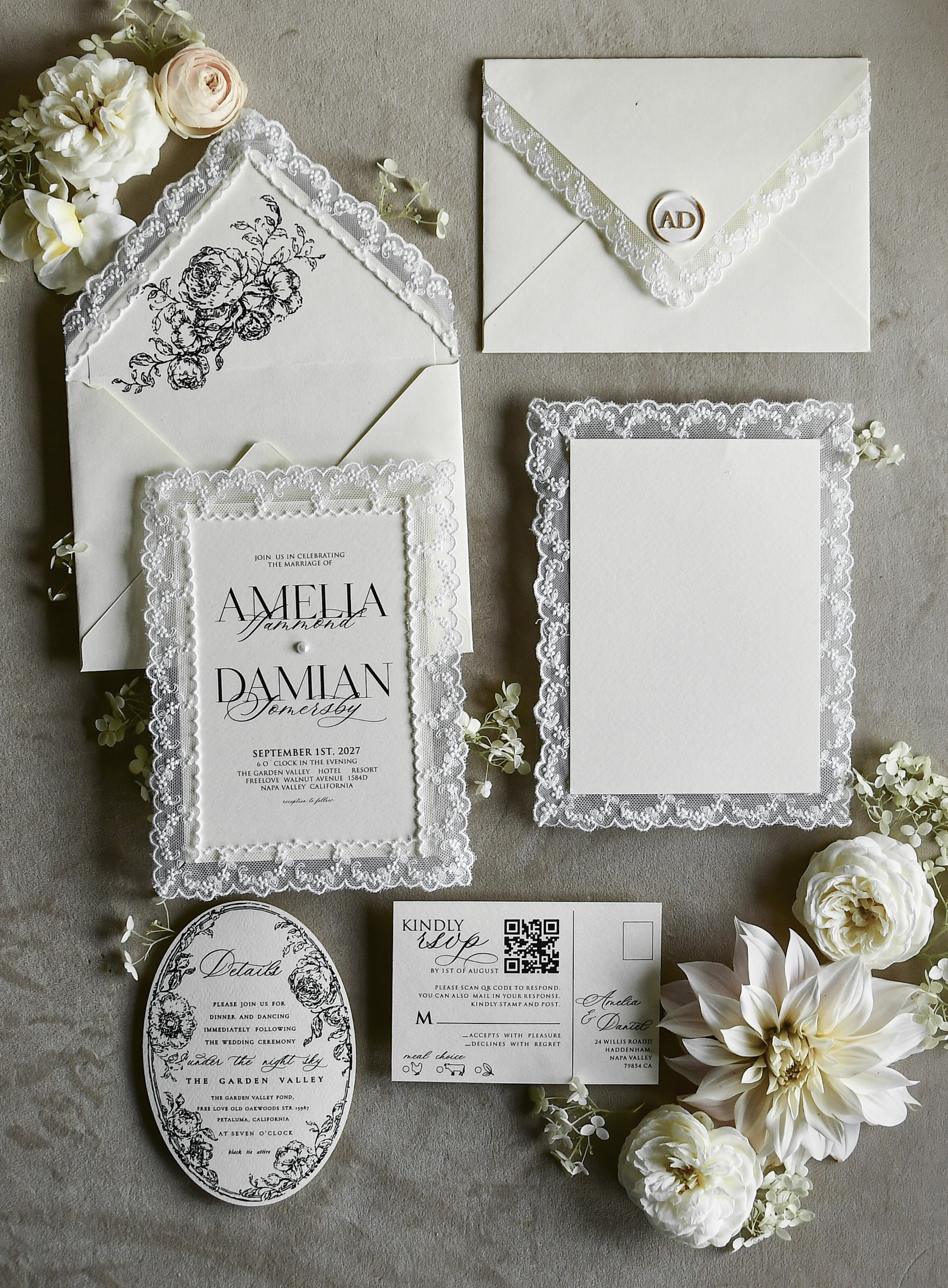
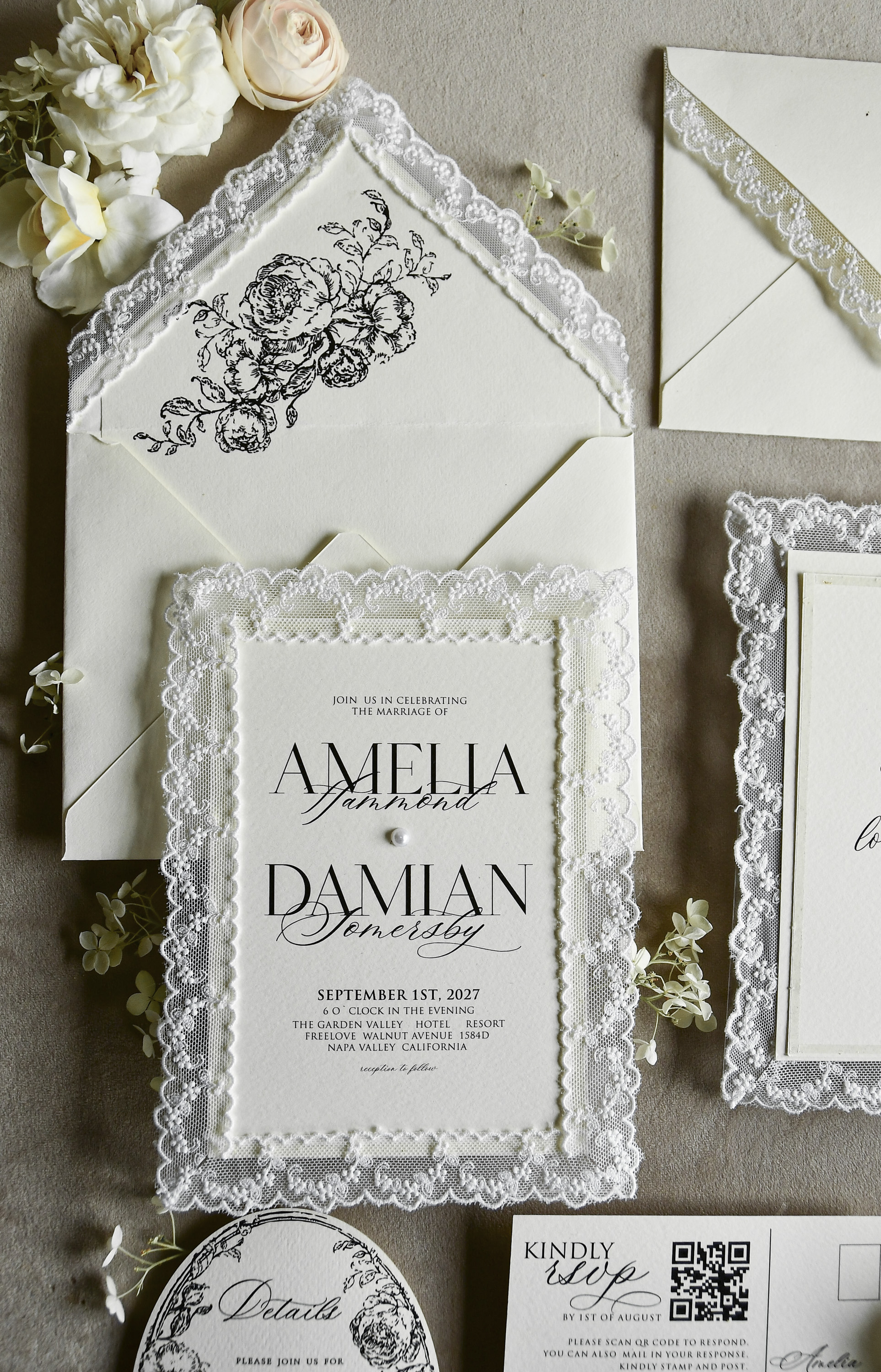
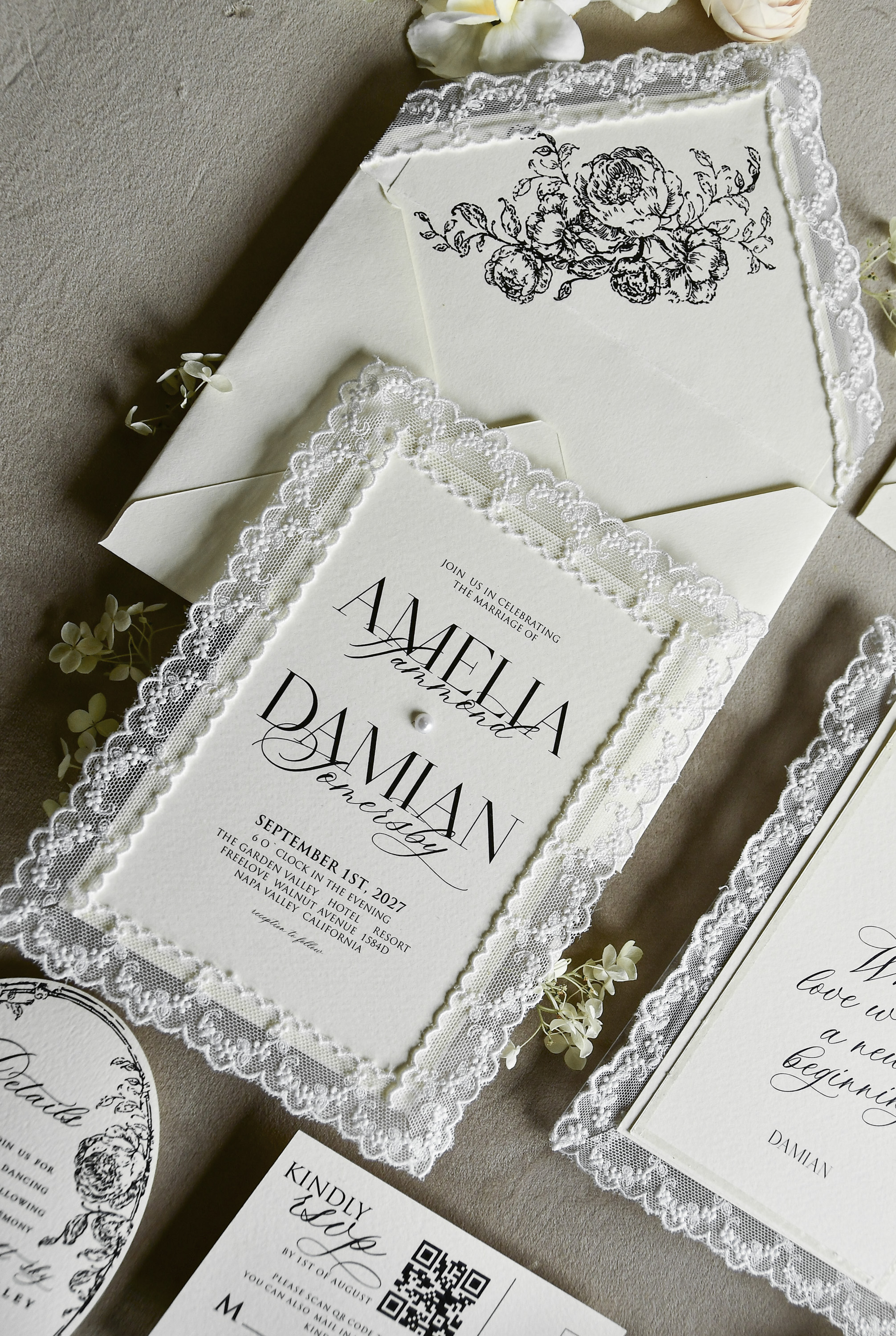
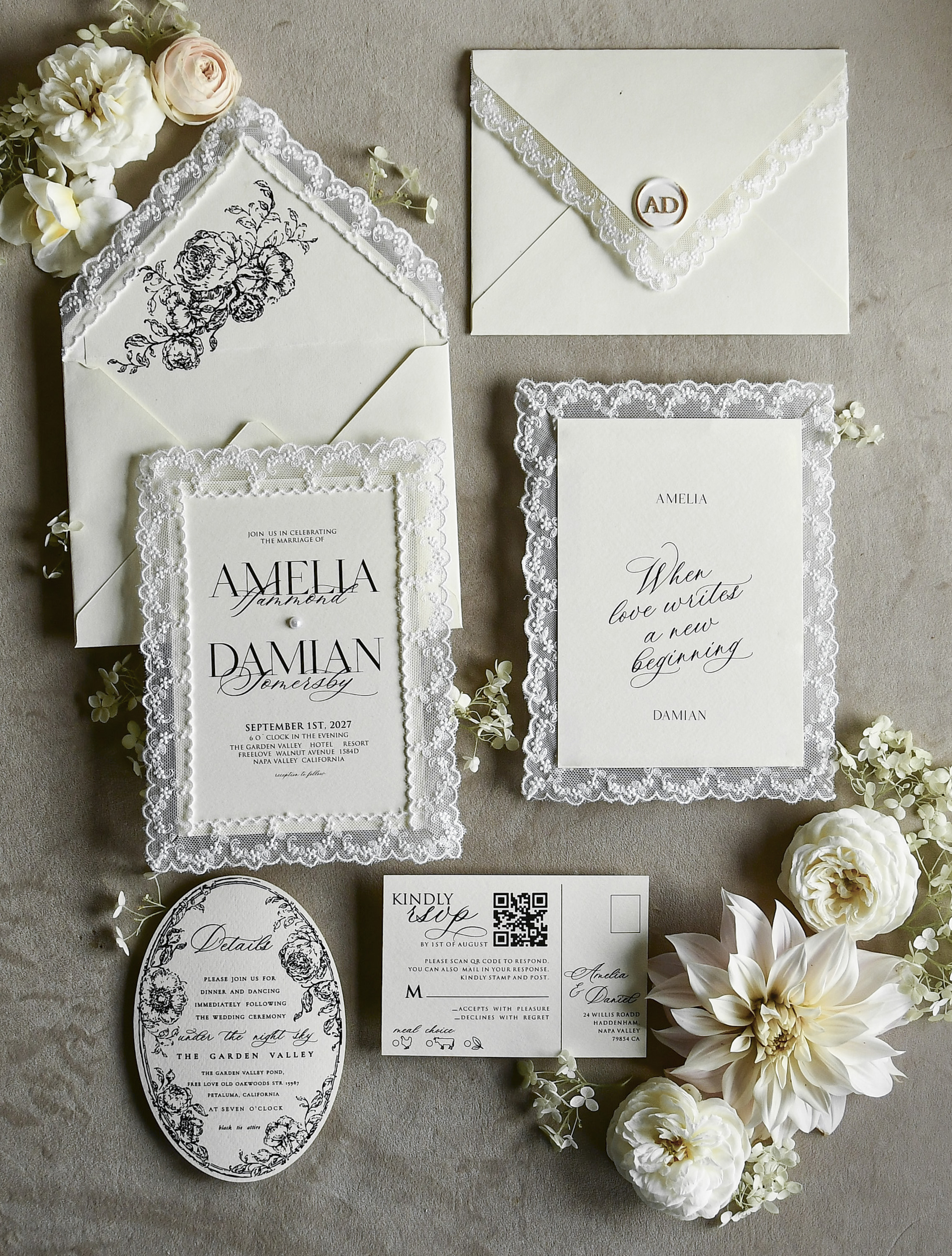
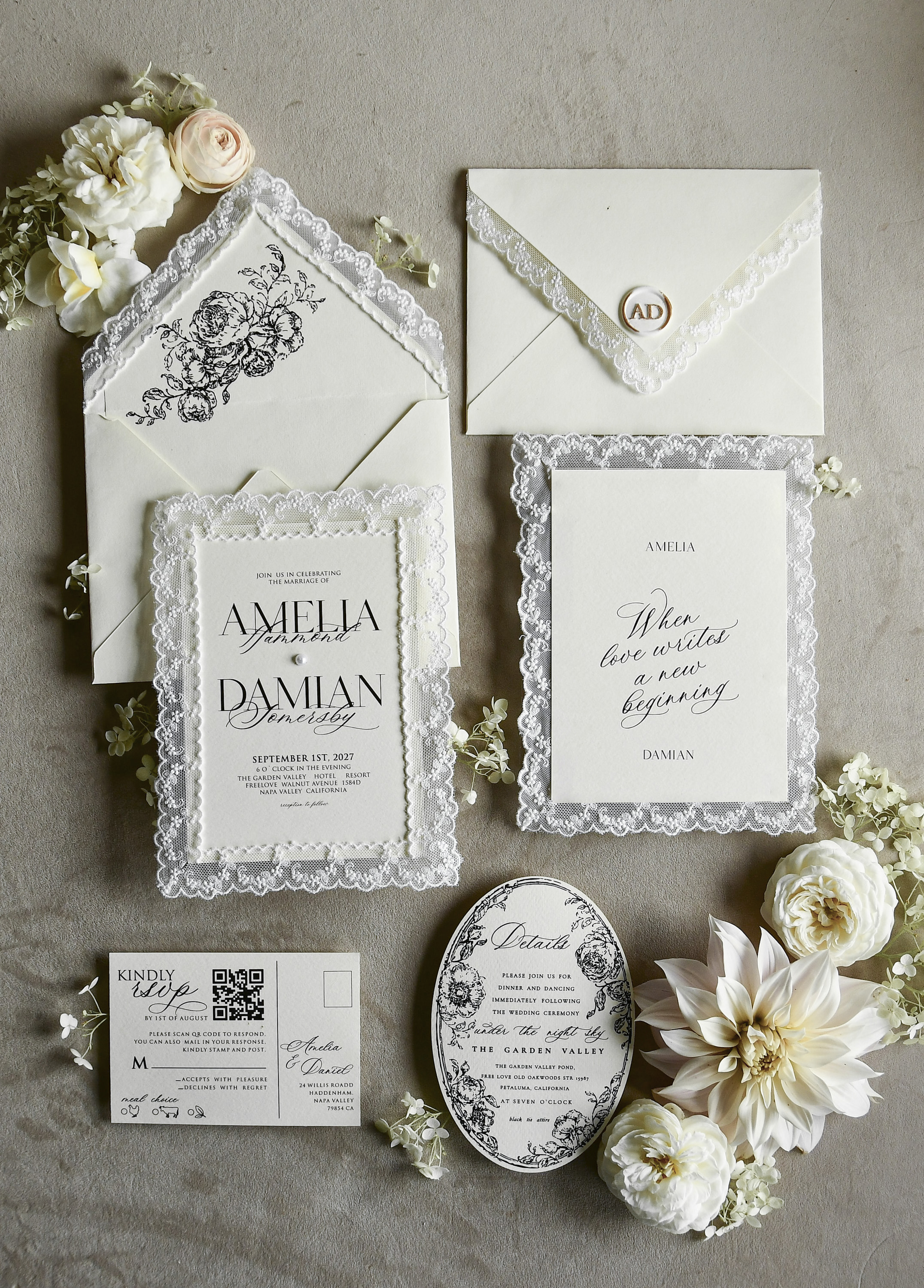
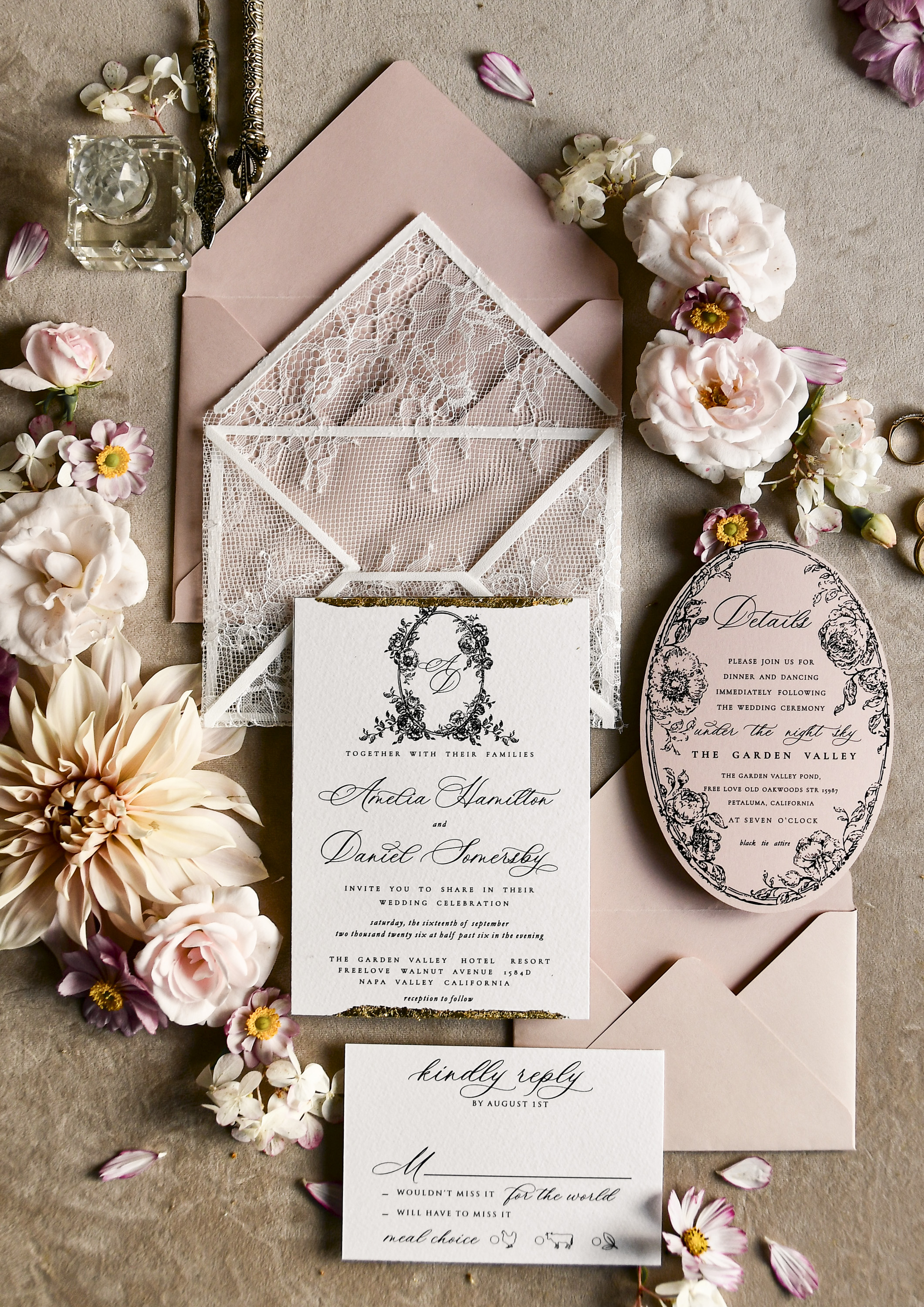
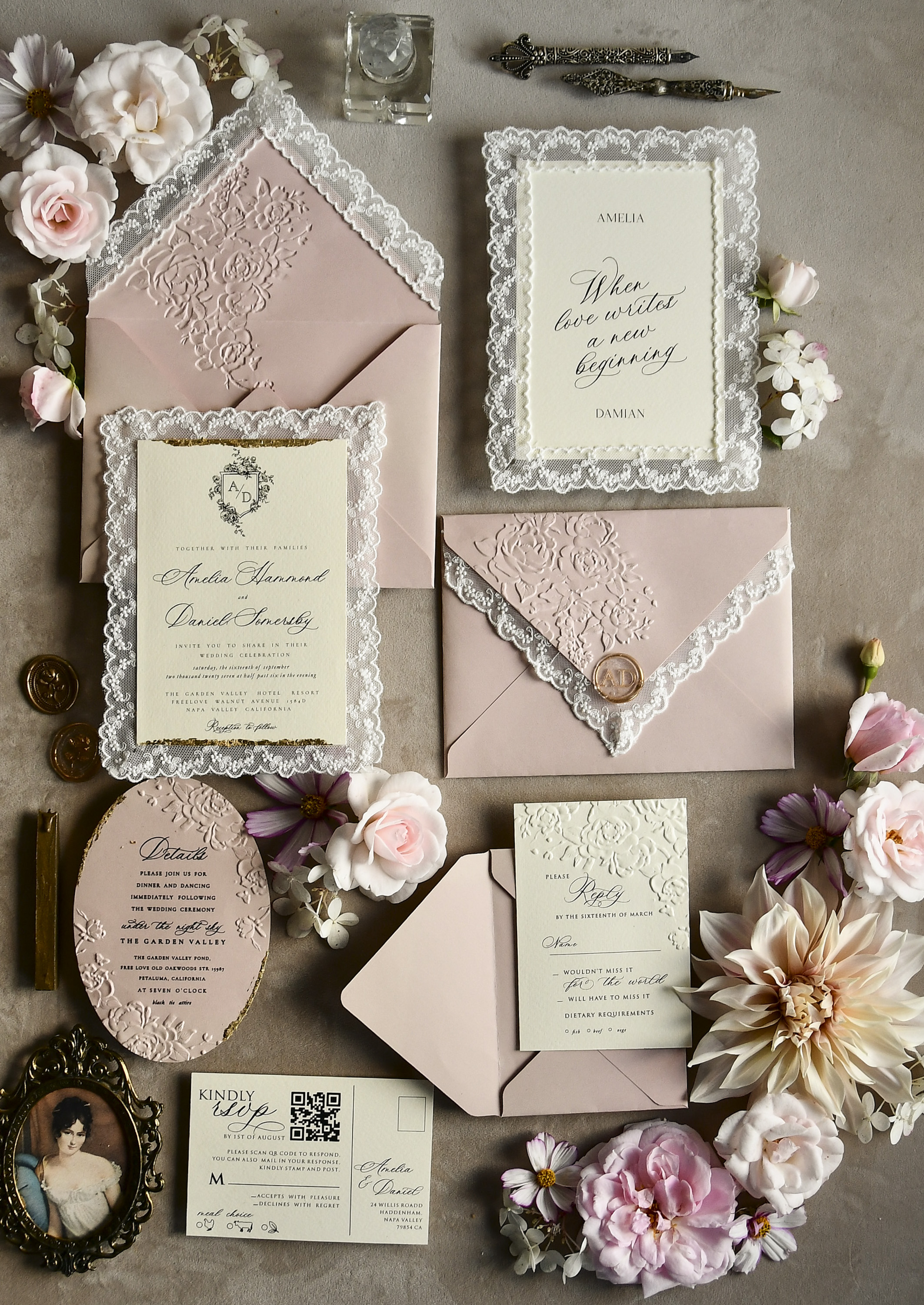
Whatever you choose, make sure every invitation in your stack reflects the same rule. If you are using a beautifully detailed design like the 09/laceD/z vintage lace wedding invitation, the inner envelope is your best tool — address it precisely to the adults invited, without adding "and family" unless children are truly welcome.
How to Communicate Your Policy Without Awkwardness
The invitation itself does the heaviest lifting. Address each envelope to the specific guests invited — "Mr. and Mrs. Rivera" rather than "The Rivera Family" signals clearly that children are not included. On your wedding website, a simple, warm line works well: "Our reception will be an adults-only celebration. We hope this gives you a chance to enjoy a special night out."
Do not print "no children" or "adults only" directly on the invitation card — it reads as blunt and can feel unwelcoming. The envelope addressing plus a website note is the standard etiquette approach.
If you know certain guests will need extra notice to arrange childcare — especially out-of-town family — consider giving them a heads-up by phone before invitations arrive. A quick, friendly call goes a long way toward preventing surprise or disappointment.
If You Do Invite Children: Setting Them Up for Success
Welcoming kids means thinking a little ahead so they — and their parents — actually enjoy the day.
- Designate a kids' table with activities: crayons, coloring sheets, or a small activity bag. Many couples personalize these with a simple note or booklet.
- Offer a children's meal option so you are not paying for a filet mignon for a five-year-old who wants macaroni.
- Consider a quiet room or lounge area where parents can take an overtired toddler without disrupting the ceremony or speeches.
- Hire an on-site babysitter or nanny for the reception. Parents can relax and celebrate, knowing their kids are supervised nearby. This is especially appreciated at longer receptions.
These small touches make a family-friendly wedding feel genuinely welcoming rather than an afterthought — and they free parents up to actually celebrate with you.
A Note on Navigating Family Pressure
This is one of those decisions where well-meaning relatives sometimes push back. A grandparent may insist that excluding grandchildren is offensive. A sibling may say they cannot come without their baby. Acknowledge their feelings with kindness, then hold your ground: "We completely understand, and we will miss you if you cannot make it. We hope you can find a way to join us."
You are not obligated to make exceptions to avoid discomfort. A consistent, clearly communicated policy is far kinder in the long run than a patchwork of special cases that leaves other guests feeling singled out. Whatever you decide, own it with confidence — it is your wedding, and both choices are completely legitimate.
Frequently Asked Questions
Not at all — adults-only weddings are widely accepted and very common. The key is communicating your policy clearly and consistently through proper envelope addressing and your wedding website so guests have plenty of time to arrange childcare.
Address the outer and inner envelopes only to the adults who are invited — for example, "Mr. and Mrs. Thompson" rather than "The Thompson Family." Avoid adding "and family" or "and guests" unless those additional guests are genuinely welcome.
Standard etiquette says no — printing "adults only" or "no children" directly on the card can feel abrupt. Instead, rely on precise envelope addressing and a note on your wedding website to convey the policy warmly and clearly.
Express that you will genuinely miss them, but hold your policy firmly. Making exceptions for some guests while refusing others creates unfairness and hurt feelings — consistency is the kindest approach in the long run.
Send invitations six to eight weeks before the wedding for local guests and eight to twelve weeks for destination or out-of-town events. If you know guests will need extra time to arrange childcare, a friendly phone call before invitations arrive is a thoughtful courtesy.
There is no official rule — it is entirely up to you. Some couples set the cutoff at infants only, others at age five, ten, or eighteen. Whatever age you choose, apply it consistently across your entire guest list to avoid any perception of favoritism.
See This Design Up Close
You May Also Like
More Wedding Planning Guides
- → Handling Family Guest List Pressure Without Losing Your Mind (or Your Vision)
- → Last-Minute RSVP Changes: How to Stay in Control When Guests Switch Their Answer
- → Plus-Ones for Teenagers: The Honest Wedding Etiquette Guide
- → RSVP Follow-Up Timing: Your No-Stress Guide to Chasing Late Replies
- → Making Your Wedding Kid-Friendly: Childcare, Entertainment, or Both?
- → What to Say When Someone Assumes They're Invited to Your Wedding
- → When Future In-Laws Want to Add Their Friends to Your Guest List
- → Guests Who RSVP Yes and Don't Appear: A Practical Guide for Couples
- → Adults-Only Wedding: How to Spread the Word Without Hurt Feelings
- → Trim Your Wedding Guest List Without the Awkwardness
- → The Estranged Sibling Invitation Dilemma: A Thoughtful Guide for Couples
- → Someone Added Extra Names to Your RSVP Card — Here's Exactly What to Do
- → Your Wedding Invitation Send-Off: Getting the Timing Just Right
- → Uninvited Plus-Ones and Tag-Alongs: How to Keep Your Guest List Intact
- → When Family Feuds Threaten Your Wedding Plans: A Practical Peacekeeper's Guide
- → Inviting an Estranged Brother or Sister: Finding Clarity Before You Seal the Envelope
- → Cousins, Invites, and Hard Choices: A Practical Guest List Guide