
Your Wedding Invitation Send-Off: Getting the Timing Just Right
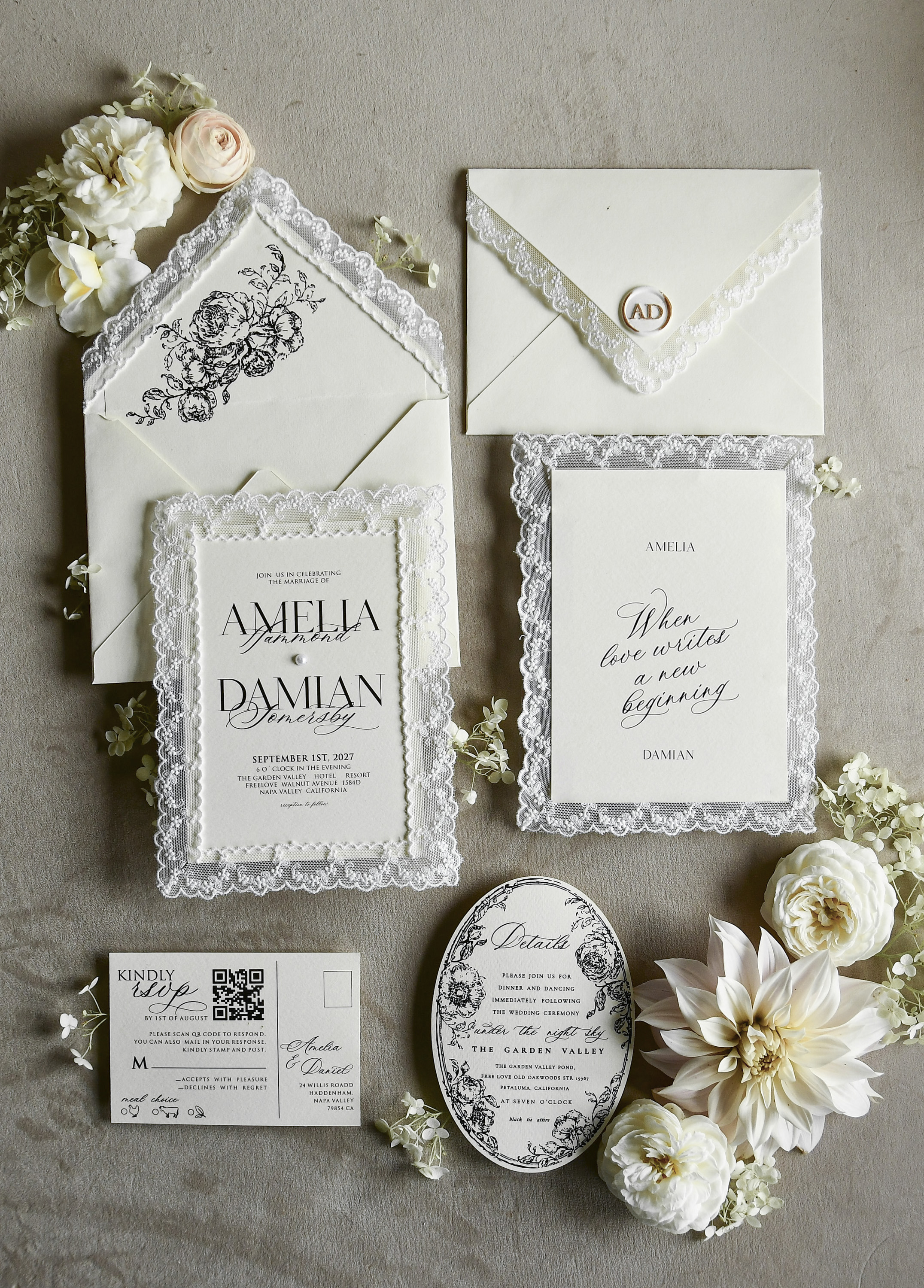
Timing your wedding invitations correctly is one of those details that sounds simple but has real consequences. Send too early and guests forget to RSVP. Send too late and people can't make travel arrangements. Getting this one thing right keeps your entire planning timeline running smoothly — and it's easier than you think once you know the rules.
The Standard Rule: 6 to 8 Weeks Before the Wedding
For most weddings, the sweet spot is mailing invitations 6 to 8 weeks before your wedding date. This gives guests enough time to clear their calendars, book accommodations, and send back their RSVPs without the invitation sitting on a counter for months collecting dust.
Here's a simple way to think about it:
- 8 weeks out: Best for spring and summer weddings when guests are juggling busy social calendars
- 6 weeks out: Works well for fall and winter weddings or smaller, more intimate celebrations
- 10–12 weeks out: Recommended if your wedding falls on or near a major holiday weekend
If you're unsure, err on the side of earlier. No one has ever complained about getting a beautiful invitation with plenty of notice.
Destination Weddings Need Extra Lead Time
If you're asking guests to travel — whether across the country or internationally — the standard timeline doesn't apply. Destination weddings require invitations 3 to 4 months in advance, sometimes even earlier depending on the location and time of year.
Guests need to book flights, arrange hotel stays, request time off work, and potentially apply for travel documents. Giving them that runway isn't just courteous — it's essential to getting a good turnout. Pair your early invitations with a wedding website that lists accommodation options, travel tips, and local recommendations so guests feel supported from the moment they open the envelope.
Don't Forget Save-the-Dates — They Come First
Wedding invitations don't work in isolation. Save-the-dates are the opening act, and they should go out 6 to 12 months before your wedding. For destination weddings, aim for the 9 to 12 month mark. For local weddings, 6 months is usually plenty.
Think of save-the-dates as a heads-up and invitations as the official ask. Once your save-the-dates are out, your guests know something is coming — which means your invitation arrives with excitement rather than surprise. This two-step approach also takes pressure off your invitation timeline, since guests already have the date blocked.
Setting Your RSVP Deadline (and Sticking to It)
Your RSVP deadline should fall 3 to 4 weeks before the wedding. This gives you enough buffer to chase down non-responders, finalize your headcount with the caterer, and submit seating arrangements. Here's a practical breakdown:
- Mail invitations 6–8 weeks before the wedding
- Set the RSVP deadline 3–4 weeks before the wedding
- Spend 1 week following up with non-responders
- Submit final headcount to your venue and caterer 2 weeks out
Be clear on the invitation itself — write the deadline in plain language like "Kindly reply by October 5th" rather than vague phrases. Clarity gets results.
Order Your Invitations Earlier Than You Think
Here's where couples often run into trouble: they nail the mailing timeline but forget to account for design, printing, and assembly time. Most stationery orders take 2 to 4 weeks to produce after you finalize your design, and you'll want extra days to address envelopes, stuff them, and add postage.
A good rule of thumb: have your invitations in hand at least 2 weeks before your target mail date. That means placing your order 6 to 8 weeks before you plan to send — which puts you ordering invitations roughly 3 to 4 months before the wedding for a standard local celebration.
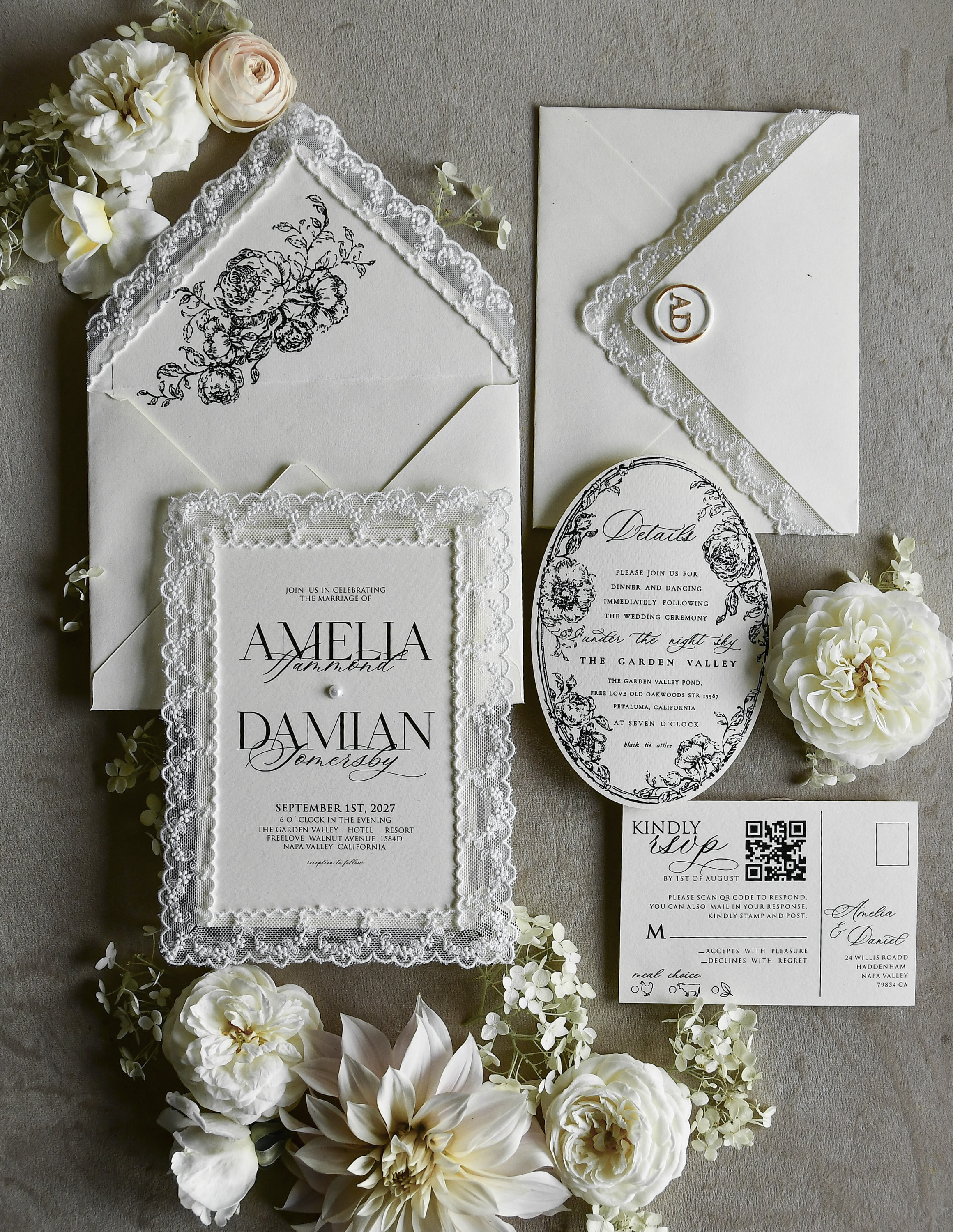
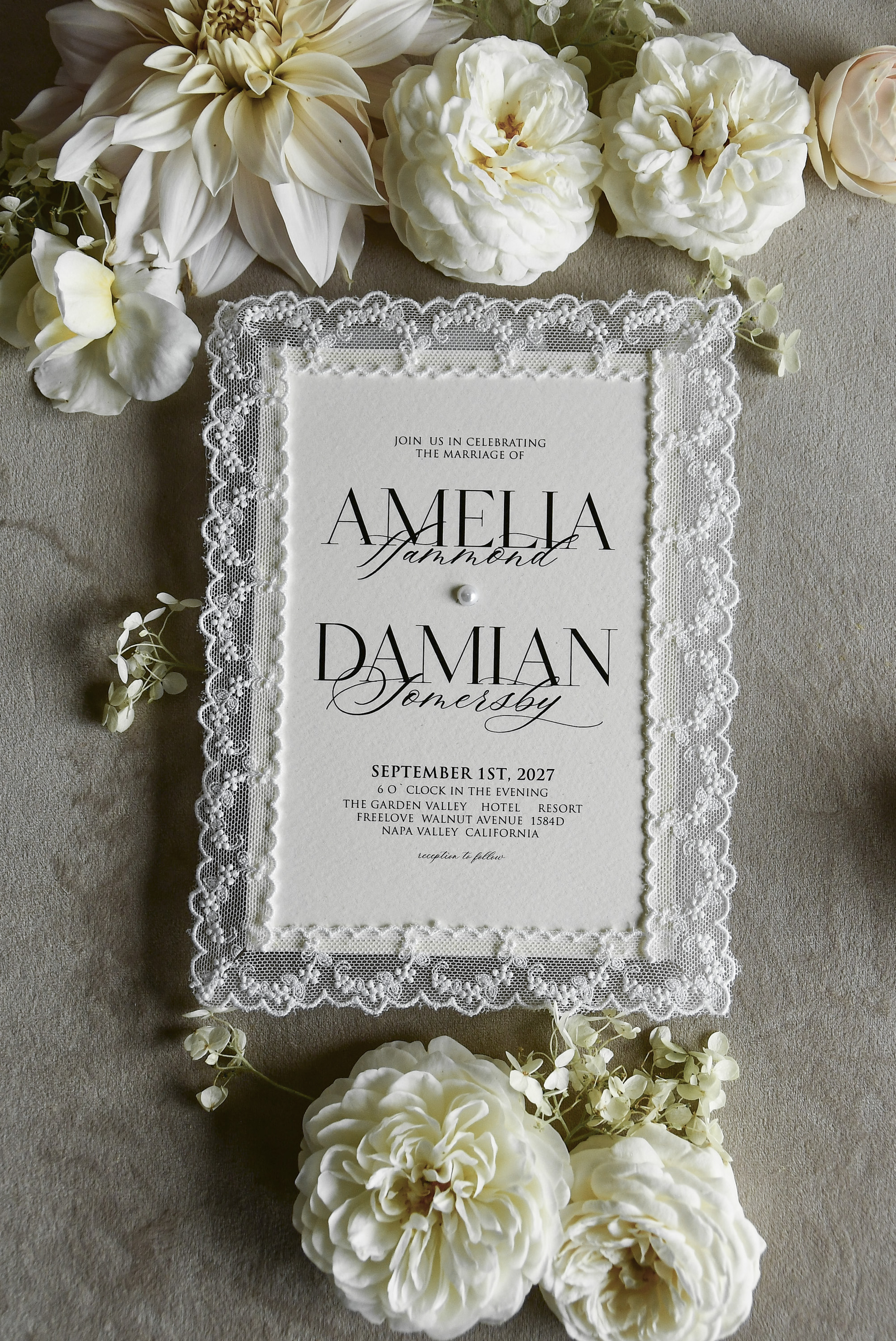
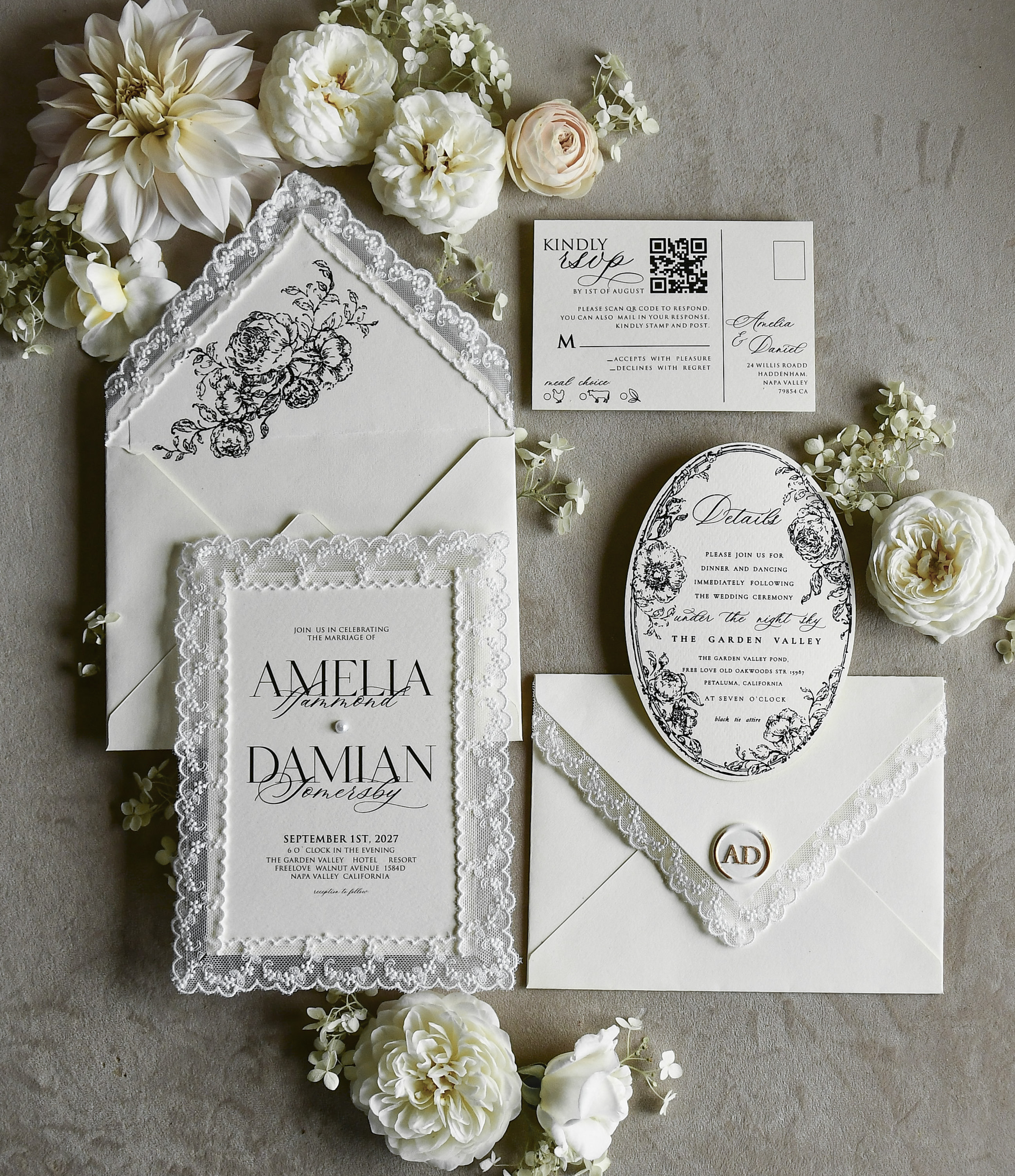
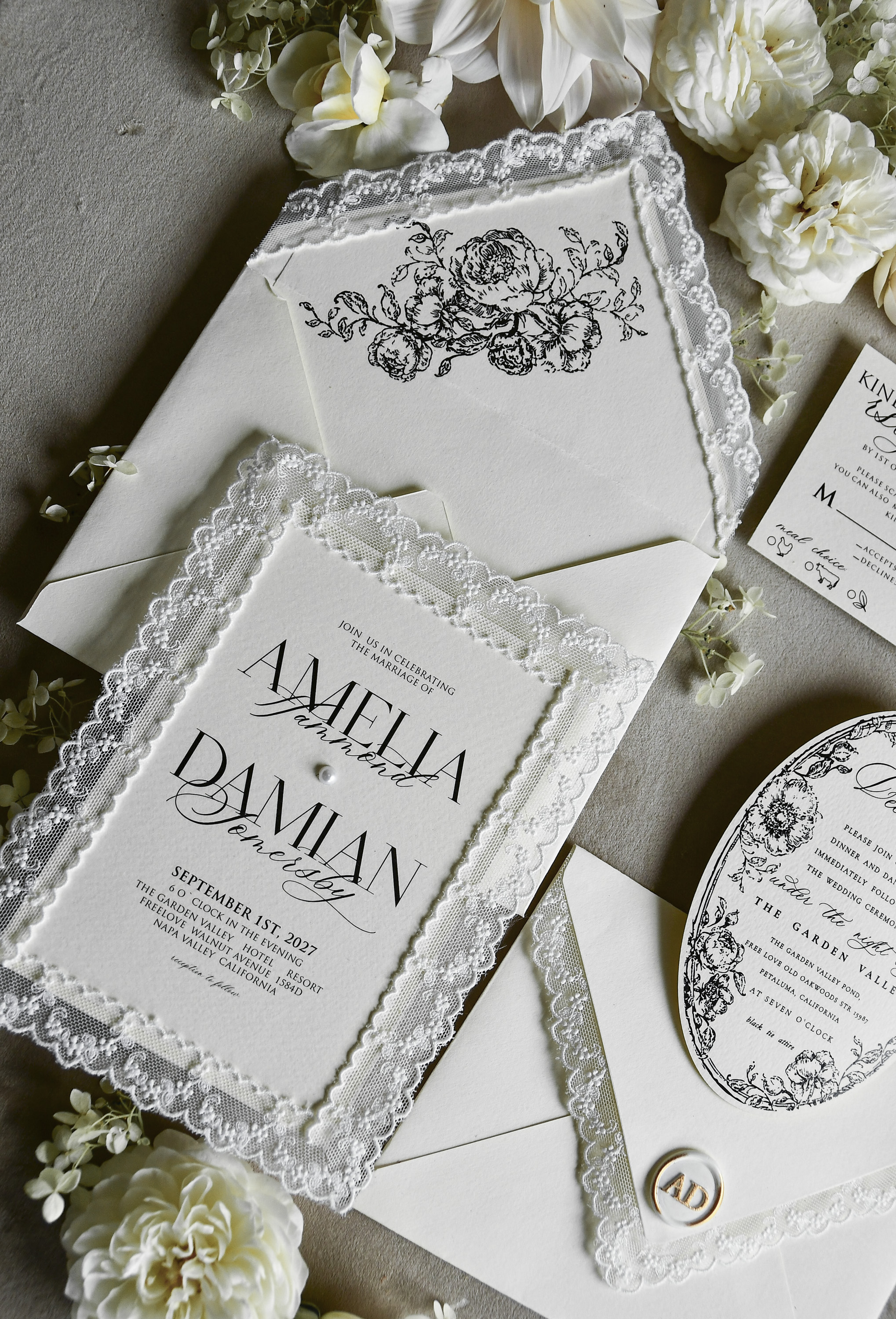
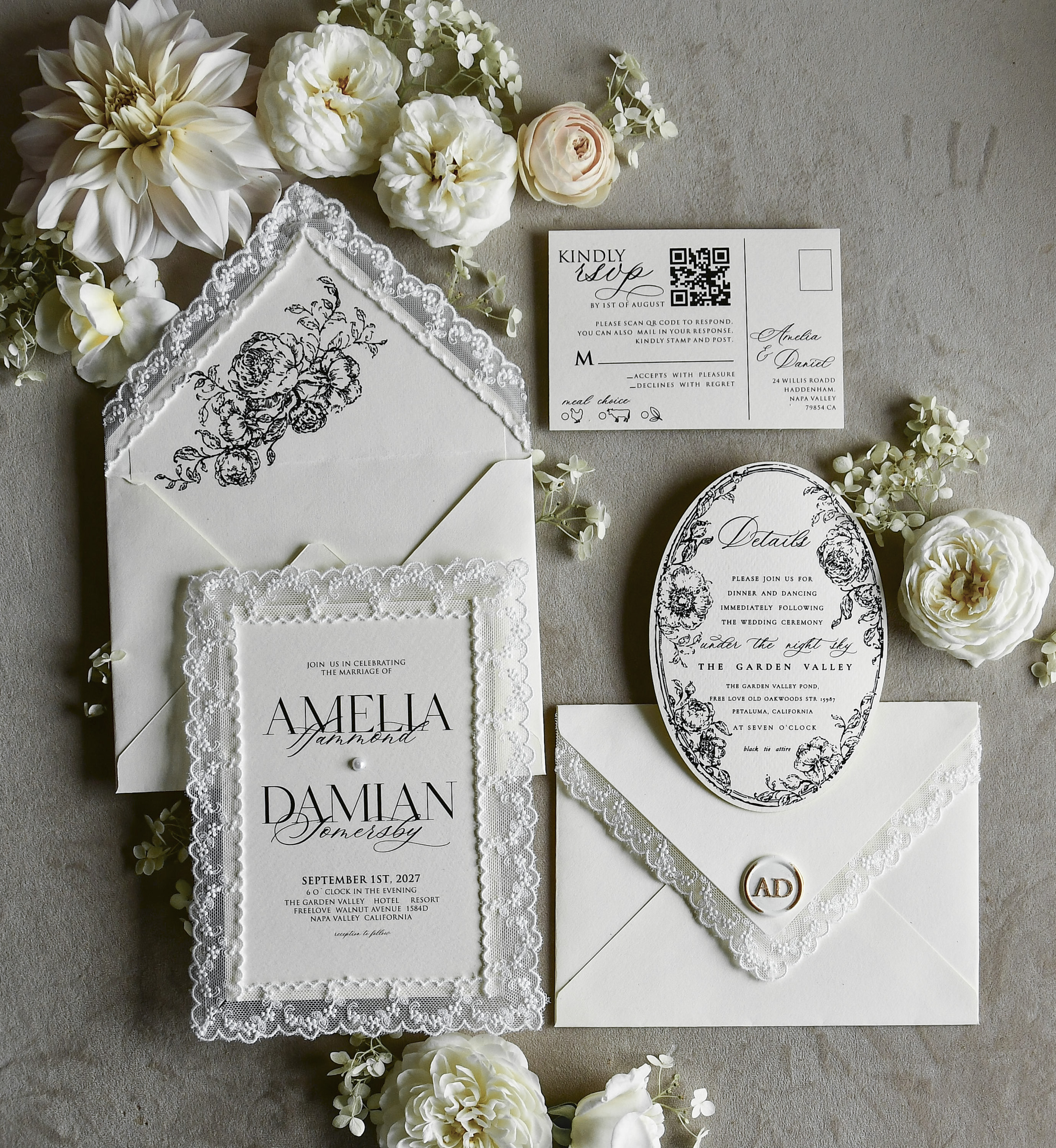
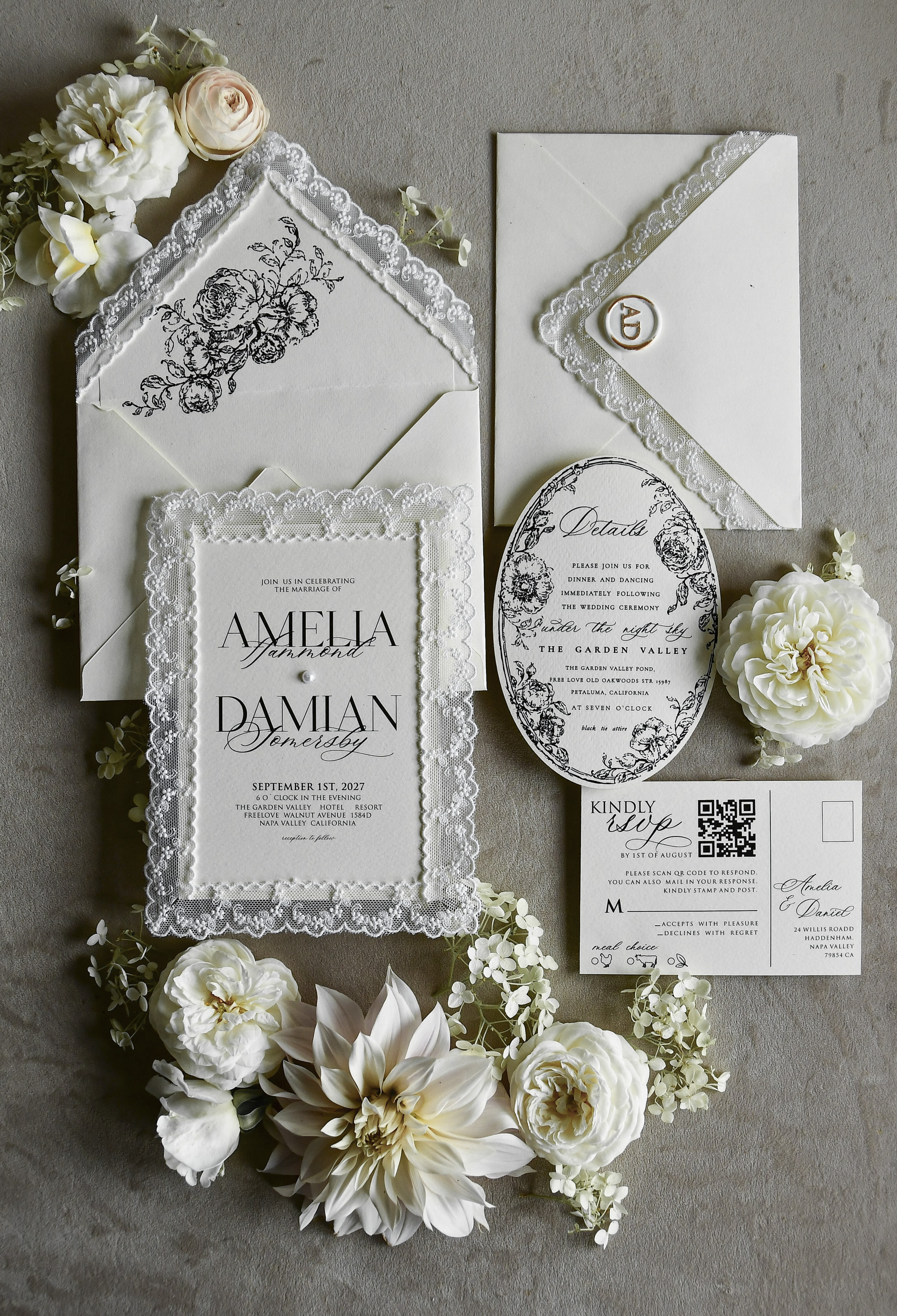
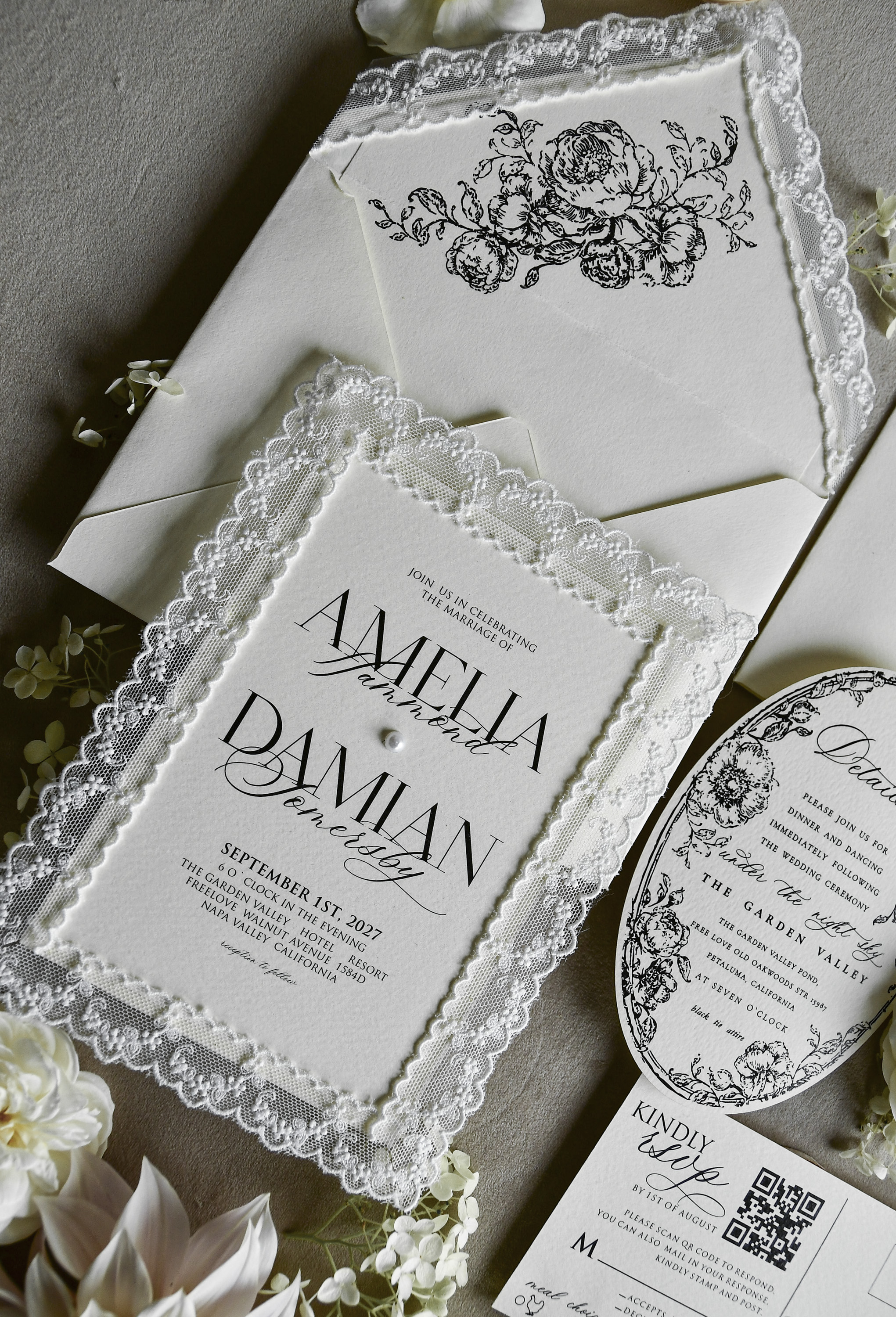
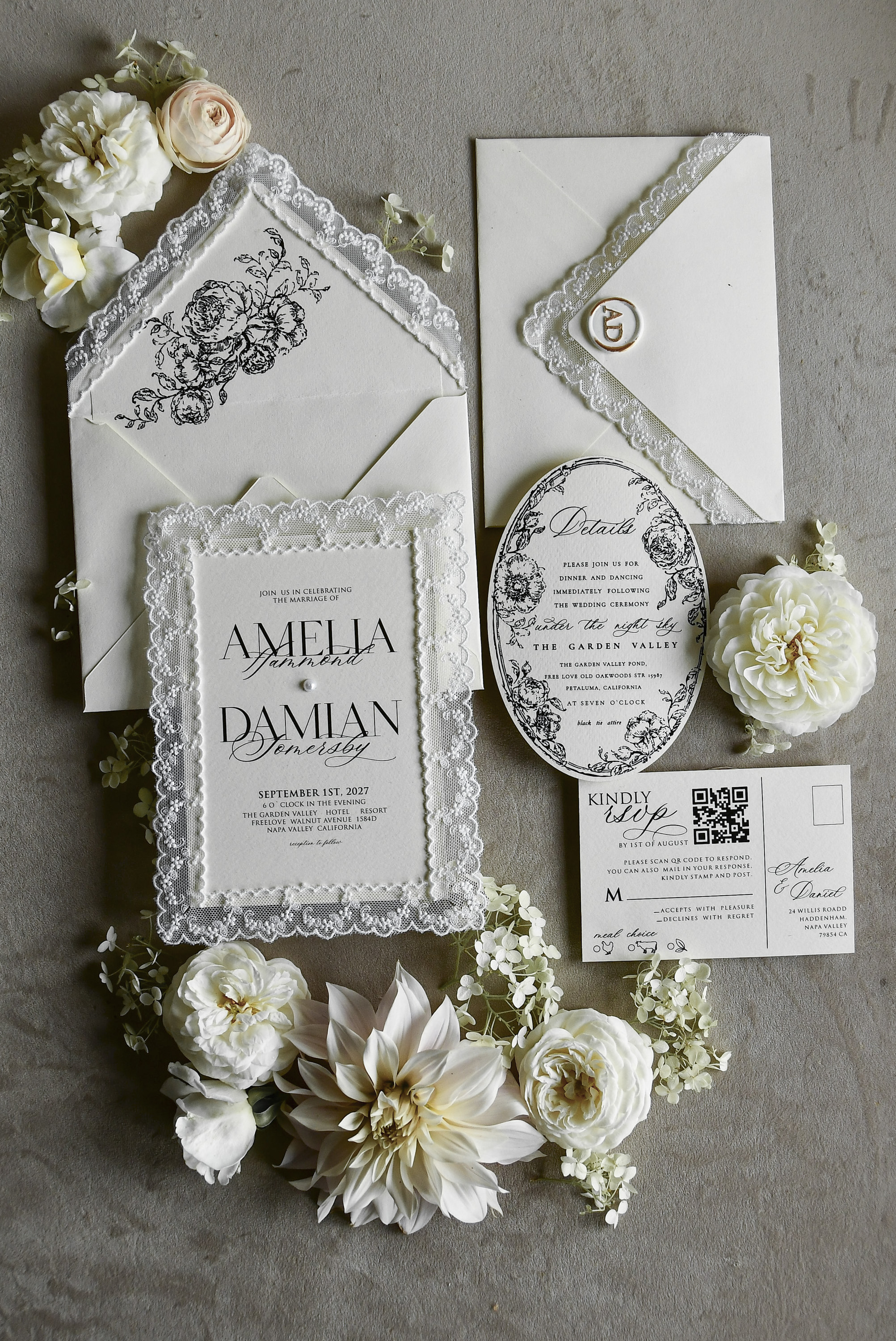
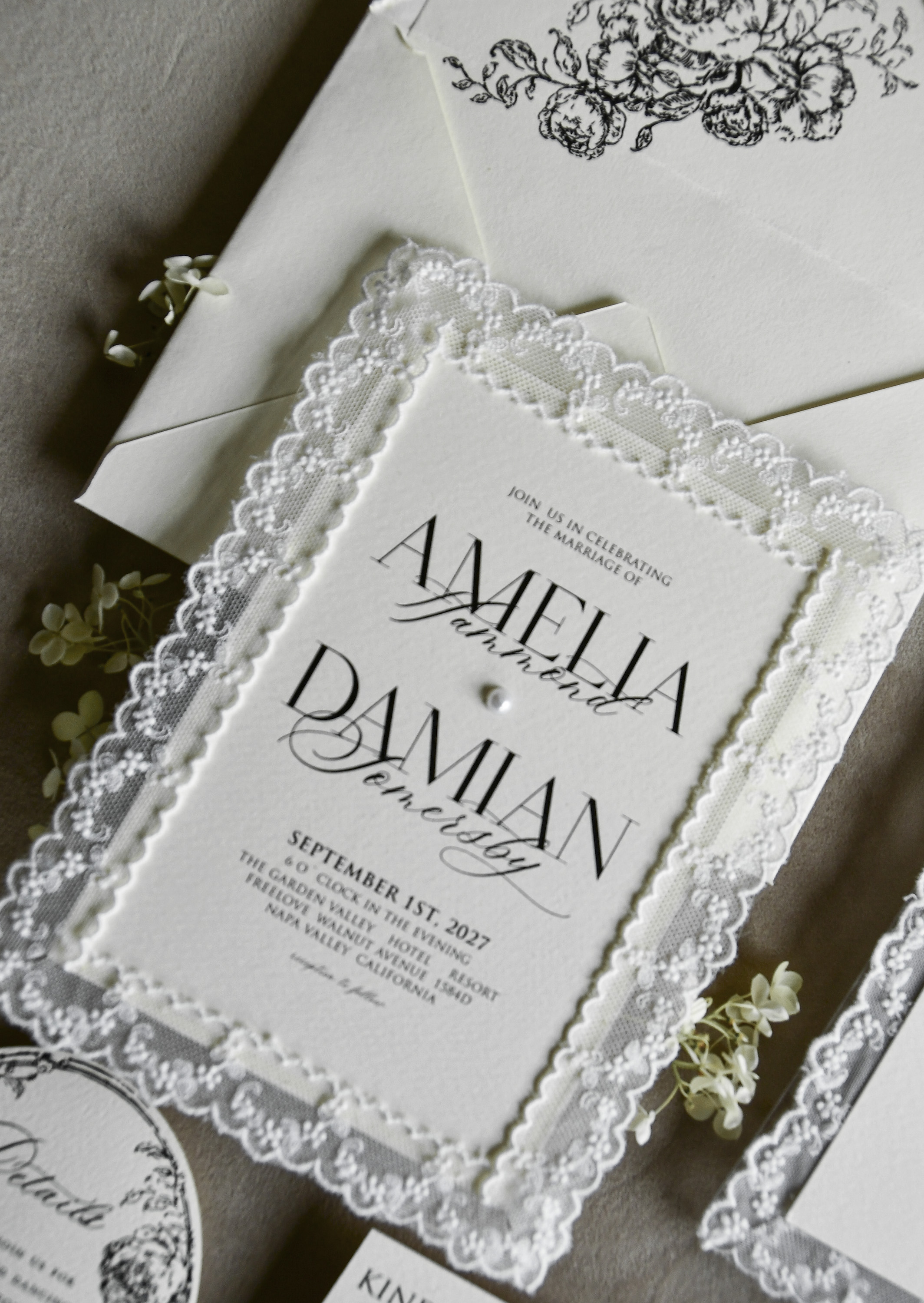
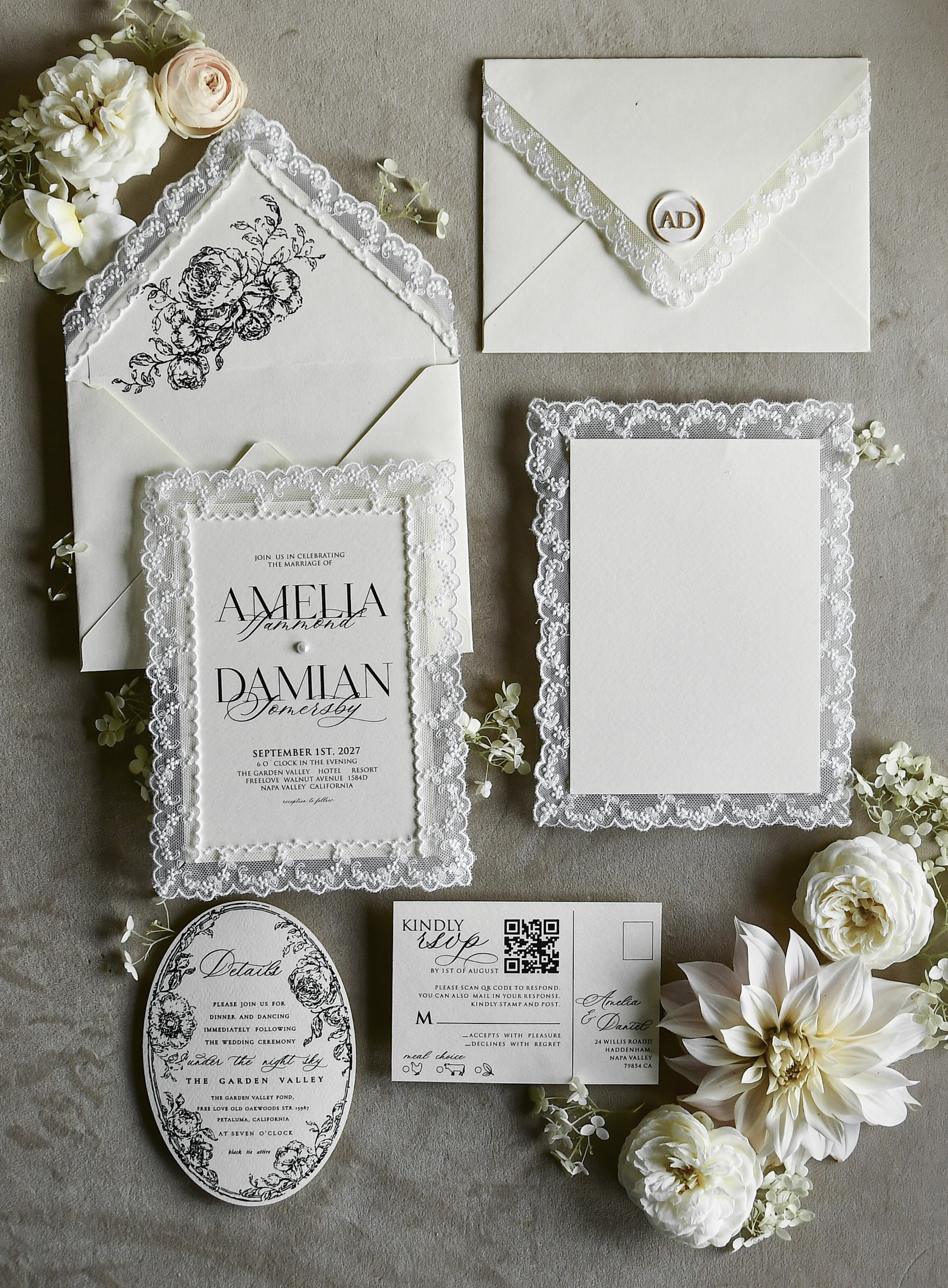
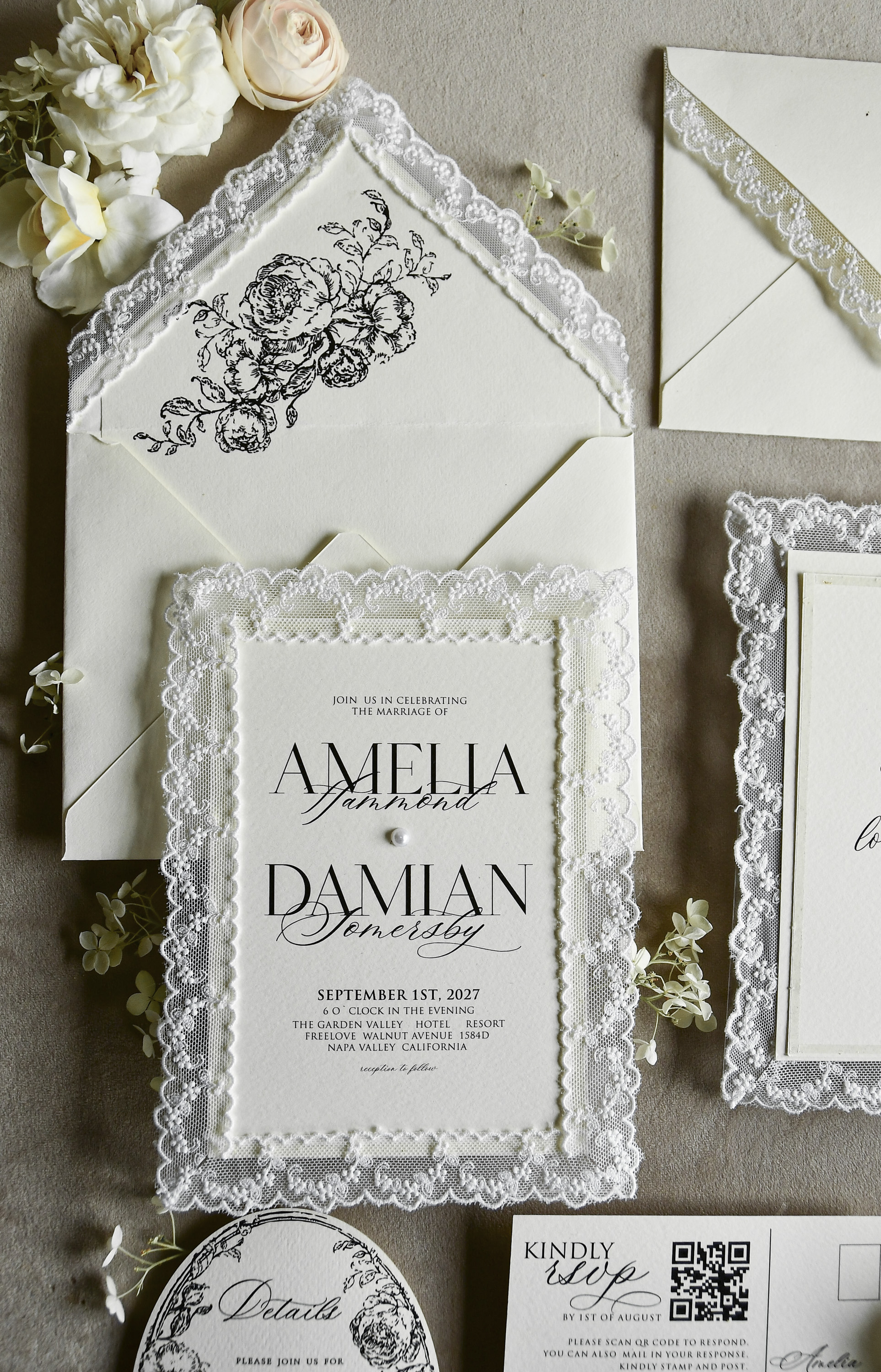
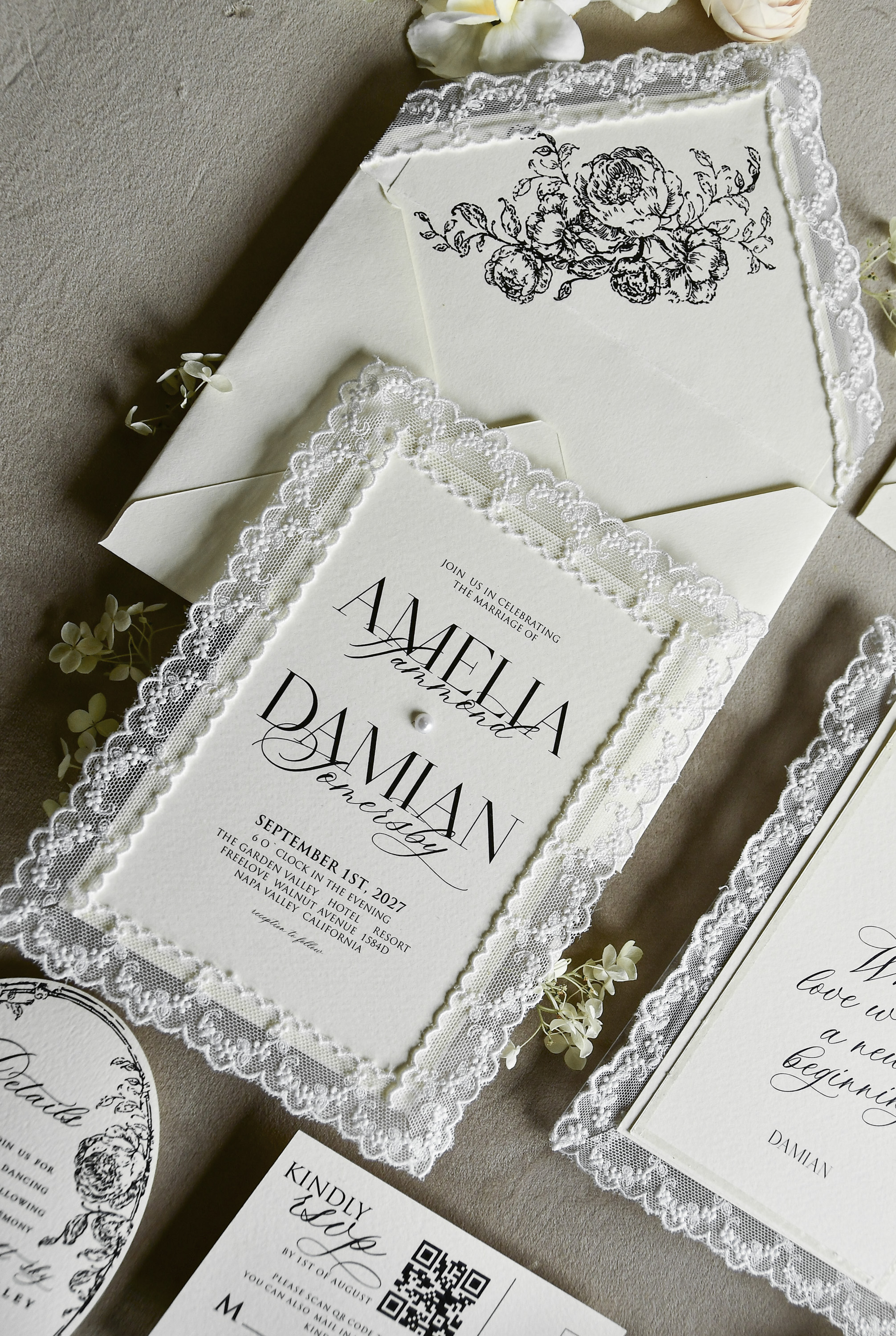
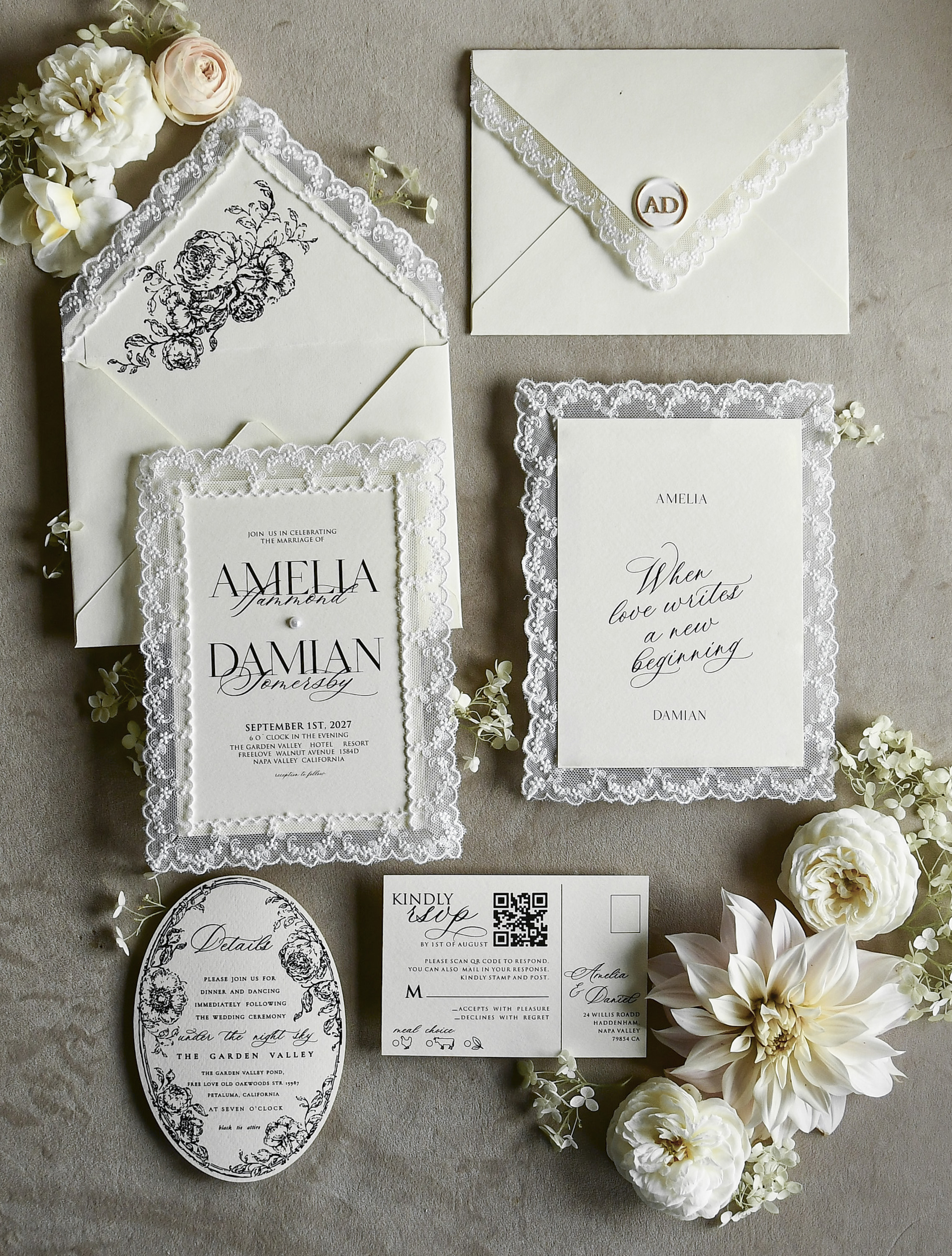
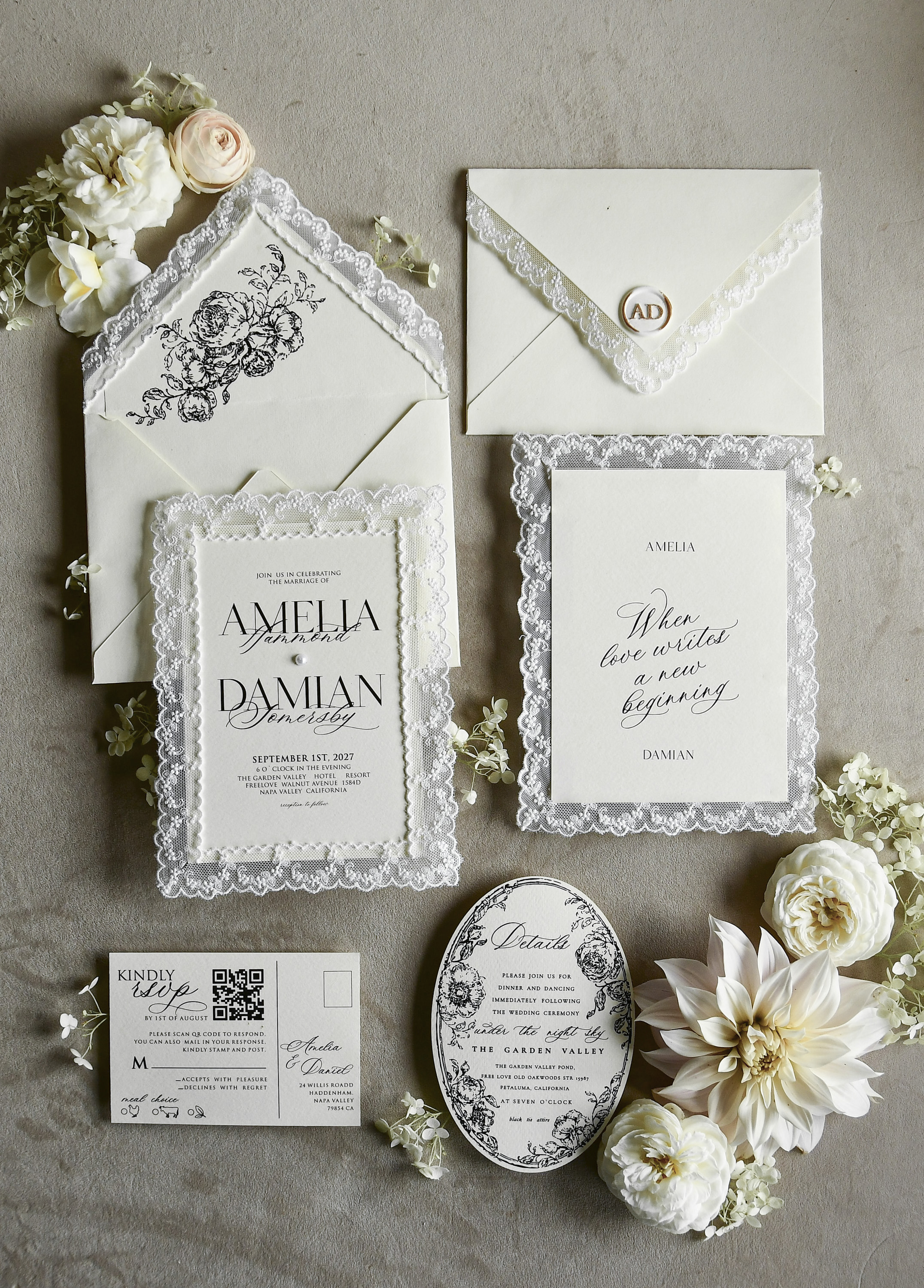
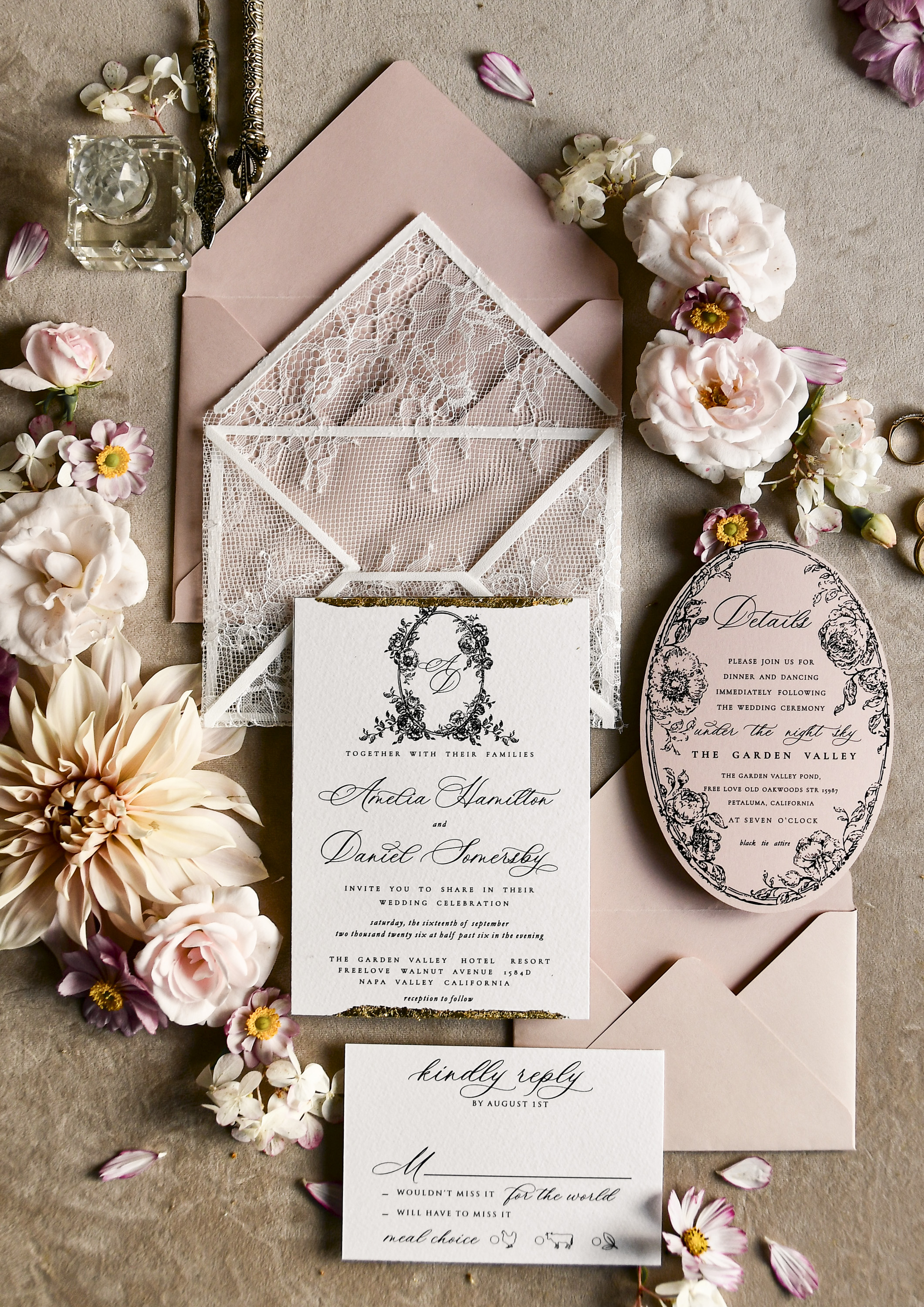
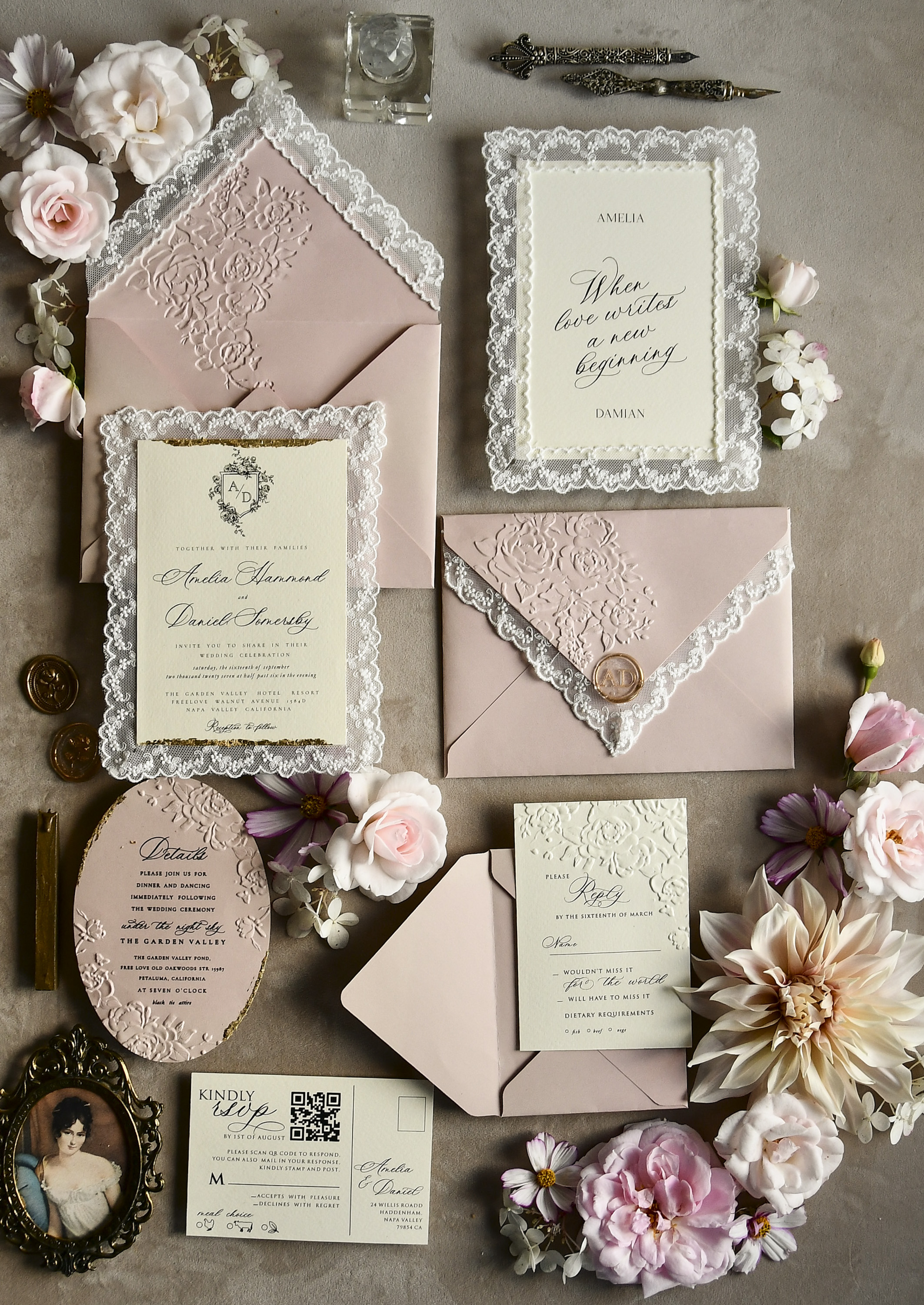
If you're drawn to something elegant and timeless, our 09/laceD/z suite from our vintage lace collection is a beautiful option starting from $8.50. The intricate lace detailing photographs beautifully and pairs well with both rustic and classic wedding aesthetics. Build in that extra lead time so you're never rushing a decision this important.
Frequently Asked Questions
Four weeks is on the shorter end and can work for very small or local weddings where most guests live nearby. However, it doesn't give out-of-town guests enough time to arrange travel, so it's better to aim for at least 6 weeks whenever possible.
Yes — it's a kind gesture that lets them know they were thought of even if logistics didn't work out. Some couples include a note acknowledging the distance or conflict, and guests often appreciate the inclusion regardless of whether they can attend.
Don't panic — send them as soon as they're ready and consider following up with a quick text or email to your closest guests so they know to watch for something in the mail. Transparency goes a long way, and most guests will understand.
Yes, absolutely. Save-the-dates are a heads-up, not an official invitation. Every guest who received a save-the-date should also receive a formal invitation with all the event details, RSVP instructions, and any enclosures.
Give it about a week past your deadline before reaching out — a friendly text or phone call works better than email for getting quick responses. Build a buffer of a few extra seats into your headcount if possible, since late RSVPs are almost guaranteed at any wedding.
The time of day doesn't affect when you mail invitations — what matters is the date itself and how far guests are traveling. Stick to the standard 6 to 8 week timeline regardless of whether your ceremony is morning, afternoon, or evening.
See This Design Up Close
You May Also Like
More Wedding Planning Guides
- → Handling Family Guest List Pressure Without Losing Your Mind (or Your Vision)
- → Last-Minute RSVP Changes: How to Stay in Control When Guests Switch Their Answer
- → Plus-Ones for Teenagers: The Honest Wedding Etiquette Guide
- → RSVP Follow-Up Timing: Your No-Stress Guide to Chasing Late Replies
- → Family Affair or Adults-Only? How to Navigate the Kids-at-Your-Wedding Question
- → Making Your Wedding Kid-Friendly: Childcare, Entertainment, or Both?
- → What to Say When Someone Assumes They're Invited to Your Wedding
- → When Future In-Laws Want to Add Their Friends to Your Guest List
- → Guests Who RSVP Yes and Don't Appear: A Practical Guide for Couples
- → Adults-Only Wedding: How to Spread the Word Without Hurt Feelings
- → Trim Your Wedding Guest List Without the Awkwardness
- → The Estranged Sibling Invitation Dilemma: A Thoughtful Guide for Couples
- → Someone Added Extra Names to Your RSVP Card — Here's Exactly What to Do
- → Uninvited Plus-Ones and Tag-Alongs: How to Keep Your Guest List Intact
- → When Family Feuds Threaten Your Wedding Plans: A Practical Peacekeeper's Guide
- → Inviting an Estranged Brother or Sister: Finding Clarity Before You Seal the Envelope
- → Cousins, Invites, and Hard Choices: A Practical Guest List Guide