
Who Actually Pays When the Guest List Grows?

One of the most common sources of wedding-planning tension isn't the flowers or the venue — it's the guest list. The moment families start adding names, the question surfaces fast: who actually pays for those extra guests? The short answer is that whoever adds the guests typically covers their share of the costs. But as with most wedding etiquette, the reality is a little more nuanced. Here's everything you need to know to handle it fairly, clearly, and without awkward family drama.
The General Rule: You Add Them, You Pay for Them
The most widely accepted etiquette principle is straightforward — the person or family requesting additional guests should contribute financially to cover those additions. If your future in-laws want to invite twelve coworkers who weren't on your original list, it's reasonable to expect them to contribute the per-head cost for each of those guests.
Per-head costs at a wedding typically include catering, bar service, rentals (chairs, linens, place settings), and sometimes venue fees based on occupancy. In the US, the average per-guest cost ranges from $150 to $300+ depending on your location and venue type. That number adds up quickly when a list grows by ten or twenty people.
Before any family member starts adding names, sit down together and agree on a budget per additional guest. Put a number to it early — vague conversations lead to misunderstandings later.
When Parents Are Contributing to the Wedding Budget
If one or both sets of parents are helping fund the wedding, the conversation around extra guests becomes a negotiation rather than a simple rule. A common arrangement is to divide the guest list proportionally based on financial contribution. For example, if the bride's parents are covering 40% of the total budget, they might reasonably expect to invite 40% of the guests.
This model works well when everyone agrees on it upfront. Problems arise when parents assume their financial contribution buys them unlimited guest slots. Set a clear cap — for instance, "Each family gets 20 guest spots within the agreed budget" — and put it in writing if needed.
If a family member wants to exceed their allotted spots, they should cover the per-head cost for the overage. This keeps things fair without turning the wedding into a business transaction.
Handling the Invitation Side of Things
Extra guests mean extra invitations, and that's a real cost too. Stationery, postage, envelope addressing, and inserts all add up. If your in-laws are adding 15 people to the list, those 15 people need invitations — and someone needs to pay for them.
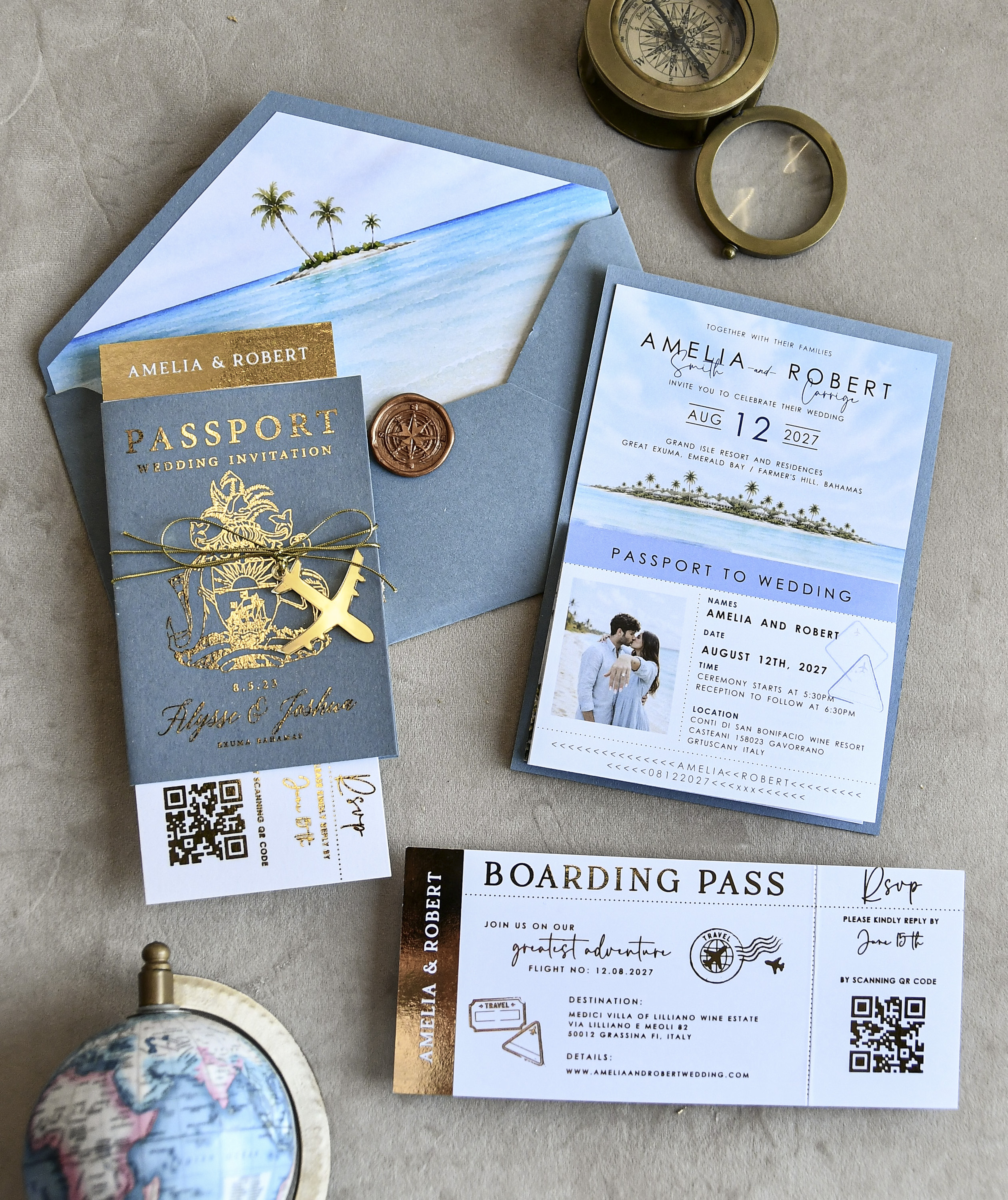
When you're already ordering a larger batch of wedding invitations, adding a few extra is usually less expensive per unit than ordering a small supplemental run. That's why it's smart to finalize all guest additions before you place your stationery order. Our 01/passH/z passport-style beach wedding invitations are a beautiful option for couples planning a destination or coastal celebration — and ordering them in the right quantity from the start saves both money and stress.
Build a small buffer of 10–15 extra invitations into your original order to account for late additions, addressing errors, and keepsakes. It's far cheaper to order extras upfront than to reorder later.
Tricky Scenarios and How to Navigate Them
Real life rarely follows a clean formula. Here are a few common situations and how to handle them:
- Parents who pay a lump sum: If your parents gave you $10,000 and said "do whatever you want," they don't automatically get to add guests beyond what that budget supports. Their contribution is generous but finite.
- The guilt trip guest: "You have to invite Aunt Carol's new boyfriend" — if it wasn't in the original plan and doesn't fit the budget, it's fair to say no or ask that the requesting family member cover the cost.
- Last-minute additions: Once your caterer's headcount is locked in, adding guests may trigger a fee or minimum increase. That cost should fall on whoever made the late request.
- Your own wish-list additions: If you and your partner decide to expand the list after the initial budget was set, that's on you — budget accordingly or make cuts elsewhere.
The key in every scenario is communicating early and setting expectations before emotions run high.
A Simple Framework to Protect Your Budget
To avoid confusion, use this practical approach from the start:
- Set your total guest count based on your budget — not the other way around.
- Assign guest allotments to each family group before anyone starts making lists.
- Calculate and share the per-head cost so everyone understands the real impact of additions.
- Agree that any guests added beyond allotments are the financial responsibility of the person requesting them.
- Order your wedding invitations — like the stunning destination-ready 01/passH/z passport invites — only after the final list is confirmed and approved by all parties.
This framework won't eliminate every disagreement, but it gives you a fair, transparent structure to fall back on when the pressure mounts.

Frequently Asked Questions
Not at all — it's actually a reasonable and increasingly common practice. Framing it as a shared cost rather than a charge keeps the conversation respectful. Most family members respond well when they understand the real per-head cost involved.
The national average ranges from $150 to $300 per guest, though it can go higher in major cities or luxury venues. This typically includes food, beverages, and a proportional share of rentals and venue costs.
Contributing financially gives parents a say, but not unlimited control. Agree upfront on how many guests each contributing party may invite in exchange for their contribution, and document that agreement clearly.
Ideally, your guest list should be finalized at least 6–8 weeks before your planned mail date. Locking the list before ordering stationery avoids costly reprints and ensures everyone gets an invitation on time.
Most caterers charge a per-head overage fee for additions after the deadline, which can be higher than the original per-person rate. That additional cost should be borne by whoever requested the late addition.
A clear plus-one policy applied consistently is your best tool — for example, plus-ones only for engaged, married, or long-term partners. Communicate the policy early so guests aren't surprised, and apply the same rule across all family groups to stay fair.
See This Design Up Close













You May Also Like



More Wedding Planning Guides
- → Handling Last-Minute RSVP Changes: What Couples Need to Know
- → When Kids Deserve Their Own Wedding Invitation: An Age-by-Age Guide
- → Navigating Stepparent Wedding Invitations: A Practical Guide
- → Your Aunt Remarried: Should Her New Husband Be on the Guest List?
- → How to Kindly Let Guests Know Your Wedding Is Adults-Only or Strictly RSVPed
- → The Graceful Art of Trimming Your Wedding Guest List
- → Inviting New Partners to Your Wedding: A Practical Guide for Couples
- → Uninvited Guests on the RSVP Card: How to Handle Extra Names Gracefully
- → Navigating the Awkward Guest List: Should You Invite Estranged Family?
- → How to Handle the 'Why Wasn't I Invited?' Conversation Gracefully
- → The Last Possible Moment to Mail Your Wedding Invitations (And How to Stay on Track)
- → The Complete Guide to Addressing Wedding Invitations Like a Pro
- → Cousins and the Guest List: What You're Actually Obligated to Do
- → When a Family Member Threatens to Skip Your Wedding Over the Guest List
- → Uninvited Plus-Ones and Tag-Alongs: How to Keep Your Guest List Intact
- → When Family Feuds Threaten Your Wedding Plans: A Practical Peacekeeper's Guide
- → Inviting an Estranged Brother or Sister: Finding Clarity Before You Seal the Envelope
- → Cousins, Invites, and Hard Choices: A Practical Guest List Guide