
When a Family Member Threatens to Skip Your Wedding Over the Guest List

You've carefully built your guest list, sent your invitations, and then—a phone call. A relative announces they won't come if a certain person is there. Whether it's a feuding sibling, an estranged aunt, or a complicated ex-step-parent, this situation is more common than couples expect. Here's how to handle it with grace, without letting someone else's conflict hijack your wedding day.
Understand What's Really Being Said
When a relative delivers an ultimatum about your guest list, it can feel like a personal attack—but it's usually about their own unresolved conflict, not about you. Before reacting, take a breath and recognize what's happening: they are placing their discomfort above your wishes on one of the most important days of your life.
That doesn't make them a villain, but it does mean the problem is theirs to solve, not yours. Understanding this distinction will help you respond from a place of calm rather than guilt or panic.
Hold Your Ground Kindly but Clearly
You are not obligated to uninvite someone to appease a relative. Doing so sets a precedent that ultimatums work, and it can create a deeper wound with the person who was removed. Instead, respond with warmth and firmness. A simple script:
- "We love you and we really want you there. Both [Name] and you are important to us, and we've made our final decisions about the guest list. We hope you'll choose to join us."
Avoid lengthy justifications—they invite negotiation. Say your piece once, clearly, and then let the ball be in their court. You're not being cruel; you're being honest about what your wedding will look like.
Practical Steps to Reduce the Tension
Even if you won't change the guest list, you can take thoughtful steps to minimize friction on the day itself:
- Seat them strategically. Place feuding parties at tables on opposite sides of the reception space with different groups of people around them.
- Brief your wedding party. Ask a trusted bridesmaid, groomsman, or coordinator to gently redirect anyone who seems headed toward conflict.
- Stagger arrivals if needed. For a ceremony, you can ask one party to arrive 15–20 minutes earlier than the other to avoid an awkward parking-lot encounter.
- Communicate expectations. If the conflict is serious, a quiet word before the wedding—"I need you both to be civil for one day"—can be surprisingly effective.
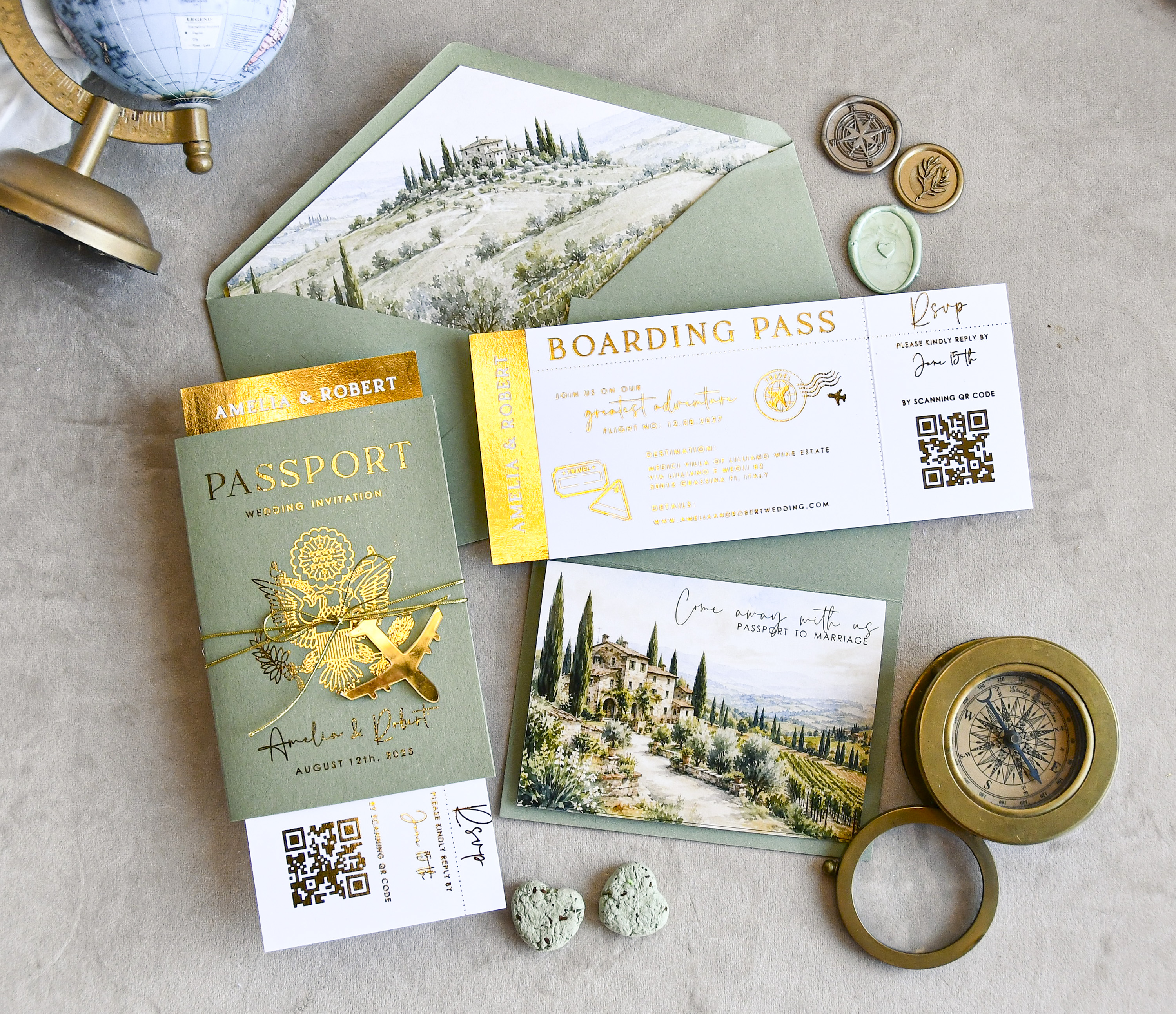
When you're mailing your invitations, keep the experience positive for every guest. A beautifully designed invitation like the 01/passH/z passport-style beach wedding invite sets a joyful, celebratory tone from the moment your guests open the envelope—reminding everyone what the day is actually about.
If They Follow Through and Don't Come
Sometimes, despite your best efforts, a relative will skip the wedding. It hurts, and it's okay to feel that grief. But try to reframe it: their absence is a choice they made, not something you caused. You did not exclude them—they excluded themselves.
After the wedding, give the relationship some time and space before addressing it again. Many relatives who skip in protest quietly regret it once the day has passed and they see the photos. A gracious note a few weeks later—"We missed you and hope we can celebrate together soon"—leaves the door open without rewarding the ultimatum.
When to Involve a Mediator (and When Not To)
In rare cases—especially when the conflict involves trauma, abuse, or a deeply fractured family dynamic—a neutral third party like a therapist or trusted family elder can help broker a temporary truce. This is worth considering if the relationship is one you genuinely want to preserve long-term.
However, for most garden-variety family feuds, bringing in a mediator escalates the drama more than it resolves it. Keep the conversation direct, low-key, and private. The fewer people who know about the ultimatum, the less social pressure builds on everyone involved. Your wedding planning should feel exciting—ordering your 01/passH/z passport invitations and choosing your florals—not like shuttle diplomacy.
Frequently Asked Questions
Only if you genuinely want to, not because of pressure. Removing a guest to satisfy an ultimatum rarely resolves the underlying conflict and may damage your relationship with the uninvited person permanently. Make the decision based on your own values and wishes.
The same principles apply, though the emotional stakes feel higher. Acknowledge their feelings, then calmly restate that the guest list is final. If a parent is contributing financially and leveraging that, it may be worth an honest conversation about what strings are attached to their contribution.
Absolutely—and most adults will agree when asked directly and privately. Keep the request simple: "I'm not asking you to be best friends, just to be polite for a few hours." Most people can manage that when they know it matters to you.
Each partner should ideally handle their own family members—you speak to your relatives, your partner speaks to theirs. This reduces the feeling of outside interference and keeps the conversation more personal and effective.
As soon as the threat arises—don't let it linger and grow. Having the conversation at least two to three months before the wedding gives everyone time to process and adjust their plans without last-minute chaos.
No—keep it as private as possible. Sharing the drama with other guests puts them in an awkward position and can amplify tensions. Handle it quietly between the people directly involved.
See This Design Up Close













You May Also Like




More Wedding Planning Guides
- → Handling Last-Minute RSVP Changes: What Couples Need to Know
- → Who Actually Pays When the Guest List Grows?
- → When Kids Deserve Their Own Wedding Invitation: An Age-by-Age Guide
- → Navigating Stepparent Wedding Invitations: A Practical Guide
- → Your Aunt Remarried: Should Her New Husband Be on the Guest List?
- → How to Kindly Let Guests Know Your Wedding Is Adults-Only or Strictly RSVPed
- → The Graceful Art of Trimming Your Wedding Guest List
- → Inviting New Partners to Your Wedding: A Practical Guide for Couples
- → Uninvited Guests on the RSVP Card: How to Handle Extra Names Gracefully
- → Navigating the Awkward Guest List: Should You Invite Estranged Family?
- → How to Handle the 'Why Wasn't I Invited?' Conversation Gracefully
- → The Last Possible Moment to Mail Your Wedding Invitations (And How to Stay on Track)
- → The Complete Guide to Addressing Wedding Invitations Like a Pro
- → Cousins and the Guest List: What You're Actually Obligated to Do
- → Uninvited Plus-Ones and Tag-Alongs: How to Keep Your Guest List Intact
- → When Family Feuds Threaten Your Wedding Plans: A Practical Peacekeeper's Guide
- → Inviting an Estranged Brother or Sister: Finding Clarity Before You Seal the Envelope
- → Cousins, Invites, and Hard Choices: A Practical Guest List Guide