
Kids at Your Wedding: How to Decide What's Right for Your Celebration
One of the most surprisingly divisive decisions in wedding planning isn't the venue or the flowers — it's the guest list question that tends to spark the most family drama: should you invite children to your wedding? There's no single right answer, but there is a right answer for you. This guide walks you through the real considerations so you can make a confident, thoughtful decision — and communicate it gracefully to your guests.
Start With Your Vision, Not the Pressure
Before you weigh anyone else's opinion, get clear on what kind of wedding you actually want. A formal, candlelit evening reception at a city venue has a very different vibe than a relaxed afternoon garden party. Neither is wrong — but children fit more naturally into some settings than others.
Ask yourself honestly:
- Do you want kids there? If nieces, nephews, and little cousins running around sounds joyful to you, that's a real and valid reason to include them.
- Does your venue accommodate children safely? Think about open bars, staircases, outdoor terrain, and noise levels.
- What does your budget allow? Each child typically counts as a guest for catering purposes, even if they eat less.
Your wedding should reflect your relationship — not an obligation to please everyone. Start from your vision and work outward from there.
The Most Common Approaches (and Their Trade-Offs)
Most couples land in one of four camps. Here's an honest look at each:
- All children welcome: Inclusive, family-friendly, and often more relaxed in atmosphere. Works beautifully for daytime or outdoor weddings. The trade-off: higher headcount, more unpredictable energy during ceremonies, and added catering costs.
- Immediate family children only: A popular middle ground. You include your own siblings' kids or children in the wedding party, but draw the line there. Be prepared to explain the rule clearly and consistently — inconsistency is what causes hurt feelings.
- No children under a certain age: For example, children 12 and older are welcome. This keeps older kids who can sit through a ceremony while excusing toddlers and infants. Just be very clear on the invitation so parents aren't caught off guard.
- Adults-only wedding: A completely legitimate choice. Many couples prefer an elegant, uninterrupted evening. Parents often secretly appreciate a night out. The key is communicating this early and kindly.
How to Communicate Your Decision Without Drama
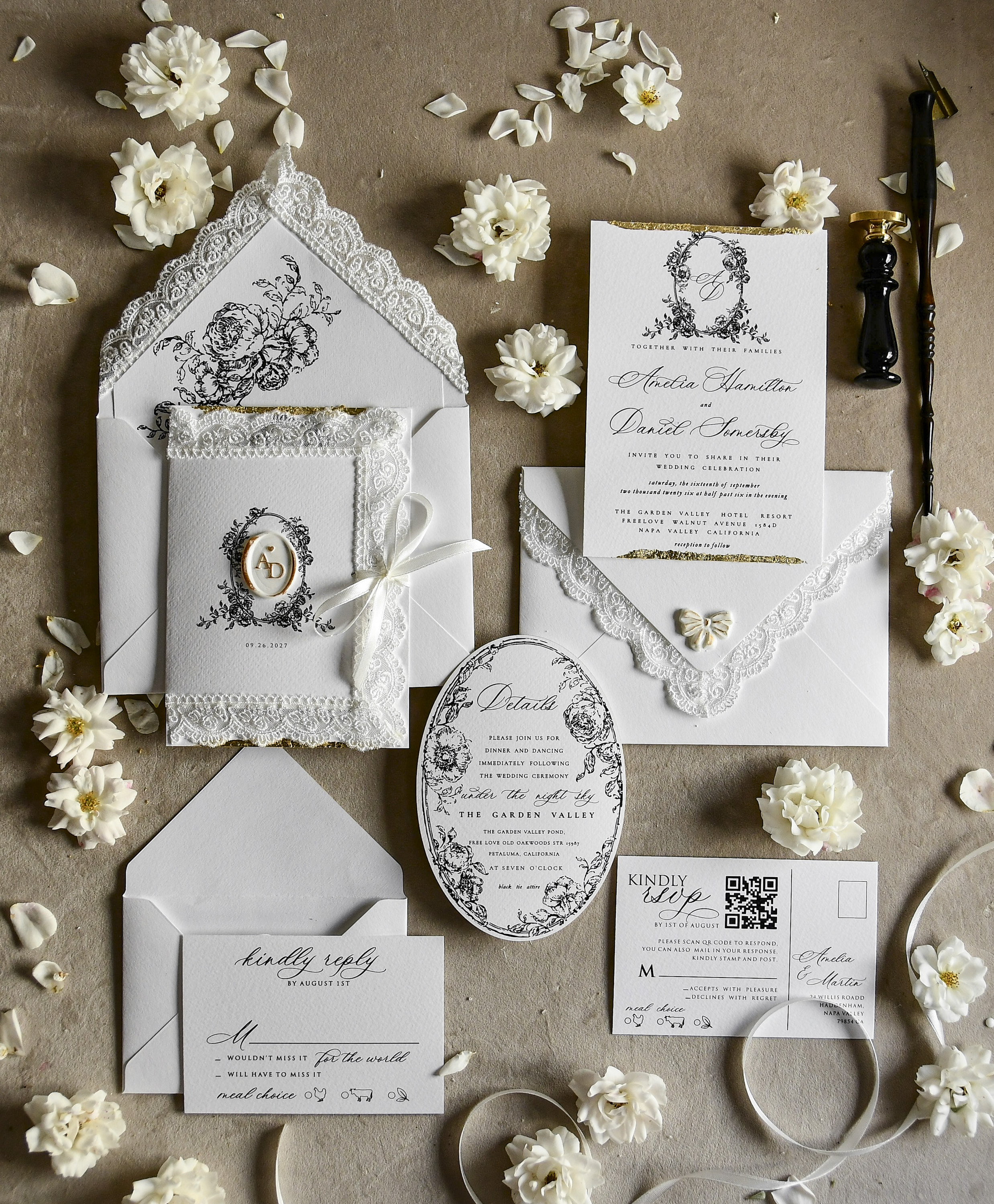
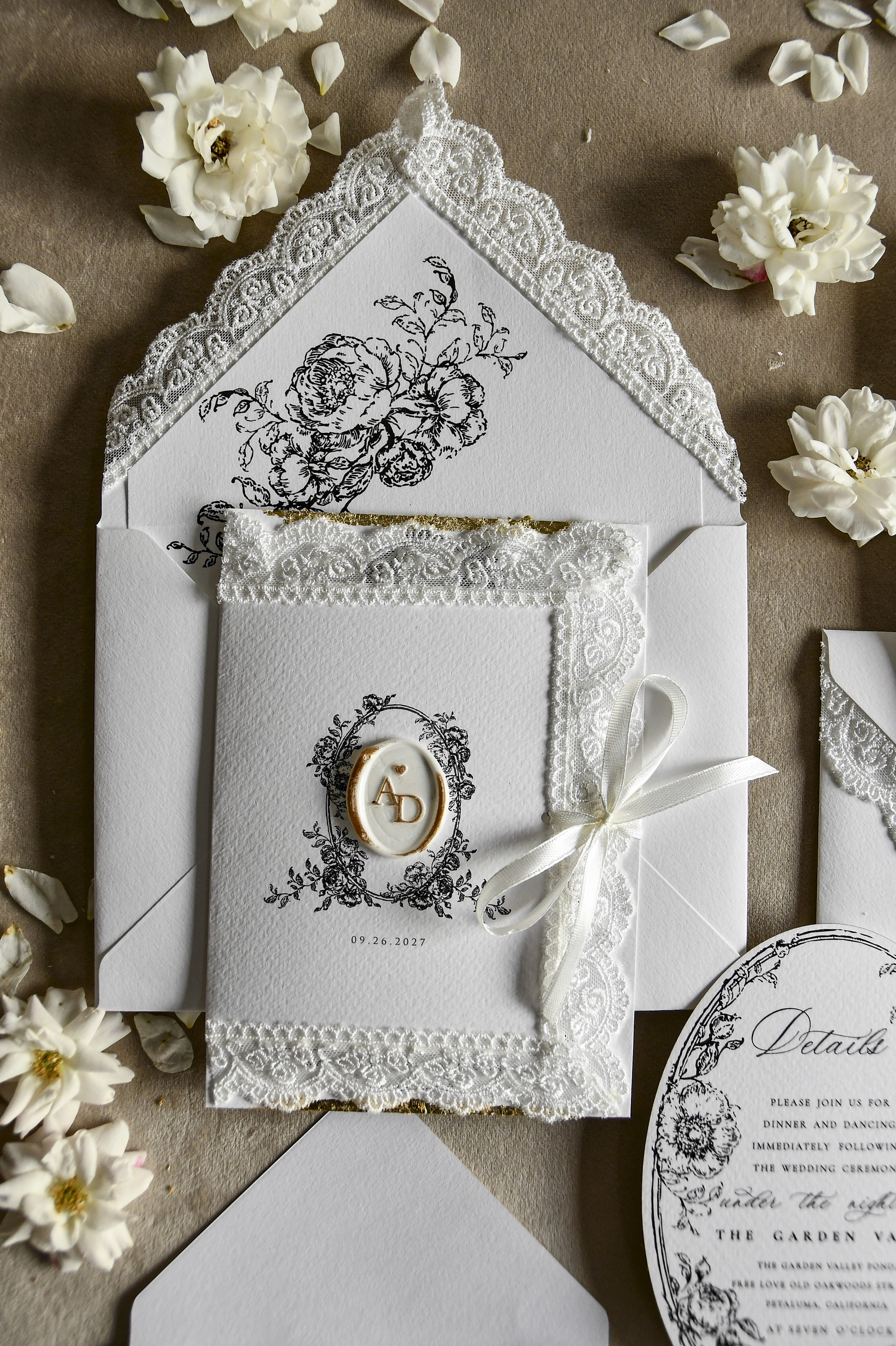
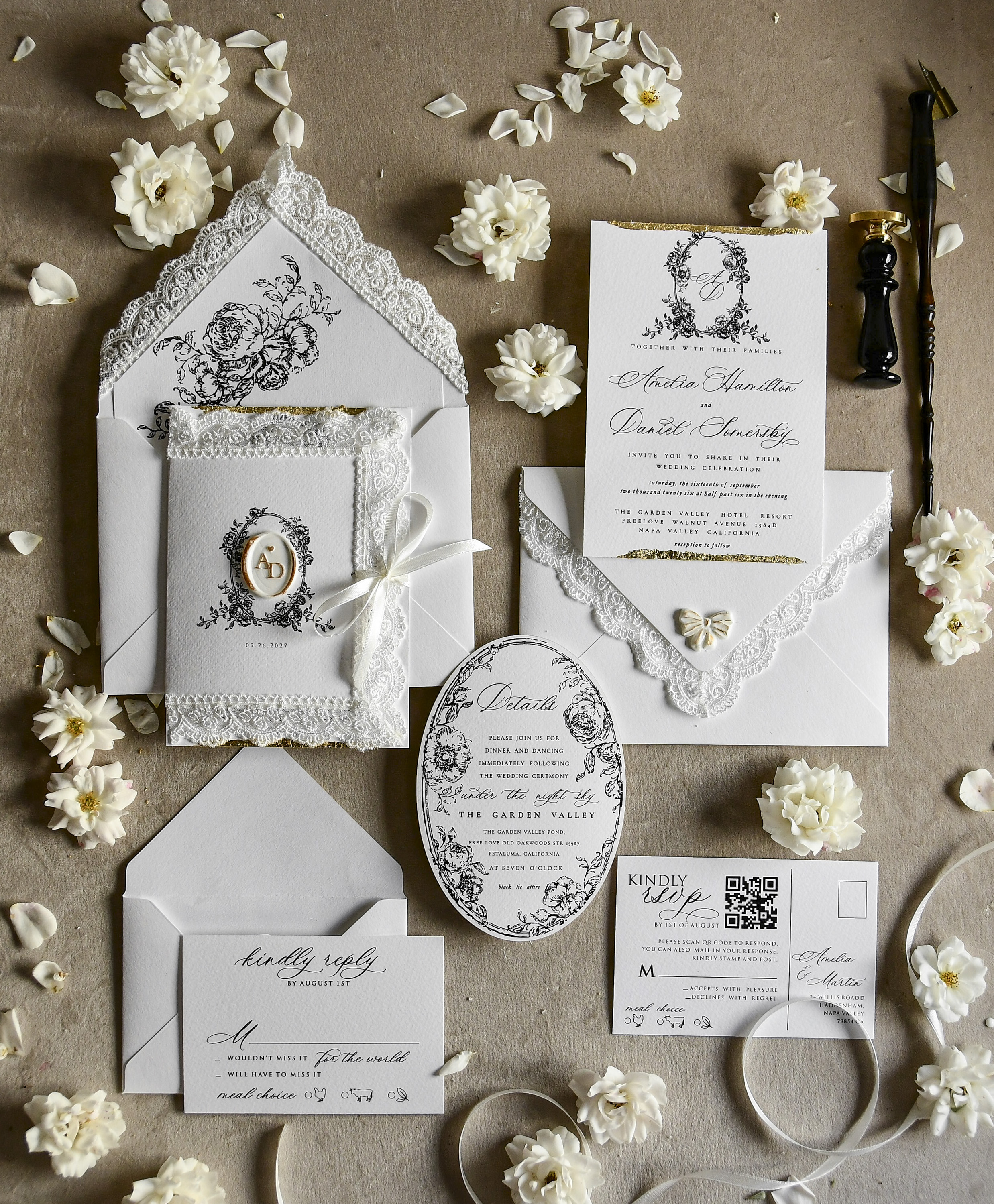
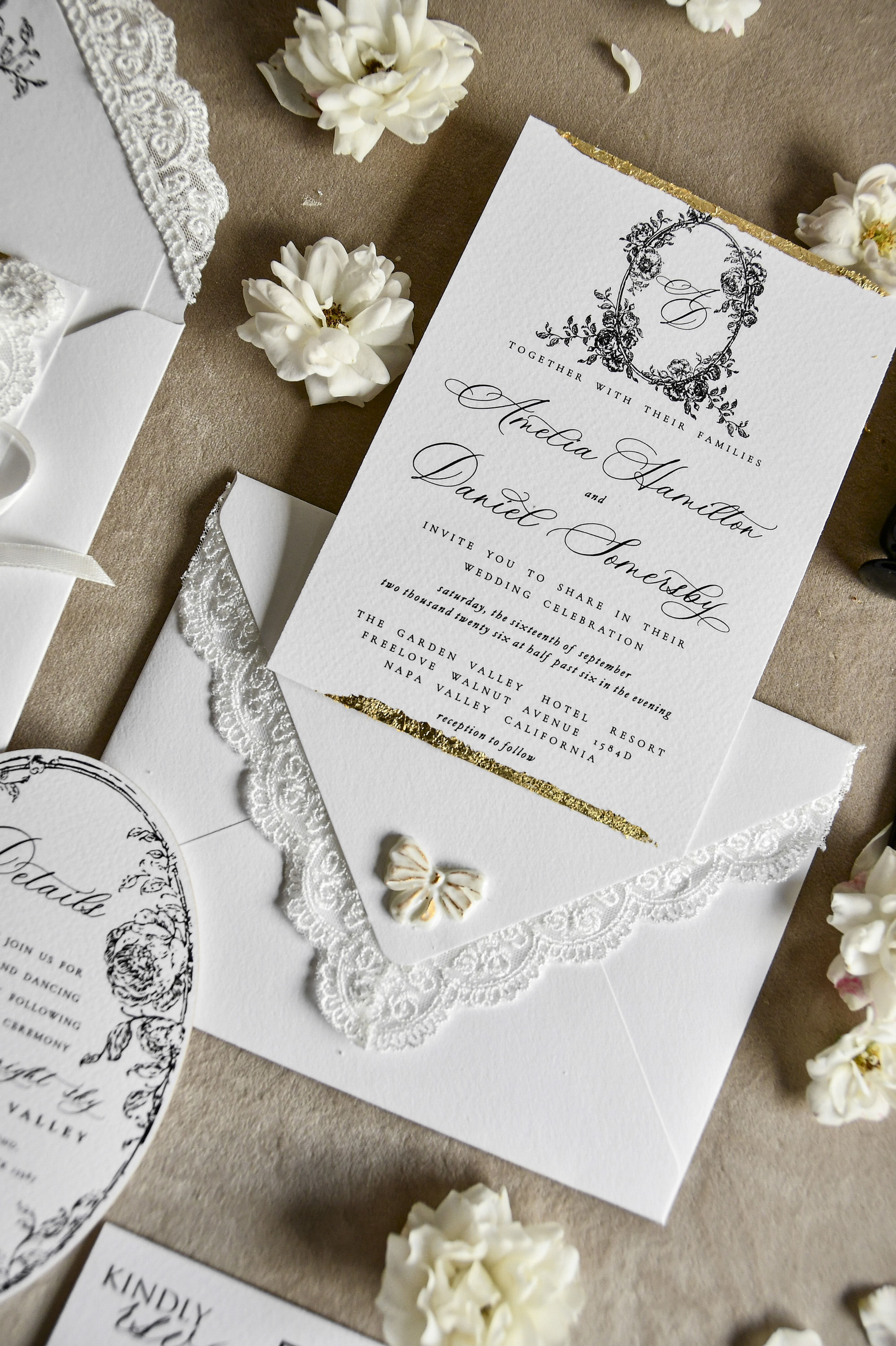
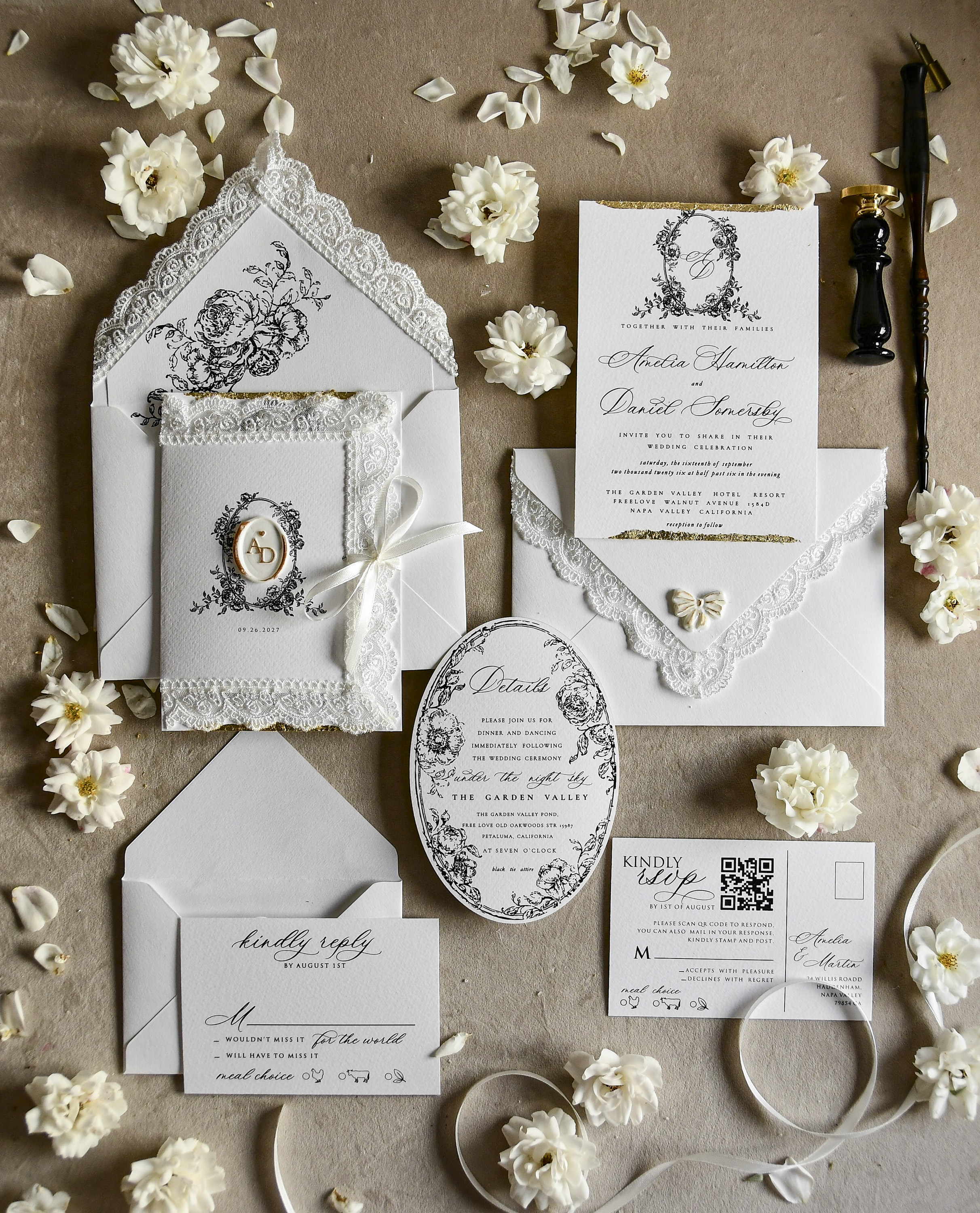
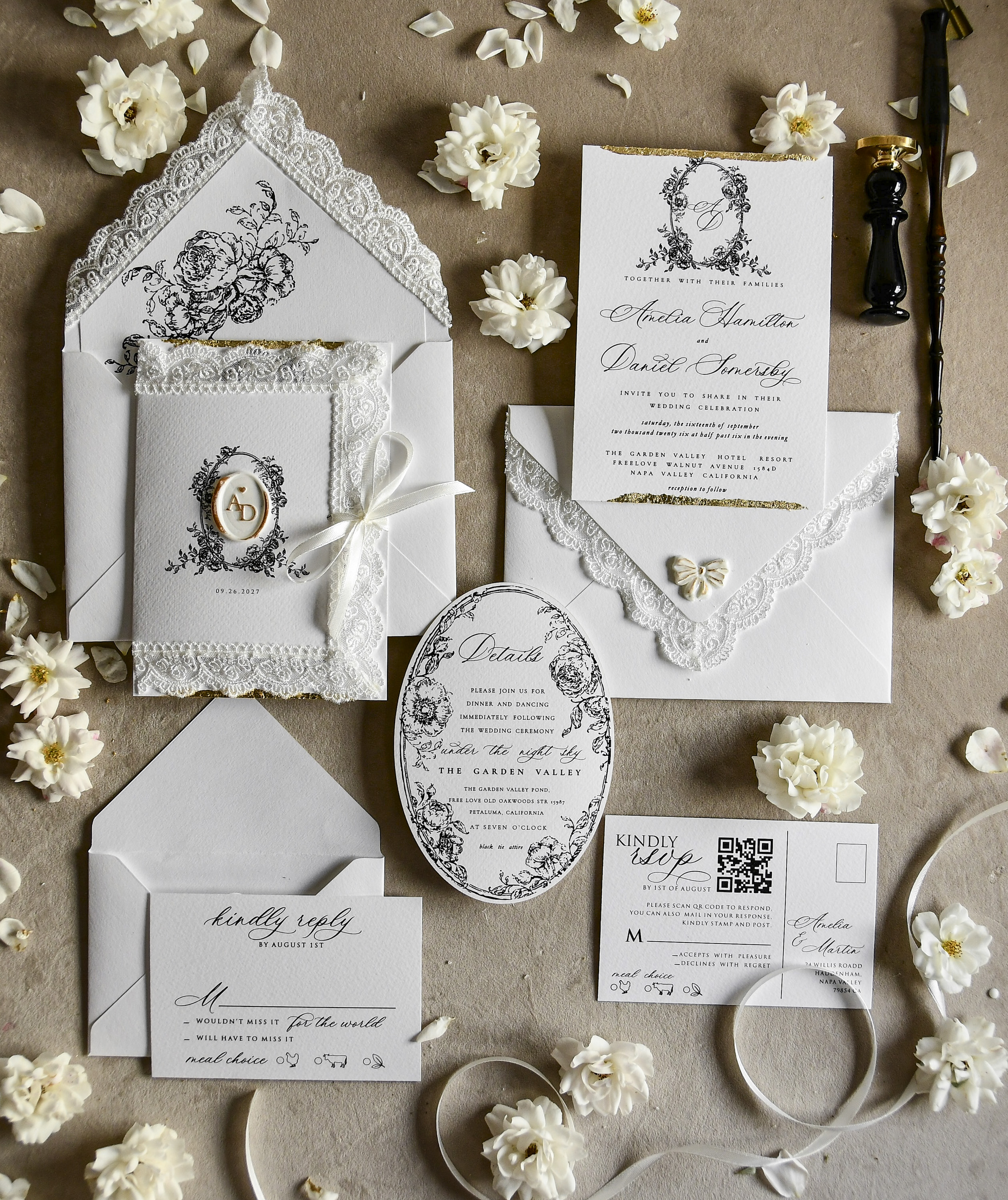
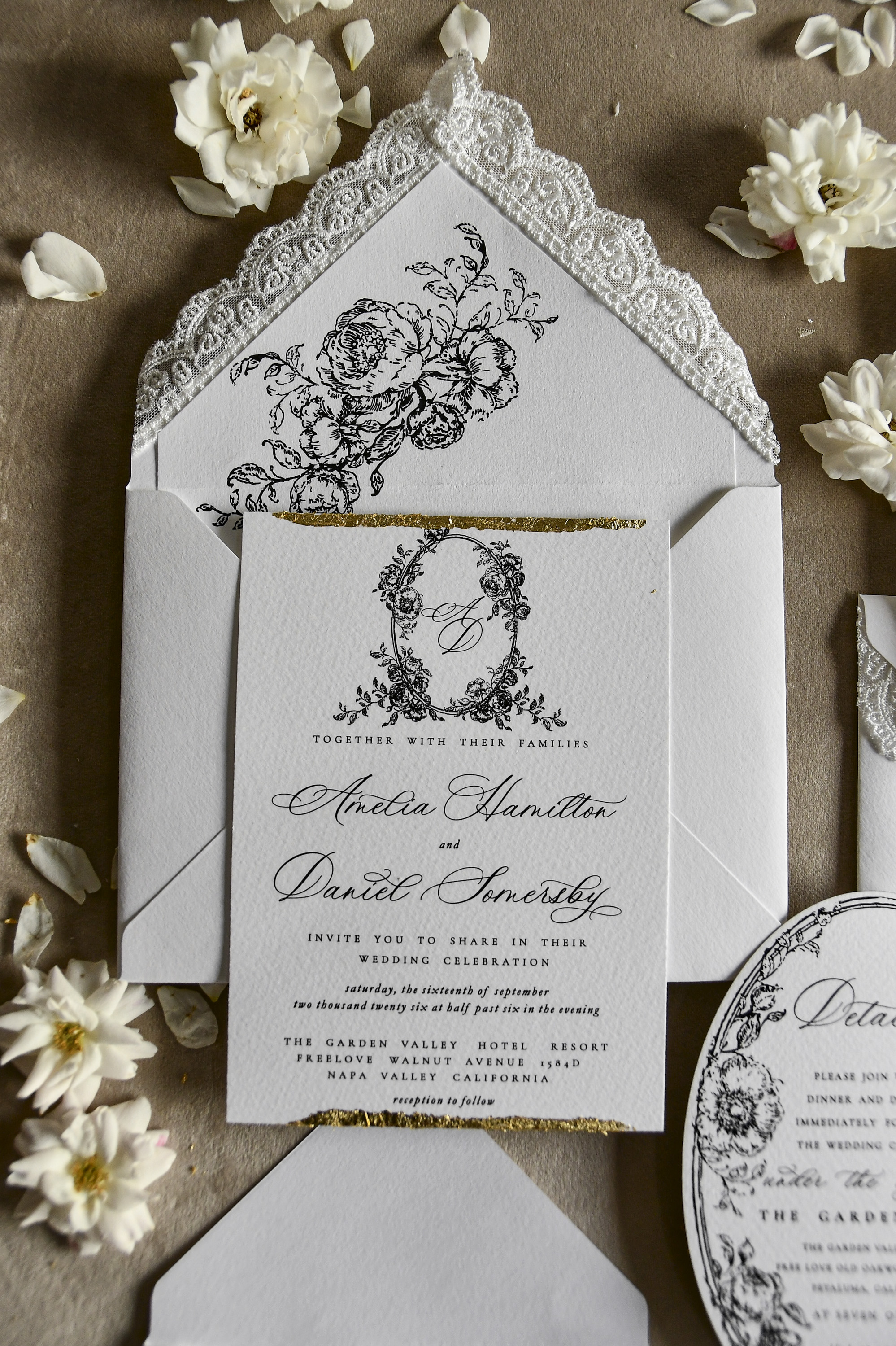
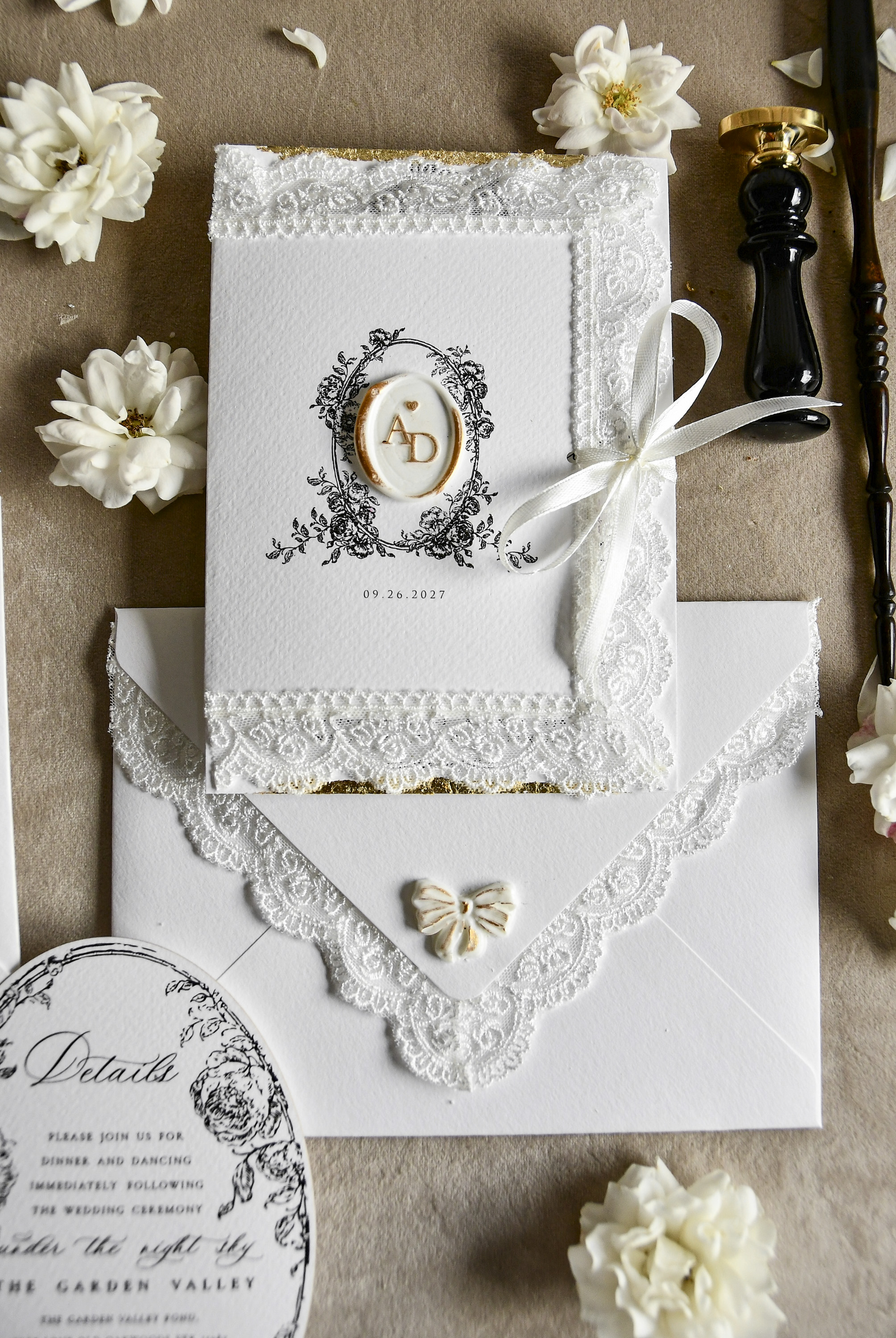
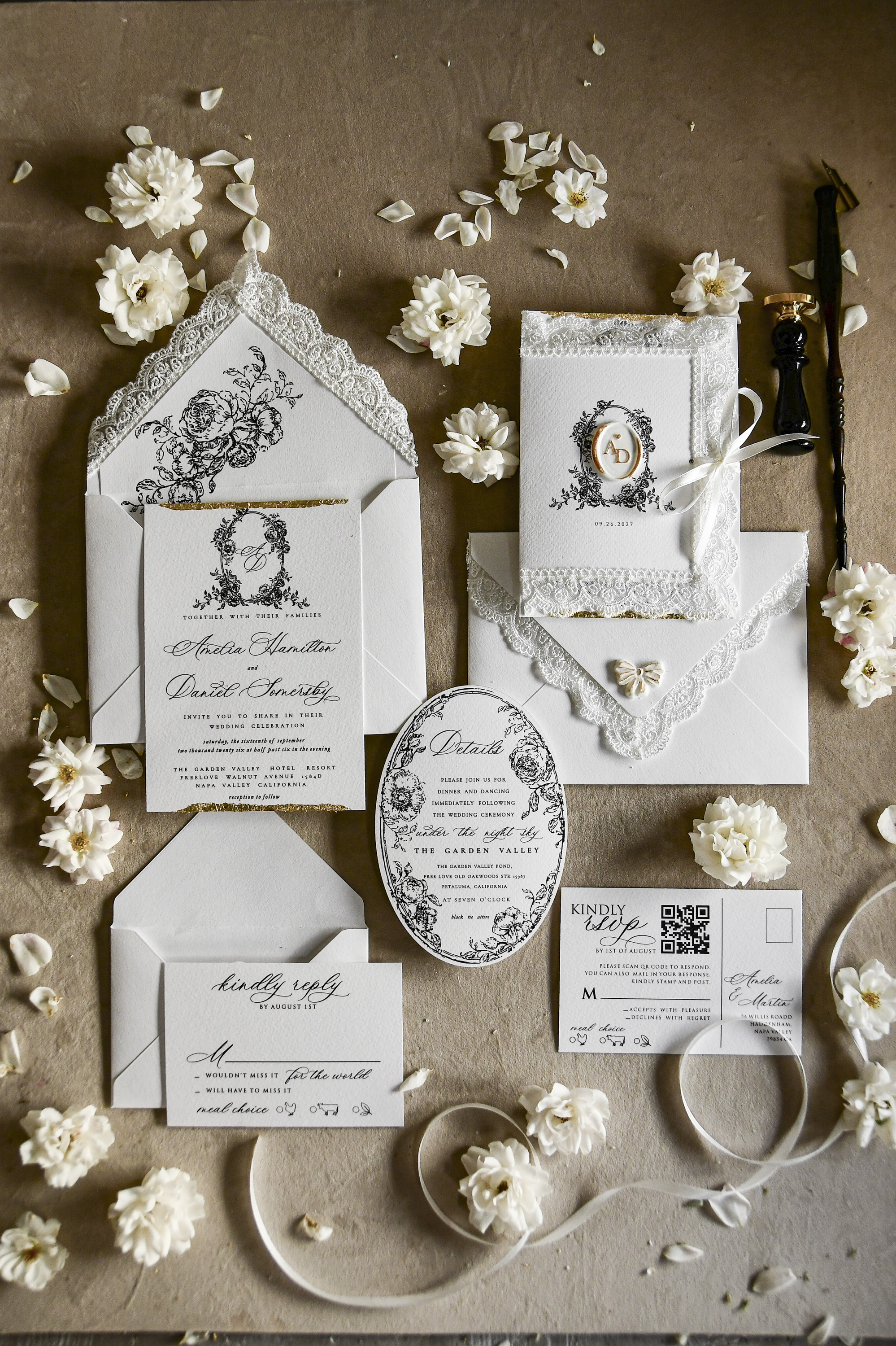
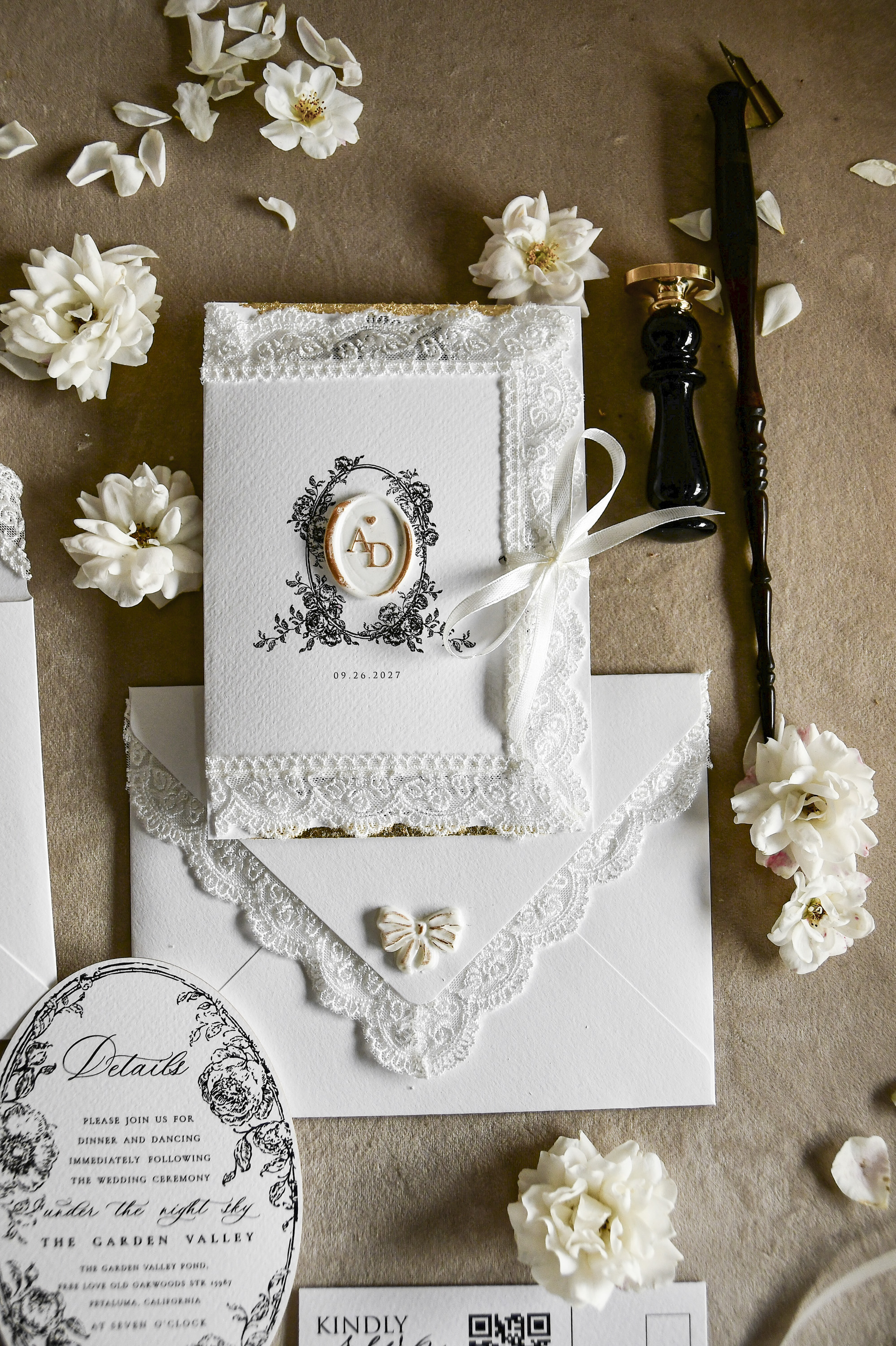
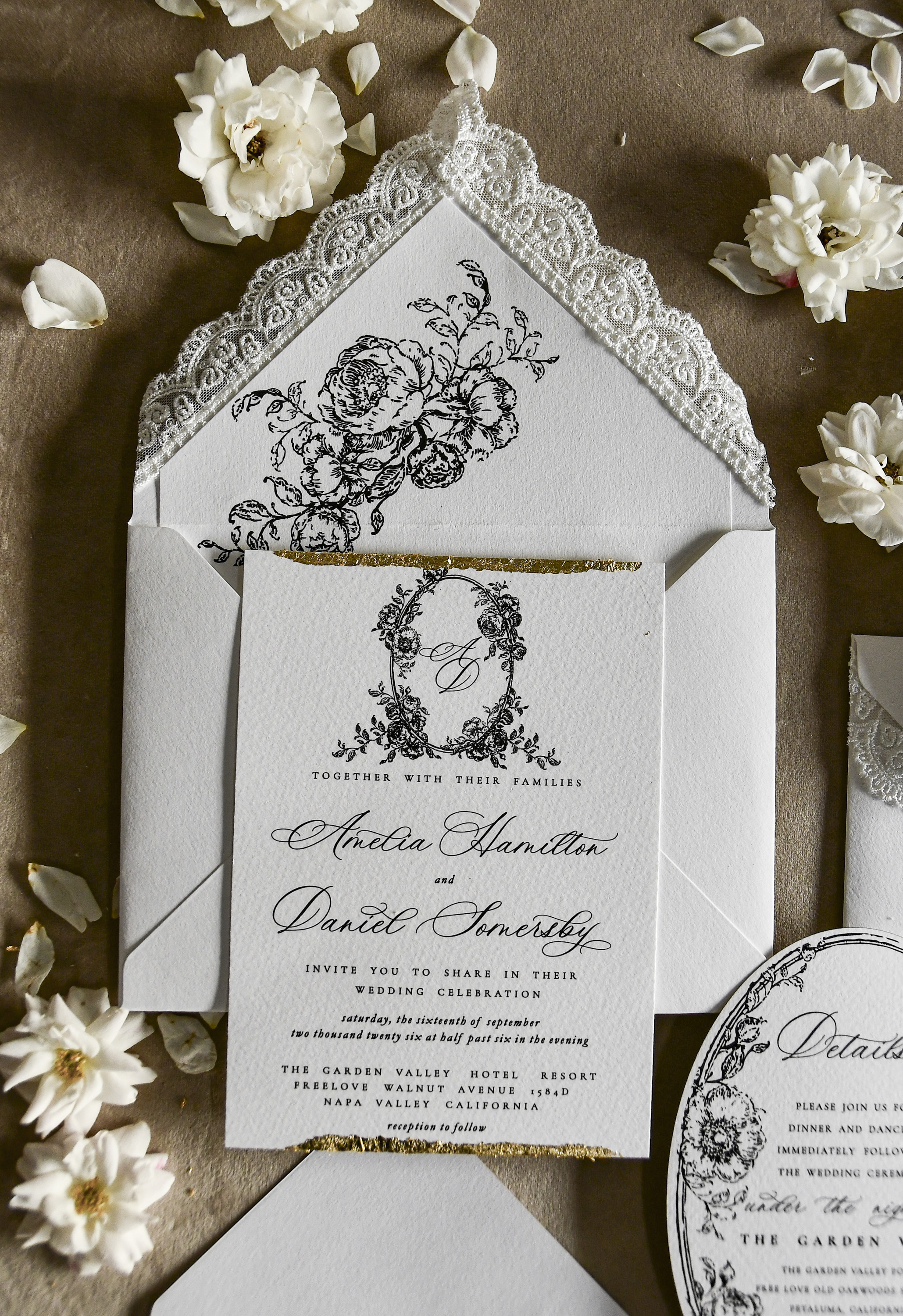
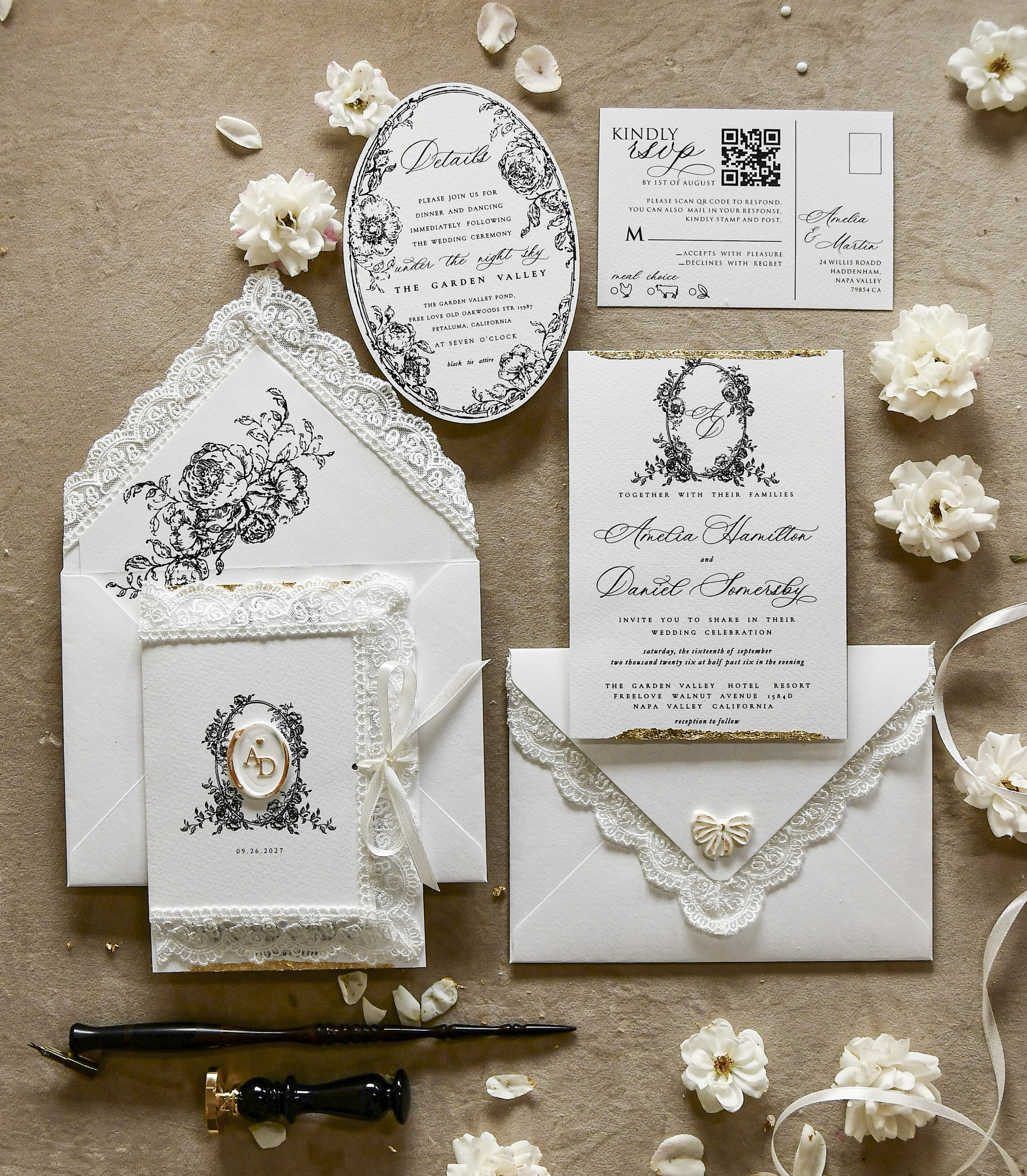
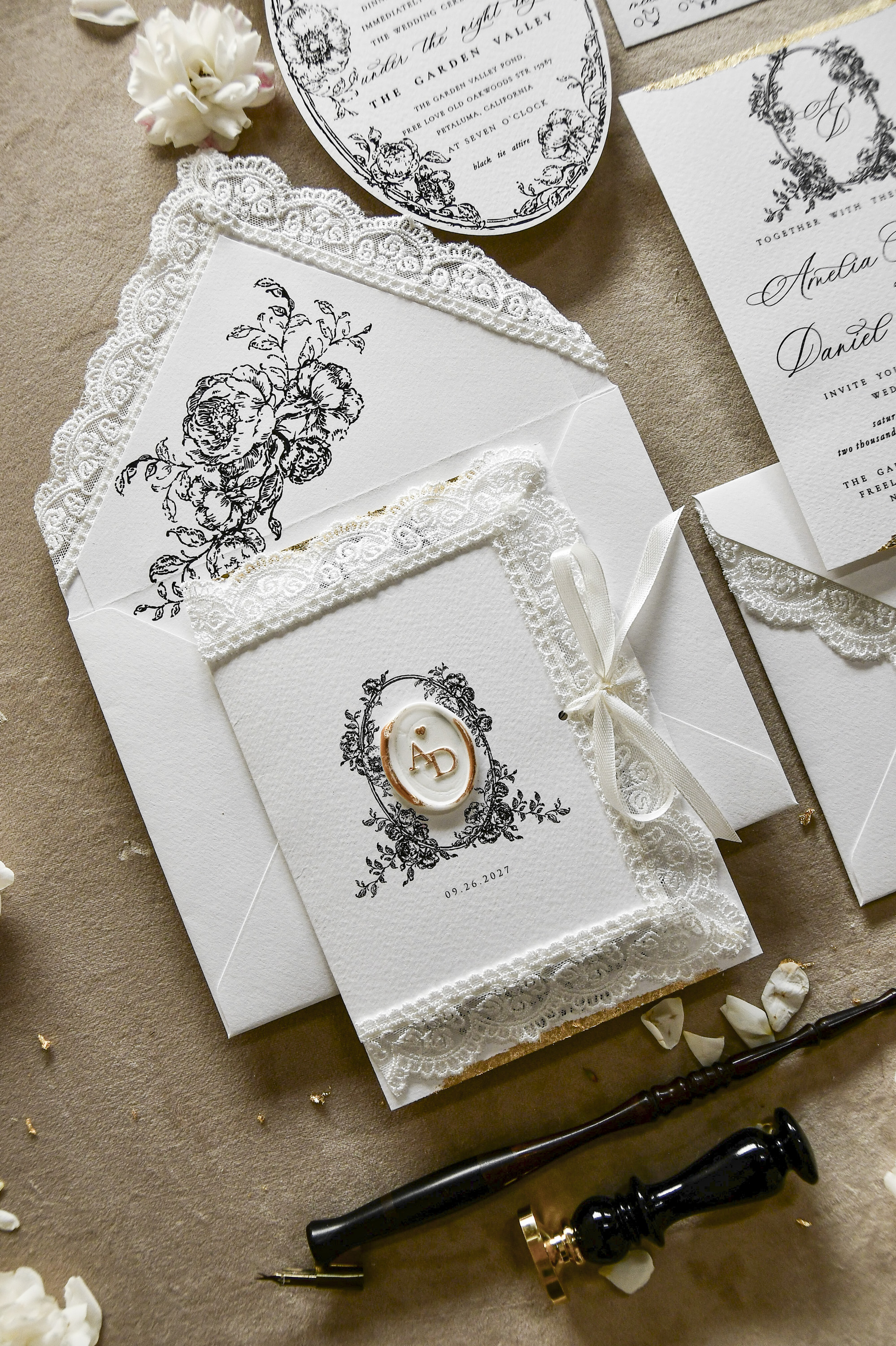
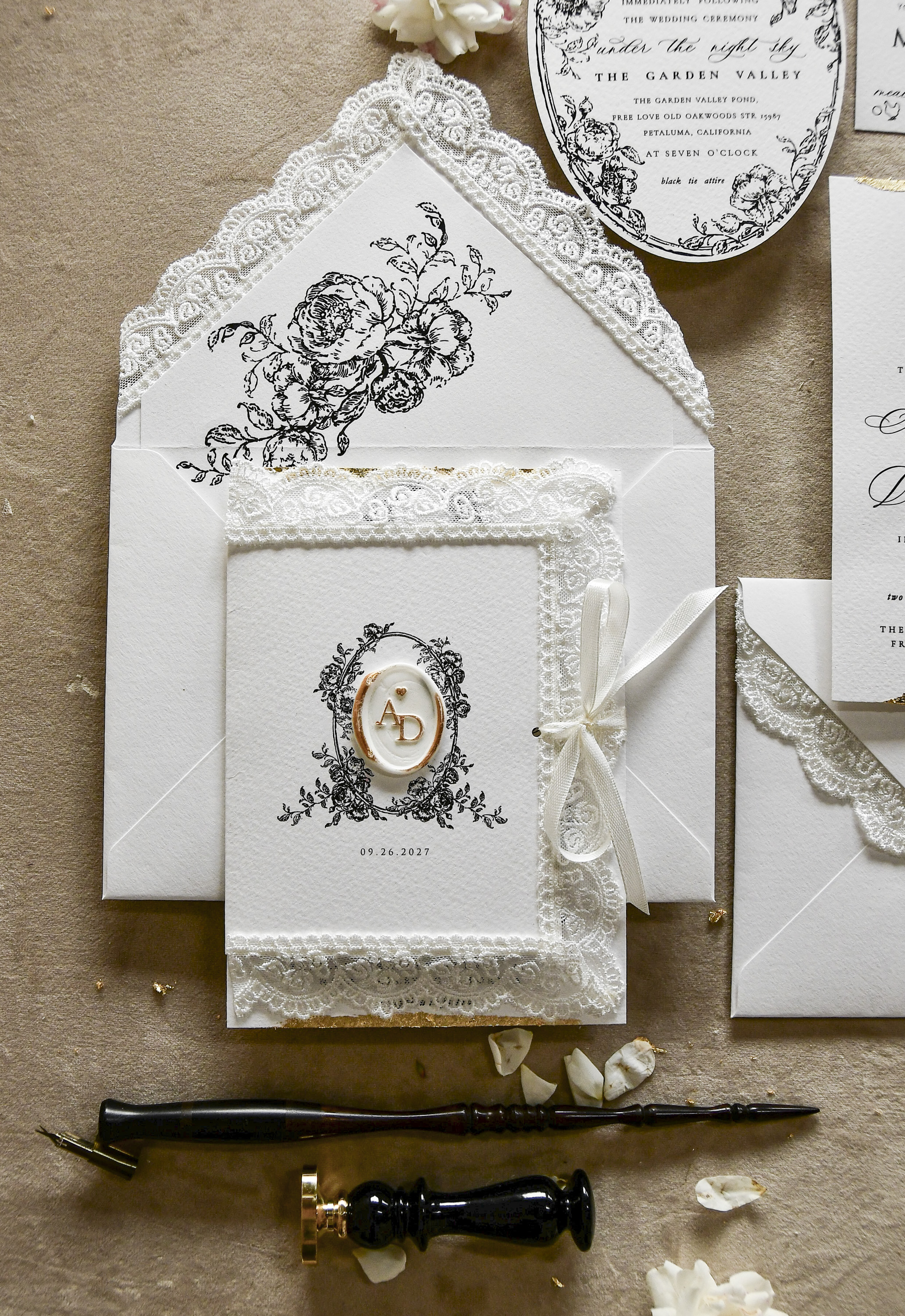
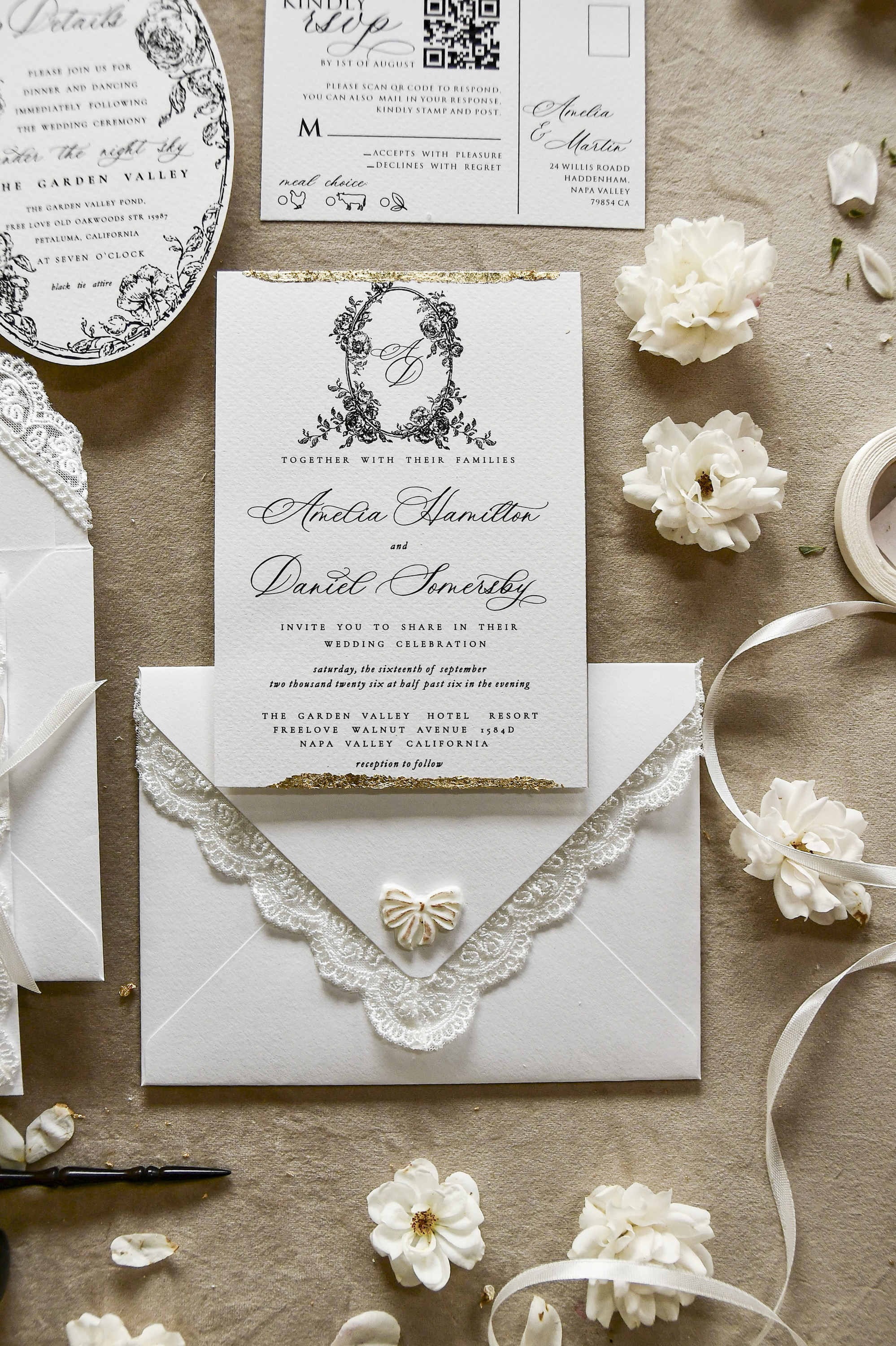
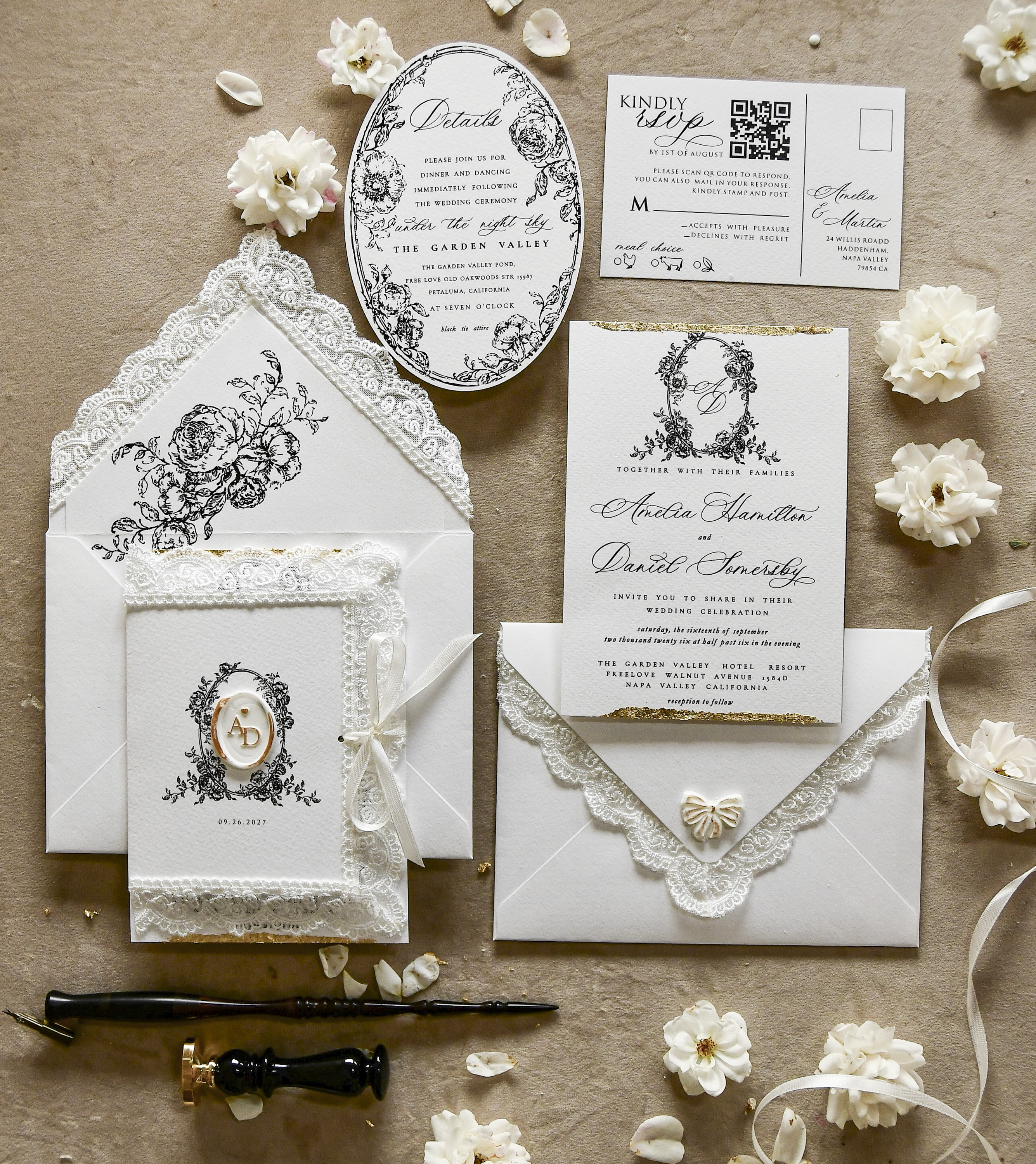
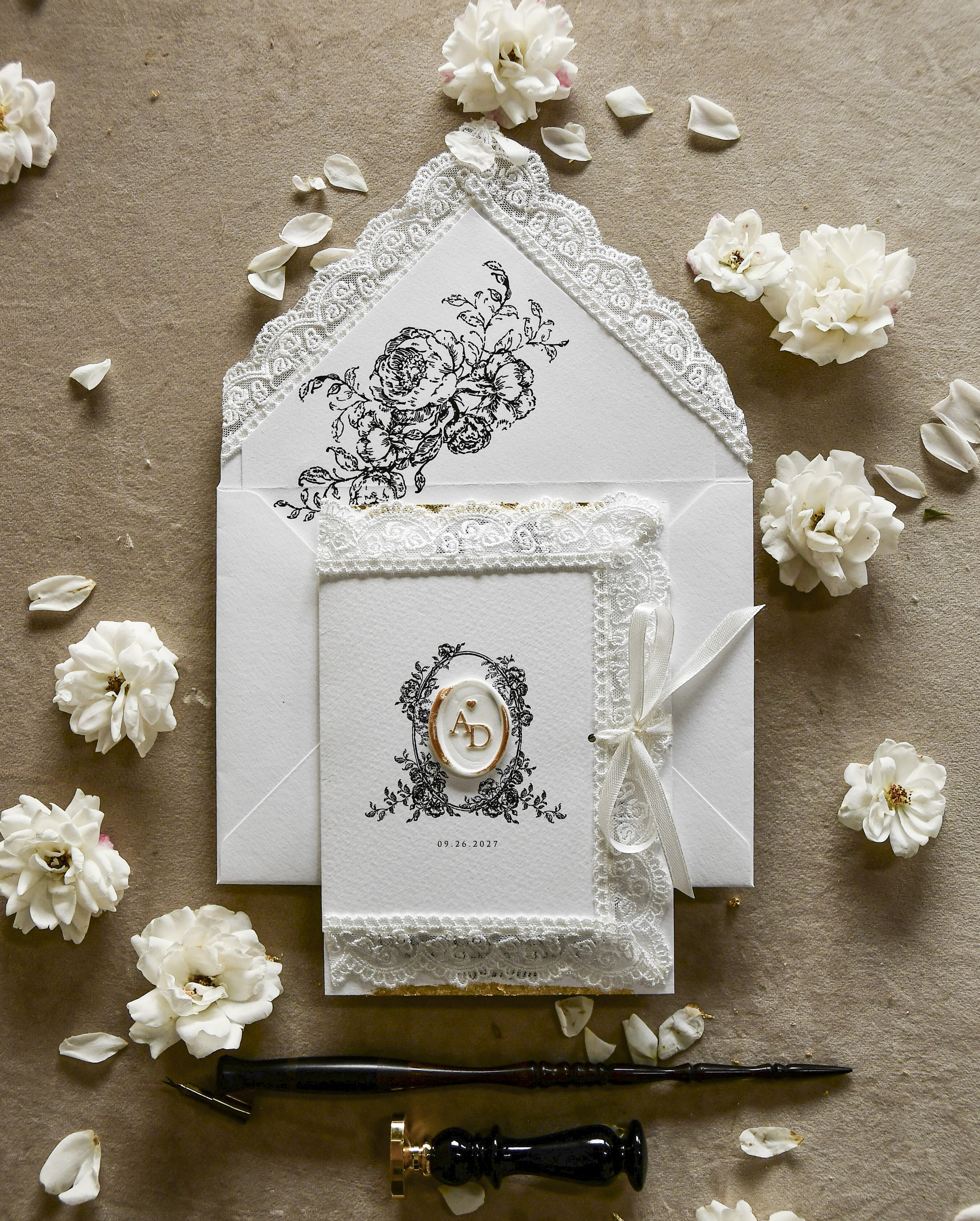
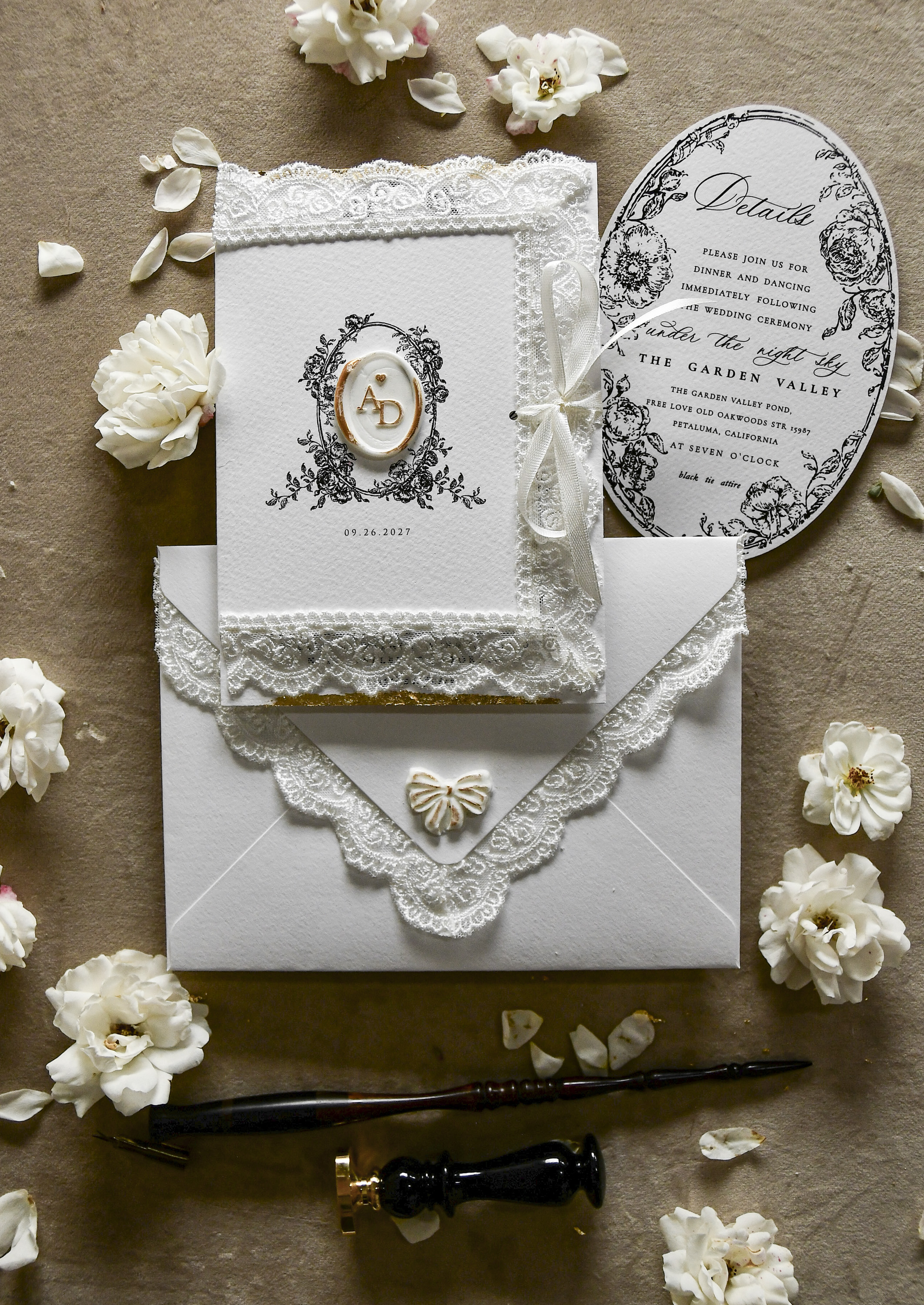
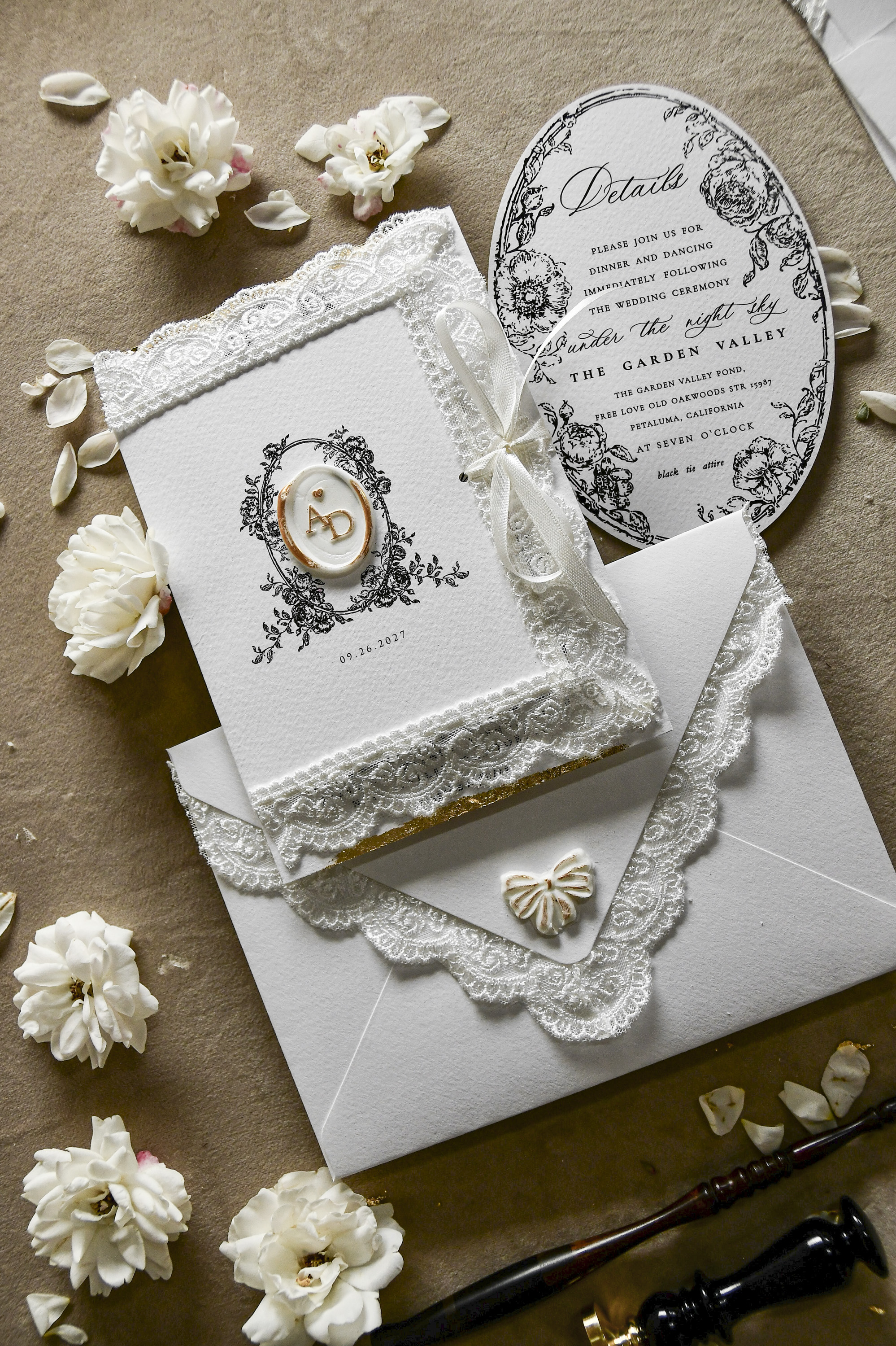
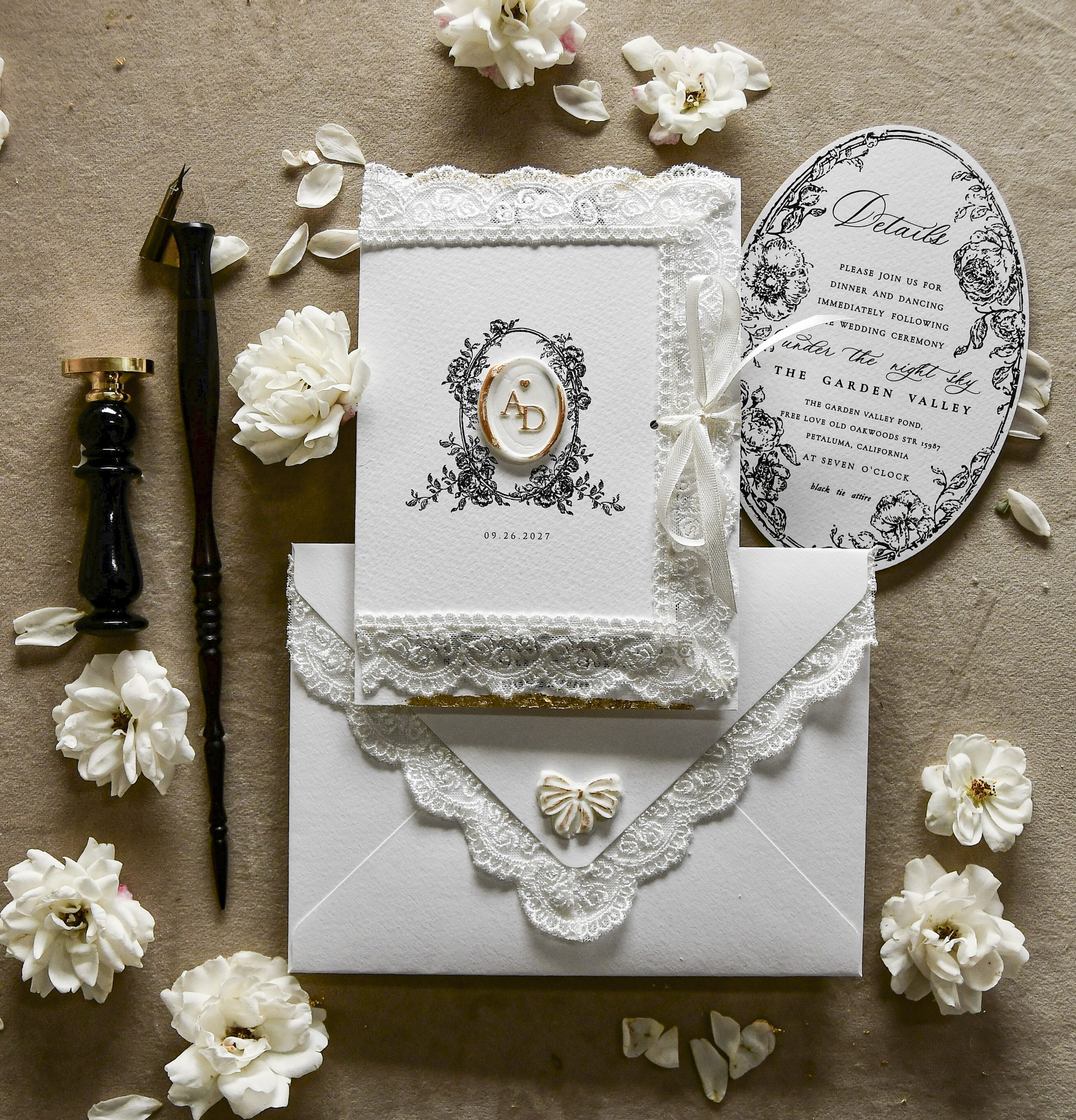
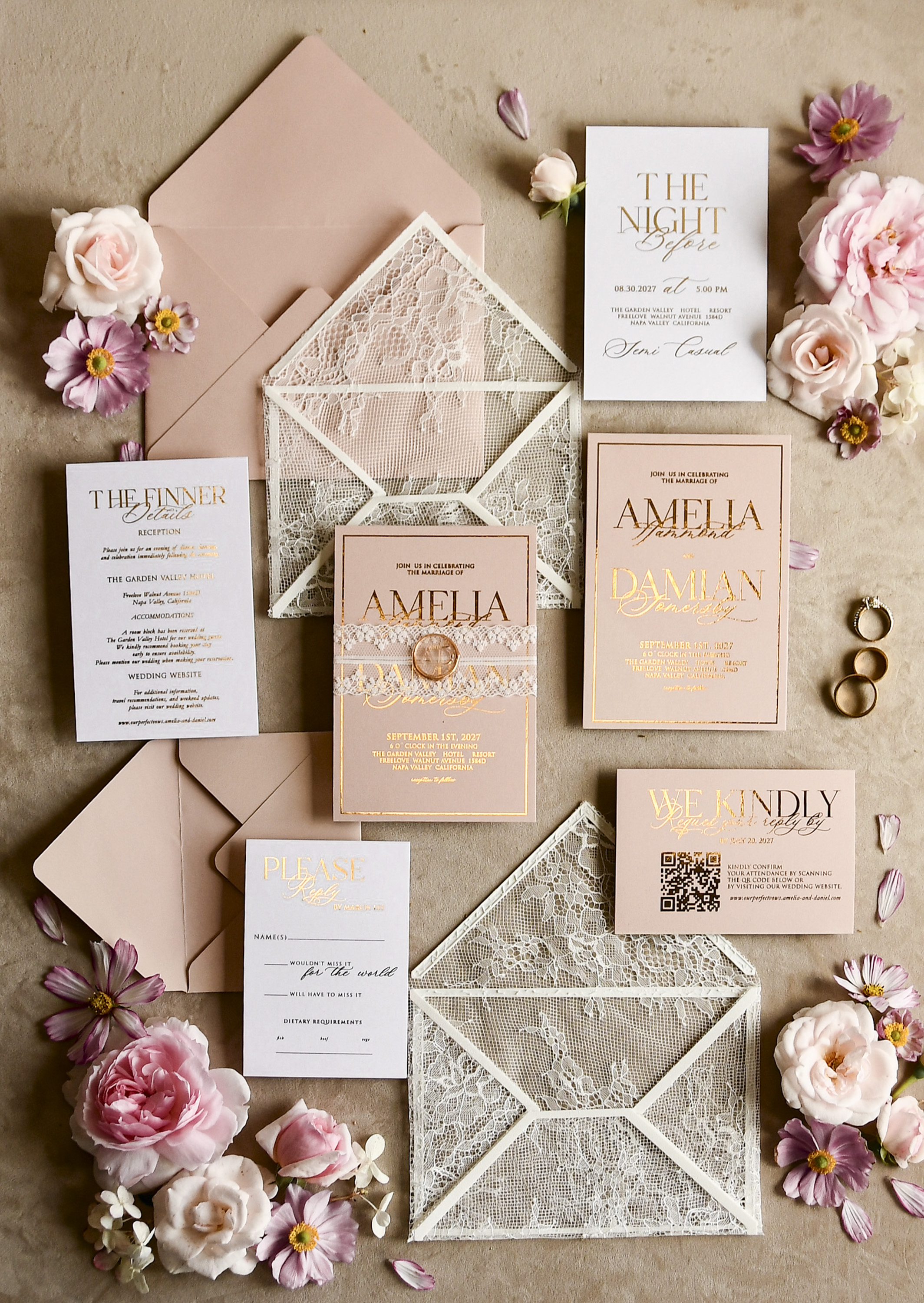
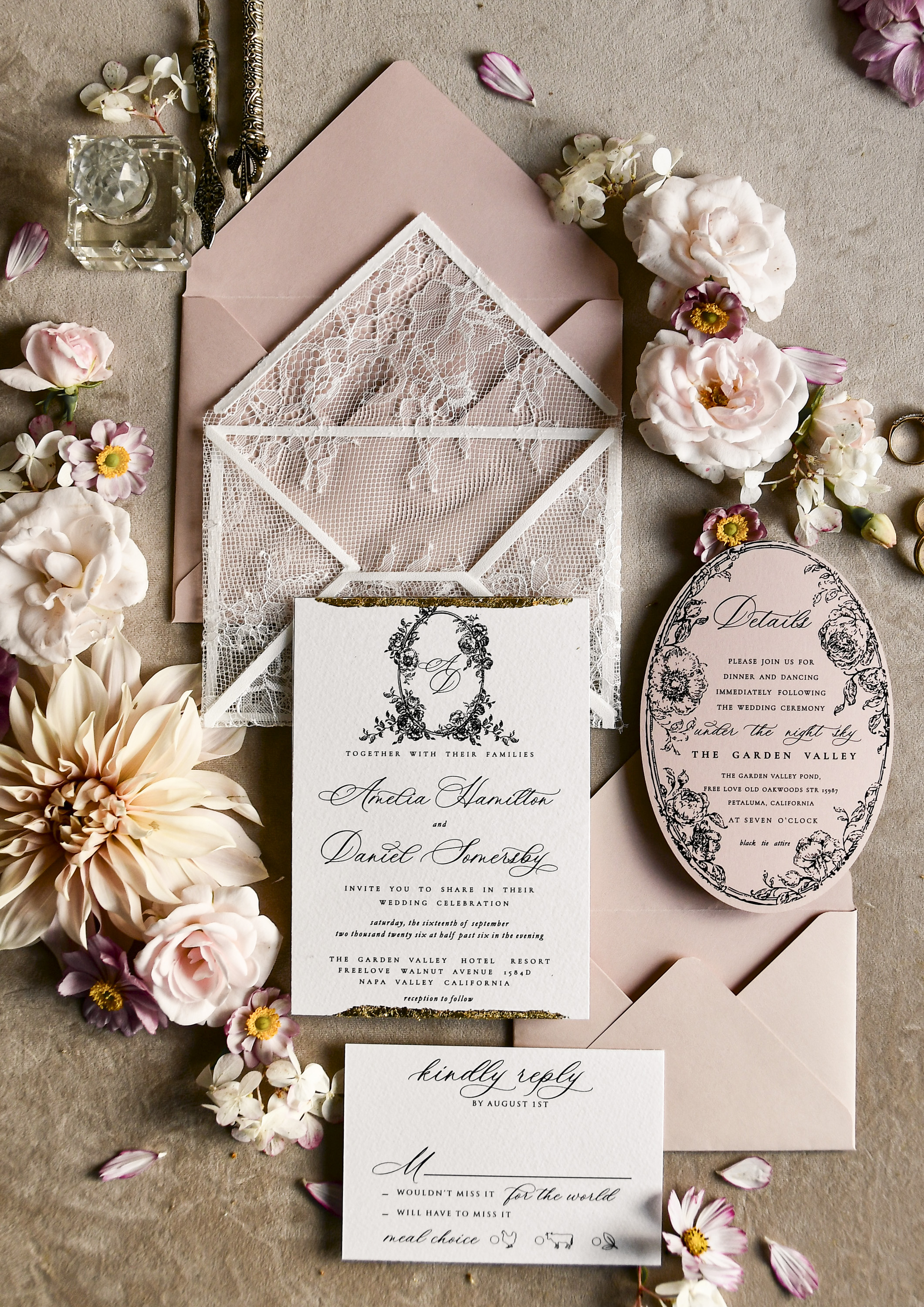
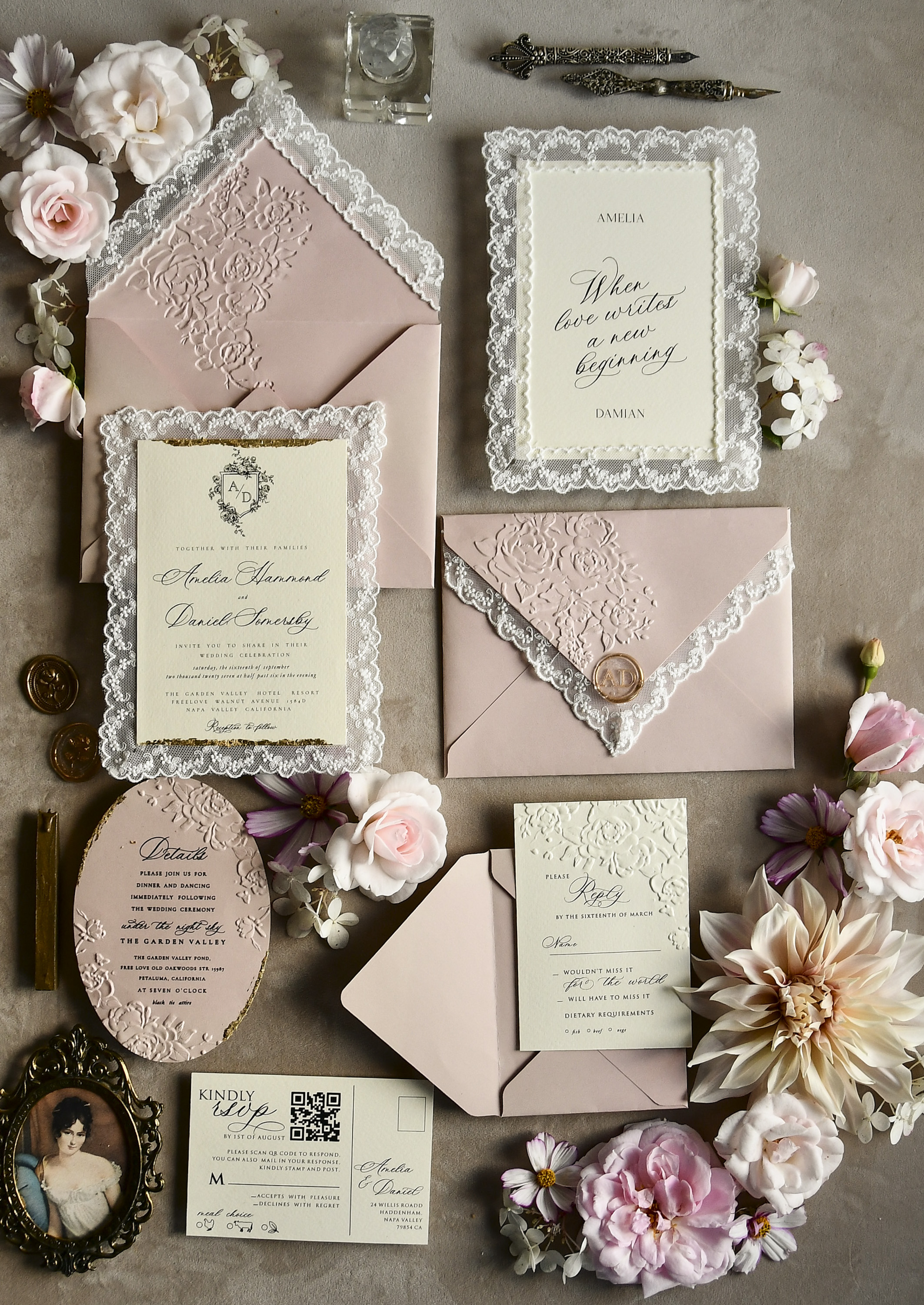
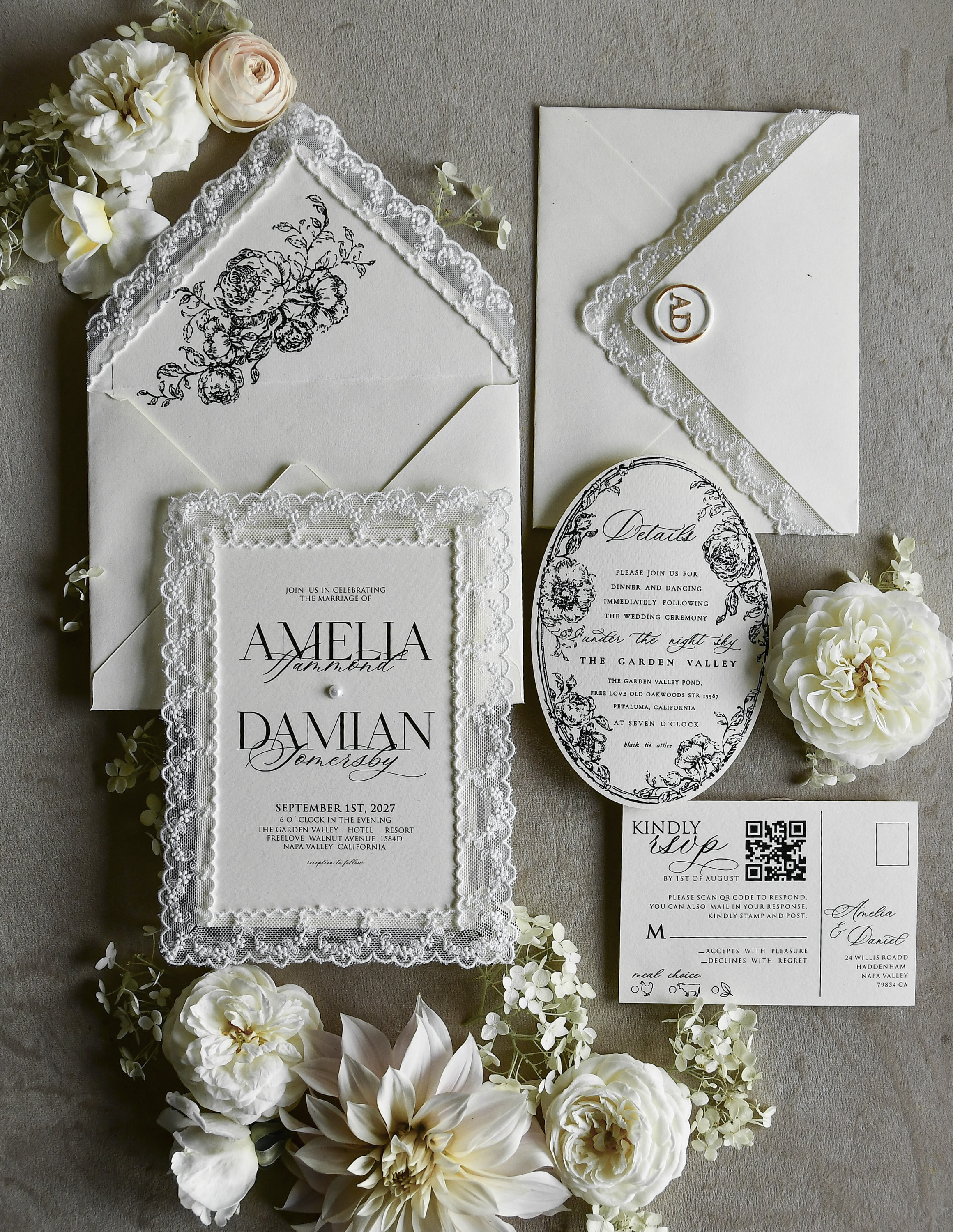
The way you word your invitation matters enormously. Your invitation is the official, authoritative word on who is and isn't invited — which is why getting it right is so important. For a romantic, vintage-style event, a beautifully designed invitation like the 03/laceTR/z from Margo&Bees sets an elegant, grown-up tone before guests even read a word.
For an adults-only wedding, the invitation envelope is your first tool. Address it specifically to the adults invited — "Mr. and Mrs. James Carter" rather than "The Carter Family." You can also include a line on your wedding website or inner envelope such as: "We have chosen to celebrate with an adults-only reception and appreciate your understanding."
If you're allowing some children but not others, spread the word through family members and close friends before invitations go out. A quiet, personal heads-up to the parents who won't be bringing kids softens the message far better than letting them read it cold on a card.
Never put "No children" or "Adults only" on the invitation itself — it reads as blunt. Handle it through addressing, your wedding website, and direct conversation instead.
If You Do Invite Kids: Make It Work for Everyone
Welcoming children is a generous choice — and a little planning goes a long way toward keeping everyone happy, including the kids' parents.
- Designate a kids' table with activity packs, crayons, and simple games. It gives children something to do and gives parents a breather.
- Hire a childcare provider or babysitter to supervise a kids' room or corner of the venue. This is especially appreciated at longer receptions.
- Offer a children's meal option — even something simple like pasta or chicken tenders — so kids aren't stuck with the adult tasting menu.
- Keep the ceremony as short as possible. Toddlers have a hard limit. A tight, 20-30 minute ceremony is much easier on families than an hour-long service.
- Consider the timing. A wedding that runs past 9 or 10 PM is tough on little ones. If you want a late night, a daytime ceremony with an early dinner reception lets families attend and still get kids home at a reasonable hour.
What to Do When Family Pushes Back
No matter what you decide, someone may not love it. A grandparent might insist the grandchildren must come. A close friend might feel hurt that her toddler isn't included. Here's how to handle it with grace:
Be consistent and kind. Once you've made your decision, hold to it — making exceptions for one family and not another is what truly causes resentment. Acknowledge the inconvenience honestly: "We know it's a lot to arrange childcare, and we genuinely appreciate you making it work." That simple acknowledgment goes a long way.
If a guest ultimately can't attend because they can't find childcare, express your disappointment sincerely and leave the door open. Most guests — even frustrated ones — understand that it's your wedding and your call to make.
Frequently Asked Questions
No — an adults-only wedding is a completely acceptable and common choice. What matters is communicating it early, clearly, and kindly so parents have plenty of time to arrange childcare. Most guests understand and appreciate the advance notice.
Address the envelope specifically to the adults you're inviting — for example, "Mr. and Mrs. Dana Reyes" rather than "The Reyes Family." You can also include a note on your wedding website clarifying the adults-only policy.
Yes — if a child is in your ceremony as a flower girl, ring bearer, or junior bridesmaid, it would be awkward and unkind to exclude them from the reception. Their parents should be invited as well.
As much as possible. Ideally, let close family and friends know informally six or more months before the wedding, and confirm it officially when invitations go out eight to ten weeks ahead. Parents need time to arrange reliable childcare.
Typically yes — most caterers charge a per-head fee for children, though often at a reduced rate. Check with your caterer early so you can budget accurately and decide whether to offer a separate children's menu.
A common and practical cutoff is age 8, 10, or 12 — old enough to sit through a ceremony and enjoy a dinner. Whatever age you choose, apply it consistently across all families to avoid any perception of favoritism.
See This Design Up Close

You May Also Like
More Wedding Planning Guides
- → Mailing vs. Hand-Delivering Wedding Invitations: What's the Right Call?
- → When Silence Speaks: How to Handle Guests Who Never RSVP'd
- → The Plus-One Dilemma: How to Handle Dates for Single Guests
- → Ceremony-Only Guests: The Honest Guide to Partial Wedding Invitations
- → Save the Dates and Wedding Invitations: What Each One Does and Why You Need Both
- → Navigating the Parent Guest List: How to Keep the Peace Without Losing Control
- → The Honest Guide to Trimming Your Wedding Guest List Without the Guilt
- → The Graceful Art of Telling Someone They're Not on the Guest List
- → Seating Your Divorced Parents at the Wedding: A Practical Guide
- → When Guests Ghost Your RSVP: What to Do Next
- → The Honest Guide to Deciding Who Gets a Plus One at Your Wedding
- → The Ex Factor: How to Decide Whether a Former Partner Belongs on Your Guest List
- → The Perfect Timing for Mailing Your Wedding Invitations
- → Digital vs. Paper Wedding Invitations: Which Is Right for You?
- → Child-Free Weddings: What's Rude and What's Perfectly Fine
- → Everything Your Wedding Invitation Needs to Say
- → Navigating Guest List Pressure: When Mom Wants to Invite Someone You Don't
- → When Your Partner Wants a Smaller Guest List Than You Do
- → Online RSVPs vs. Mailed Cards: What Every Couple Should Know
- → Uninvited Plus-Ones and Tag-Alongs: How to Keep Your Guest List Intact
- → When Family Feuds Threaten Your Wedding Plans: A Practical Peacekeeper's Guide
- → Inviting an Estranged Brother or Sister: Finding Clarity Before You Seal the Envelope
- → Cousins, Invites, and Hard Choices: A Practical Guest List Guide