
Ceremony-Only Guests: The Honest Guide to Partial Wedding Invitations
You have a venue that holds 200 people for the ceremony but only 80 for the dinner. Or maybe your budget simply doesn't stretch to feeding every extended family member and childhood neighbor. Whatever the reason, you're wondering: is it actually acceptable to invite someone to witness your vows but not join the celebration afterward? The short answer is yes — but how you handle it makes all the difference between guests who feel honored and guests who feel like an afterthought.
Yes, It's Acceptable — With the Right Mindset
Ceremony-only invitations have a long tradition, particularly in larger families and religious communities where the wedding Mass or ceremony is considered the most meaningful part of the day. The reception is a private party; the ceremony is a public declaration. Framing it that way — to yourself and, gently, to guests — helps everyone feel good about the arrangement.
That said, be honest with yourself about who you're placing in this category. Ceremony-only lists work best for:
- Extended family you see once a year or less
- Parents' friends or colleagues who want to witness the moment
- Neighbors, community members, or congregation members
- Coworkers you're friendly with but not close to
If someone is a genuine close friend, think twice before leaving them off the reception list. The closer the relationship, the more awkward the distinction becomes.
How to Word a Ceremony-Only Invitation
The golden rule: never mention the reception on a ceremony-only invitation. Simply omit it entirely. A ceremony-only invite includes the date, ceremony time, ceremony location, and your names — nothing more. Guests who aren't invited to the reception don't need to know a reception is happening at a different venue.
A clean example:
Together with their families
Sarah Jane Collins and Michael Thomas Reed
request the honor of your presence
at their marriage
Saturday, the fourteenth of June
at two o'clock in the afternoon
St. Andrew's Episcopal Church
Charleston, South Carolina
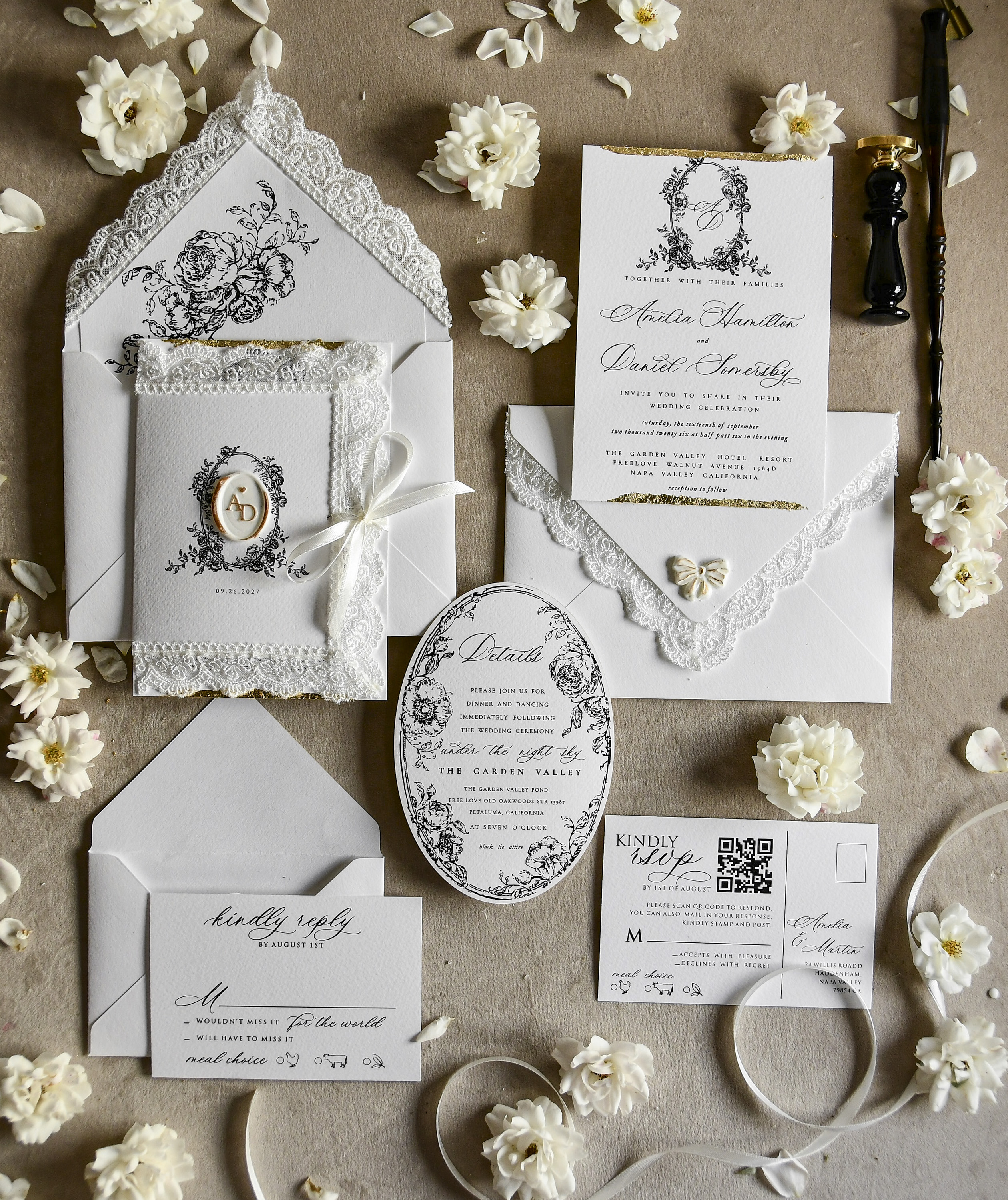
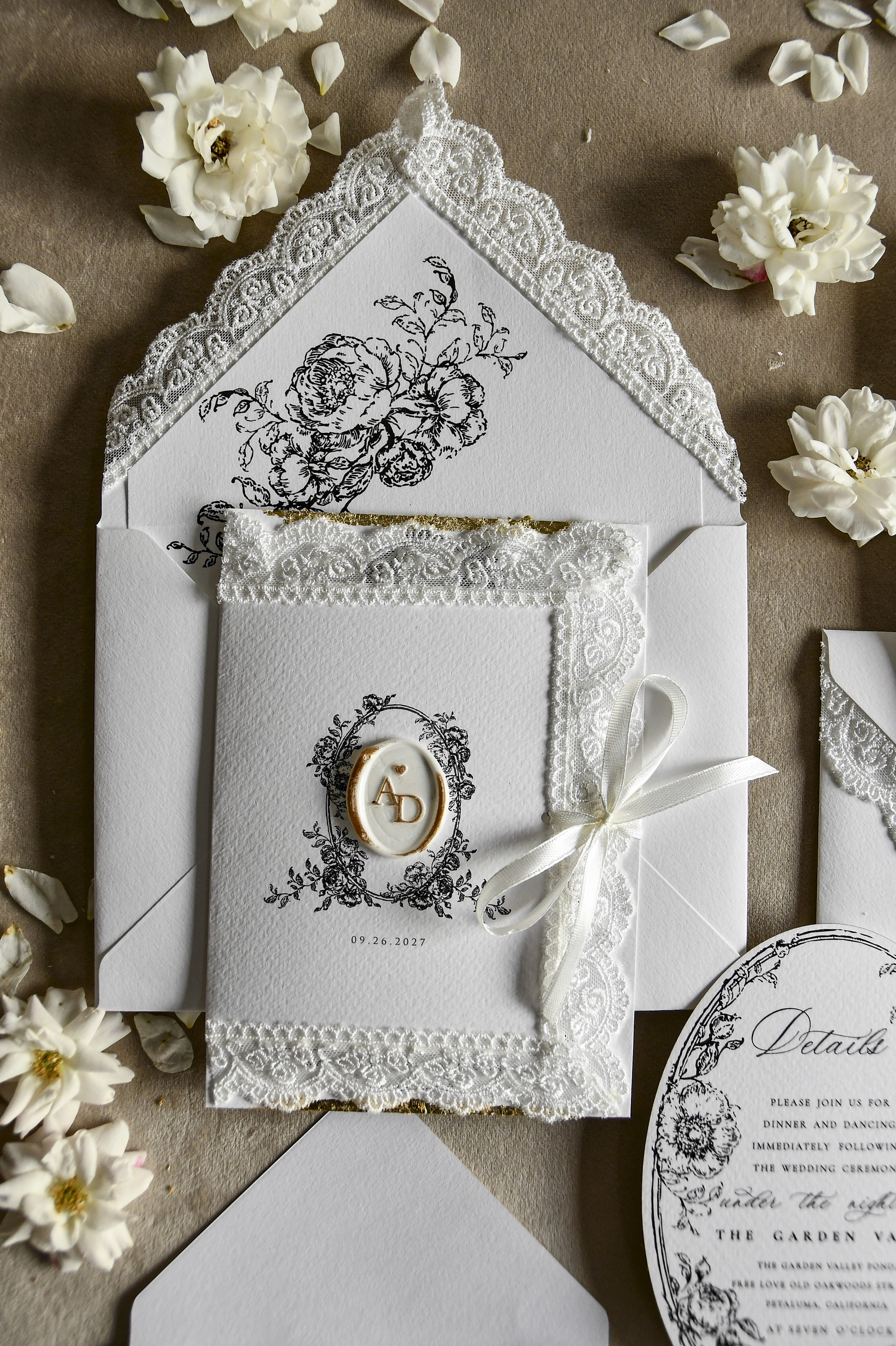
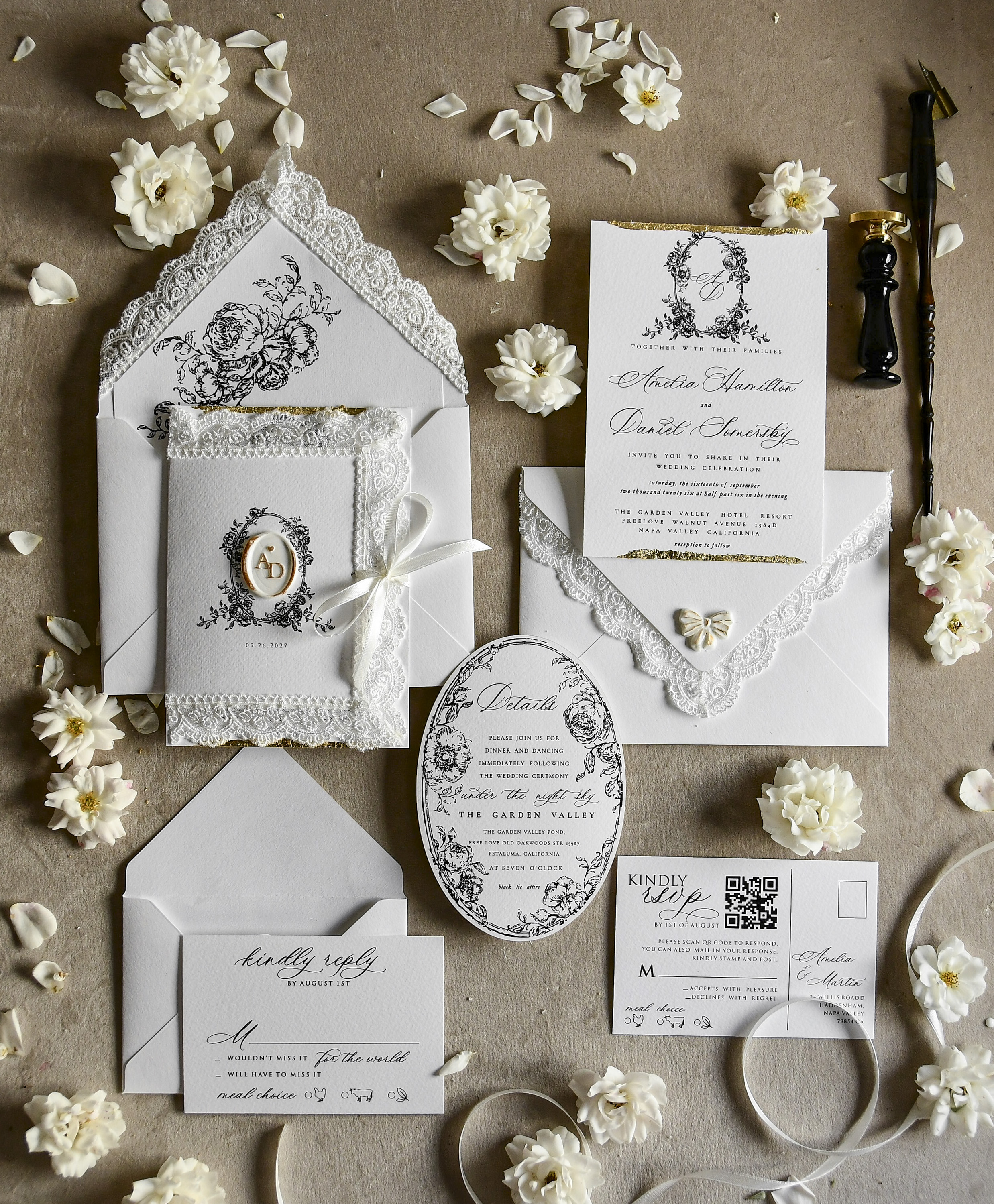
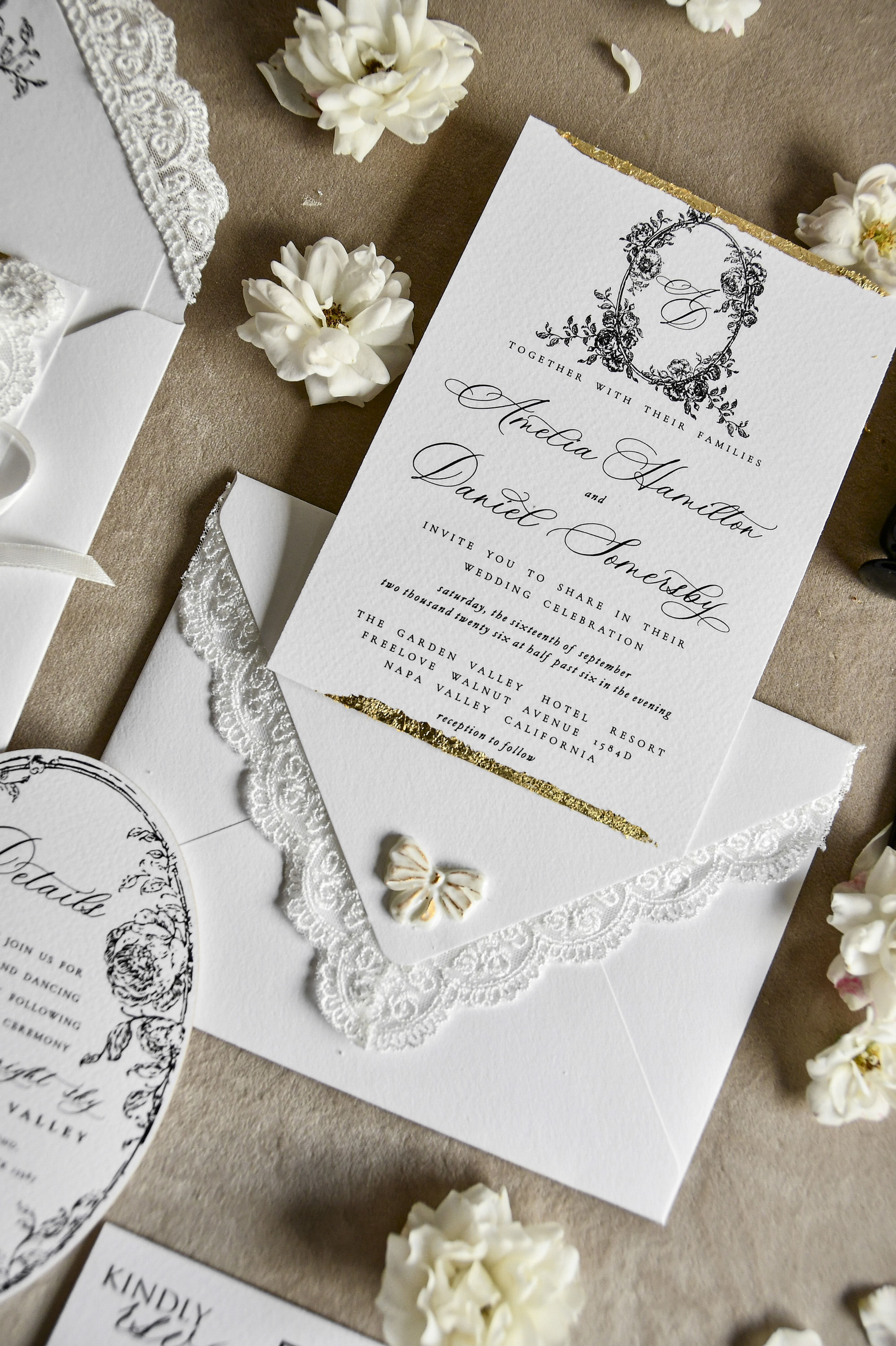
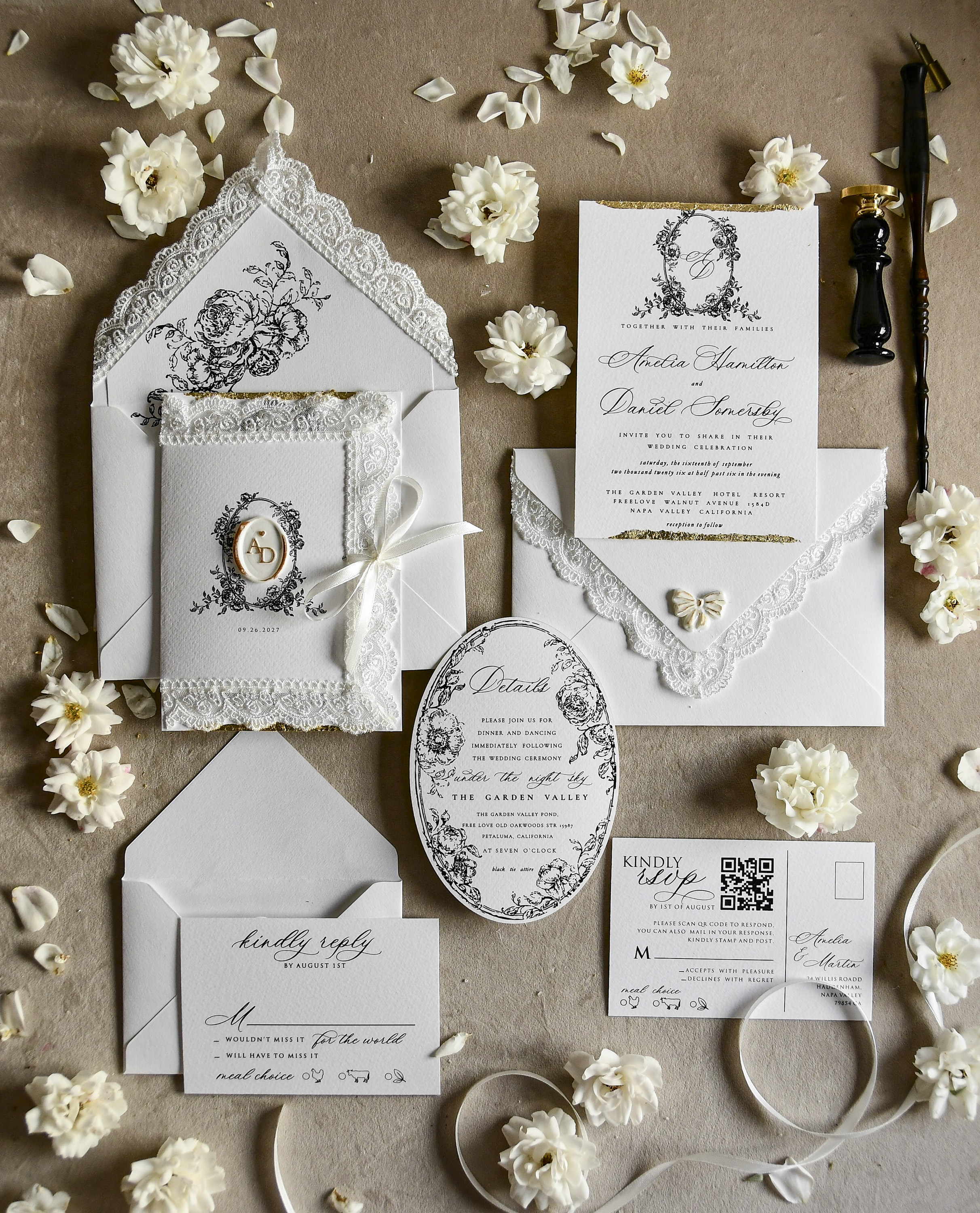
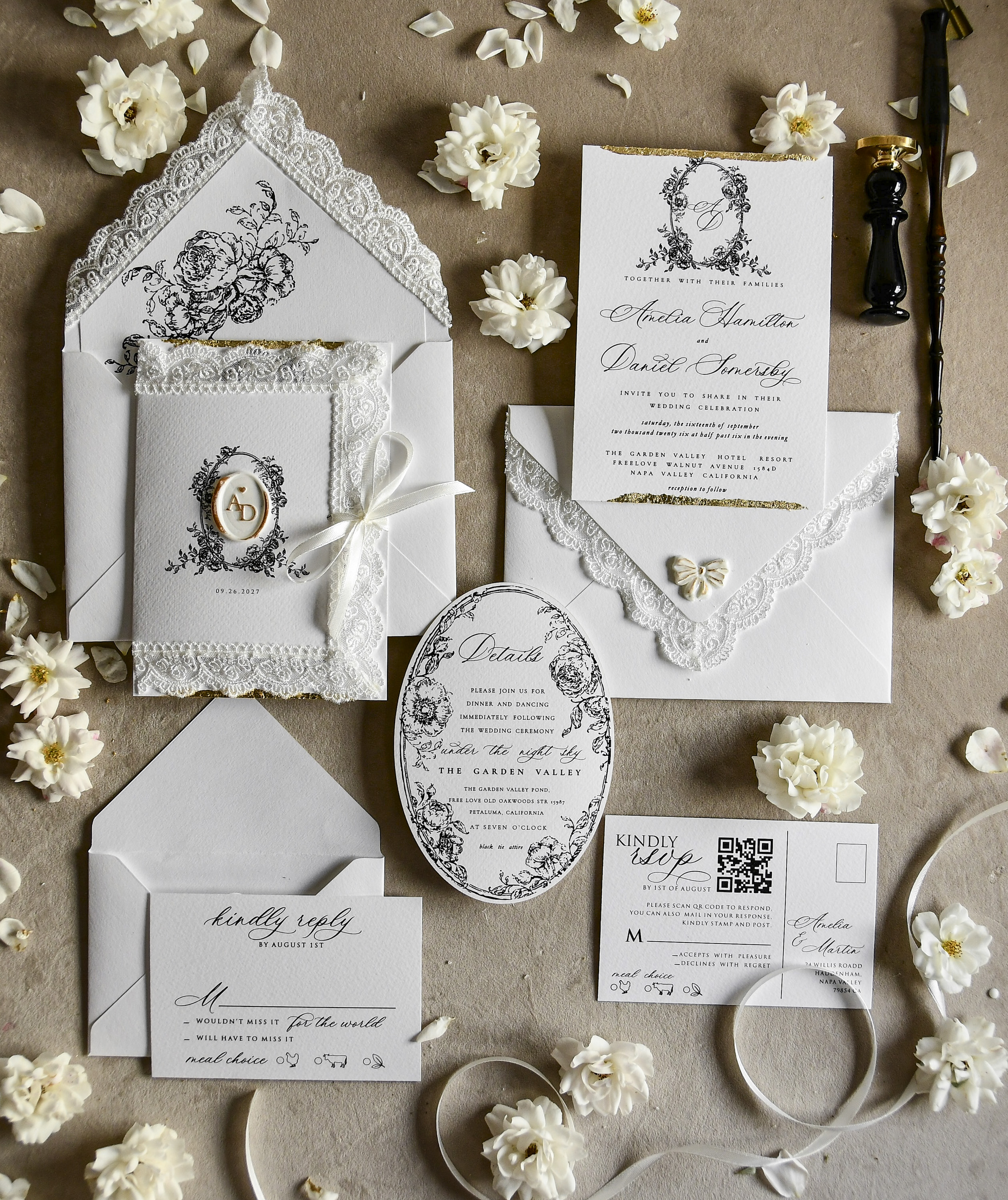
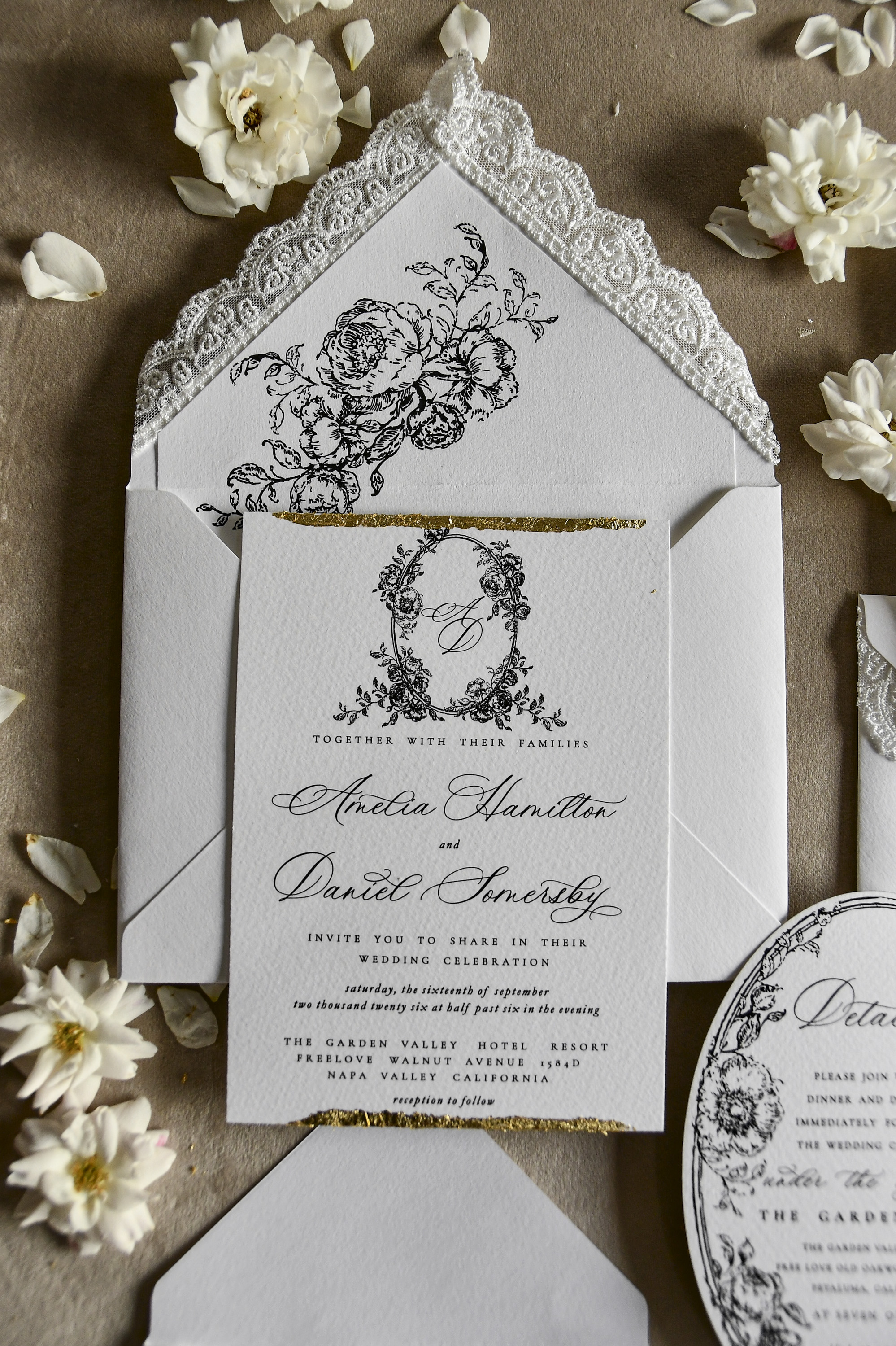
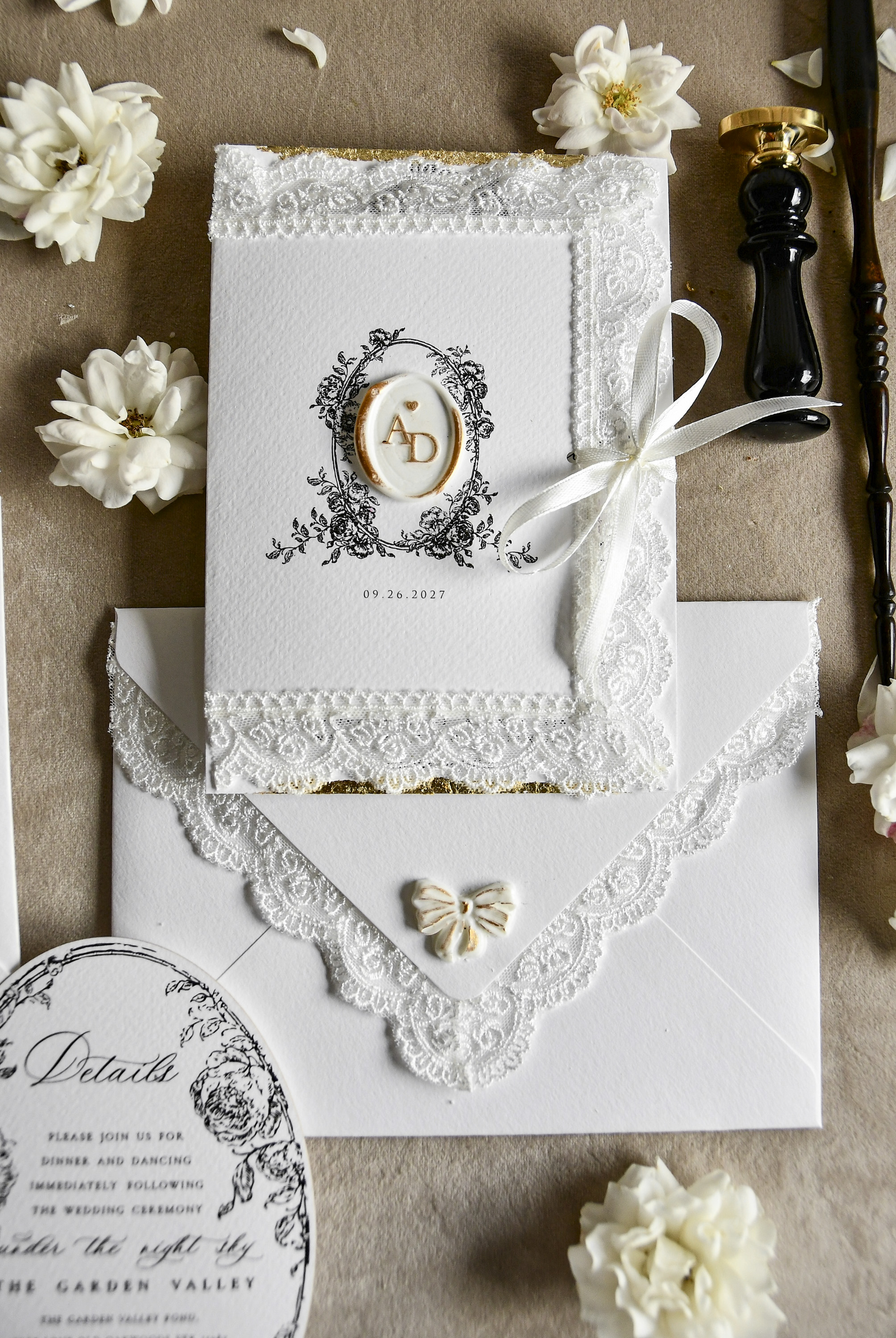
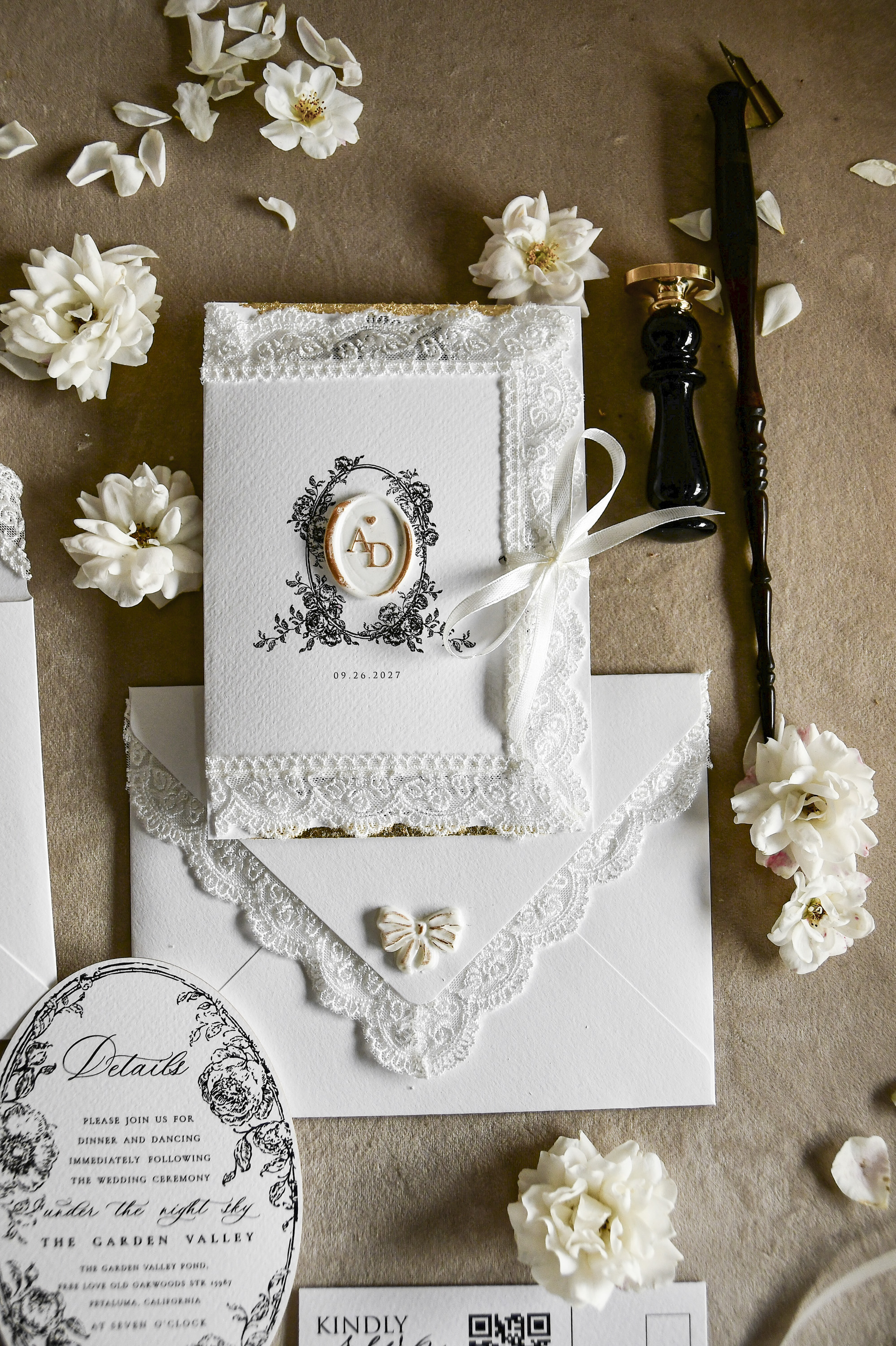
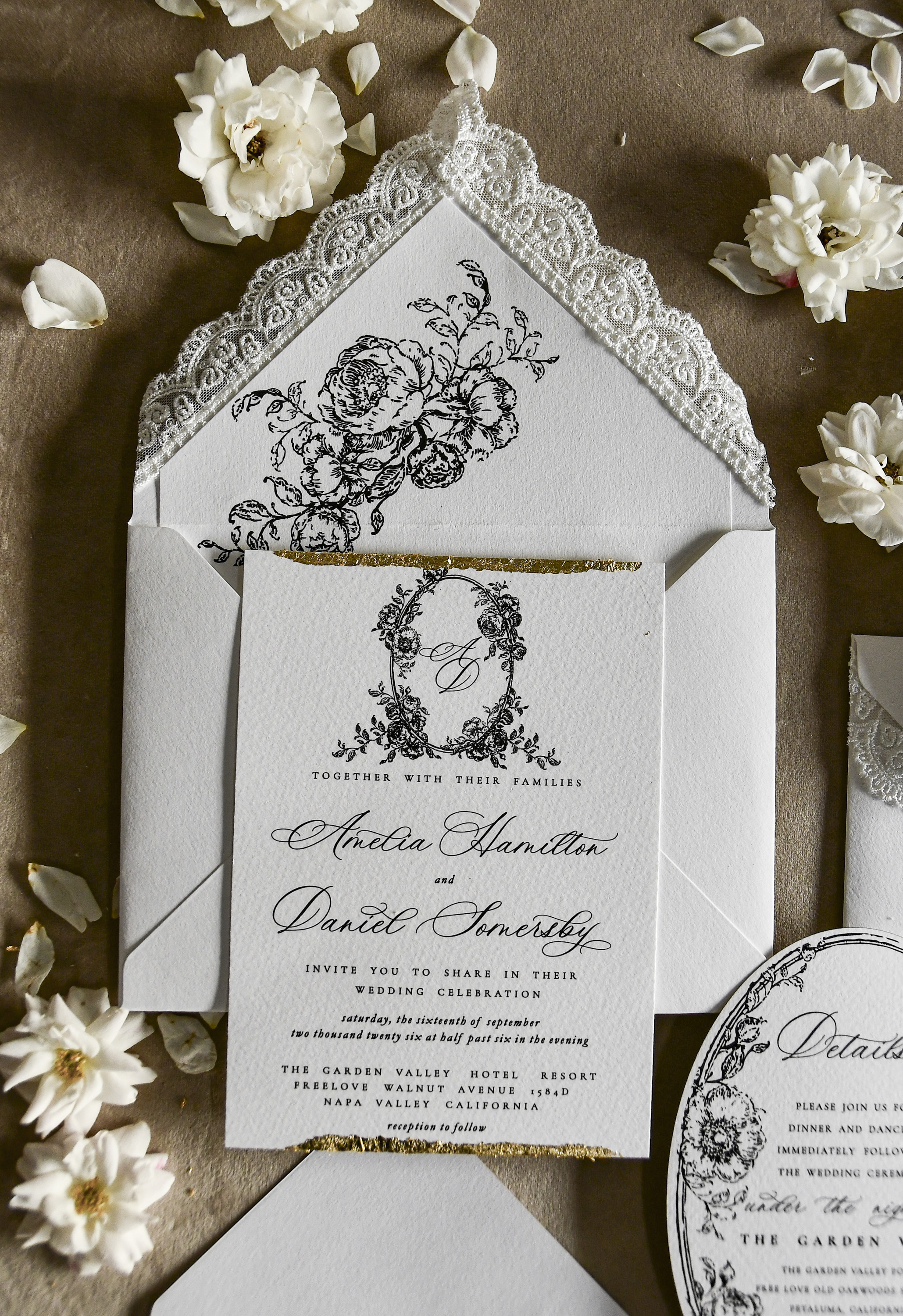
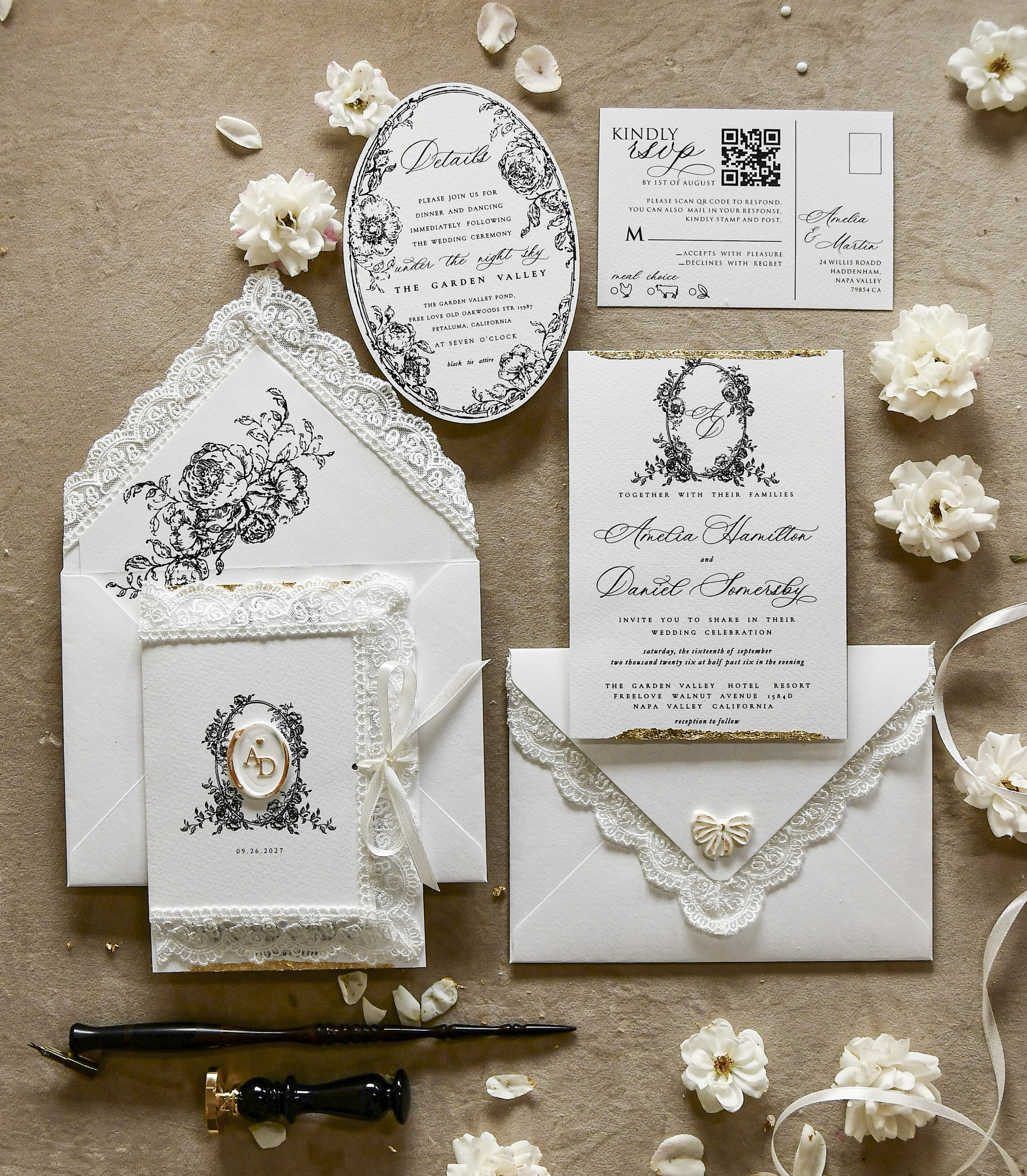
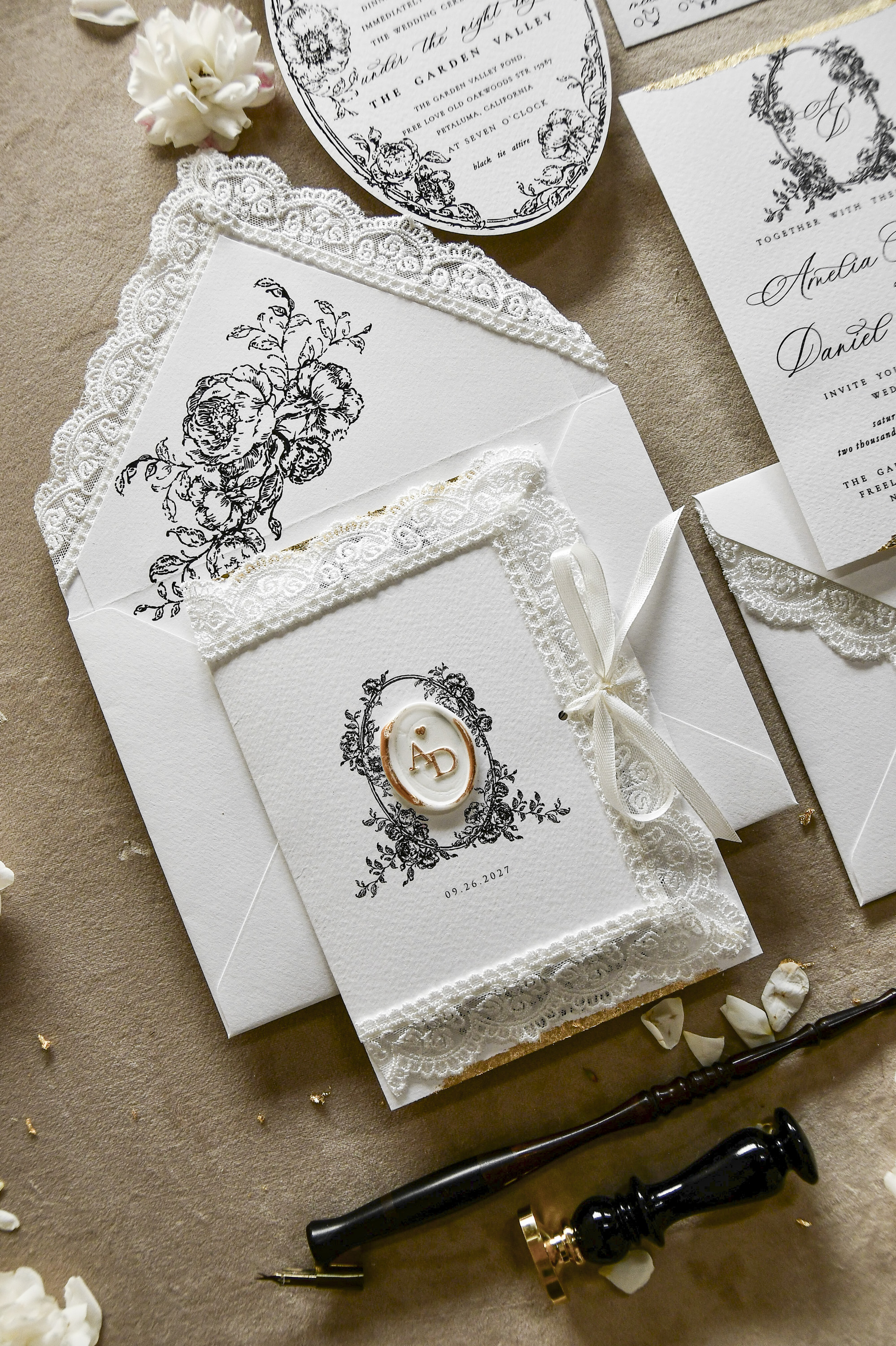
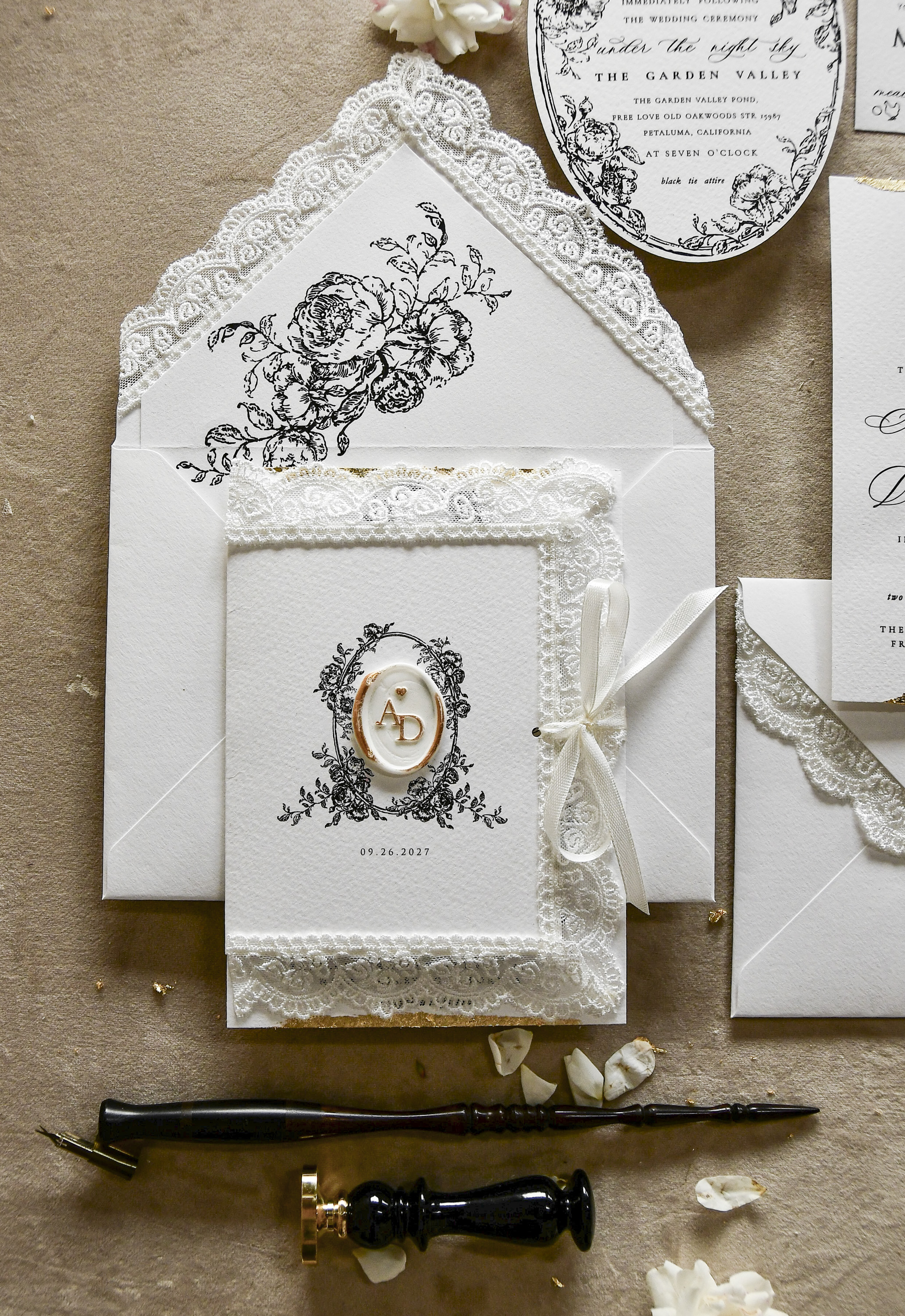
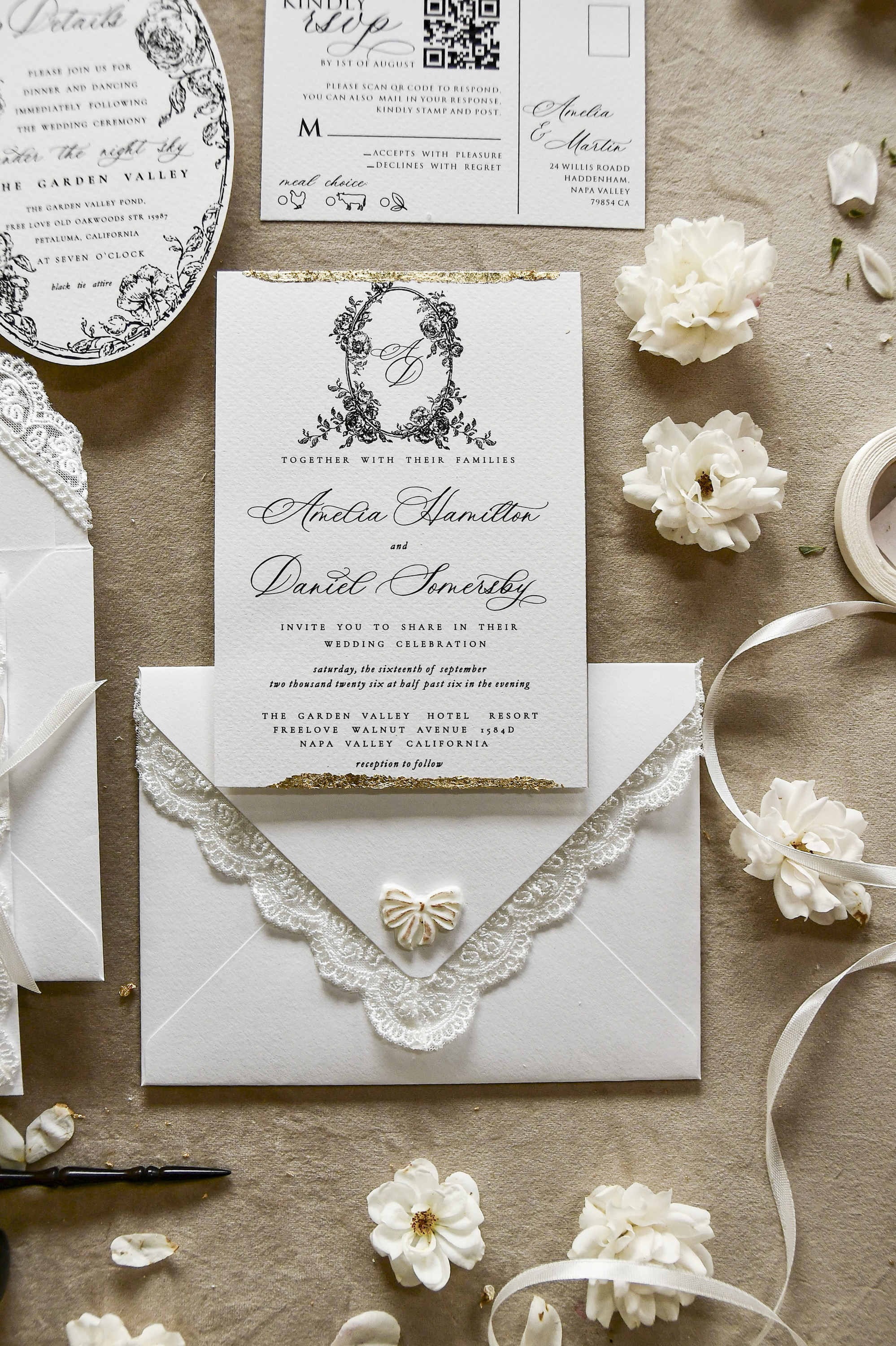
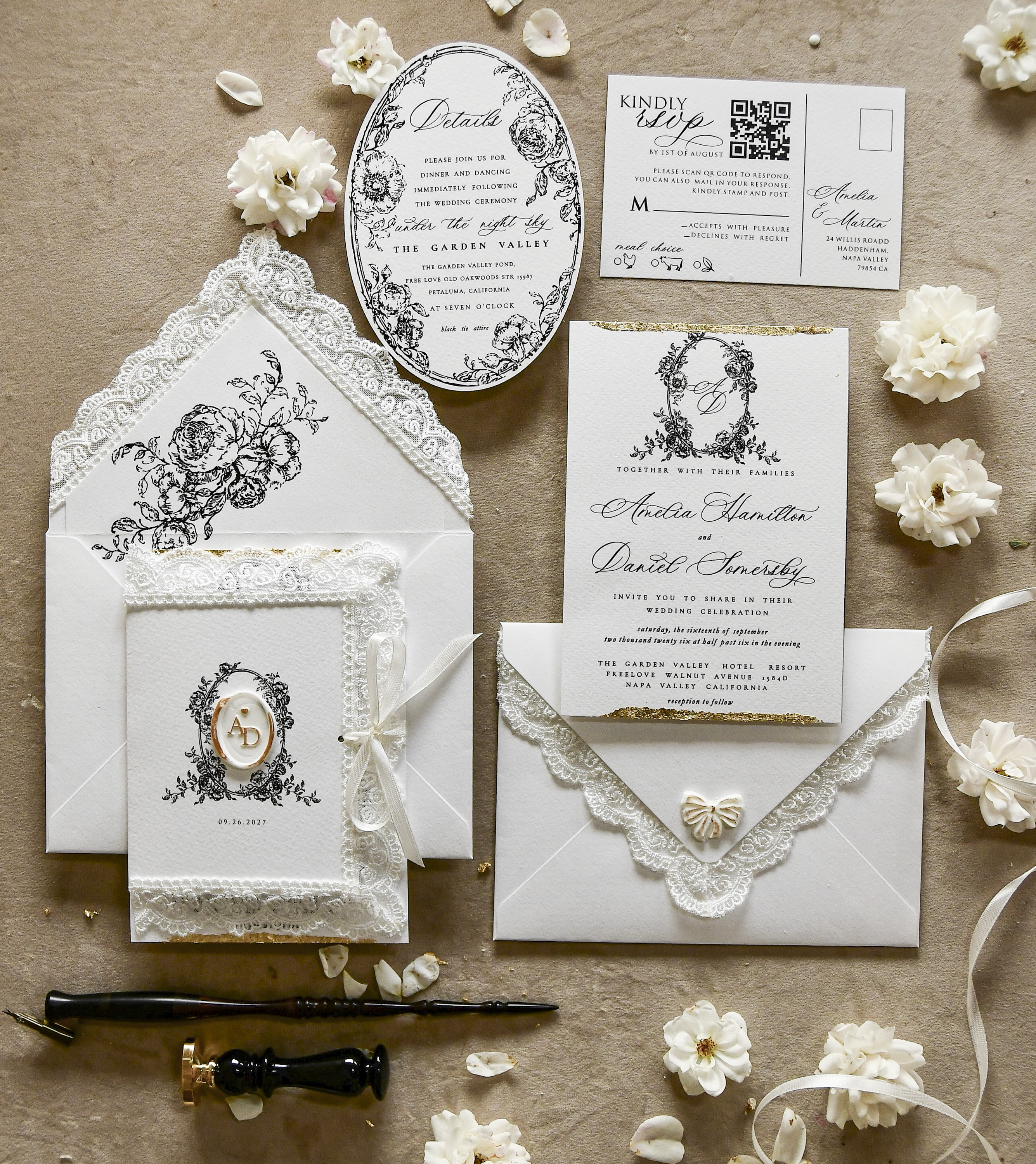
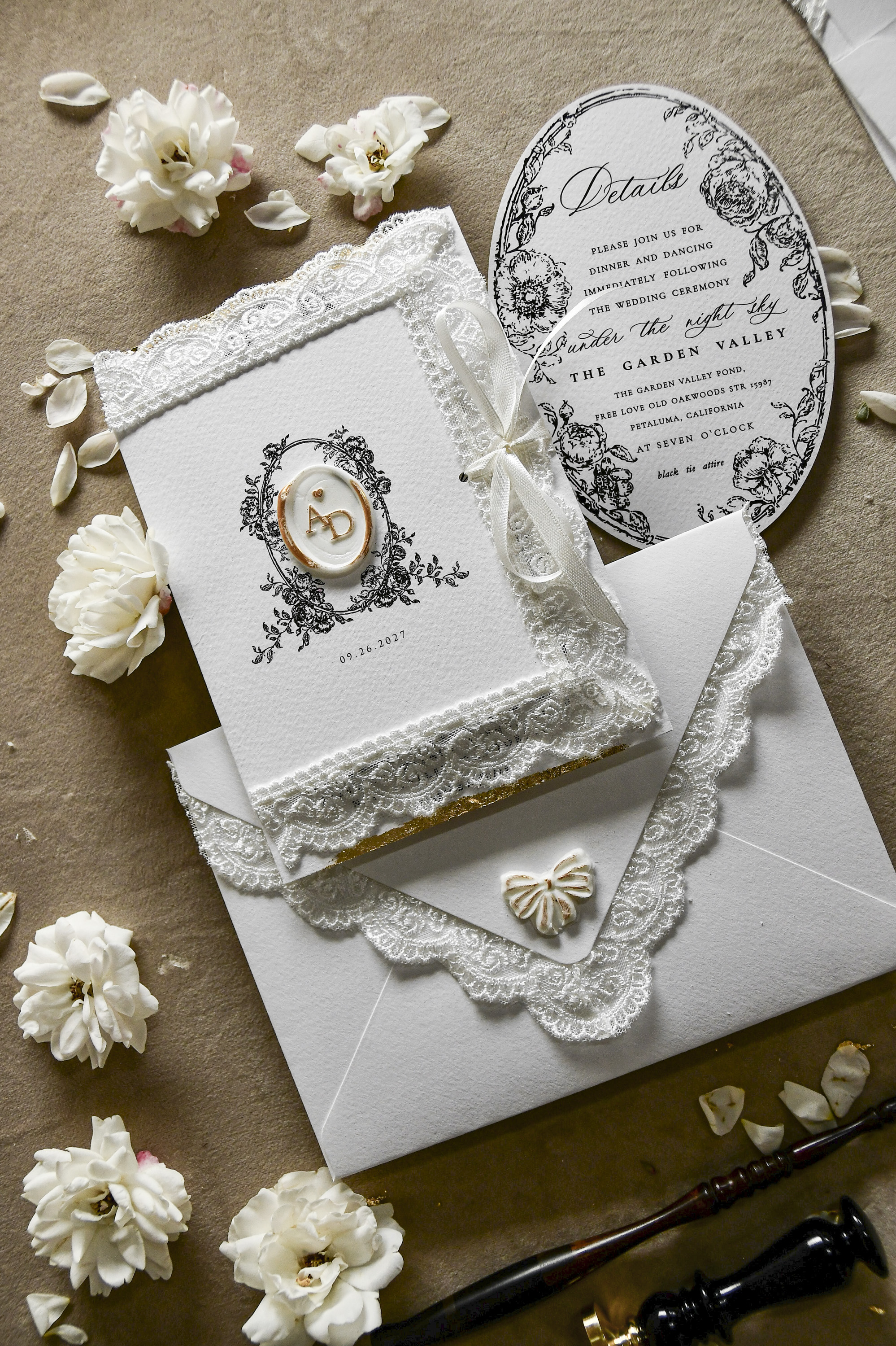
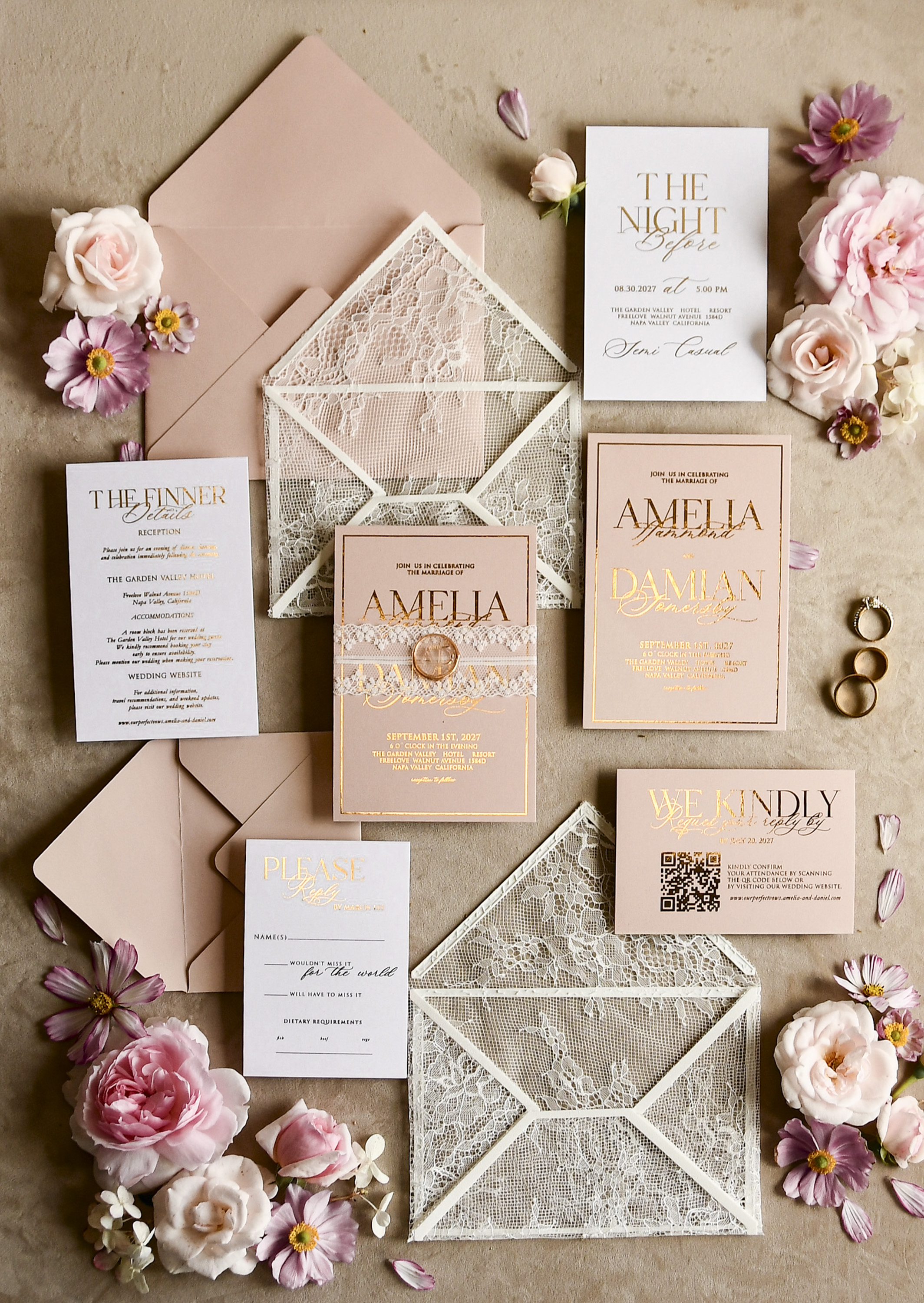
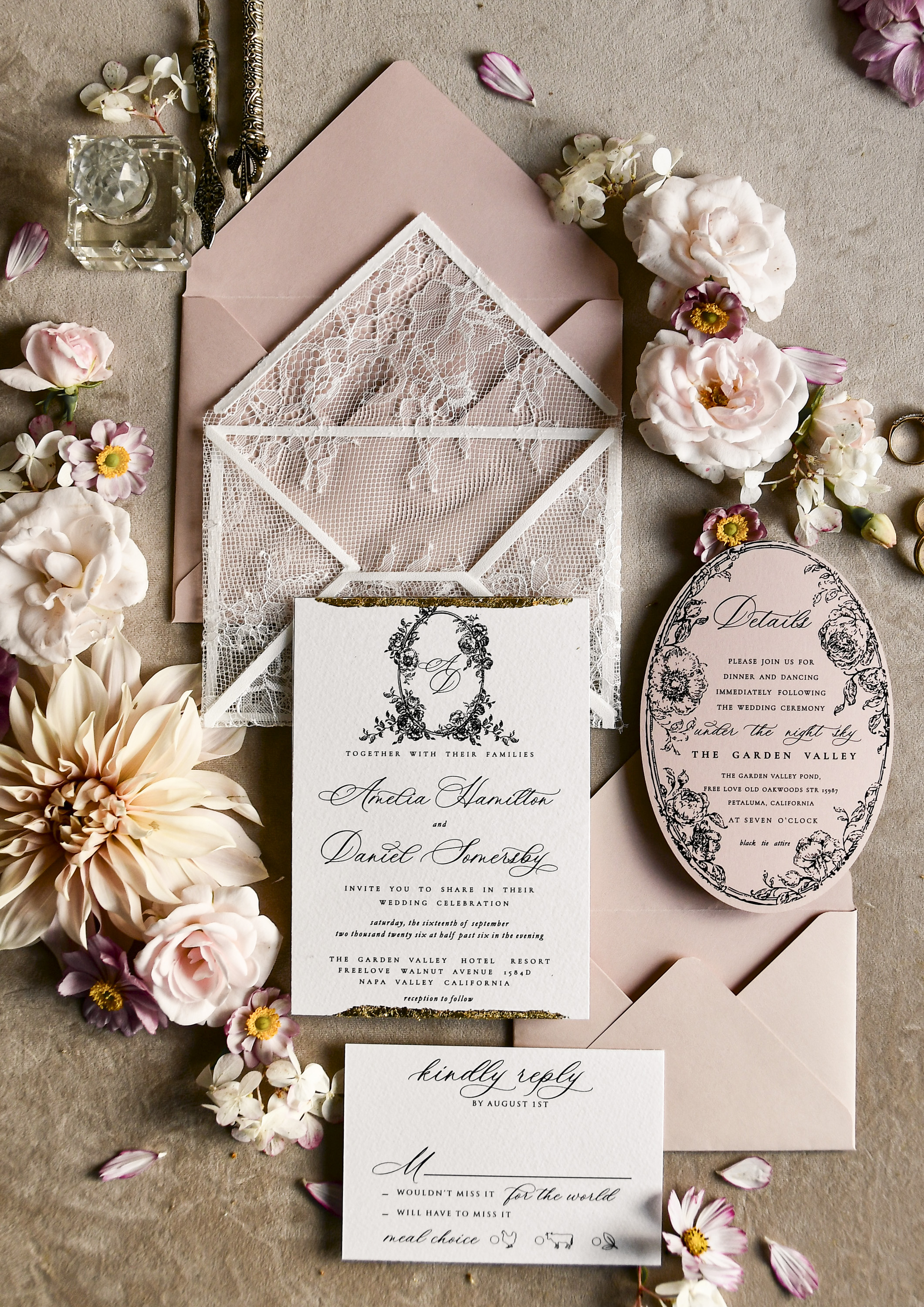
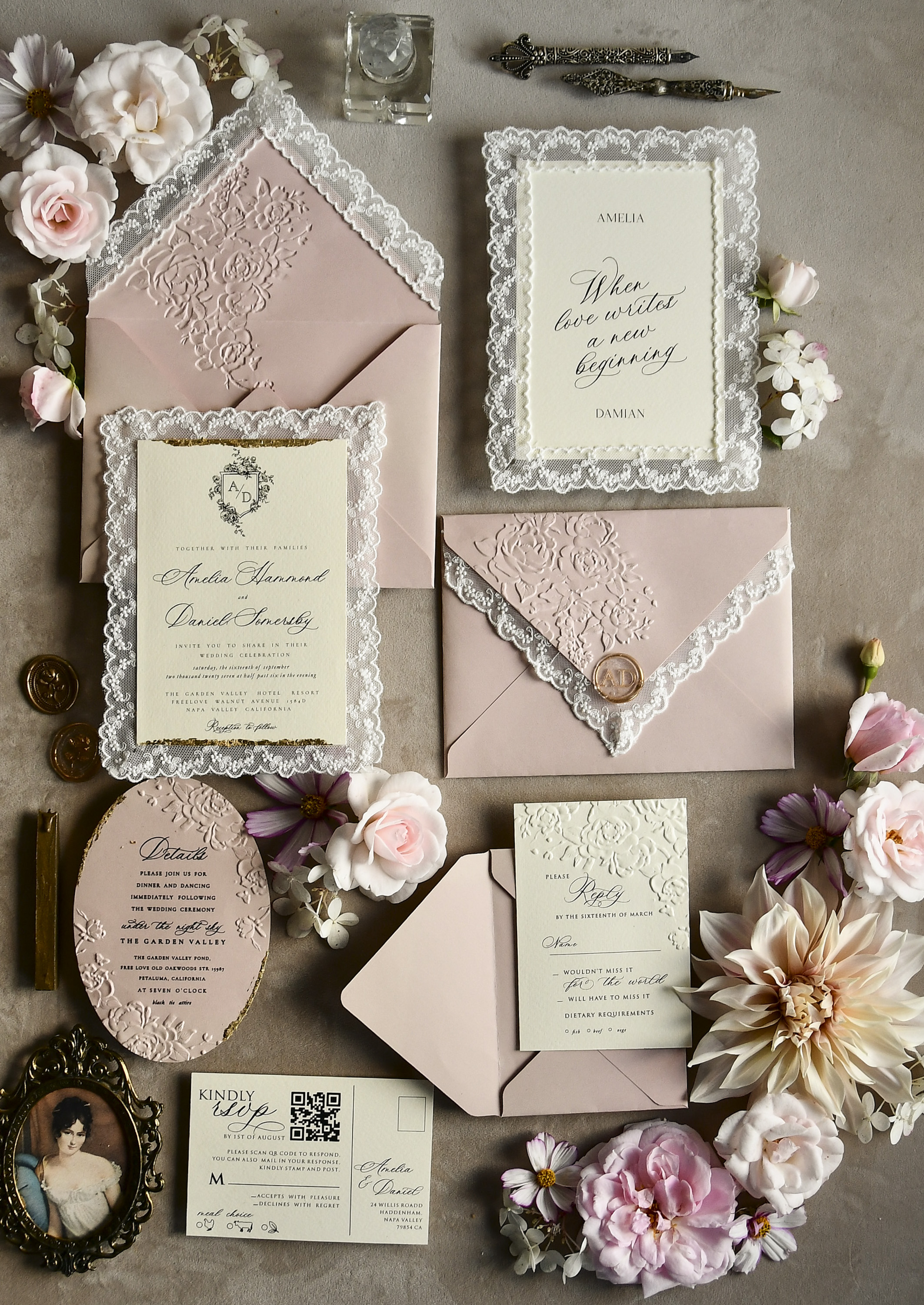
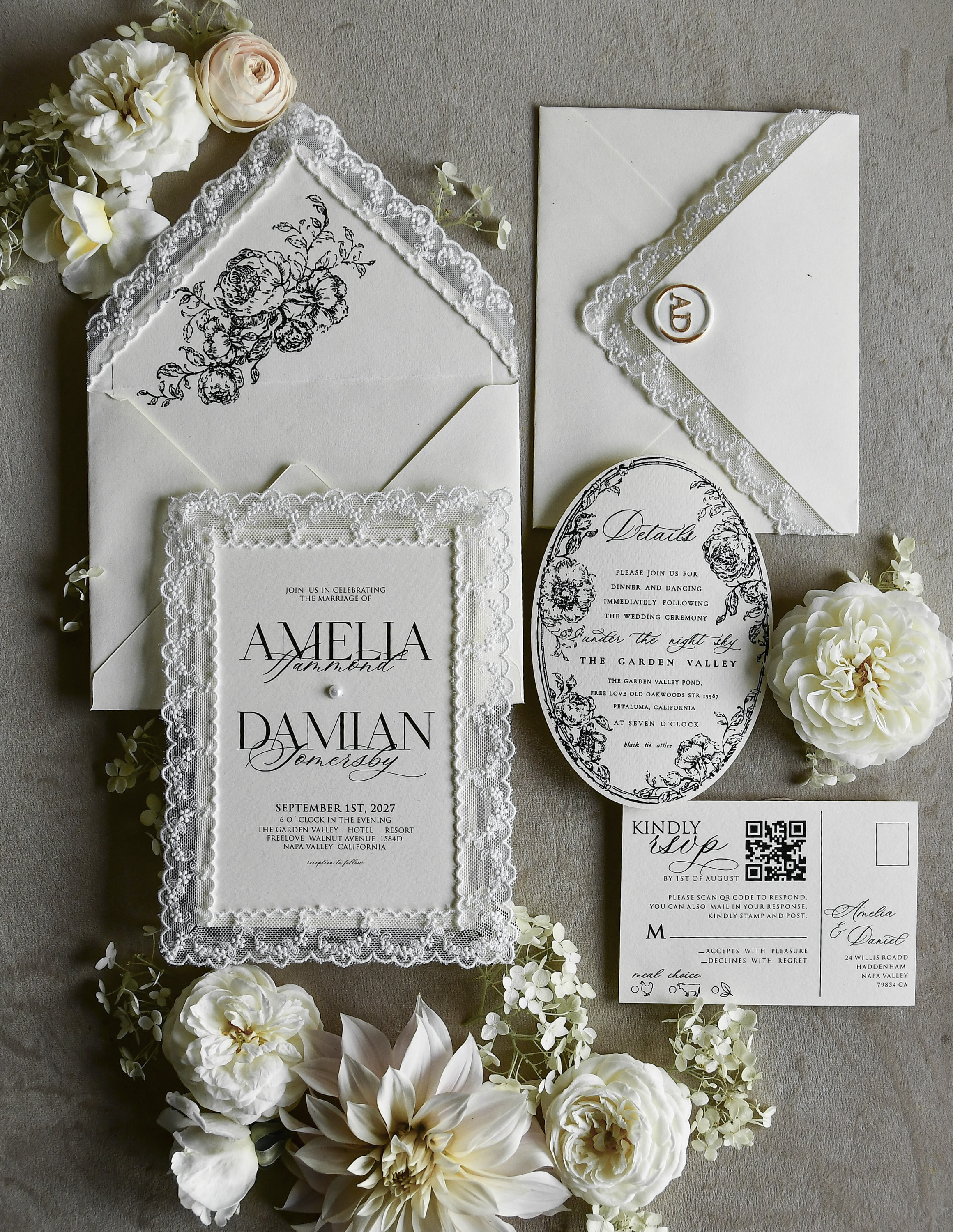
Notice there's no reception card tucked inside. For guests who are invited to the reception, you'd include a separate reception enclosure card. Our 03/laceTR/z vintage lace wedding invitation suite is a beautiful choice here — its classic, timeless design works equally well as a standalone ceremony invite or as part of a full suite with enclosures.
Keeping the Two Lists Separate Without Drama
Organization is everything. Create two clearly labeled guest lists in a spreadsheet: "Full Invitation (Ceremony + Reception)" and "Ceremony Only." When you order your stationery, you'll assemble packets differently for each group — full-suite guests receive the invitation, a reception card, and an RSVP card, while ceremony-only guests receive just the invitation (no RSVP card needed unless your venue requires a headcount).
A few practical tips to avoid mix-ups:
- Address and stuff envelopes in two separate sessions, one list at a time
- Use a colored sticker or paper clip on ceremony-only invitations as you assemble them
- Double-check before sealing — accidentally including a reception card in a ceremony-only envelope is a very awkward mistake to undo
- Mail both groups at the same time, roughly 6–8 weeks before the wedding, so no one notices a delay
What to Say If Someone Asks About the Reception
Prepare a gracious, brief response and stick to it. Something like: "The reception is an intimate dinner for our closest family — we so wanted you to be part of the ceremony itself." Keep it warm and don't over-explain. Most guests will understand, especially if the ceremony venue is clearly a church or large space and the reception venue is described as small or private.
If you know certain guests are likely to be hurt — a favorite aunt, a family friend who's known you for decades — consider a personal phone call before invitations arrive. A five-minute conversation goes a long way toward preventing hurt feelings.
A Note on Wording for the Reception Guests
For guests invited to both, your reception enclosure card should list the reception venue, time, and any meal or dress code details. The 03/laceTR/z suite pairs its invitation with coordinating enclosure cards, so your full-suite guests receive a polished, cohesive packet while ceremony-only guests receive a beautifully complete invitation on its own. No one needs to know their envelope is missing a card — it simply looks intentional and elegant.
Frequently Asked Questions
Generally, no — if your ceremony venue has open seating and no catering headcount is needed, skip the RSVP card for ceremony-only guests. If your ceremony venue requires a headcount for seating, include a simple response card asking only for a yes or no.
It's not rude when done thoughtfully. The key is consistency — if you apply the same rule to an entire category of guests (all extended family, all coworkers) rather than cherry-picking individuals, it reads as a practical decision rather than a personal slight.
No. Simply don't mention it on their invitation. If they ask directly, be honest and brief — explain the reception is an intimate dinner for immediate family and closest friends. Most people will accept this gracefully.
This is sometimes called a "cocktail hour cut" and it can work, but it requires very clear communication on the invitation. It often confuses guests and can feel like a mixed message, so most etiquette experts recommend choosing one line: either reception or not.
Mail them at the same time as your full invitations — 6 to 8 weeks before the wedding date. Mailing them later can make guests feel like an afterthought, even if that wasn't your intention.
A gift is never an obligation to extend a reception invitation, especially if your venue has a firm capacity. Send a warm, personal thank-you note promptly after the wedding — that's the appropriate and gracious response.
See This Design Up Close





You May Also Like
More Wedding Planning Guides
- → Kids at Your Wedding: How to Decide What's Right for Your Celebration
- → Mailing vs. Hand-Delivering Wedding Invitations: What's the Right Call?
- → When Silence Speaks: How to Handle Guests Who Never RSVP'd
- → The Plus-One Dilemma: How to Handle Dates for Single Guests
- → Save the Dates and Wedding Invitations: What Each One Does and Why You Need Both
- → Navigating the Parent Guest List: How to Keep the Peace Without Losing Control
- → The Honest Guide to Trimming Your Wedding Guest List Without the Guilt
- → The Graceful Art of Telling Someone They're Not on the Guest List
- → Seating Your Divorced Parents at the Wedding: A Practical Guide
- → When Guests Ghost Your RSVP: What to Do Next
- → The Honest Guide to Deciding Who Gets a Plus One at Your Wedding
- → The Ex Factor: How to Decide Whether a Former Partner Belongs on Your Guest List
- → The Perfect Timing for Mailing Your Wedding Invitations
- → Digital vs. Paper Wedding Invitations: Which Is Right for You?
- → Child-Free Weddings: What's Rude and What's Perfectly Fine
- → Everything Your Wedding Invitation Needs to Say
- → Navigating Guest List Pressure: When Mom Wants to Invite Someone You Don't
- → When Your Partner Wants a Smaller Guest List Than You Do
- → Online RSVPs vs. Mailed Cards: What Every Couple Should Know
- → Uninvited Plus-Ones and Tag-Alongs: How to Keep Your Guest List Intact
- → When Family Feuds Threaten Your Wedding Plans: A Practical Peacekeeper's Guide
- → Inviting an Estranged Brother or Sister: Finding Clarity Before You Seal the Envelope
- → Cousins, Invites, and Hard Choices: A Practical Guest List Guide