
The Perfect Timing for Mailing Your Wedding Invitations
One of the most common questions newly engaged couples ask is: when exactly should wedding invitations go in the mail? Send them too early and guests misplace them; send them too late and you're scrambling for headcounts. The good news is there's a well-established timeline that takes the guesswork out of it — and a little flexibility built in for destination weddings, holiday weekends, and other special circumstances.
The Standard Mailing Window: 6 to 8 Weeks Before the Wedding
For most weddings held within driving distance for the majority of guests, the sweet spot is six to eight weeks before your wedding date. This gives guests enough time to check their calendars, book accommodations if needed, and return their RSVP cards without feeling rushed.
Here's a simple way to think about it:
- 8 weeks out: Ideal if your guest list is large (150+), if many guests are traveling from out of state, or if your wedding falls near a popular travel weekend.
- 6 weeks out: Works well for smaller, more local celebrations where most guests are already aware of the date through a save-the-date.
Mailing earlier than eight weeks can actually work against you — guests set the invitation aside and forget to RSVP, or details feel abstract so far in advance.
Destination Weddings and Holiday Weekends Need More Lead Time
If your wedding requires guests to book flights, reserve hotel blocks, or plan around a major holiday, push your mailing date to three to four months in advance. This is especially important for:
- Destination weddings (overseas or requiring air travel)
- Weddings on or near Thanksgiving, Memorial Day, Fourth of July, or Labor Day weekend
- Weddings in popular venues that require guests to plan well ahead
Even with an early invitation mailing, you should still send save-the-dates six to twelve months before a destination wedding so guests can request time off work and lock in travel deals.
Don't Forget Save-the-Dates — They Come First
Save-the-dates and invitations work as a team. Save-the-dates go out six to twelve months before the wedding (earlier for destination events), while formal invitations follow closer to the date. Think of save-the-dates as a heads-up and invitations as the official, detailed announcement.
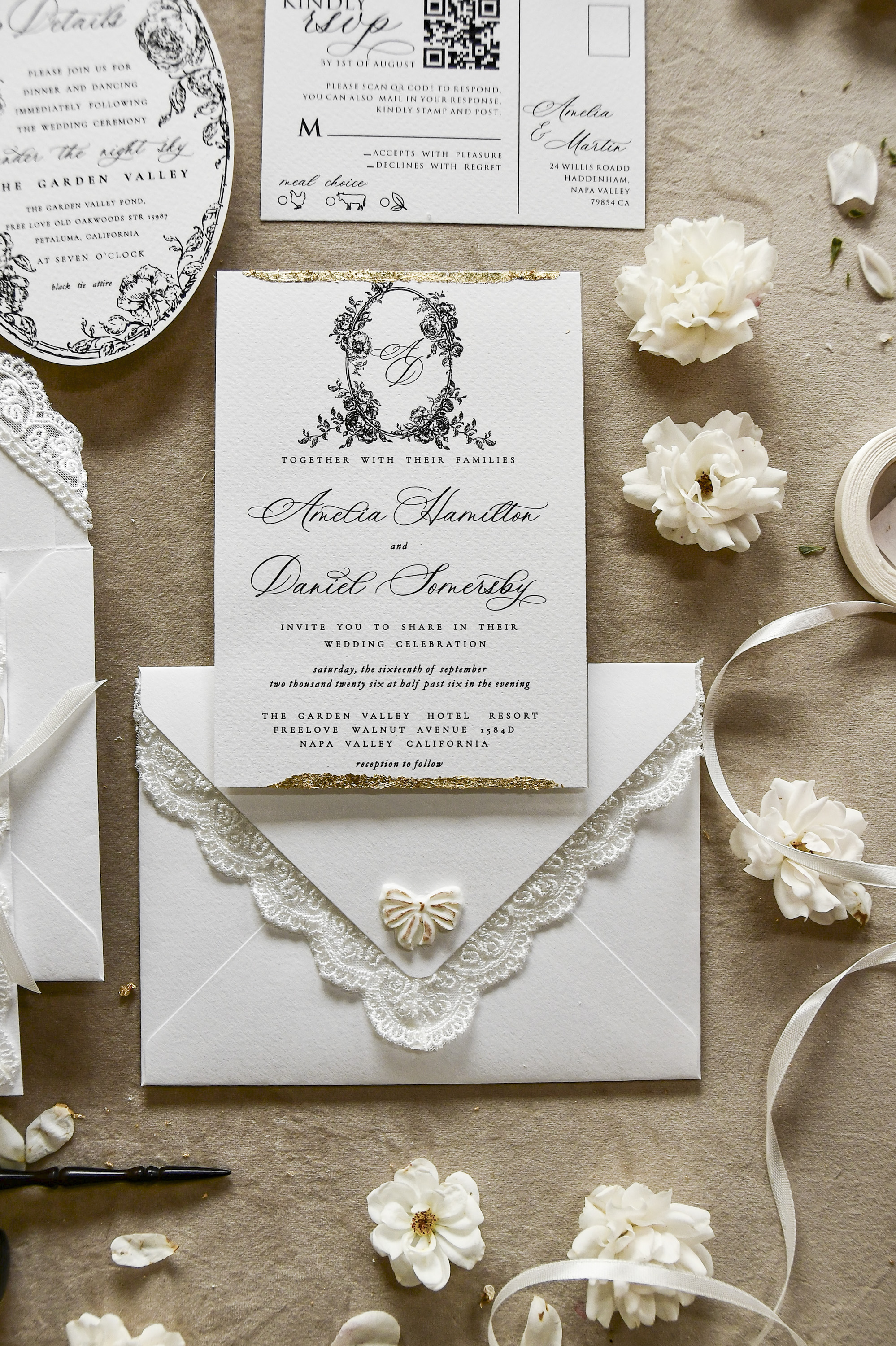
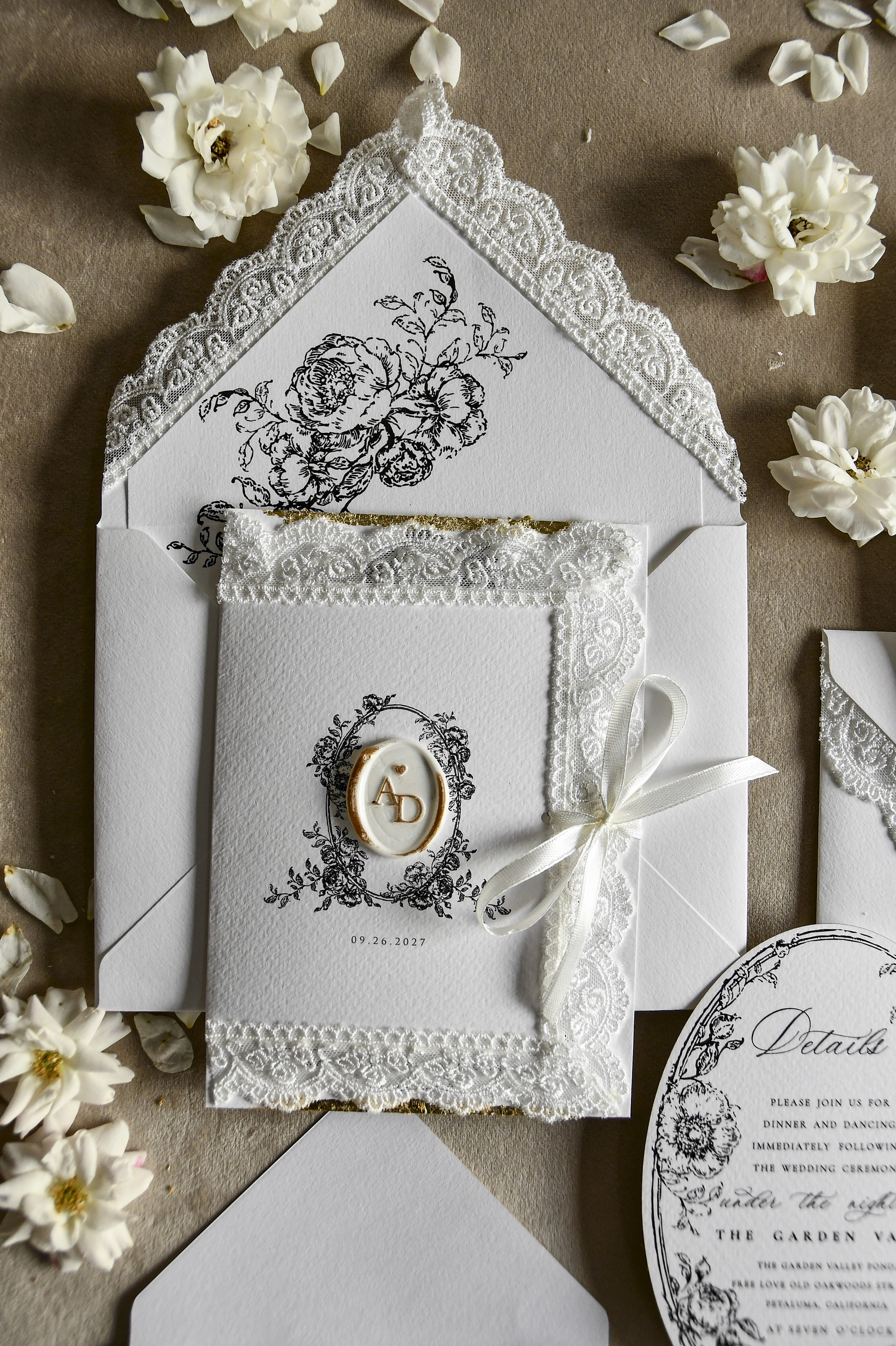
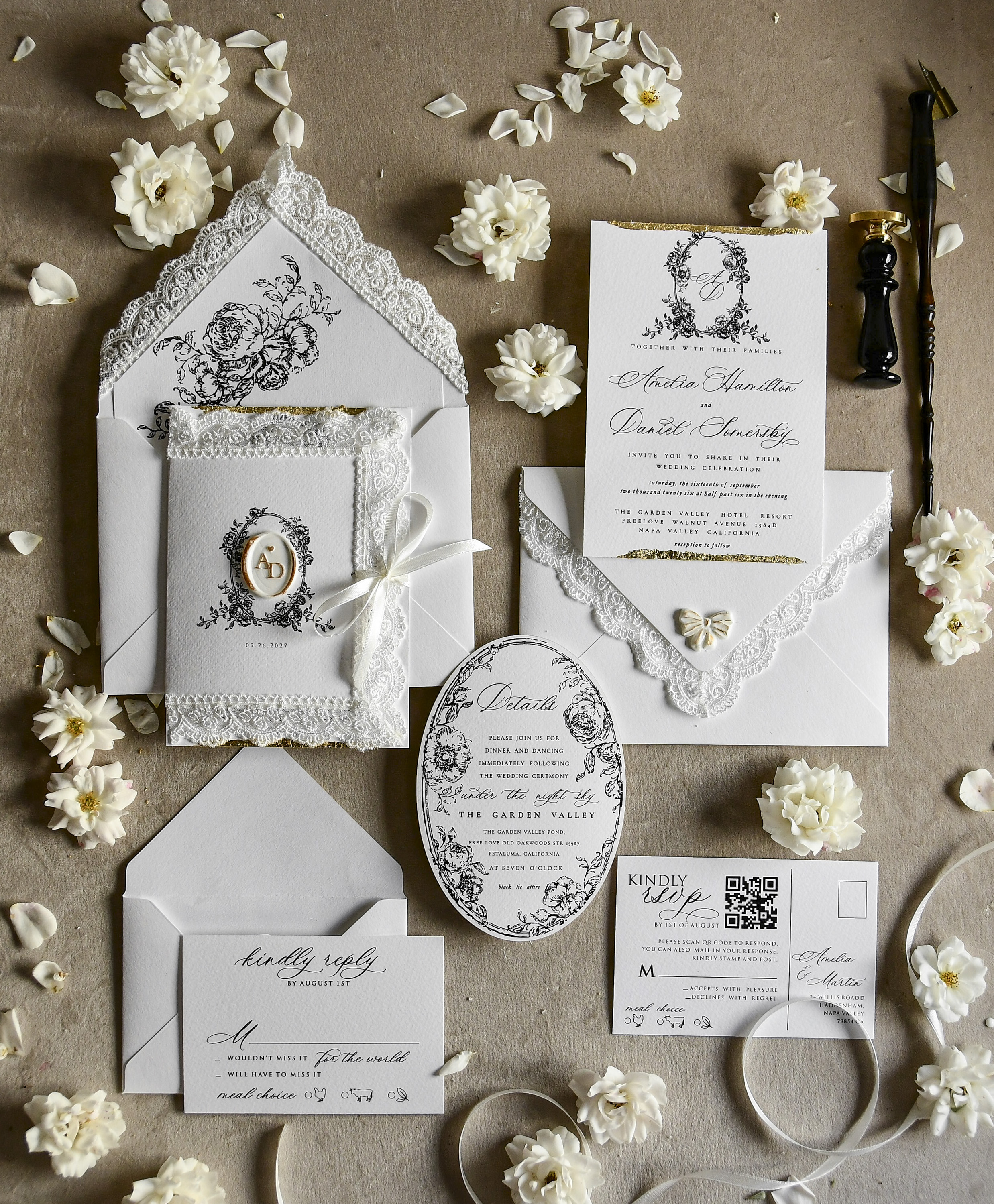
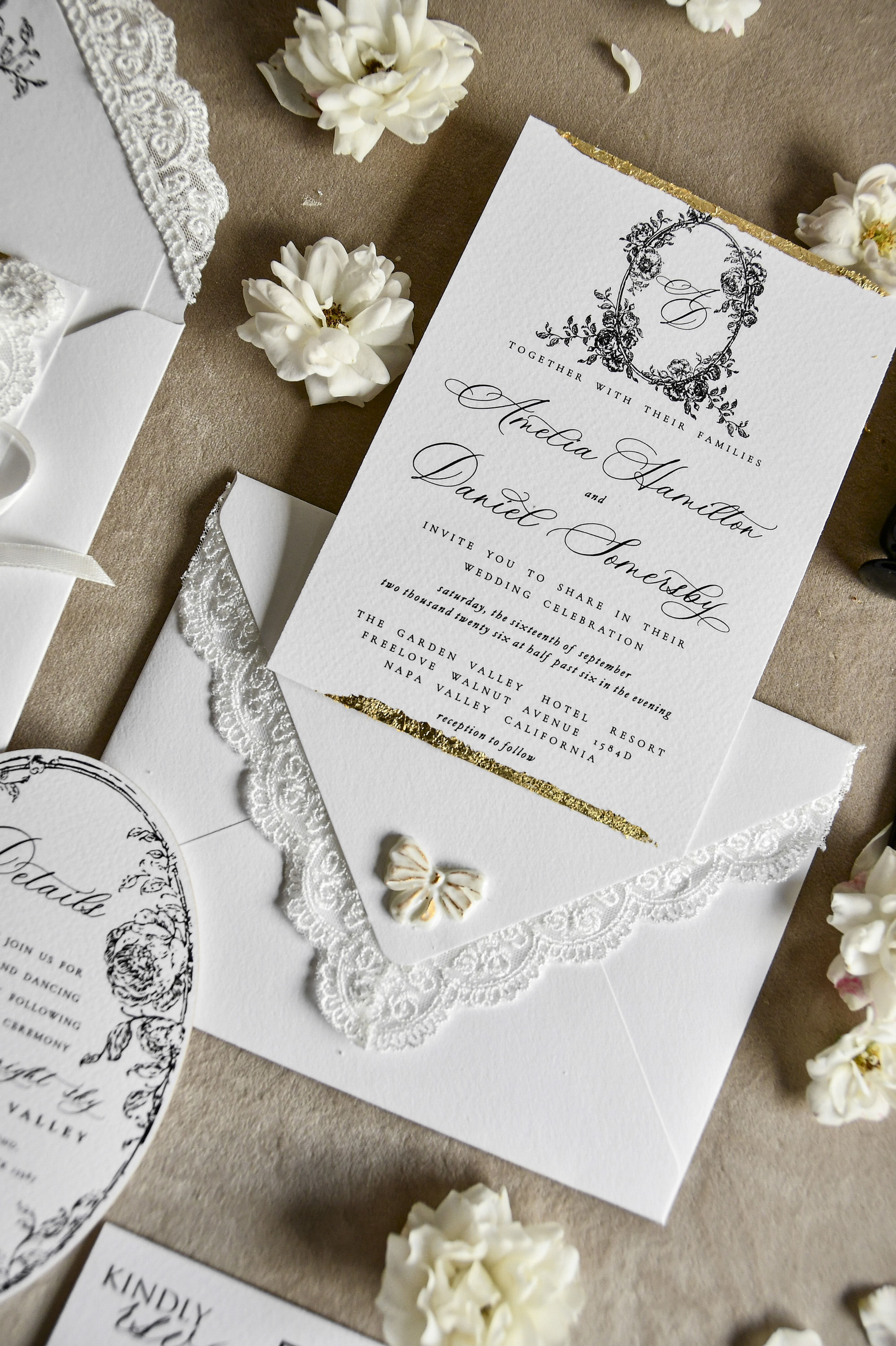
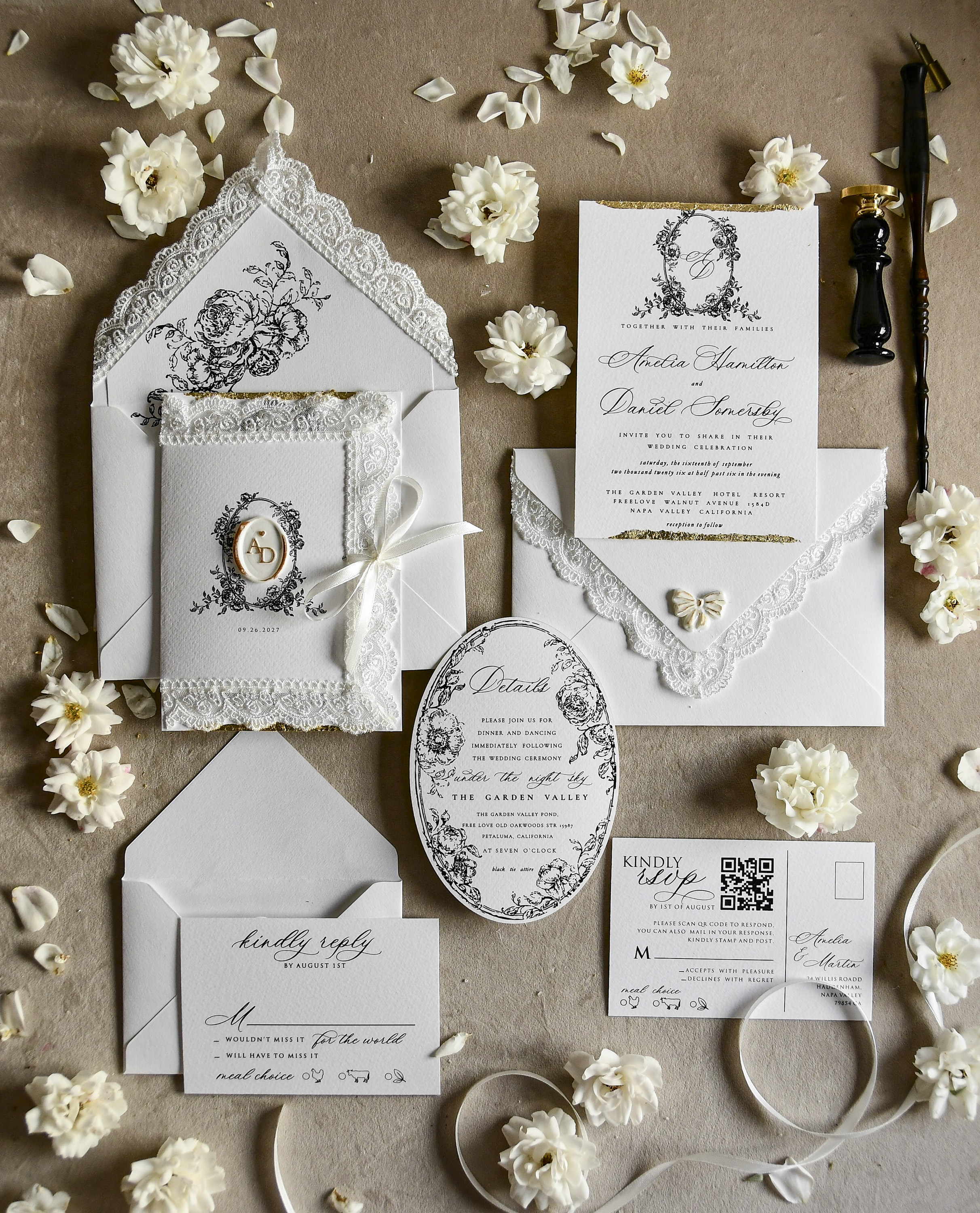
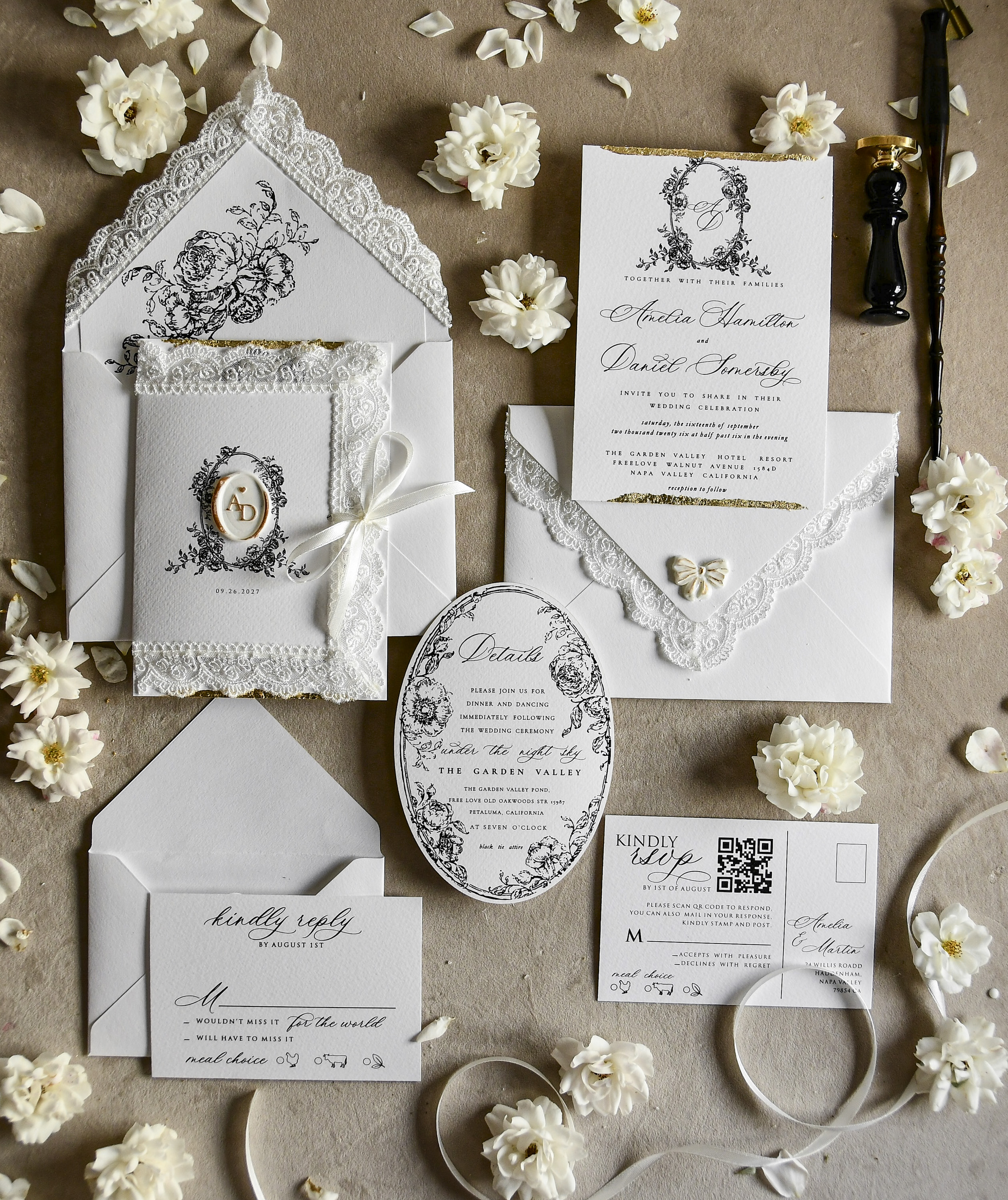
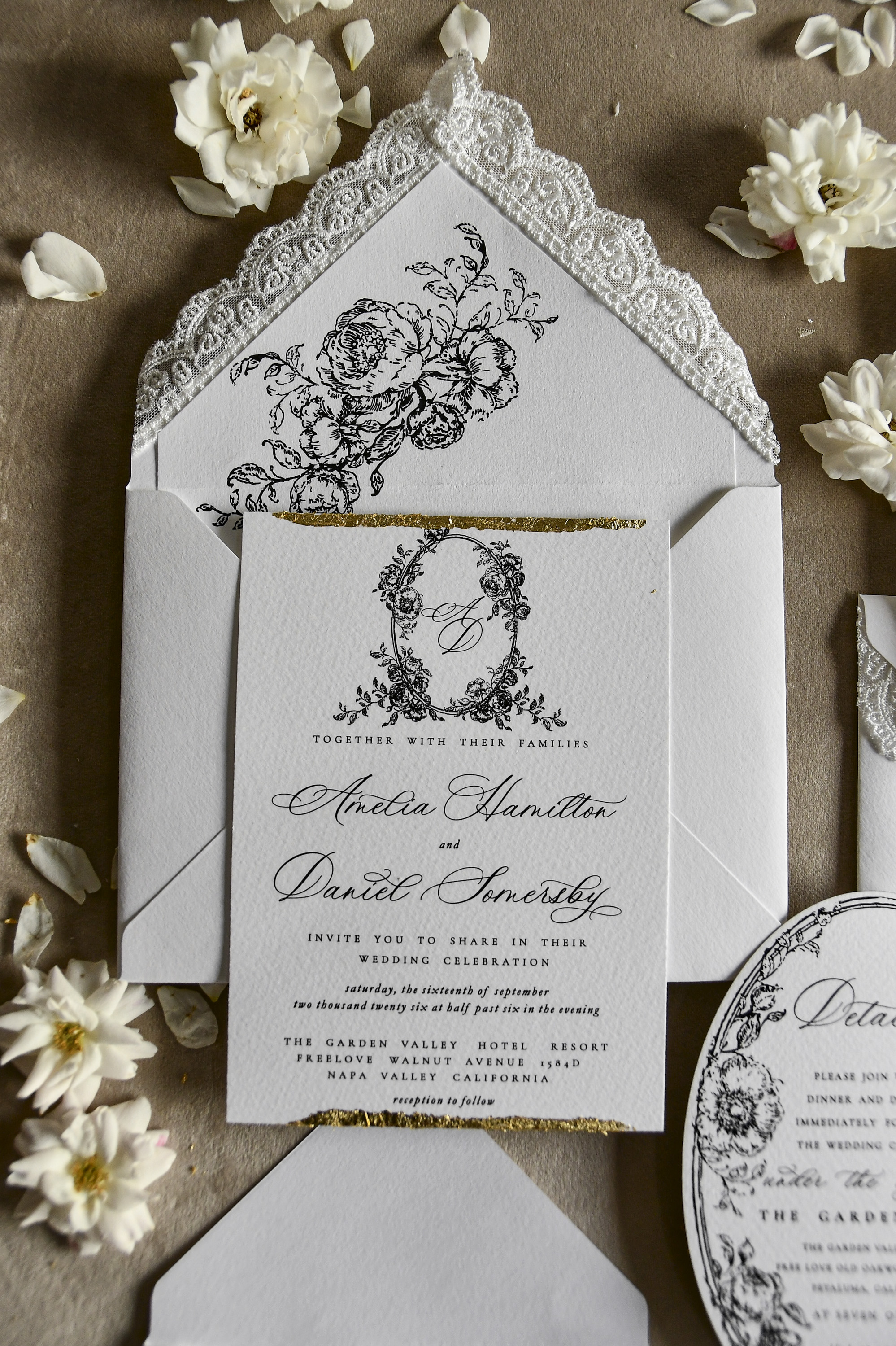
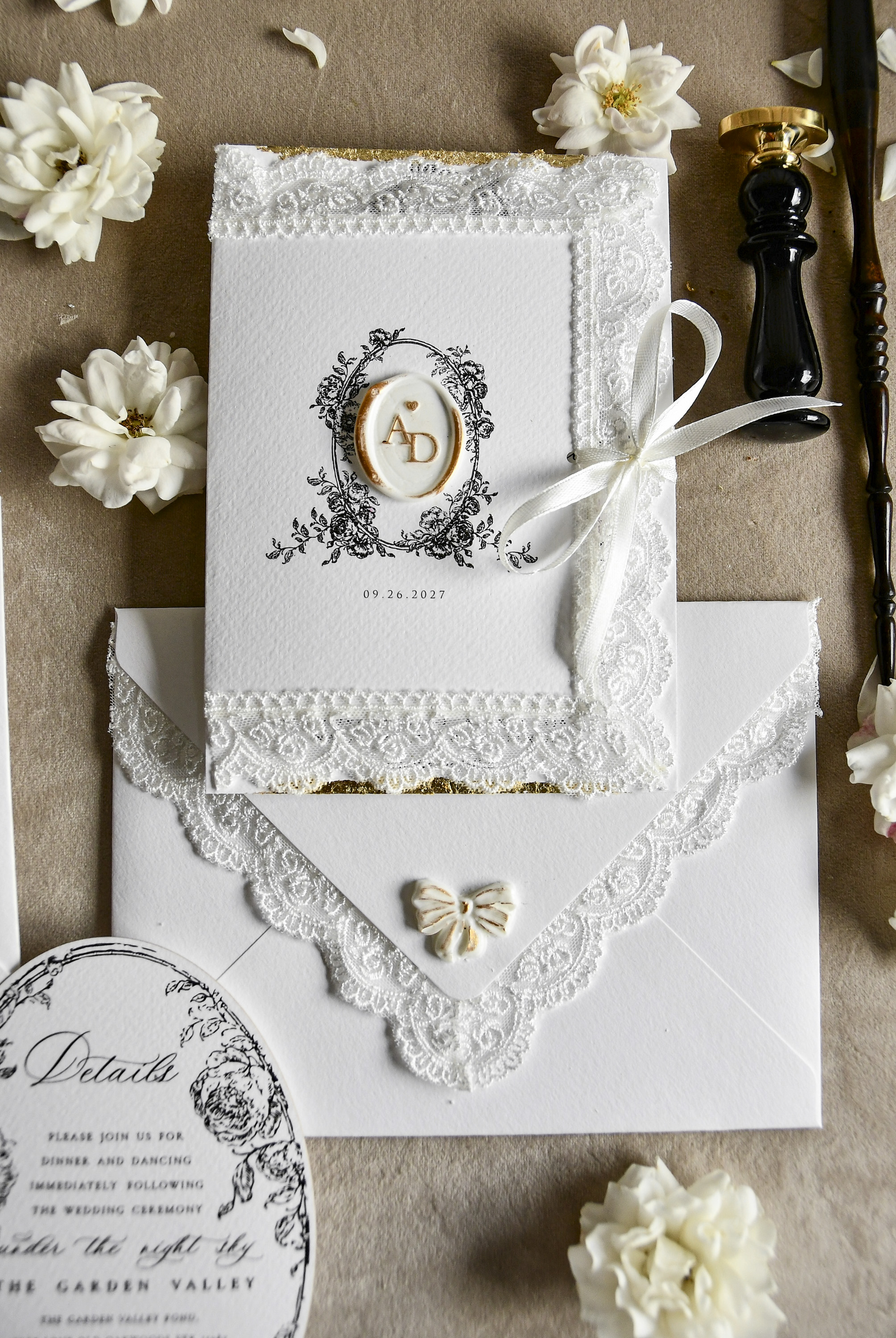
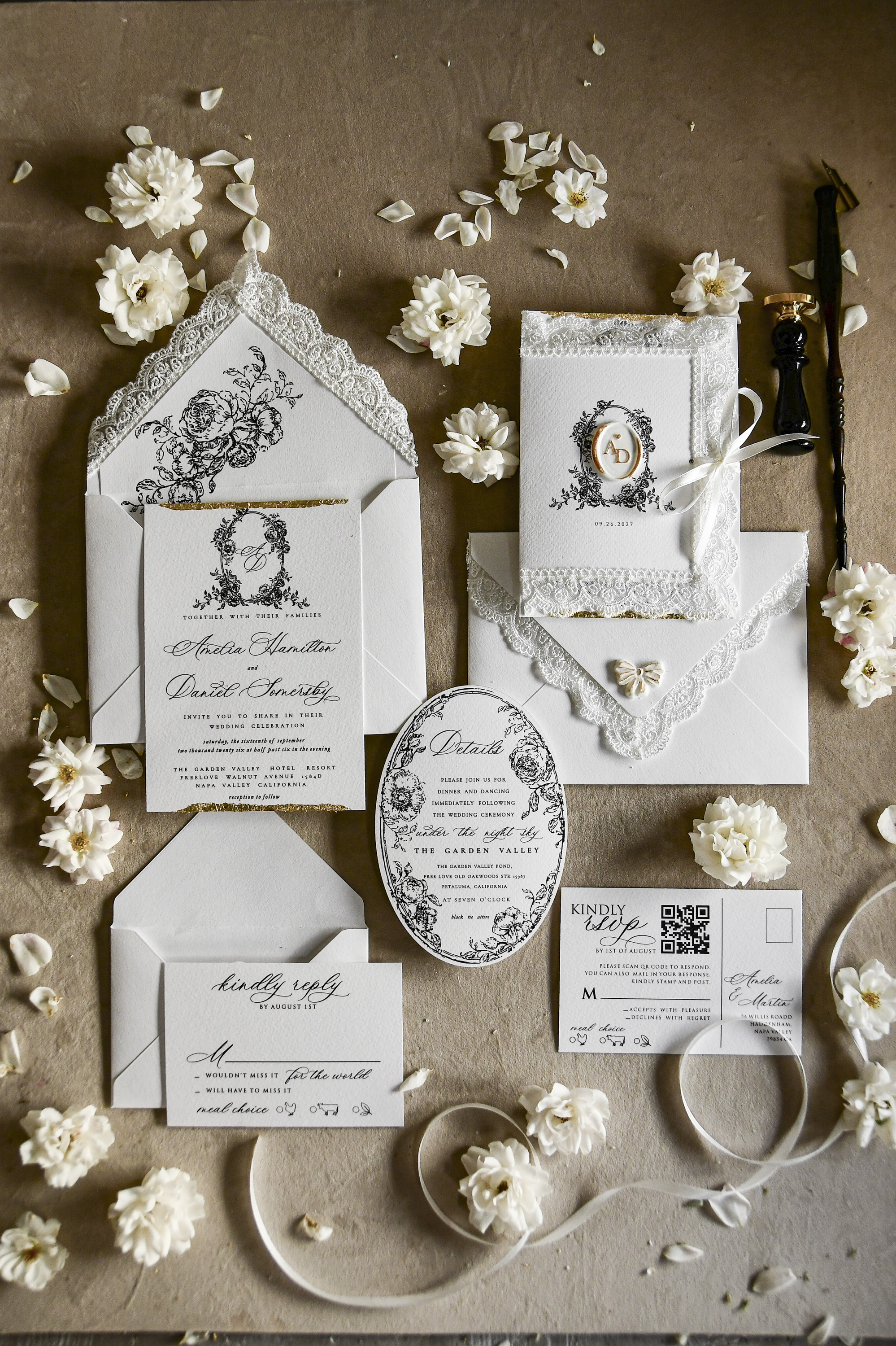
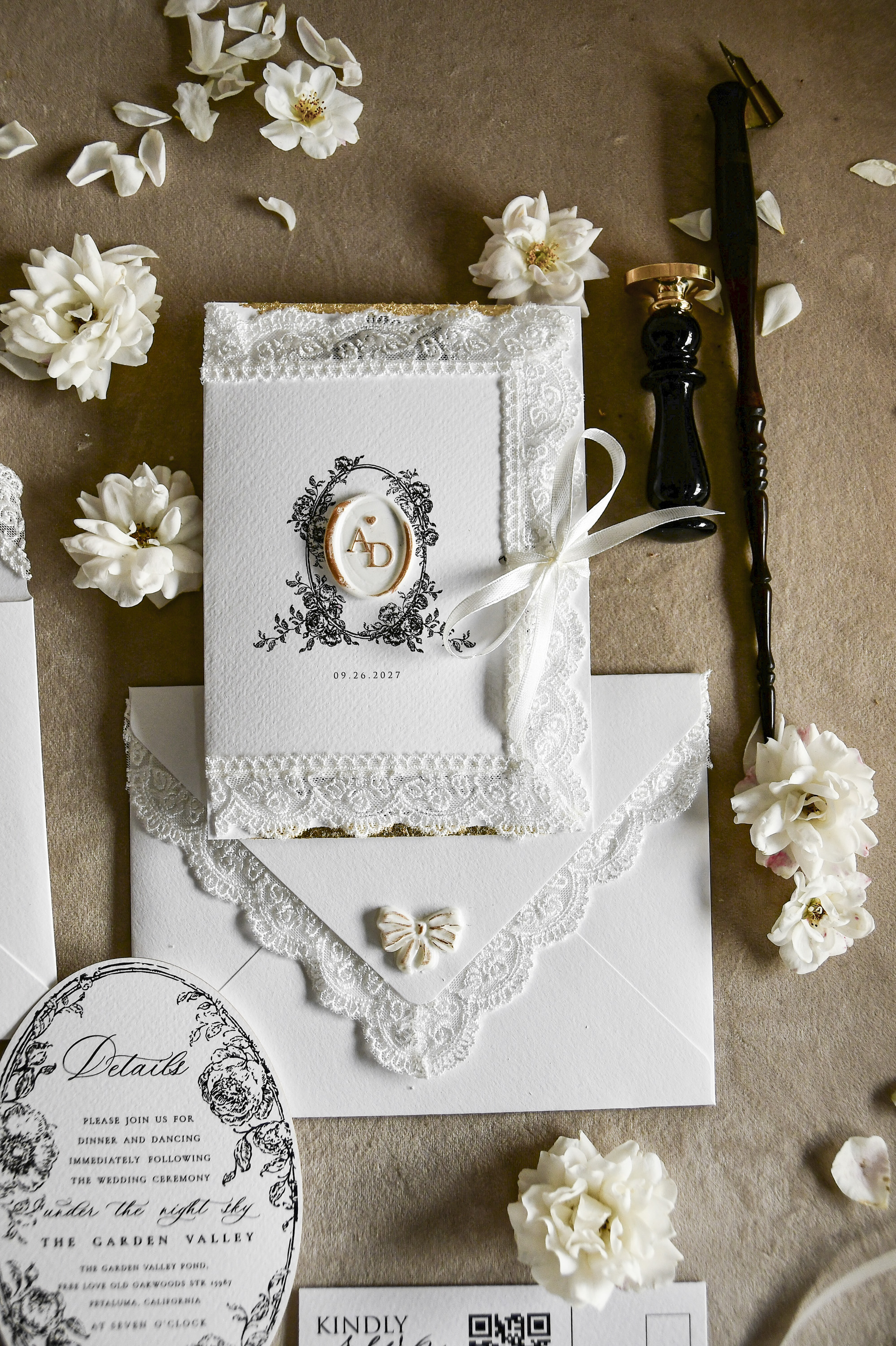
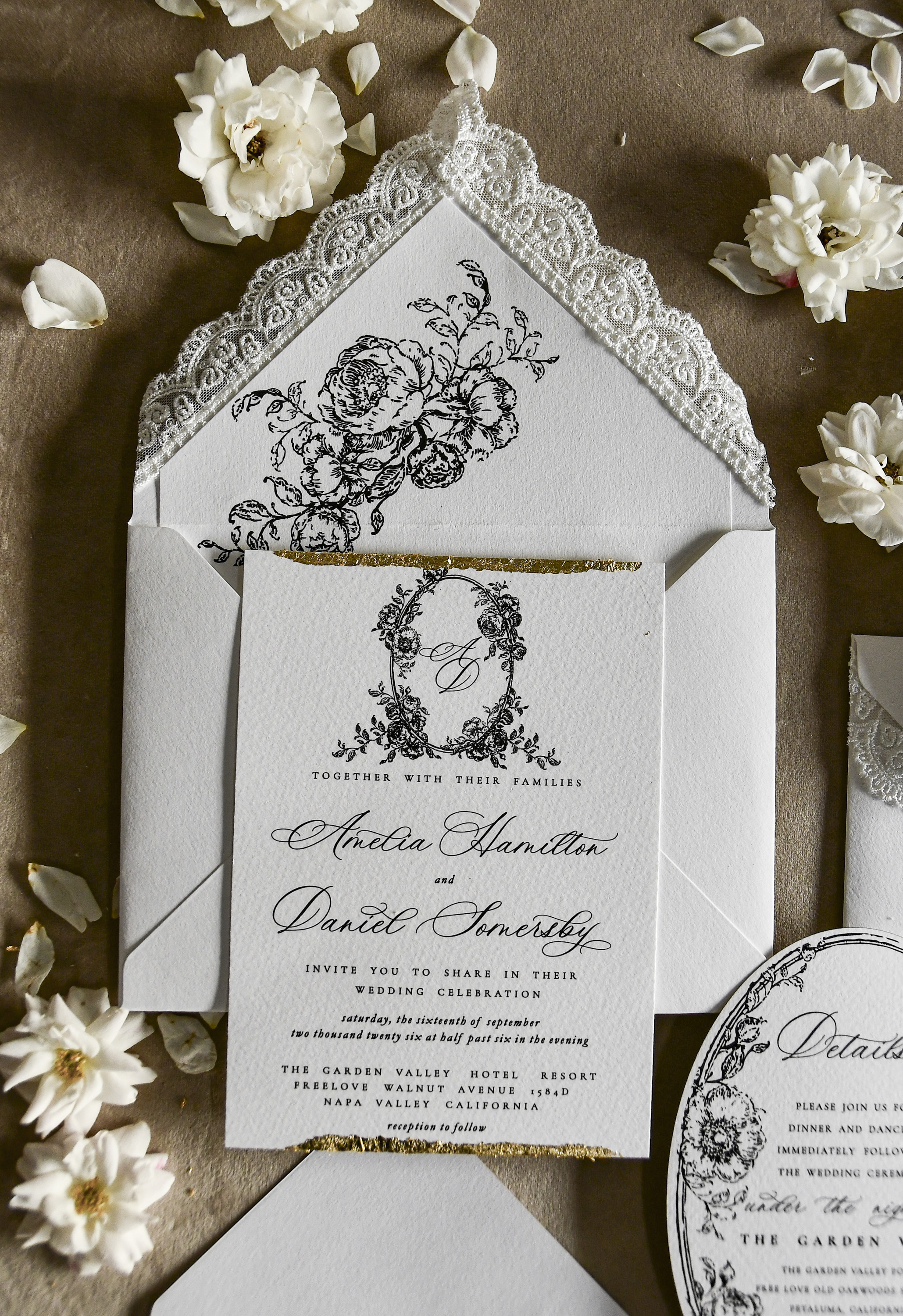
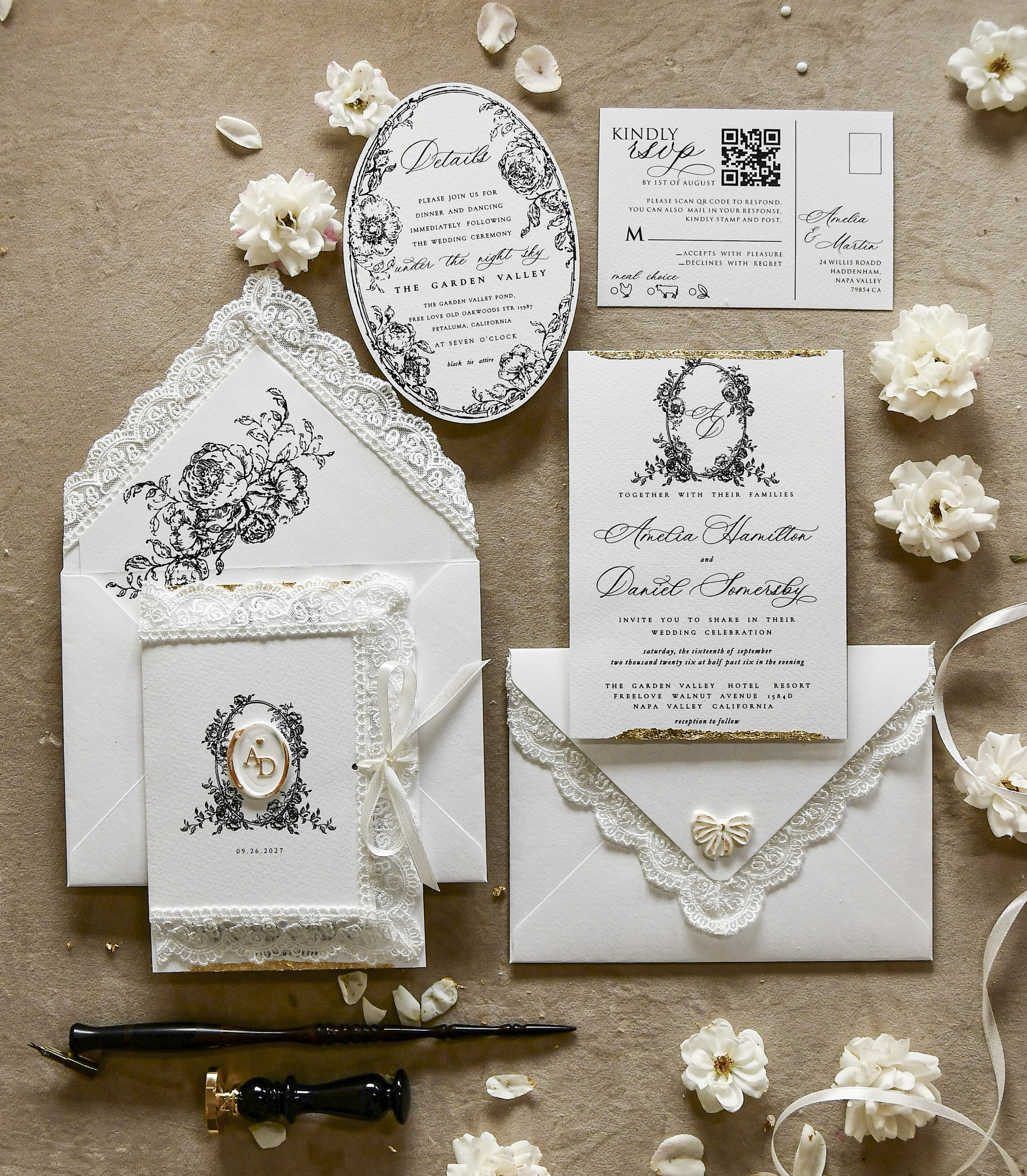
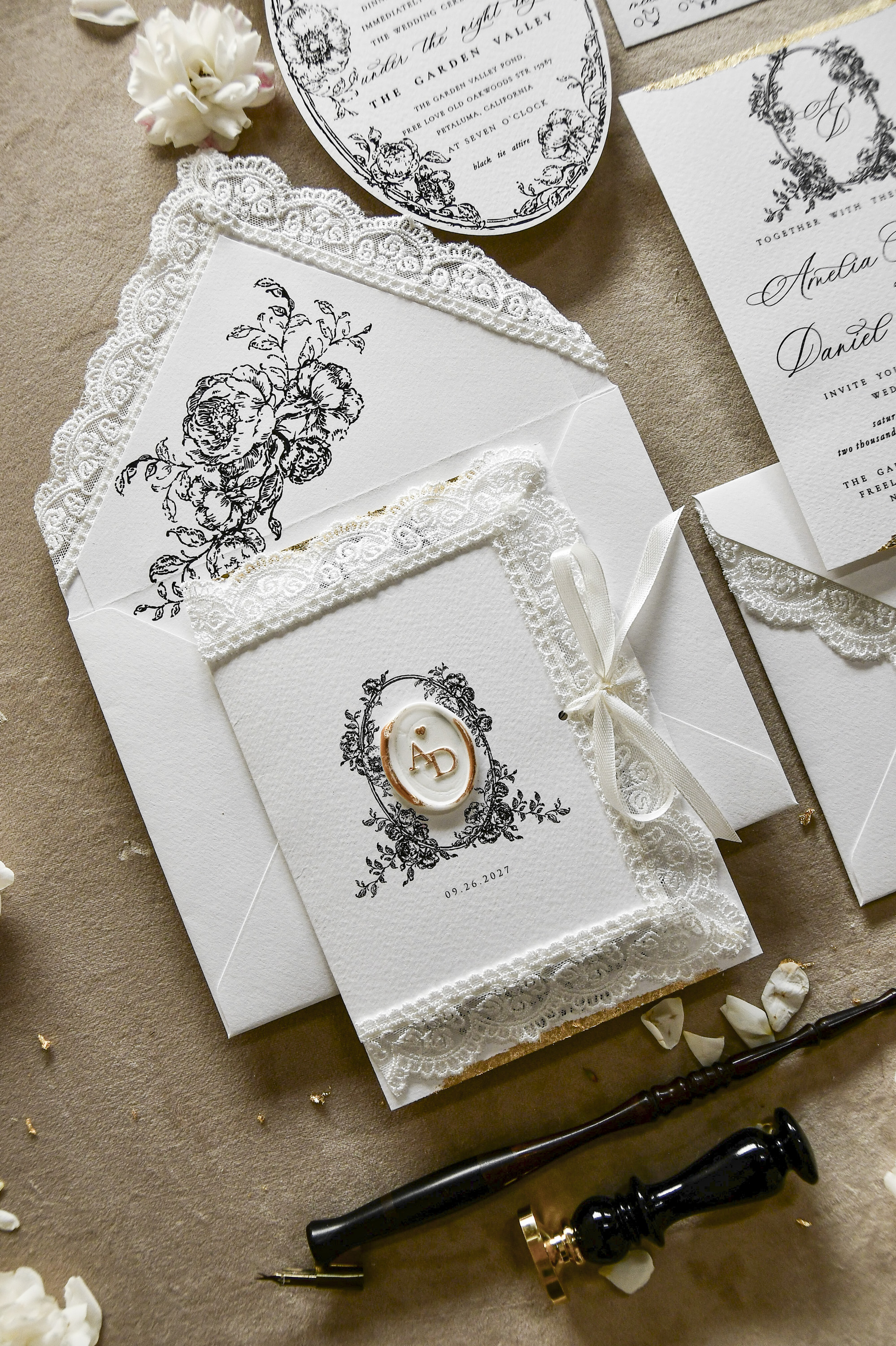
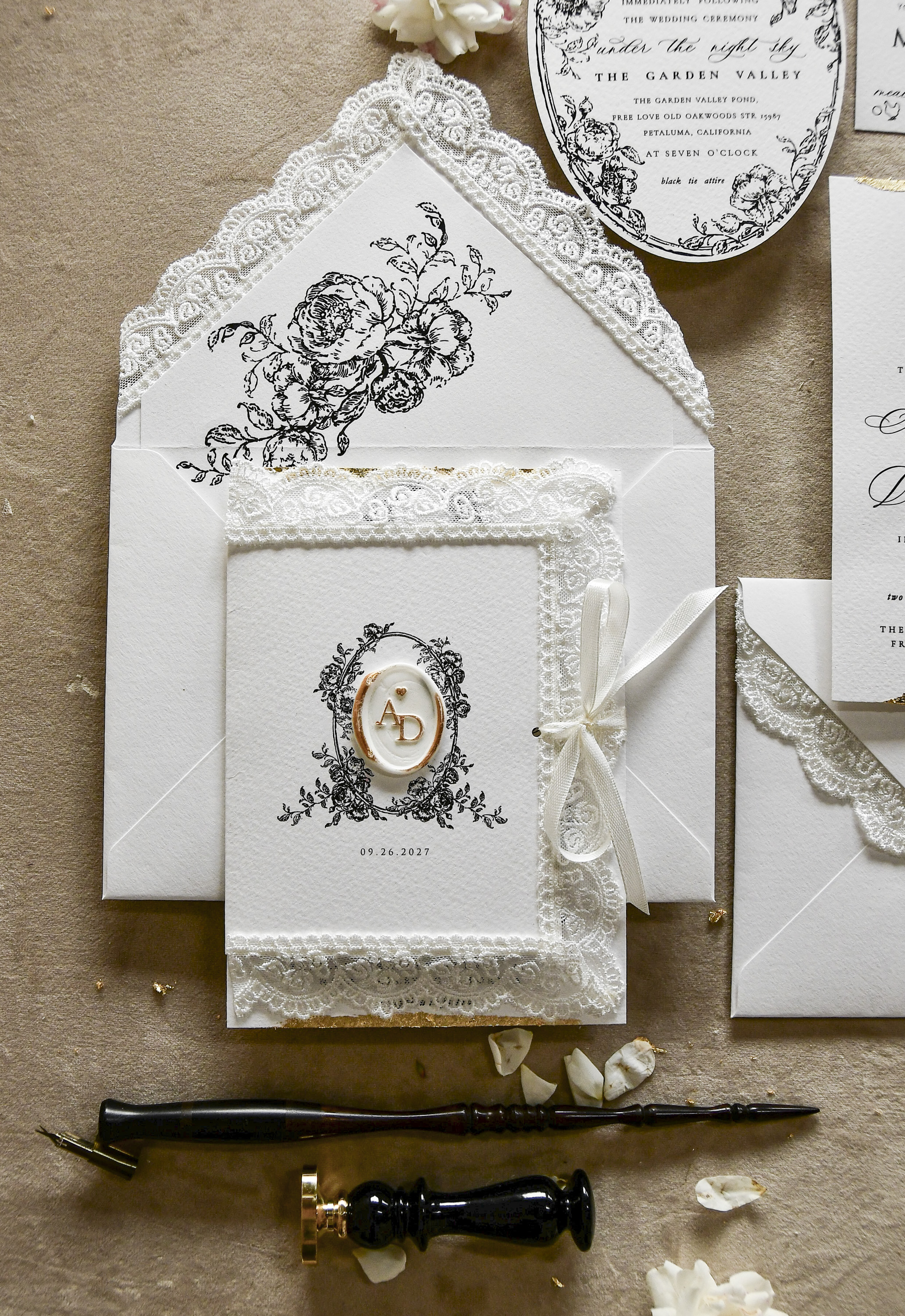
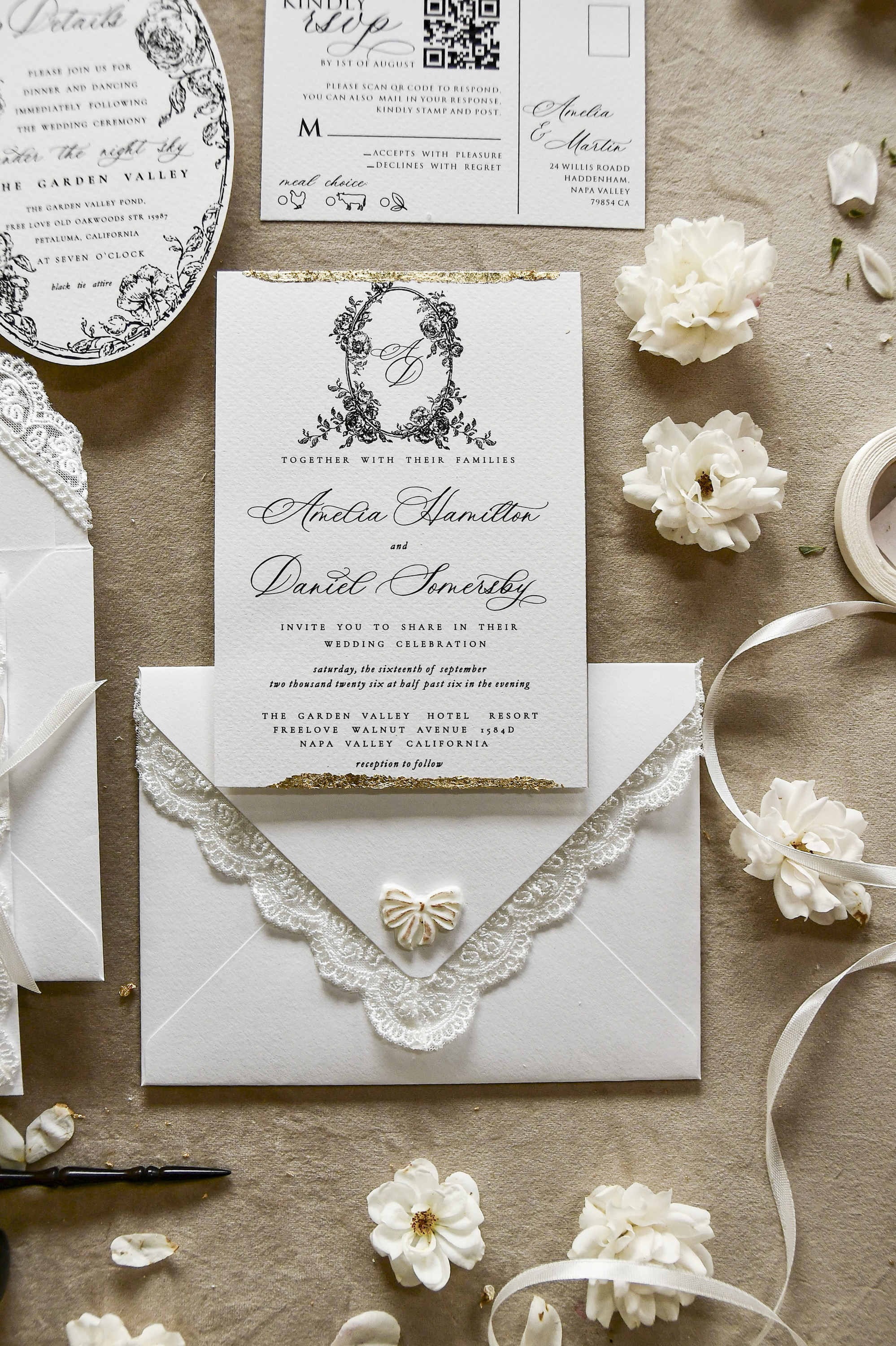
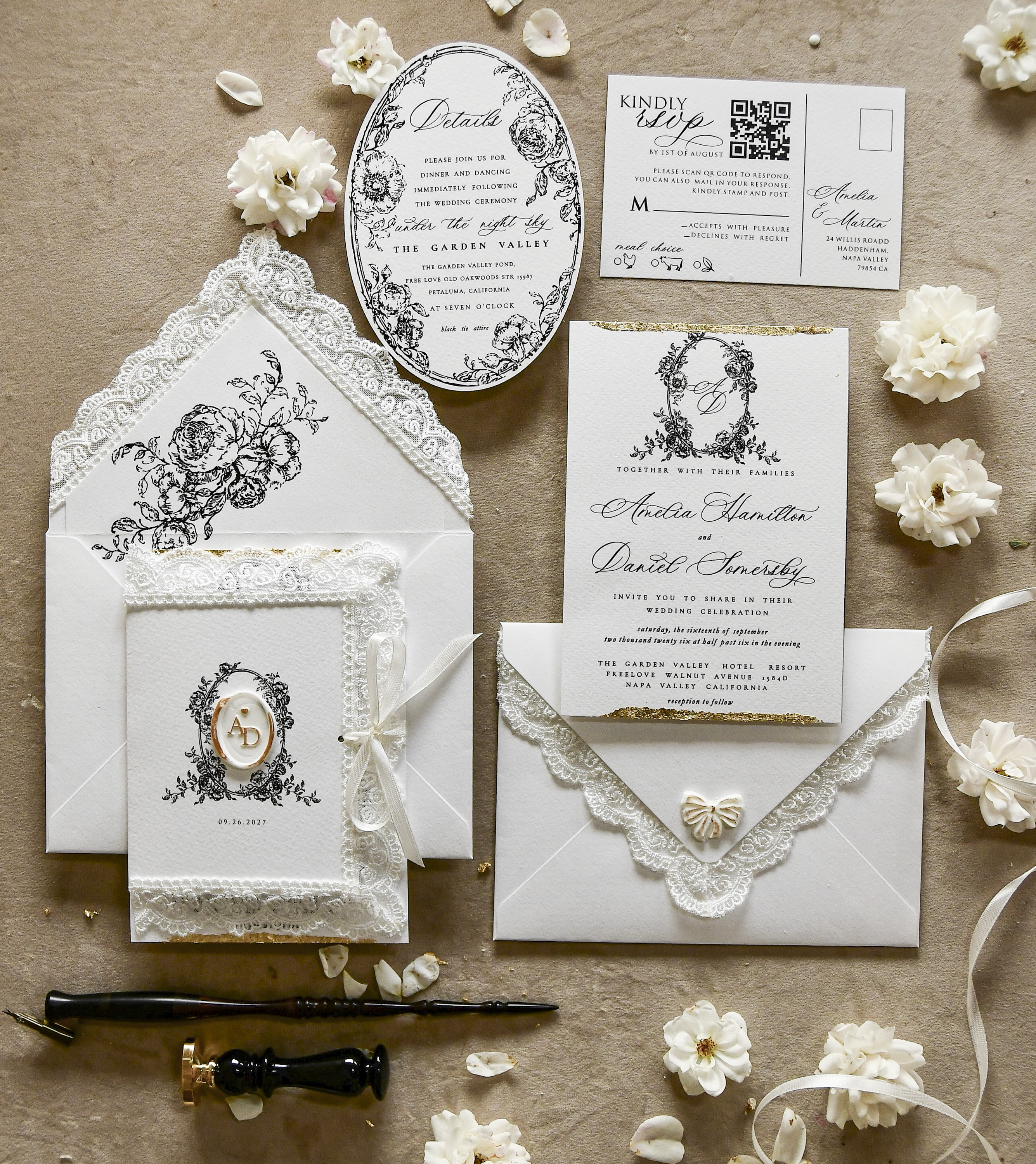
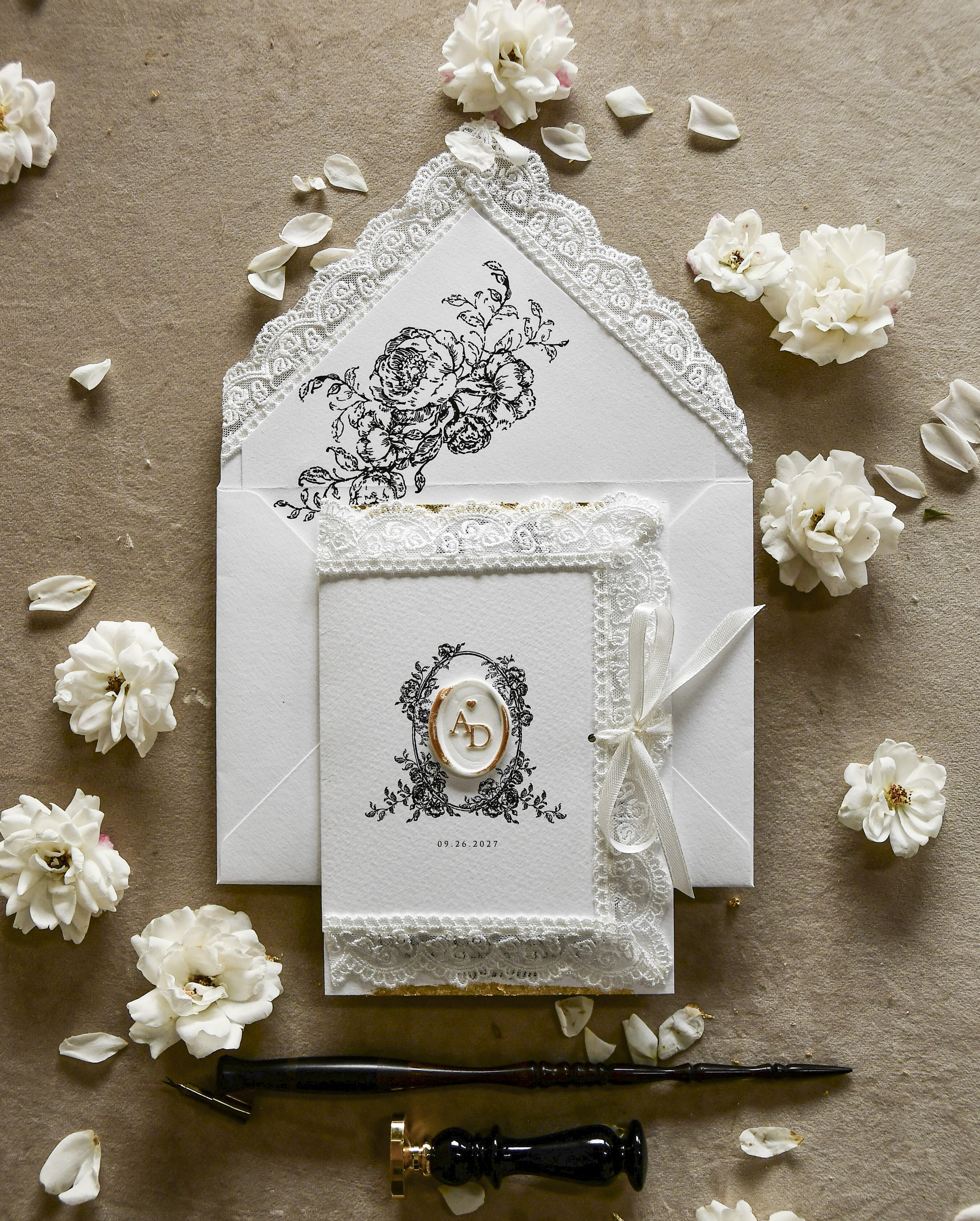
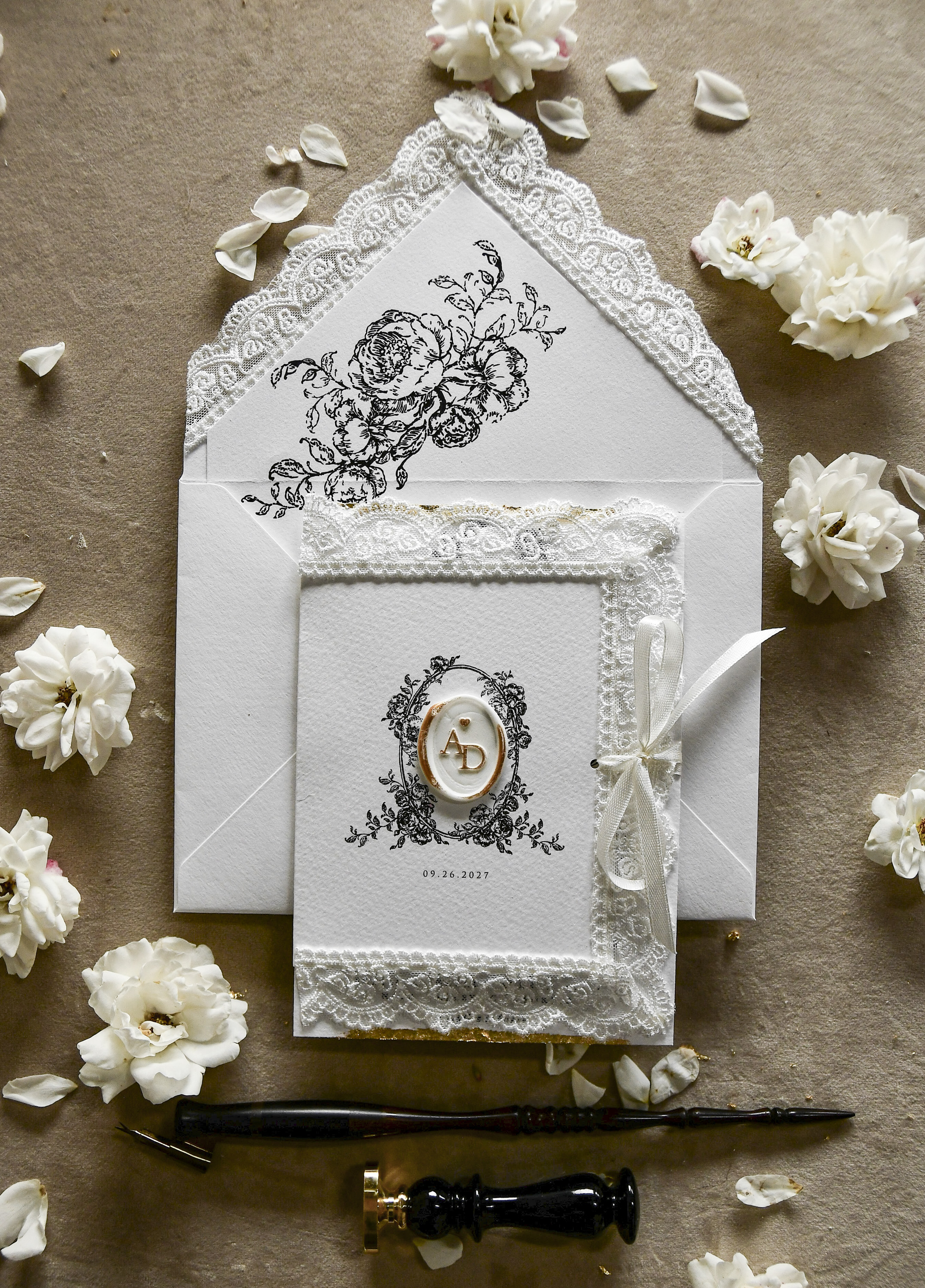
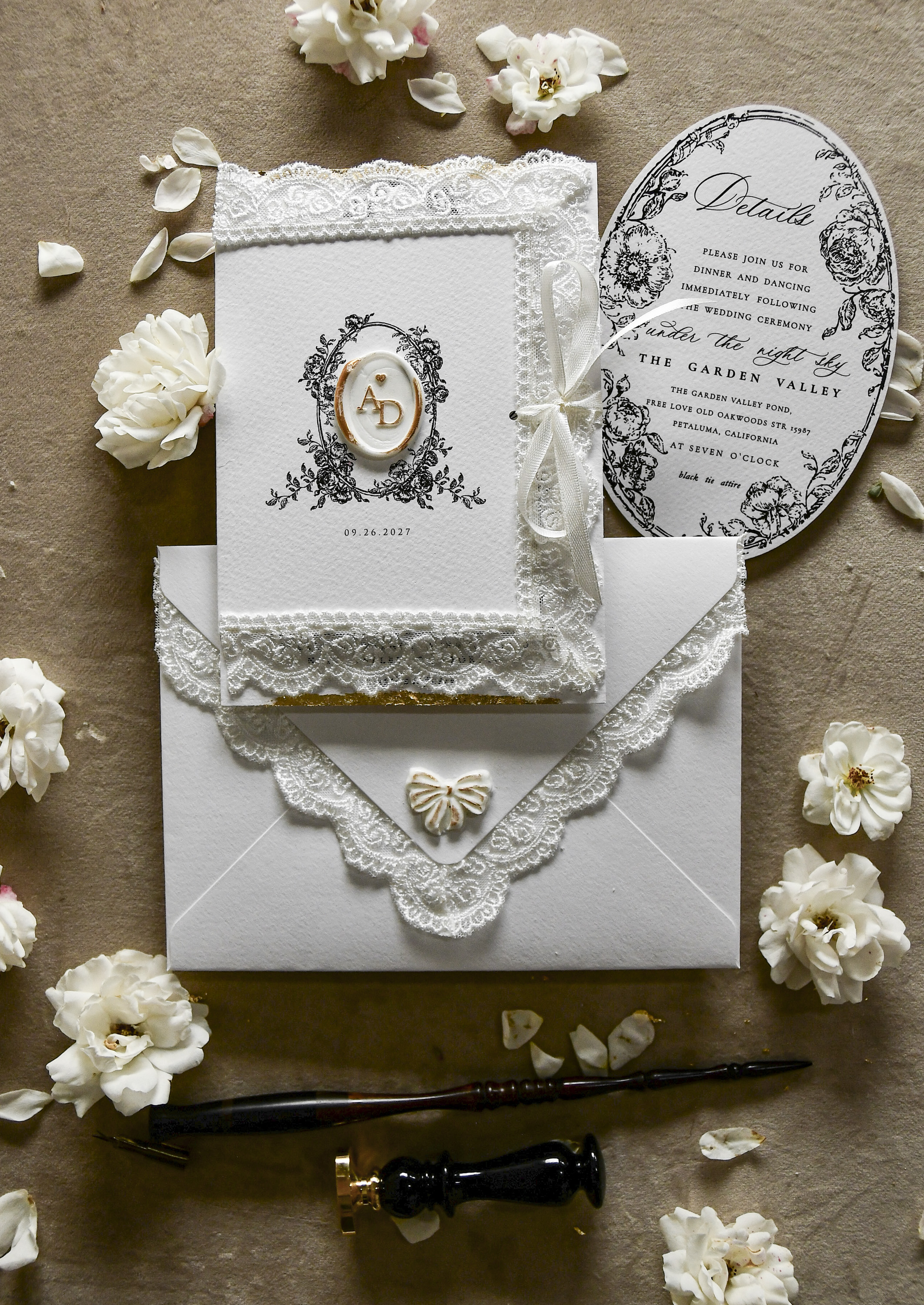
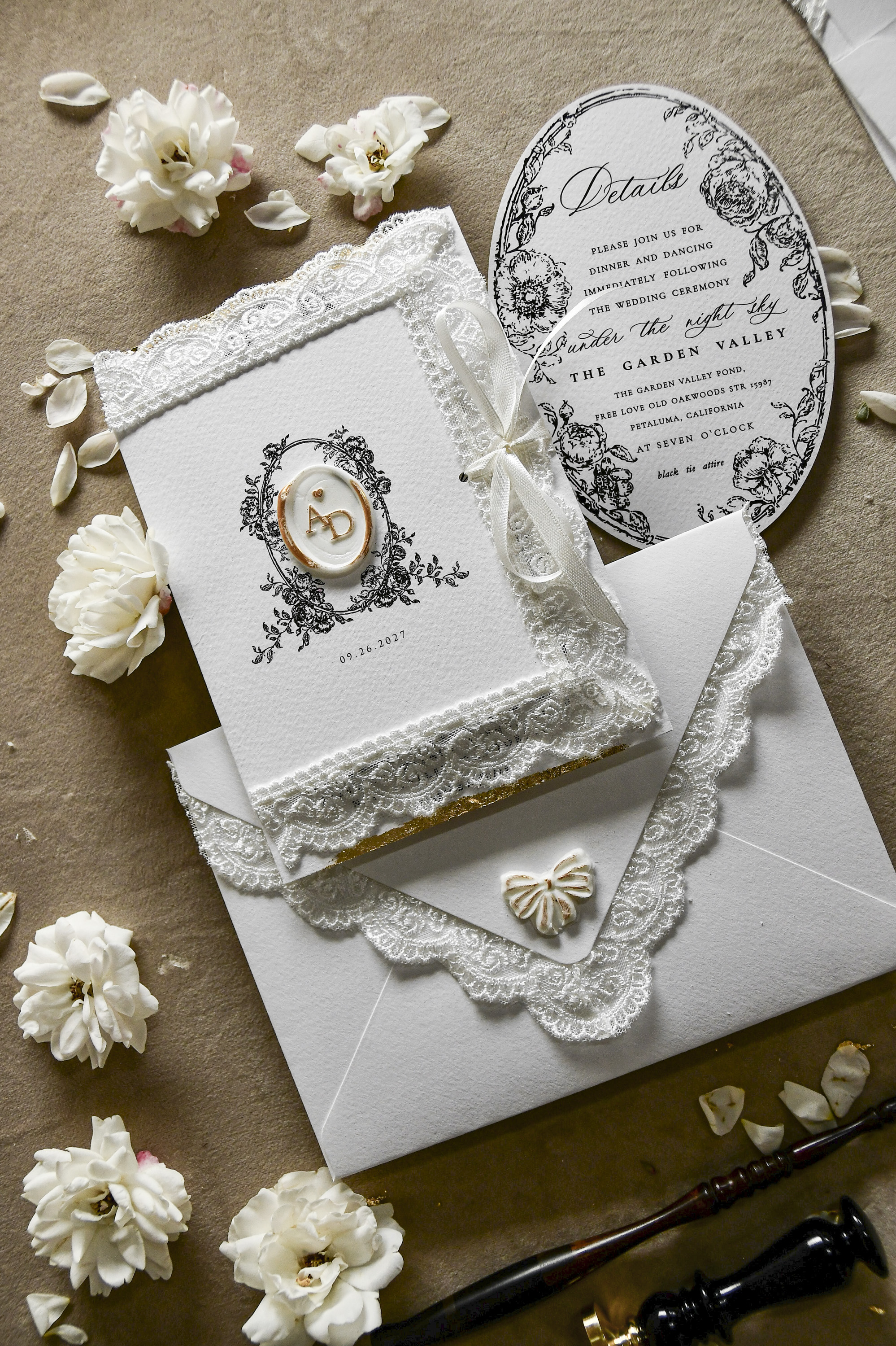
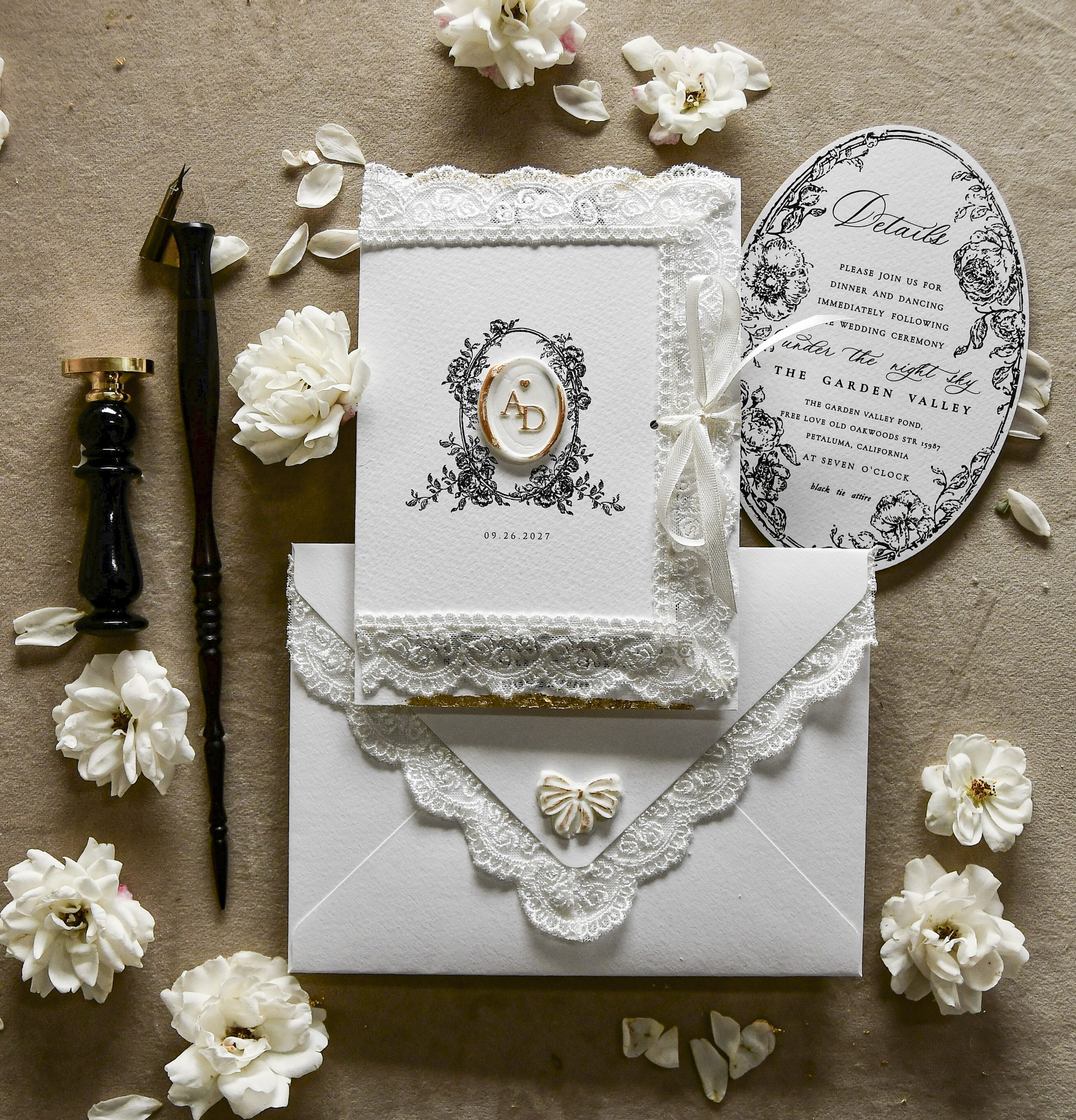
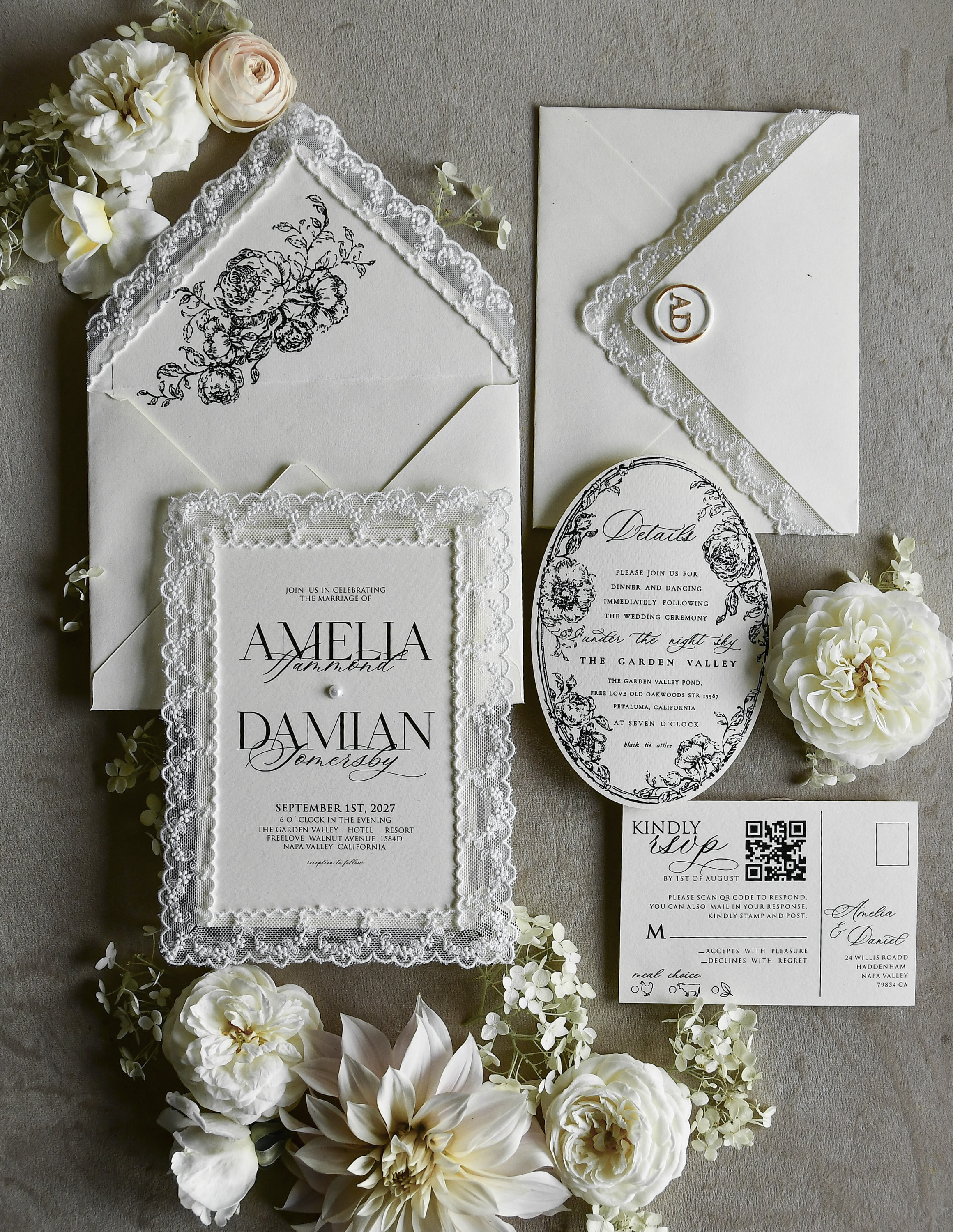
Once you've mailed save-the-dates, your guest list is essentially set — it's considered poor etiquette to send a save-the-date to someone you don't intend to invite to the wedding. So finalize your list before those go out, and use the months in between to design and order your invitations. A beautifully crafted suite like our 03/laceTR/z from the vintage lace collection takes time to personalize, print, and assemble, so build that production time into your schedule.
Setting Your RSVP Deadline the Right Way
Your RSVP deadline should be printed on the invitation itself and set two to three weeks before the wedding date. This gives you time to:
- Chase down any non-responders (and there will always be a few)
- Submit a final headcount to your caterer, usually required one to two weeks before the event
- Finalize seating charts and place cards
Avoid setting the RSVP deadline too close to the wedding — a one-week window creates unnecessary stress. Equally, don't set it four or five weeks out; guests tend to procrastinate regardless of how much time you give them.
A Quick Timeline Cheat Sheet
Here's a consolidated view of the full invitation timeline for a typical US wedding:
- 12 months out: Finalize guest list; send save-the-dates for destination weddings
- 6–8 months out: Send save-the-dates for local or regional weddings
- 4–5 months out: Order your wedding invitations (allow time for design, proofing, and printing — especially for detailed suites like the rustic lace 03/laceTR/z)
- 6–8 weeks out: Mail invitations
- 2–3 weeks before wedding: RSVP deadline
- 1–2 weeks before wedding: Final headcount to caterer
Sticking to this roadmap keeps you calm, keeps your vendors informed, and gives your guests the courtesy of adequate notice.
Frequently Asked Questions
Yes, six weeks is generally acceptable for local weddings where most guests have already received a save-the-date. If your guest list includes many out-of-town travelers or your wedding falls near a holiday, aim for eight weeks or more to give people time to make arrangements.
If you're sending invitations less than six weeks before the wedding, consider following up with a personal phone call or text to close family and friends so nothing gets lost in the mail. You may also want to shorten your RSVP window slightly and be prepared to reach out to non-responders quickly.
Yes, try to mail your entire batch on the same day or within a day or two. This ensures all guests receive the news at roughly the same time, which is especially important if some invitees may talk to each other before receiving their own invitation.
Order your invitations at least eight to twelve weeks before you plan to mail them. This allows time for design customization, proofing, printing, and assembly — plus a buffer for any reprints if something needs to be corrected.
Absolutely — a save-the-date is not a substitute for a formal invitation. Every guest on your list should receive a proper invitation suite with all the event details, RSVP card, and any enclosures like accommodation cards or directions.
Mail destination wedding invitations three to four months before the wedding date. Pair this with save-the-dates sent six to twelve months in advance so guests have maximum time to book travel, request time off work, and plan their trip.
See This Design Up Close
You May Also Like
More Wedding Planning Guides
- → Kids at Your Wedding: How to Decide What's Right for Your Celebration
- → Mailing vs. Hand-Delivering Wedding Invitations: What's the Right Call?
- → When Silence Speaks: How to Handle Guests Who Never RSVP'd
- → The Plus-One Dilemma: How to Handle Dates for Single Guests
- → Ceremony-Only Guests: The Honest Guide to Partial Wedding Invitations
- → Save the Dates and Wedding Invitations: What Each One Does and Why You Need Both
- → Navigating the Parent Guest List: How to Keep the Peace Without Losing Control
- → The Honest Guide to Trimming Your Wedding Guest List Without the Guilt
- → The Graceful Art of Telling Someone They're Not on the Guest List
- → Seating Your Divorced Parents at the Wedding: A Practical Guide
- → When Guests Ghost Your RSVP: What to Do Next
- → The Honest Guide to Deciding Who Gets a Plus One at Your Wedding
- → The Ex Factor: How to Decide Whether a Former Partner Belongs on Your Guest List
- → Digital vs. Paper Wedding Invitations: Which Is Right for You?
- → Child-Free Weddings: What's Rude and What's Perfectly Fine
- → Everything Your Wedding Invitation Needs to Say
- → Navigating Guest List Pressure: When Mom Wants to Invite Someone You Don't
- → When Your Partner Wants a Smaller Guest List Than You Do
- → Online RSVPs vs. Mailed Cards: What Every Couple Should Know
- → Uninvited Plus-Ones and Tag-Alongs: How to Keep Your Guest List Intact
- → When Family Feuds Threaten Your Wedding Plans: A Practical Peacekeeper's Guide
- → Inviting an Estranged Brother or Sister: Finding Clarity Before You Seal the Envelope
- → Cousins, Invites, and Hard Choices: A Practical Guest List Guide