
Ordering Wedding Invitations: The Smartest Way to Get Your Numbers Right
One of the most common mistakes couples make when ordering wedding invitations is confusing number of guests with number of invitations needed. Order too few and you're scrambling for reprints at full price. Order too many and you've spent money on stationery that never leaves the house. This guide walks you through exactly how to calculate your invitation quantity — so you get it right the first time.
Count Households, Not Heads
The golden rule of invitation ordering: one invitation per household, not per person. A couple living together gets one invitation. Roommates who are both invited each get their own. Adult children still living at home can typically share an invitation with their parents — unless they're over 18 and you want them to feel individually recognized, in which case a separate invite is a thoughtful touch.
Here's a quick example: if you're inviting 150 guests, you might only need 80–90 invitations once you account for couples, families, and shared households. Always build your list household by household, not name by name, before you place your order.
Always Order Extra — Here's How Many
Once you have your household count, add a buffer. Most stationery experts recommend ordering 15–20 extra invitations beyond your household total. Here's why that buffer matters:
- Last-minute additions: Someone gets added to the guest list after you've already ordered.
- Addressing mistakes: Envelopes get smudged, misspelled, or damaged — extras save you.
- Keepsakes: You and your partner will each want one. So will your parents.
- Lost in the mail: It happens. Having extras means you can quickly resend.
If your household count is 85, order at least 100–105 invitations. The cost per unit is almost always lower when you order in larger quantities, so rounding up is almost always the financially smarter move.
Don't Forget the Extras Inside the Envelope
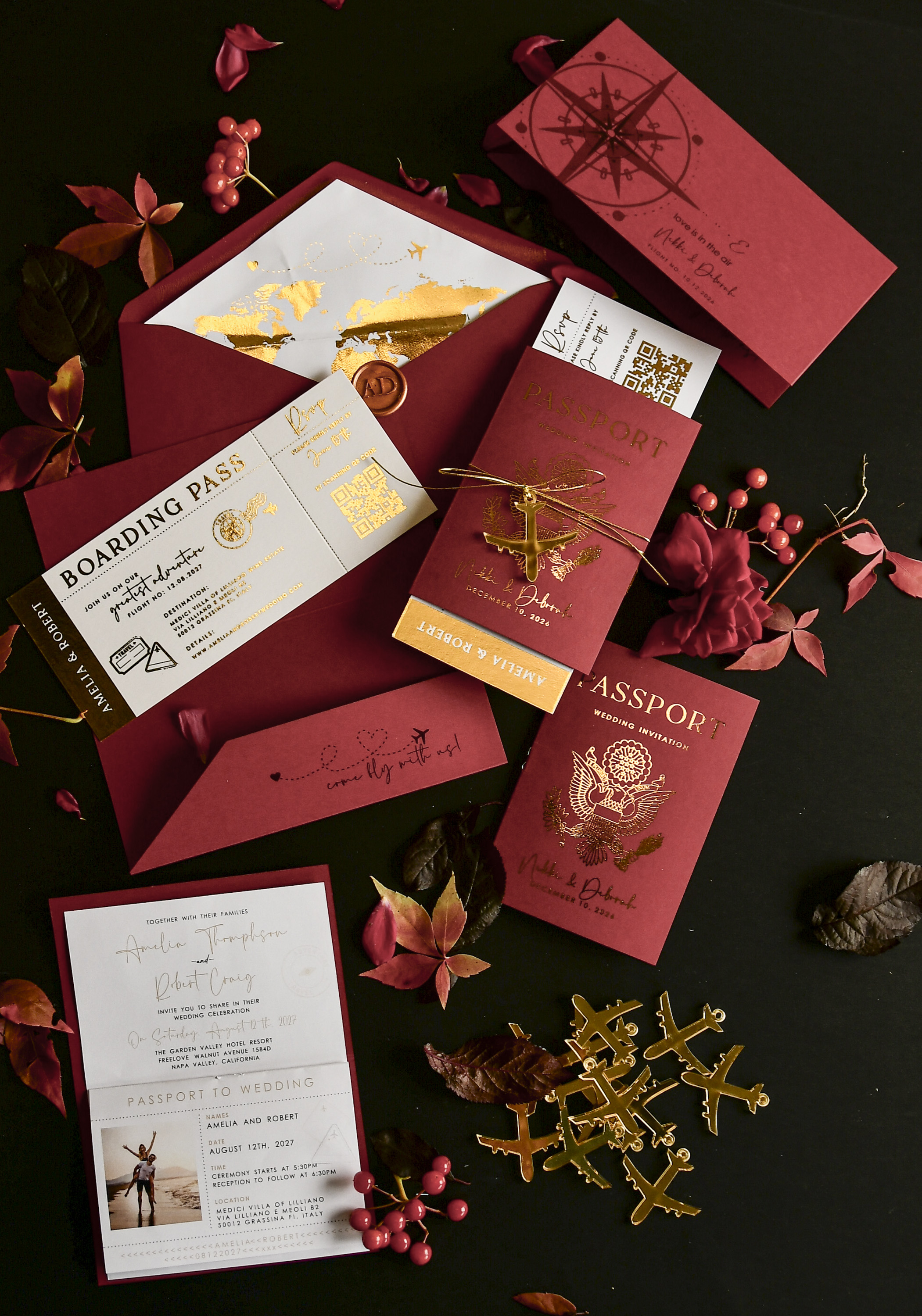
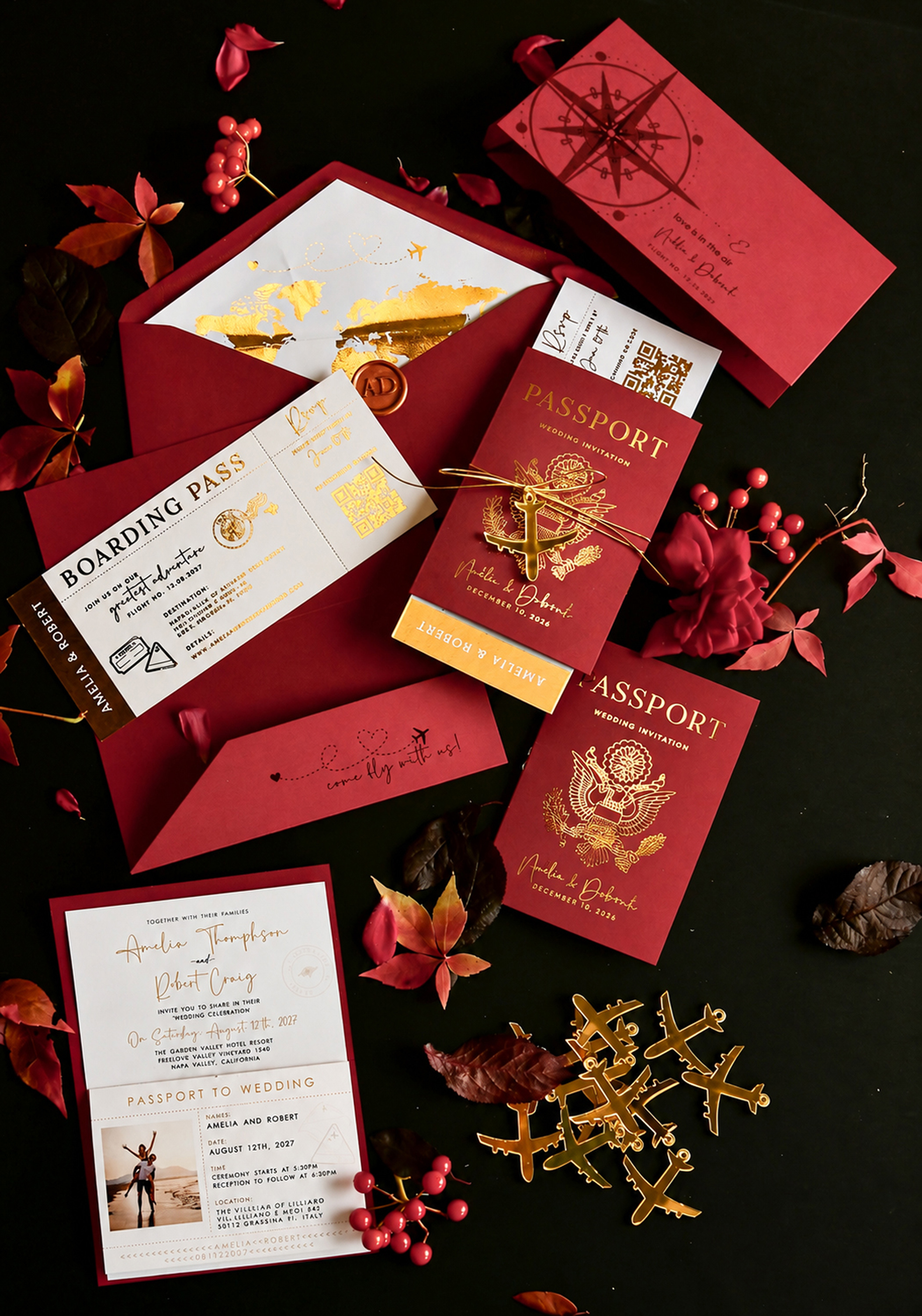
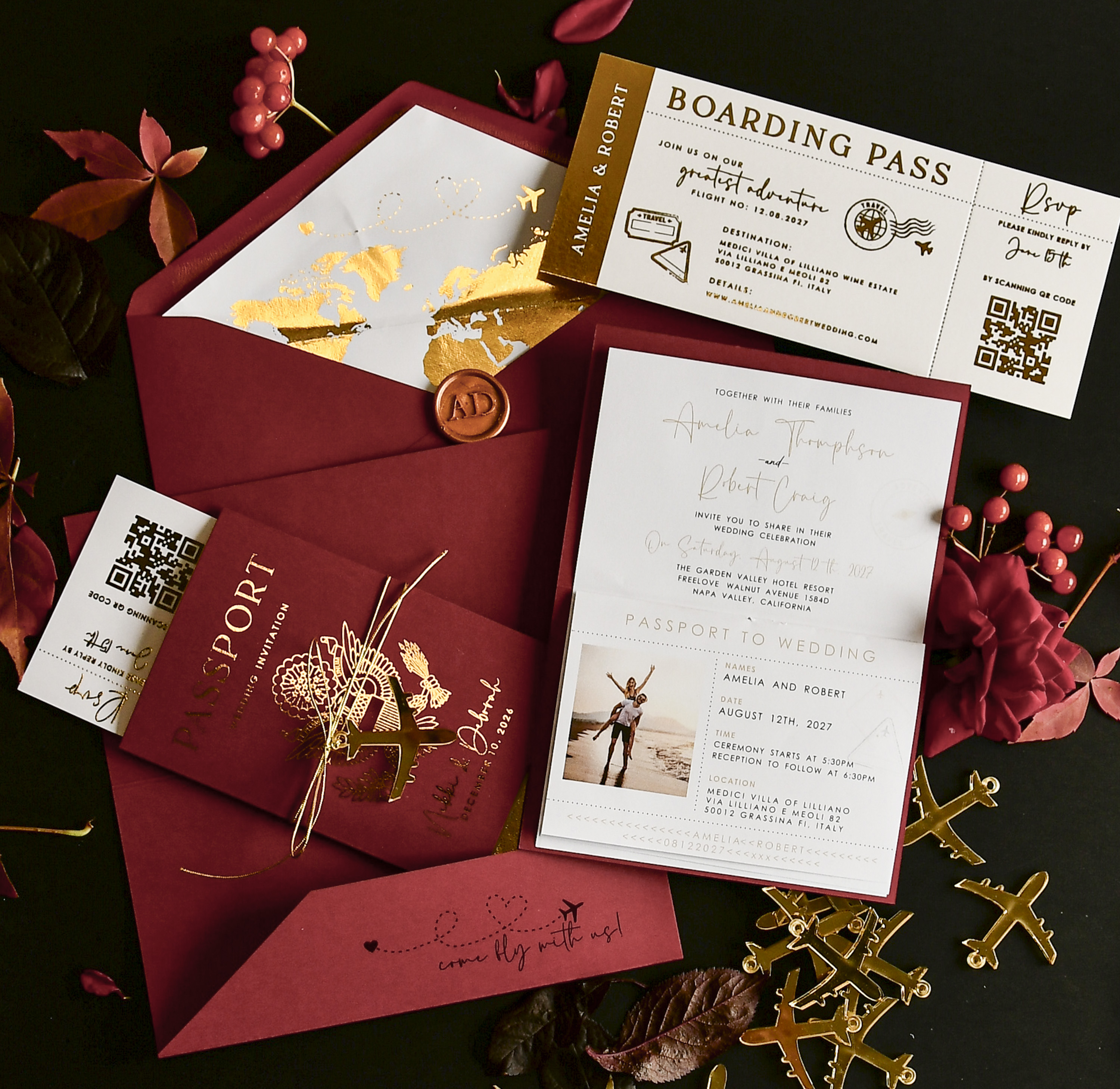
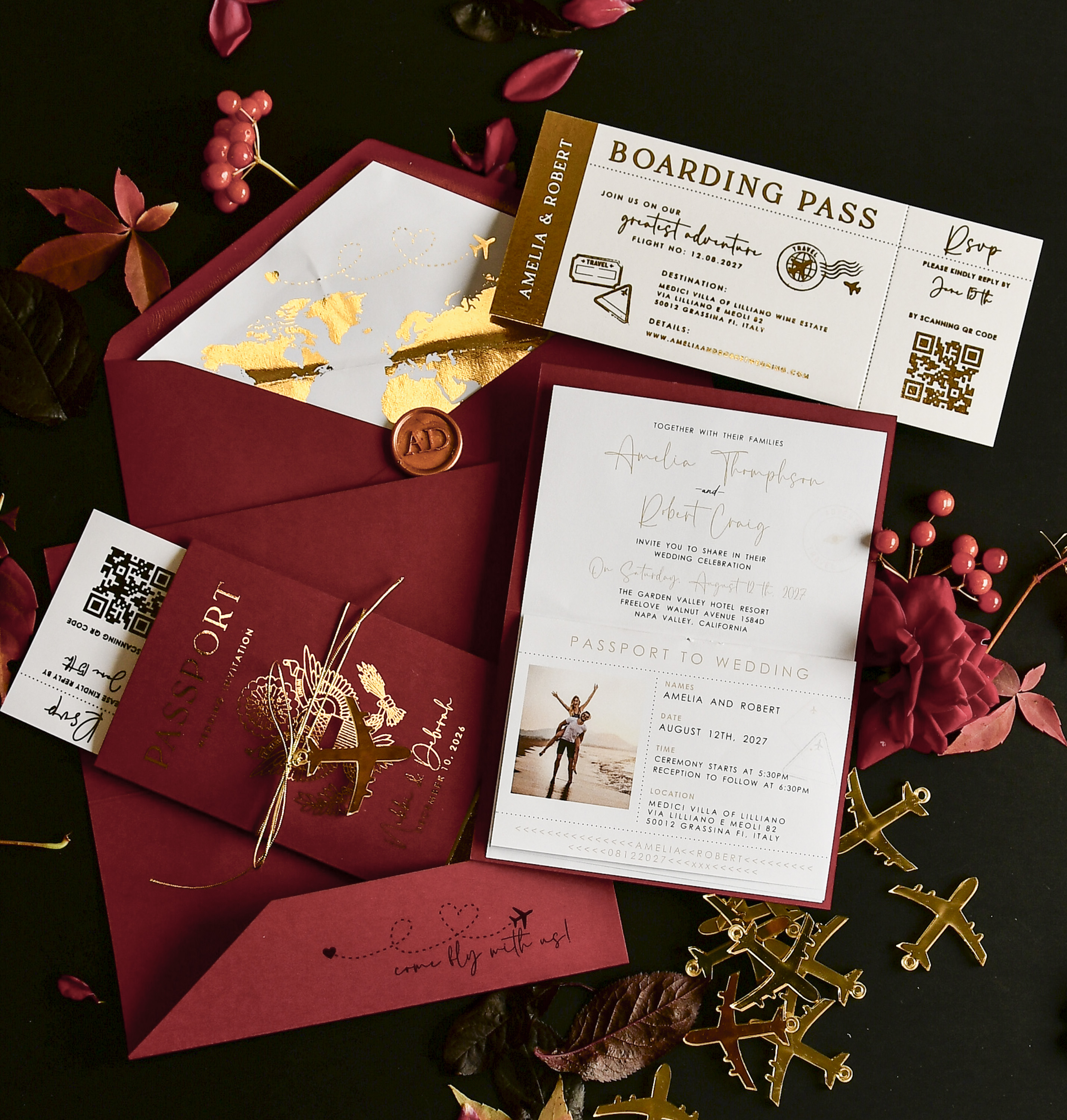
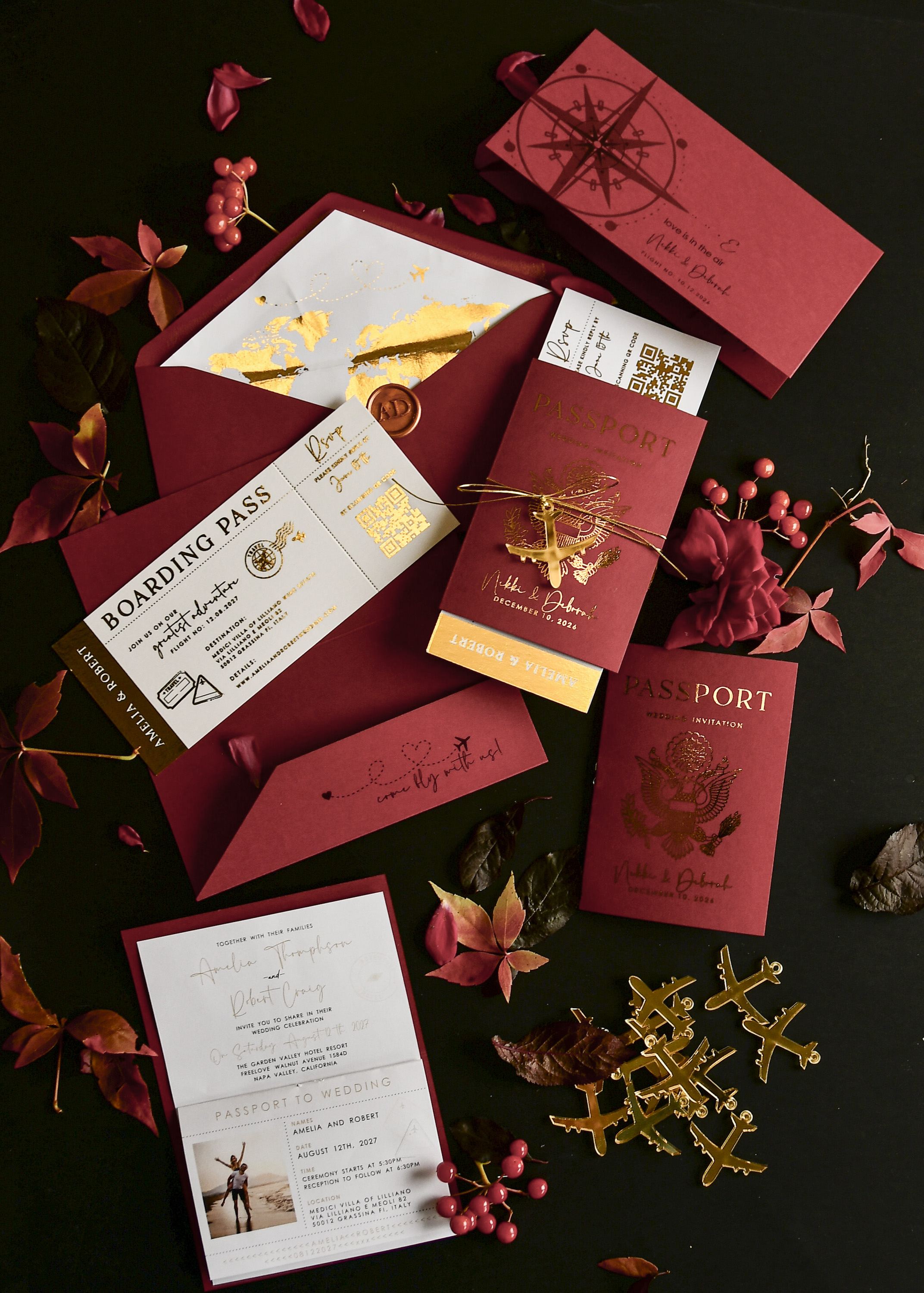
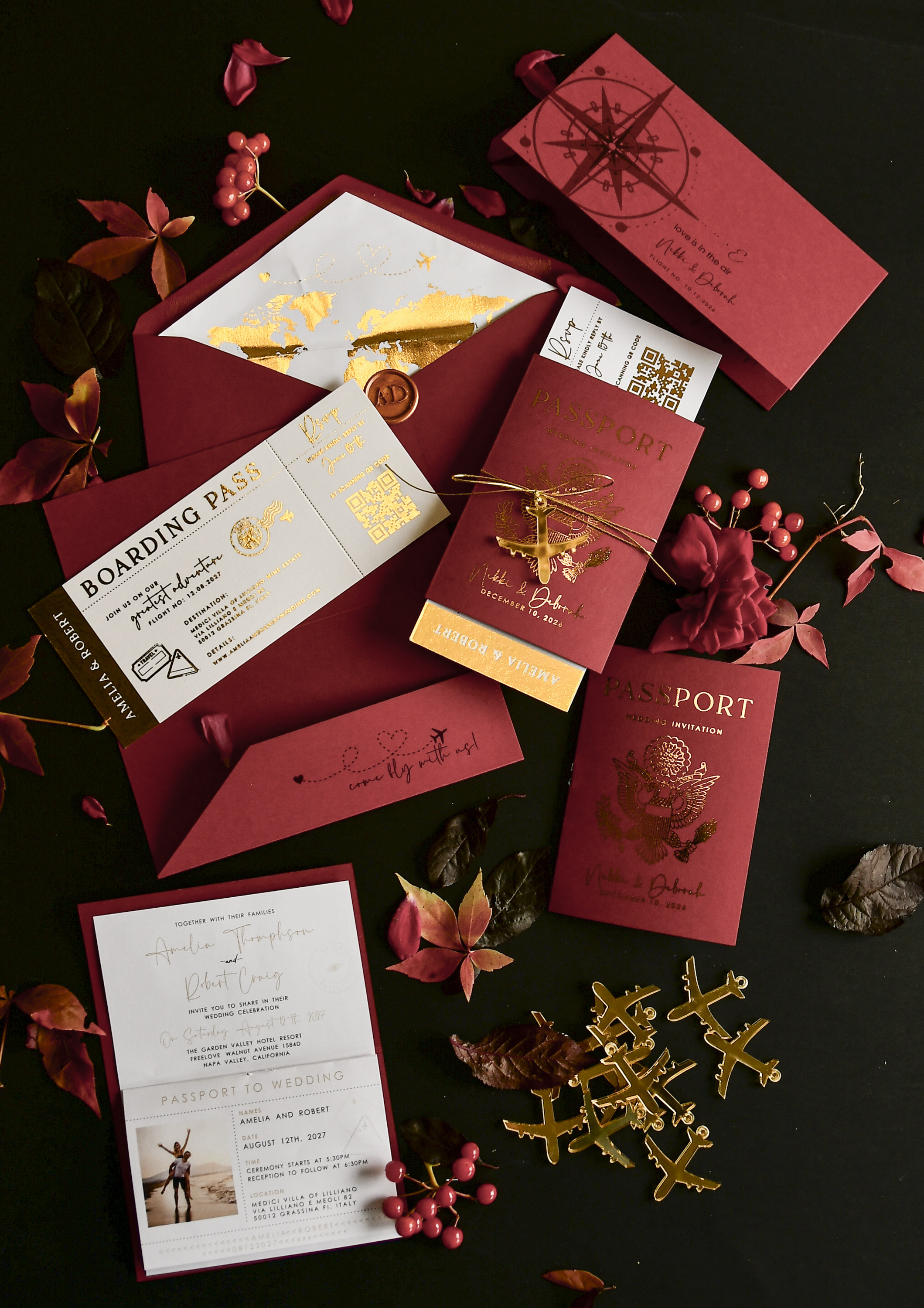
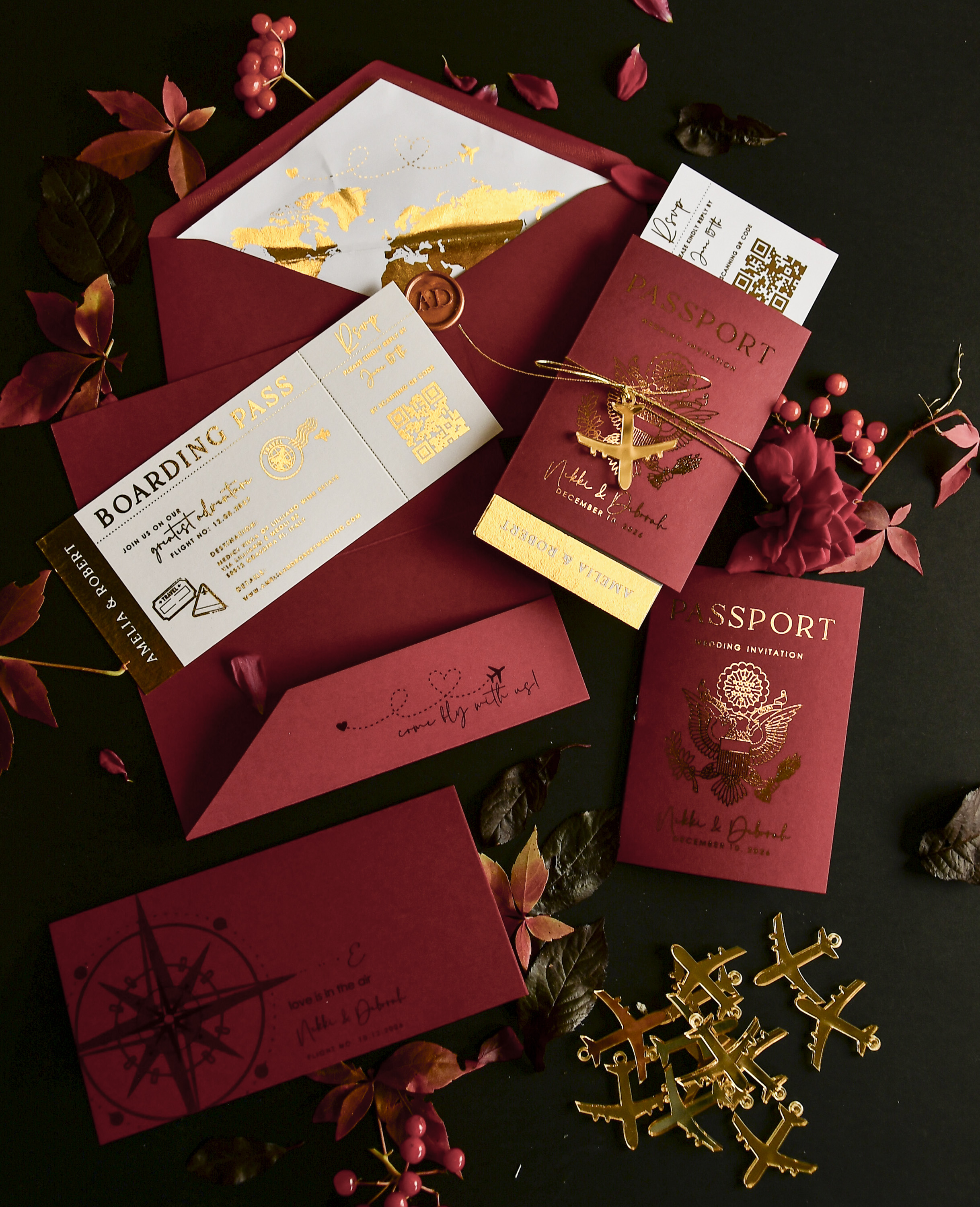
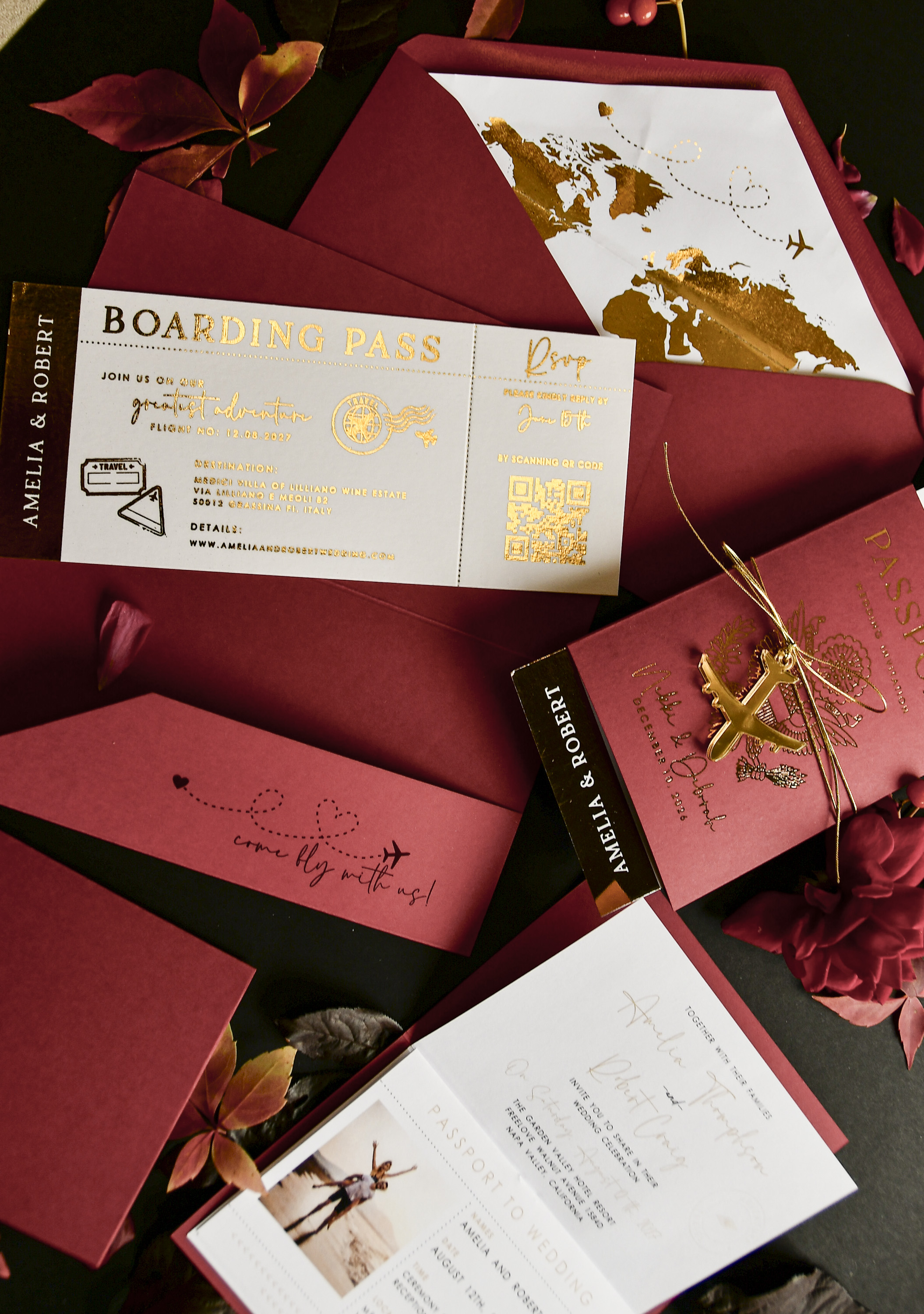
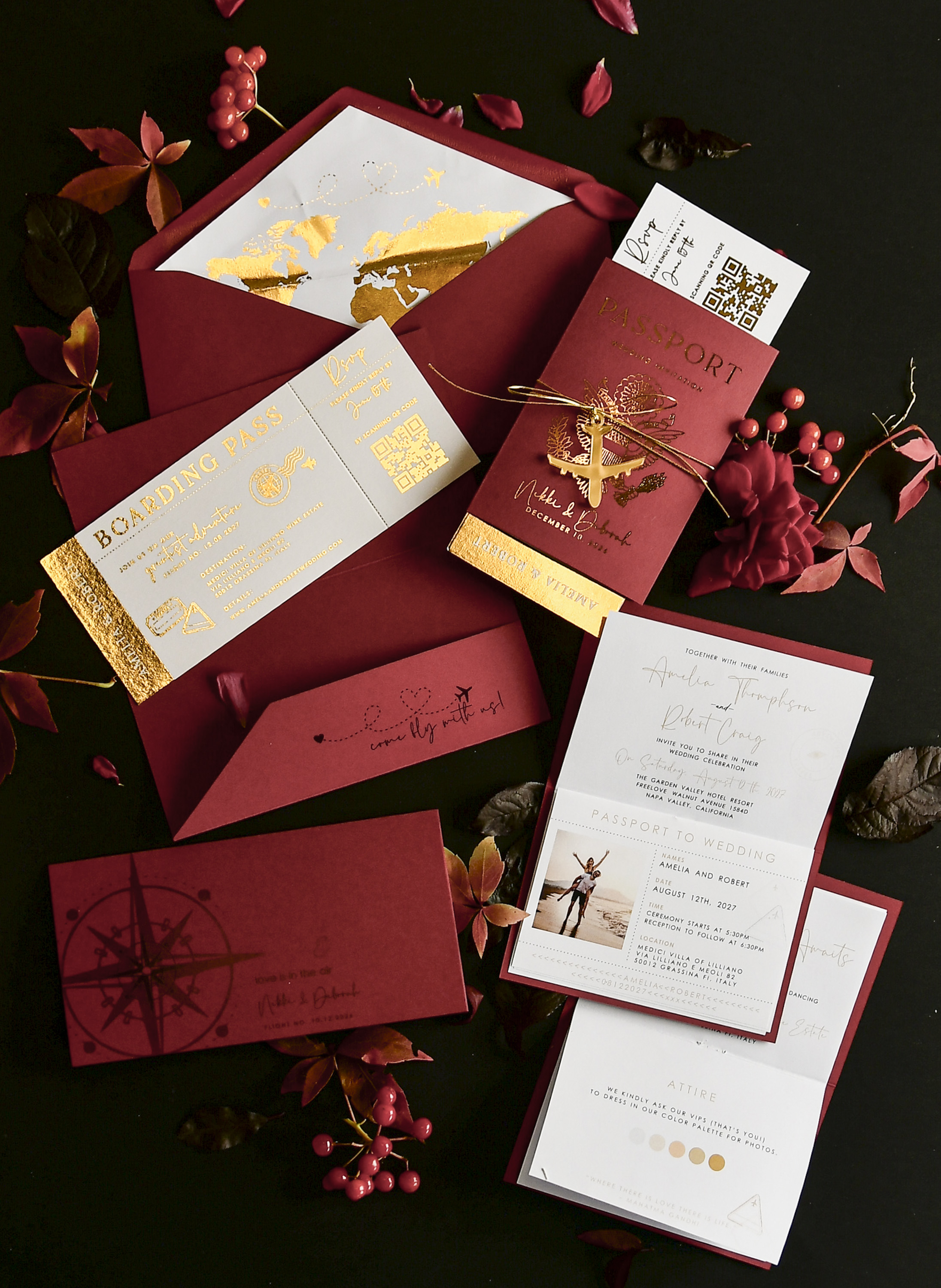
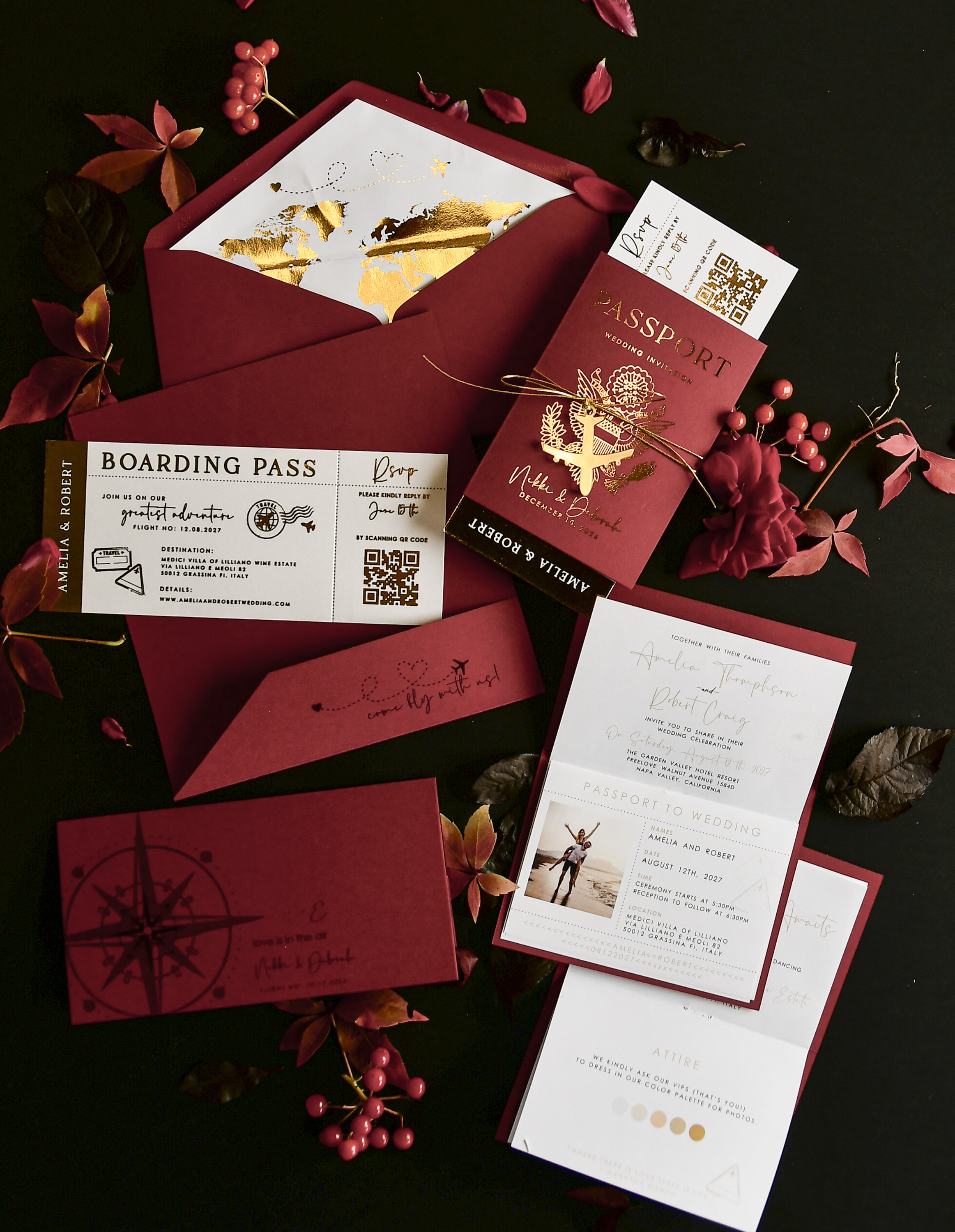
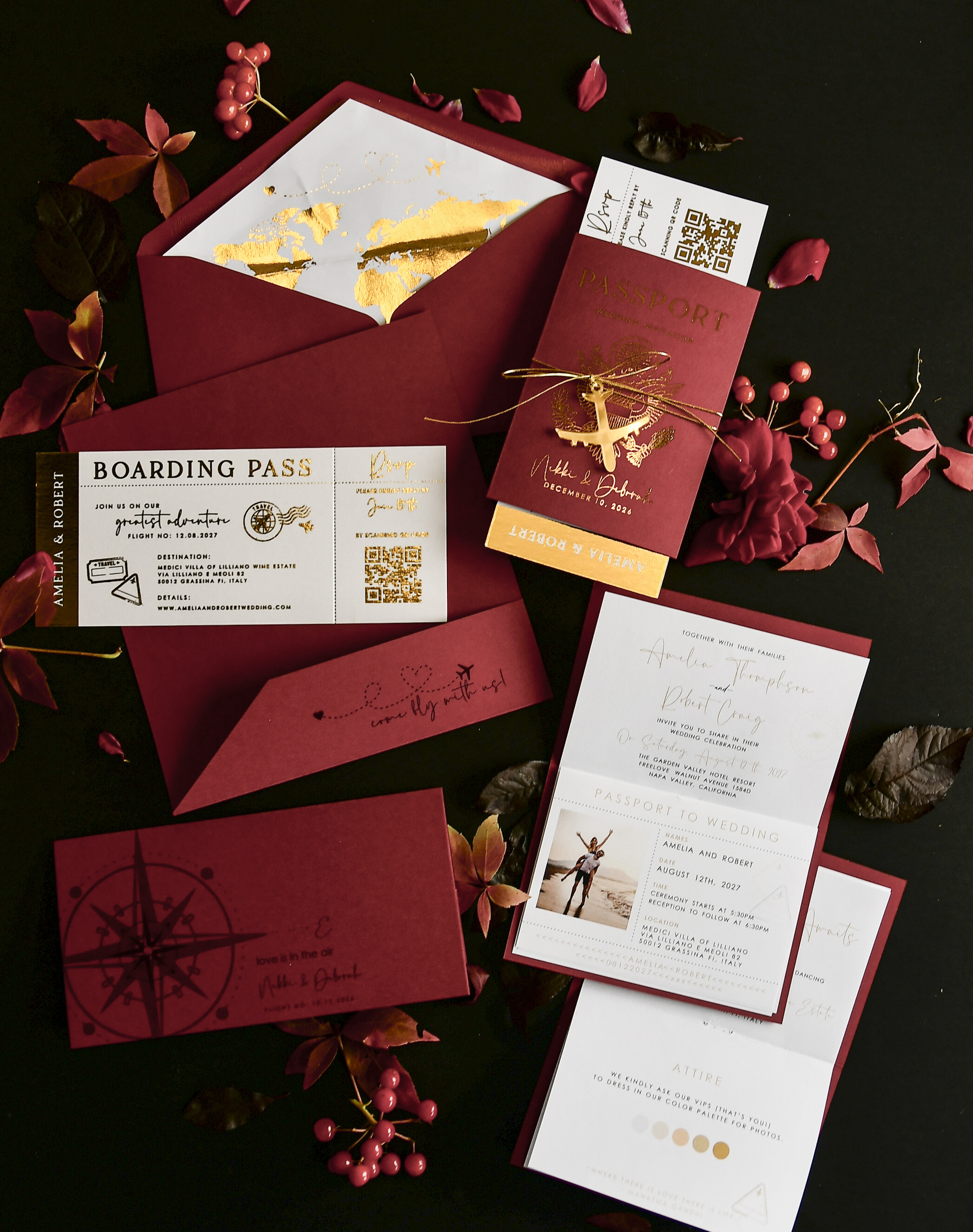
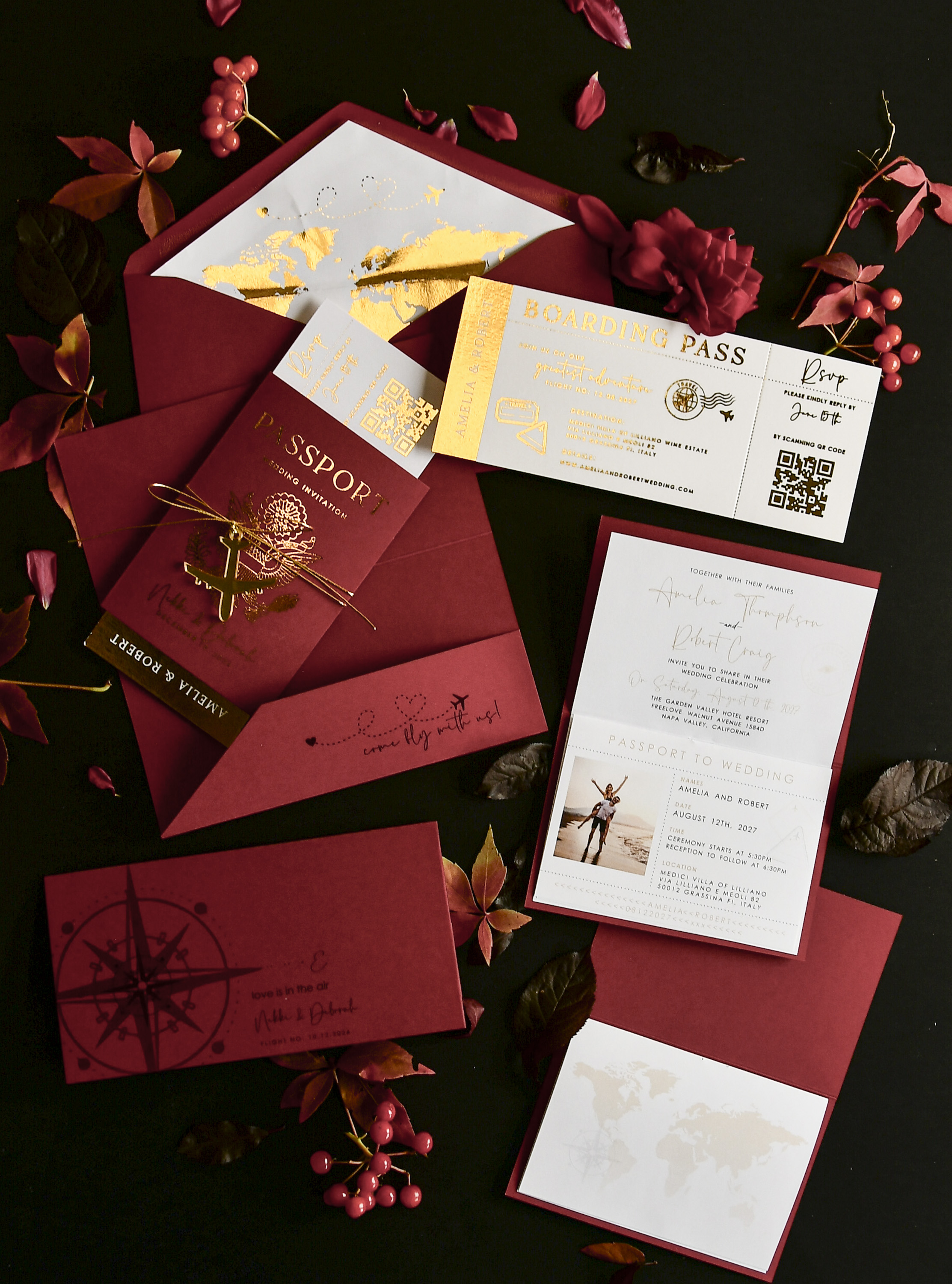
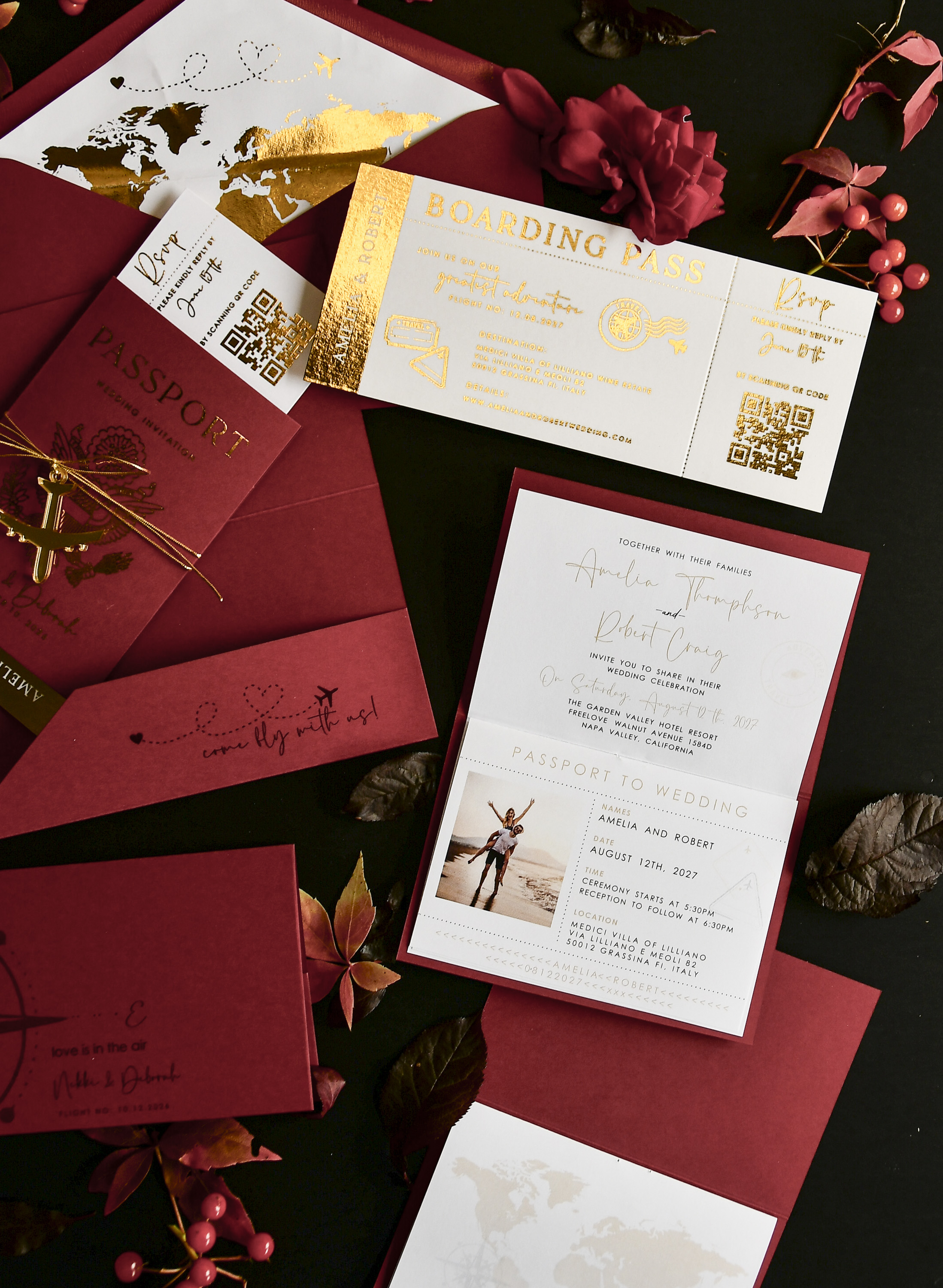
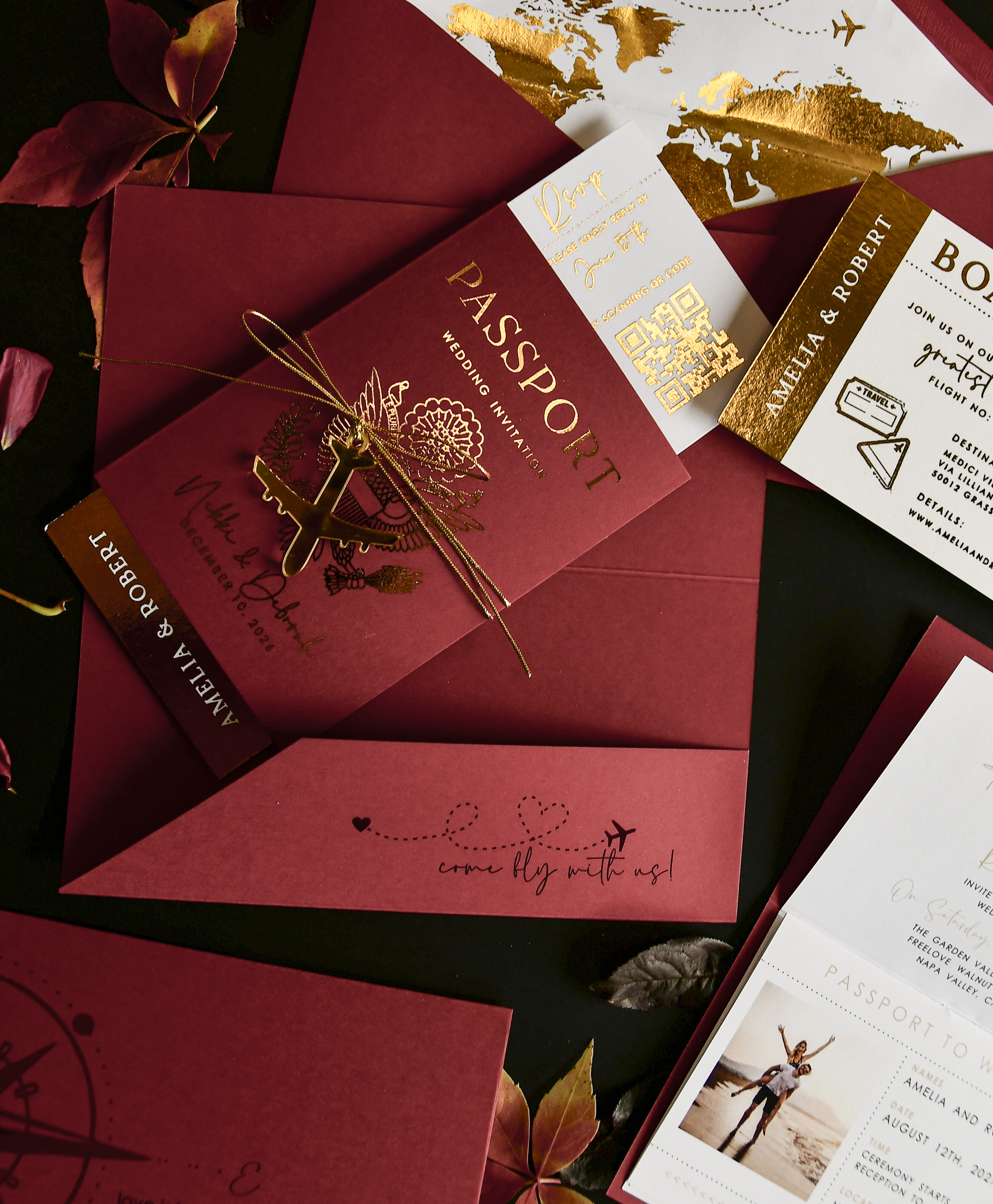
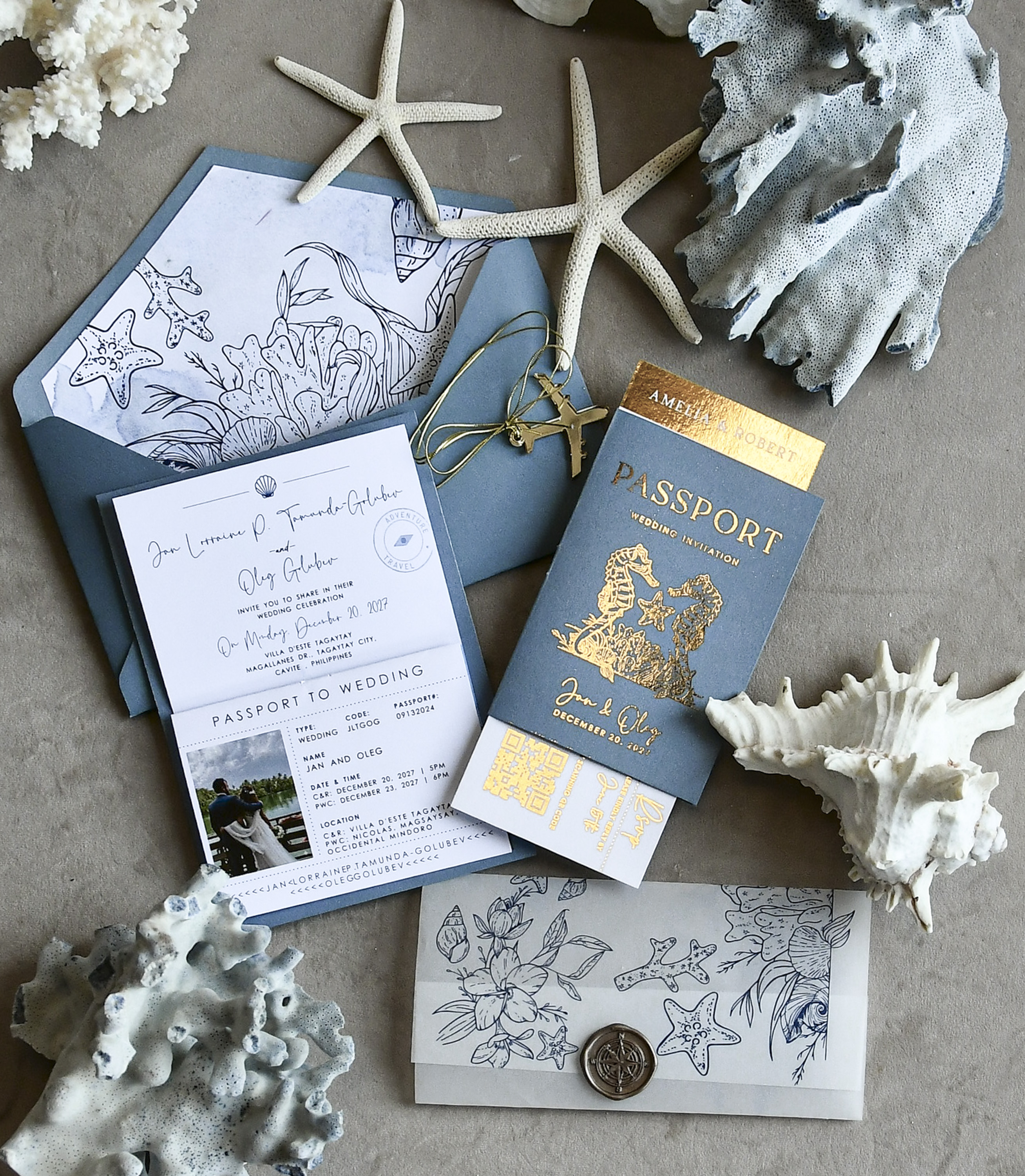
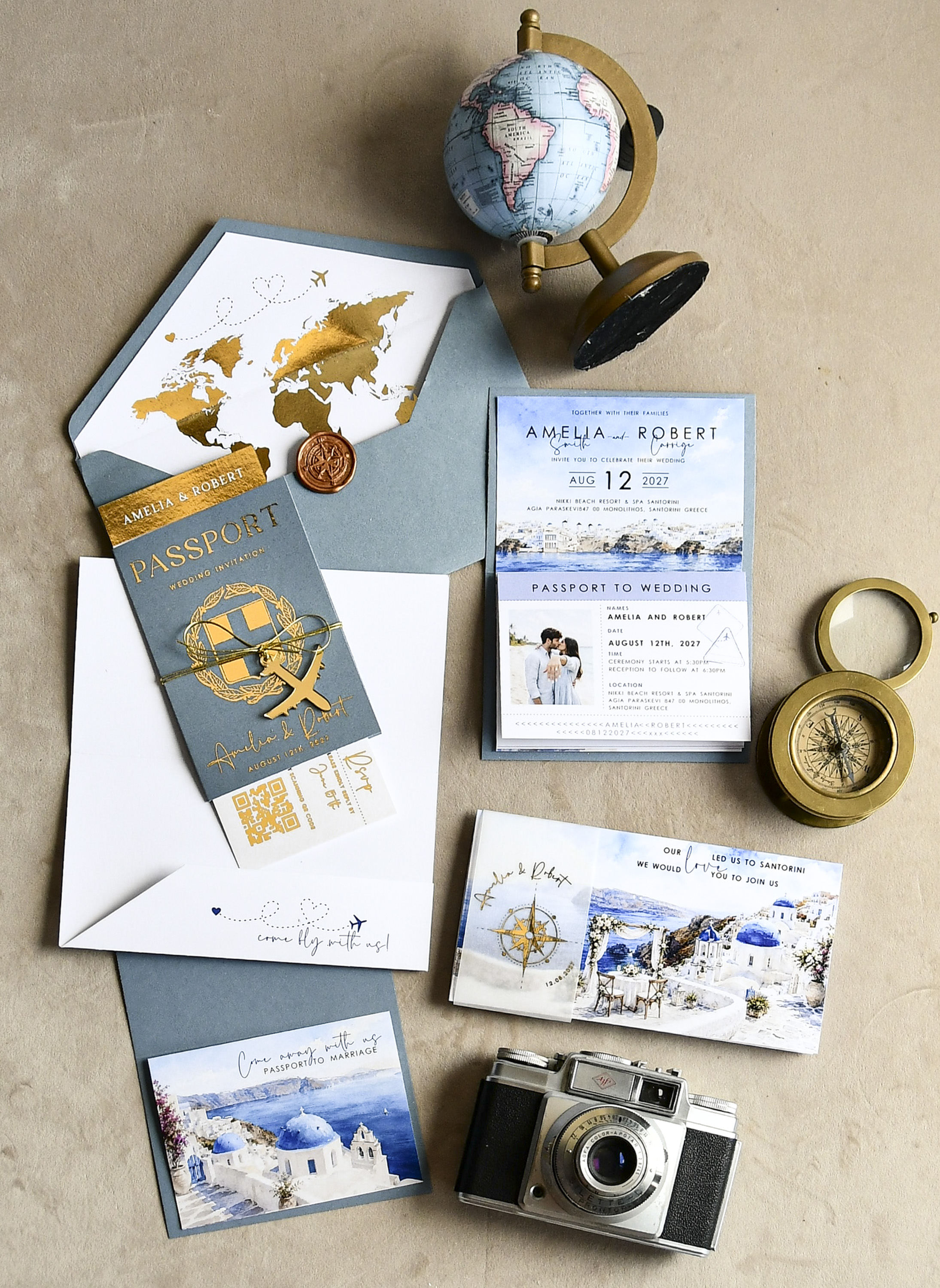
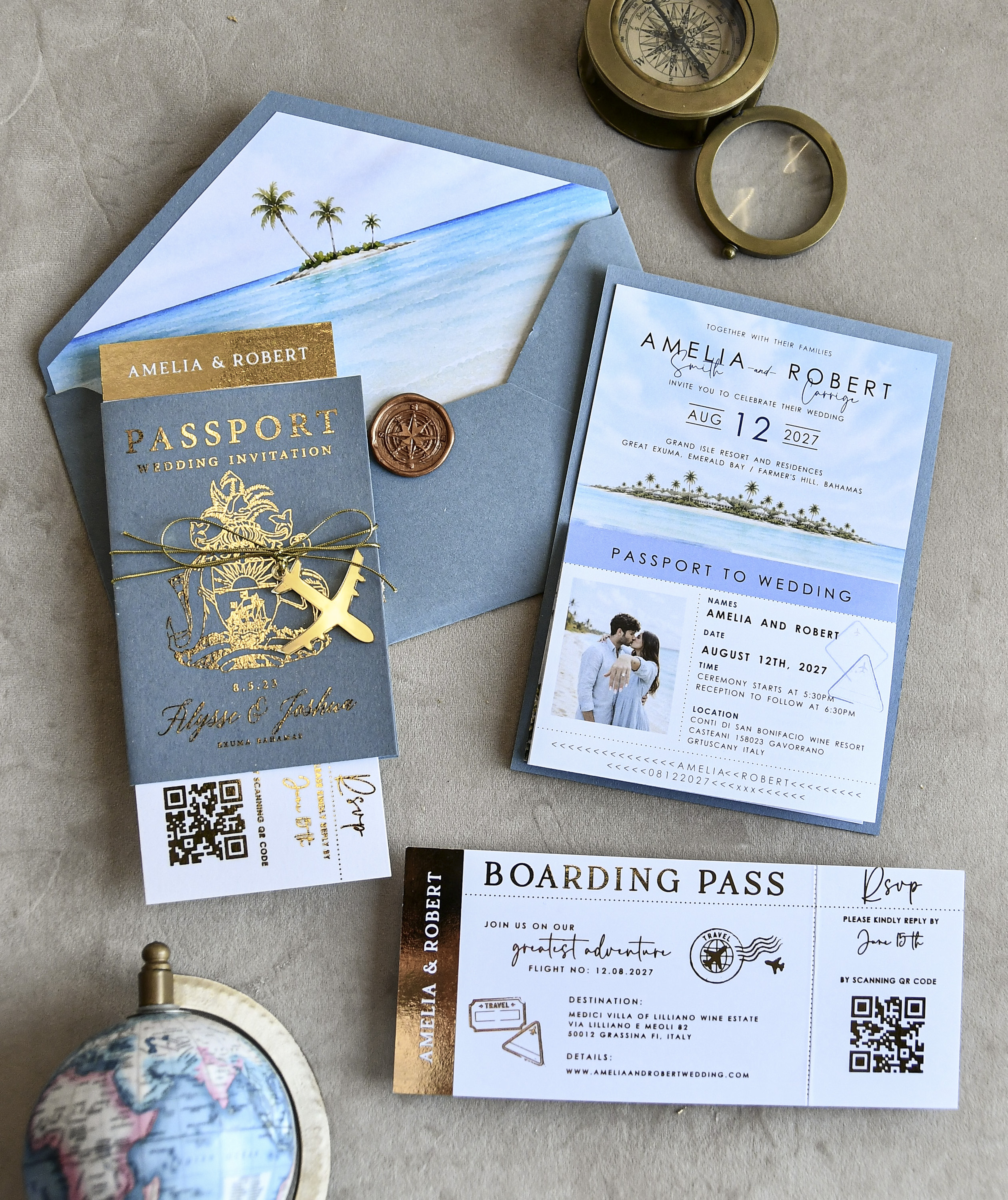
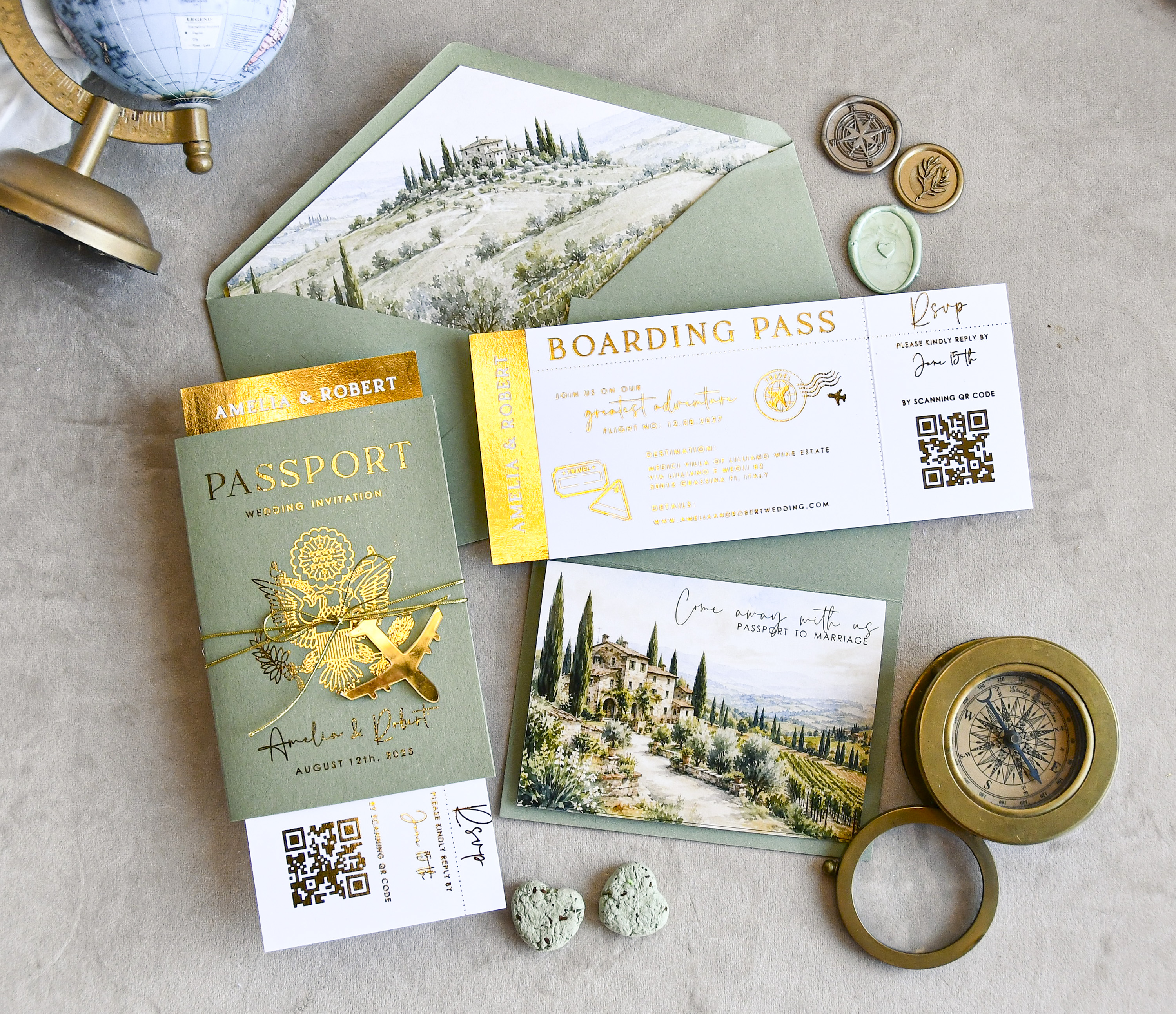
Your invitation suite likely includes more than just the main card. RSVP cards, detail cards, venue maps, and inner envelopes all need to be counted separately — and they should match your invitation quantity exactly (plus your buffer). If you're sending a destination or beach wedding invitation suite like the 14/passFG/z passport-style invites from Margo&Bees, keep in mind that multi-piece suites have more components to track, so your buffer becomes even more important.
Make a checklist of every piece in your suite and confirm the quantity of each before you finalize your order. It's easy to remember the main invitation and forget to order enough RSVP envelopes.
When to Place Your Order (Timing Matters)
Most couples should order invitations 4–5 months before the wedding. This gives you time to:
- Finalize your guest list and address spreadsheet
- Allow 2–4 weeks for production and printing
- Address and assemble the suite (budget 1–2 weeks)
- Mail invitations 6–8 weeks before the wedding (8–12 weeks for destination weddings)
If you're working with a custom or semi-custom design — like a passport-style suite — build in extra lead time for proofing and revisions. Rushing a reprint because you underordered is stressful and expensive, so locking in your numbers early is always worth it.
A Simple Formula to Use Right Now
Use this quick formula before you order:
- Count every household on your guest list → Household Total
- Add 15–20 extras → Buffer
- Add keepsake copies (typically 3–5) → Keepsakes
- Household Total + Buffer + Keepsakes = Your Order Quantity
For example: 90 households + 15 buffer + 5 keepsakes = 110 invitations. That's your number. When in doubt, round up to the next pricing tier — the per-unit savings usually offset the cost of the extra copies, and you'll be grateful you have them.
Frequently Asked Questions
Yes, if you're inviting certain guests to the reception only, they still need a formal invitation. You can send a slightly different card noting the reception details, but they should absolutely receive something in the mail rather than a text or email.
You'll need to reorder, which almost always costs more per unit because you're printing a smaller quantity. Some printers also charge a setup fee for each new order, so a reprint of 10–15 invitations can end up costing nearly as much as your original order.
It's a lovely gesture to send invitations to close family or friends who live far away and likely can't make it — it shows you were thinking of them. Just factor those into your household count so you don't run short.
Order at least 20–25 extra envelopes beyond your invitation count. Addressing envelopes by hand or with a calligrapher means mistakes will happen, and having extras on hand prevents a last-minute panic before your mail date.
You can, but it's not recommended. Paper stock and print batches can vary slightly between orders, meaning your second batch may not perfectly match the first. It's almost always better to order everything at once with a generous buffer.
For a small number of very casual acquaintances or last-minute additions, a digital invitation can work. However, for anyone on your core guest list, a physical invitation is still the etiquette standard and sets the right tone for your celebration.
See This Design Up Close

You May Also Like
More Wedding Planning Guides
- → The Complete Plus One Rulebook for Your Wedding Guest List
- → When Family Feels Like Strangers: Navigating Distant Relatives on Your Guest List
- → Adults-Only Wedding: How to Let Guests Know Without the Drama
- → Adding More Guests to Your Wedding: Who Owes What?
- → Your Pre-Wedding Survival Guide to Family Conflict
- → What to Do When a Guest Shows Up With Someone You Didn't Invite
- → In-Laws Want to Invite Their Friends? Here's How to Handle It
- → Navigating Plus-Ones for Single Guests: A Couples' Guide to Getting It Right
- → Extra Names on Your RSVP Card: How to Respond Without the Stress
- → The Honest Guide to Including a Stepparent on Your Wedding Guest List
- → When Saying No to a Plus One Is Perfectly Okay
- → Should Kids Come to Your Wedding? How to Think It Through and Decide
- → Navigating Divorced Parent Seating at Your Wedding Reception
- → Inviting Your Boss and Coworkers to Your Wedding: What You Actually Need to Know
- → Uninvited Plus-Ones and Tag-Alongs: How to Keep Your Guest List Intact
- → When Family Feuds Threaten Your Wedding Plans: A Practical Peacekeeper's Guide
- → Inviting an Estranged Brother or Sister: Finding Clarity Before You Seal the Envelope
- → Cousins, Invites, and Hard Choices: A Practical Guest List Guide