
Adding More Guests to Your Wedding: Who Owes What?

The guest list is one of the most tension-filled parts of wedding planning — and the moment extra names start appearing, so does the question of who pays for them. Whether it's your future in-laws insisting on cousins you've never met or your own parents adding childhood friends, the financial responsibility needs to be settled early and clearly. Here's how to handle it with confidence and kindness.
The General Rule: Whoever Adds the Guest Covers the Cost
The most straightforward etiquette guideline is simple: the person or family who requests additional guests should bear the cost of those additions. If your in-laws want to invite ten work colleagues, it's fair to ask them to contribute the per-head cost for each of those ten people. If your parents want to expand their side of the list, the same logic applies.
Before any names are finalized, calculate your per-guest cost — typically the catering price per plate plus a proportional share of venue, florals, and rentals. For most US weddings, this runs between $150 and $350 per person, depending on your market and venue type. Share this number openly with both families so everyone understands the real stakes of adding a name.
How to Negotiate When Parents Are Paying (or Partially Paying)
If your parents or in-laws are contributing to the wedding budget, they may feel entitled to a say in the guest list — and in many cases, that's a reasonable expectation. The key is to set a clear seat allocation at the very start of planning, not after contracts are signed.
A common approach is to divide the guest list into thirds: one-third for the couple, one-third for the bride's family, one-third for the groom's family. Each group is responsible for staying within their allotment. If a family wants more seats than their share, they either fund the additional guests directly or make cuts elsewhere on their portion of the list.
- Put it in writing. A simple email summarizing the agreed-upon numbers protects everyone.
- Set a firm deadline. Guest names should be submitted at least 4–5 months before the wedding so invitations can go out on time.
- Stick to it. Once the venue headcount is locked, late additions are genuinely costly and logistically complicated.
When the Couple Is Self-Funding: You Have Full Authority
If you and your partner are paying for the wedding yourselves, you hold the decision-making power — and that includes the guest list. You are not obligated to add guests at a family member's request, and you are certainly not obligated to pay for guests you didn't choose to invite.
That said, if you want to accommodate a family's wishes without friction, offer a compromise: you'll add the guests they want if they cover the per-person cost. Frame it practically rather than emotionally — "We'd love to include them. Our caterer charges $200 per person, so if you'd like to contribute $600 for the three of them, we can make it work." Most families respond well when the math is laid out plainly.
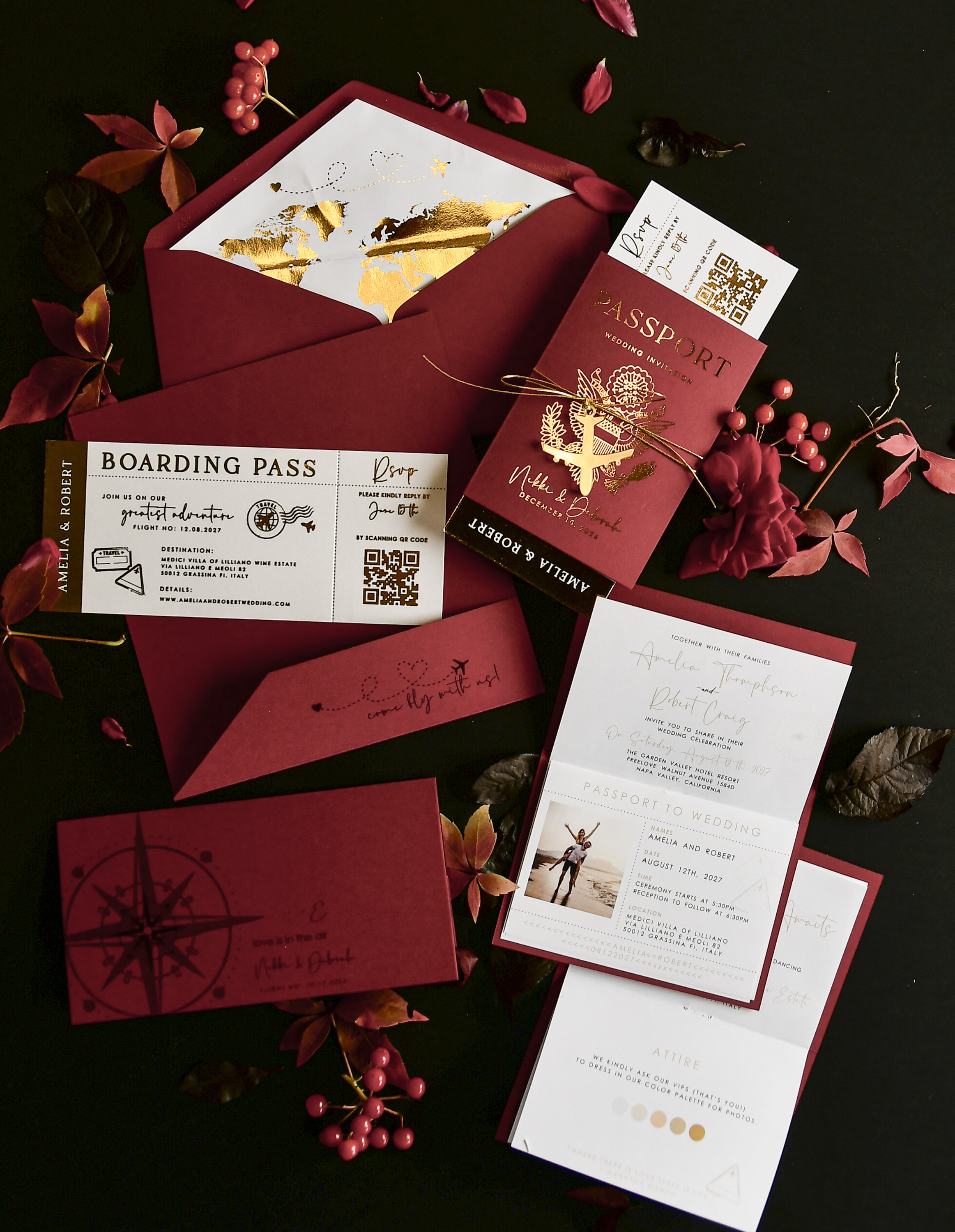
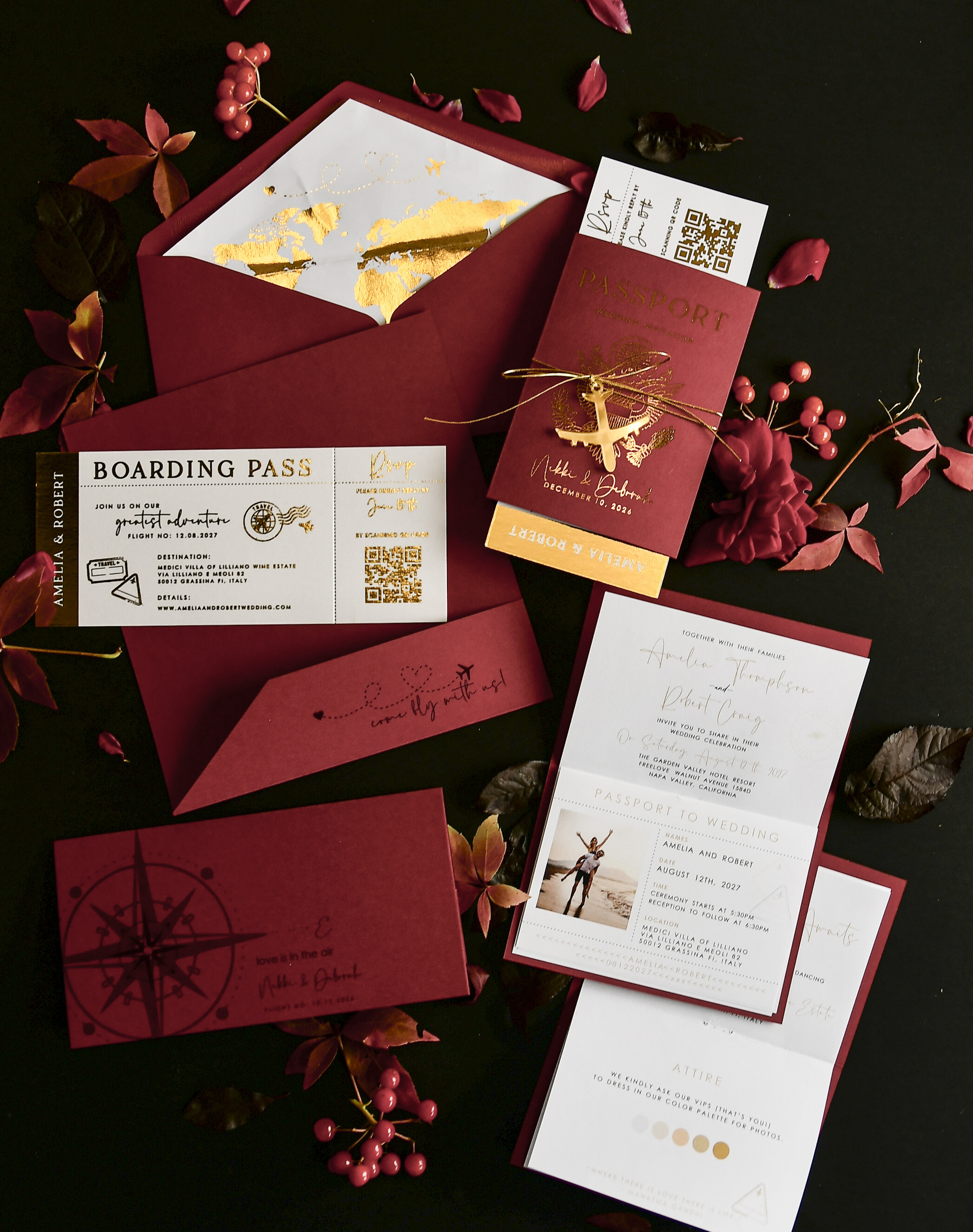
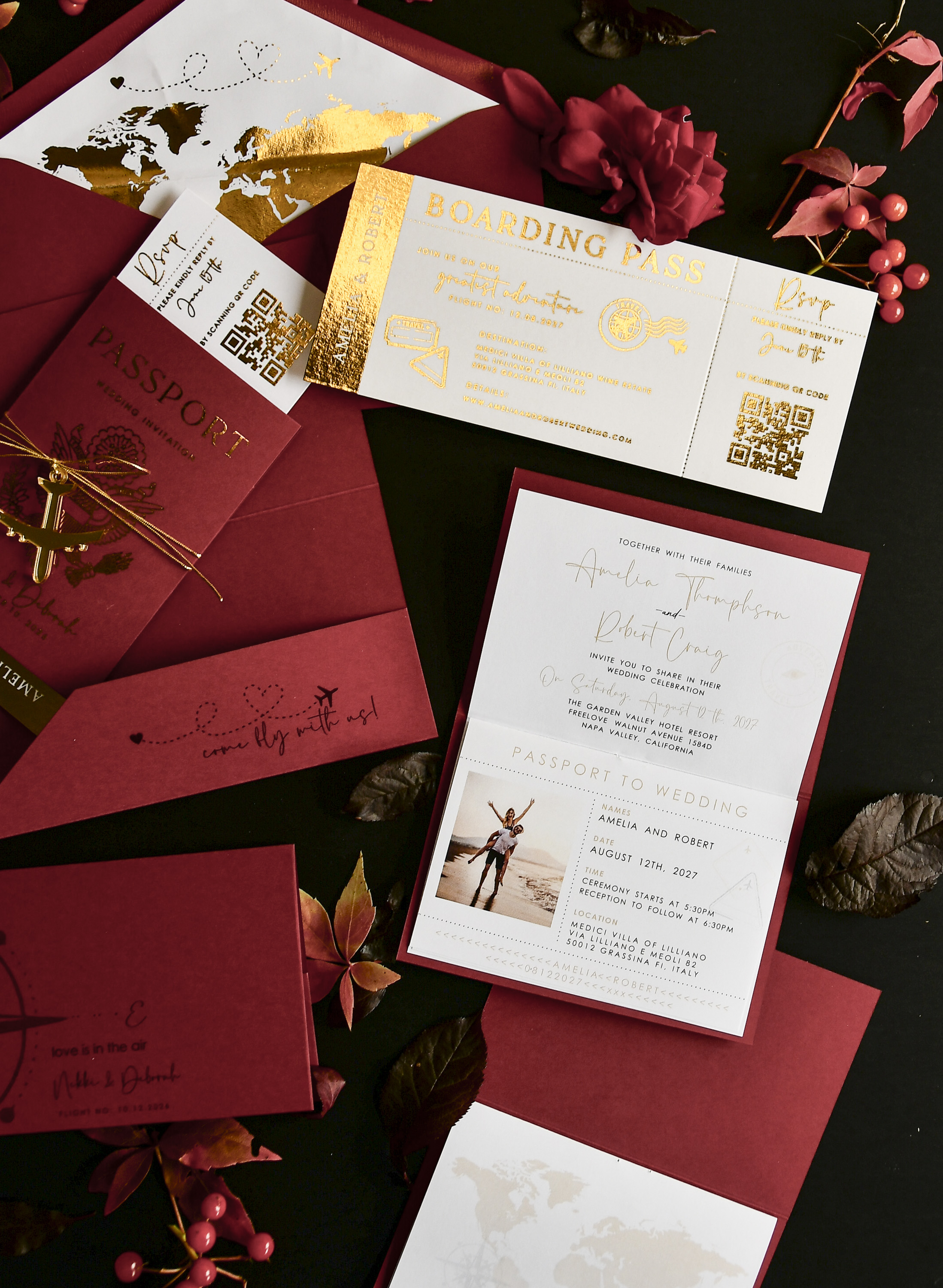
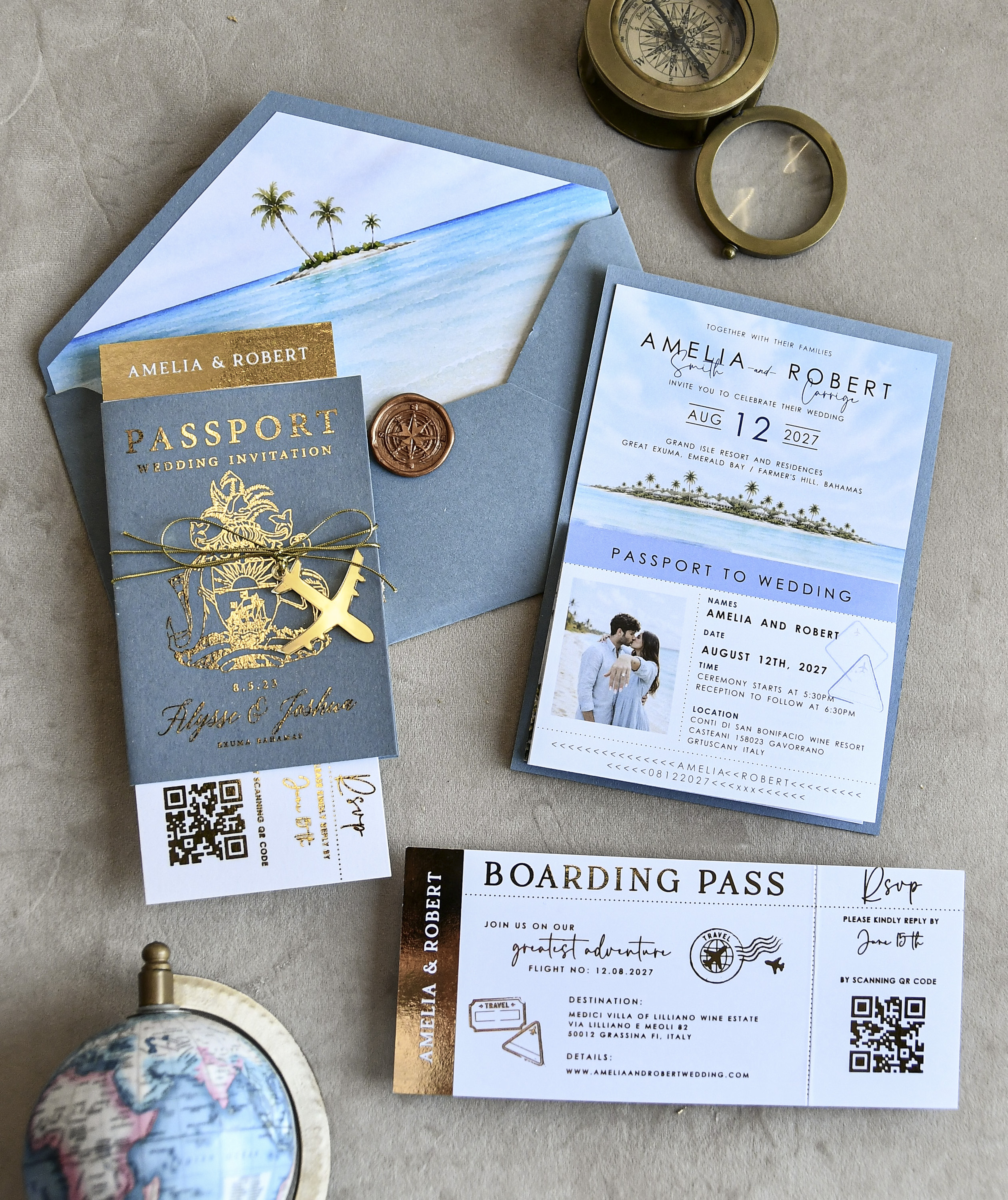
This is also the moment to get your invitations ordered. A beach or destination wedding with a growing guest list benefits from a passport-style invitation suite — our 14/passFG/z passport to love beach wedding invites are a beautiful way to signal the tone of your celebration while keeping the headcount conversation grounded in something tangible and exciting.
Vendor Contracts and the Hidden Costs of Adding Guests Late
Many couples don't realize that adding guests after contracts are signed triggers costs far beyond just the catering plate. Consider everything that scales with headcount:
- Catering minimums and overage fees
- Additional table rentals, linens, and centerpieces
- Extra chairs and place settings
- Upgraded venue to accommodate more people
- Additional invitations and postage
- Larger wedding cake or more dessert portions
Caterers typically allow a final headcount adjustment two to three weeks before the wedding, but adding guests after that window can mean paying for phantom plates or penalty fees. Always check your venue and catering contracts before agreeing to any last-minute additions — and make sure whoever is requesting those additions understands they may be covering penalty costs, not just per-plate costs.
A Word on Plus-Ones and Children
Plus-ones and children are the two most common sources of surprise guest additions — and both deserve a firm, consistent policy from the start. Decide early whether you're offering plus-ones to all guests, only to engaged or married guests, or only to guests in long-term relationships. Apply the rule uniformly to avoid hurt feelings.
For children, a child-free wedding is perfectly acceptable. Communicate it clearly on your wedding website and, if needed, on the invitation itself. If you do allow children, count every child over a certain age (often 5 or older) as a full guest for catering purposes. Our passport to love beach wedding invitations include envelope addressing options that make it easy to specify exactly who is invited — family name only, or each individual name — so there's no ambiguity about who's included.

Frequently Asked Questions
Not at all — it's a practical and increasingly common arrangement. Frame it as a straightforward financial reality rather than a personal rejection, and most families will understand. Sharing your per-person cost breakdown helps make the conversation feel businesslike rather than confrontational.
Revisit the guest list agreement you made at the start and remind them of the seat allocation they were given. If there was no formal agreement, now is the time to set one — put the revised terms in writing and tie any additional guests to a direct financial contribution from them.
Add up your catering cost per plate, then divide your total venue, floral, and rental costs by your expected headcount and add that figure to the plate cost. This gives you a realistic all-in number, which typically ranges from $150 to $350 per person for US weddings.
Technically yes, but it's awkward and can feel like an afterthought to the people receiving a late invitation. If you must add guests after the initial send, reach out personally by phone or email before the paper invitation arrives to explain the situation warmly.
Contact the guest directly and kindly clarify that due to venue capacity, you're unable to accommodate additional guests beyond those named on the invitation. Most guests will understand — and having a clear RSVP card that lists names explicitly helps prevent this situation in the first place.
Yes, in most cases venues count every person present toward occupancy limits, regardless of age. Caterers may offer a reduced children's plate price for kids under a certain age, but you should always confirm this in your contract rather than assuming.
See This Design Up Close










You May Also Like



More Wedding Planning Guides
- → The Complete Plus One Rulebook for Your Wedding Guest List
- → When Family Feels Like Strangers: Navigating Distant Relatives on Your Guest List
- → Adults-Only Wedding: How to Let Guests Know Without the Drama
- → Ordering Wedding Invitations: The Smartest Way to Get Your Numbers Right
- → Your Pre-Wedding Survival Guide to Family Conflict
- → What to Do When a Guest Shows Up With Someone You Didn't Invite
- → In-Laws Want to Invite Their Friends? Here's How to Handle It
- → Navigating Plus-Ones for Single Guests: A Couples' Guide to Getting It Right
- → Extra Names on Your RSVP Card: How to Respond Without the Stress
- → The Honest Guide to Including a Stepparent on Your Wedding Guest List
- → When Saying No to a Plus One Is Perfectly Okay
- → Should Kids Come to Your Wedding? How to Think It Through and Decide
- → Navigating Divorced Parent Seating at Your Wedding Reception
- → Inviting Your Boss and Coworkers to Your Wedding: What You Actually Need to Know
- → Uninvited Plus-Ones and Tag-Alongs: How to Keep Your Guest List Intact
- → When Family Feuds Threaten Your Wedding Plans: A Practical Peacekeeper's Guide
- → Inviting an Estranged Brother or Sister: Finding Clarity Before You Seal the Envelope
- → Cousins, Invites, and Hard Choices: A Practical Guest List Guide