
Extra Names on Your RSVP Card: How to Respond Without the Stress
You open an RSVP card and notice something unexpected: your cousin has accepted for herself and her new boyfriend you've never met, or a family friend has penciled in two kids you didn't invite. It's one of the most common — and most awkward — wedding planning surprises. Take a breath. This situation is completely manageable, and with the right approach you can address it kindly, protect your budget and venue capacity, and keep relationships intact.
Why This Happens More Often Than You'd Think
Most guests who add extra names aren't trying to be rude — they genuinely don't know the rules. Wedding etiquette isn't taught in schools, and many people assume that a plus-one is a given, that children are always welcome, or that a long-term partner is automatically included. Others simply misread the invitation. The good news: this is almost never malicious, which means a warm, direct conversation almost always resolves it without drama.
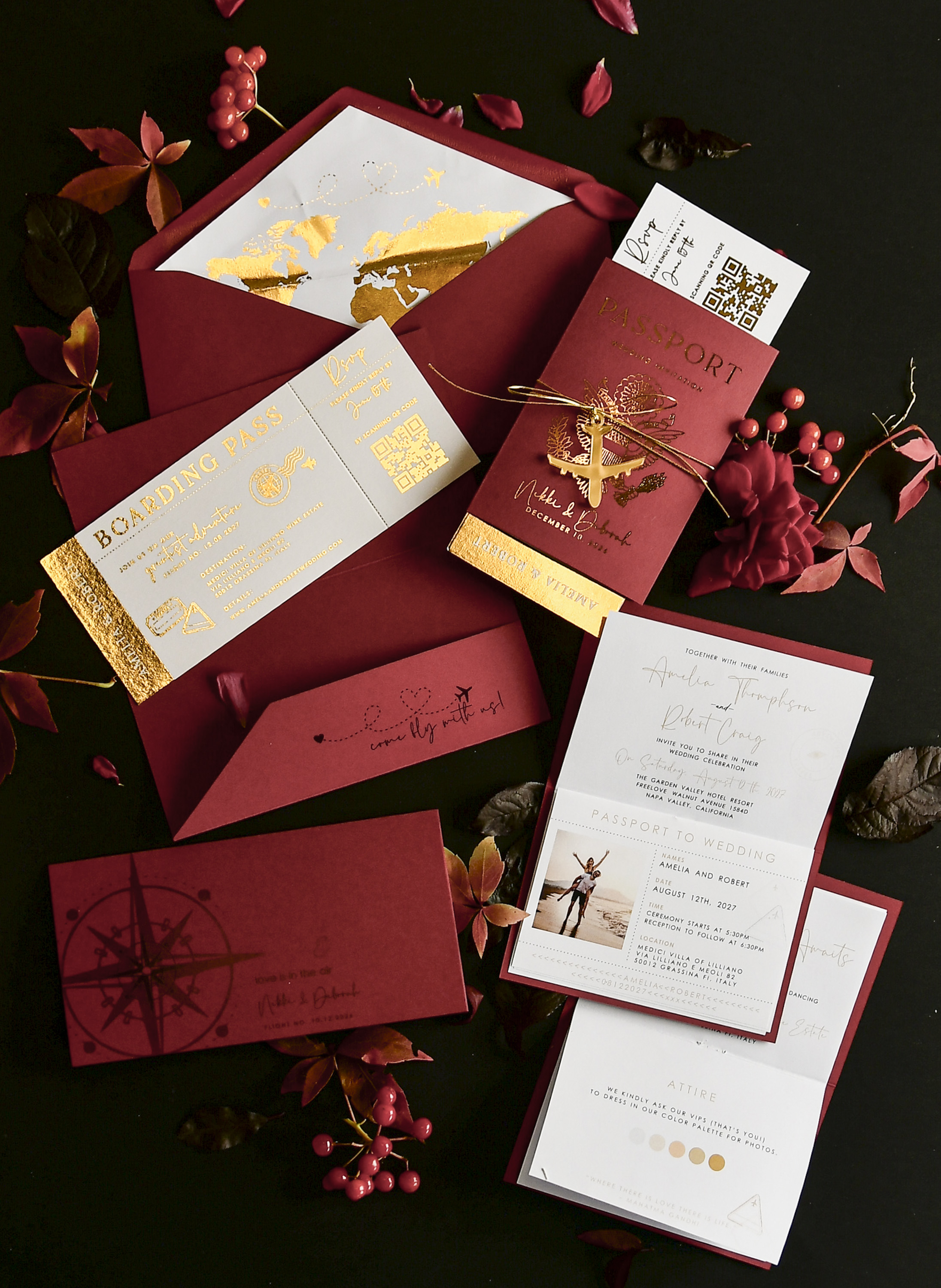
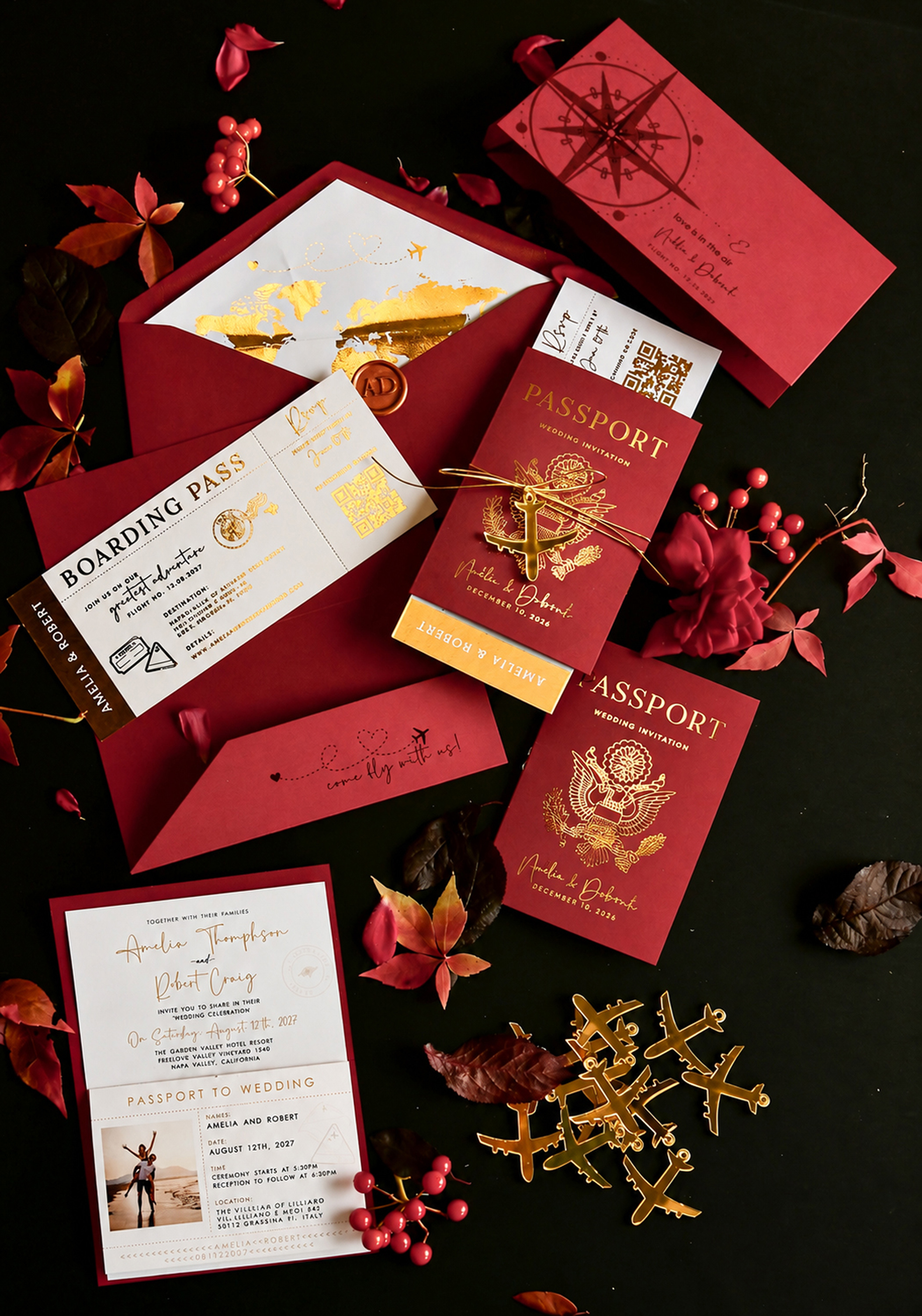
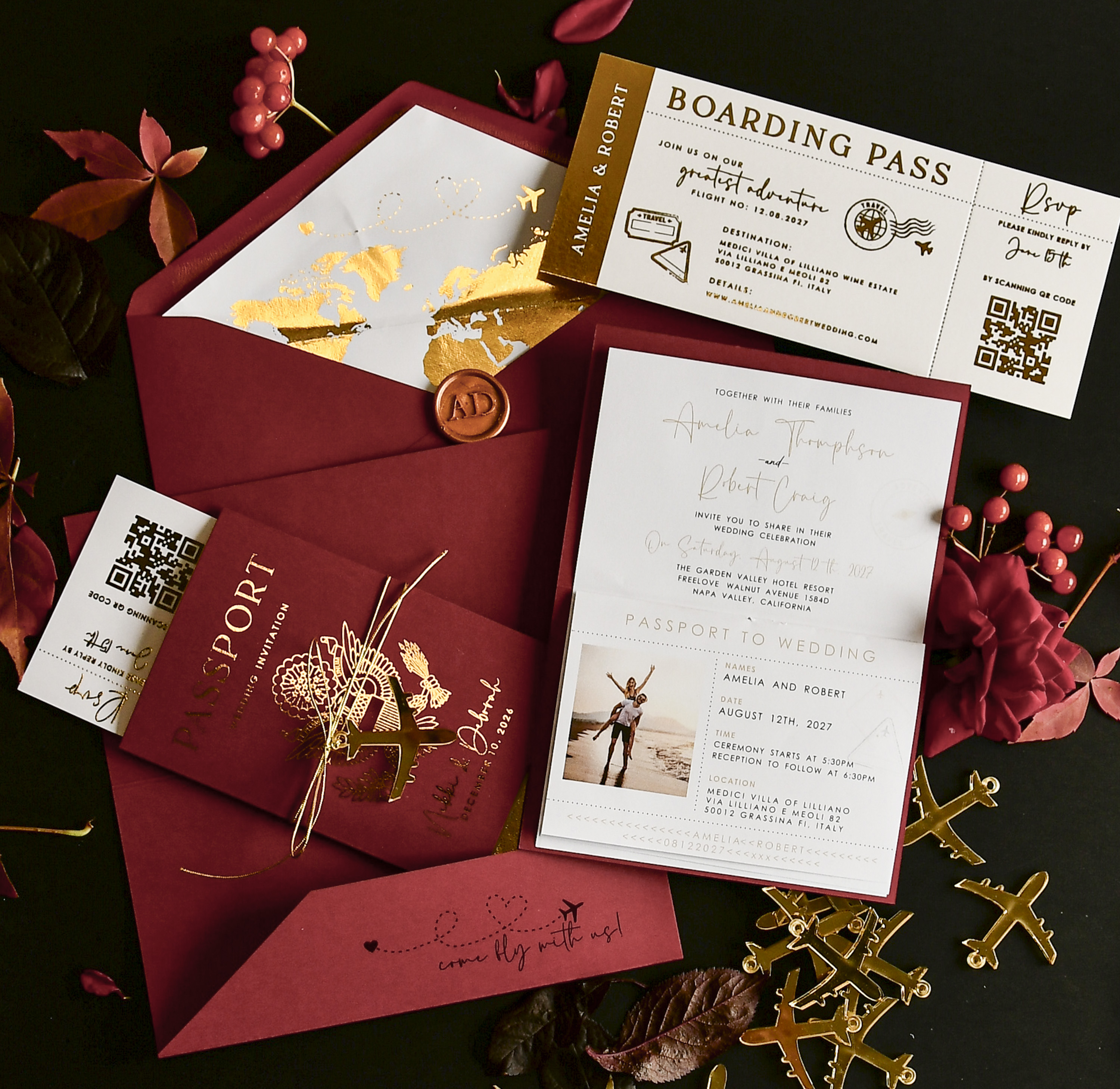
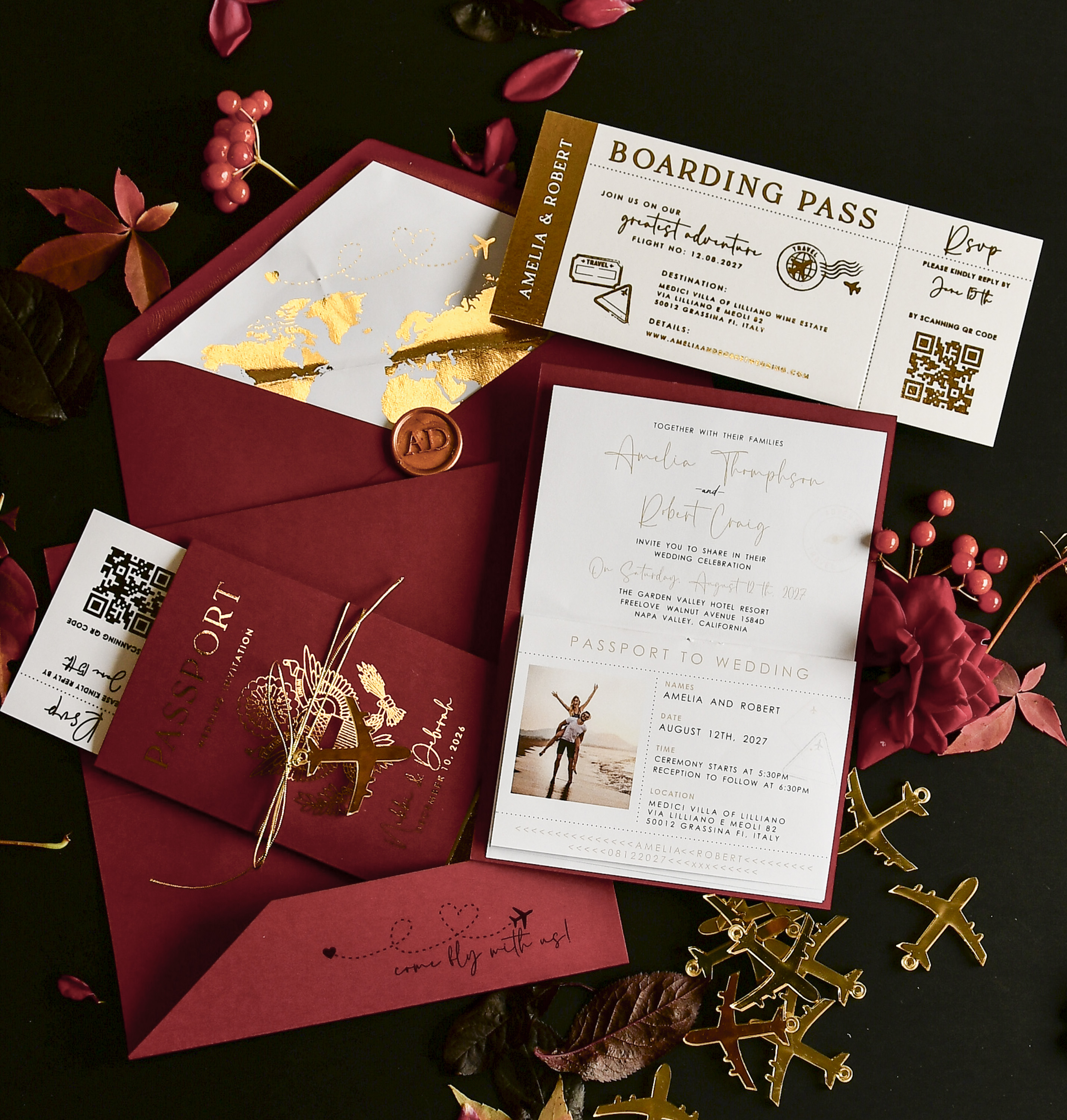
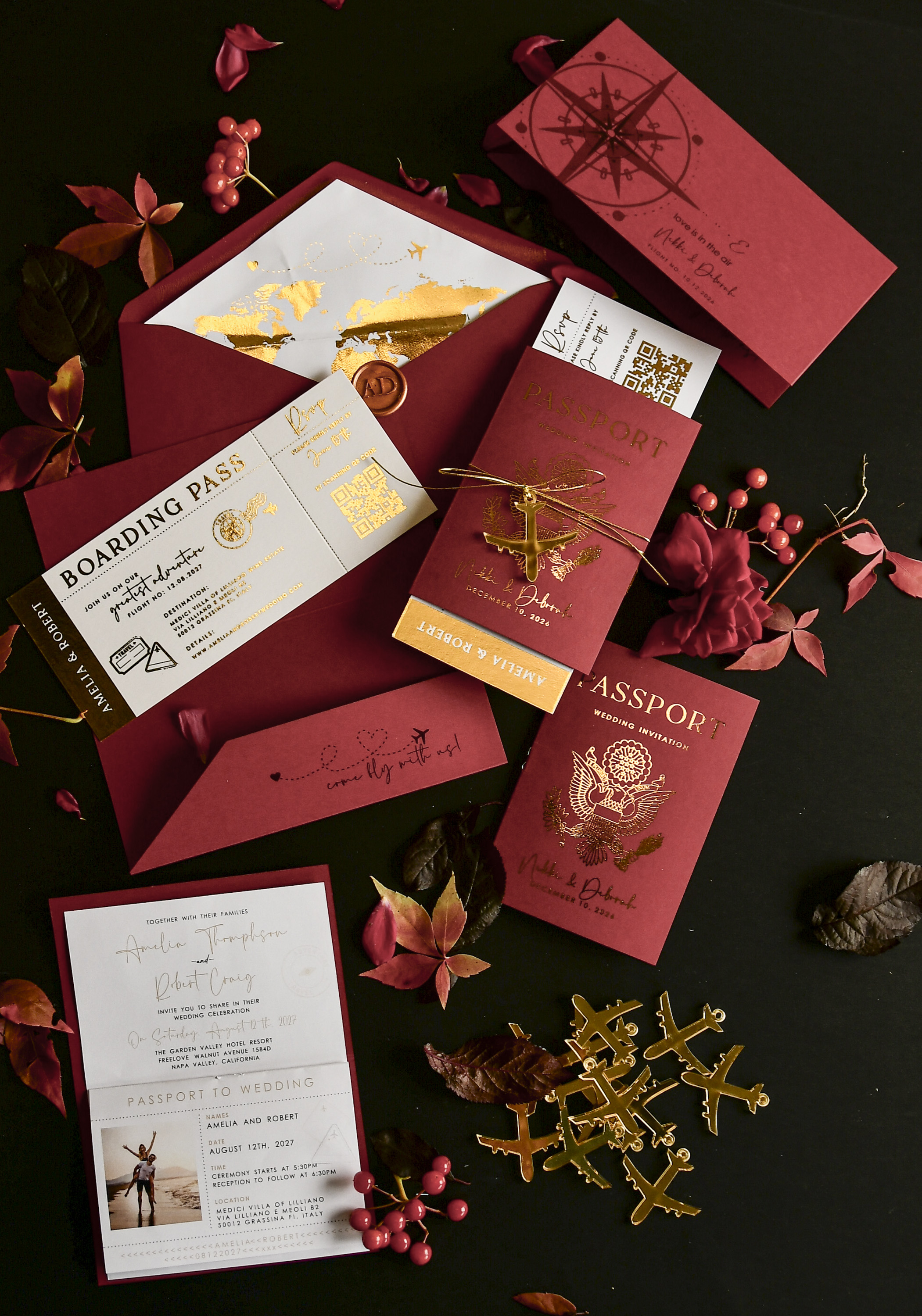
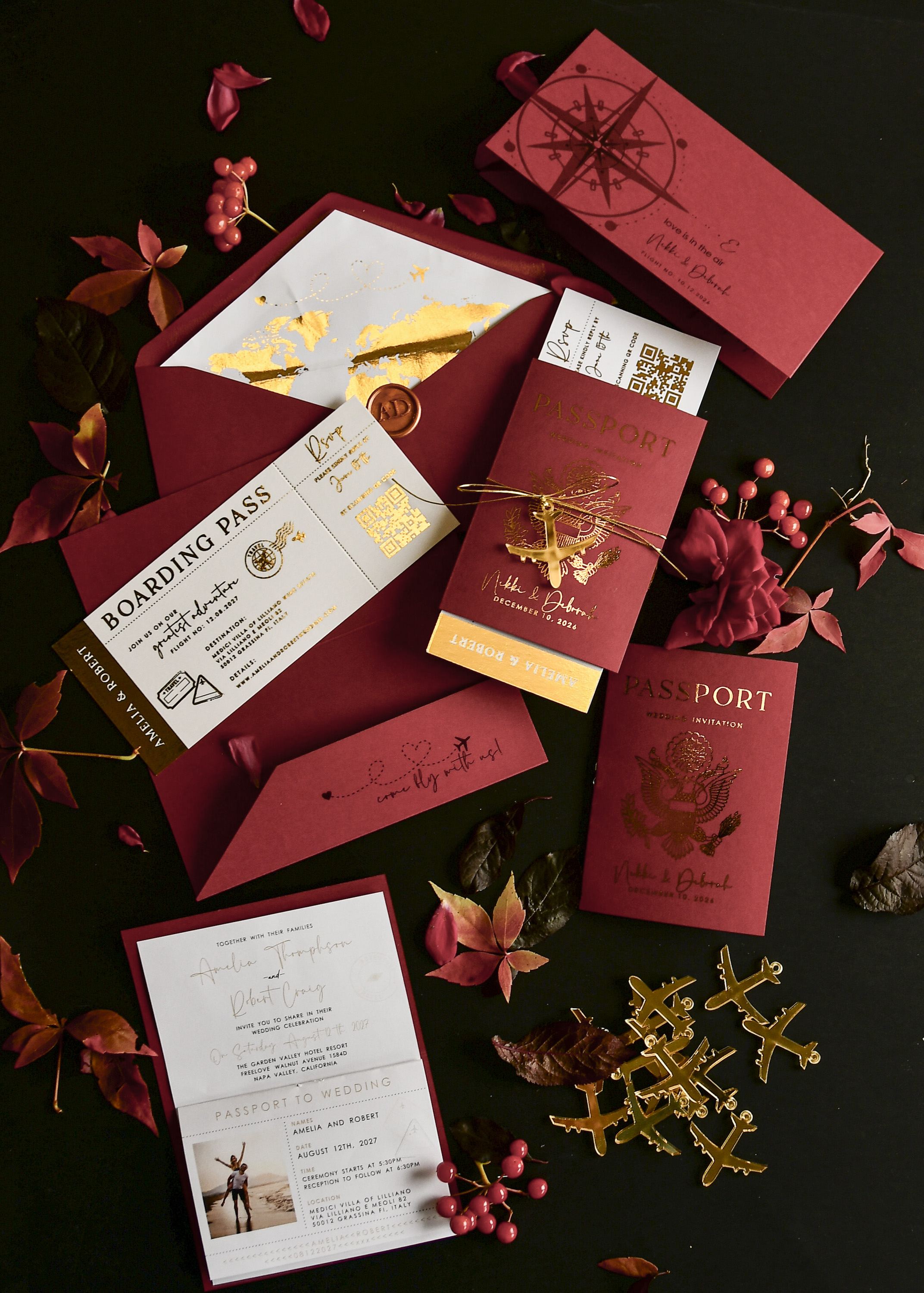
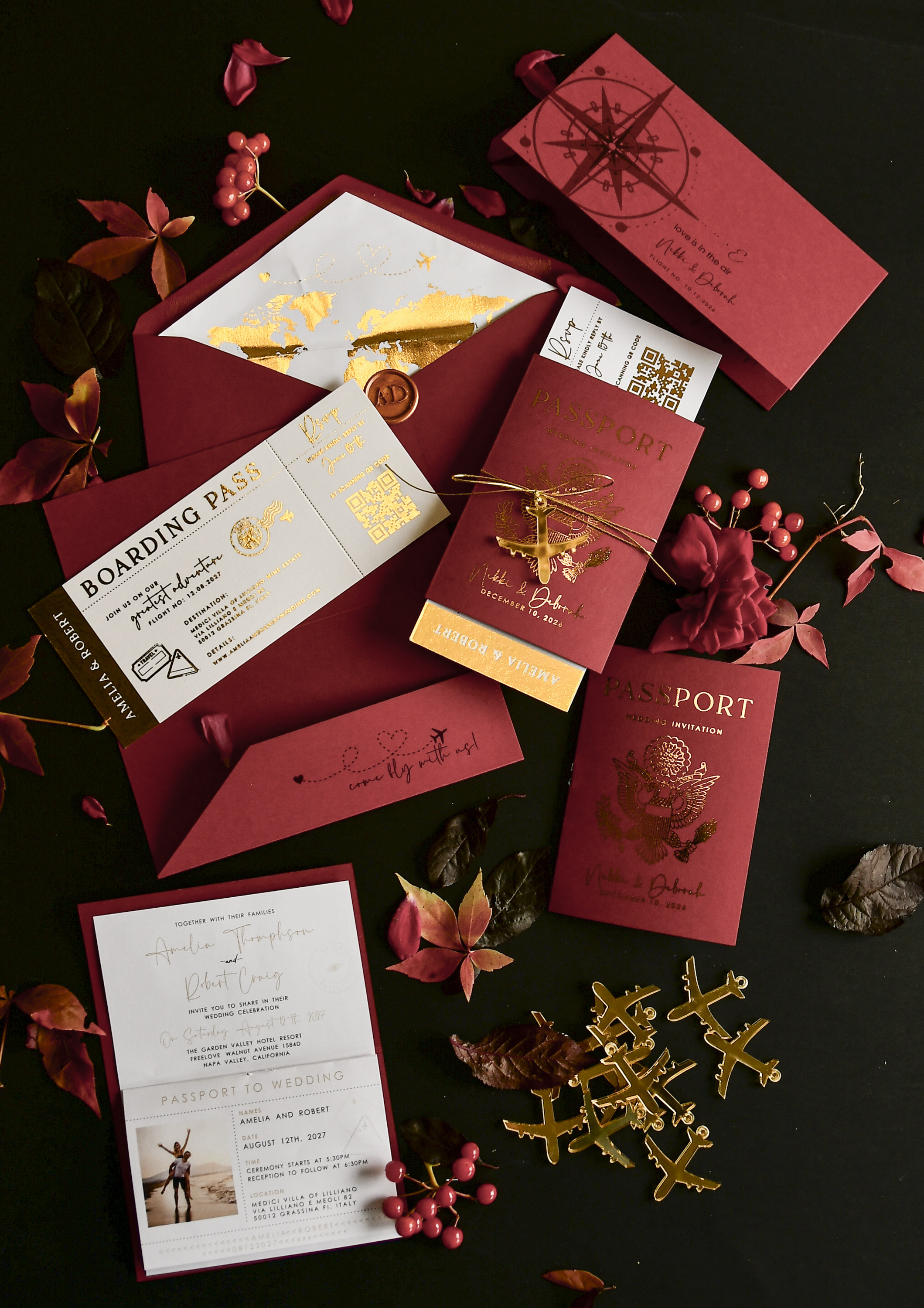
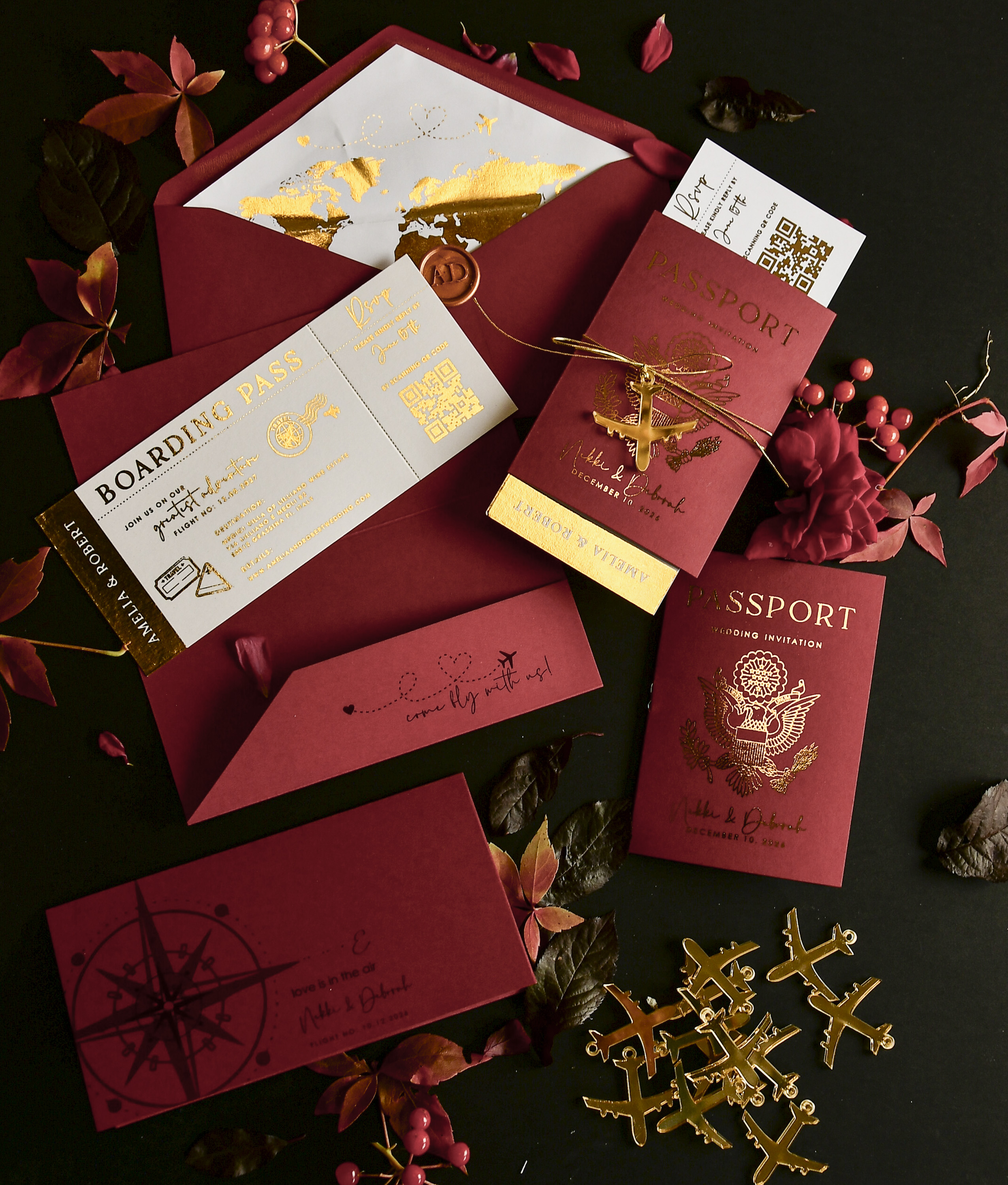
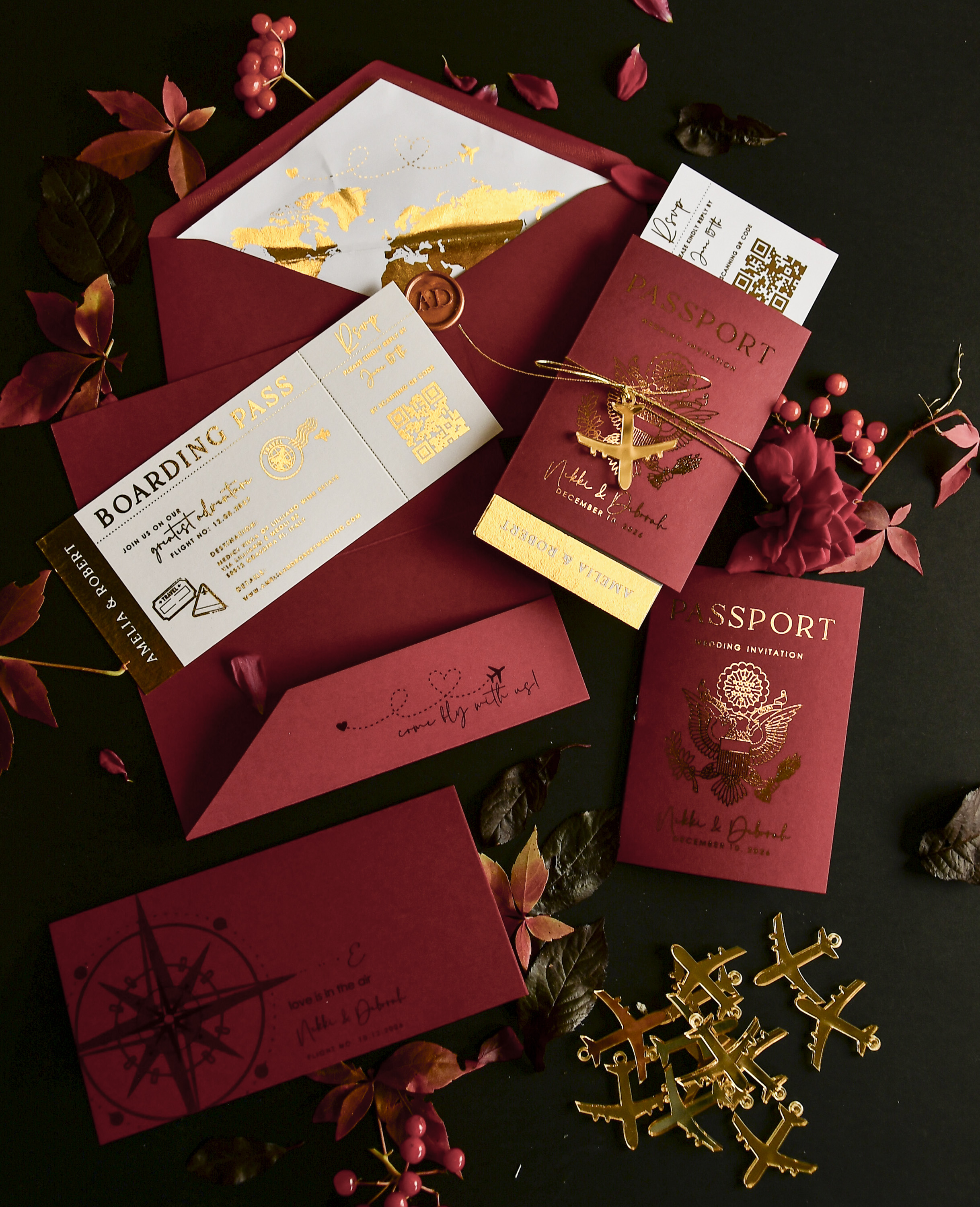
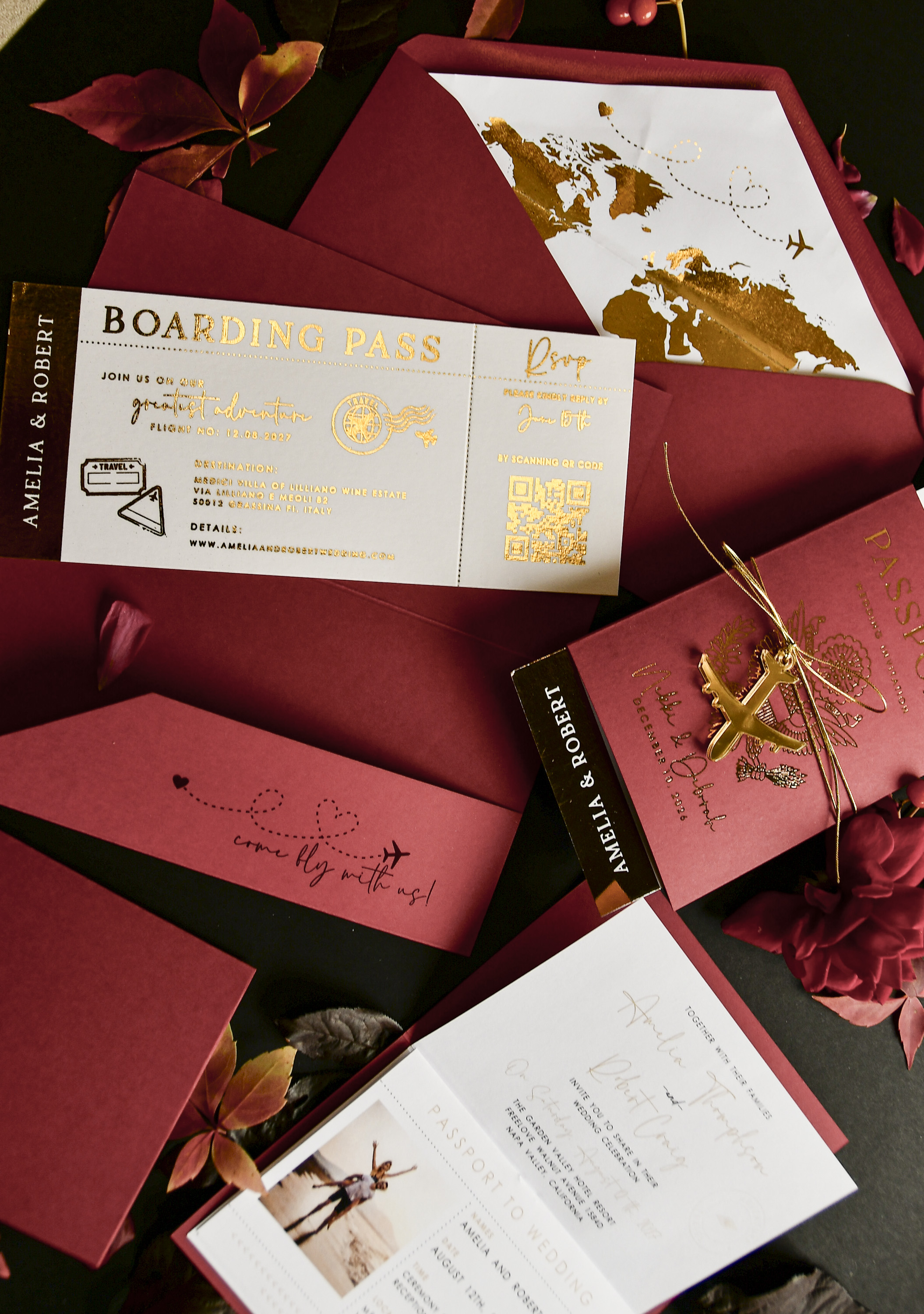
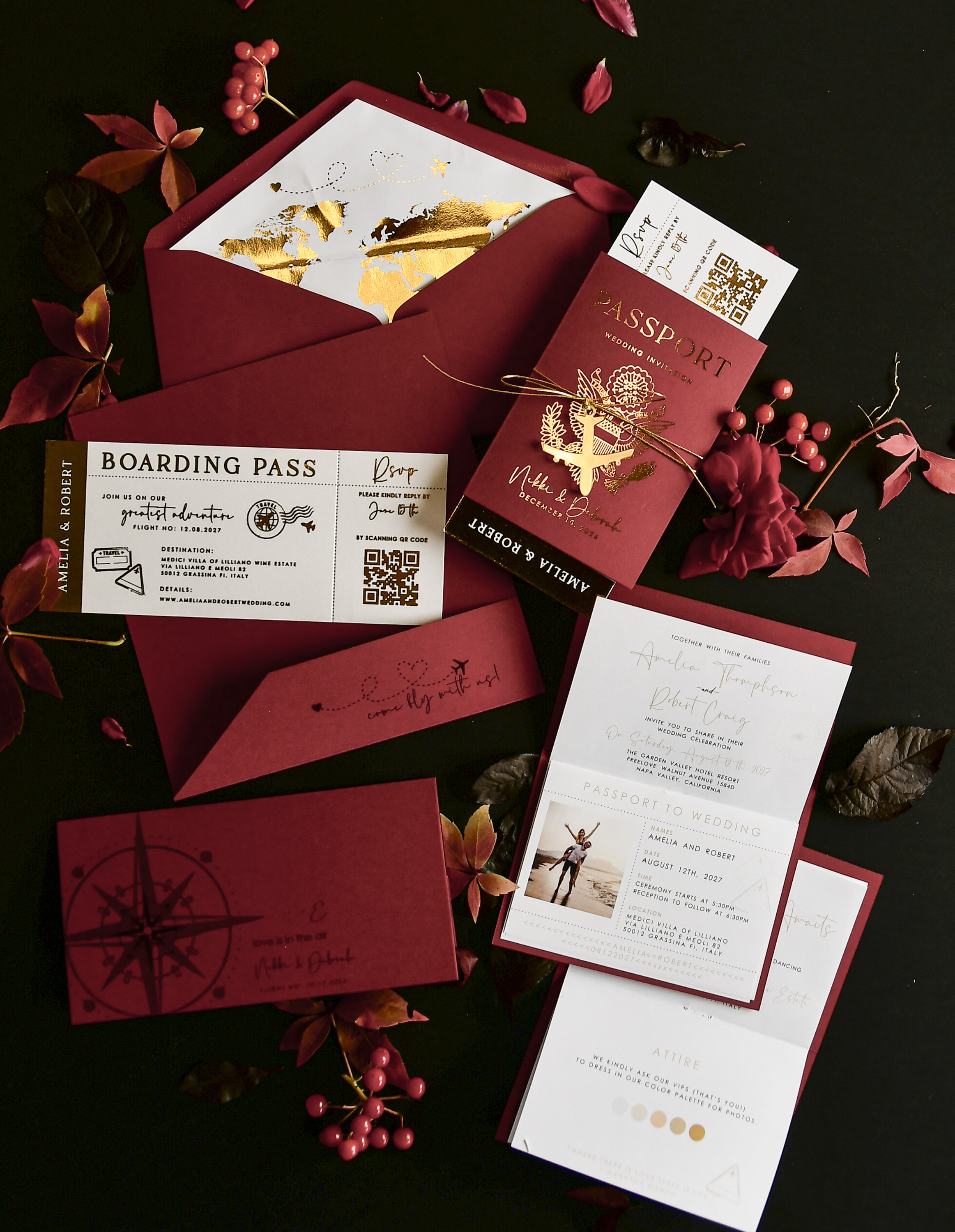
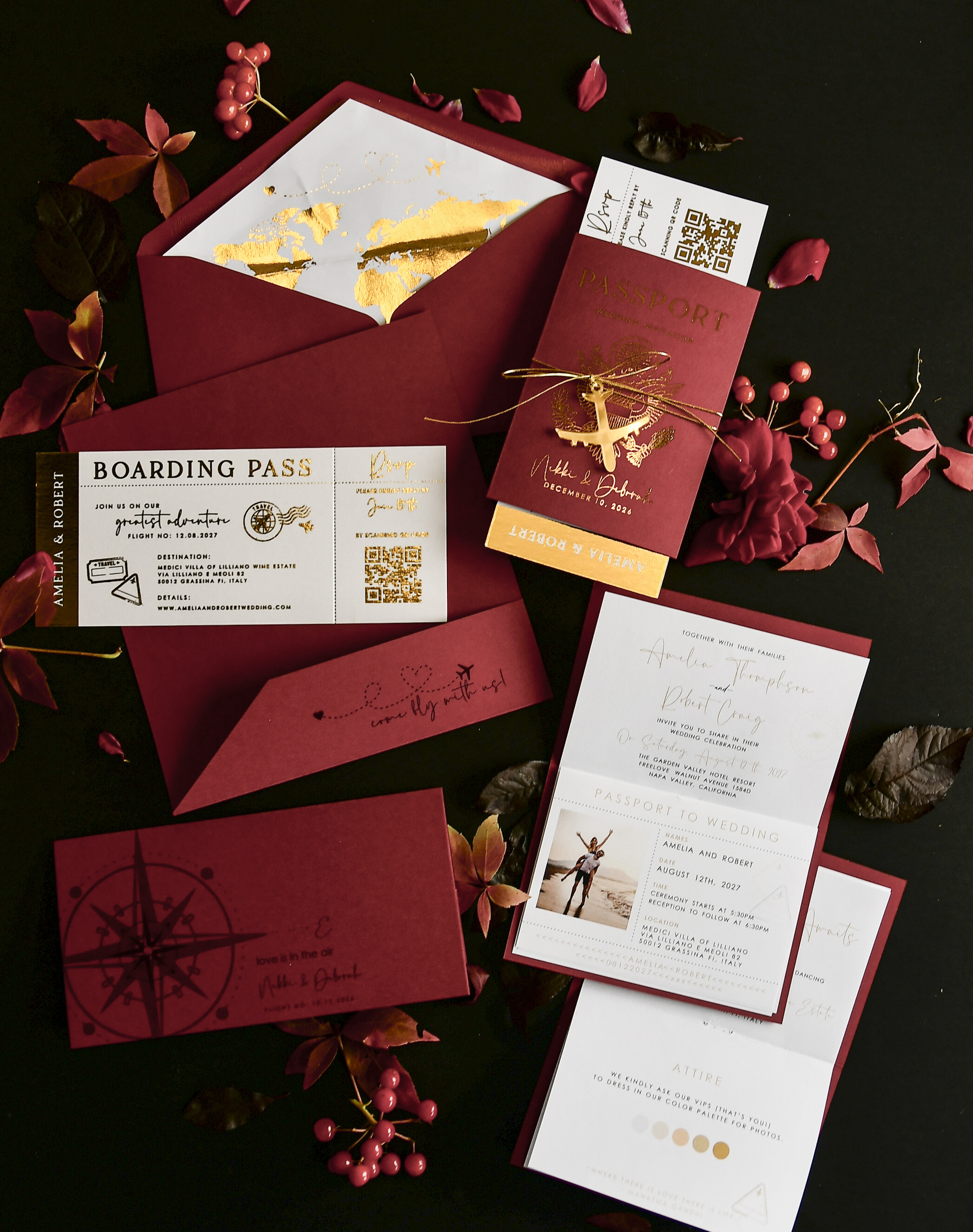
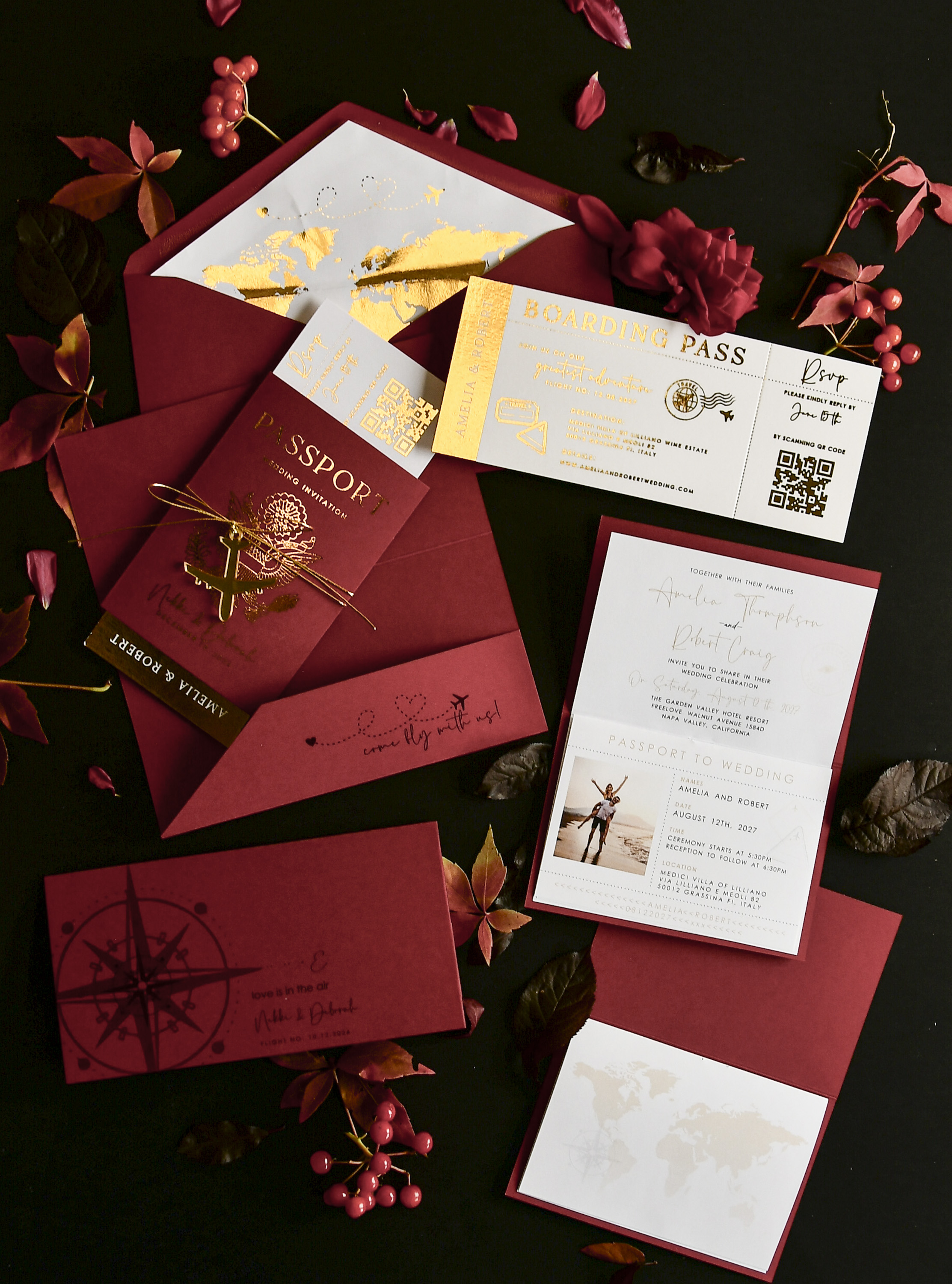
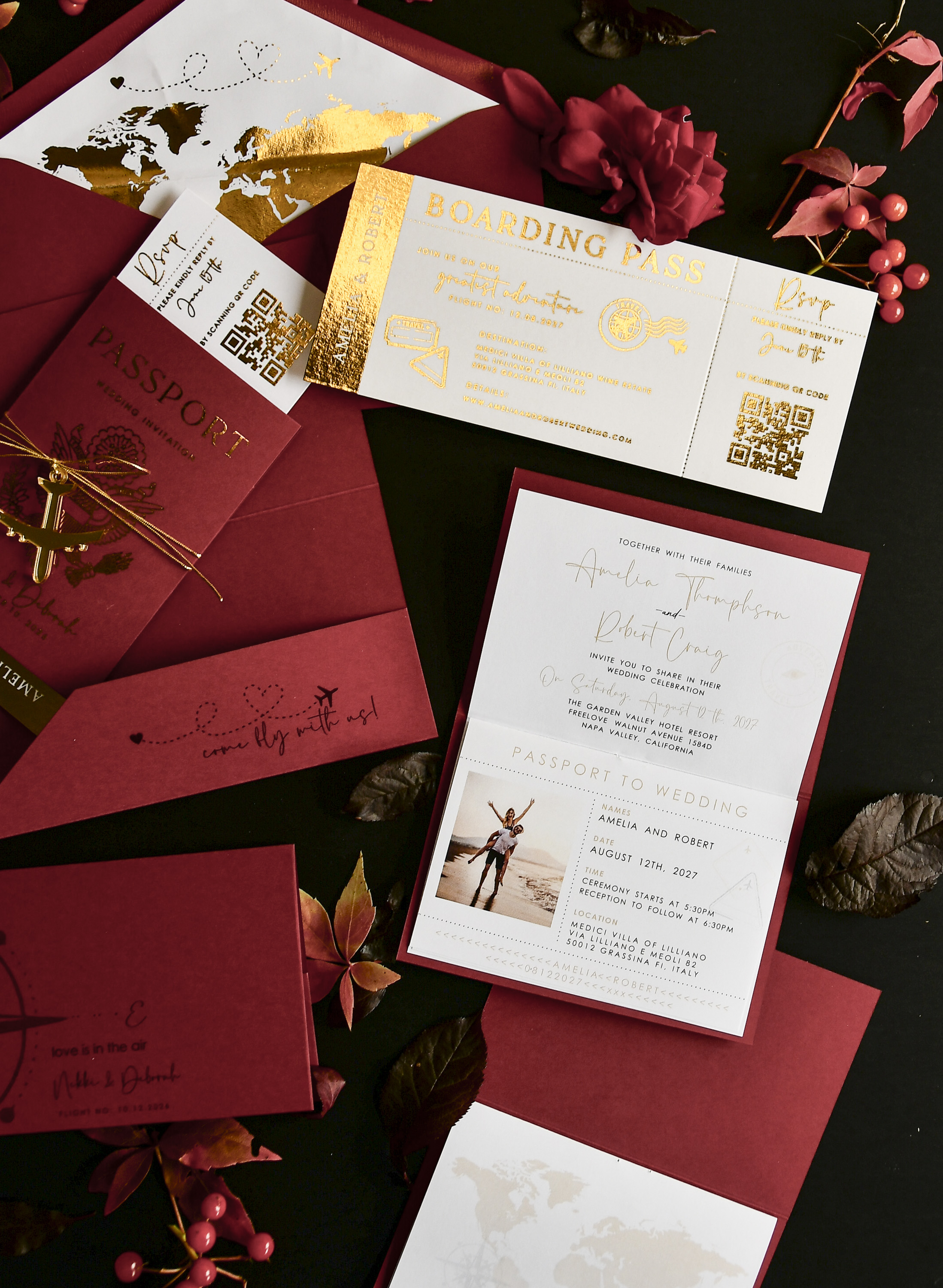
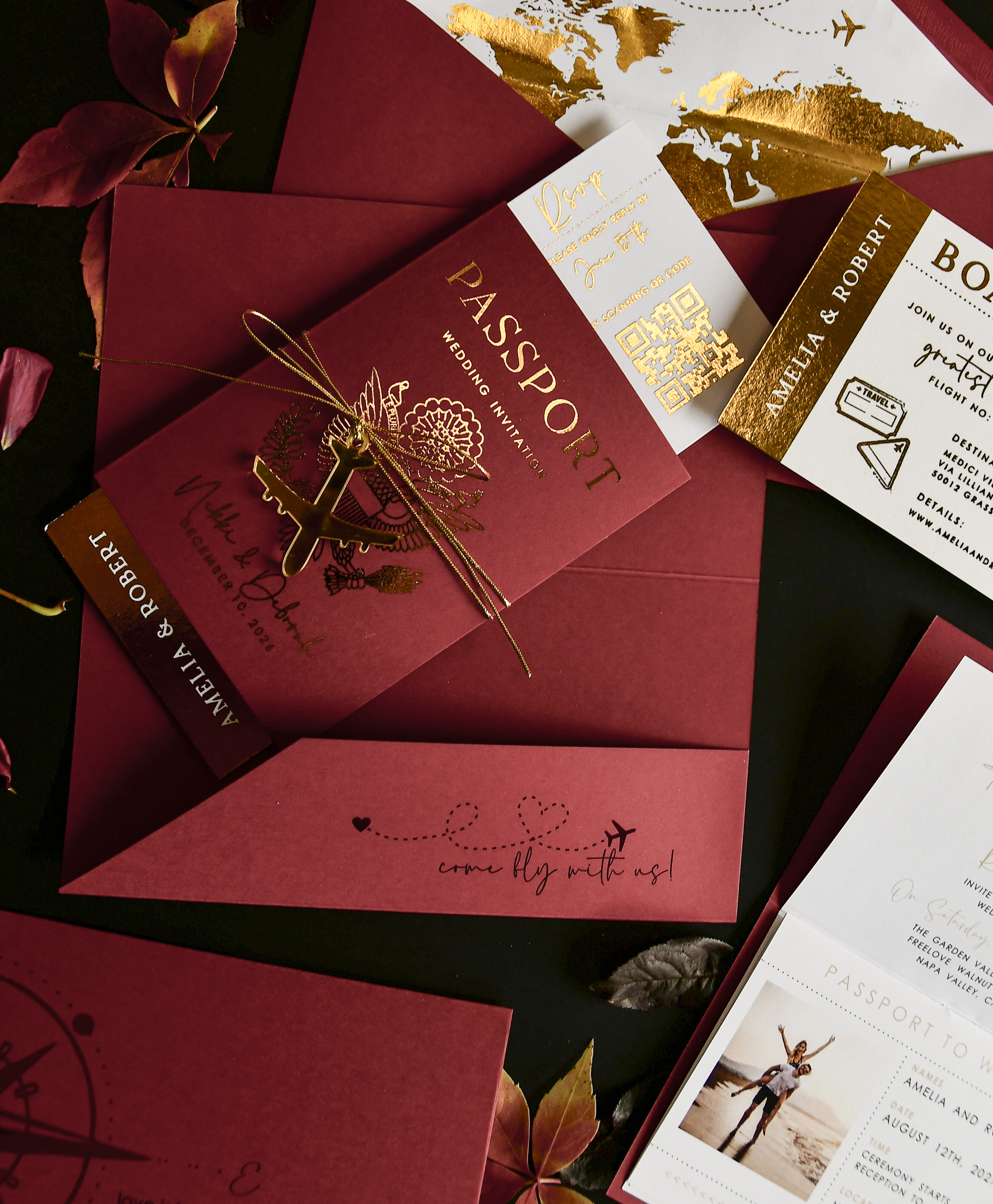
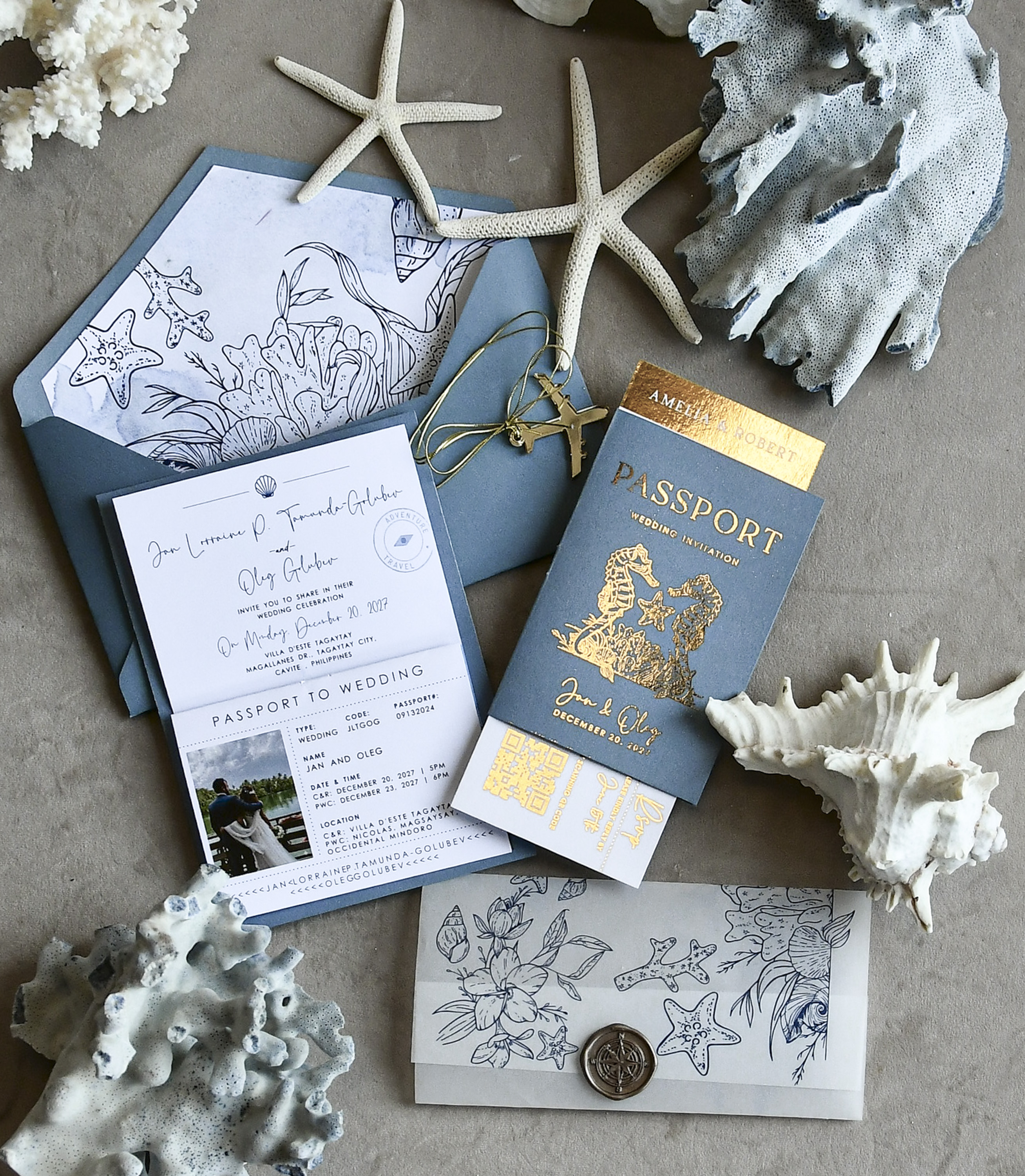
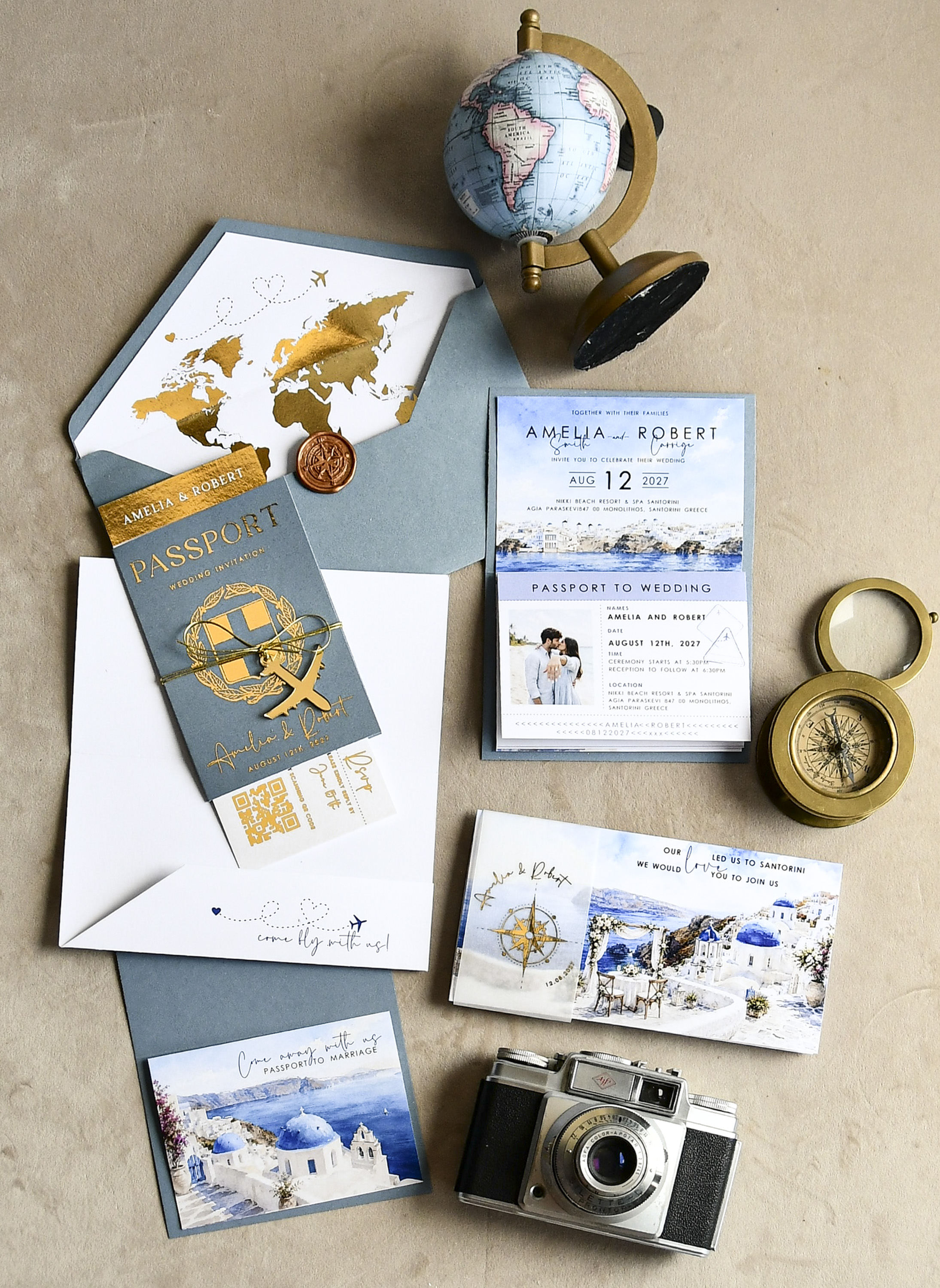
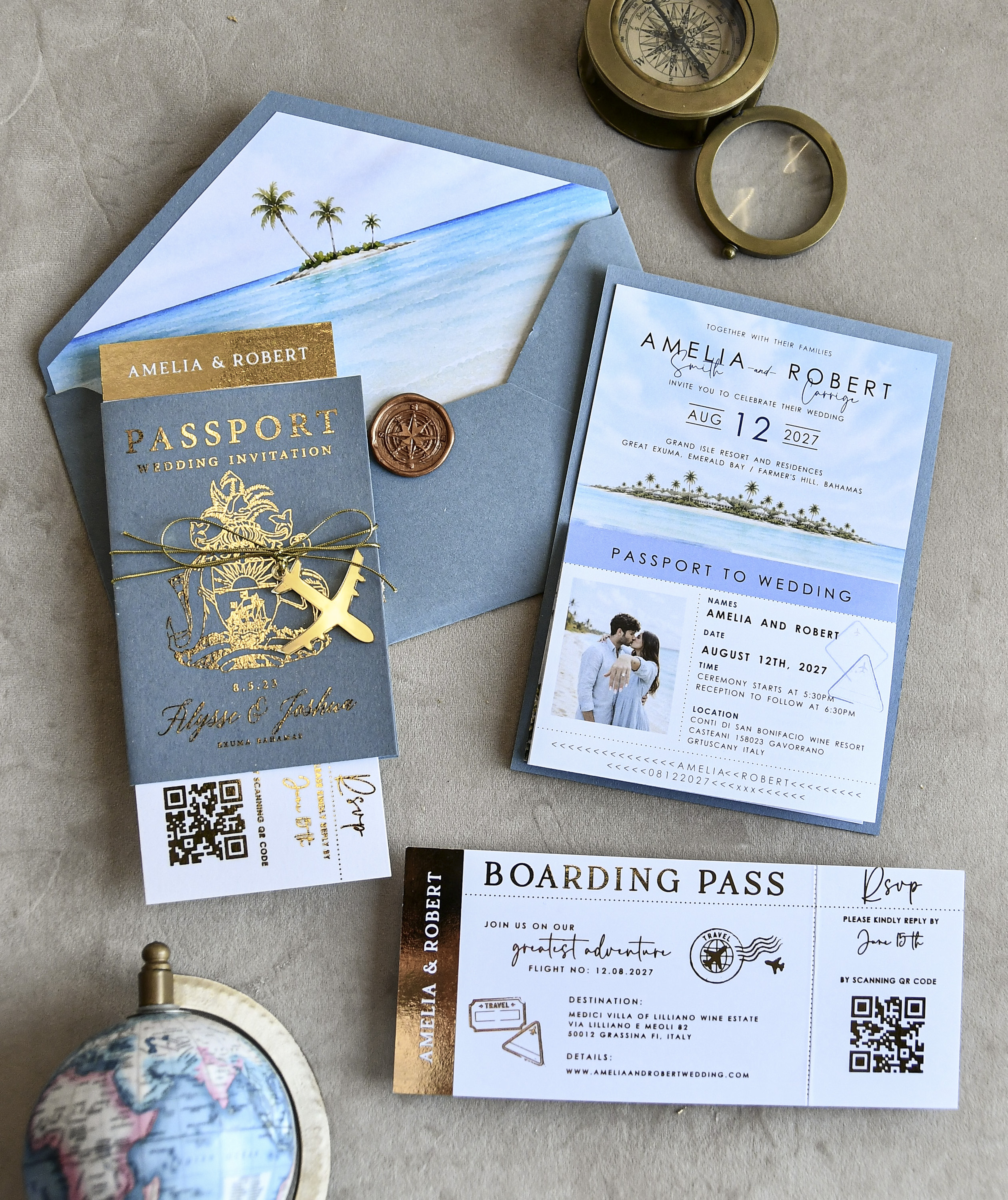
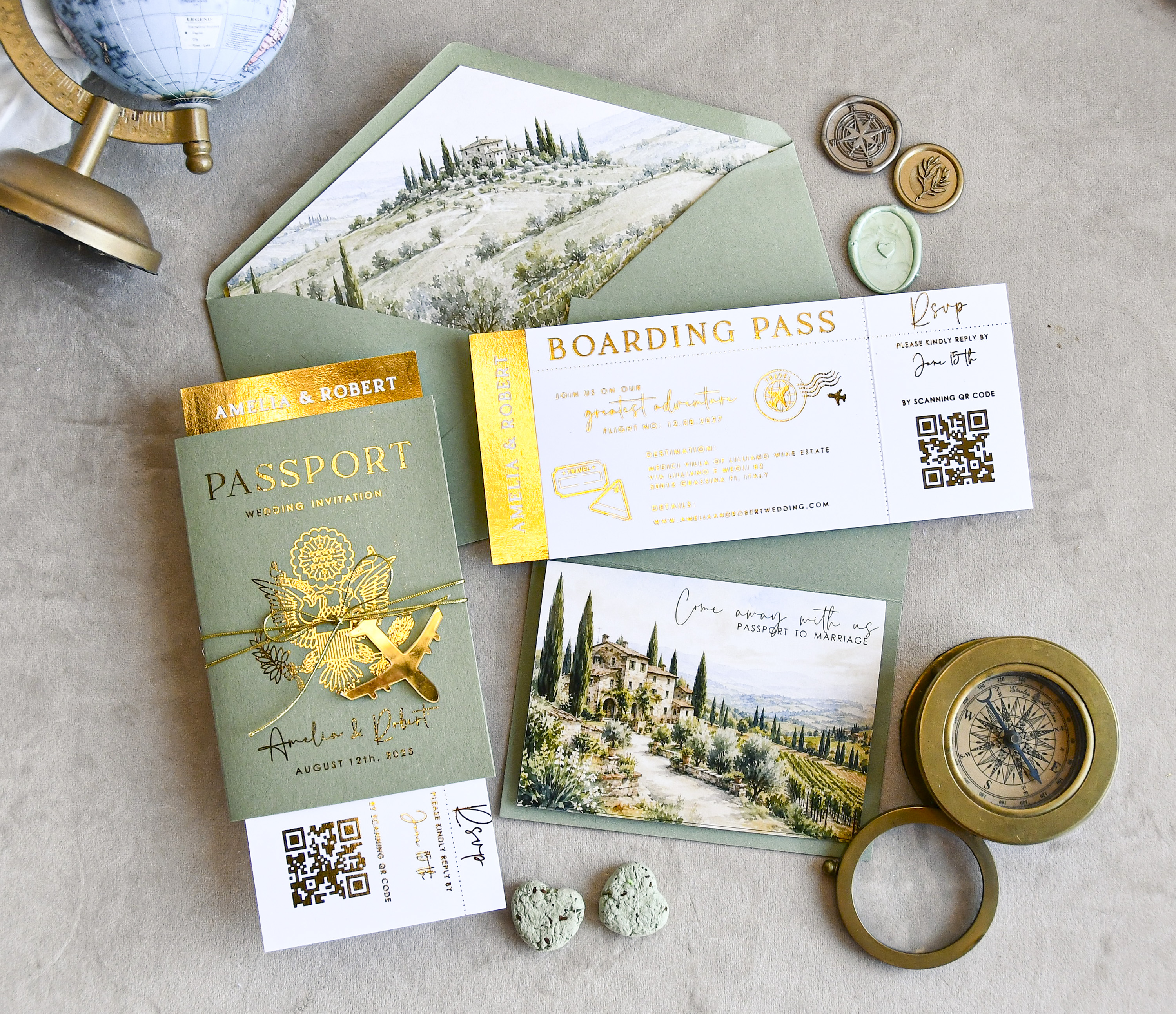
The best prevention is a clearly addressed outer envelope. When you address an invitation to "Ms. Priya Patel" rather than "Priya Patel & Guest," you signal that the invitation is for one person. If you're using a destination or beach wedding theme — like our 14/passFG/z passport-style invitations — the novelty format already draws attention to the details, so guests tend to read more carefully. Still, even the most thoughtfully designed suite won't catch every misunderstanding.
Your First Step: Audit Every RSVP as It Arrives
Don't wait until all your RSVPs are in to notice discrepancies. Review each card the day it arrives and cross-reference it against your master guest list. Note the exact names on your invitation versus what was written on the reply card. This real-time tracking means you catch problems early — when you still have plenty of time to reach out before your caterer's headcount deadline.
Keep a simple spreadsheet with columns for: invited guests, RSVP response, names written on the card, and any discrepancy. Flag anyone who added an unauthorized name immediately so nothing slips through the cracks as the pile grows.
How to Reach Out Without Making It Weird
Once you've identified the issue, contact the guest directly — a phone call or personal text is far warmer than an email. The goal is to correct the misunderstanding while making the guest feel respected. Here's a script you can adapt:
- For an unplanned plus-one: "Hey, we got your RSVP — so excited you're coming! We noticed [Name] was included too. Unfortunately we have a strict guest count at our venue, so we weren't able to extend plus-ones this time. We hope you understand!"
- For unexpected children: "We're so happy you can make it! Just a heads-up — we're keeping our reception adults-only to stay within our venue limit. We'll miss the little ones, but we hope you can still join us!"
- For a family member who added relatives: "We loved getting your RSVP! It looks like a few extra names got added — our venue capacity is really tight, so we need to keep it to exactly who's on the invitation. Can we chat for a minute?"
Keep your tone light and blame the venue or budget rather than the guest's behavior. This gives everyone a graceful exit from an awkward moment.
When the Guest Pushes Back
Occasionally a guest will argue, express hurt feelings, or ask you to make an exception. This is where you need a united front with your partner and a firm but kind reply. Phrases like "We completely understand, and we're so sorry — we just can't make exceptions without affecting everyone else's experience" close the loop without leaving room for negotiation. If the guest truly cannot attend without bringing the extra person, accept that gracefully; it's better than overcrowding your venue or busting your catering budget.
If the situation involves a close family member and real tension, consider looping in a trusted parent or family spokesperson to help mediate. You shouldn't have to spend your engagement managing interpersonal conflict alone.
Preventing the Problem on Future Invitations
If you haven't mailed all your invitations yet, there are a few practical tweaks that reduce confusion. Add a line to your RSVP card that reads: "We have reserved ___ seat(s) in your honor" and fill in the exact number — this leaves zero ambiguity. Addressing envelopes precisely (listing only invited names) and including a wedding website with a clear FAQ about your adults-only or no-plus-one policy also helps set expectations before the card even arrives. Our 14/passFG/z passport-style invitations pair beautifully with a custom inner envelope where you can list every invited guest by name, making the headcount crystal clear from the start.
Frequently Asked Questions
No — an RSVP card is not a binding contract, and you are not obligated to seat guests who weren't invited. Politely contact the guest as soon as possible to clarify, and update your headcount accordingly.
Call or text them personally rather than sending a message in writing, which can feel cold. Blame logistics — venue capacity or catering minimums — rather than framing it as a personal choice, and thank them warmly for understanding.
Yes, this is one of the most effective ways to prevent extra names. Write "We have reserved ___ seat(s) in your honor" and fill in the number before mailing — guests will see exactly how many spots they have and are far less likely to add names.
It's tempting to just say yes, but adding one person often creates a cascade — other guests may find out and feel slighted. If your budget and venue truly allow it, discuss with your partner first; otherwise, hold the line and invite them to a post-wedding celebration instead.
Keep the conversation private and compassionate, and if needed, ask a parent or close family member to help relay the message. Remind yourself that a gentle correction now prevents much bigger logistical headaches on the wedding day itself.
Not at all — it's actually the responsible thing to do. Ignoring the discrepancy is unfair to your venue, your caterer, and your other guests. Most people appreciate a kind heads-up rather than an awkward situation on the wedding day.
See This Design Up Close
You May Also Like
More Wedding Planning Guides
- → The Complete Plus One Rulebook for Your Wedding Guest List
- → When Family Feels Like Strangers: Navigating Distant Relatives on Your Guest List
- → Adults-Only Wedding: How to Let Guests Know Without the Drama
- → Ordering Wedding Invitations: The Smartest Way to Get Your Numbers Right
- → Adding More Guests to Your Wedding: Who Owes What?
- → Your Pre-Wedding Survival Guide to Family Conflict
- → What to Do When a Guest Shows Up With Someone You Didn't Invite
- → In-Laws Want to Invite Their Friends? Here's How to Handle It
- → Navigating Plus-Ones for Single Guests: A Couples' Guide to Getting It Right
- → The Honest Guide to Including a Stepparent on Your Wedding Guest List
- → When Saying No to a Plus One Is Perfectly Okay
- → Should Kids Come to Your Wedding? How to Think It Through and Decide
- → Navigating Divorced Parent Seating at Your Wedding Reception
- → Inviting Your Boss and Coworkers to Your Wedding: What You Actually Need to Know
- → Uninvited Plus-Ones and Tag-Alongs: How to Keep Your Guest List Intact
- → When Family Feuds Threaten Your Wedding Plans: A Practical Peacekeeper's Guide
- → Inviting an Estranged Brother or Sister: Finding Clarity Before You Seal the Envelope
- → Cousins, Invites, and Hard Choices: A Practical Guest List Guide