
In-Laws Want to Invite Their Friends? Here's How to Handle It

You've been engaged for five minutes and already your future in-laws have a list of twenty friends they'd love to see at the wedding. Sound familiar? The short answer is no, you are not obligated to invite your in-laws' friends — but the longer answer involves a little strategy, a lot of communication, and a clear understanding of who is paying for what. Here's how to navigate this gracefully without starting a family feud before the honeymoon.
The Golden Rule: Money Talks on the Guest List
The most widely accepted wedding etiquette principle is simple: whoever is contributing financially to the wedding earns a proportional say in the guest list. If your future in-laws are covering a meaningful portion of the costs, it's reasonable to give them a set number of guest slots to fill however they choose — including with their own friends.
A common approach is to divide the guest list into thirds: one third for the couple, one third for the bride's family, and one third for the groom's family. If your in-laws are contributing financially, work with that framework. If they are not contributing, it is entirely appropriate — and etiquette-approved — to politely explain that the guest count is fixed and you've already filled the available spots.
How to Set Boundaries Without Starting a War
The key is to frame limits around logistics, not preference. Instead of saying "We don't want your friends there," try:
- "Our venue holds 120 guests and we're already at capacity."
- "We're keeping the wedding to close family and people we've personally spent time with."
- "We'd love to celebrate with everyone at a casual post-wedding gathering instead."
These responses are honest, kind, and redirect the conversation without making anyone feel personally rejected. If your partner's parents push back, let your partner take the lead in that conversation — it's always more effective for each partner to manage their own family.
When It Might Be Worth Saying Yes
Sometimes inviting a handful of your in-laws' closest friends is actually a gift — to them and to your future relationship. Consider saying yes if:
- The friends are people your in-laws genuinely consider family (lifelong best friends, neighbors of 30 years).
- Adding them won't meaningfully strain your budget or bump guests you actually want.
- Your in-laws are helping fund the wedding and this is their one big ask.
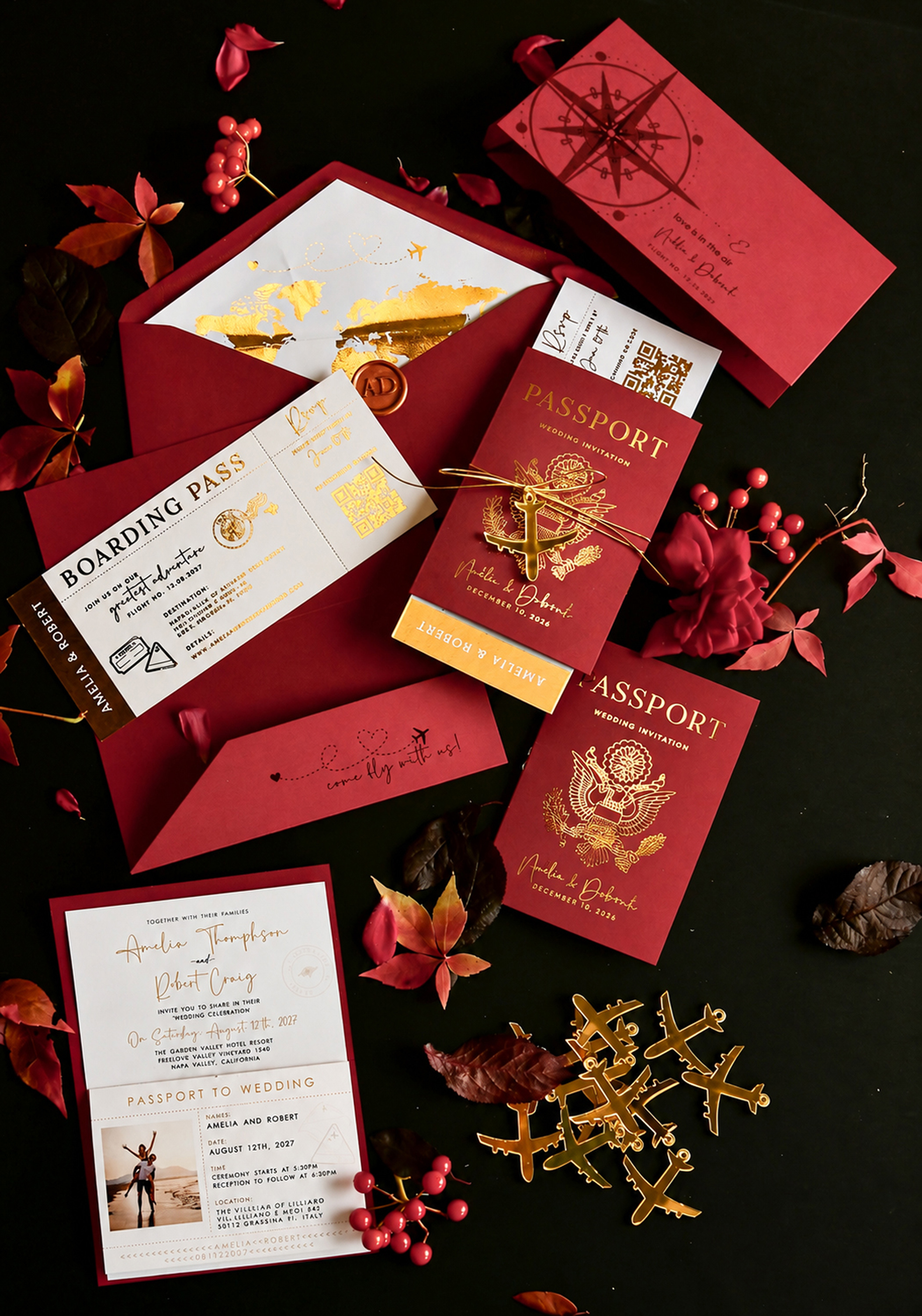
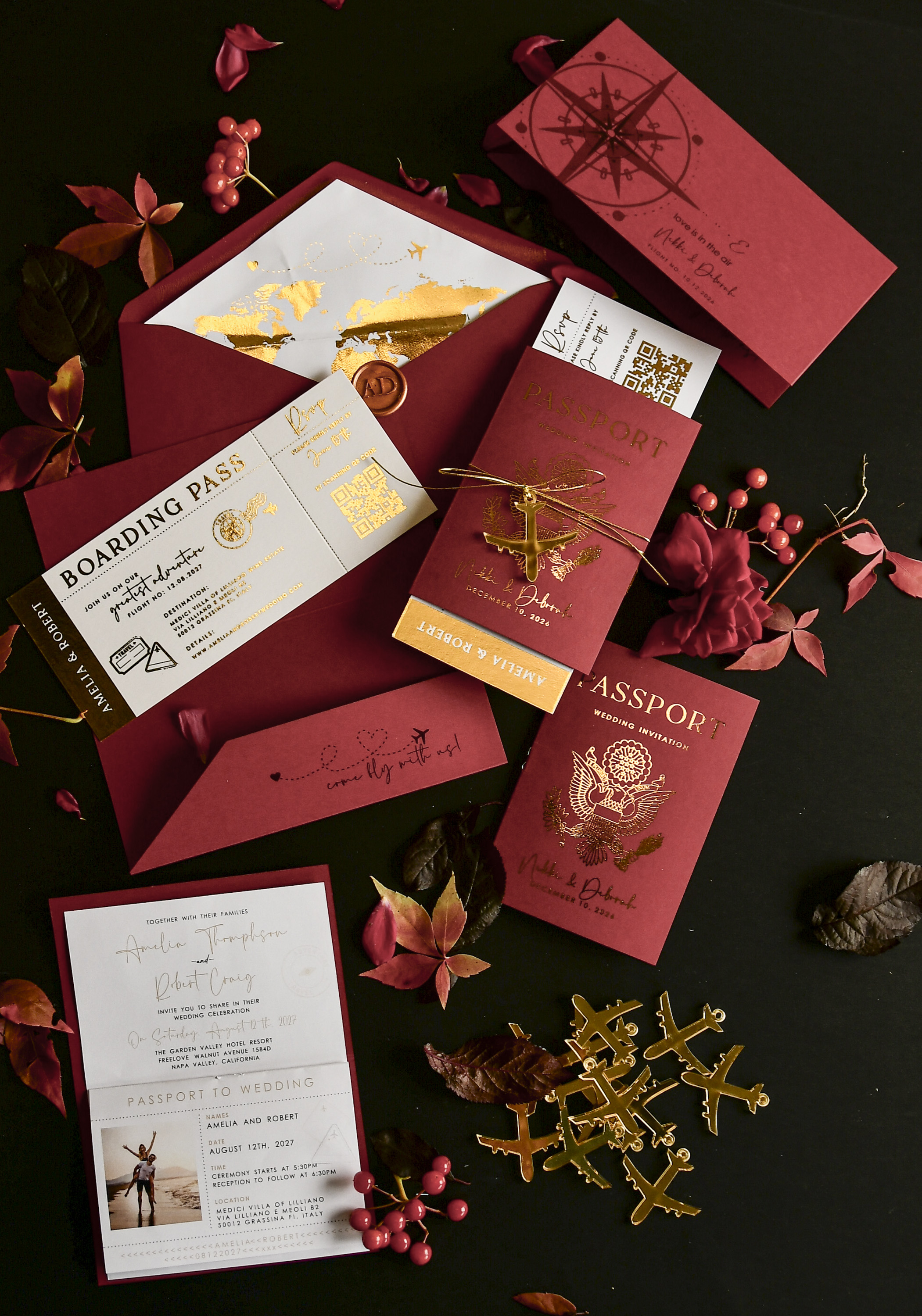
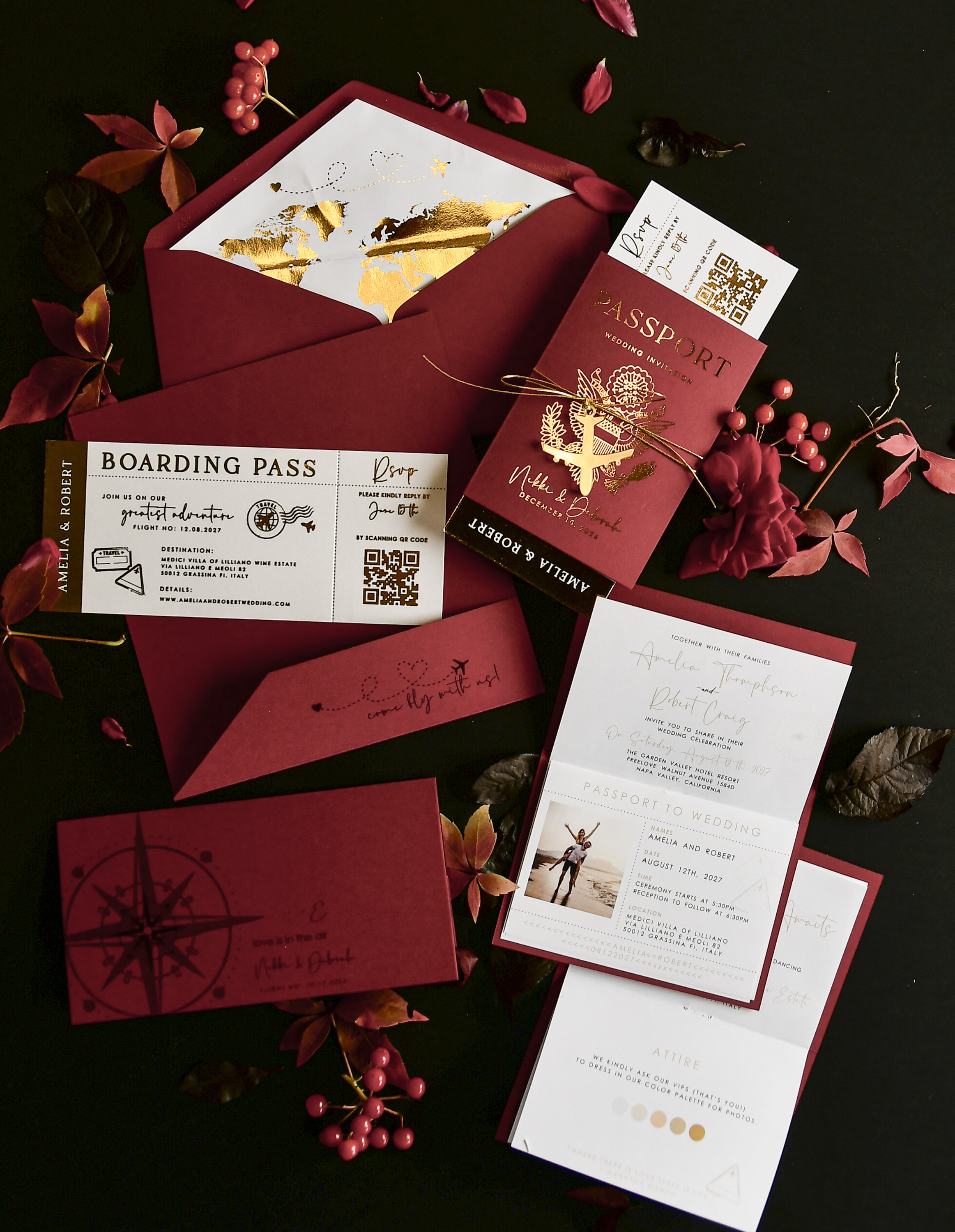
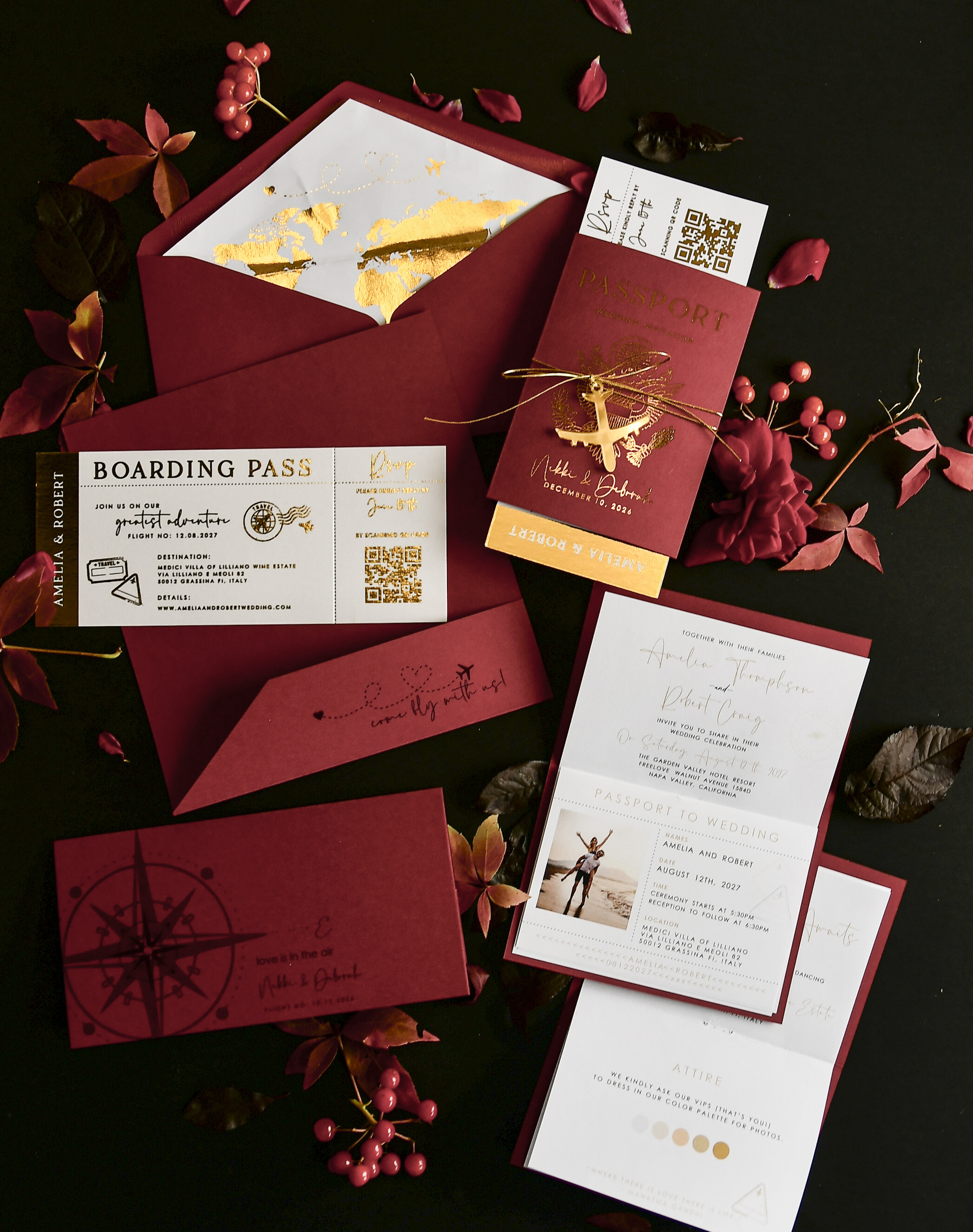
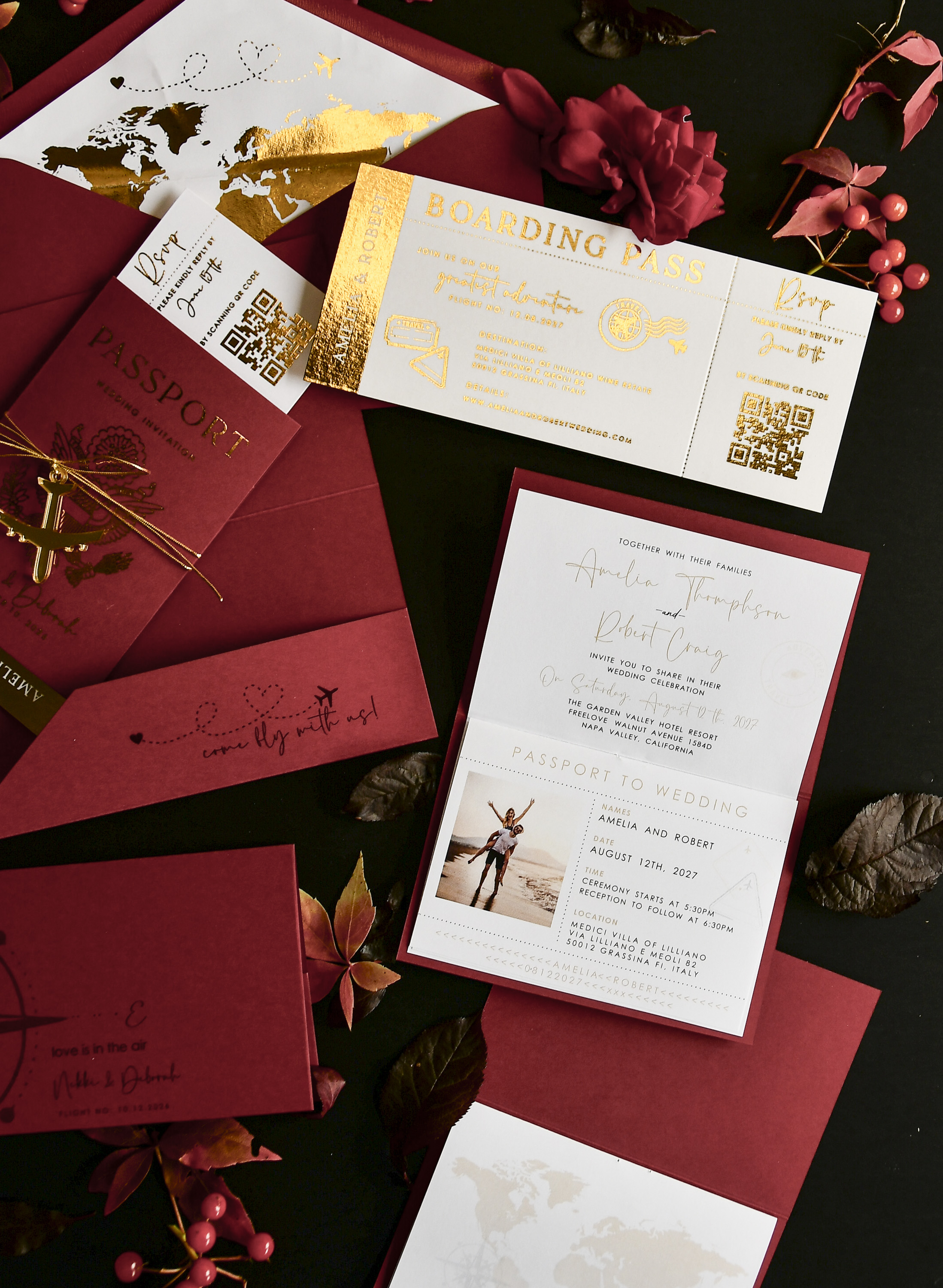
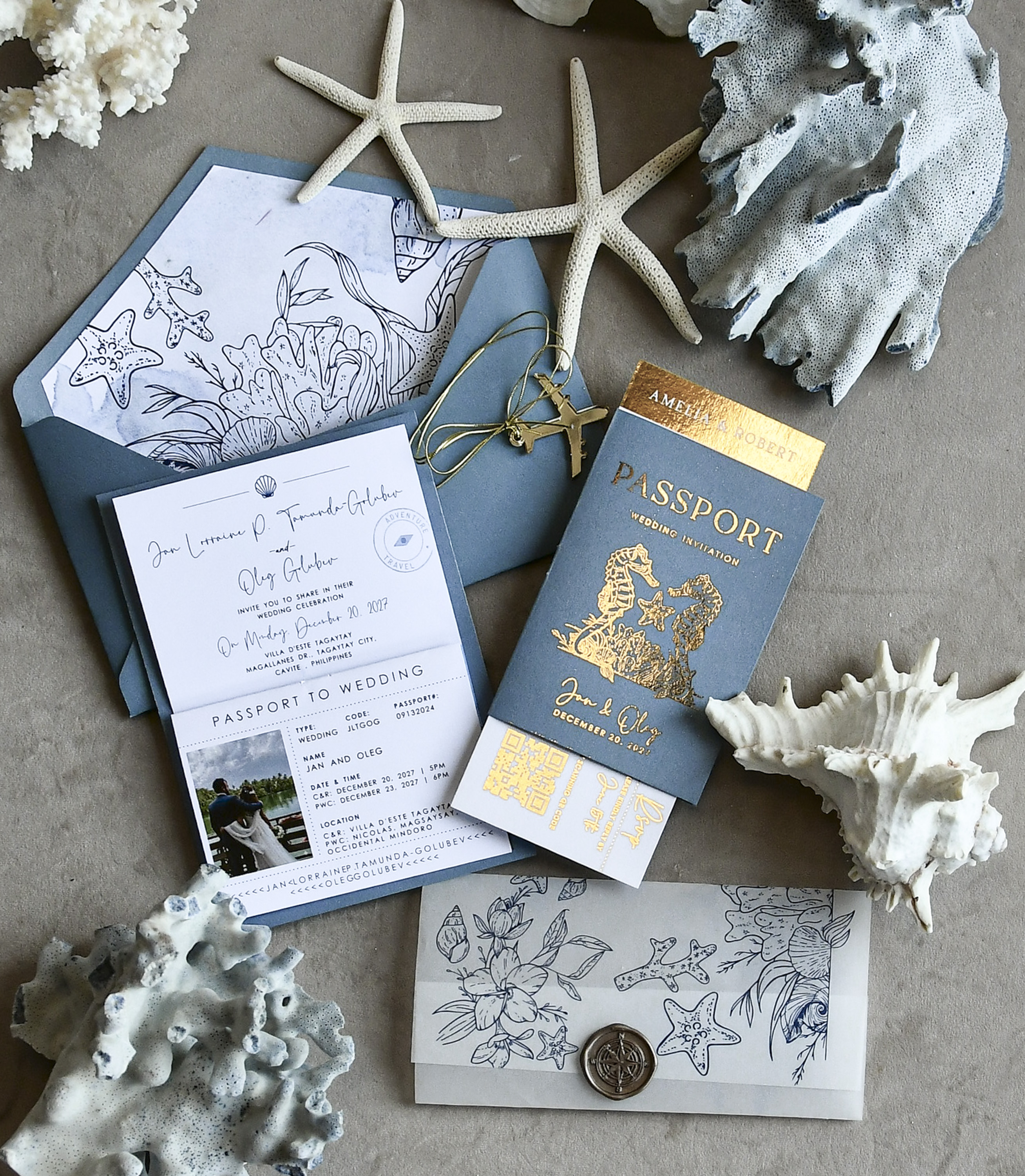
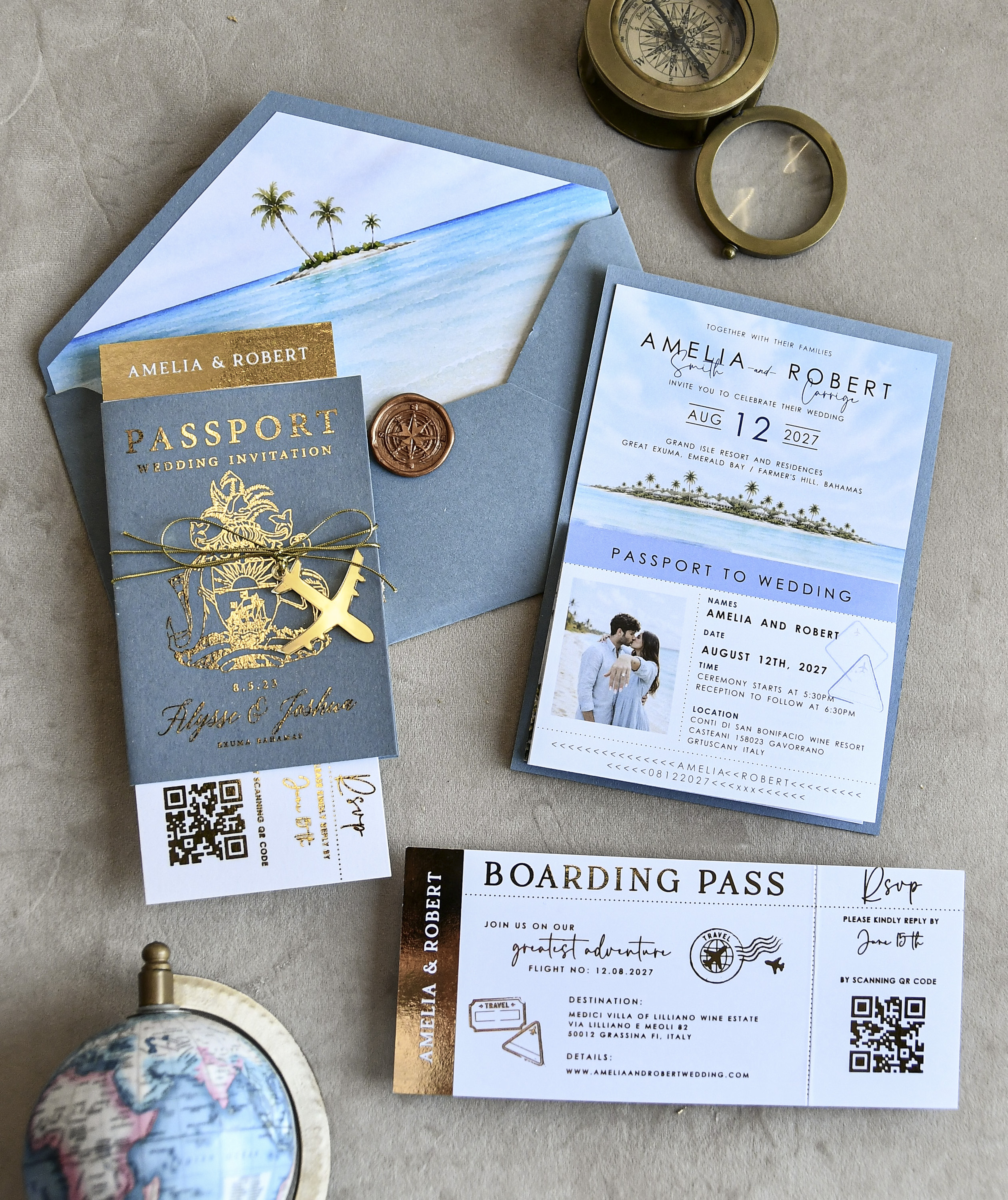
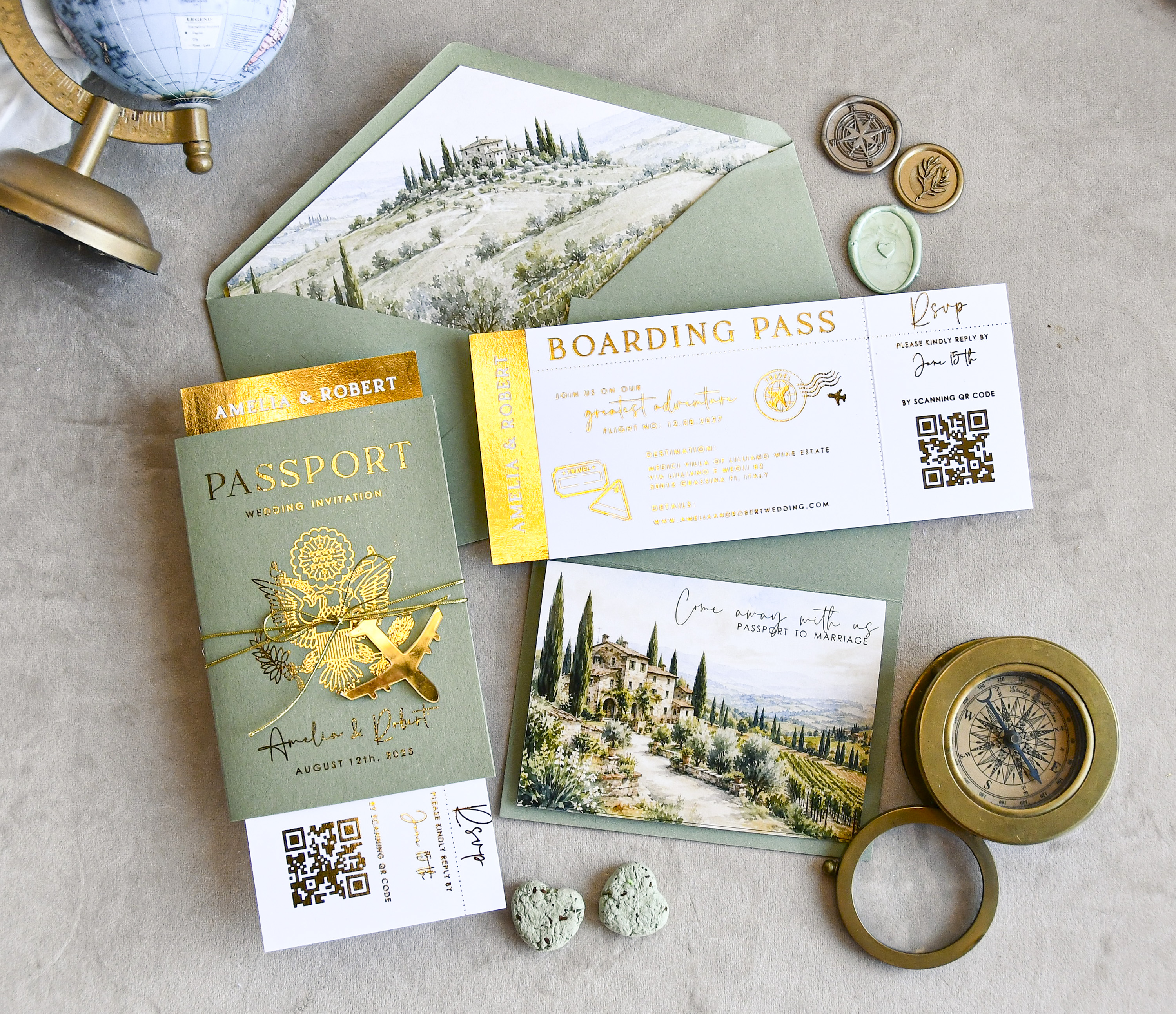
Even a small gesture — inviting two or three of their most important people — can go a long way toward building goodwill with your new family. And when your invitations go out, making them feel special matters. A beautifully designed invitation like the 14/passFG/z passport-style beach wedding invite from Margo&Bees sets a warm, celebratory tone that makes every guest — including those you weren't sure about inviting — feel genuinely welcomed.
What to Do When the Pressure Doesn't Let Up
If your future in-laws continue to push after you've calmly explained your constraints, it's time for a united front. You and your partner need to agree on your guest list priorities before any family conversations happen, so there's no room for one parent to play you against each other.
A few practical steps:
- Put the guest list in writing early. Once names are on paper and tied to a seating chart or RSVP system, it's much harder to casually add people.
- Offer an alternative celebration. A post-wedding brunch or backyard party gives in-laws a chance to celebrate with their wider circle without inflating your wedding day count.
- Loop in a planner or coordinator if needed — sometimes hearing "the venue won't allow it" from a neutral third party ends the conversation faster than anything you can say.
Remember: this is one of the first big decisions you'll make as a couple. How you handle it together sets the tone for navigating family dynamics for years to come.
Frequently Asked Questions
No, it is not rude — especially if your guest list is genuinely limited by venue capacity or budget. As long as you communicate the constraints kindly and consistently, most people will understand. The key is to apply your rules equally to both families so no one feels singled out.
If they are contributing financially, it is standard etiquette to give them a proportional number of guest slots. Discuss this early and agree on a specific number — for example, ten spots — so expectations are clear before anyone starts making promises to their friends.
Keep it simple and logistics-focused: explain that you have a firm guest count and have already reached capacity. Avoid over-explaining or apologizing excessively, as that can invite negotiation. A warm, brief message delivered by your partner to their own parents is usually the most effective approach.
Yes, absolutely. Each partner should handle their own family when it comes to sensitive guest list conversations. This prevents the other partner from becoming the villain and keeps family relationships intact. Present a unified decision, but deliver it through the right messenger.
Address it immediately and calmly — the longer you wait, the harder it becomes to walk back. Explain that no invitations have been sent yet and that the guest list is finalized as a couple. Using a structured invitation process, like sending out your <strong>14/passFG/z passport invites</strong> on a set date, gives you a clear deadline to point to.
This is a legitimate option, though it requires some etiquette care. In some cultures and family styles, a larger reception with a smaller ceremony is completely normal and accepted. Just make sure the distinction is communicated clearly on the invitation so no one shows up expecting a seat at the ceremony.
See This Design Up Close









You May Also Like

More Wedding Planning Guides
- → The Complete Plus One Rulebook for Your Wedding Guest List
- → When Family Feels Like Strangers: Navigating Distant Relatives on Your Guest List
- → Adults-Only Wedding: How to Let Guests Know Without the Drama
- → Ordering Wedding Invitations: The Smartest Way to Get Your Numbers Right
- → Adding More Guests to Your Wedding: Who Owes What?
- → Your Pre-Wedding Survival Guide to Family Conflict
- → What to Do When a Guest Shows Up With Someone You Didn't Invite
- → Navigating Plus-Ones for Single Guests: A Couples' Guide to Getting It Right
- → Extra Names on Your RSVP Card: How to Respond Without the Stress
- → The Honest Guide to Including a Stepparent on Your Wedding Guest List
- → When Saying No to a Plus One Is Perfectly Okay
- → Should Kids Come to Your Wedding? How to Think It Through and Decide
- → Navigating Divorced Parent Seating at Your Wedding Reception
- → Inviting Your Boss and Coworkers to Your Wedding: What You Actually Need to Know
- → Uninvited Plus-Ones and Tag-Alongs: How to Keep Your Guest List Intact
- → When Family Feuds Threaten Your Wedding Plans: A Practical Peacekeeper's Guide
- → Inviting an Estranged Brother or Sister: Finding Clarity Before You Seal the Envelope
- → Cousins, Invites, and Hard Choices: A Practical Guest List Guide