
The Complete Guide to What Goes on a Wedding Invitation
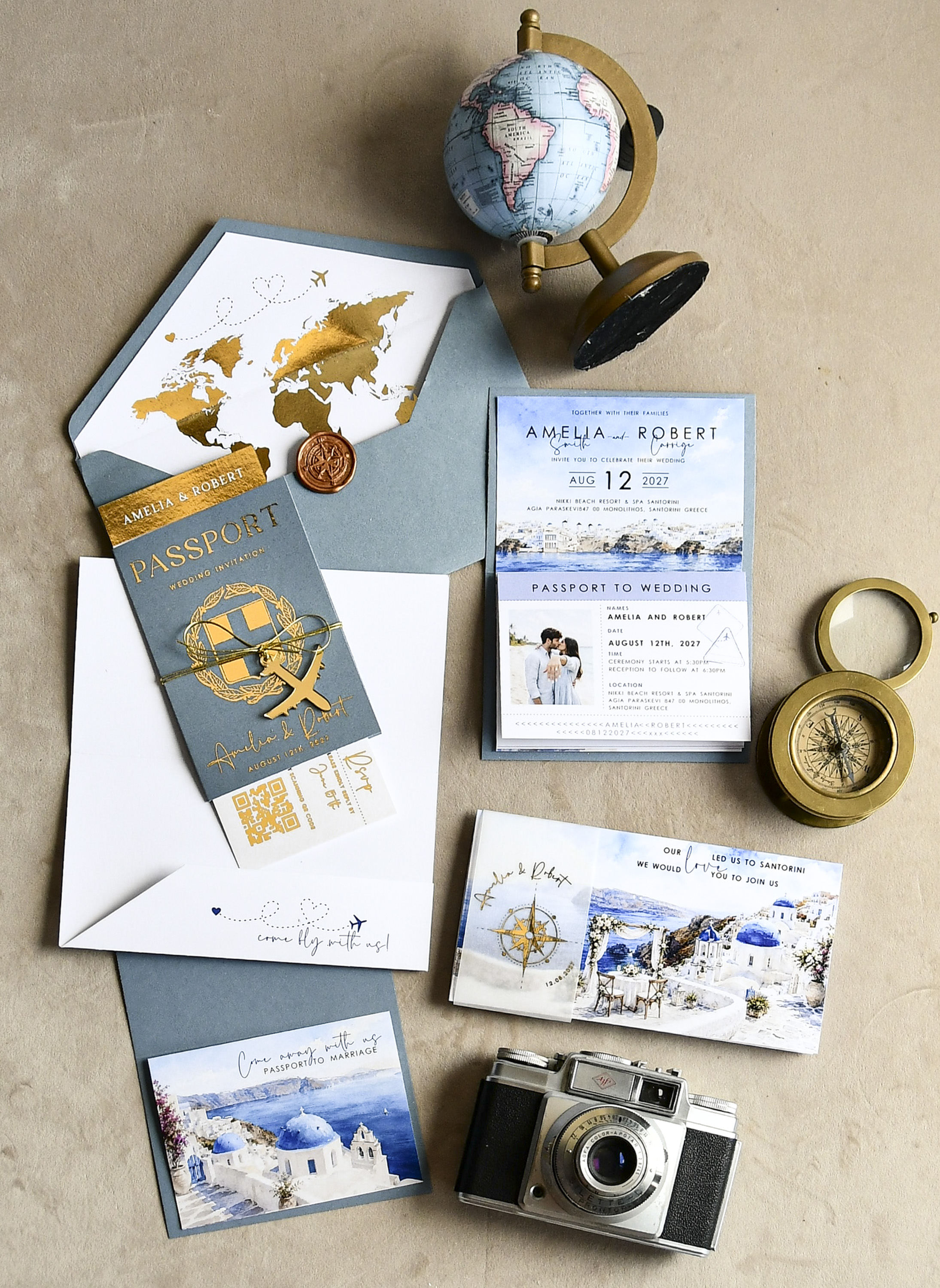
Your wedding invitation does more than announce a date—it sets the tone for your entire celebration and gives guests the practical details they need to show up ready to celebrate. Get it right and you'll field fewer confused phone calls. Get it wrong and you'll be texting the same venue address twelve times the week before the wedding. Here's everything that should appear on a wedding invitation, in plain terms.
The Non-Negotiable Essentials
Every wedding invitation, no matter how simple or elaborate, must include five core pieces of information:
- The names of the couple — Traditionally the host line introduces the couple (e.g., Together with their families, Sarah Chen and James Ortega), but modern couples often lead with their own names without a host line.
- The date — Spell out the day and date in full for a formal feel (Saturday, the fourteenth of June, two thousand and twenty-six) or use a clean numeral format for a casual vibe (Saturday, June 14, 2026).
- The ceremony time — State when guests should arrive, not just when the ceremony starts. Adding a note like Ceremony begins promptly at 4:00 PM discourages late arrivals.
- The venue name and full address — Include the street address even if the venue is well known. Out-of-town guests and GPS apps need the complete details.
- The dress code — Black tie, cocktail attire, beach casual—guests genuinely want to know. A single line in the lower corner of the invitation is all it takes.
RSVP Details and Deadlines
Your caterer and venue will need a final headcount, so RSVP information is essential. You can include it on the main invitation or on a separate RSVP card tucked inside the envelope—the latter is the traditional and most guest-friendly approach.
Make sure your RSVP details cover:
- The RSVP deadline — Set it two to three weeks before the wedding to give yourself time to chase stragglers and finalize numbers. If your wedding is on June 14, an RSVP date of May 24 is reasonable.
- How to respond — A stamped return card, a wedding website URL, an email address, or a phone number. The easier you make it, the higher your response rate.
- Meal choices (if applicable) — If your caterer requires a pre-selected entrée, list the options on the RSVP card with a checkbox for each guest.
Optional but Helpful Additions
Beyond the basics, several details can make life easier for your guests—especially if you're hosting a destination event or a multi-day celebration. Consider including:
- Wedding website URL — Point guests to your site for hotel blocks, travel tips, the full weekend schedule, and your registry. A short custom URL (e.g., sarahandjames2026.com) prints cleanly on an invitation.
- Reception details — If the reception is at a different venue or starts at a different time than the ceremony, include that information either on the main invitation or on a separate details card.
- Accommodation information — A hotel block card or a brief note directing guests to your website for lodging options is especially appreciated for destination or out-of-town weddings.
- Children policy — If your wedding is adults-only, a gentle note on the details card (We kindly request an adults-only celebration) prevents misunderstandings.
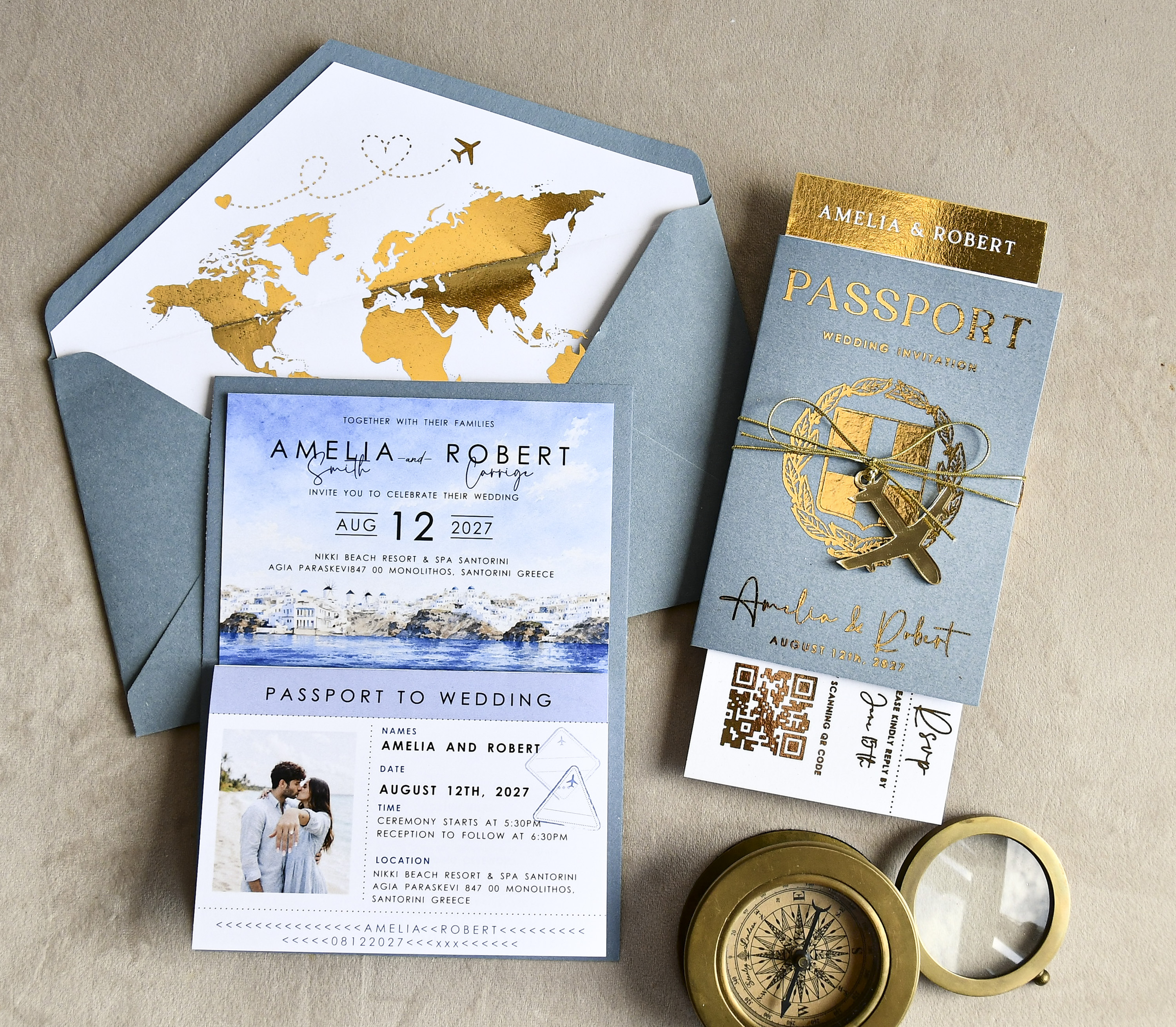
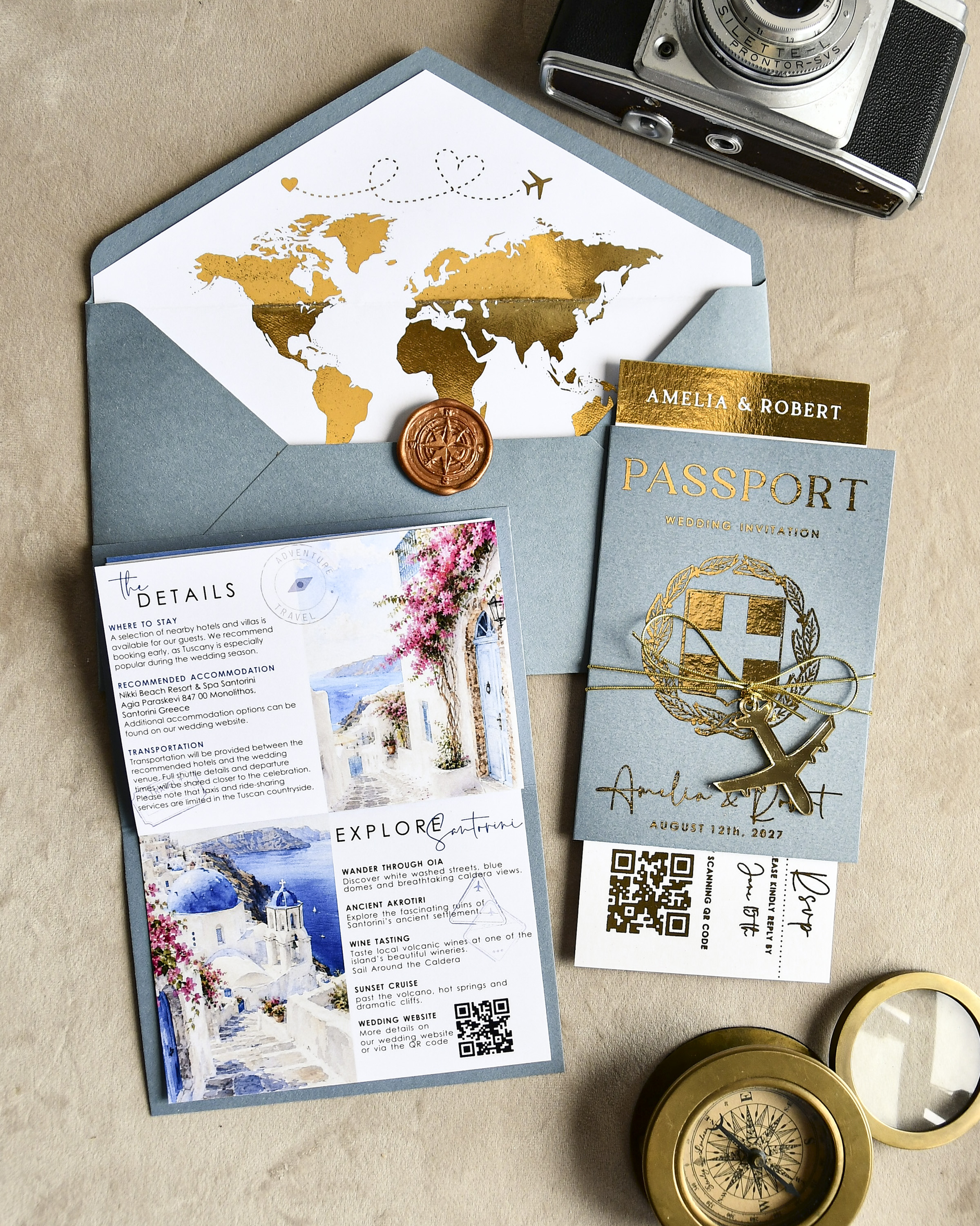
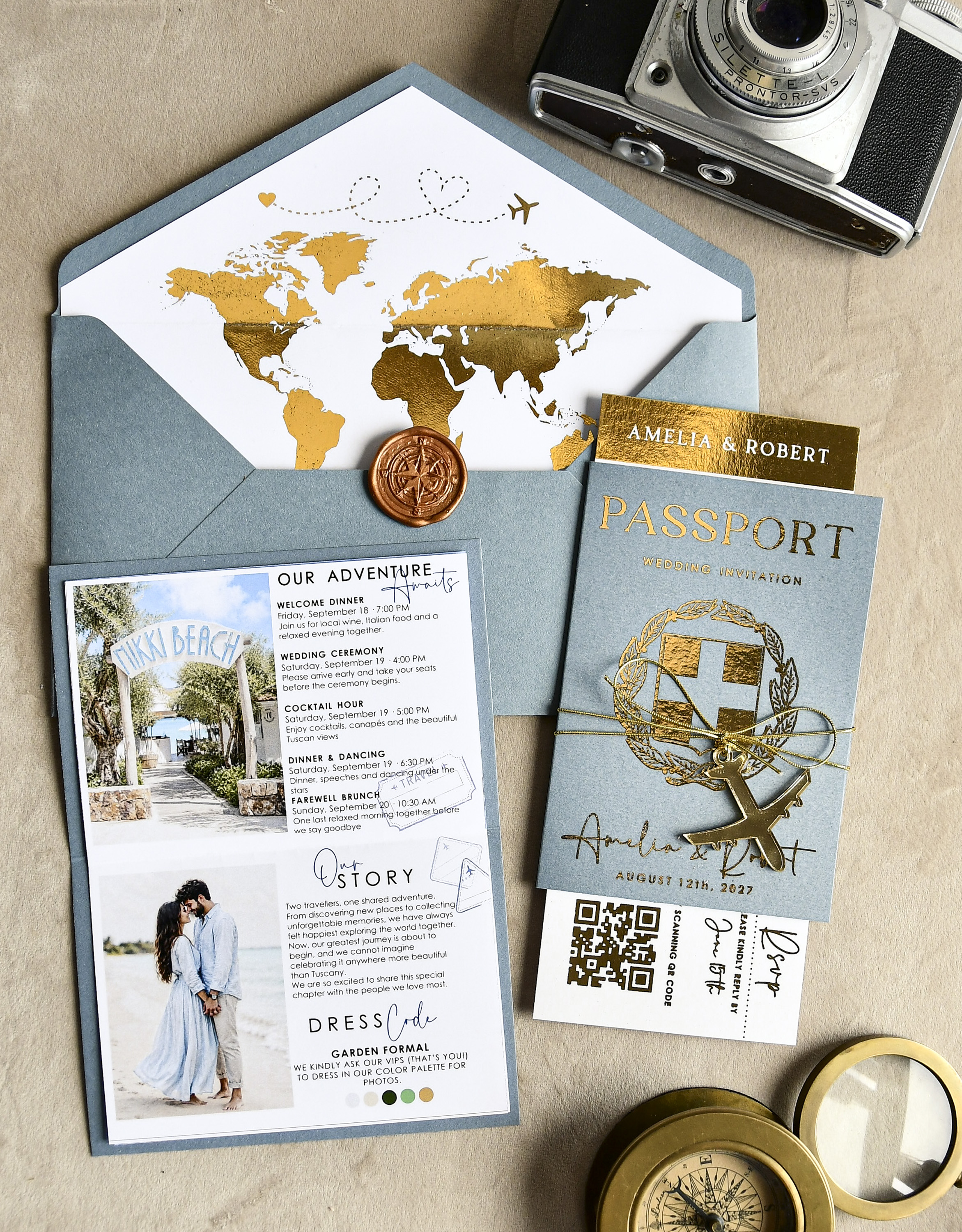
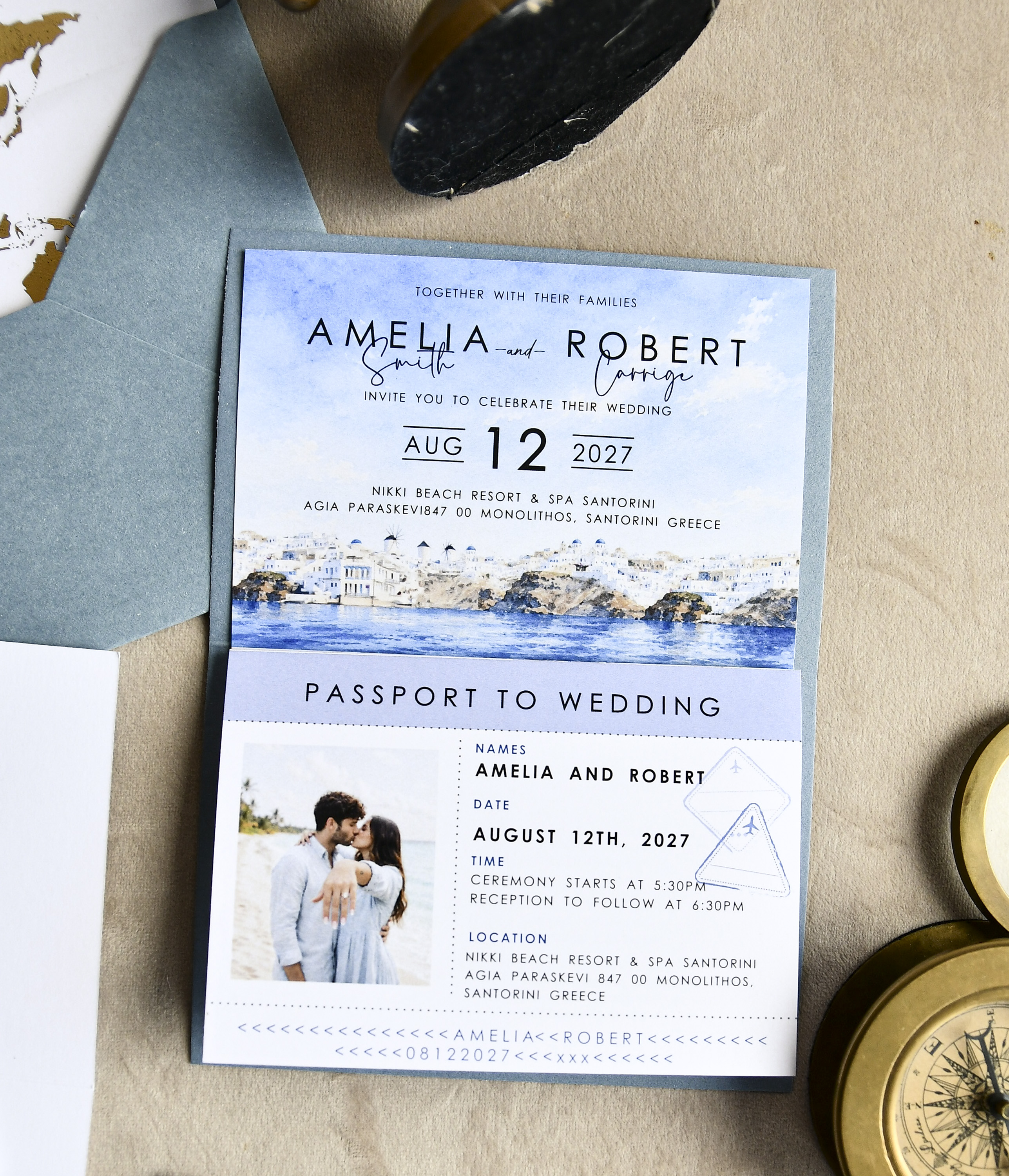
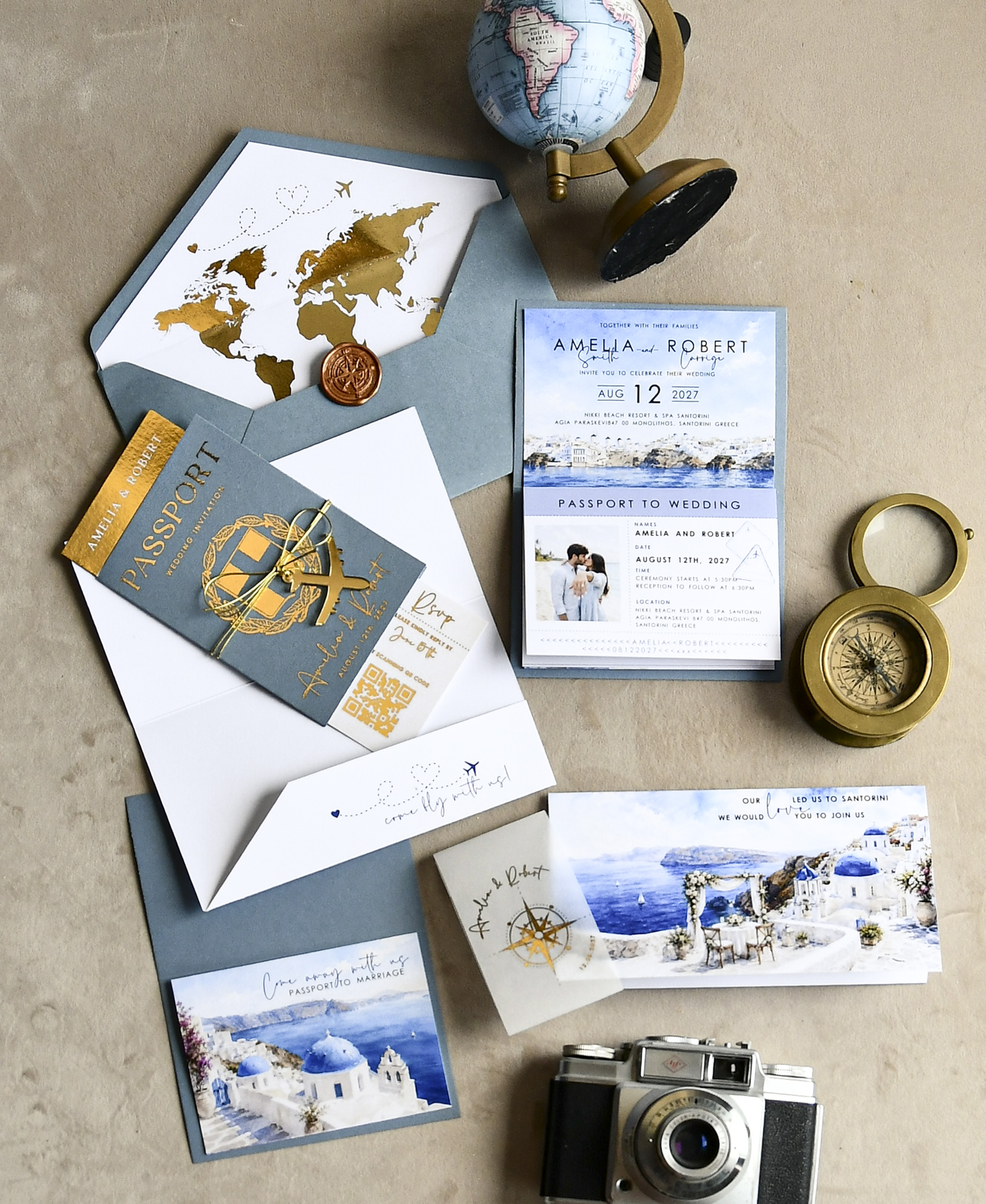
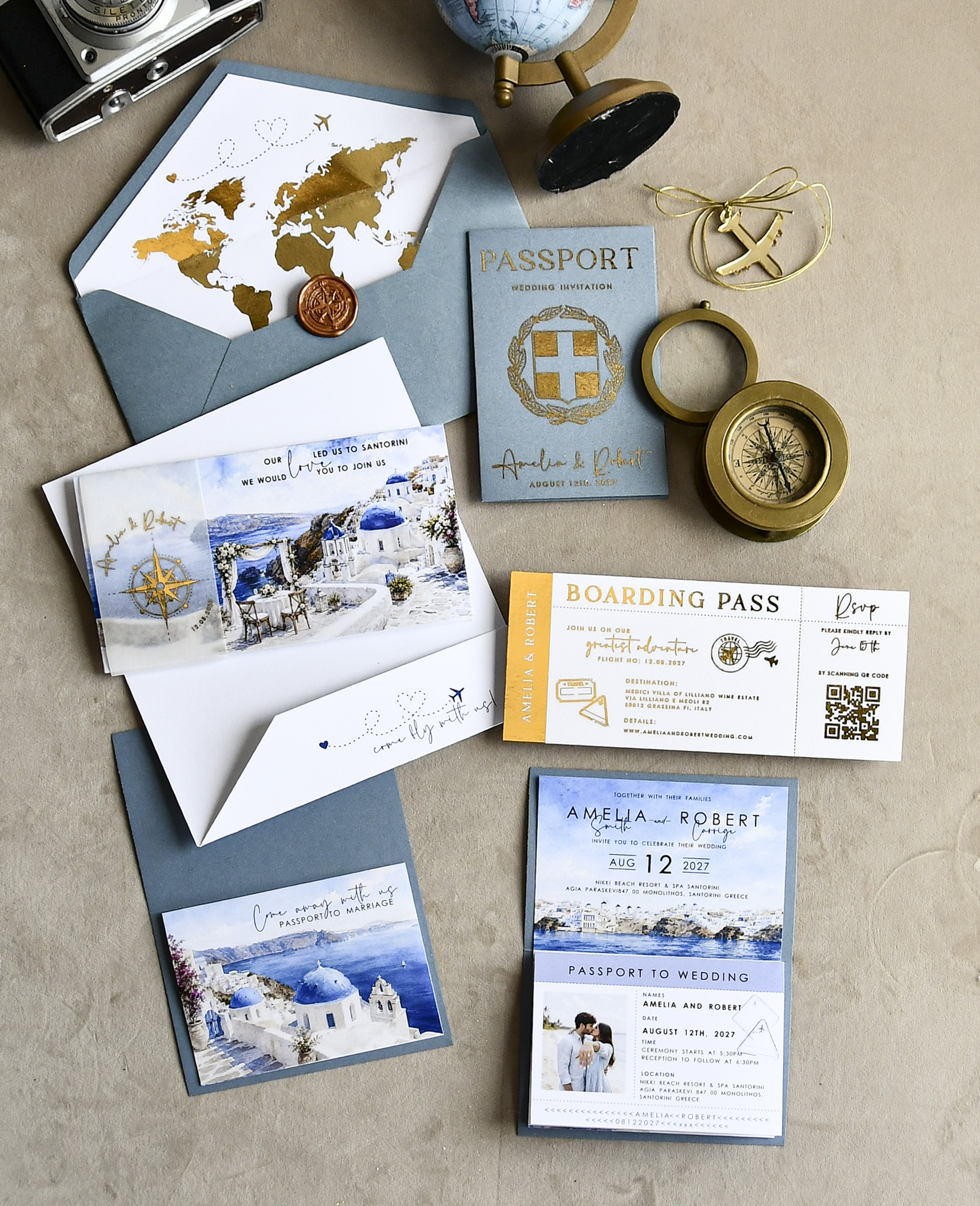
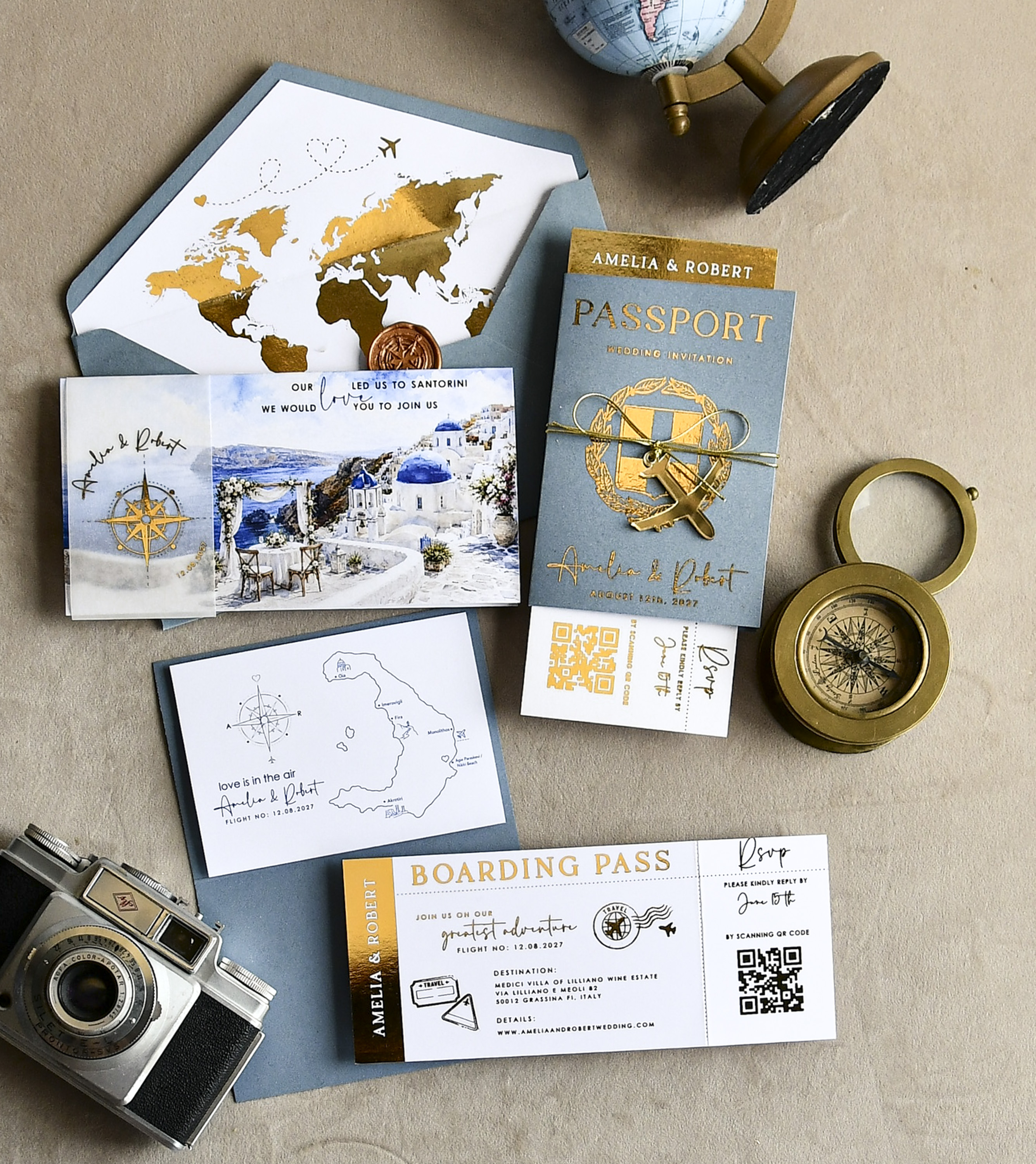
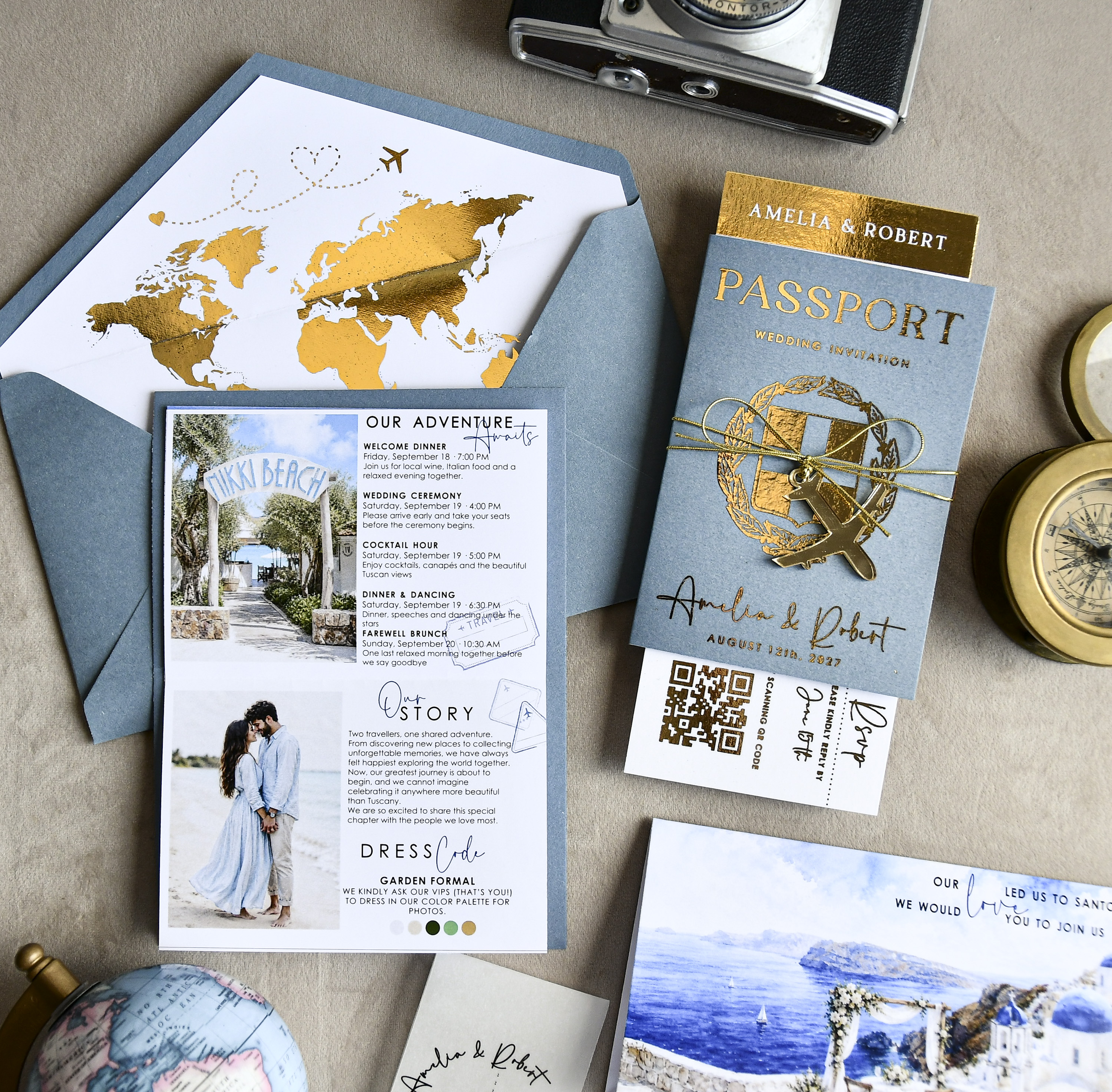
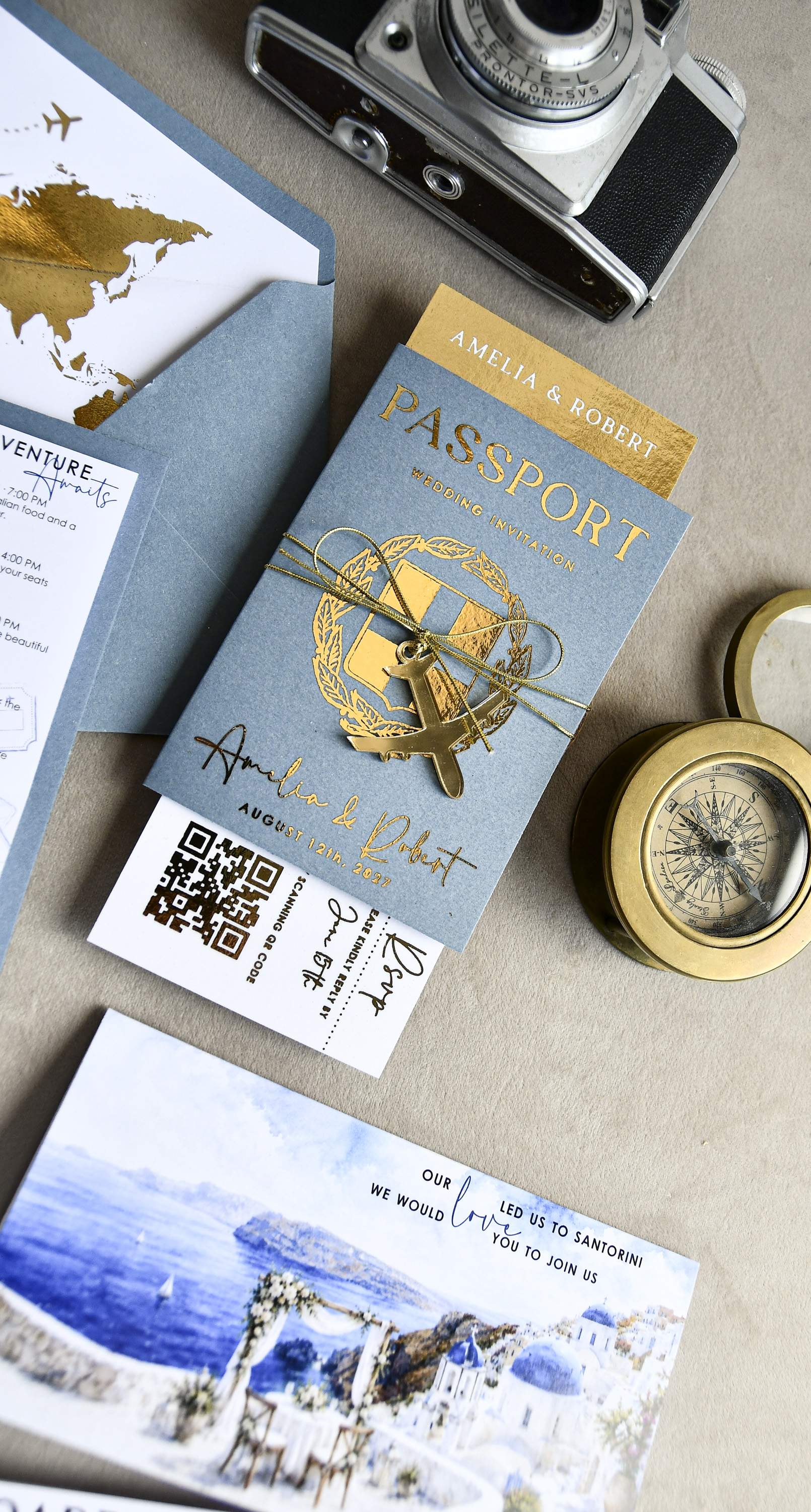
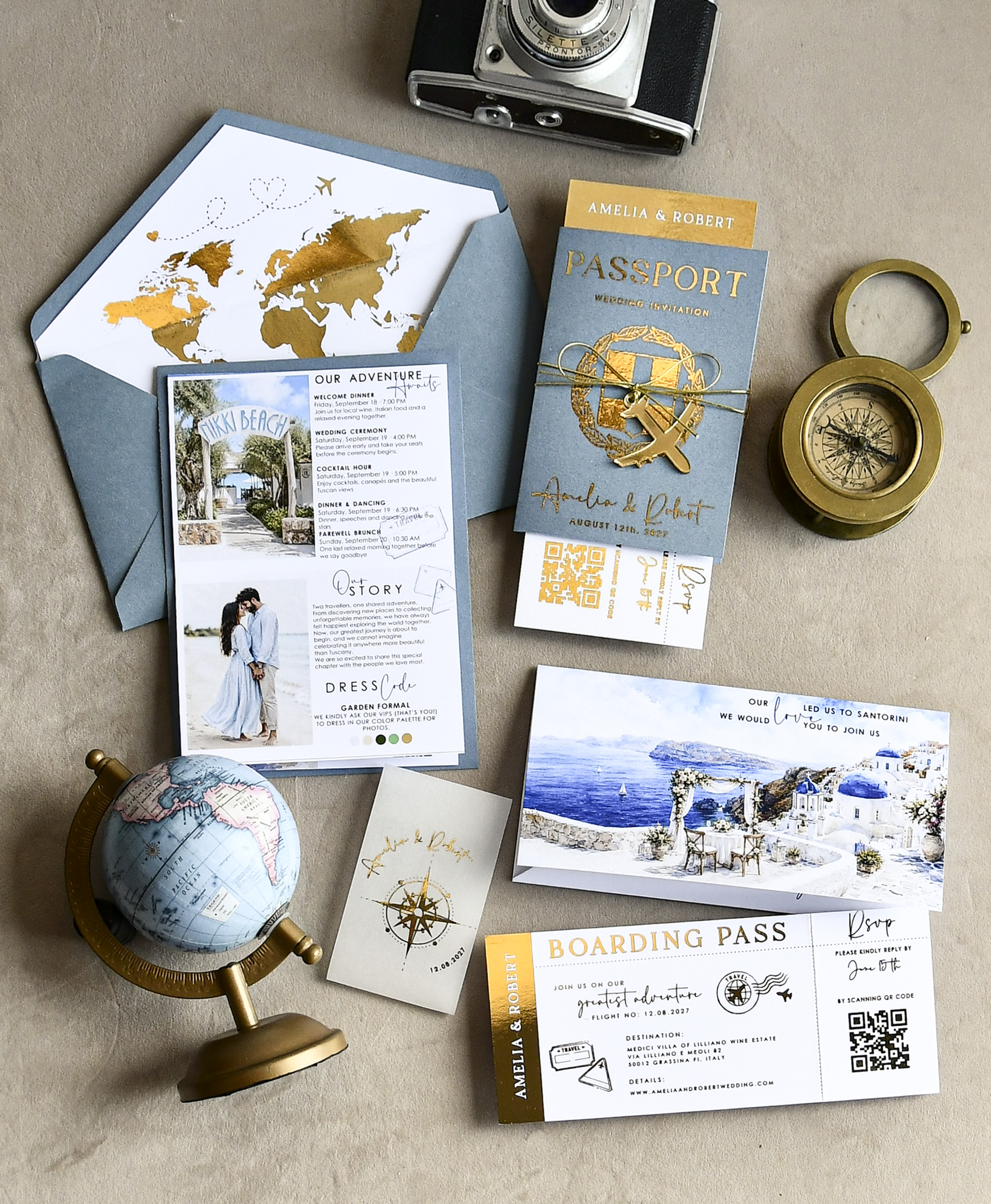
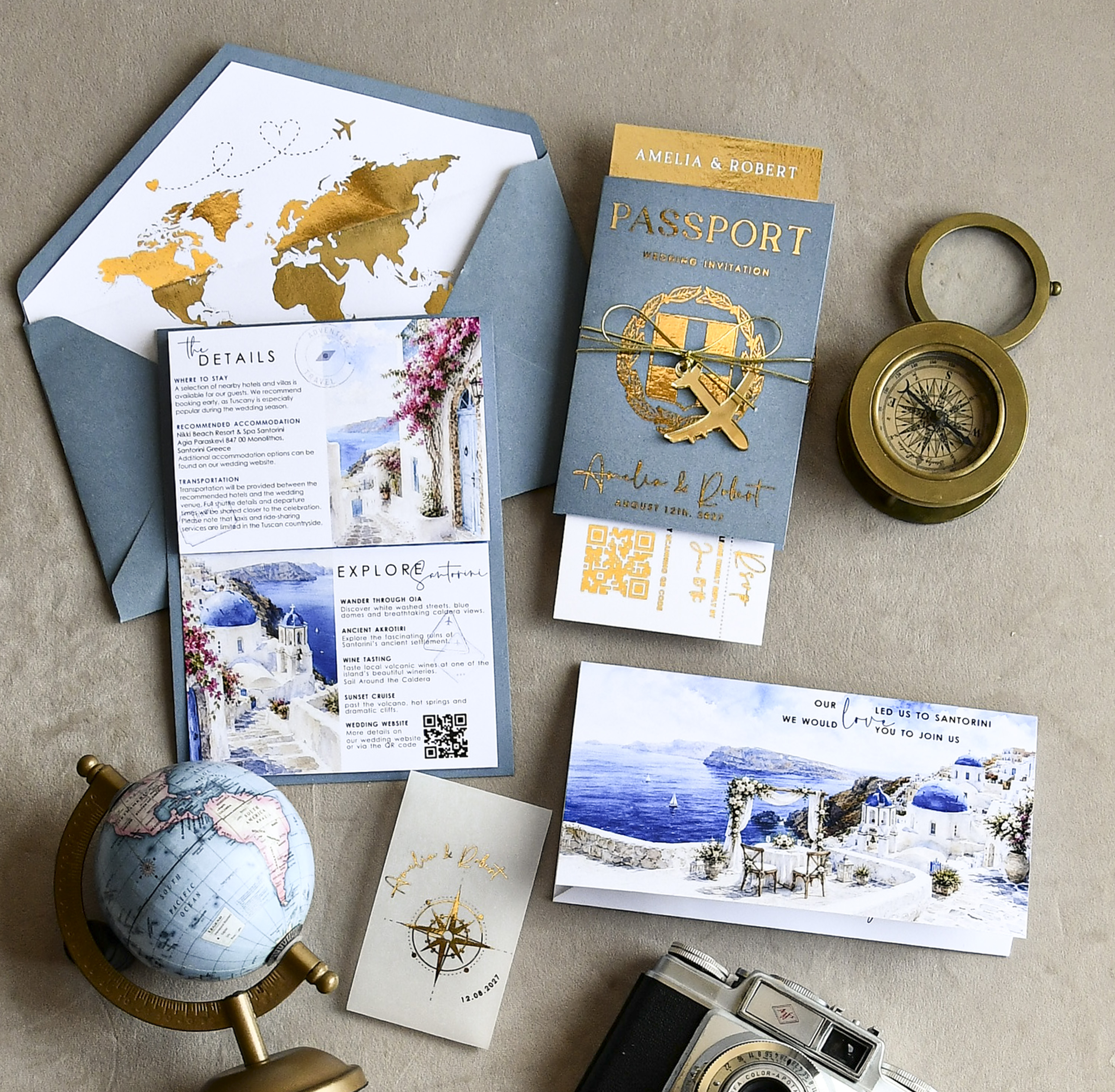
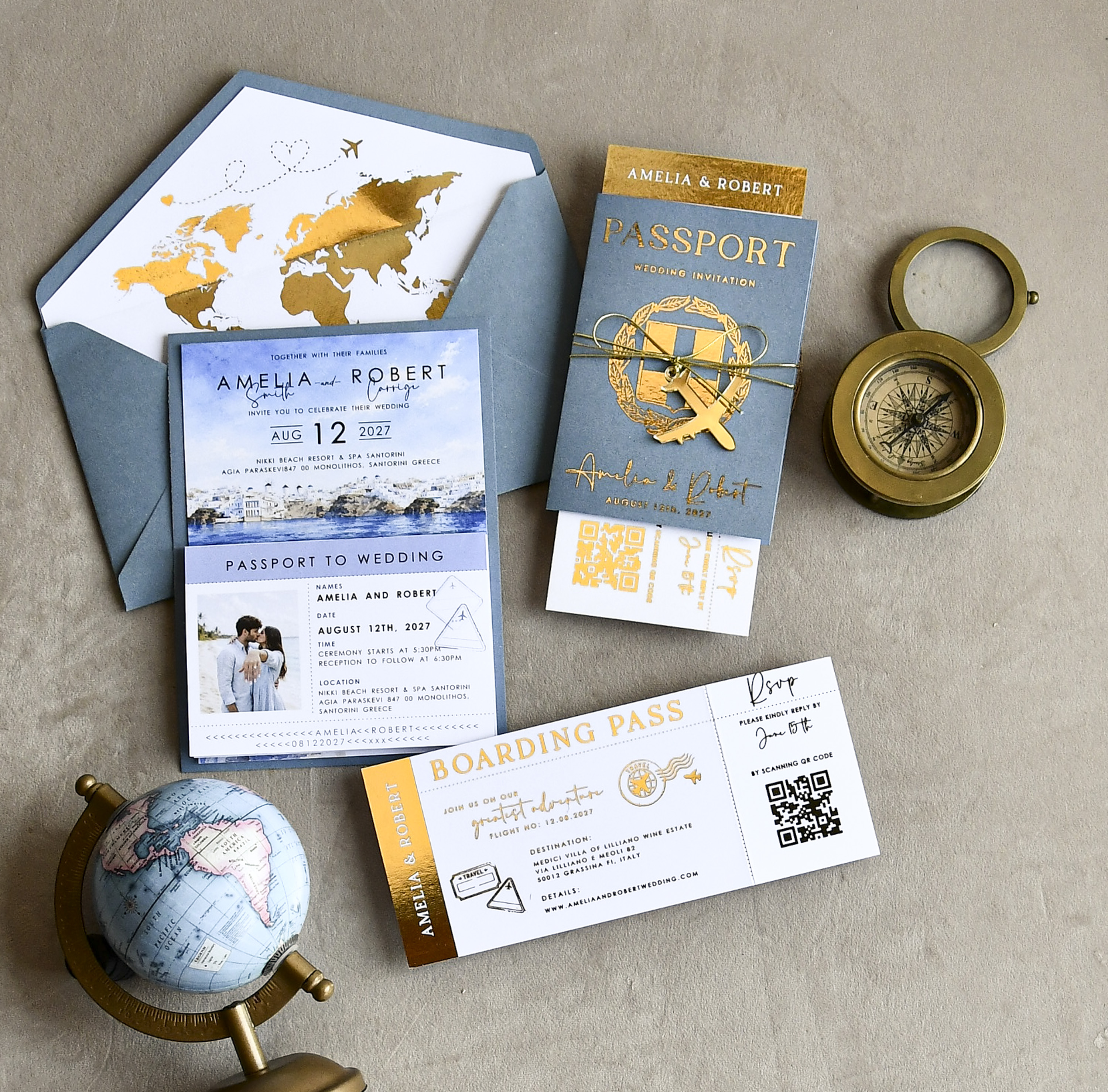
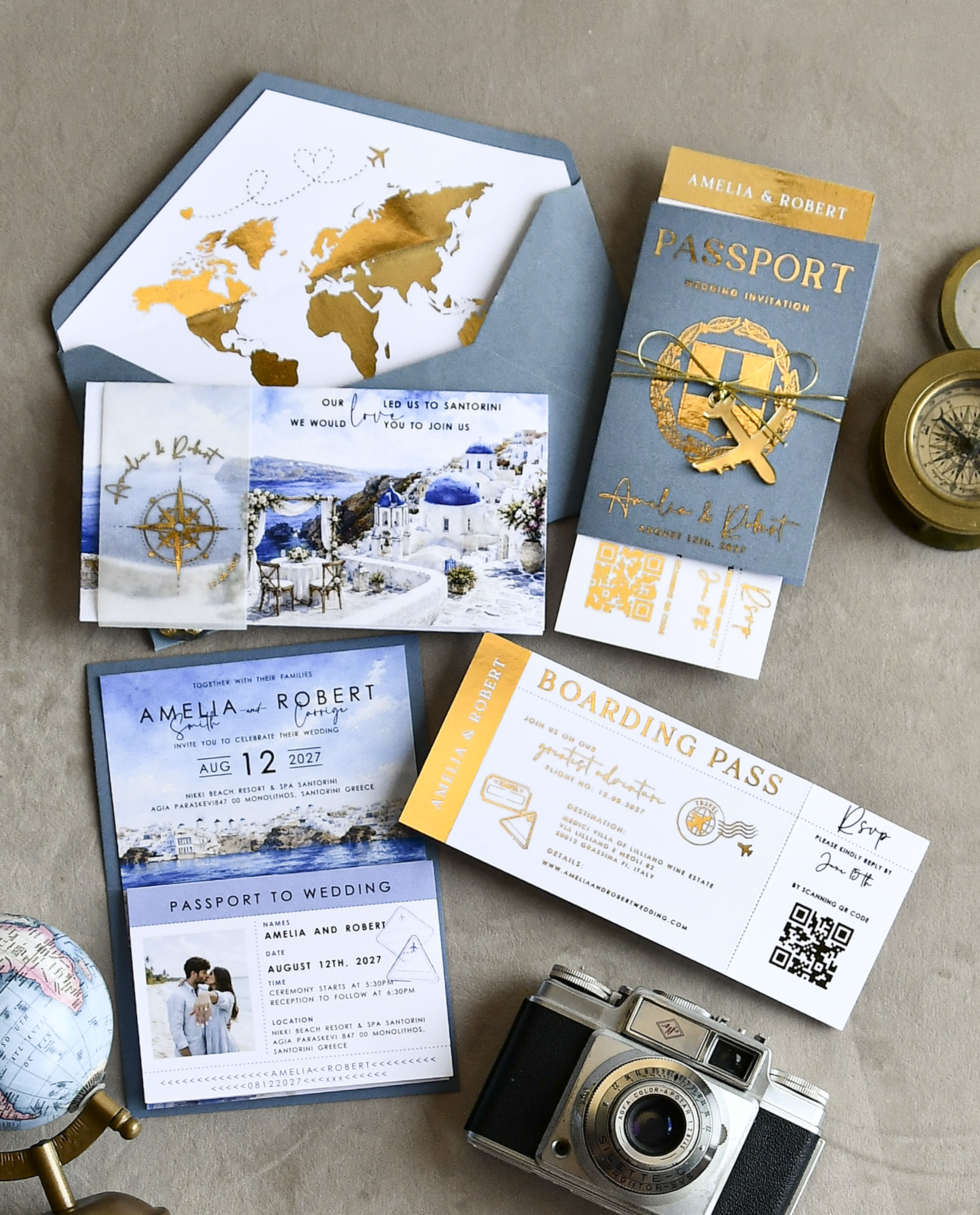
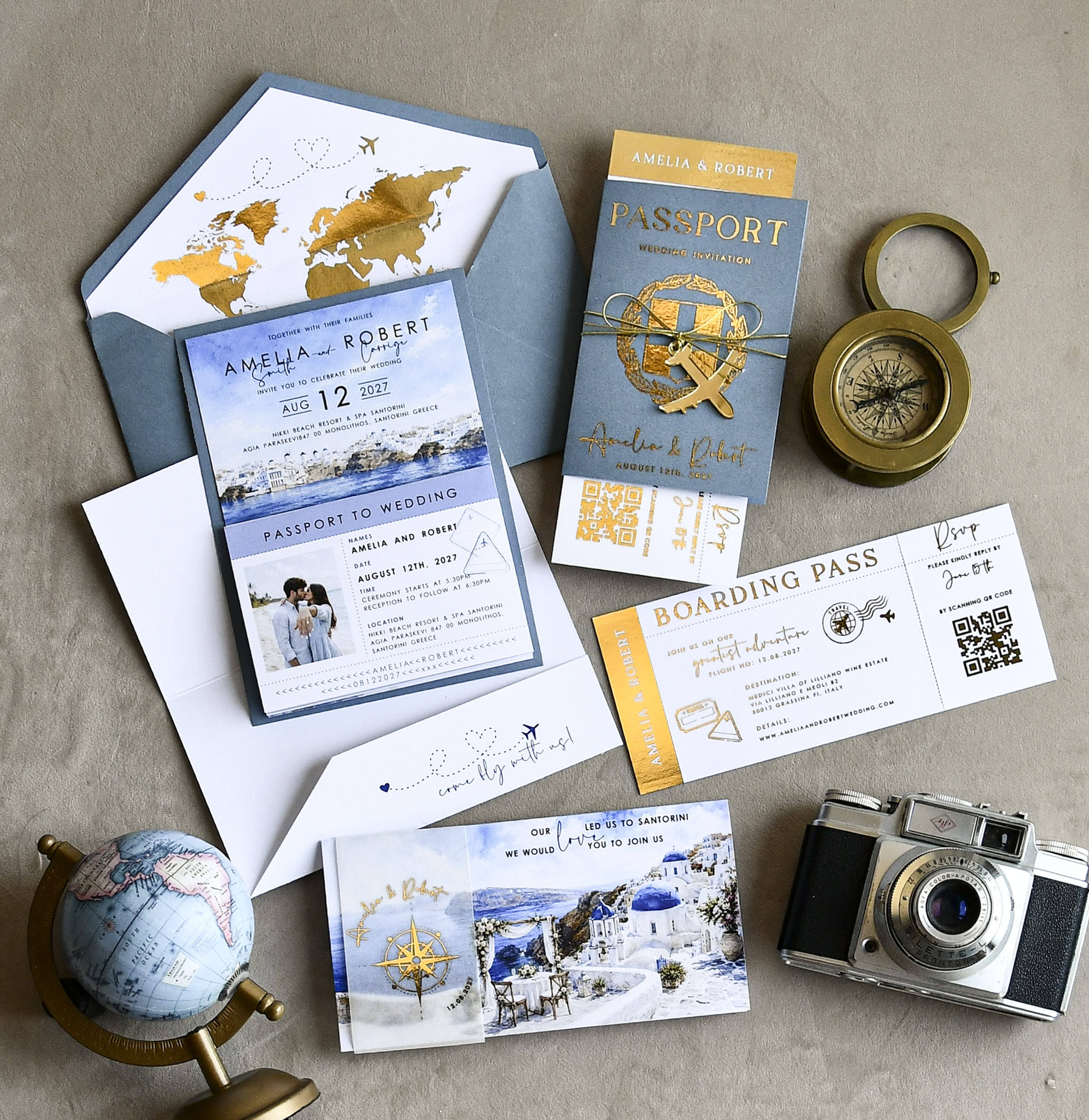
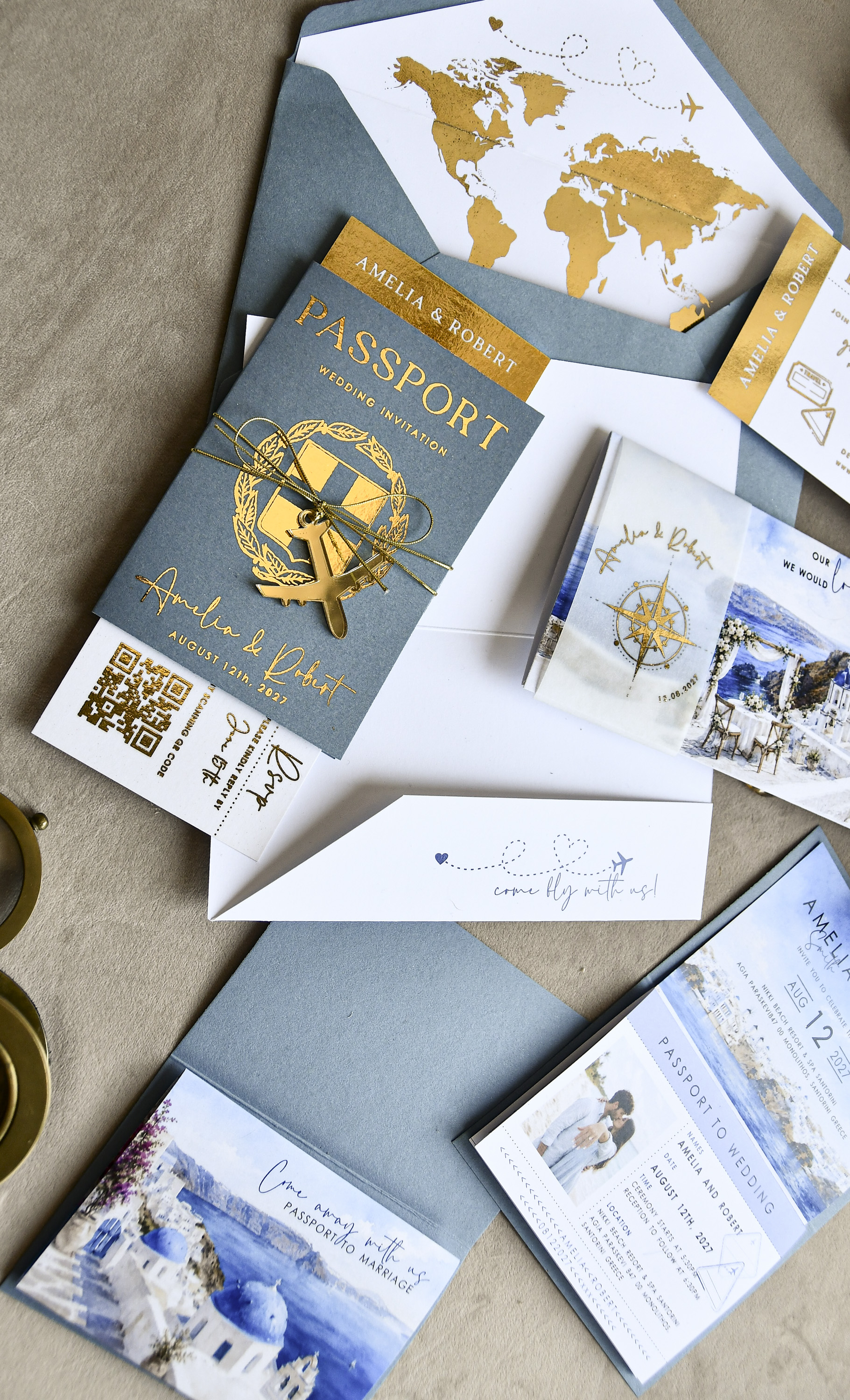
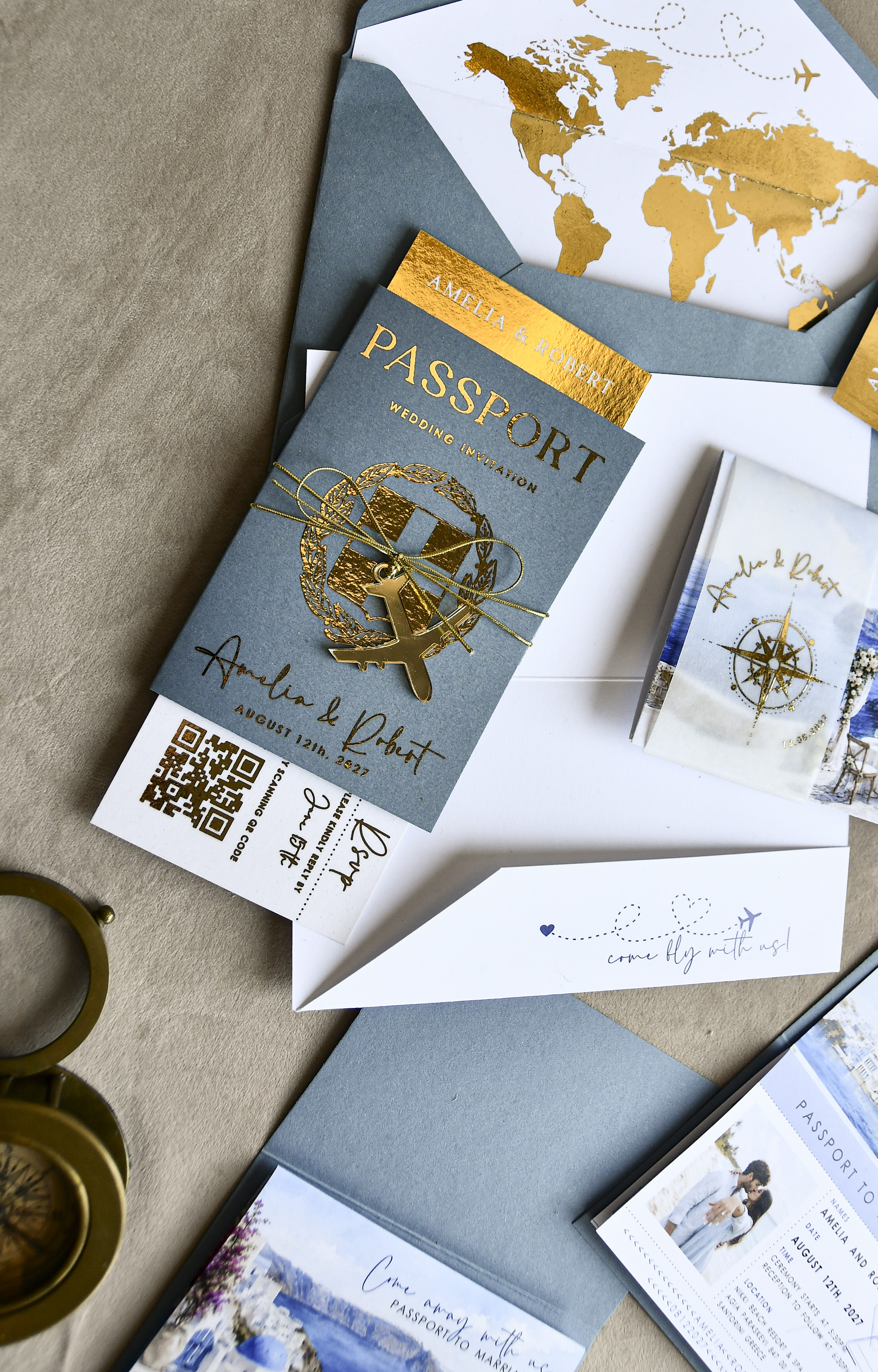
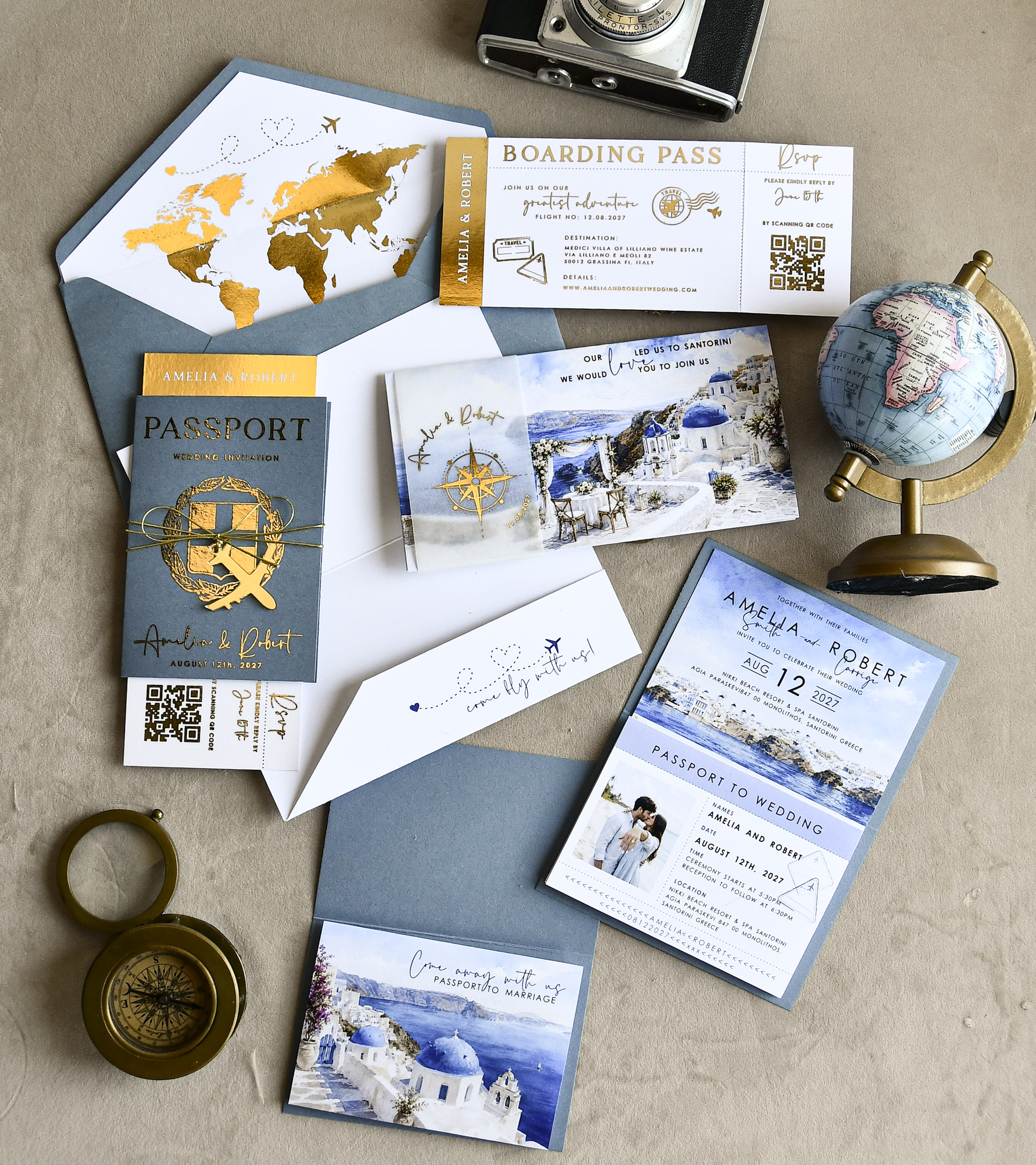
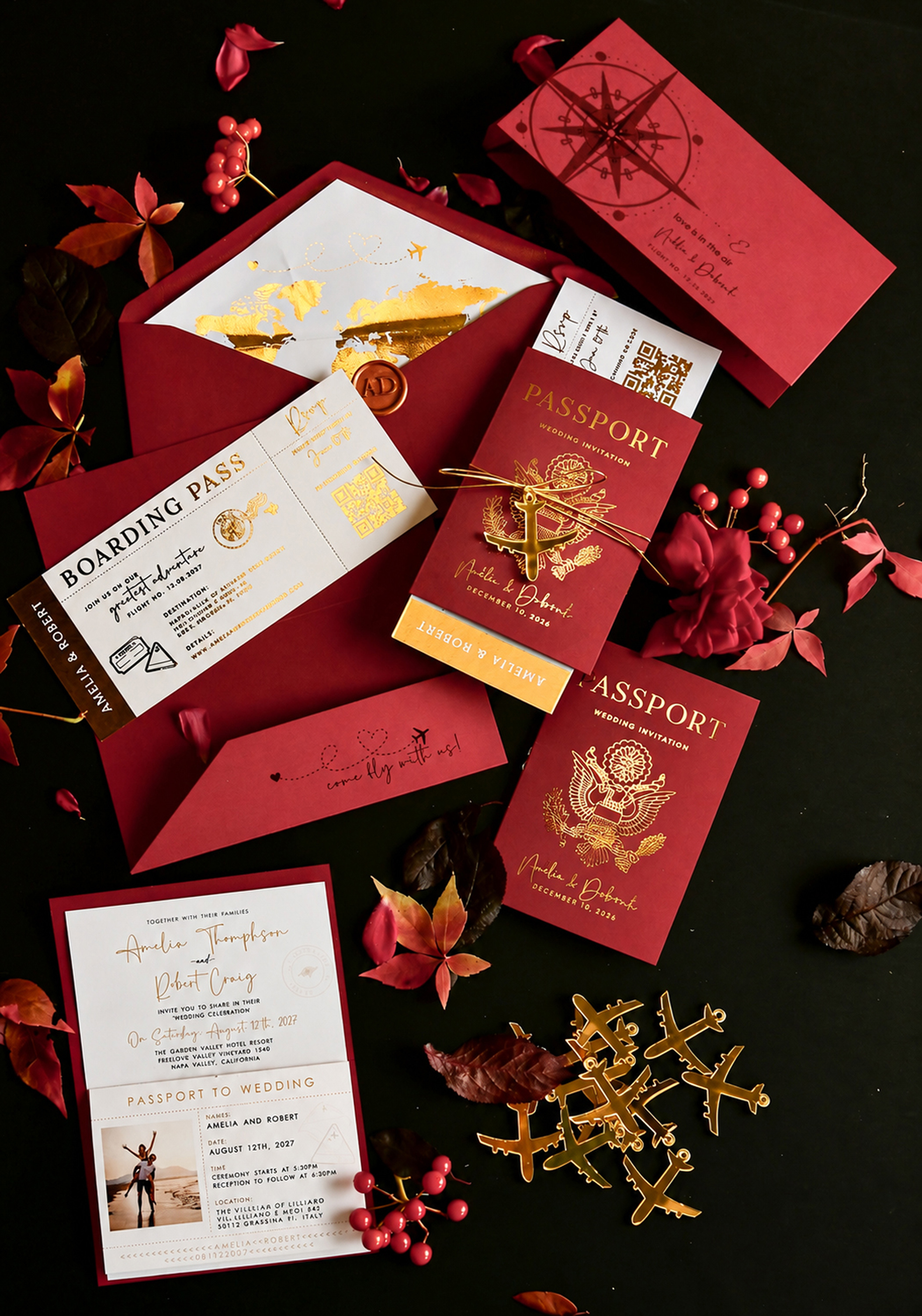
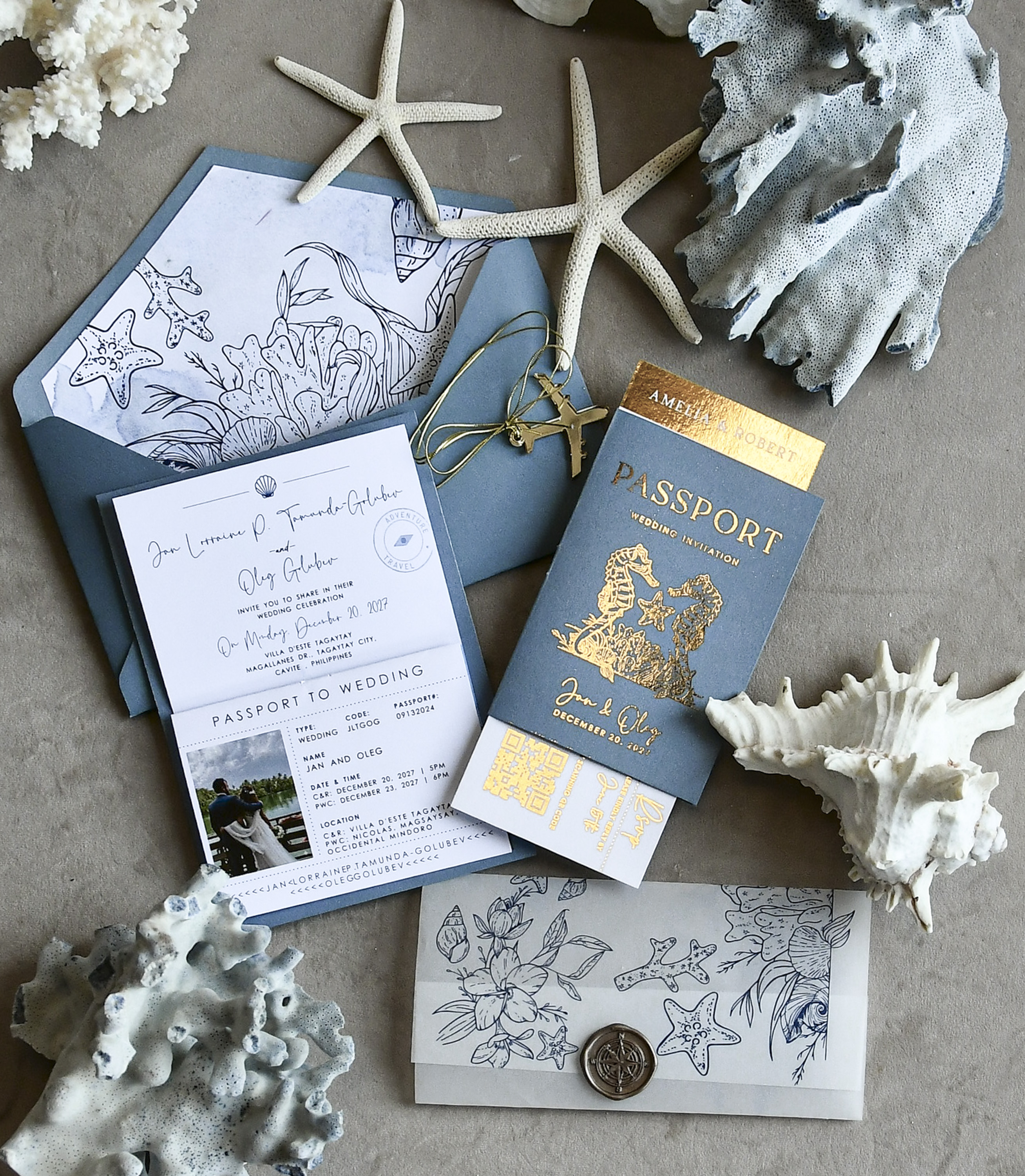
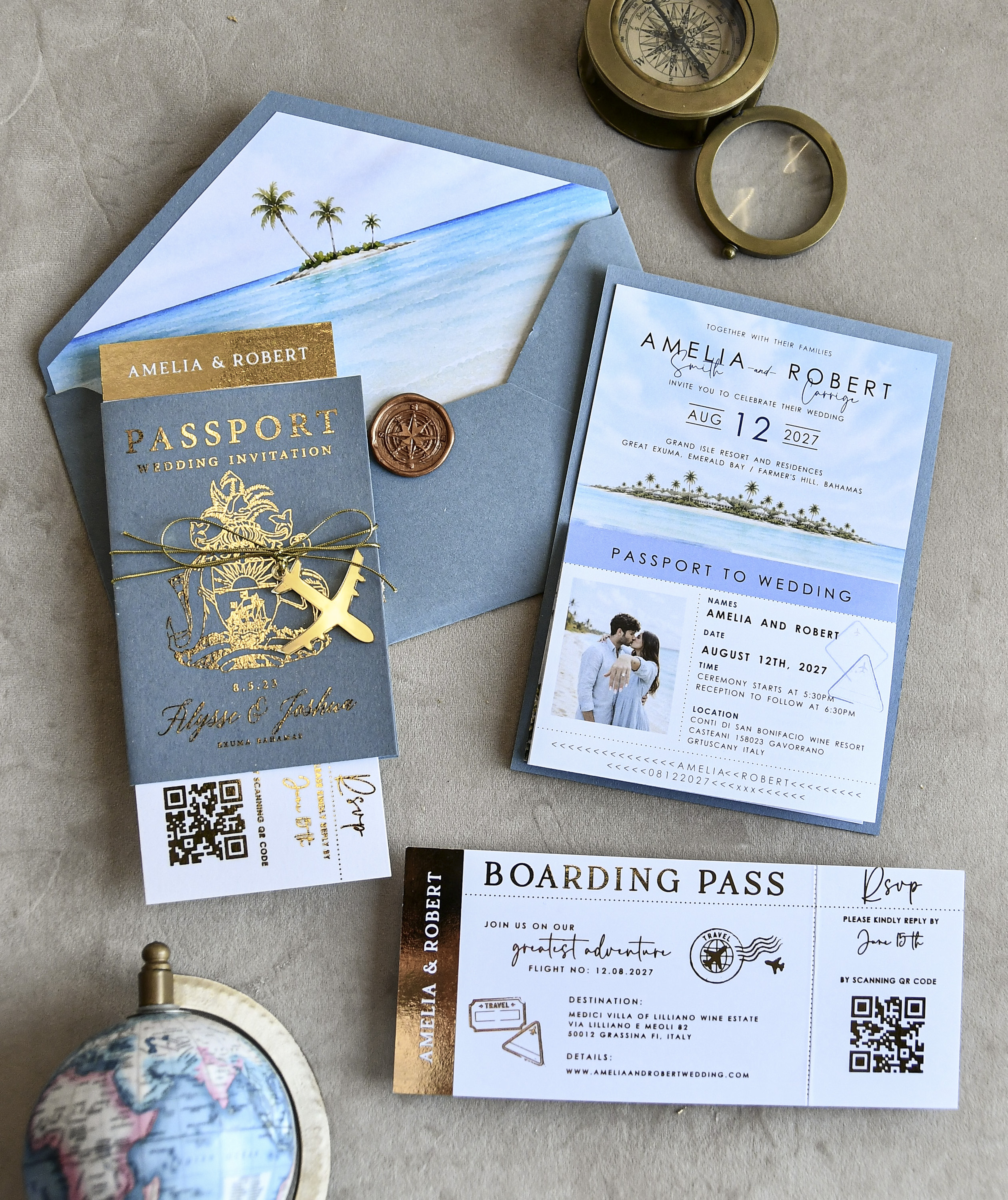
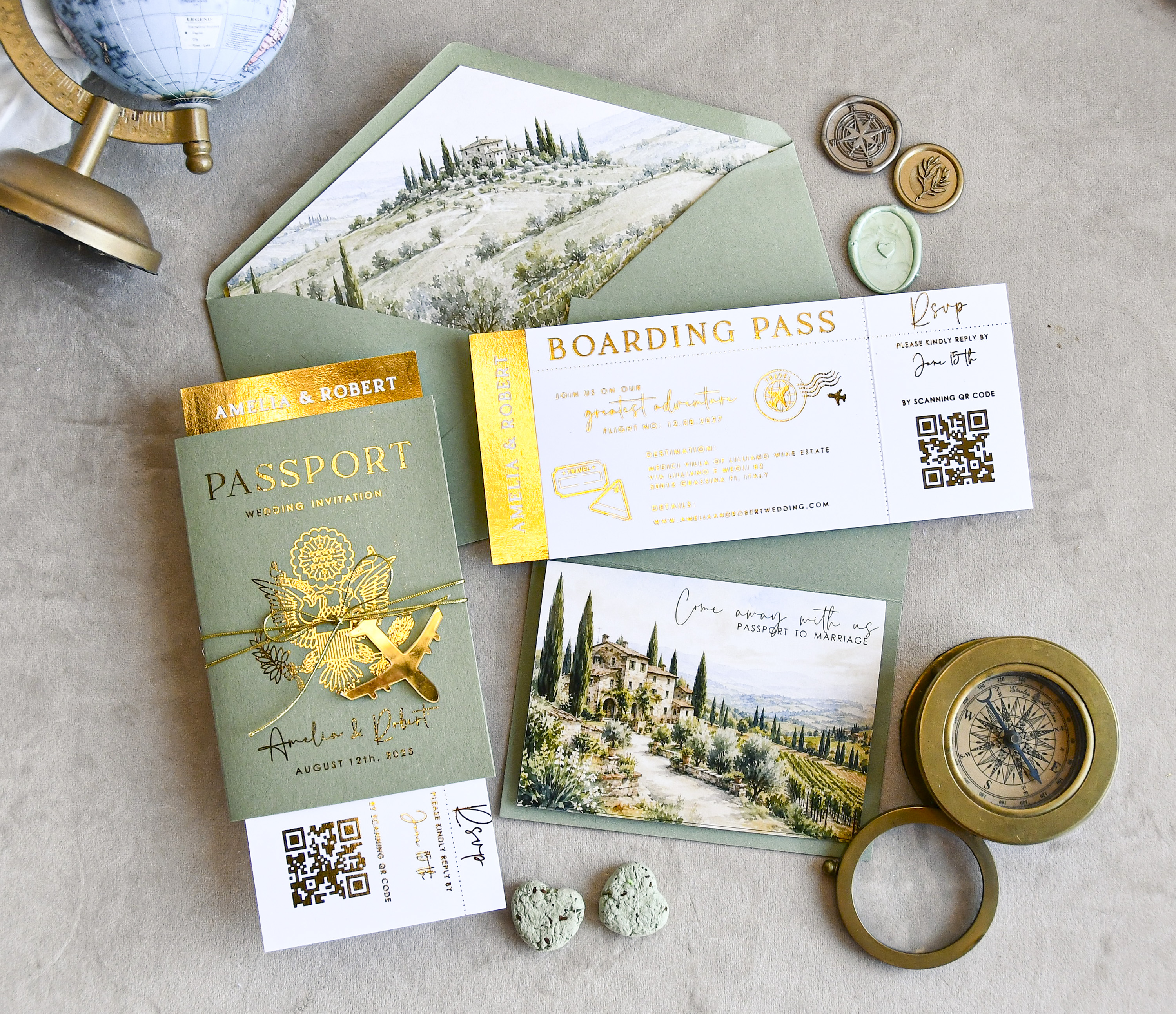
If you're planning a beach or destination wedding, a passport-style invitation suite like the Passport to Love beach wedding invites from Margo&Bees is a beautiful way to bundle all of these details into one cohesive, travel-themed package that gets guests excited from the moment they open the envelope.
Wording, Order, and Etiquette Tips
The traditional order of information on an invitation flows from who is hosting, to who is getting married, to the event details. A simple modern template looks like this:
- Host line or couple's names
- Request line (invite you to celebrate their marriage)
- Date and time
- Venue name and address
- Dress code
- RSVP details or website URL
A few quick etiquette reminders:
- Mail invitations six to eight weeks before the wedding—or ten to twelve weeks for a destination celebration.
- If you're not inviting plus-ones universally, address each envelope specifically to the named guests only. Do not write and guest unless you mean it for that household.
- Proofread everything—names, dates, addresses—at least twice before you approve your final print file. A typo on the venue address is a headache no couple wants.
Putting It All Together
A well-crafted invitation suite typically includes a main invitation card, an RSVP card with a return envelope, and one or two detail cards (for the reception, accommodations, or your wedding website). Together, these pieces give guests a complete picture without overwhelming a single card with text.
Whether you keep it minimal with just the essentials or go all-in with a full suite, the goal is the same: every guest should be able to read your invitation and know exactly where to be, when to be there, and what to wear—without needing to send you a single follow-up text. The Passport to Love beach wedding invites at Margo&Bees are designed with exactly that in mind, offering a customizable suite that covers every detail in a style that feels as special as the destination itself.
Frequently Asked Questions
It's not required, but it's strongly recommended. Without guidance, guests will default to their own judgment, which can lead to everything from jeans to ball gowns at the same ceremony. Even a casual note like <em>Casual beach attire welcome</em> gives people the clarity they appreciate.
If the ceremony and reception are at the same venue with no gap in between, you can include both on the main invitation. If they're at different locations or times, a separate reception card keeps the main invitation clean and easy to read.
Send invitations six to eight weeks before the wedding for a local or regional event. For destination weddings, mail them ten to twelve weeks in advance so guests have enough time to book travel and accommodations.
Traditional etiquette advises against listing registry details directly on the invitation, as it can appear gift-focused. Instead, include your registry on your wedding website and spread the word through your wedding party and family.
The clearest method is to address envelopes only to the adults you're inviting and include a brief note on your details card, such as <em>We kindly request an adults-only evening.</em> Avoid relying on guests to infer the policy from the envelope addressing alone.
Yes, always include the full street address. Out-of-town guests, rideshare apps, and GPS navigation all need a complete address to get guests there without confusion. It takes up minimal space and saves everyone a lot of trouble.
See This Design Up Close




You May Also Like
More Wedding Planning Guides
- → Plus One Etiquette: Exactly Who Makes the Cut at Your Wedding
- → How to Navigate a Wedding When Your Divorced Parents Are at War
- → Inviting Guests to the Ceremony But Not the Reception: What You Need to Know
- → The Case for a Small Wedding: Everything You Need to Know
- → When to Send Wedding Invitations: A Complete Timeline Guide
- → Who Gets Cut First When Your Guest List Is Too Long?
- → Wedding Invitation Addressing: Etiquette Rules Every Couple Should Know
- → Do You Have to Invite Your Future In-Laws' Friends to Your Wedding?
- → Coworkers and the Wedding Guest List: How to Decide Who Gets an Invite
- → Yes, Guests Can RSVP Online — Here's How to Make It Work Beautifully
- → More Guests or a More Memorable Wedding? How to Choose What's Right for You
- → Inviting Your Ex to Your Wedding: A Practical Guide to Making the Right Call
- → Do You Have to Invite Your Cousins to Your Wedding?
- → How to Figure Out the Right Number of Wedding Invitations to Order
- → Should You Invite an Estranged Sibling to Your Wedding?
- → Going Digital: Everything You Need to Know About Sending Online Wedding Invitations
- → No-Shows After a Yes RSVP: How to Handle It Gracefully
- → Navigating the 'Them or Me' Wedding Guest Ultimatum
- → When Parents Want to Add Friends to the Guest List: A Practical Guide
- → No Kids at Your Wedding: Navigating the Etiquette With Confidence
- → How to Defuse Family Arguments Without Losing Your Mind Before the Wedding
- → Uninvited Plus-Ones and Tag-Alongs: How to Keep Your Guest List Intact
- → When Family Feuds Threaten Your Wedding Plans: A Practical Peacekeeper's Guide
- → Inviting an Estranged Brother or Sister: Finding Clarity Before You Seal the Envelope
- → Cousins, Invites, and Hard Choices: A Practical Guest List Guide