
Wedding Invitation Wording: Every Essential Detail Couples Need to Include
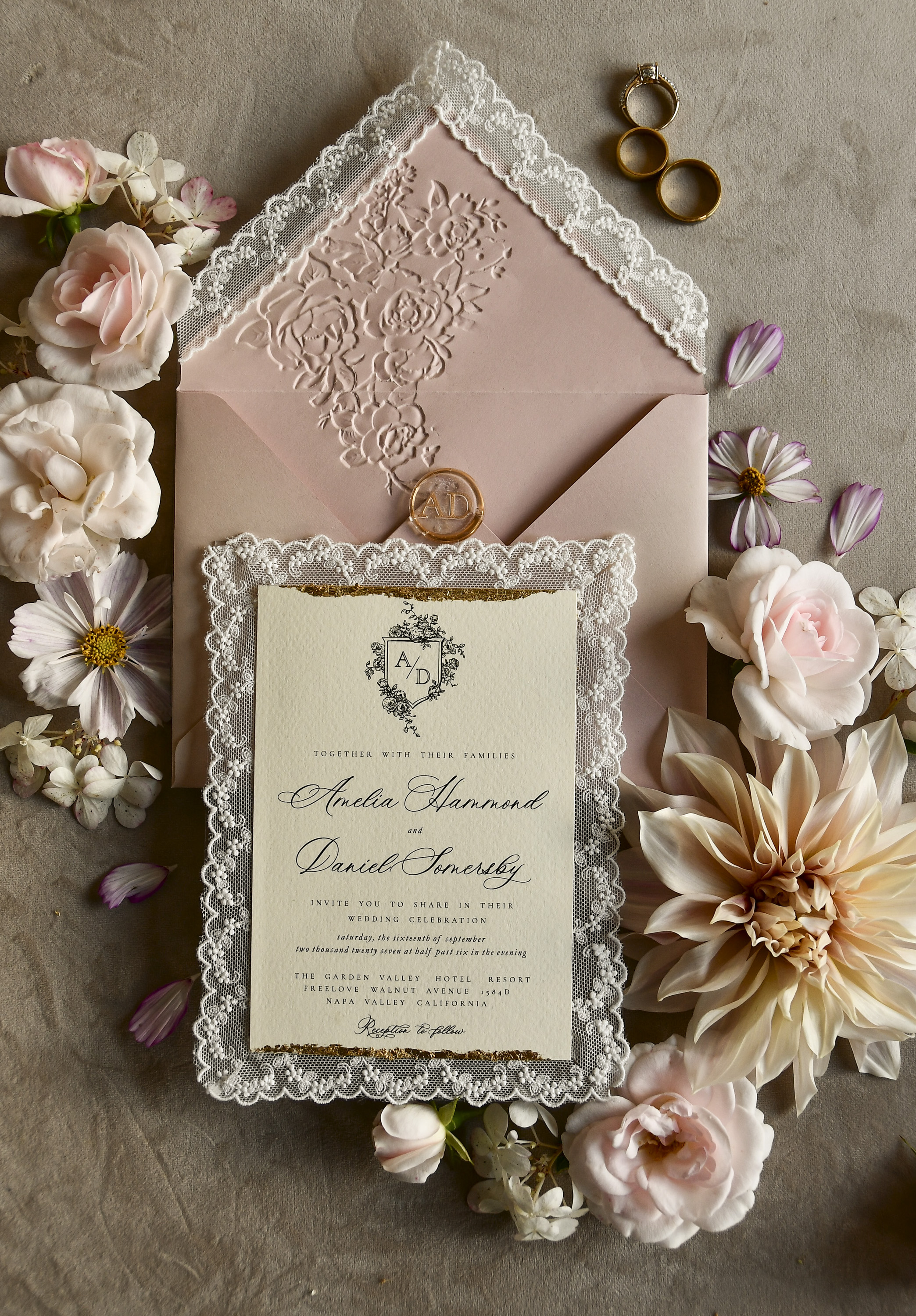
Your wedding invitation does more than announce a celebration—it sets the tone, communicates logistics, and gives guests everything they need to show up on the right day, at the right place, in the right attire. Getting the wording right feels daunting at first, but once you know the essential elements, it all comes together beautifully. Here is a clear, practical breakdown of every piece of information your invitation should include.
The Non-Negotiable Basics: Names, Date, Time, and Venue
Every wedding invitation must clearly state five core details. Miss any one of them and your guests will be scrambling to text you for answers.
- The couple's names: Traditionally, the bride's name appears first, but modern couples list names in whatever order feels right. Use full names for a formal feel or first names only for a casual vibe.
- The date: Spell out the full date for formal invitations—Saturday, the fourteenth of June, two thousand and twenty-six—or write it numerically for a modern look: June 14, 2026.
- The ceremony start time: Be specific. If your ceremony begins at 4:00 p.m., say so. Some couples add a guest arrival time (e.g., Guests are kindly asked to be seated by 3:45 p.m.) to prevent late arrivals from disrupting the processional.
- The ceremony venue name and full address: Include the street address, city, and state. Even if the venue is well known locally, out-of-town guests need the full details for GPS navigation.
Host Lines and Request Wording
The host line names who is issuing the invitation—traditionally the bride's parents, but today it may be both sets of parents, the couple themselves, or a combination. Here are common examples:
- Mr. and Mrs. Thomas Reyes request the honor of your presence… (formal, parents hosting)
- Together with their families, Sofia Reyes and James Park invite you… (couple and families co-hosting)
- You are joyfully invited to celebrate the marriage of… (couple hosting, no parents listed)
The phrase "request the honor of your presence" is traditionally reserved for religious ceremonies, while "request the pleasure of your company" suits secular venues. Either is perfectly acceptable today, so choose whichever matches your tone.
Reception Details, Dress Code, and the Wedding Website
If your ceremony and reception are at the same location, a simple line at the bottom—Reception to follow—is all you need. If the reception is at a different venue, include that address and the start time on a separate enclosure card rather than crowding the main invitation.
Dress code is one of the most commonly forgotten details, yet guests genuinely appreciate the guidance. Include it in the lower corner of the invitation or on a details card:
- Black tie
- Cocktail attire
- Garden party attire
- Casual / Festive
Your wedding website URL belongs on a separate details card or information card—not on the main invitation itself, according to traditional etiquette. However, many modern couples include it directly on the invite for convenience, and that is completely fine. The website is where guests can find hotel blocks, registry links, and FAQs.
RSVP Instructions and Deadline
Without clear RSVP instructions, you will spend weeks chasing down headcounts. Your invitation suite should include either a separate RSVP card with a prepaid return envelope or a clear reference to your online RSVP page. Either way, always include:
- The RSVP deadline: Set it two to three weeks before your caterer's final headcount deadline—typically three to four weeks before the wedding date.
- How to respond: Mail the enclosed card, visit your website, or both.
- Meal choice lines (if applicable): List entrée options so guests can select their preference when they RSVP.
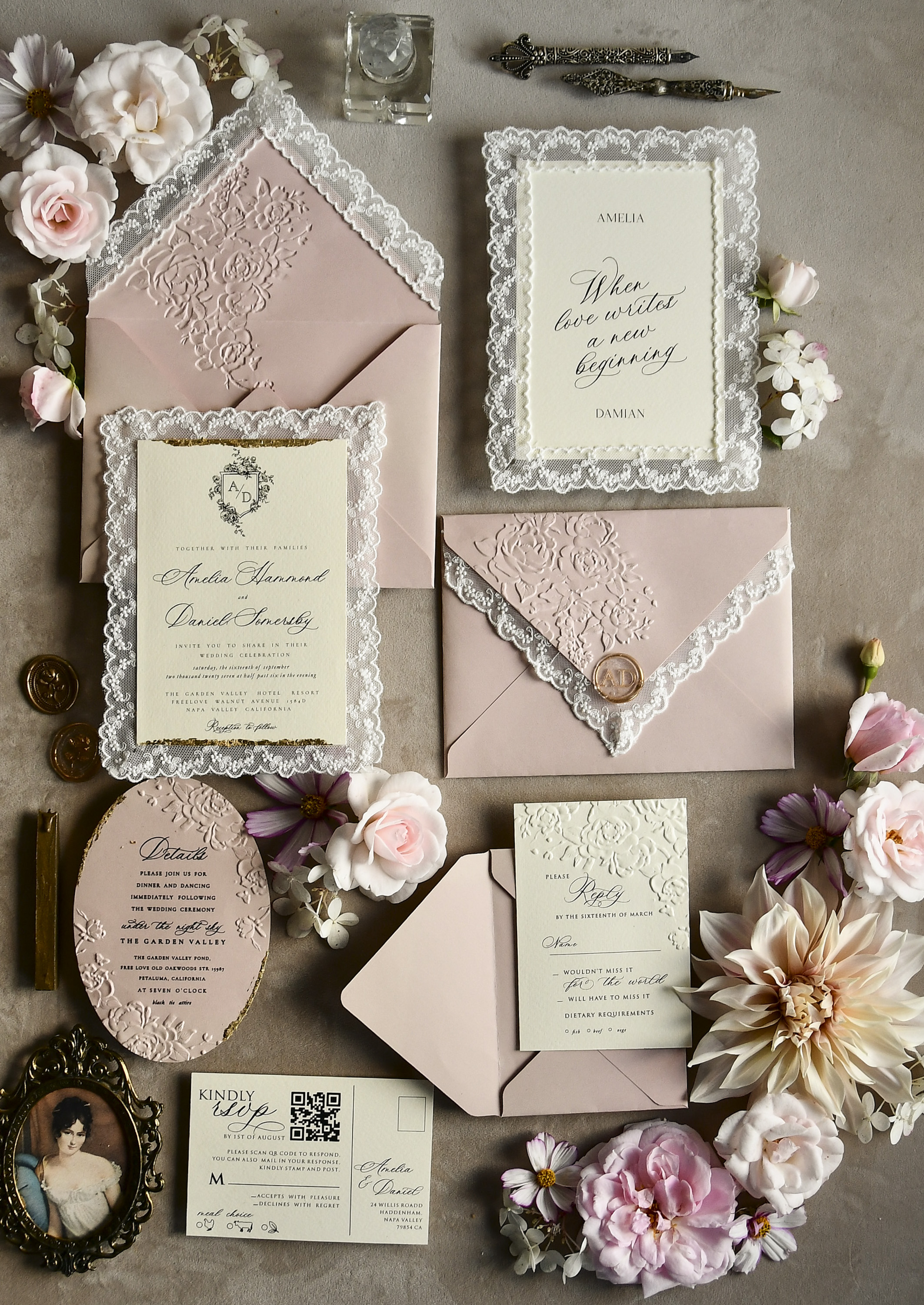
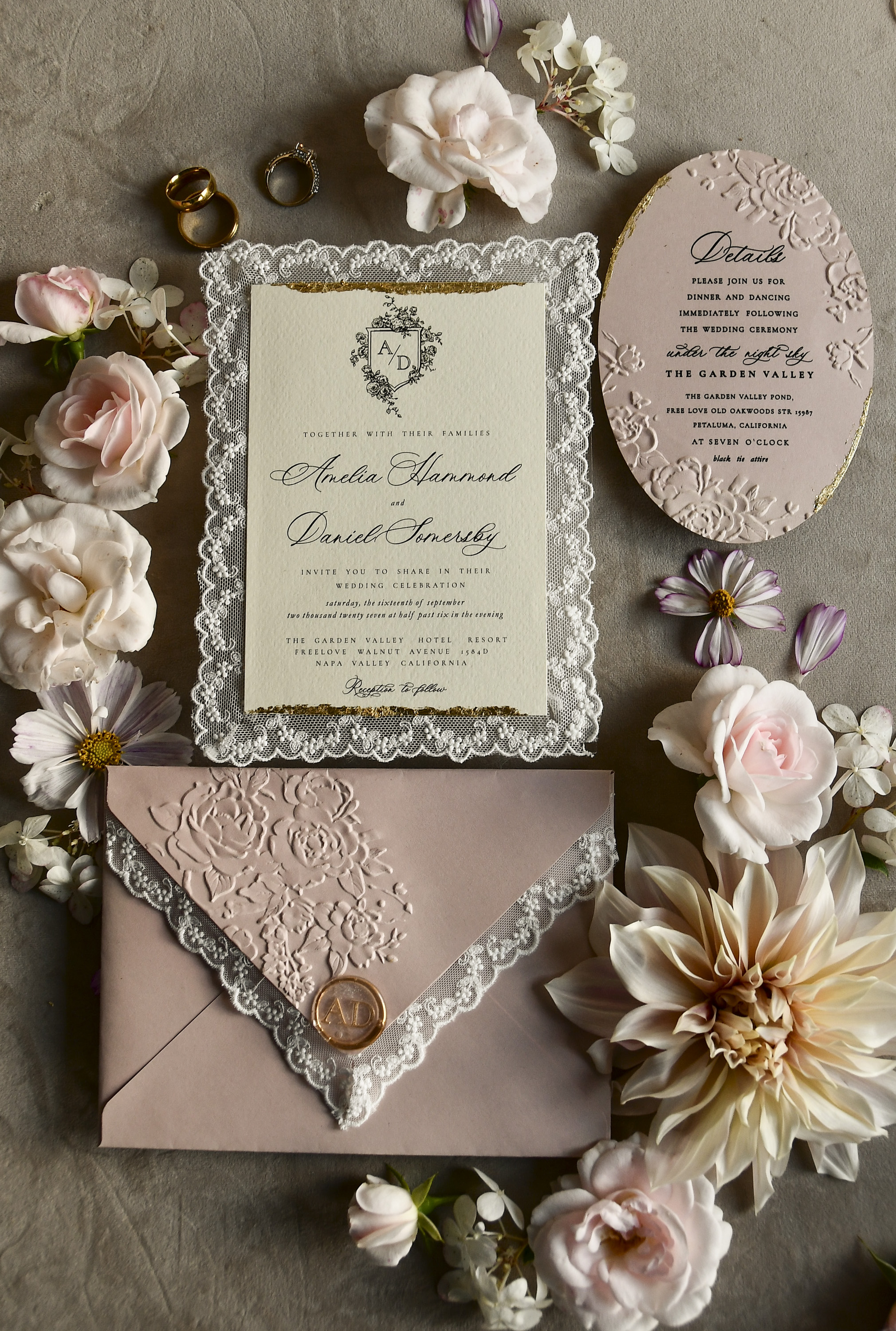
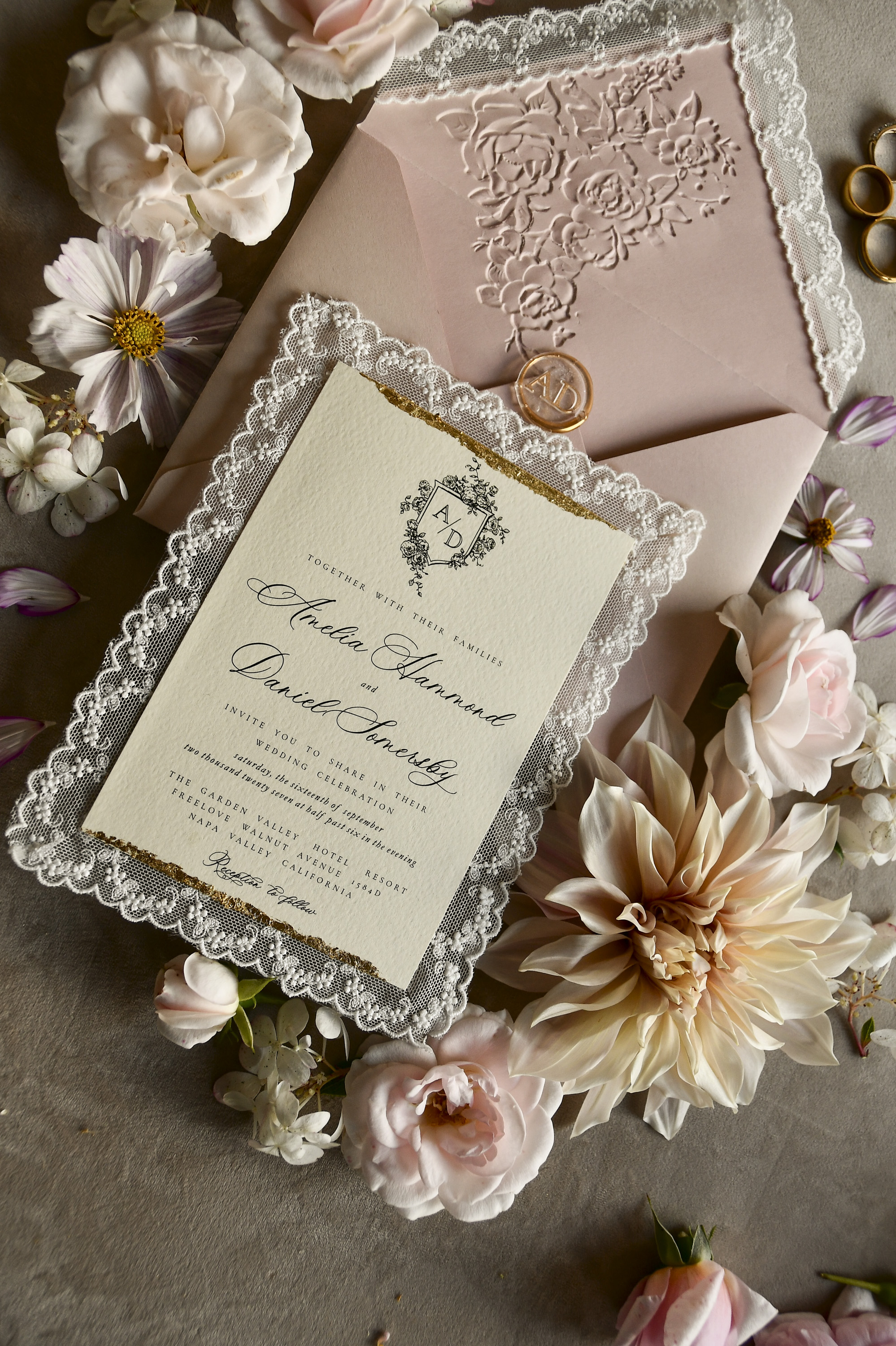
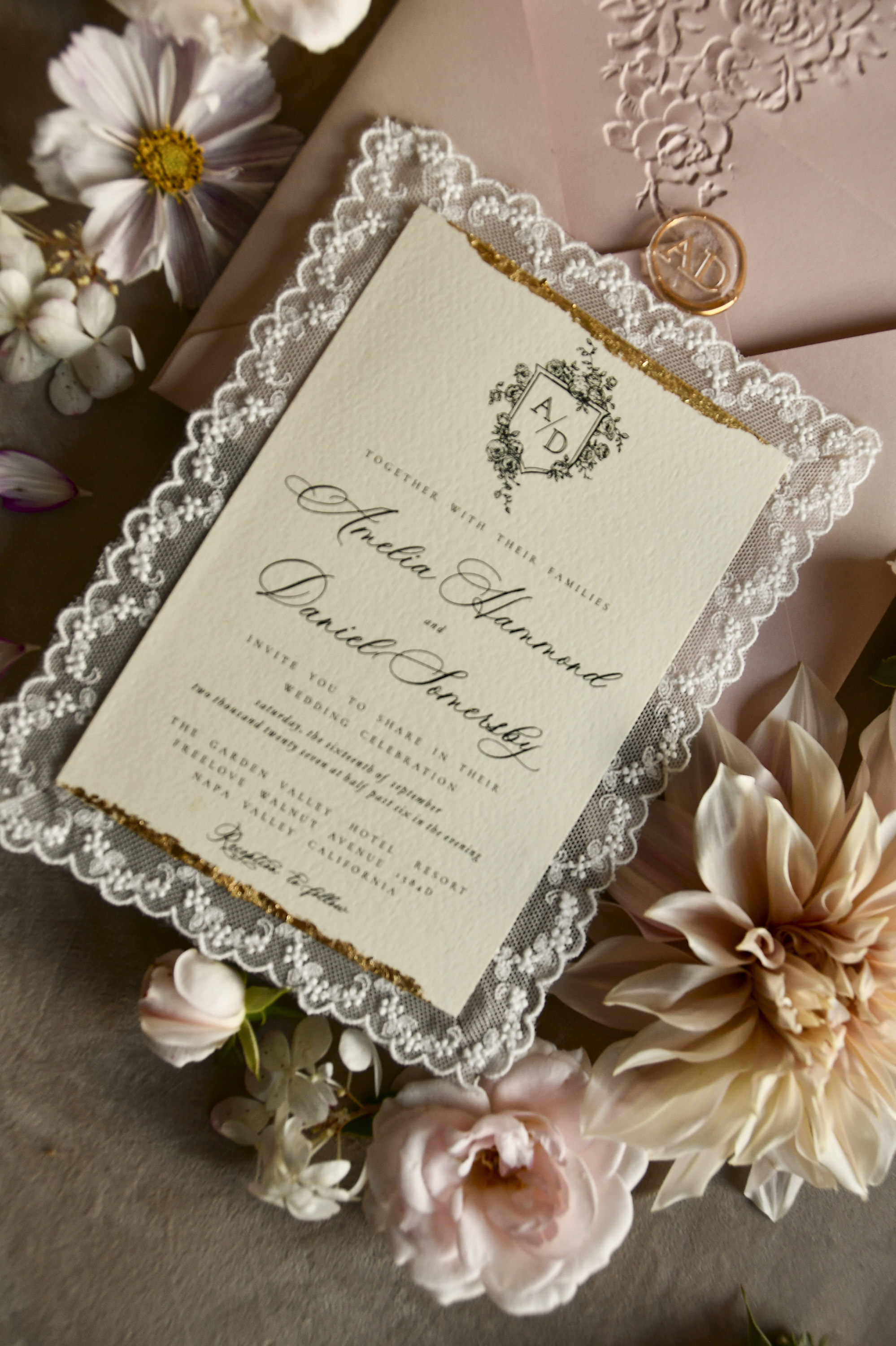
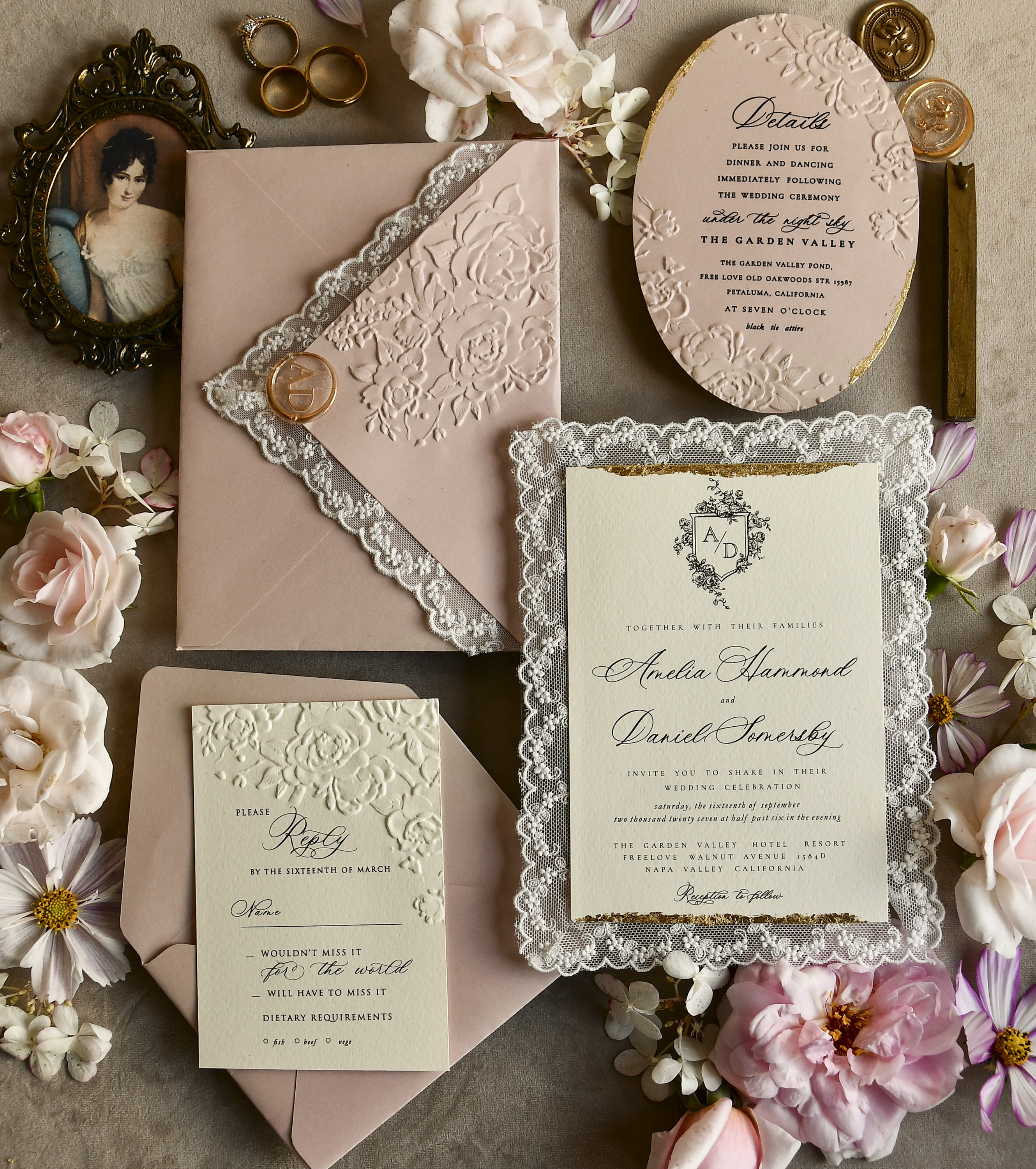
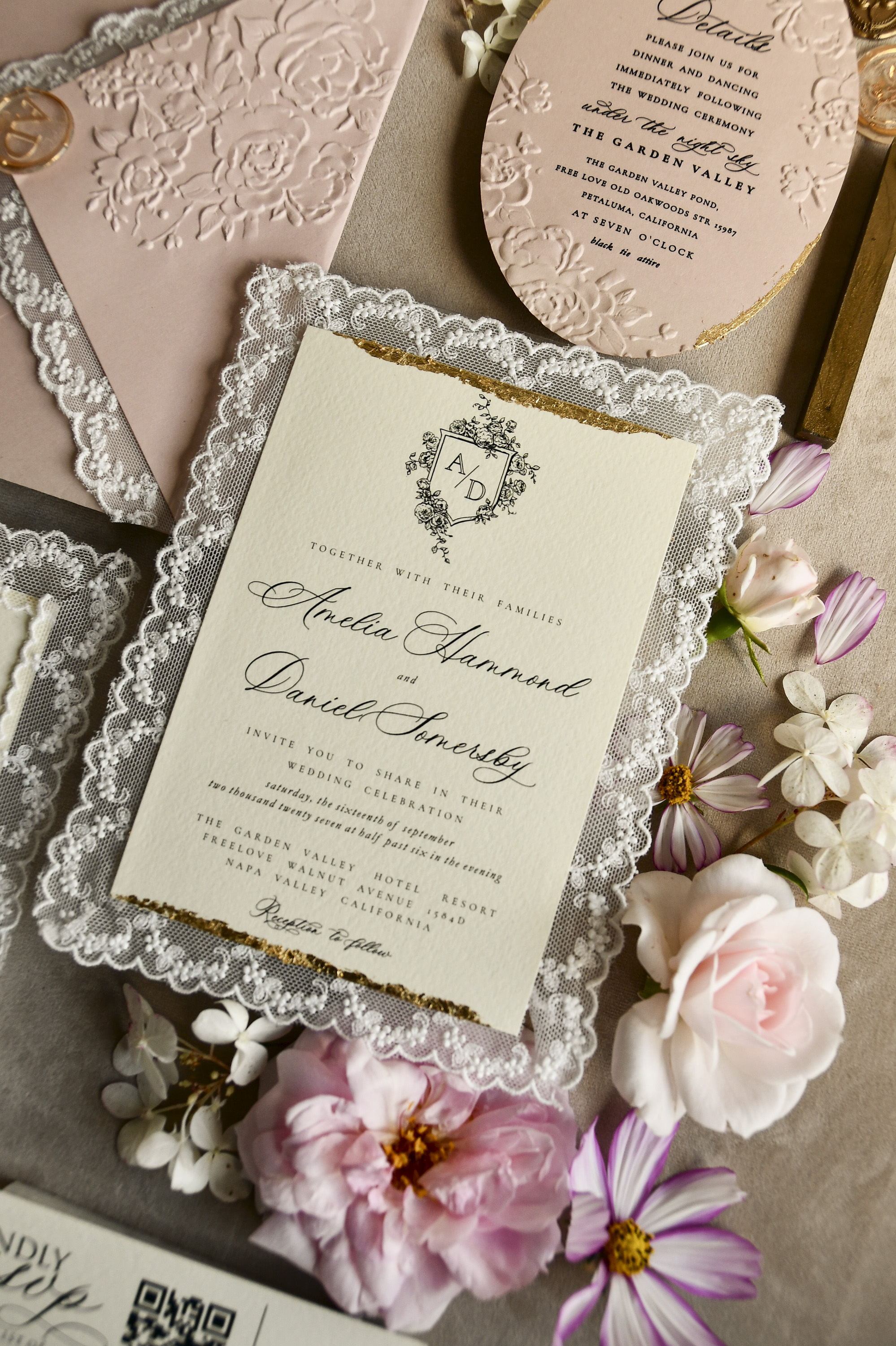
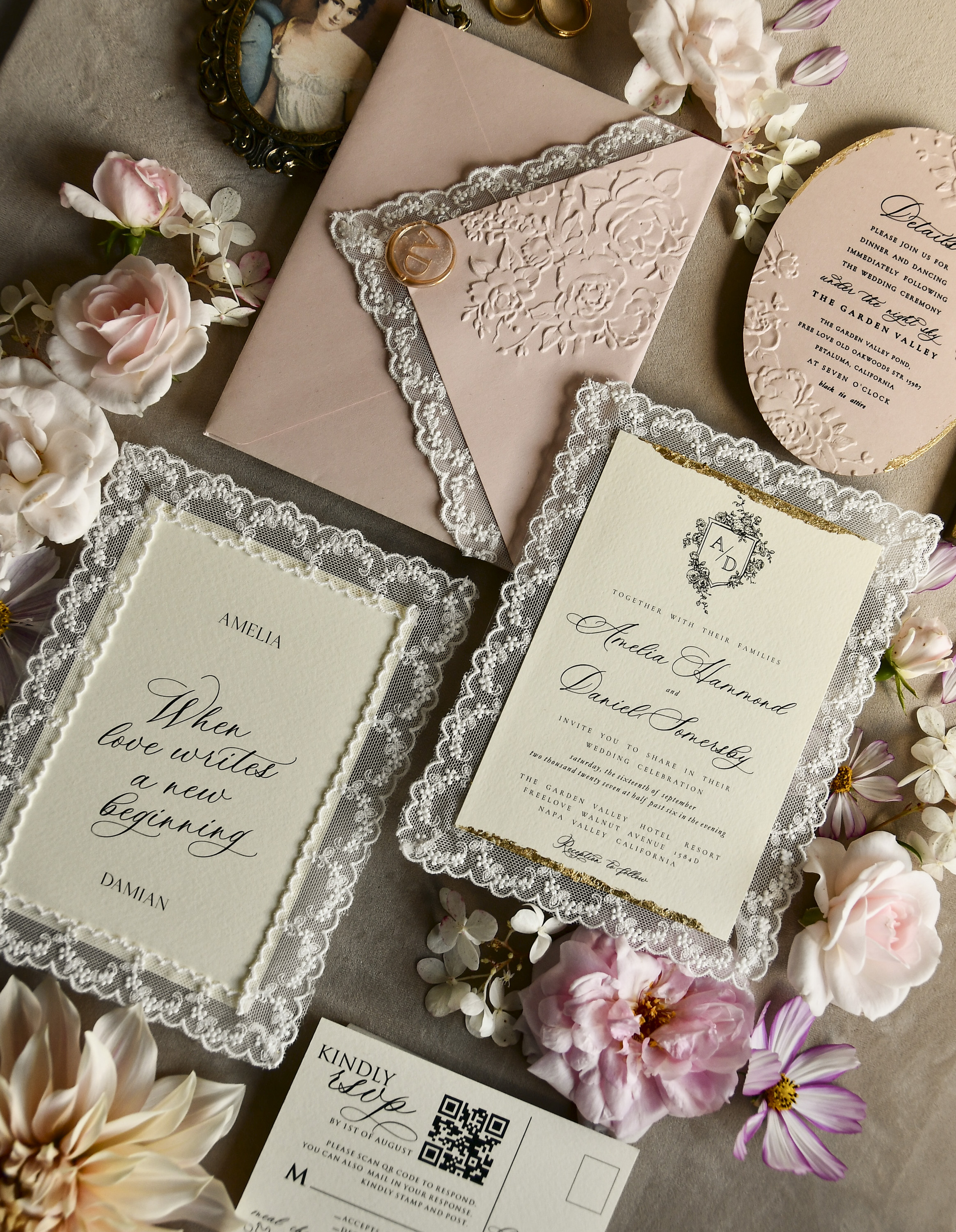
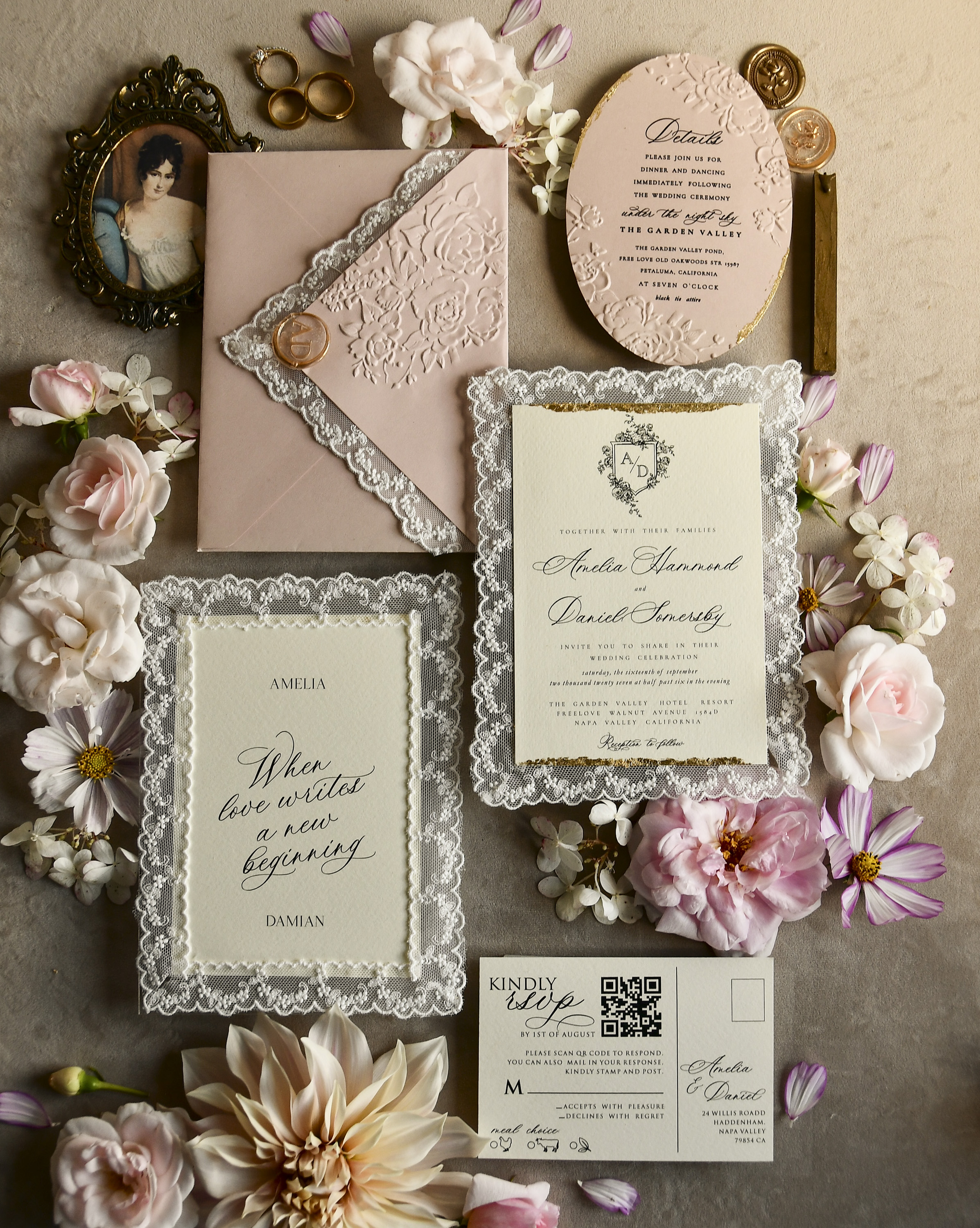
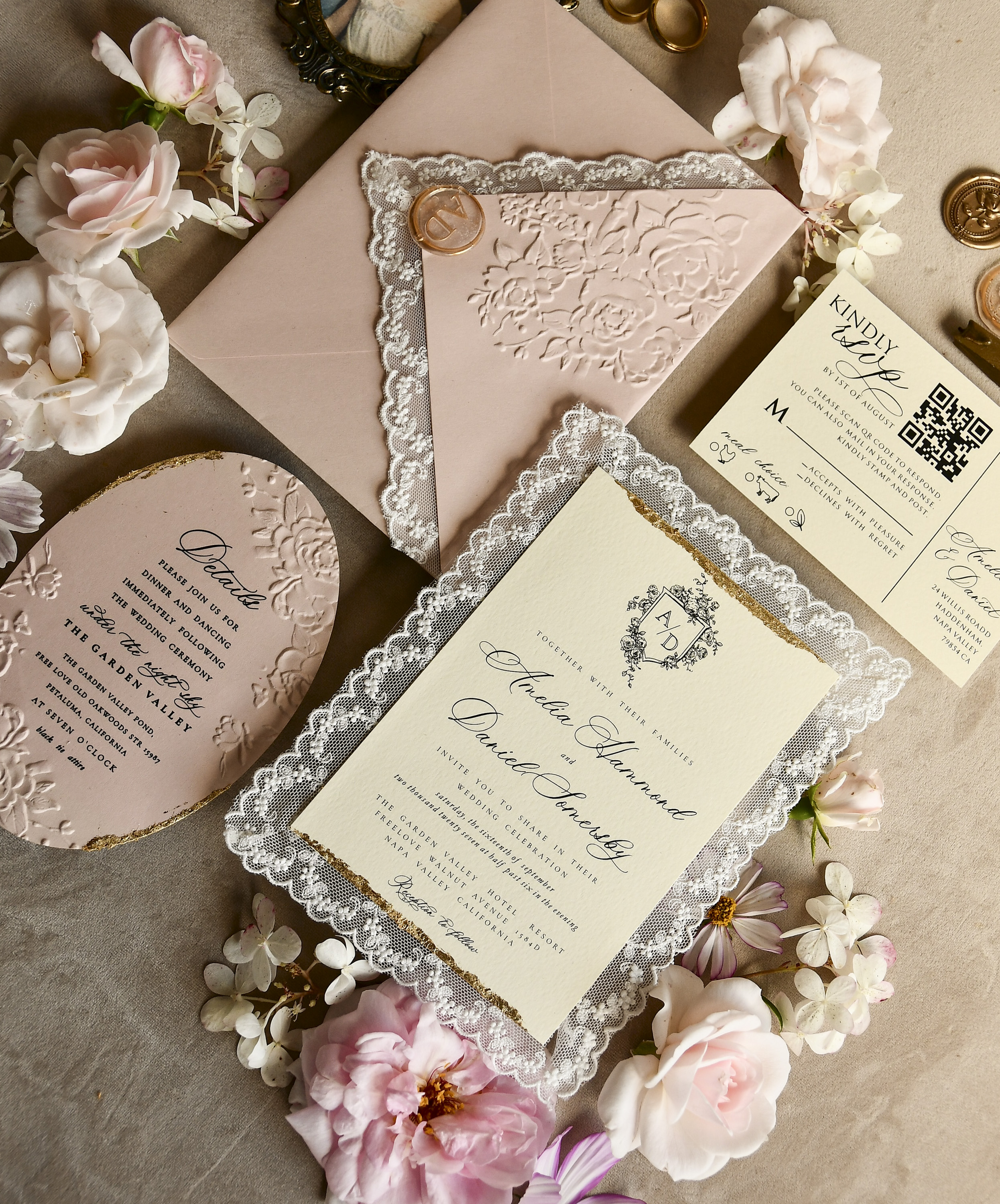
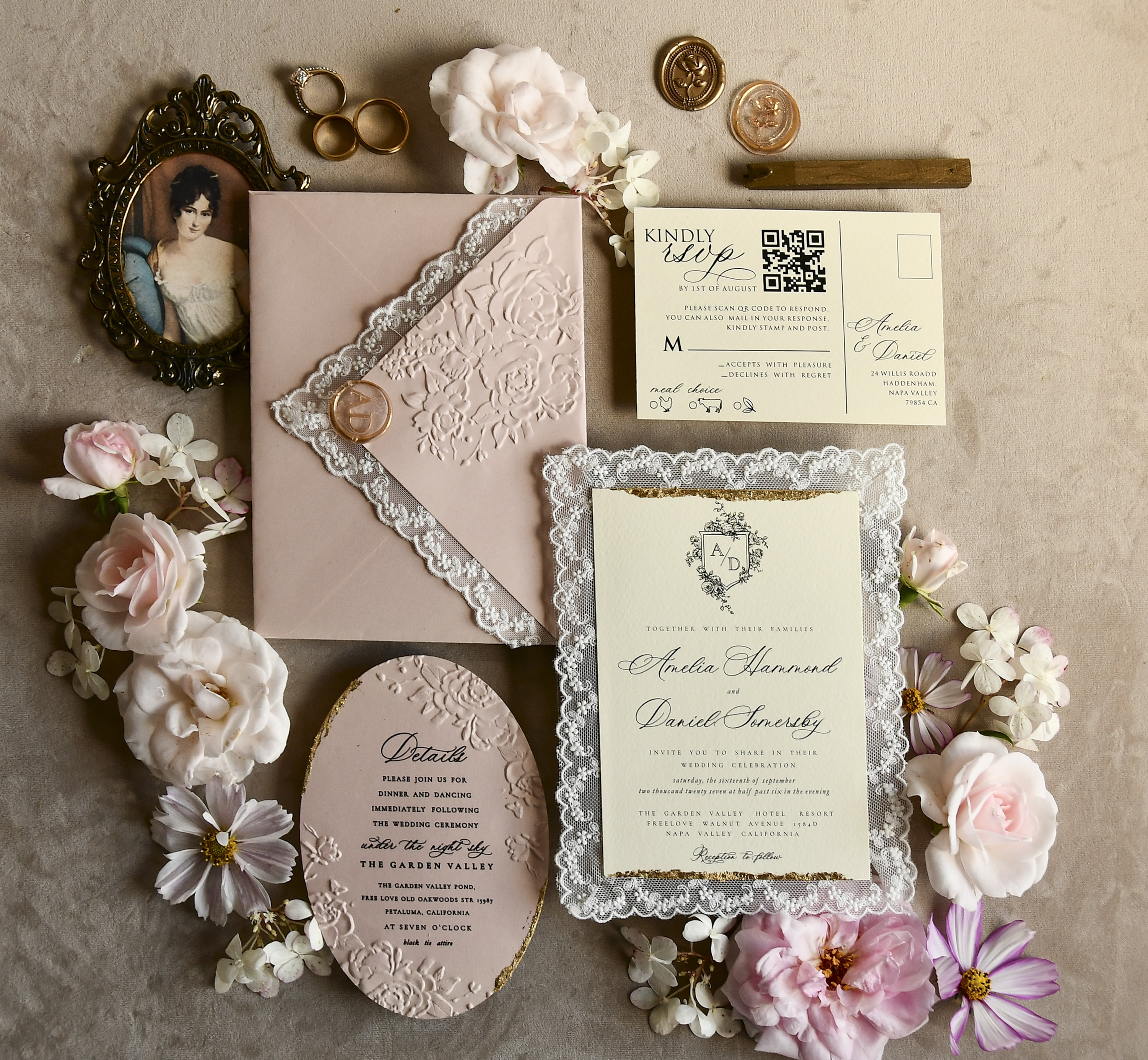
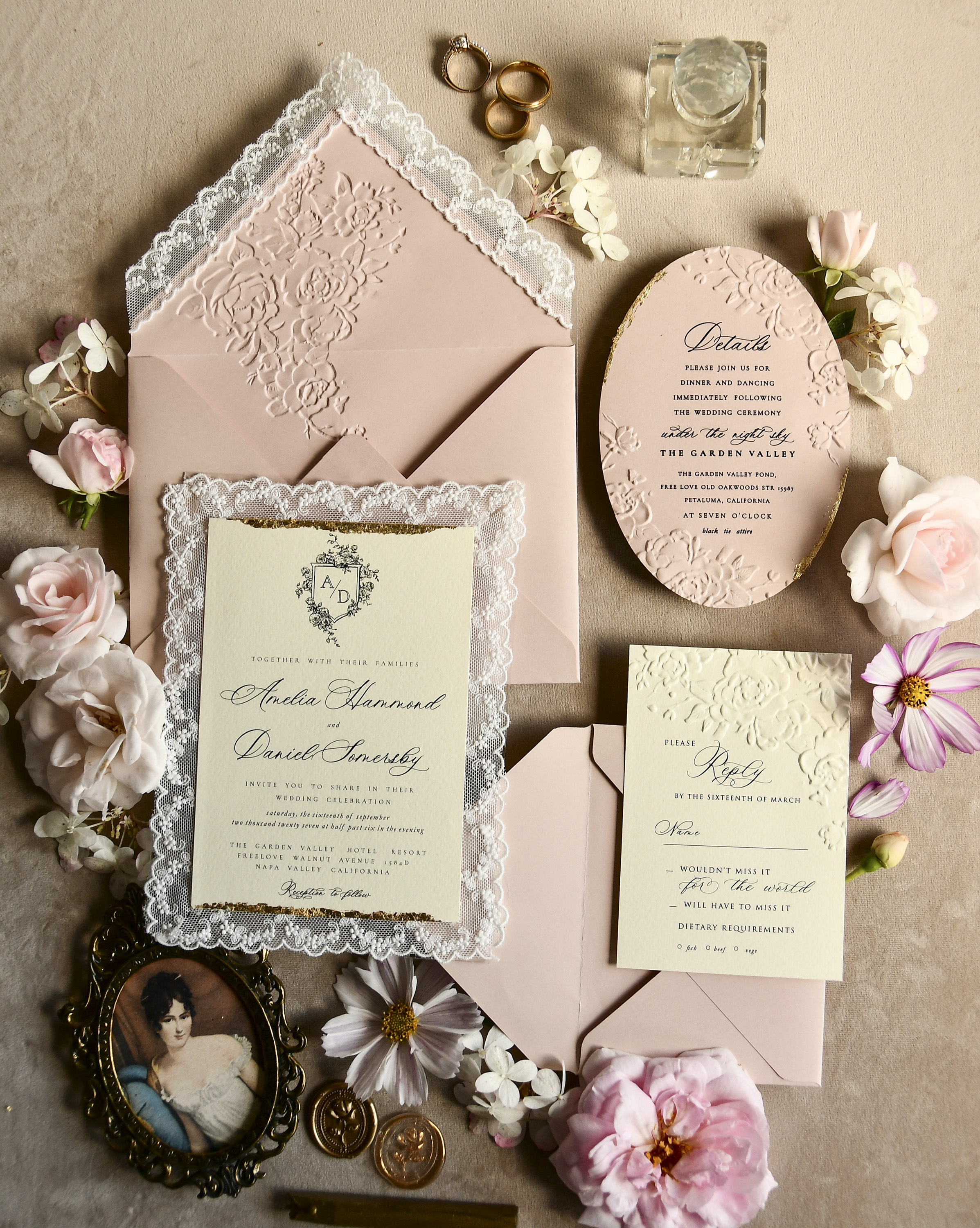
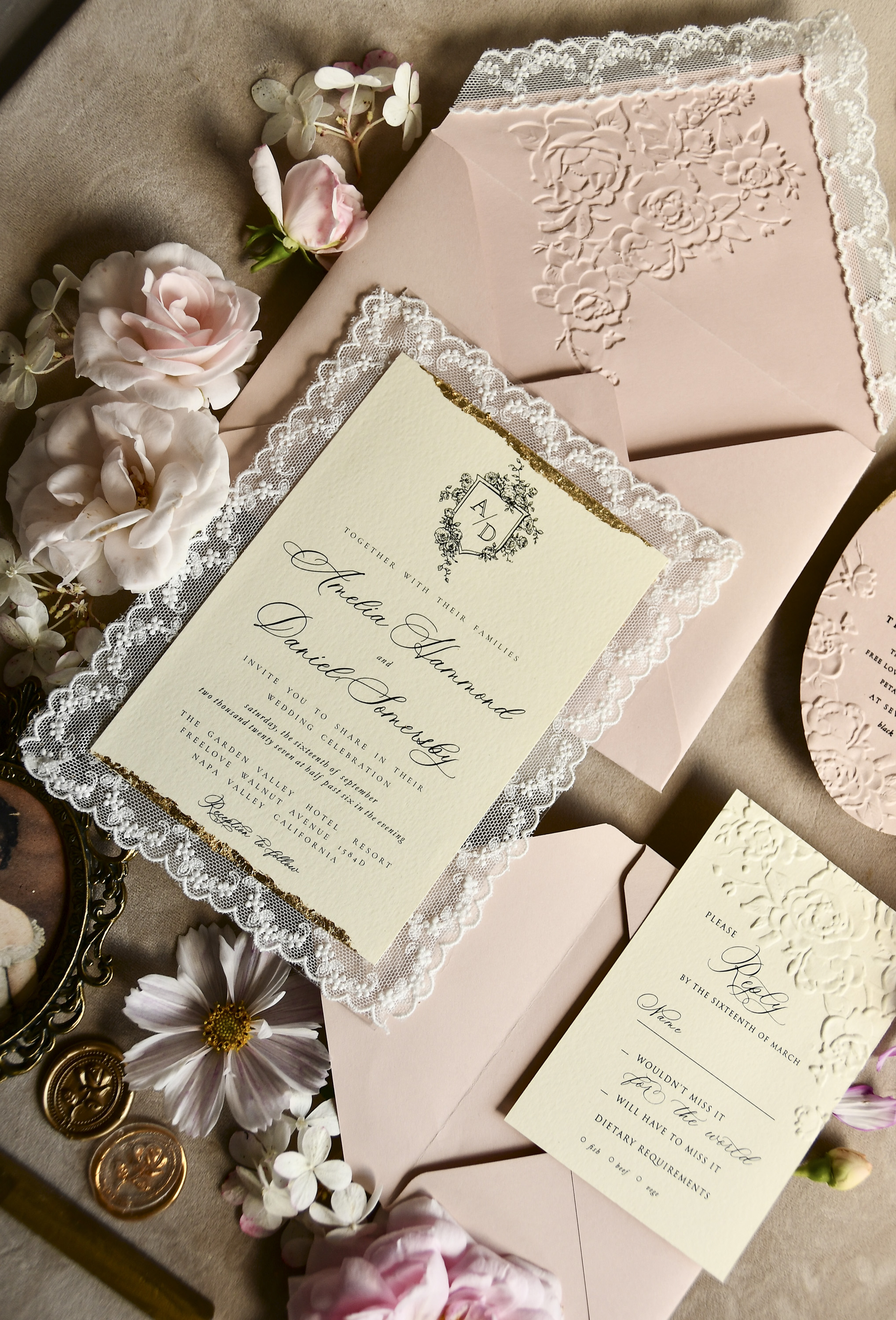
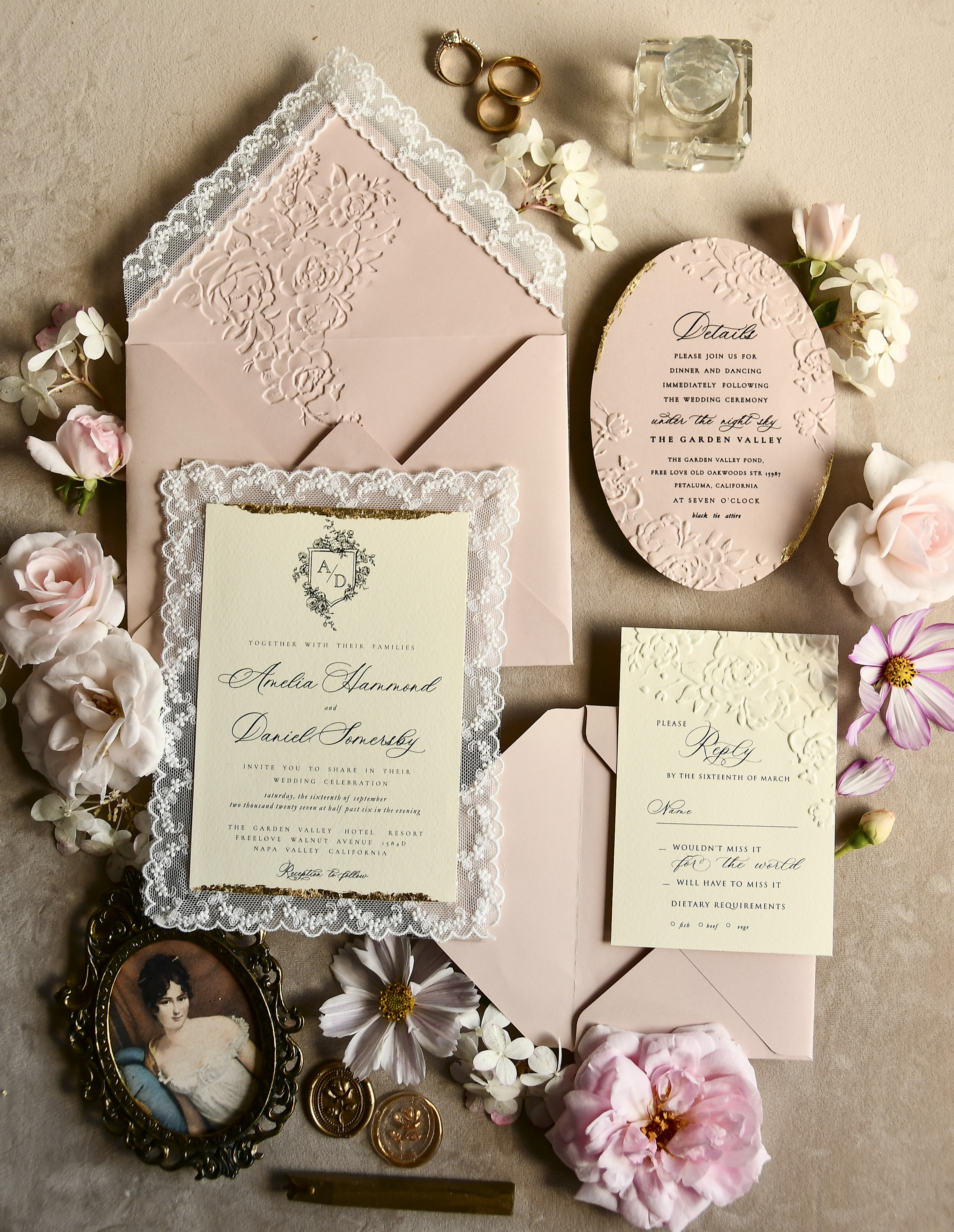
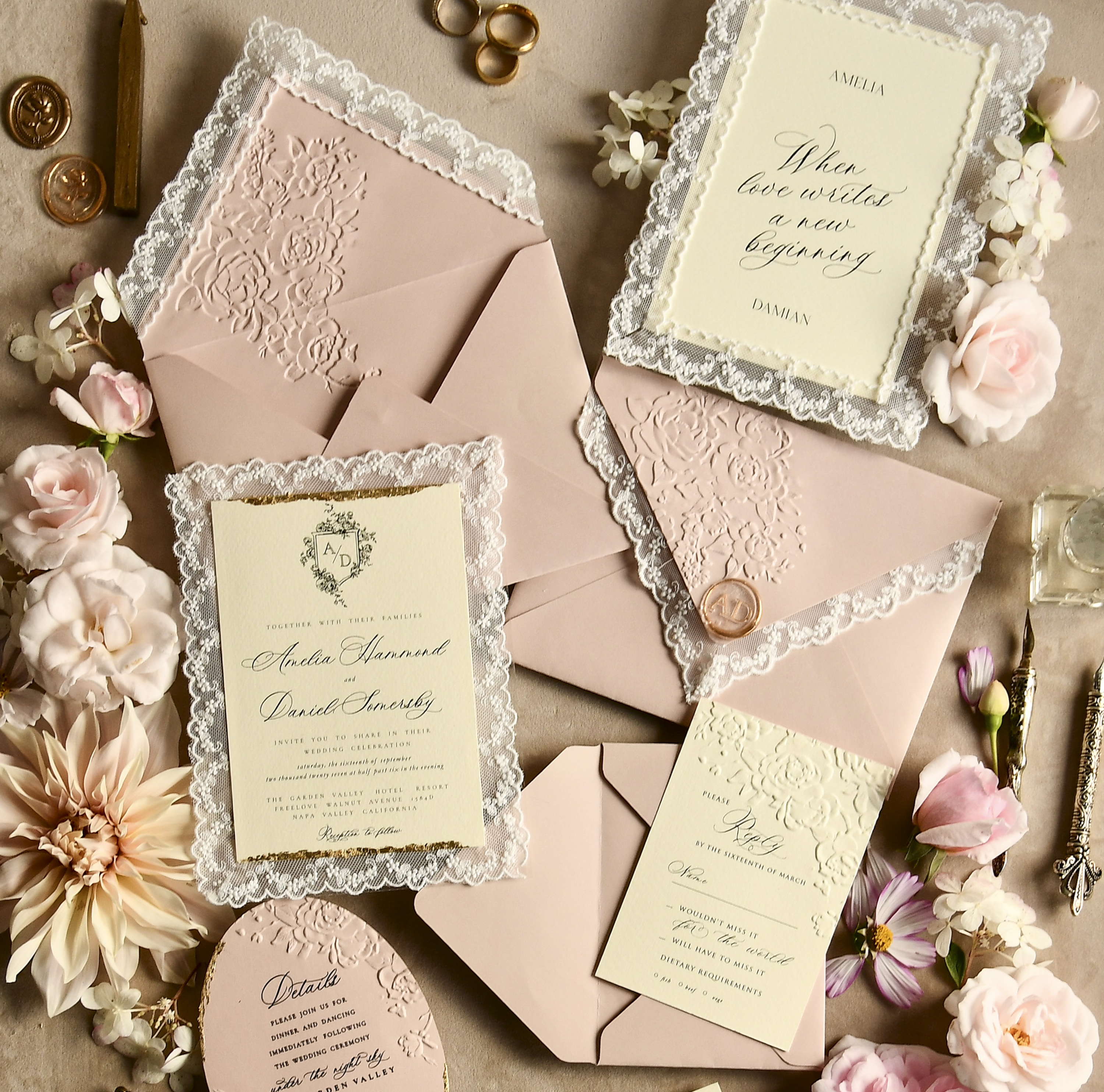
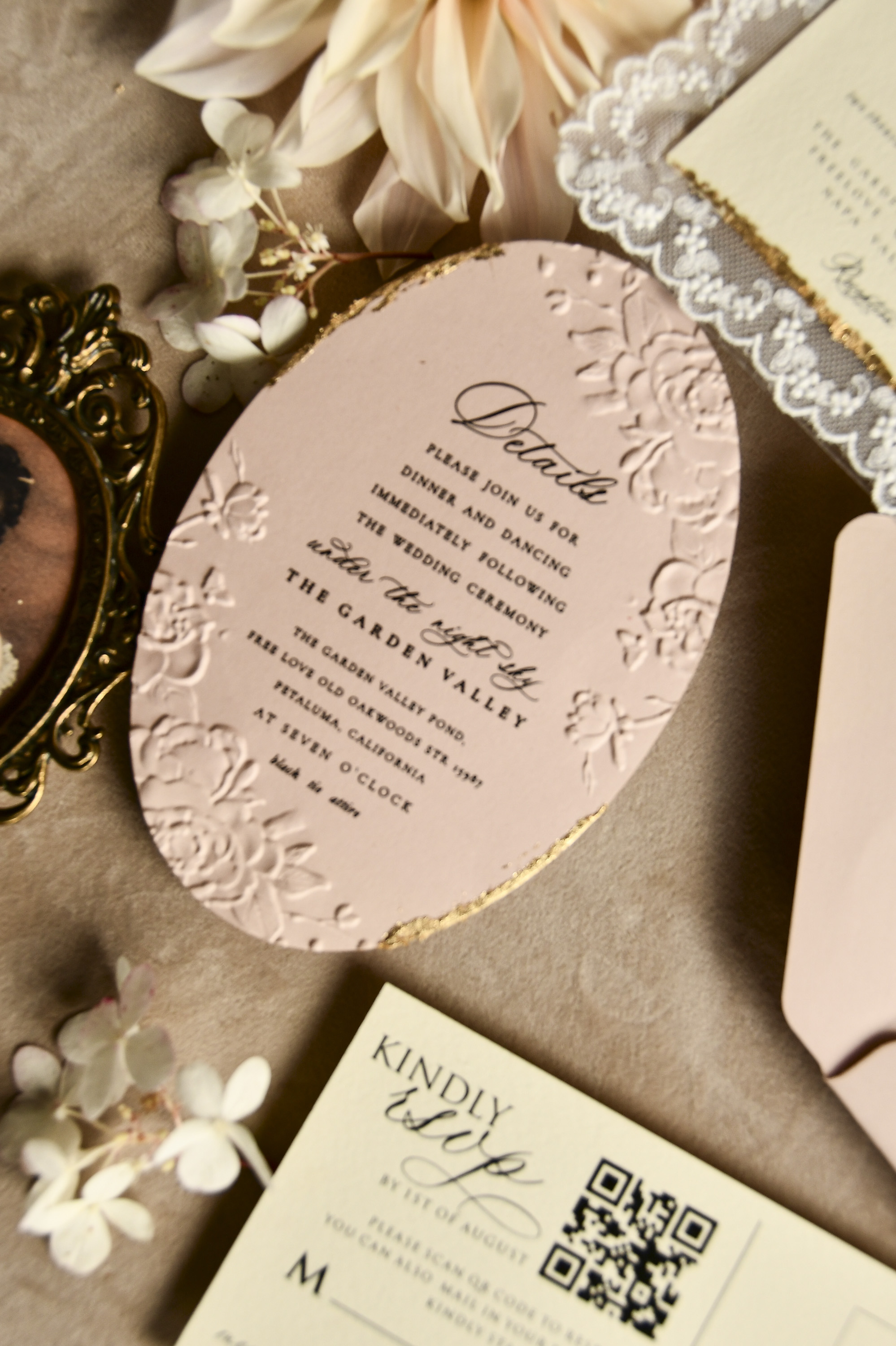
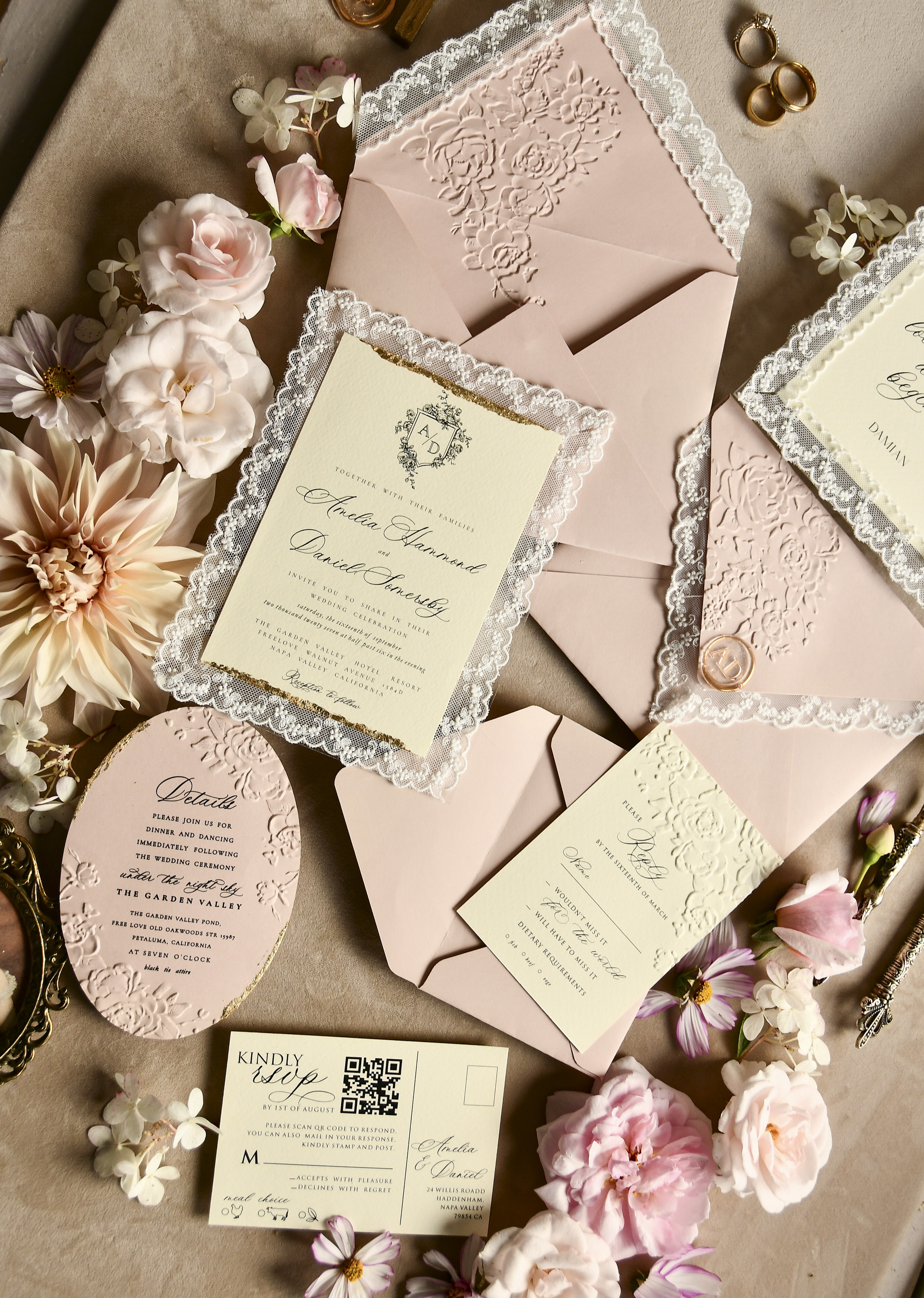
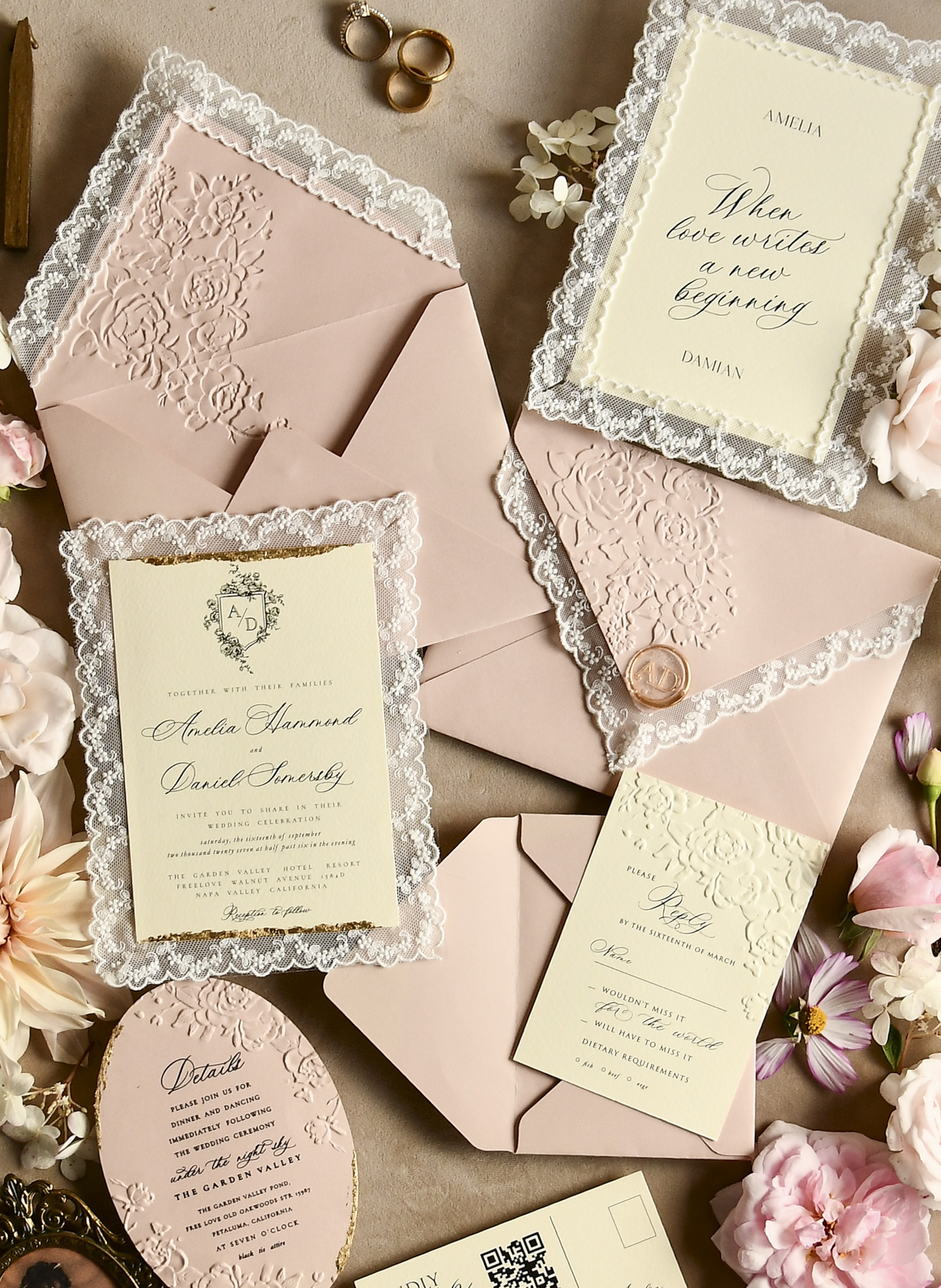
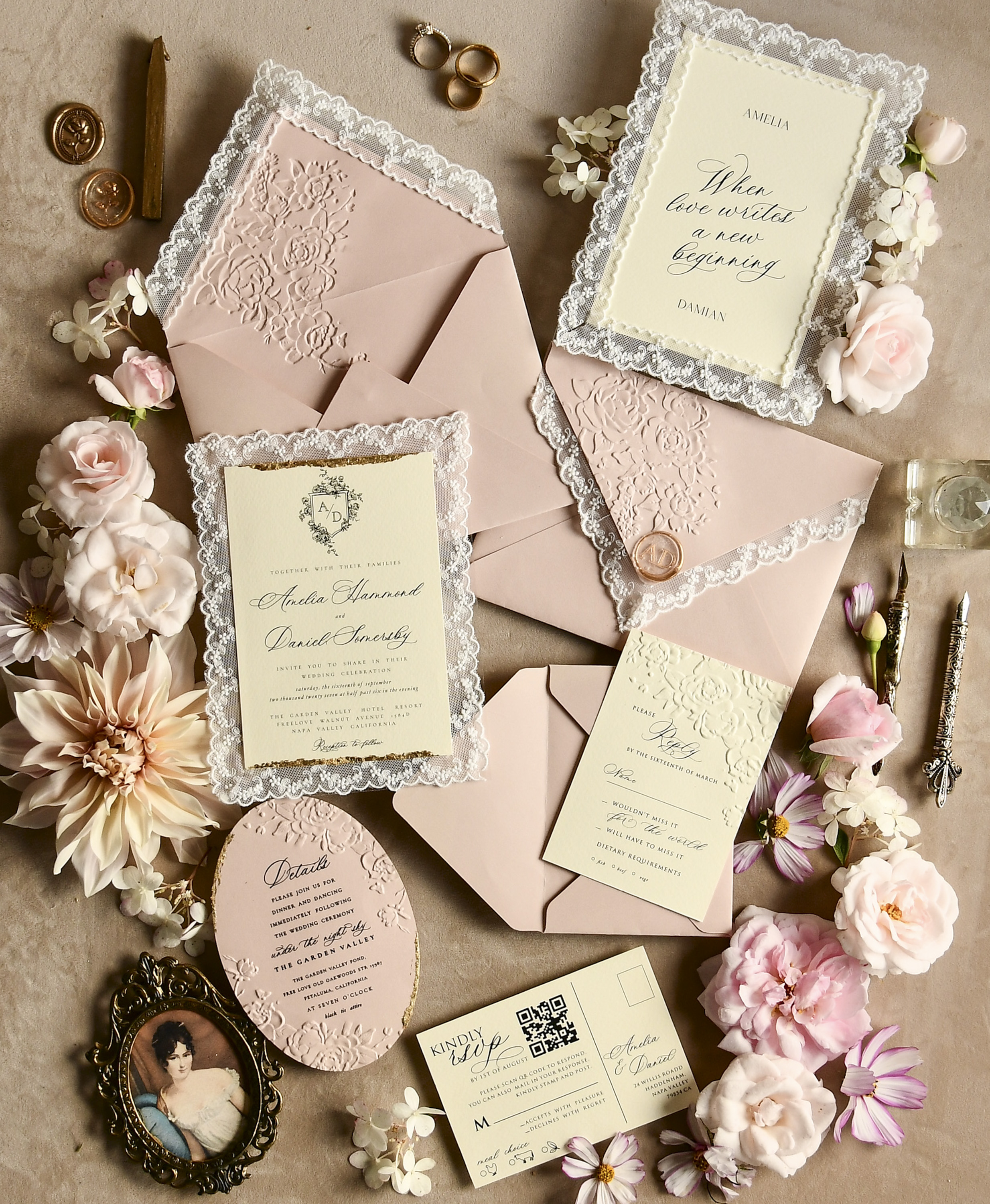
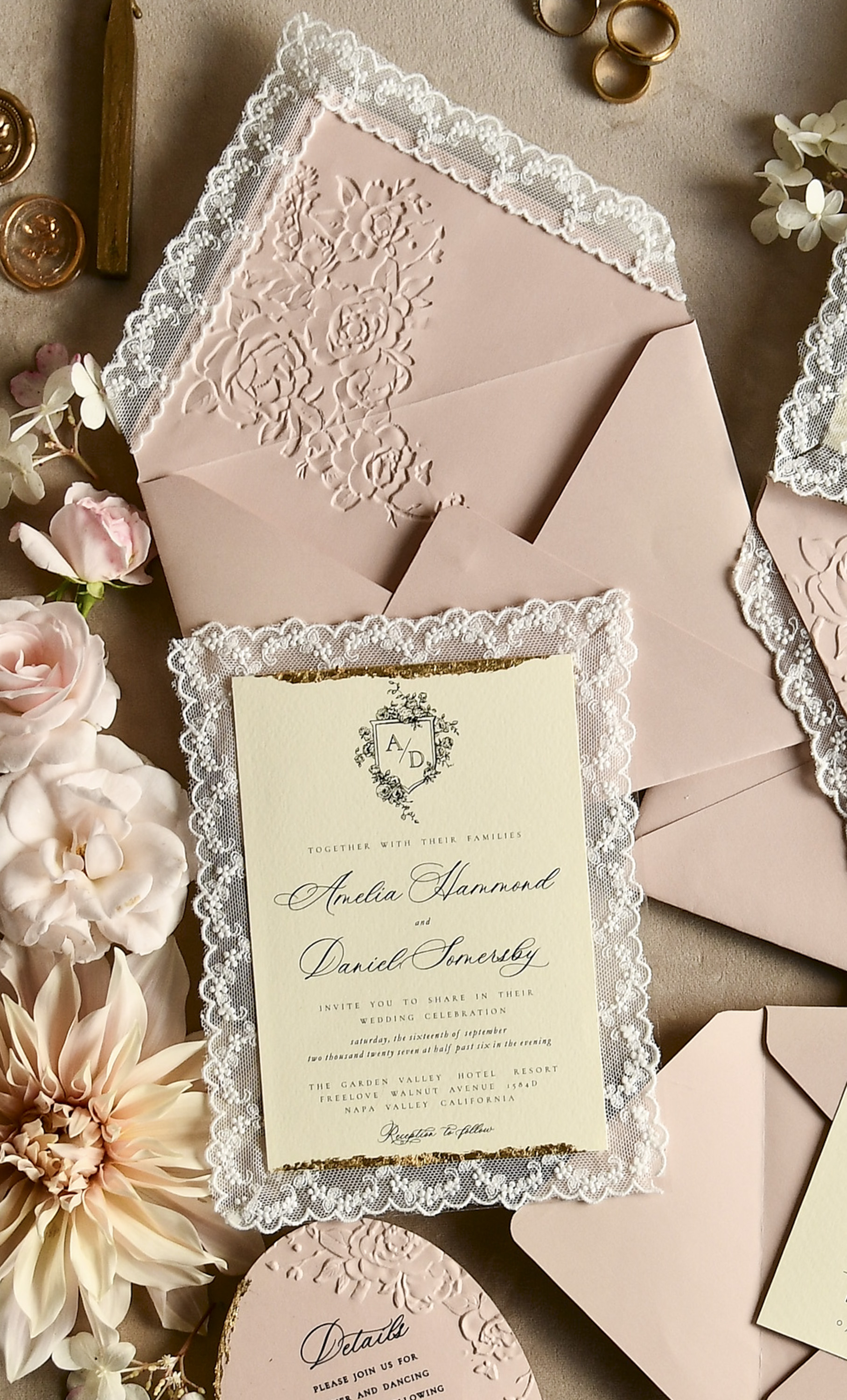
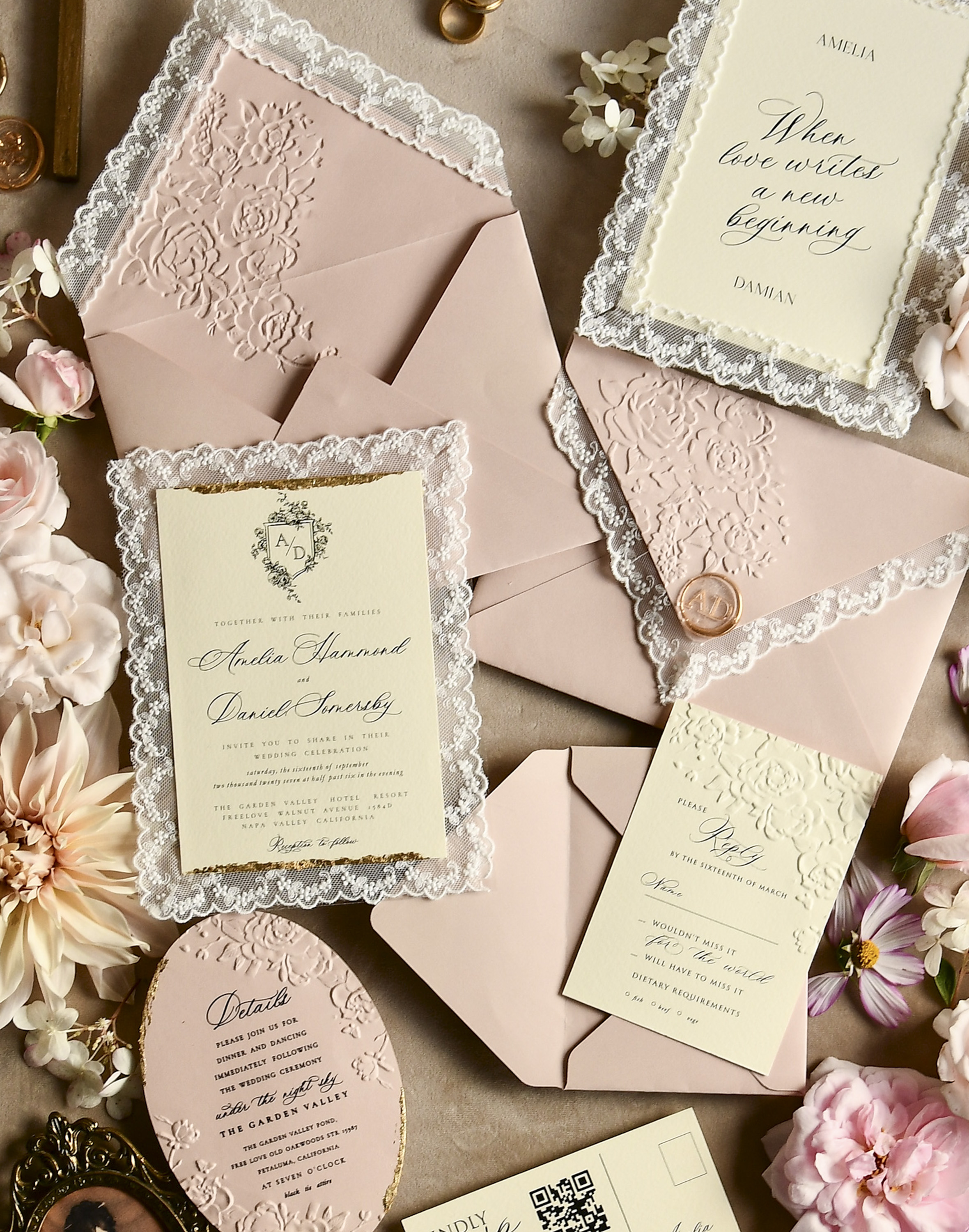
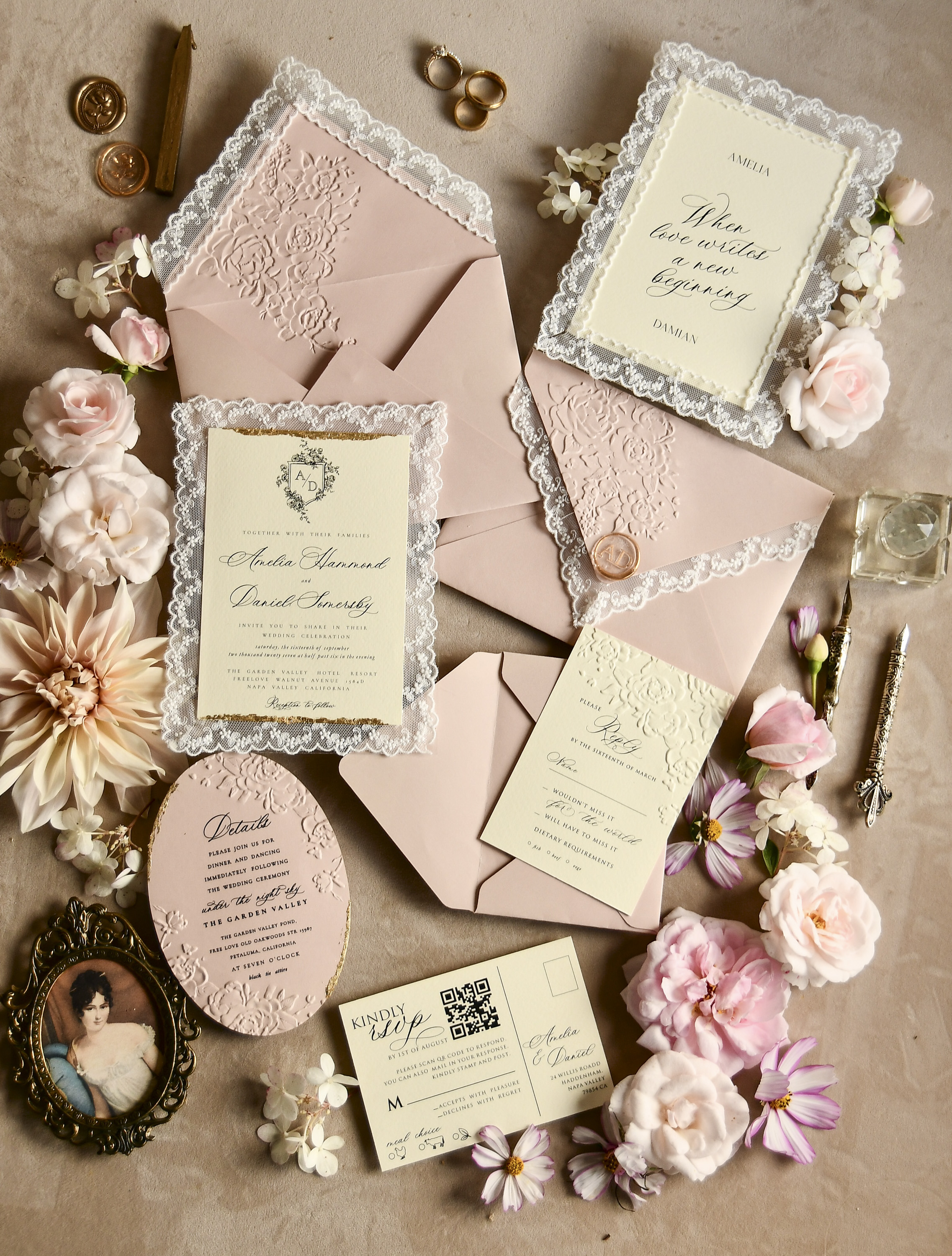
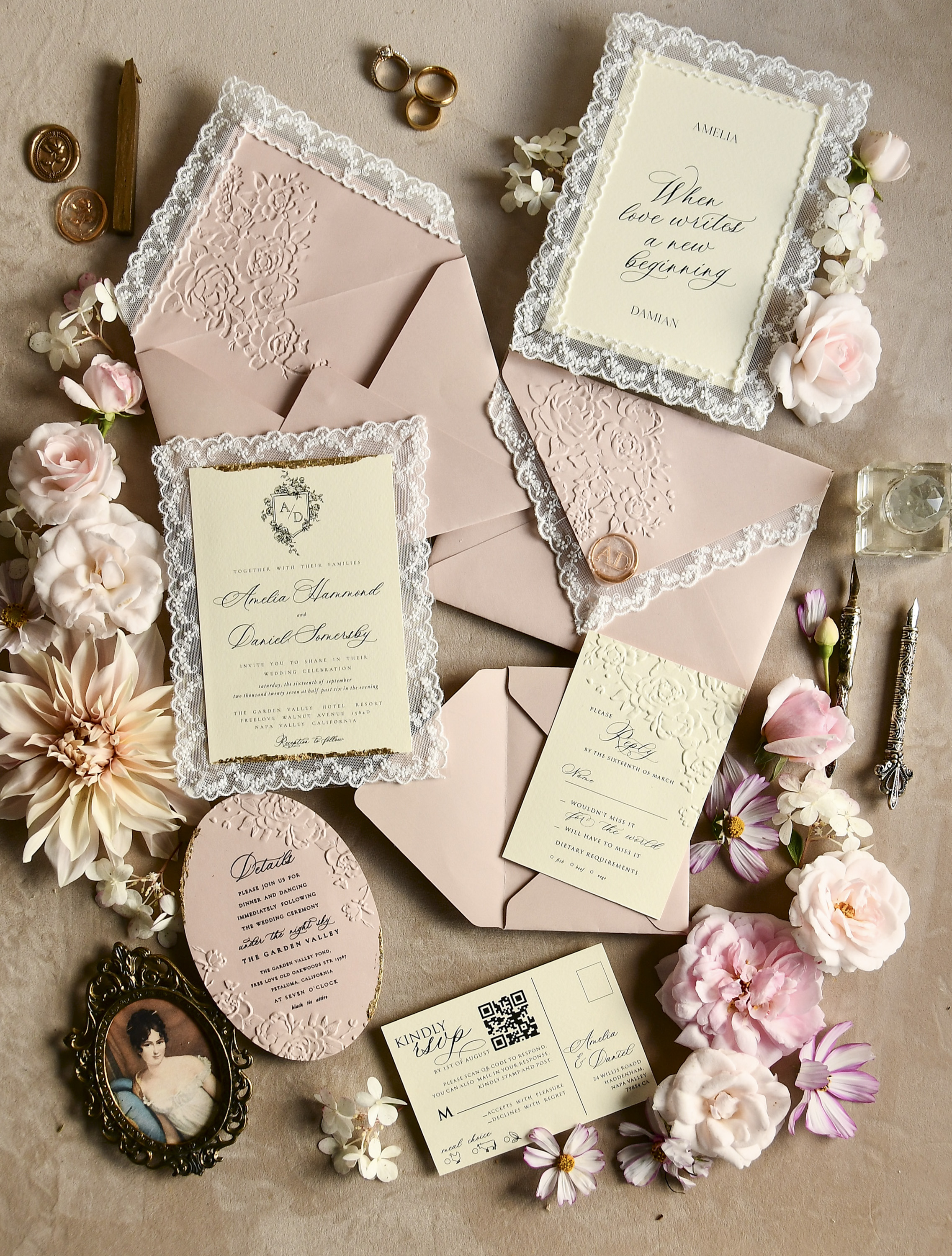
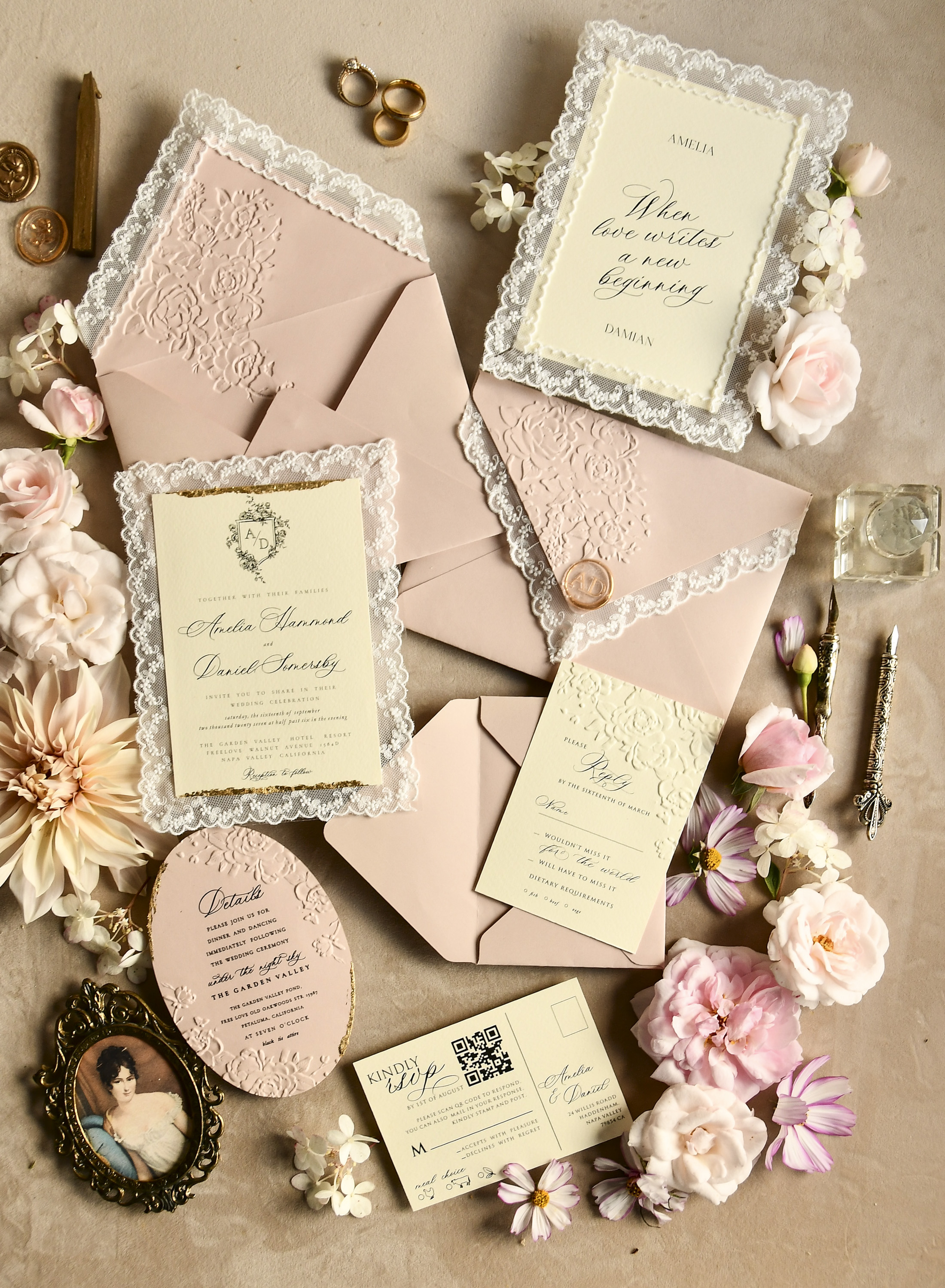
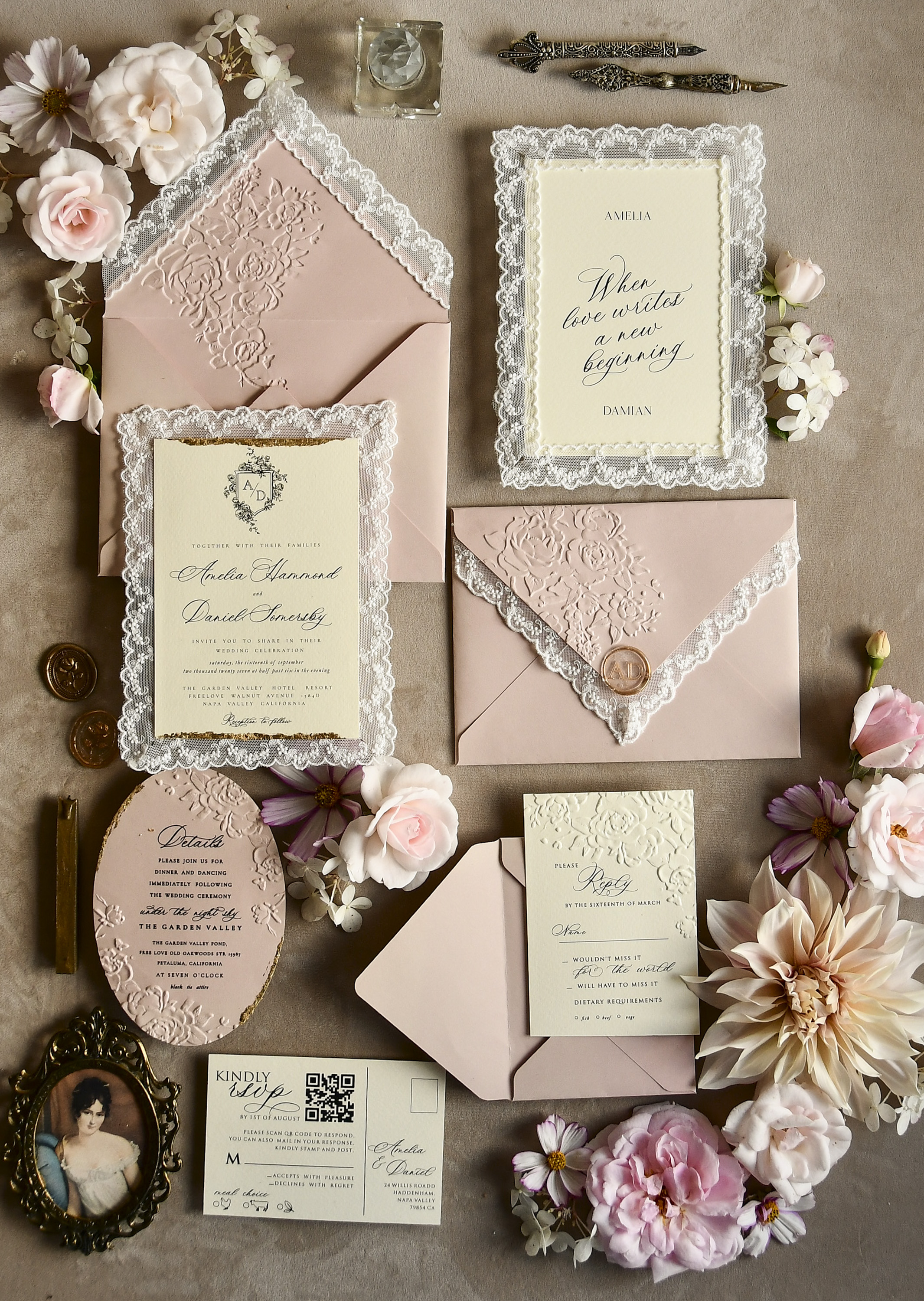
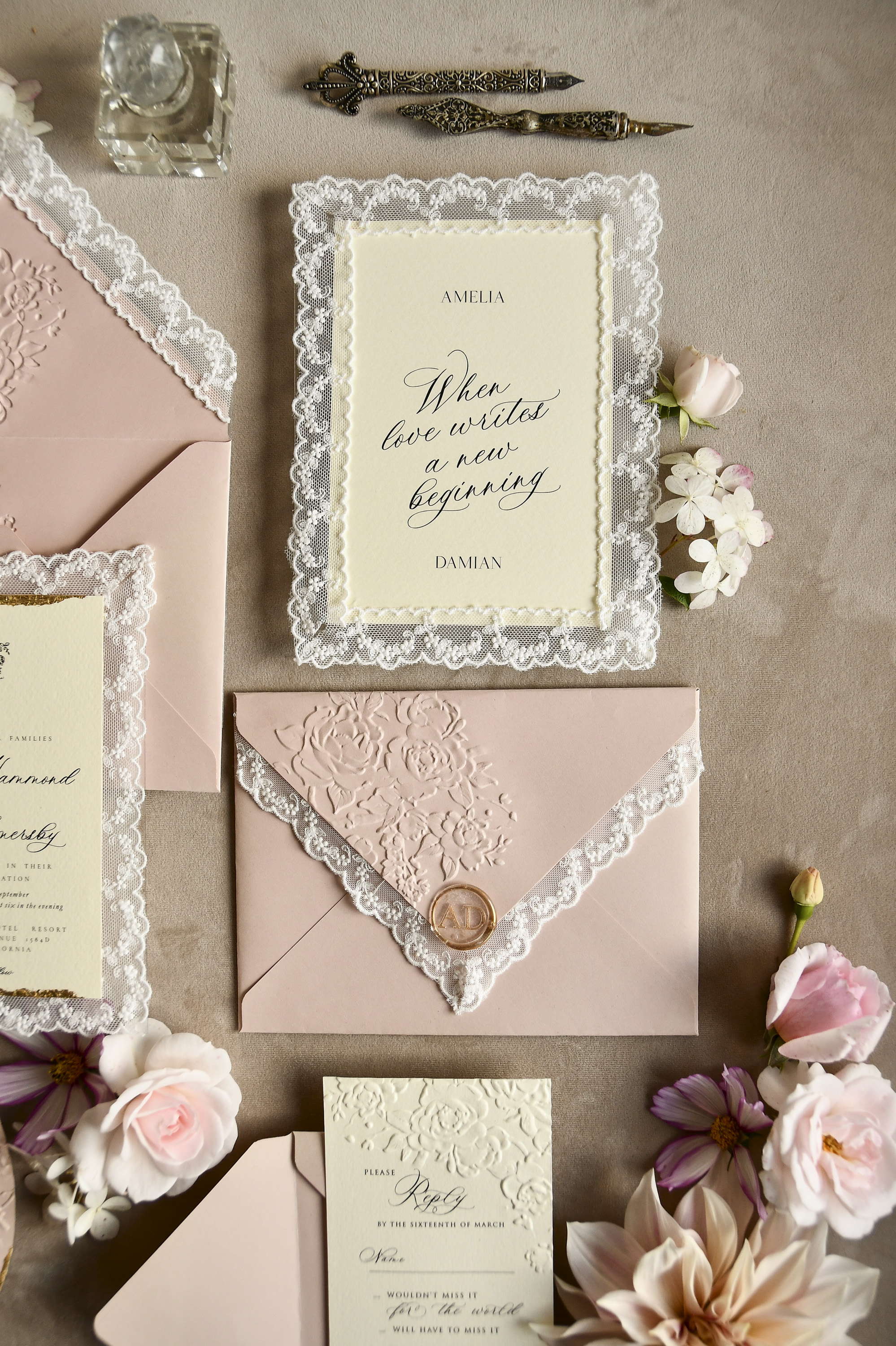
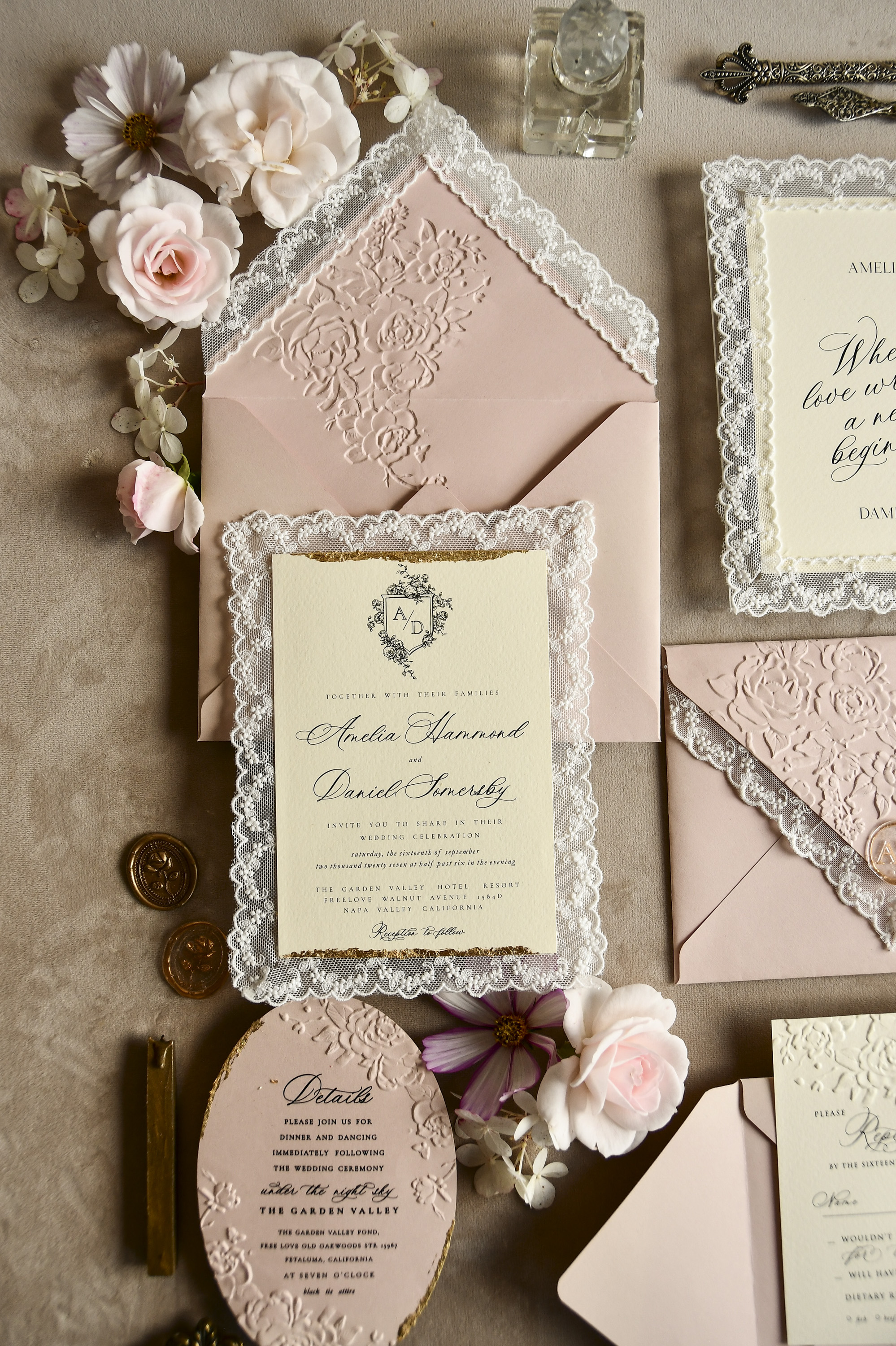
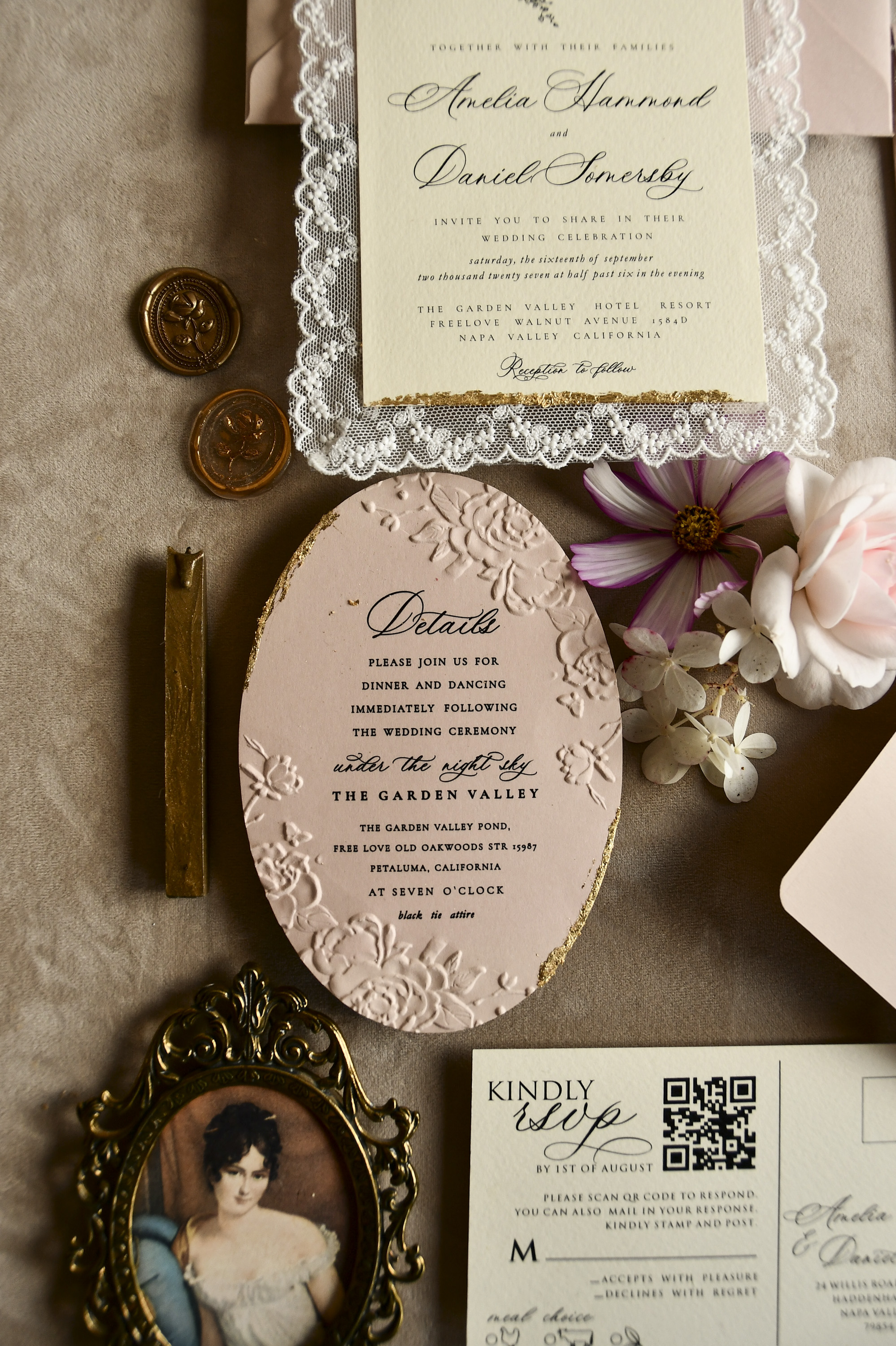
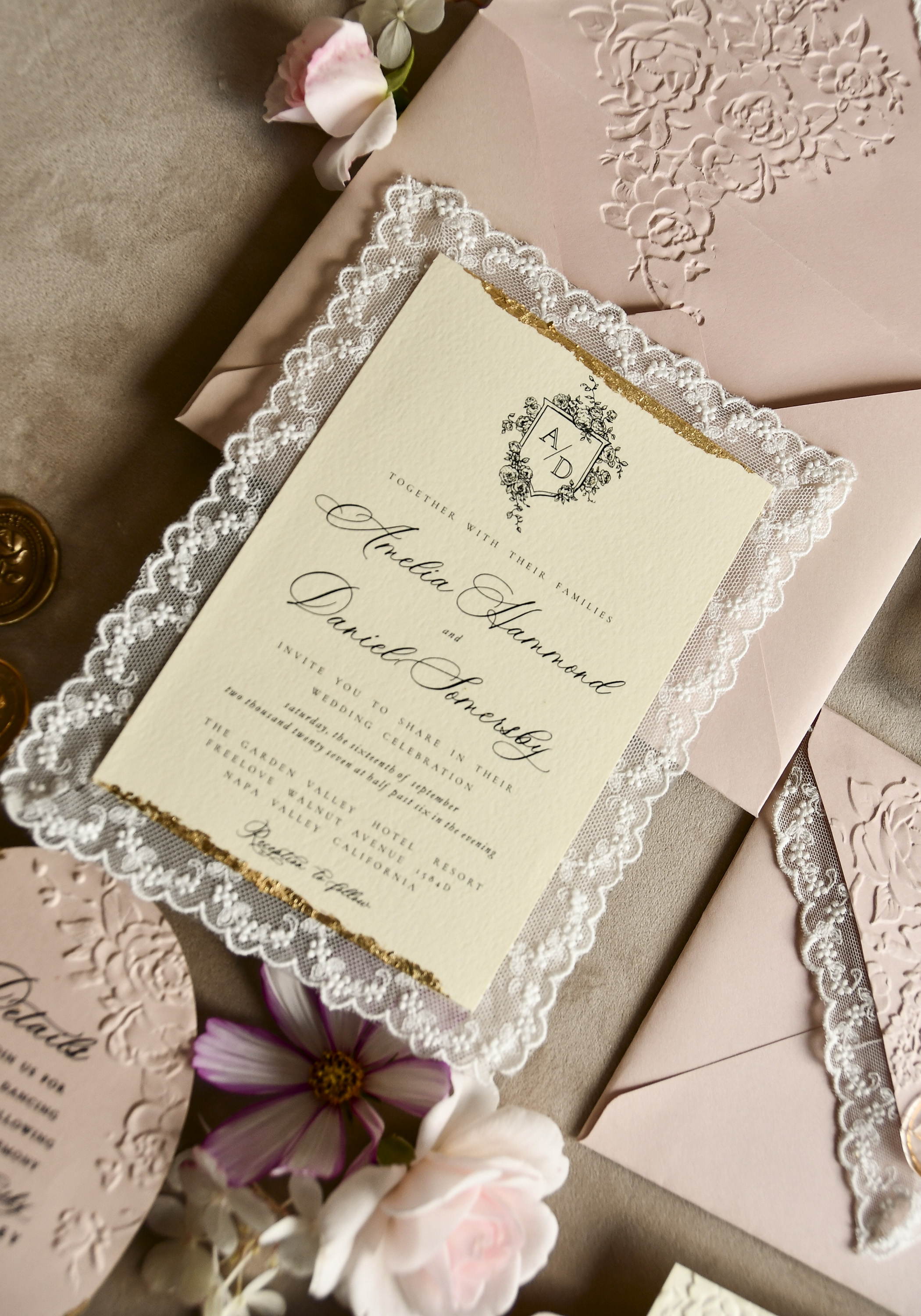
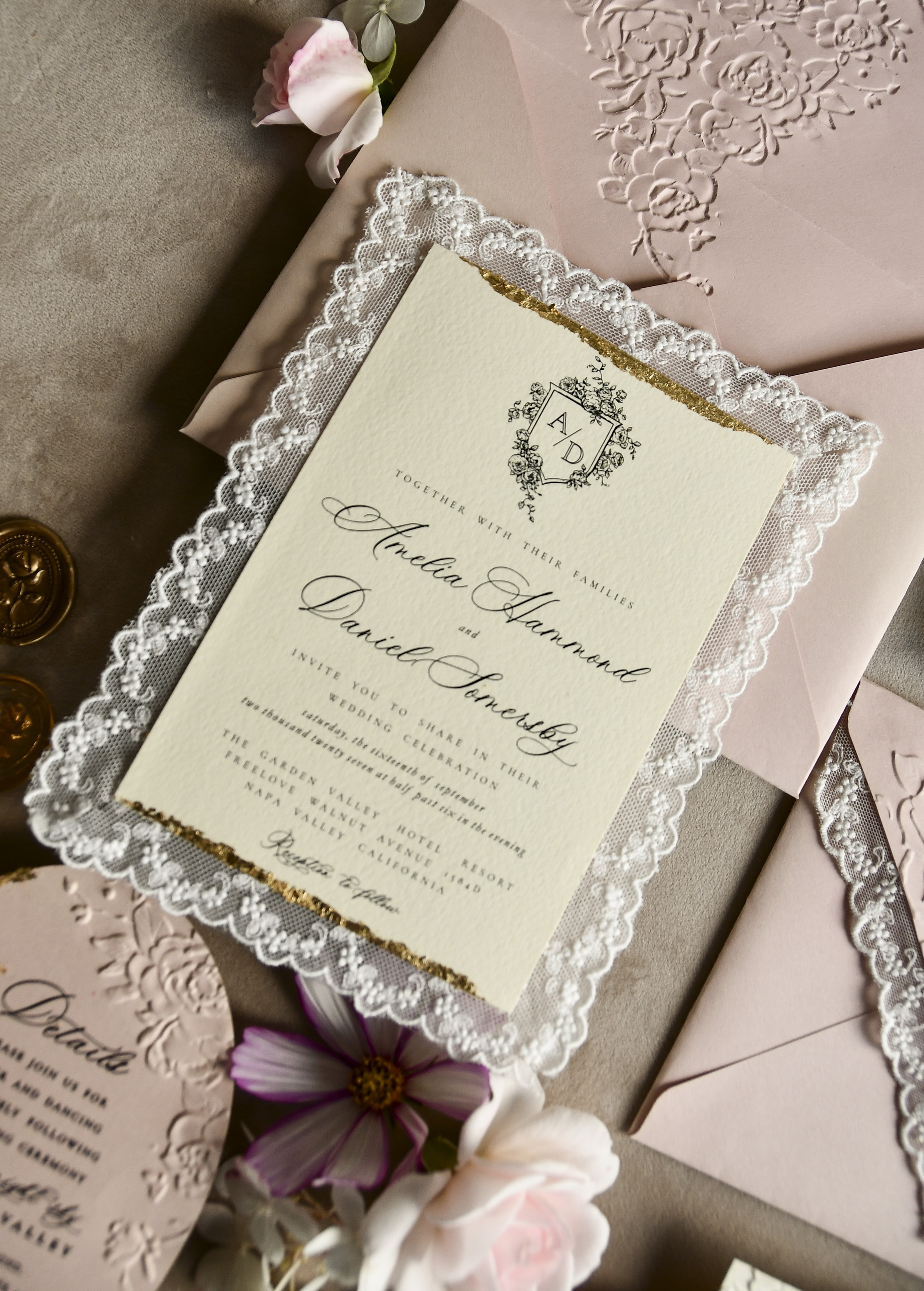
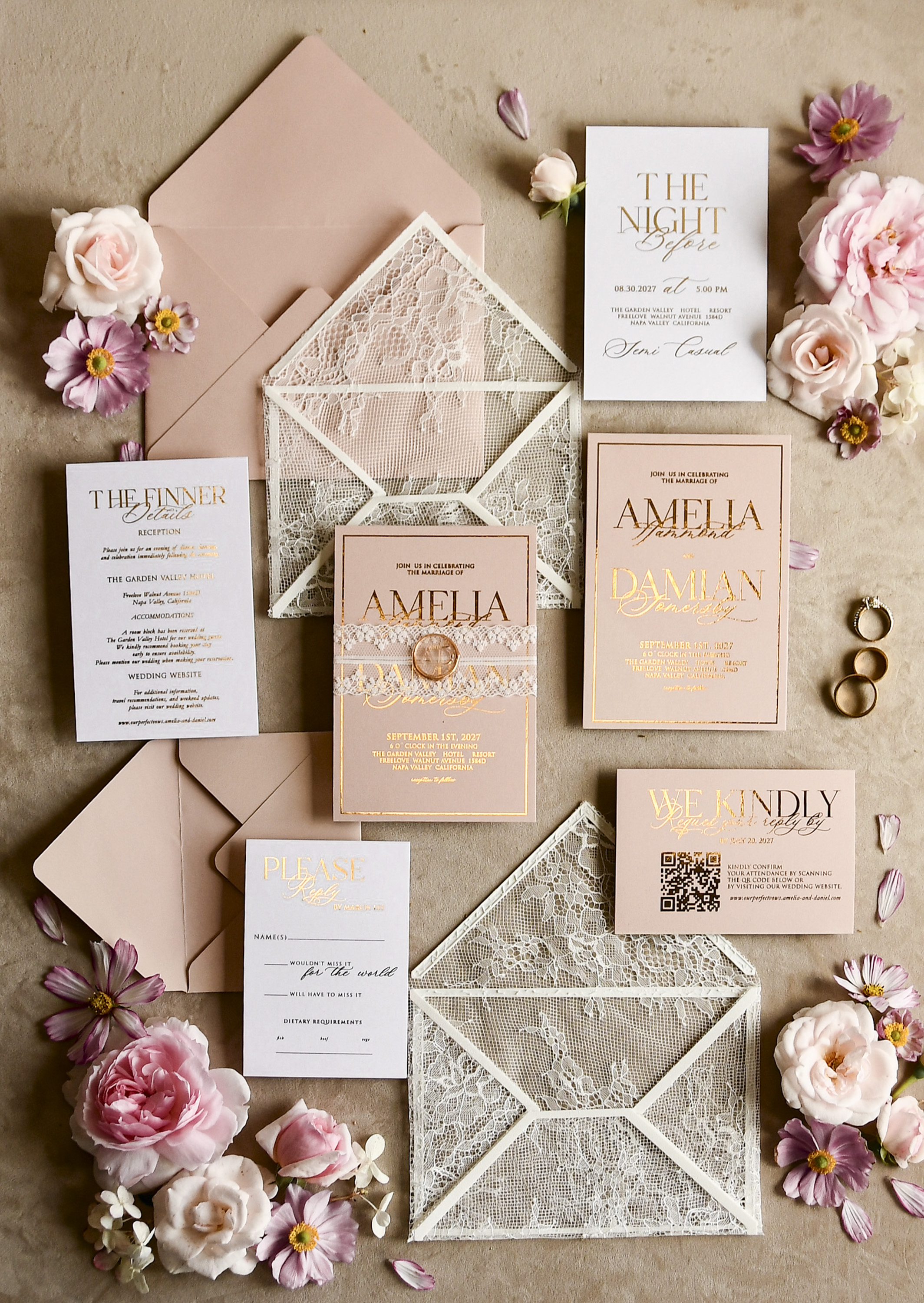
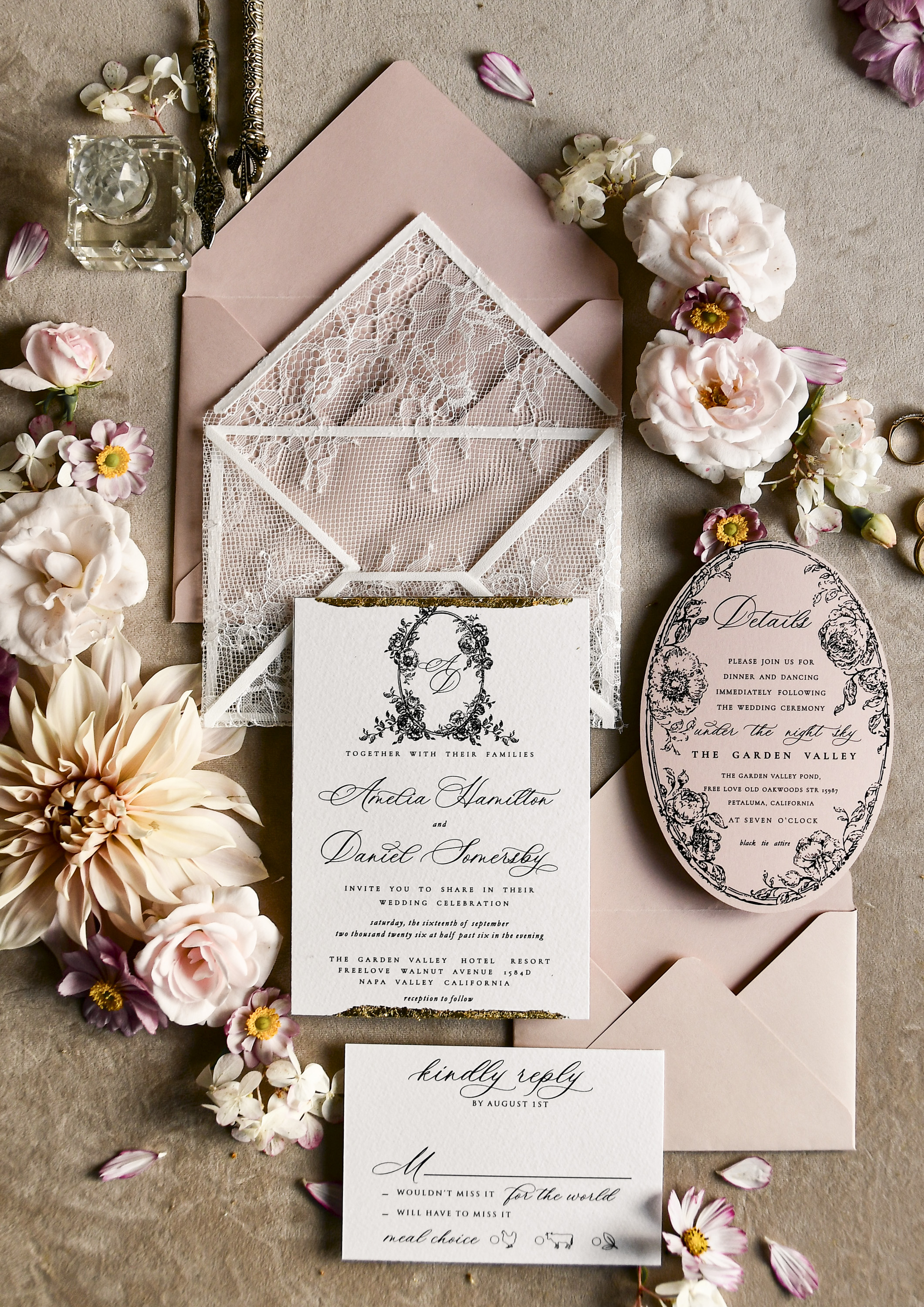
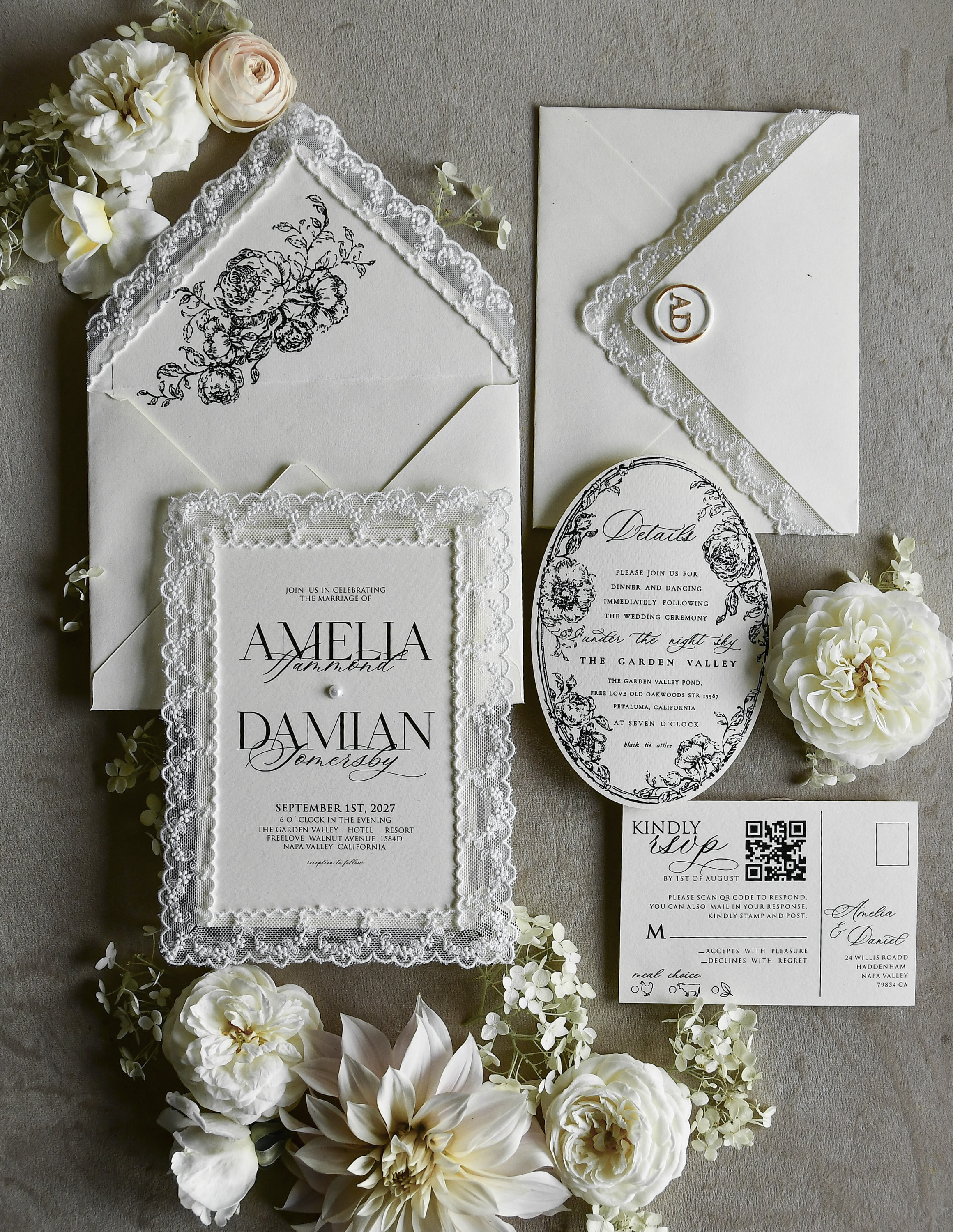
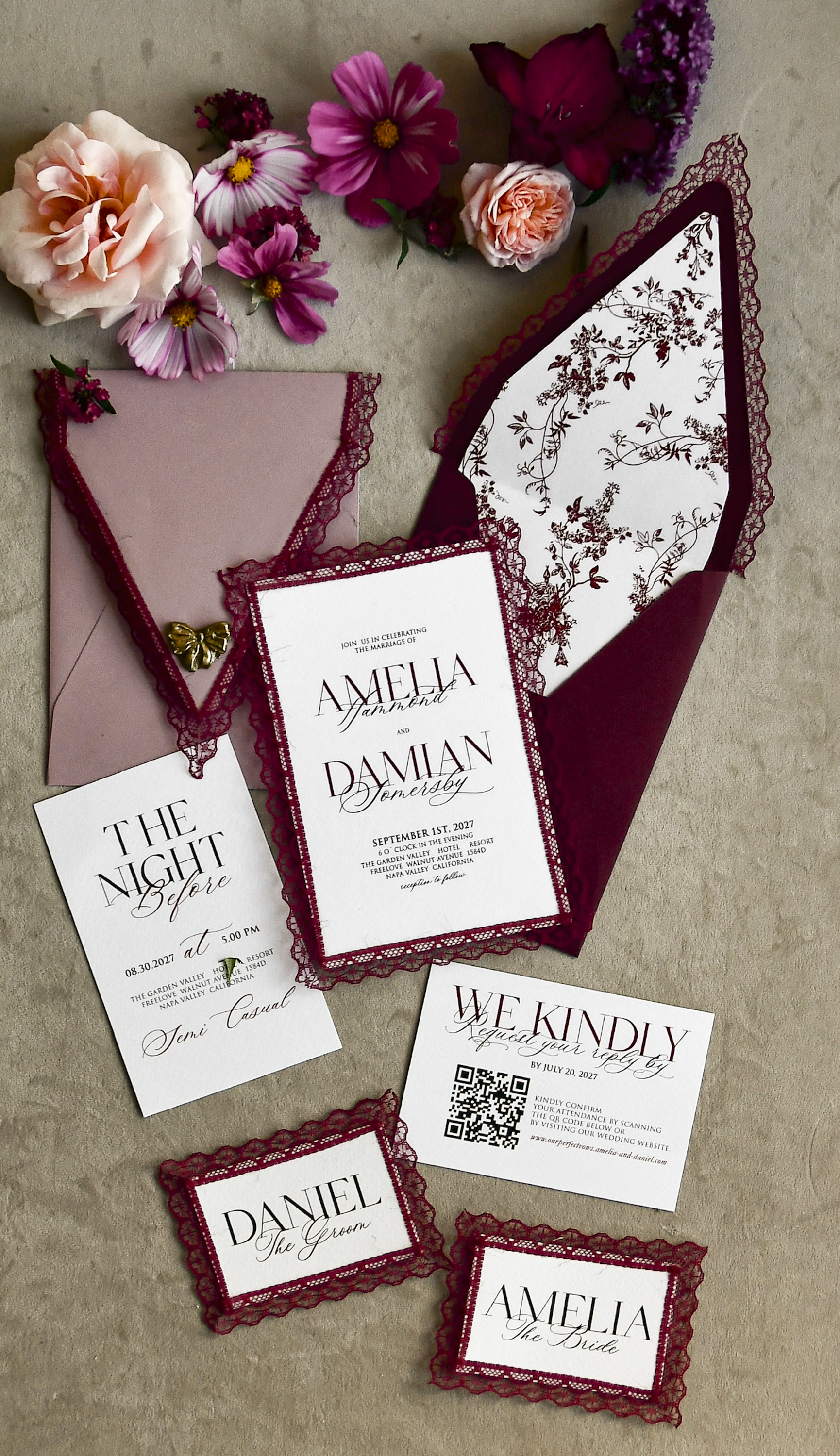
A clean, well-designed RSVP card also gives guests a moment to feel the care you put into your stationery. If you love romantic, textured details, the 01/laceembos/z vintage lace collection from Margo&Bees pairs a stunning embossed lace design with crisp, readable typography—perfect for making every card in your suite feel cohesive and intentional.
A Few Final Details Worth Double-Checking
Before you send your invitations to print, review this quick checklist:
- Proofread names twice—spelling errors on names are the most common (and most embarrassing) mistake.
- Confirm the venue address on Google Maps to make sure it routes correctly.
- Check your timeline—mail invitations six to eight weeks before the wedding, or ten to twelve weeks for destination weddings.
- Weigh a complete stuffed envelope at the post office before buying stamps; thick cardstock and multiple enclosures often require extra postage.
The 01/laceembos/z suite is a beautiful starting point if you want an invitation that feels both elegant and warmly personal—and at starting prices from $9.00, it is an accessible option for couples who want quality without compromise.
Frequently Asked Questions
You are not required to, but it is strongly recommended. Guests feel more comfortable and arrive appropriately dressed when given clear guidance, which also means better photos for you.
If the reception is at a different location from the ceremony, put it on a separate reception or details card to keep the main invitation clean and uncluttered. If it is at the same venue, a simple 'Reception to follow' line on the main invite is sufficient.
Traditional etiquette places the website URL on an enclosure card, but many modern couples include it on the main invitation for convenience. Either approach is widely accepted today.
Mail invitations six to eight weeks before the wedding for local or regional guests. For destination weddings, aim for ten to twelve weeks in advance so guests have time to book travel and accommodations.
Only if your caterer requires a headcount per entrée, which is common for plated dinners. In that case, list the options on your RSVP card rather than the main invitation.
'Honor of your presence' is traditionally used for religious ceremonies held in a house of worship, while 'pleasure of your company' suits non-religious or secular venues. In modern usage, both phrases are interchangeable and simply reflect the couple's preferred tone.
See This Design Up Close
You May Also Like
More Wedding Planning Guides
- → When to Address a Wedding Invitation Directly to a Child
- → Mailed Card or Website Link? How to Handle RSVPs the Modern Way
- → Wedding Invitation Delivery: When to Mail and When to Hand Them Off
- → Navigating a Wedding Guest List When Your Fiancé Wants to Leave Your Family Out
- → When Your Divorced Parents Can't Be in the Same Room: A Wedding Planning Guide
- → Adults-Only Weddings: Is Leaving Kids Off the List Actually Rude?
- → Wedding Invitation Addressing: Names, Titles, and Every Tricky Situation Solved
- → How to Decide Who Gets a Plus One at Your Wedding
- → Wedding Invitations: How to Count What You Actually Need
- → Yes, You Can Invite Ceremony-Only Guests — Here's How to Do It Gracefully
- → Extra Wedding Guests: Who Pays and How to Handle It Gracefully
- → Big Wedding or Better Wedding: How to Choose What Truly Matters
- → Your Wedding, Your Guest List: The Honest Truth About Inviting Cousins
- → Uninvited Extras: How to Handle Guests Who Bring Someone You Didn't Invite
- → Plus-One or No? How to Decide If Single Guests Can Bring a Date
- → How to Embrace a Small Wedding and Make It Unforgettable
- → Where Do Divorced Parents Sit at Your Wedding? Here's What Actually Works
- → To Invite or Not to Invite: Navigating the Ex Question for Your Wedding Guest List
- → Stepparents and Your Wedding Guest List: Making the Right Call
- → Setting Plus-One Boundaries Without Losing Sleep (or Friends)
- → Should Work Friends Come to Your Wedding? A No-Stress Guide to Inviting Colleagues
- → Guests Who Don't RSVP: Your Step-by-Step Plan
- → Save the Date vs. Wedding Invitation: Two Very Different Jobs, One Beautiful Paper Trail
- → When Someone Asks Why They Weren't Invited: Your Honest, Kind Playbook
- → To Call or Not to Call: Tracking Down Guests With Missing RSVPs
- → When the Guest List Must Shrink: The Right People to Remove First
- → Digital Wedding Invitations: When They Work and When to Think Twice
- → How to Handle the Parent Friend Dilemma on Your Wedding Guest List
- → Your Wedding Invitation Deadline: When the Window Officially Closes
- → Uninvited Plus-Ones and Tag-Alongs: How to Keep Your Guest List Intact
- → When Family Feuds Threaten Your Wedding Plans: A Practical Peacekeeper's Guide
- → Inviting an Estranged Brother or Sister: Finding Clarity Before You Seal the Envelope
- → Cousins, Invites, and Hard Choices: A Practical Guest List Guide