
Where Do Divorced Parents Sit at Your Wedding? Here's What Actually Works
Planning your seating chart is one of the most emotionally loaded tasks in wedding planning — and if your parents are divorced, it can feel like defusing a bomb with a guest list. The good news: there's no single "correct" rule here. What matters is creating a layout that feels comfortable for everyone, honors both families, and lets you actually enjoy your wedding day. Here's how to think it through.
The Traditional Setup — and When It Still Works
In a traditional Western ceremony, the couple's parents sit in the first row (or first pew) on their respective sides — mother of the bride on the left, mother of the groom on the right, and so on. If your parents are divorced but genuinely civil, this setup can work beautifully. Each parent simply occupies their own seat in the front row, ideally with their current partner or a supportive family member beside them.
The key word here is civil. If your parents can exchange pleasantries and genuinely wish each other well, traditional front-row seating is perfectly appropriate. You don't need to overthink it. Many couples with divorced parents use this arrangement without a single awkward moment.
When You Need More Distance Between Them
If your parents' relationship is strained — or openly hostile — proximity is your enemy. In this case, consider these practical adjustments:
- Stagger the rows: One parent sits in the first row, the other in the second or third. Both still feel honored; they're just not shoulder-to-shoulder.
- Use the aisle as a buffer: If your venue has a center aisle, seat one parent on each side of it, even if that means bending the traditional "bride's side / groom's side" convention slightly.
- Seat each with their own support system: Surround each parent with their partner, siblings, or close friends. This gives them emotional grounding and reduces the chance of awkward silences — or worse.
Whatever you decide, communicate the plan to both parents before the wedding day. Surprises at the ceremony are never welcome.
Reception Seating: The Bigger Puzzle
The ceremony lasts an hour; the reception lasts four or five. That's where seating really matters. Here are the most common approaches:
- Separate family tables: Give each parent their own table, each with their respective family members and close friends. Label them thoughtfully — "Family of [Bride's name]" rather than "Mom's Table" avoids any weird hierarchy.
- No formal family tables at all: Some couples skip the dedicated parent tables entirely and let family members choose seats among friends. This works especially well at relaxed, non-traditional receptions.
- Head table vs. sweetheart table: If you're doing a head table with the wedding party, your parents are already at separate tables by default. A sweetheart table for just the two of you removes the question entirely.
One non-negotiable: do not seat divorced parents at the same table unless they have specifically told you they're comfortable with it. Even then, think twice.
Stepparents and Blended Families
Stepparents add another layer of complexity — and another reason to plan early. A few guiding principles:
- The parent who raised you most actively typically takes the front-row seat at the ceremony. The other parent may sit a row or two back. There's no shame in this; it reflects your actual relationships.
- Stepparents generally sit with their spouse (your parent), not separately. Trying to exclude a stepparent your parent is happily married to usually creates more tension than it solves.
- If a stepparent played a meaningful role in your life, honor that — a mention in the program, a reserved seat near the front, or a small role in the processional all go a long way.
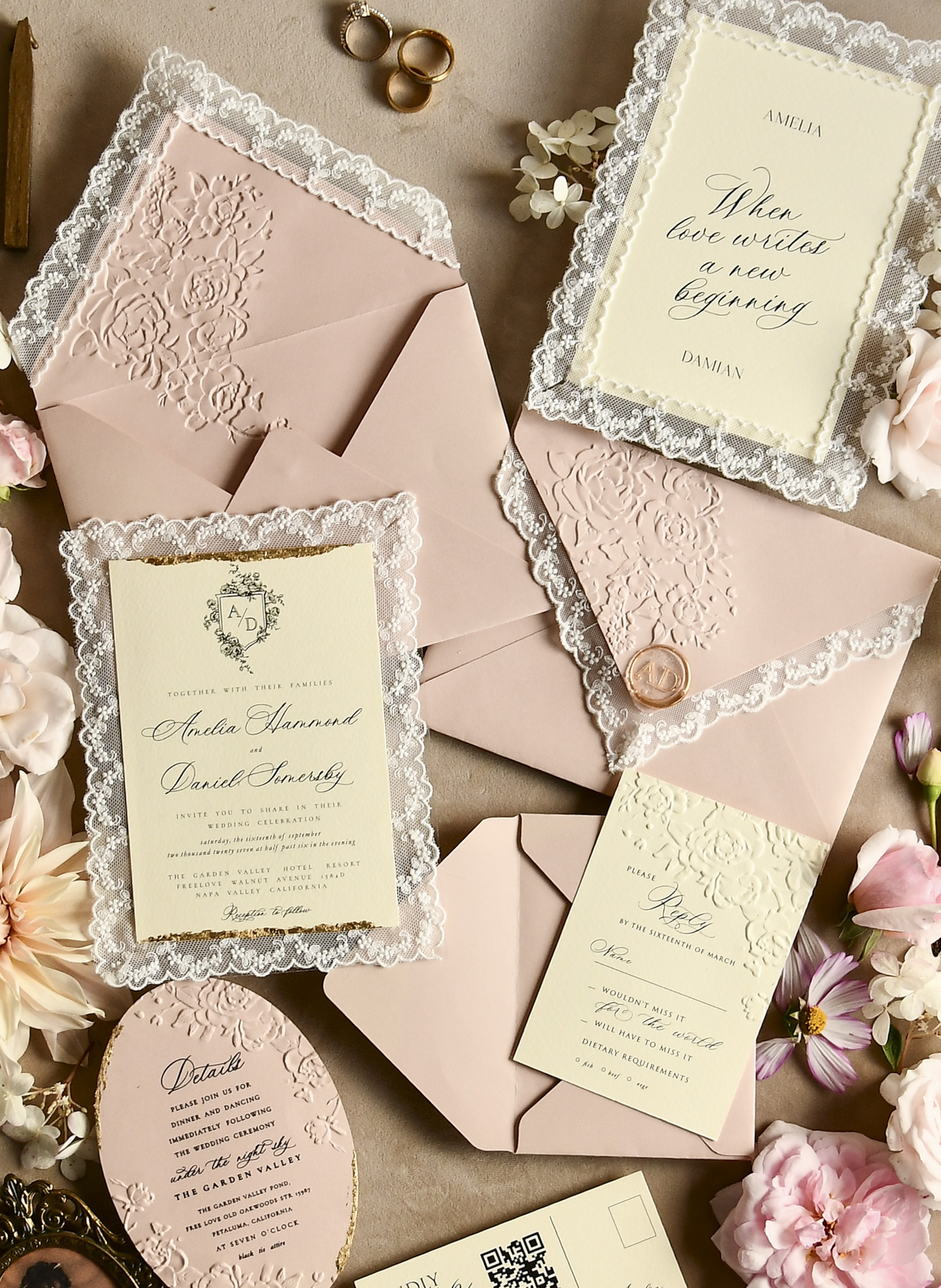
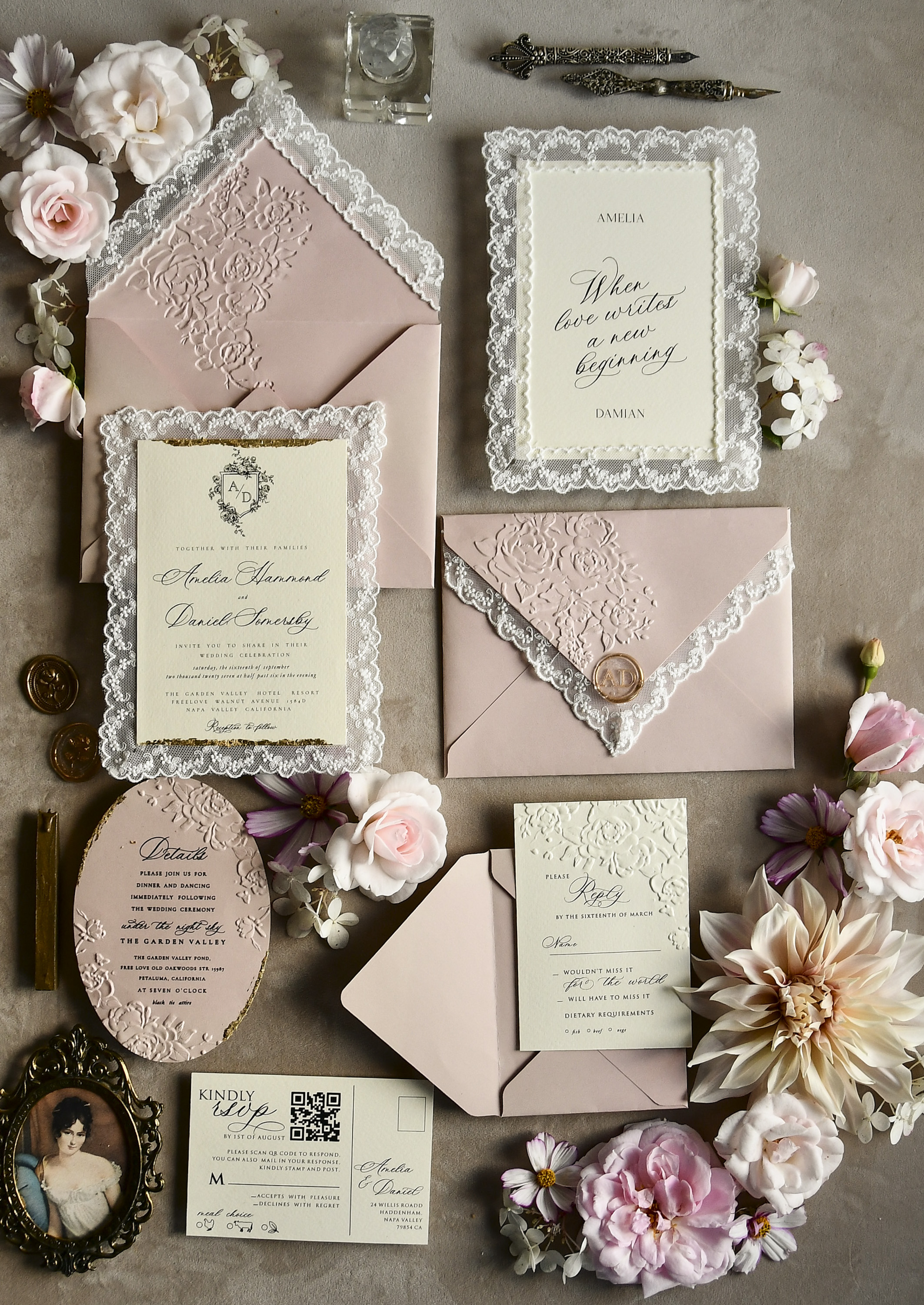
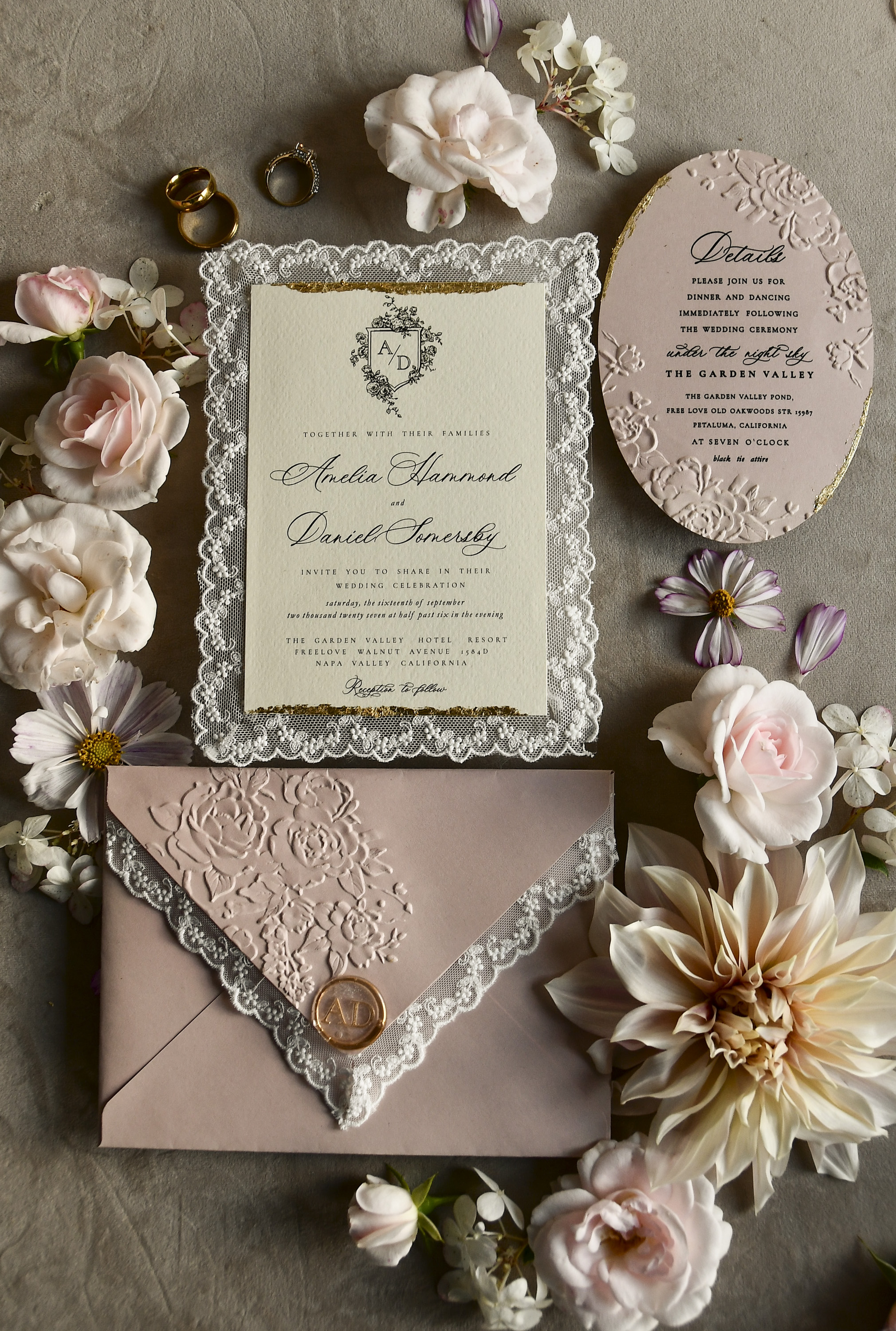
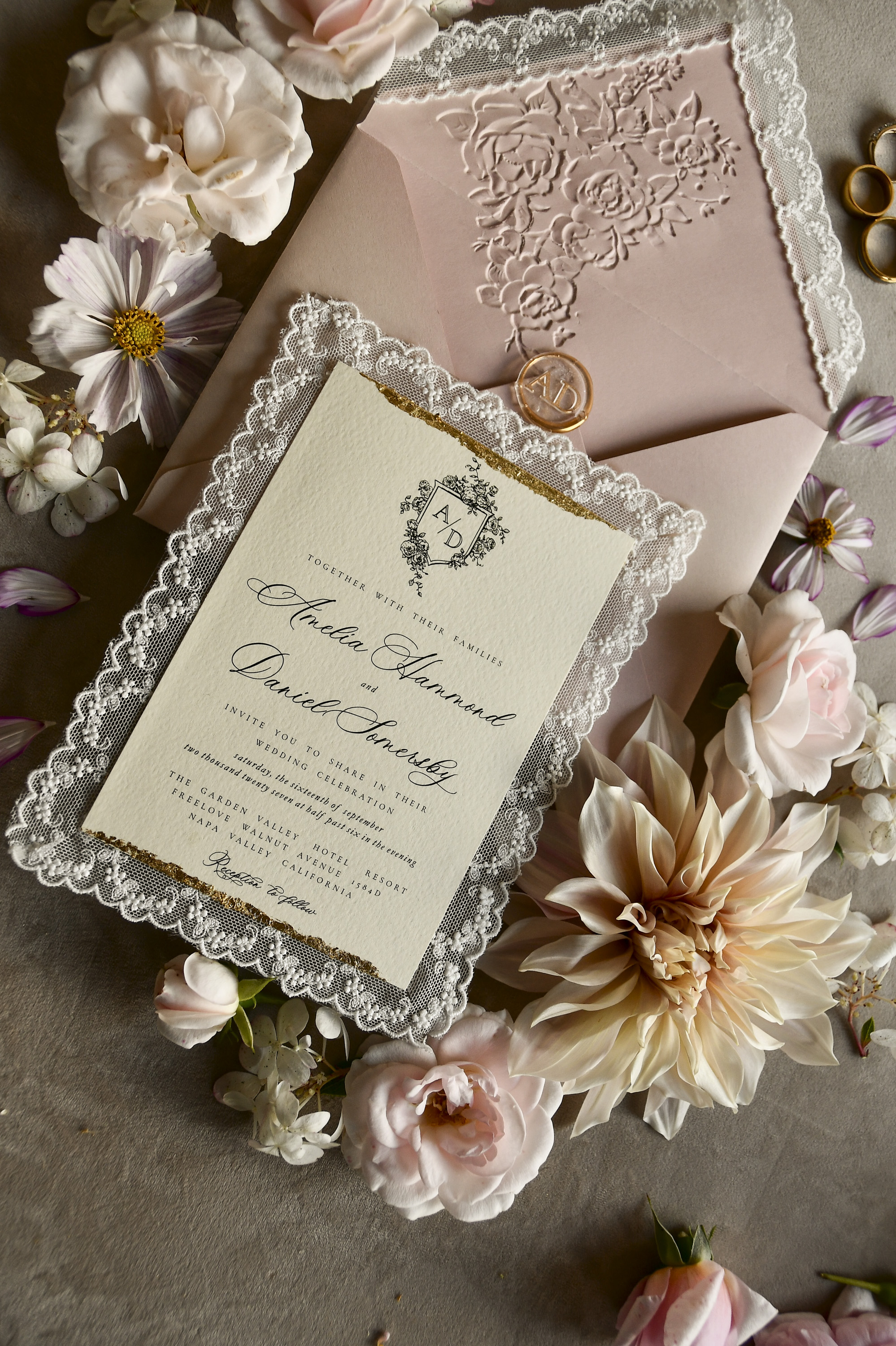
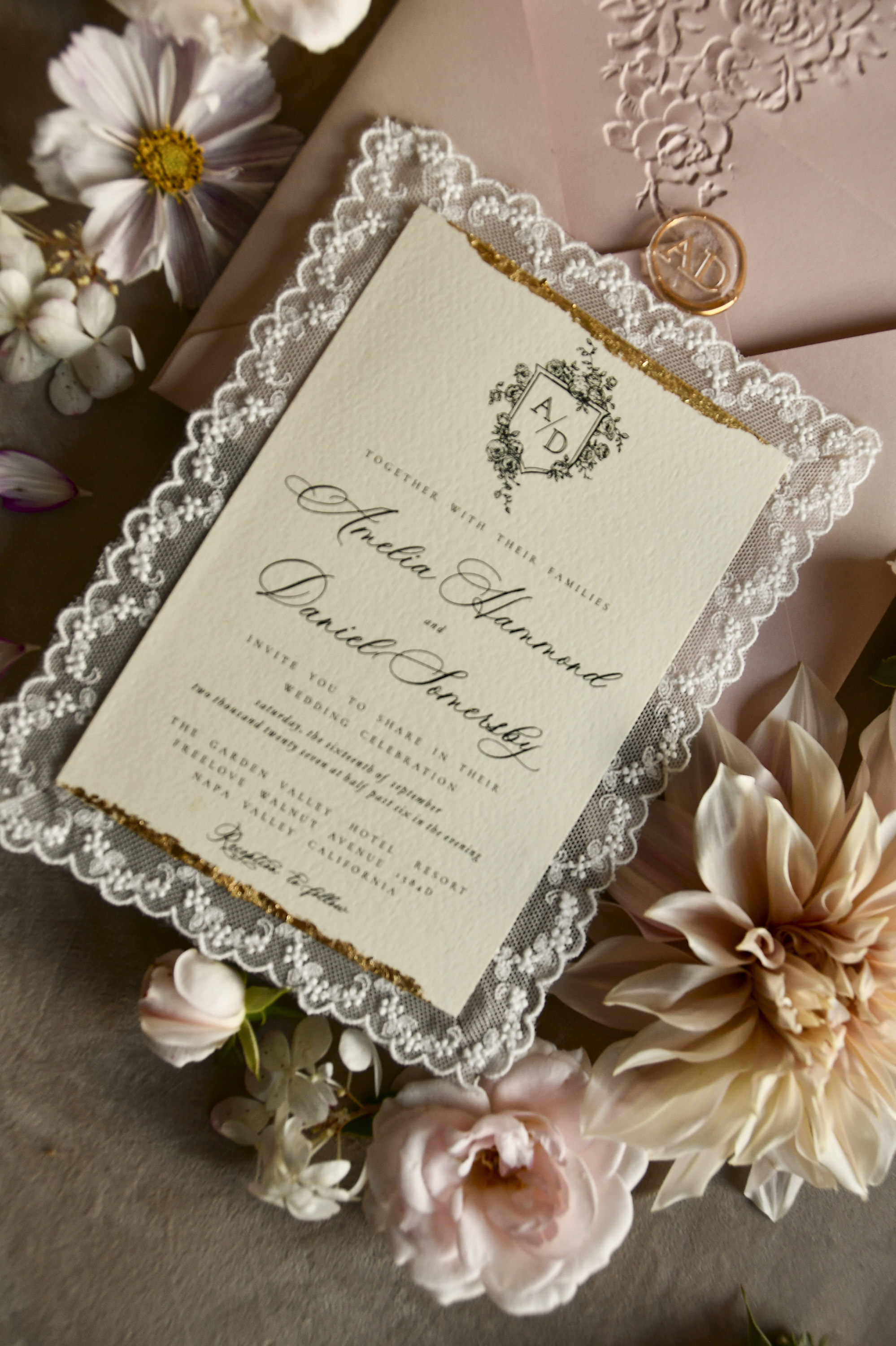
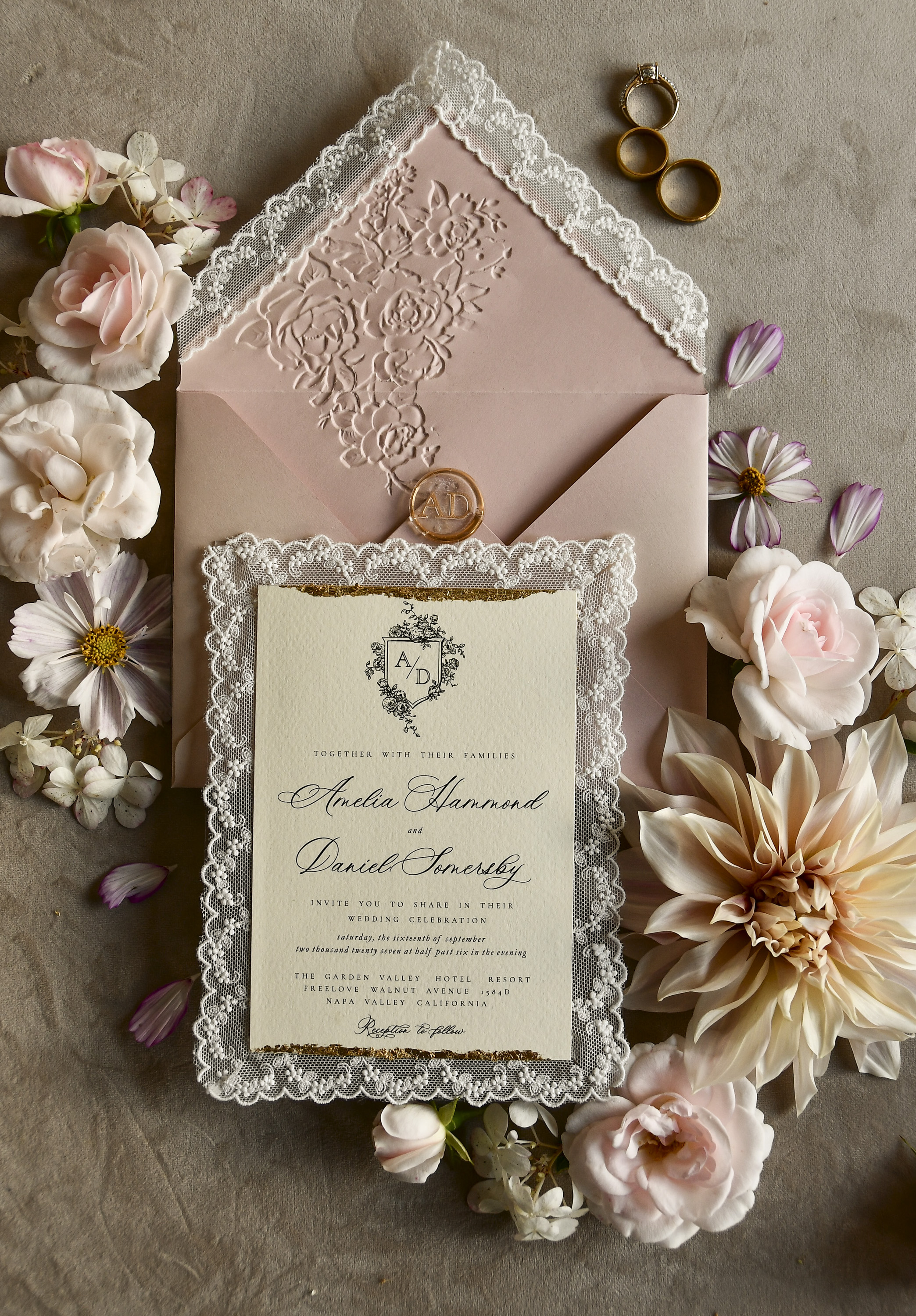
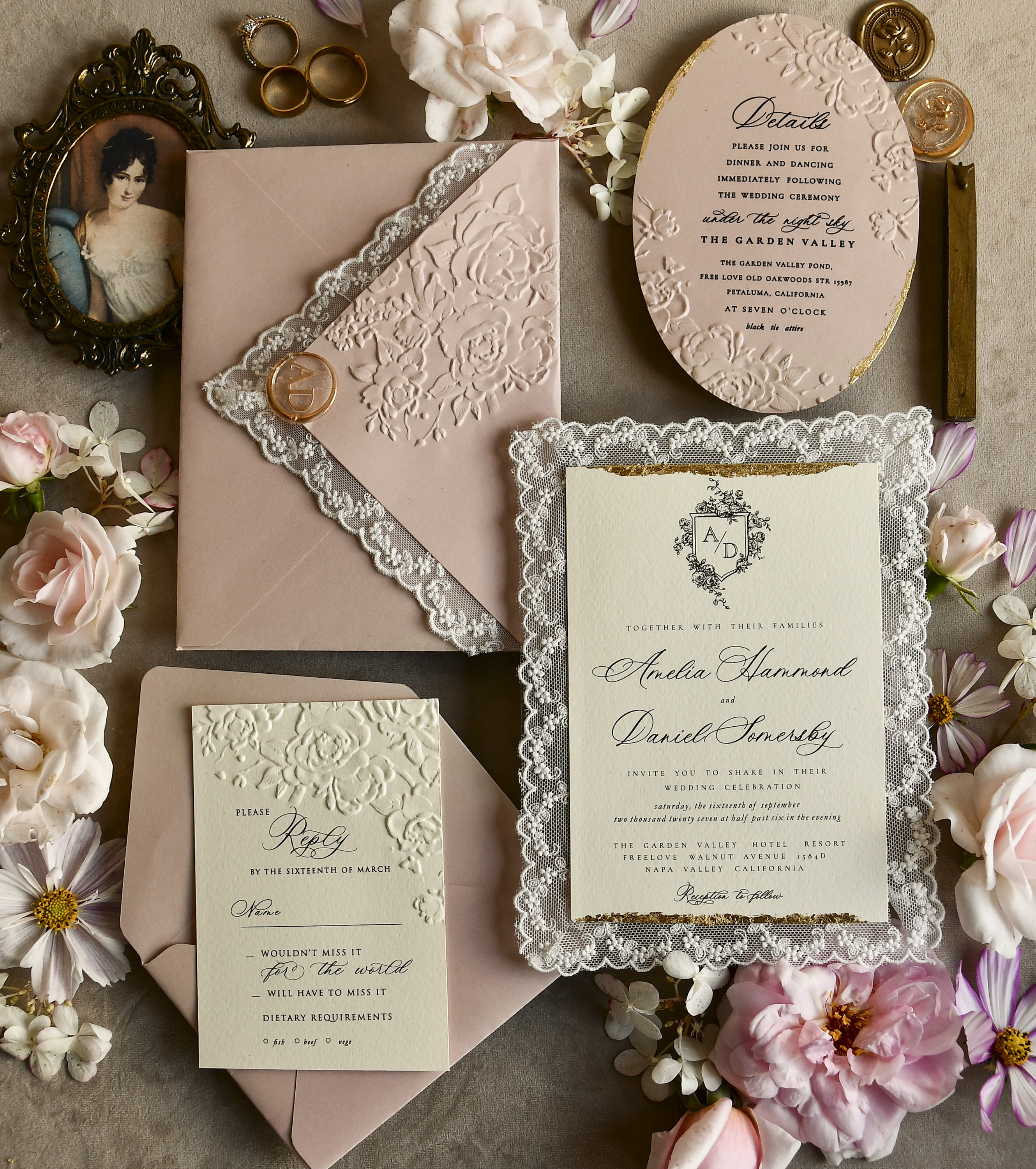
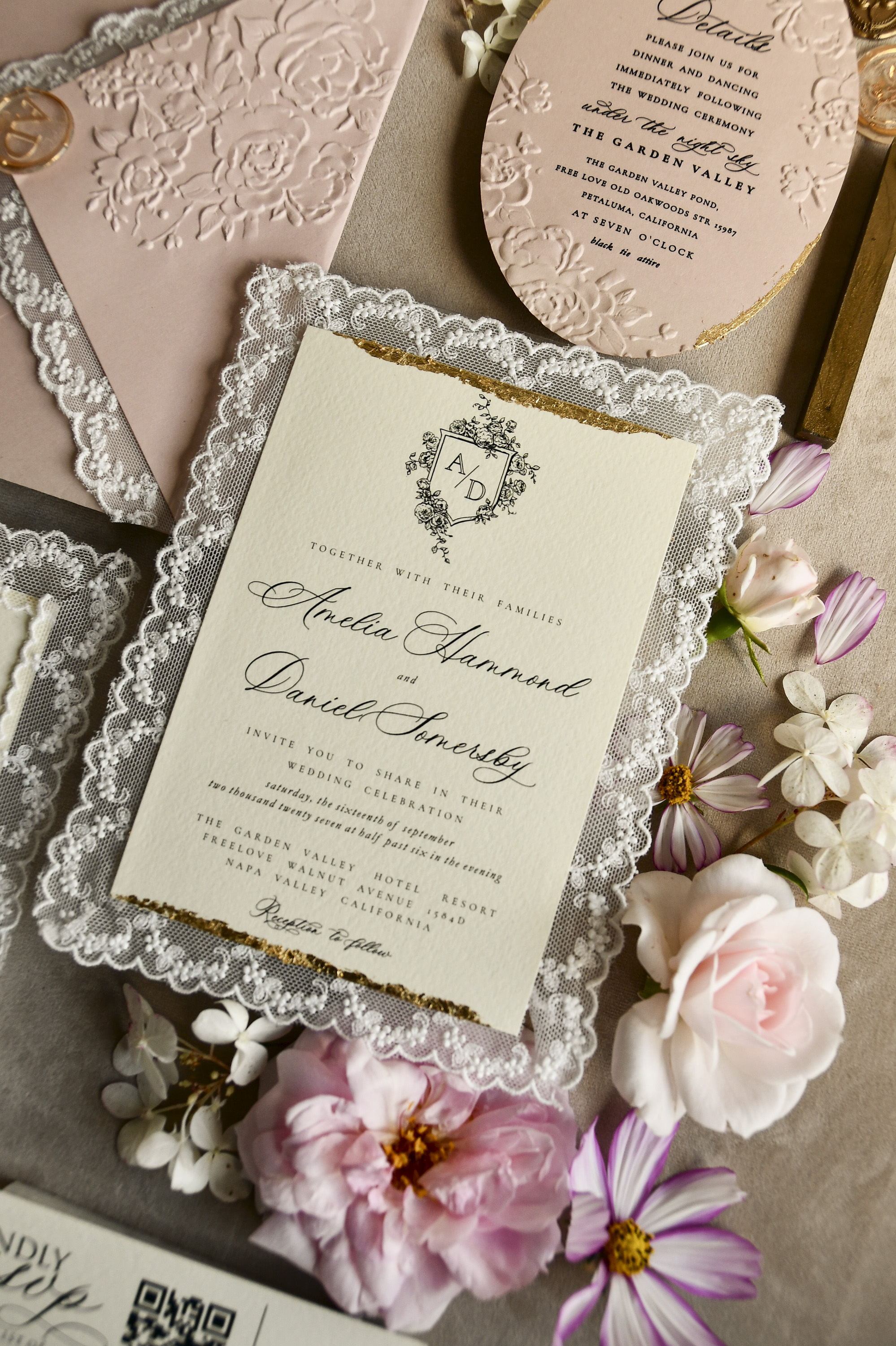
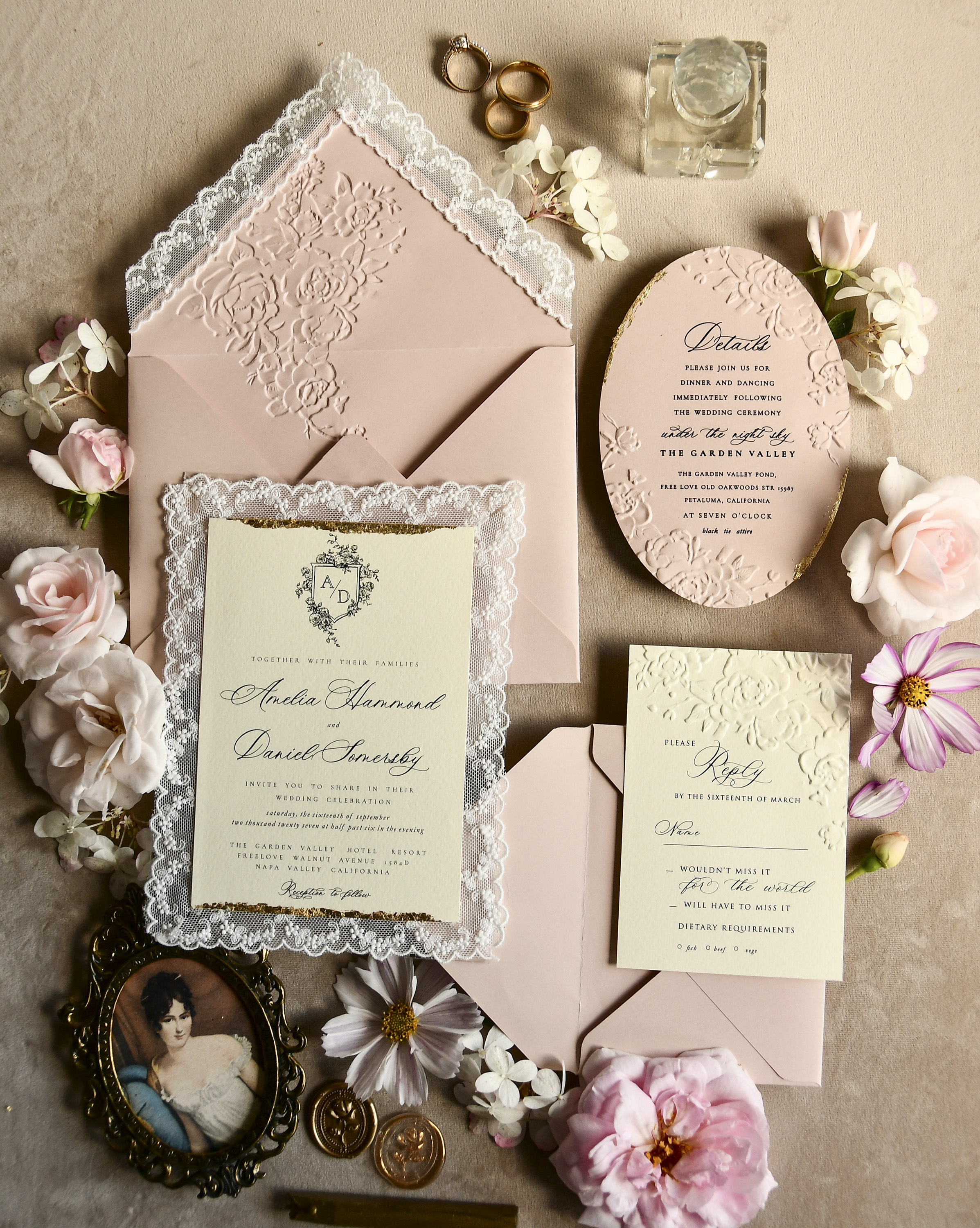
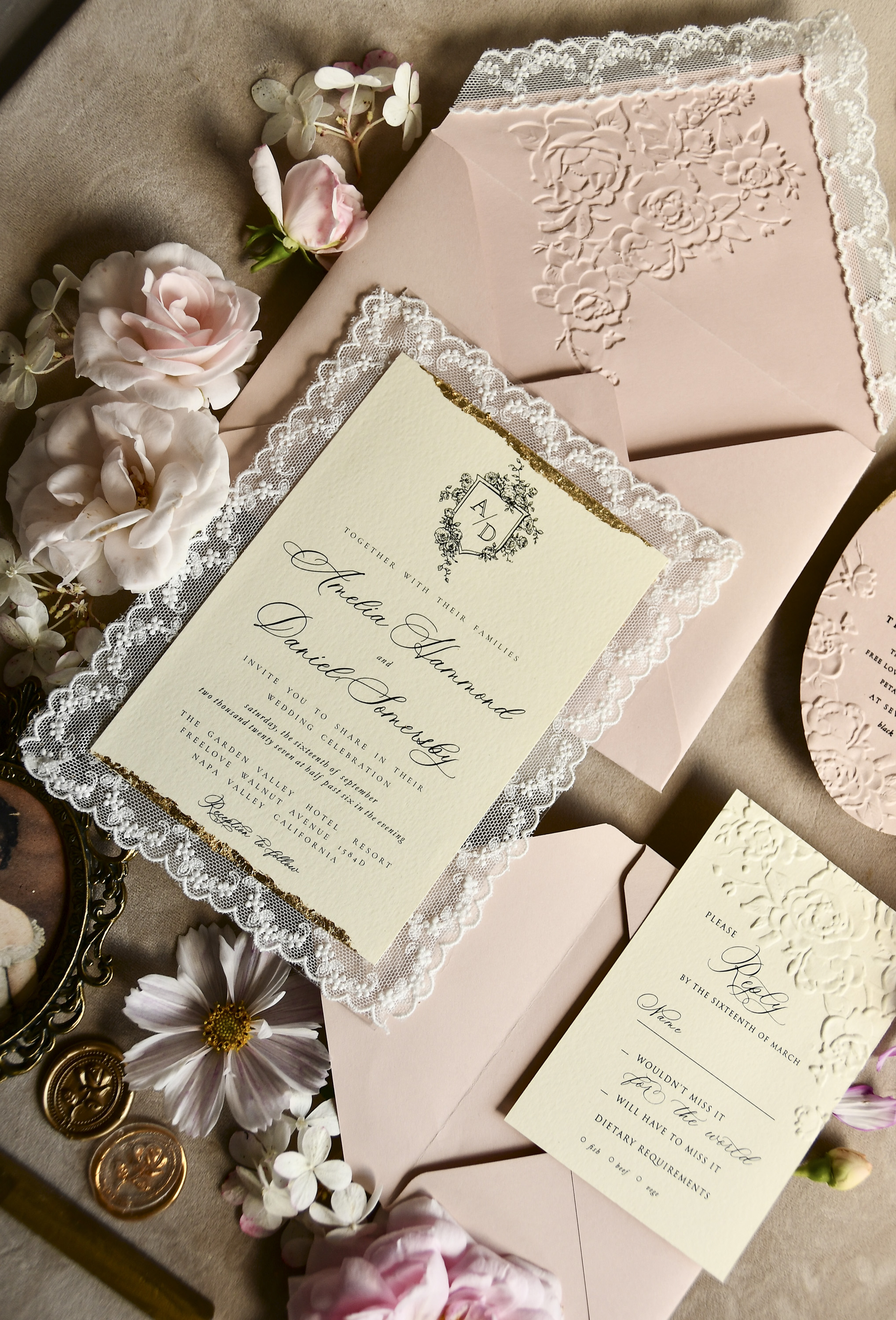
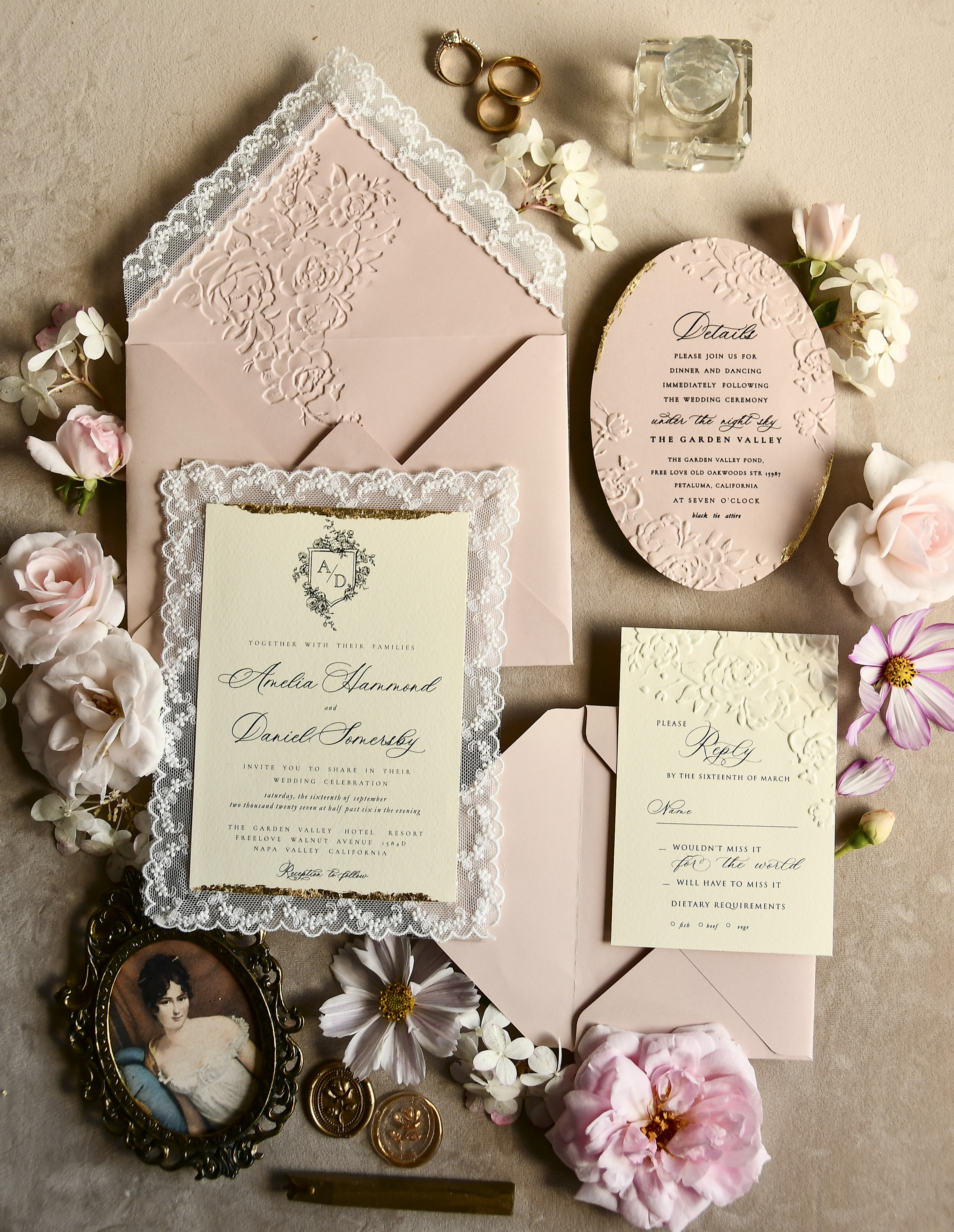
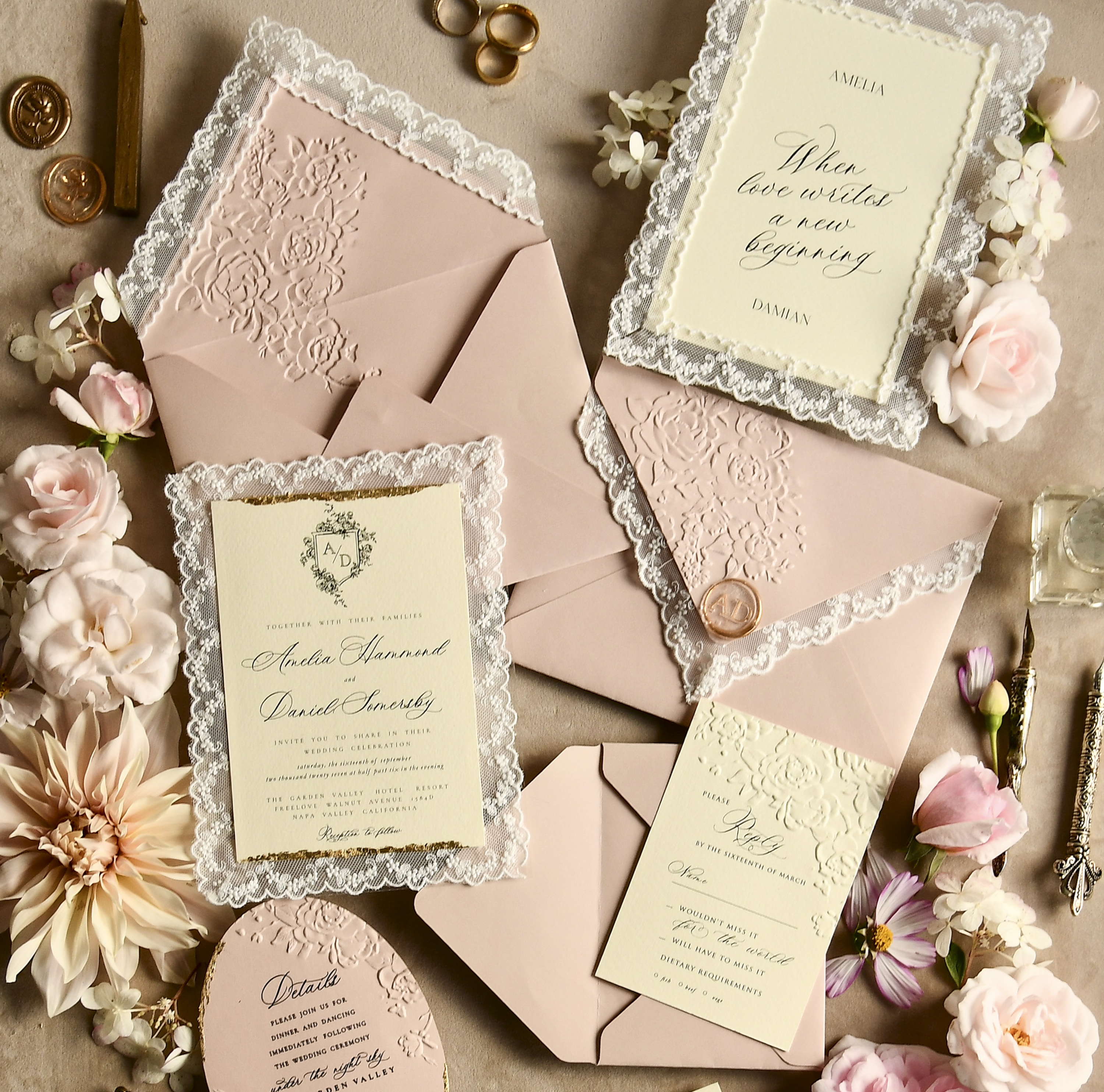
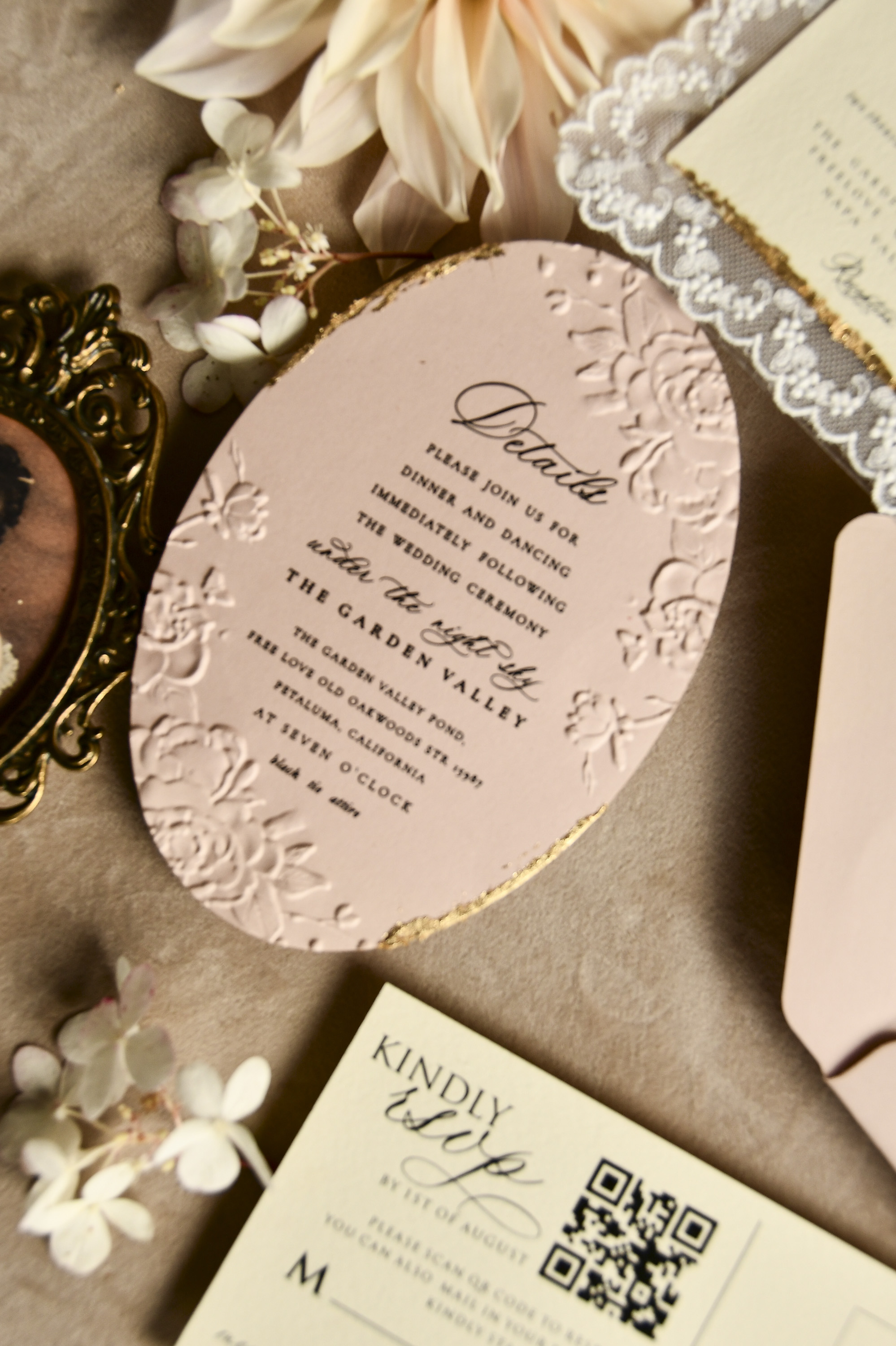
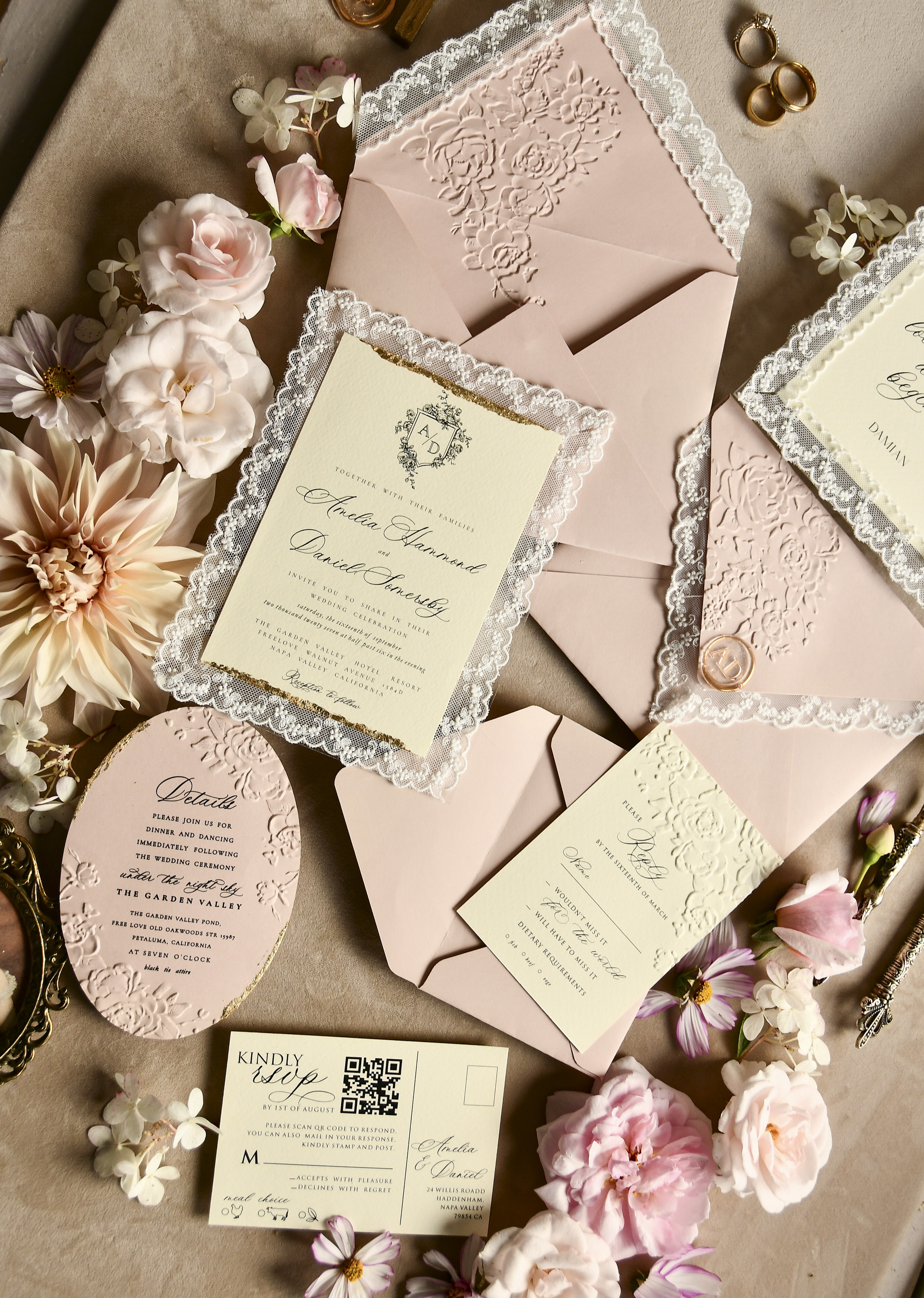
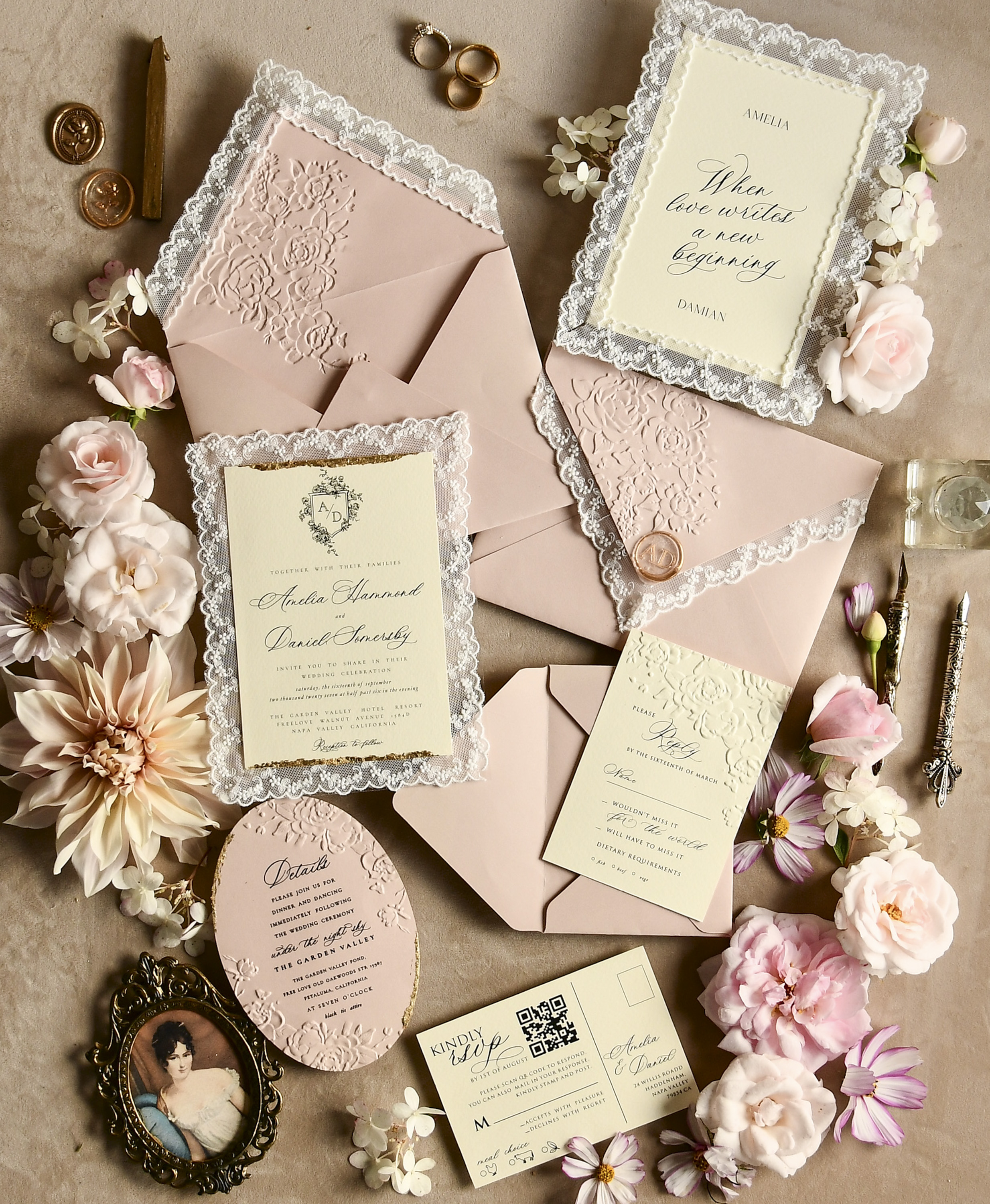
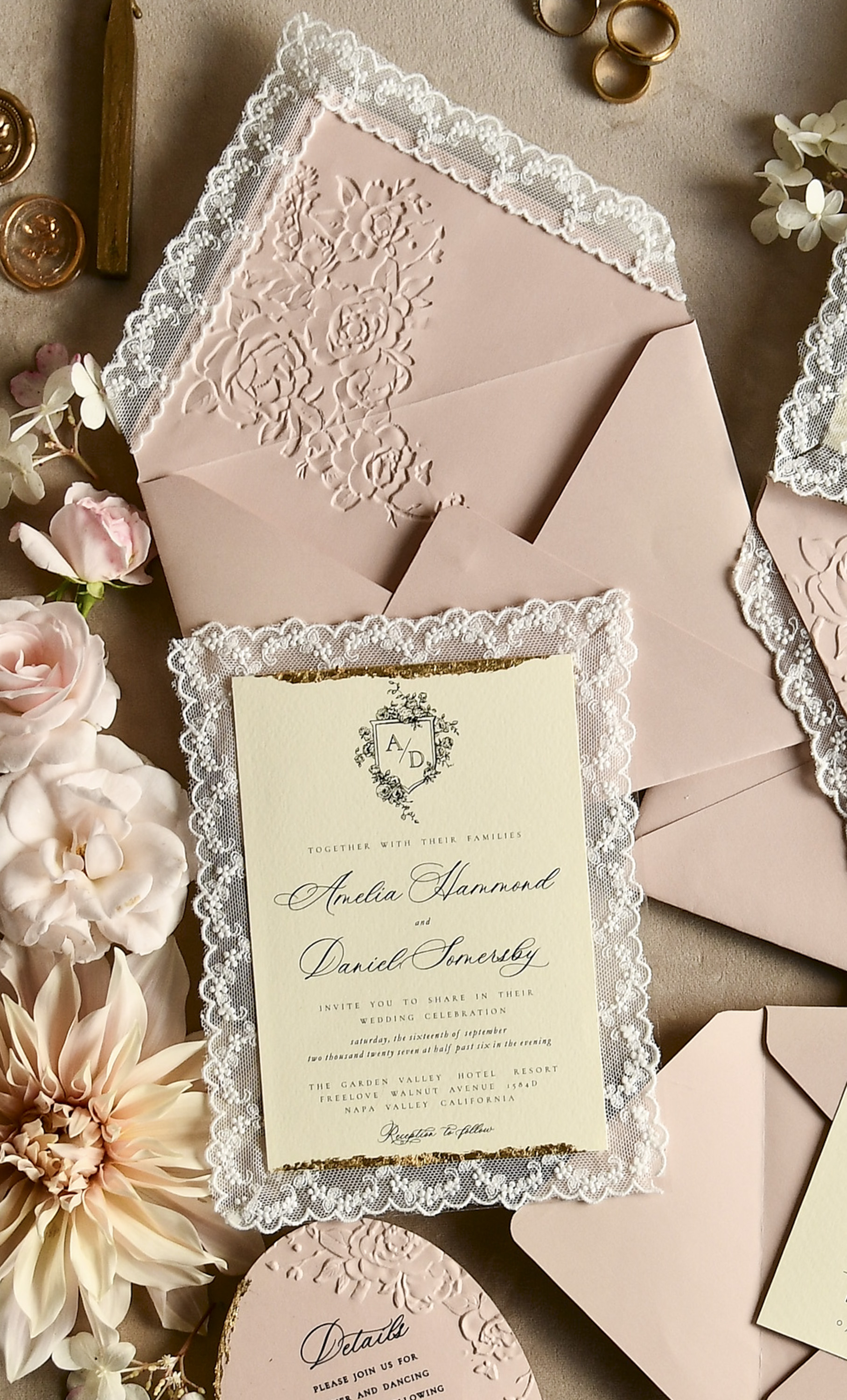
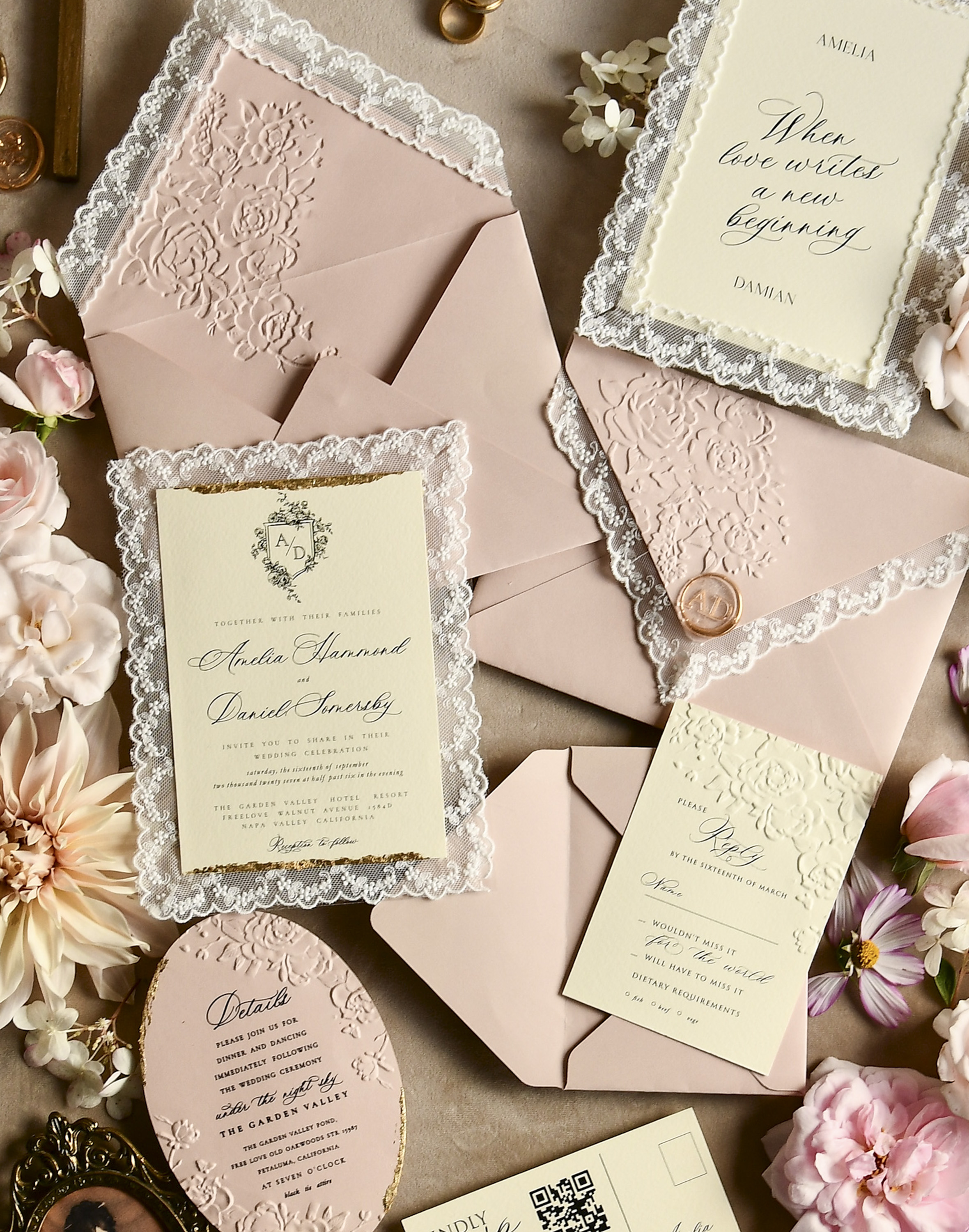
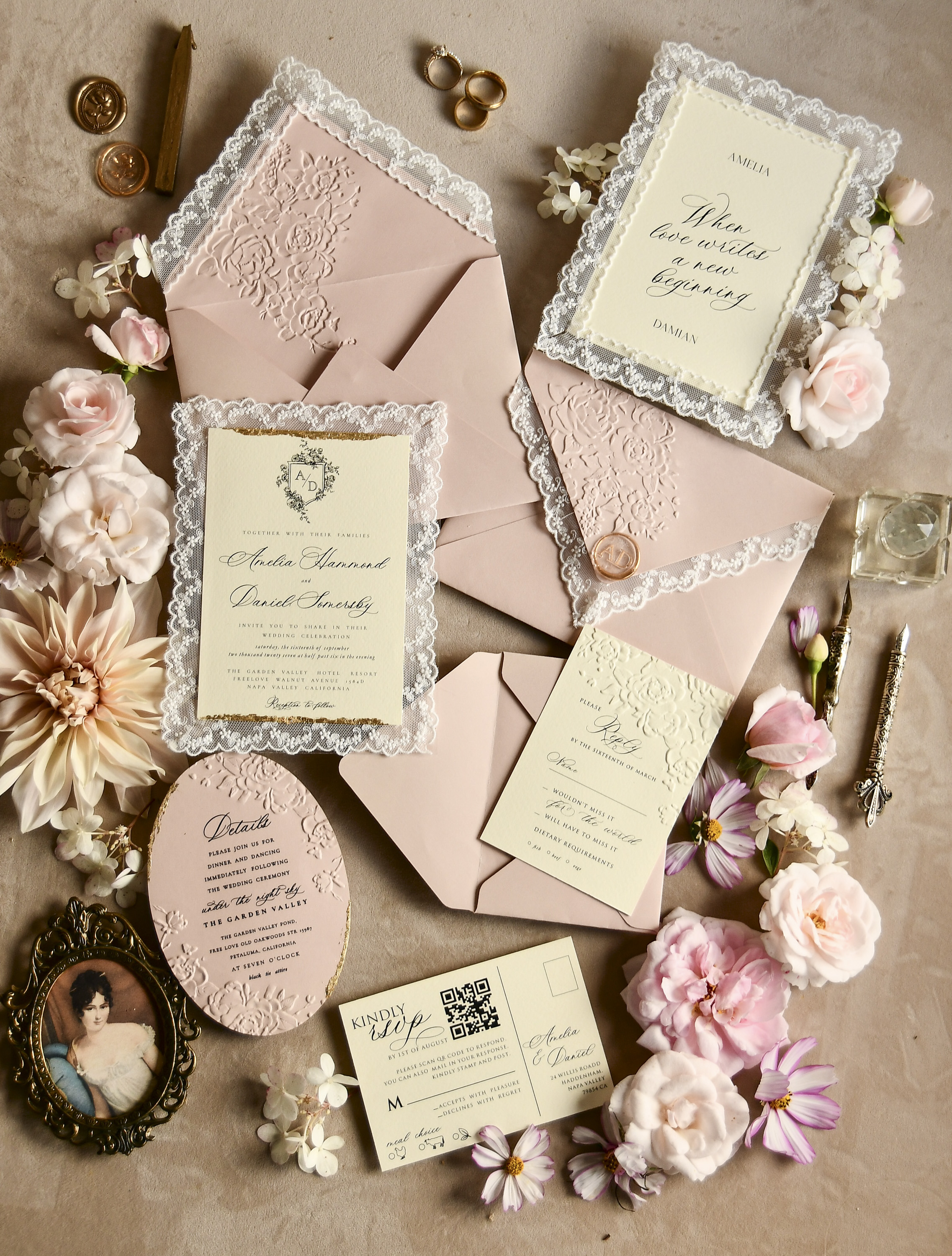
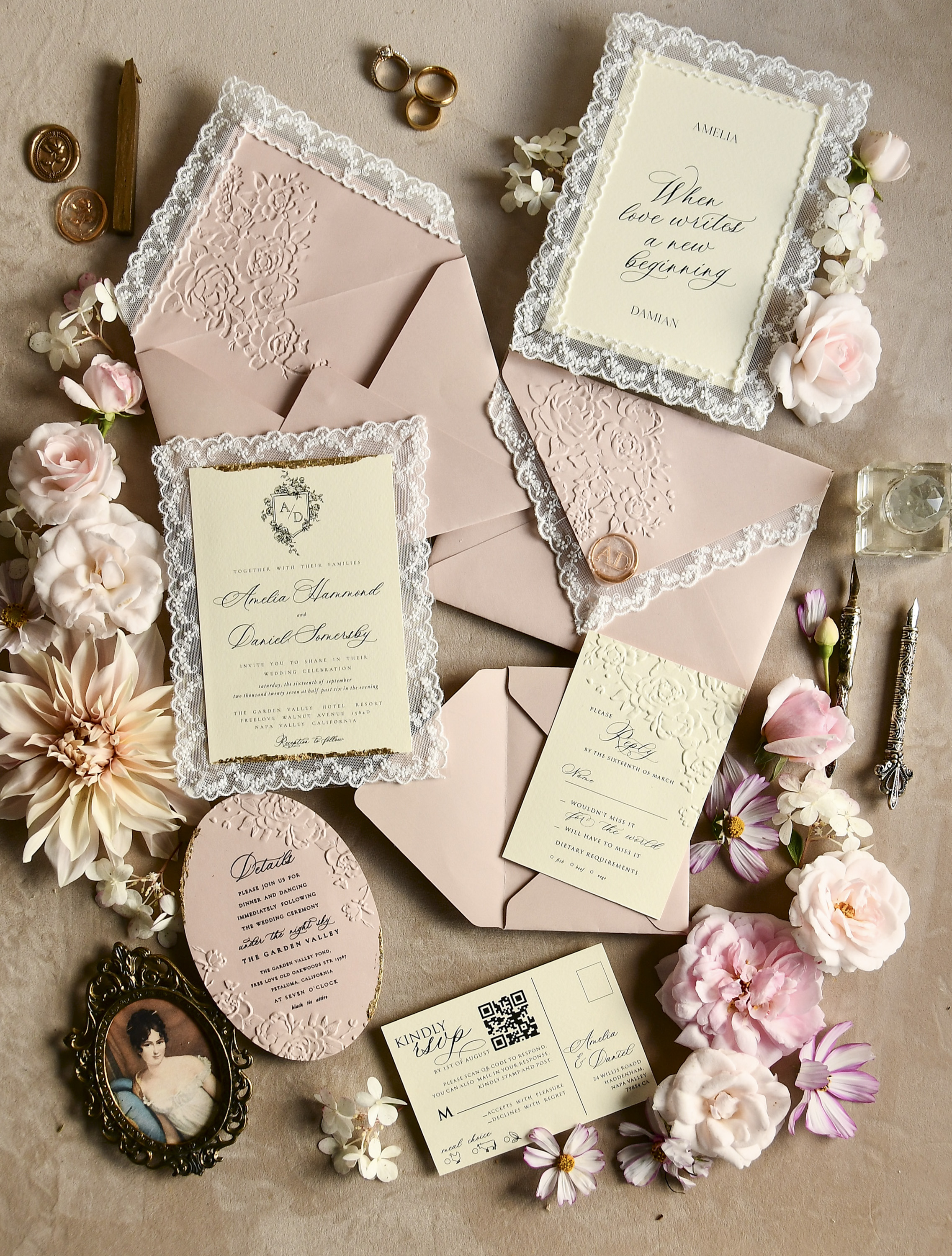
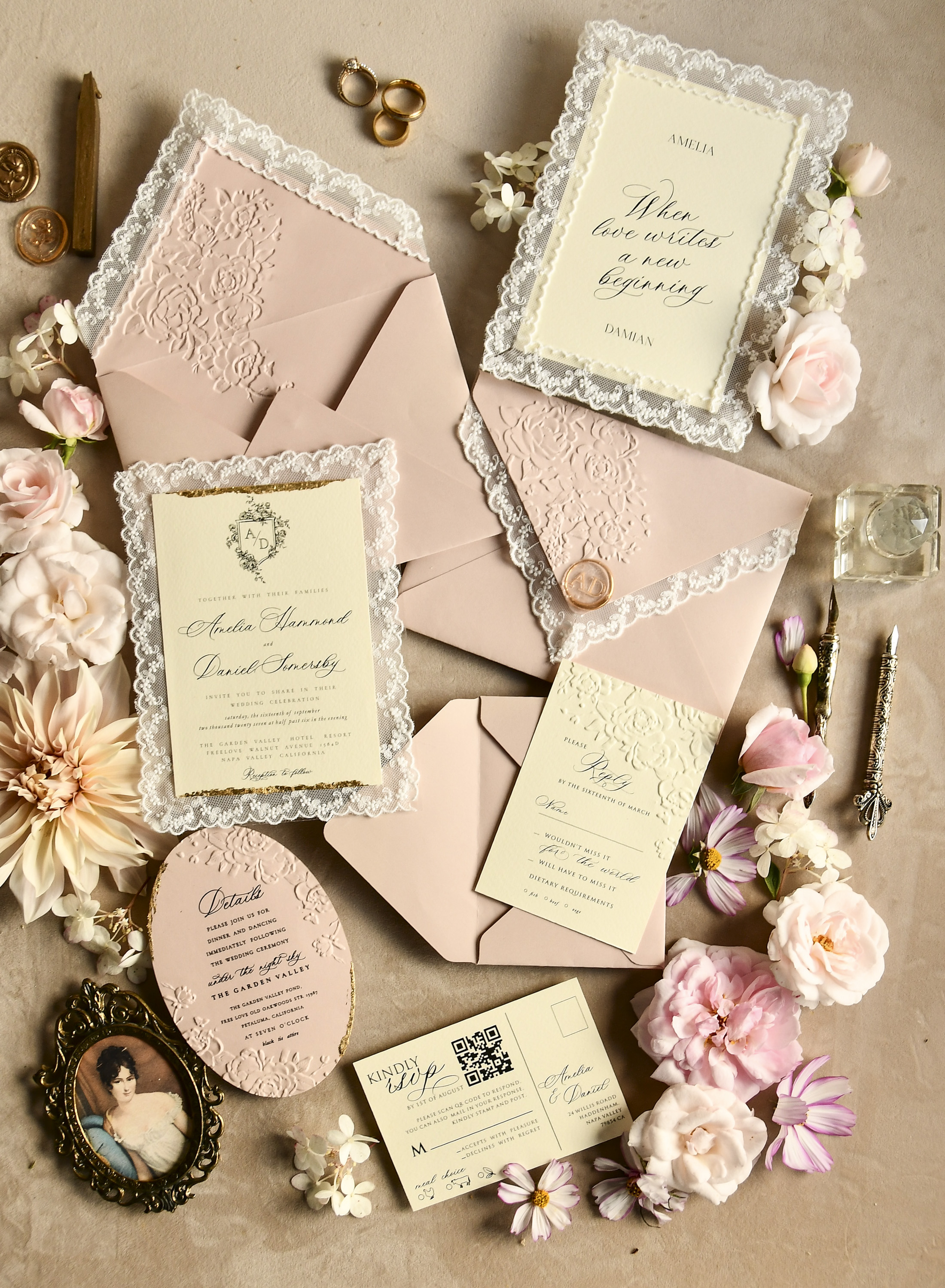
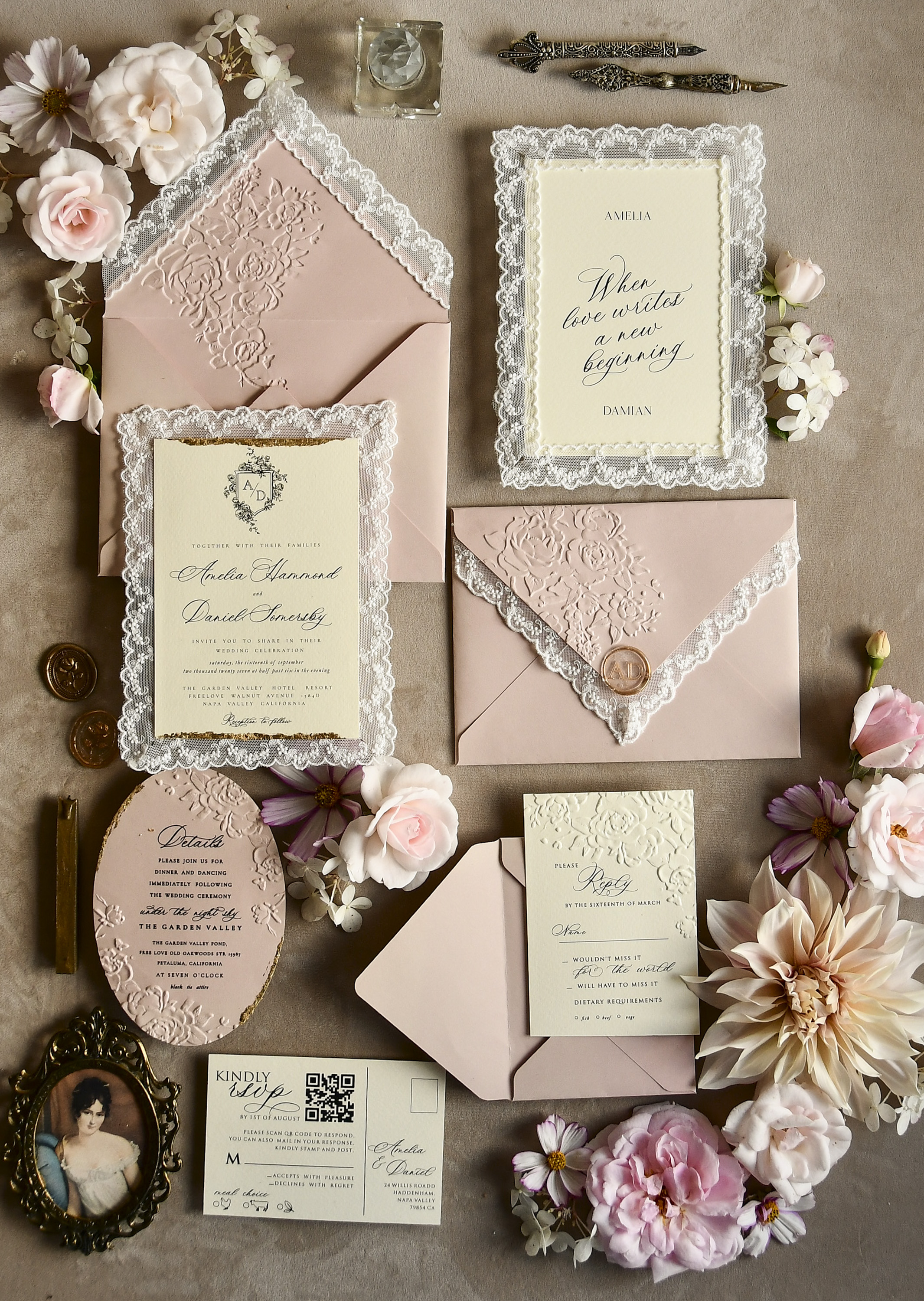
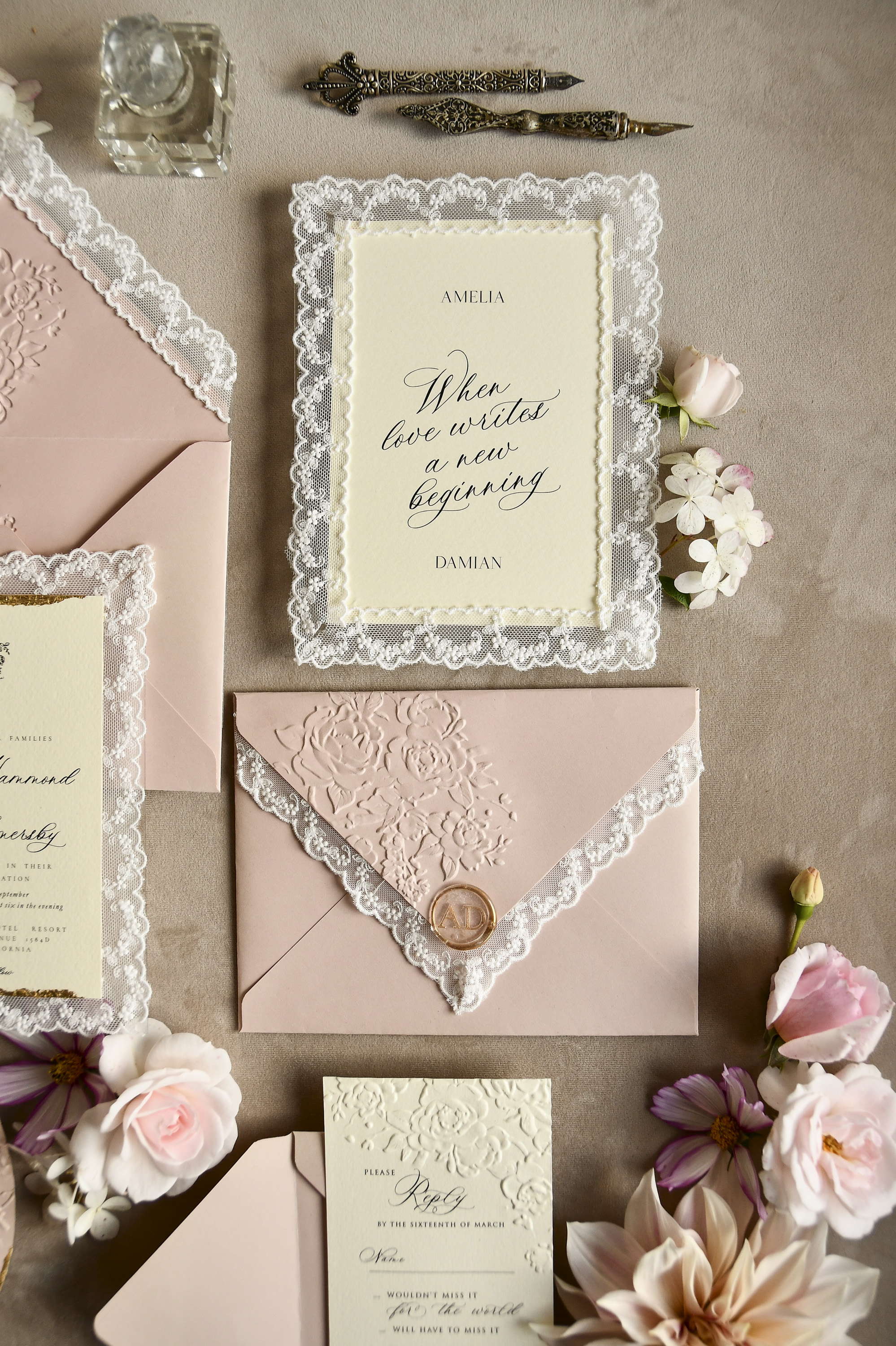
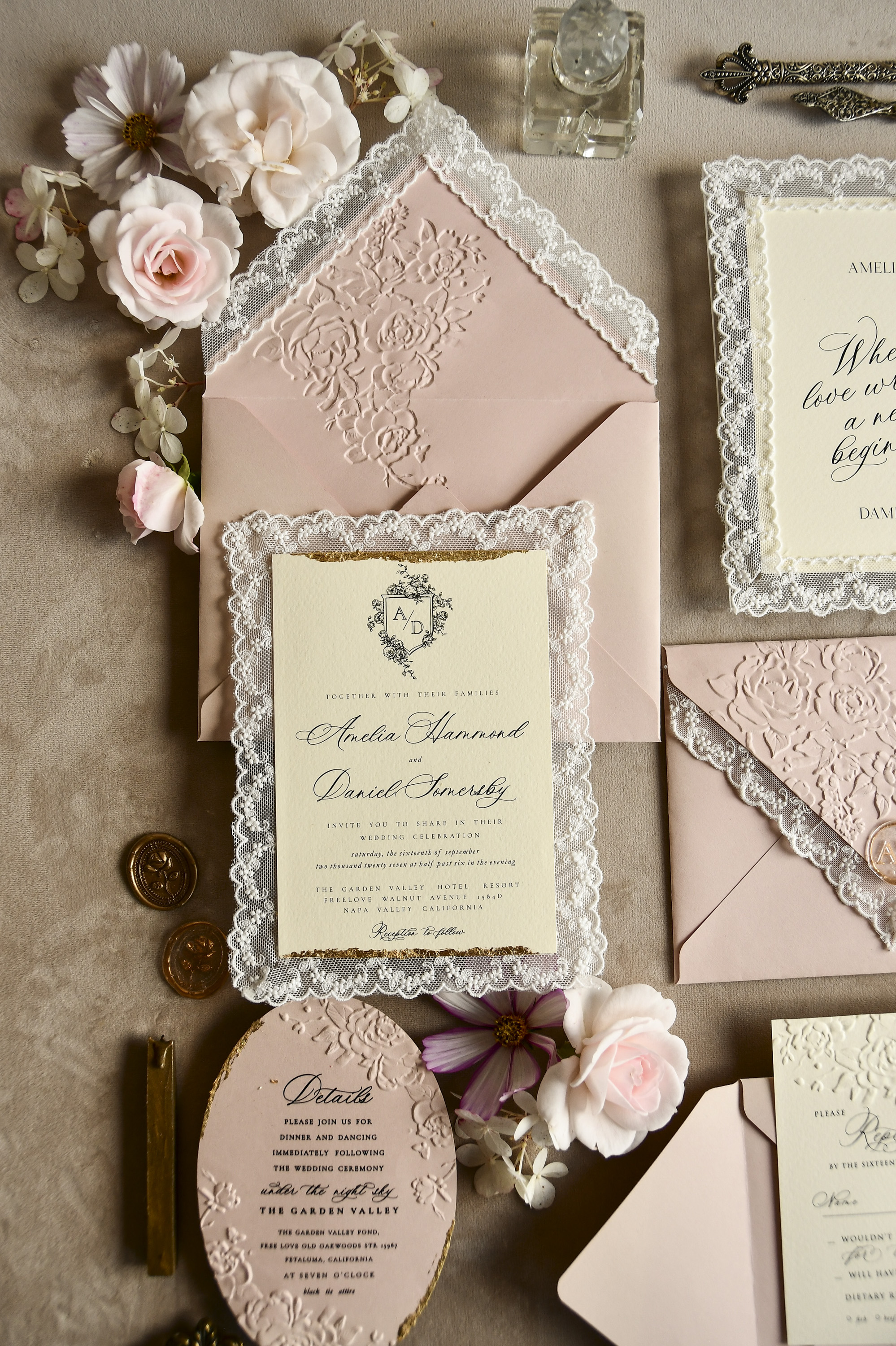
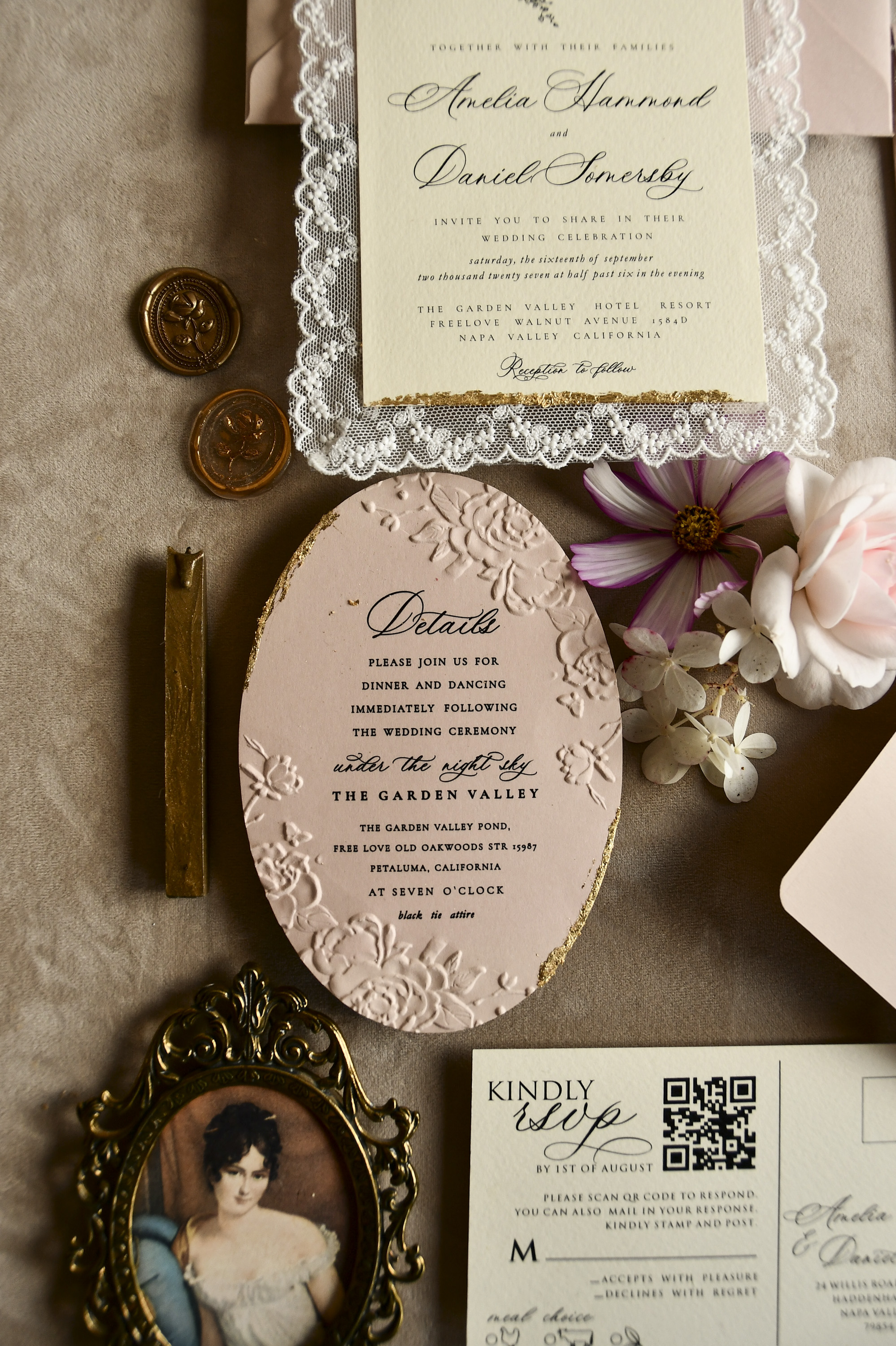
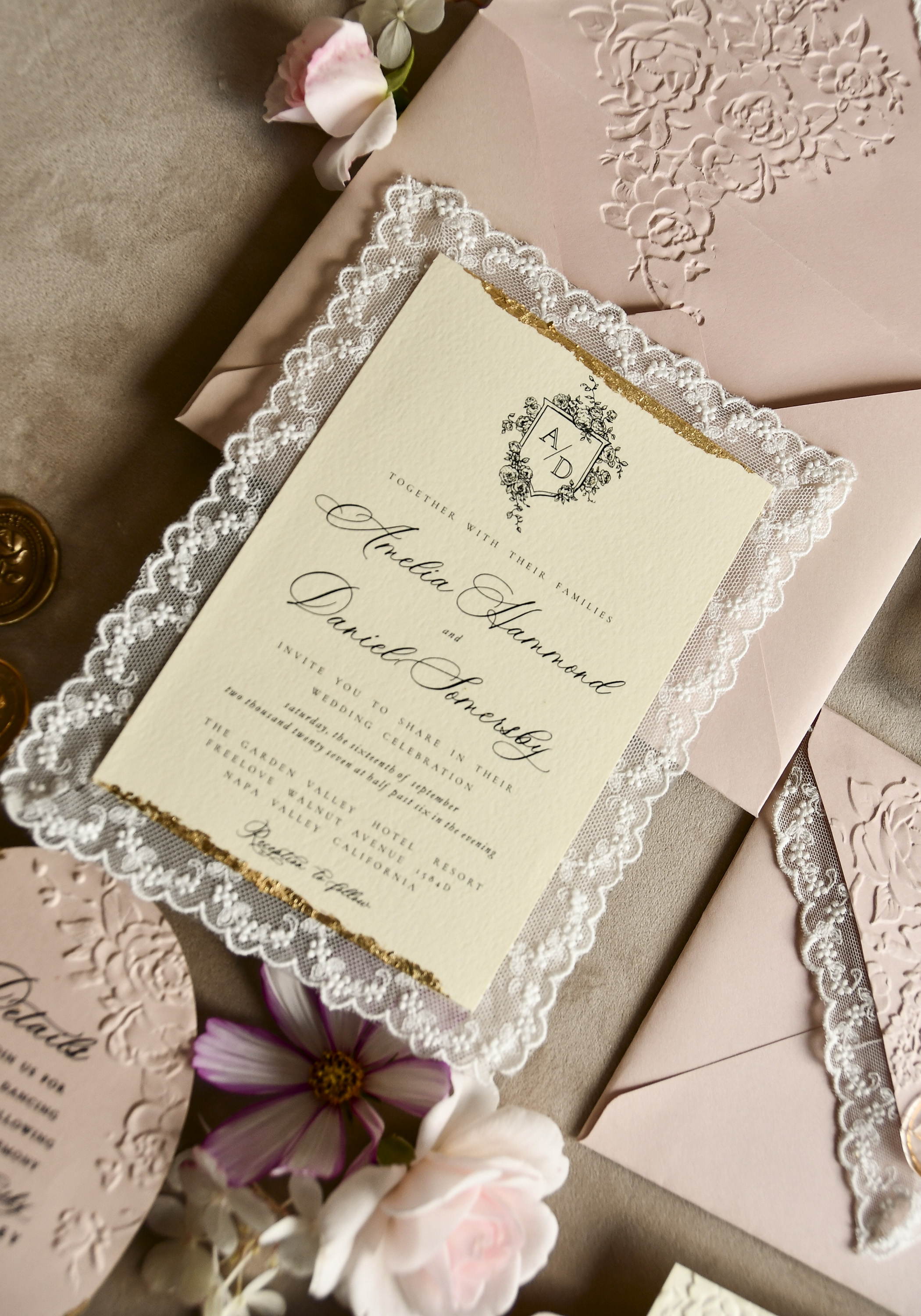
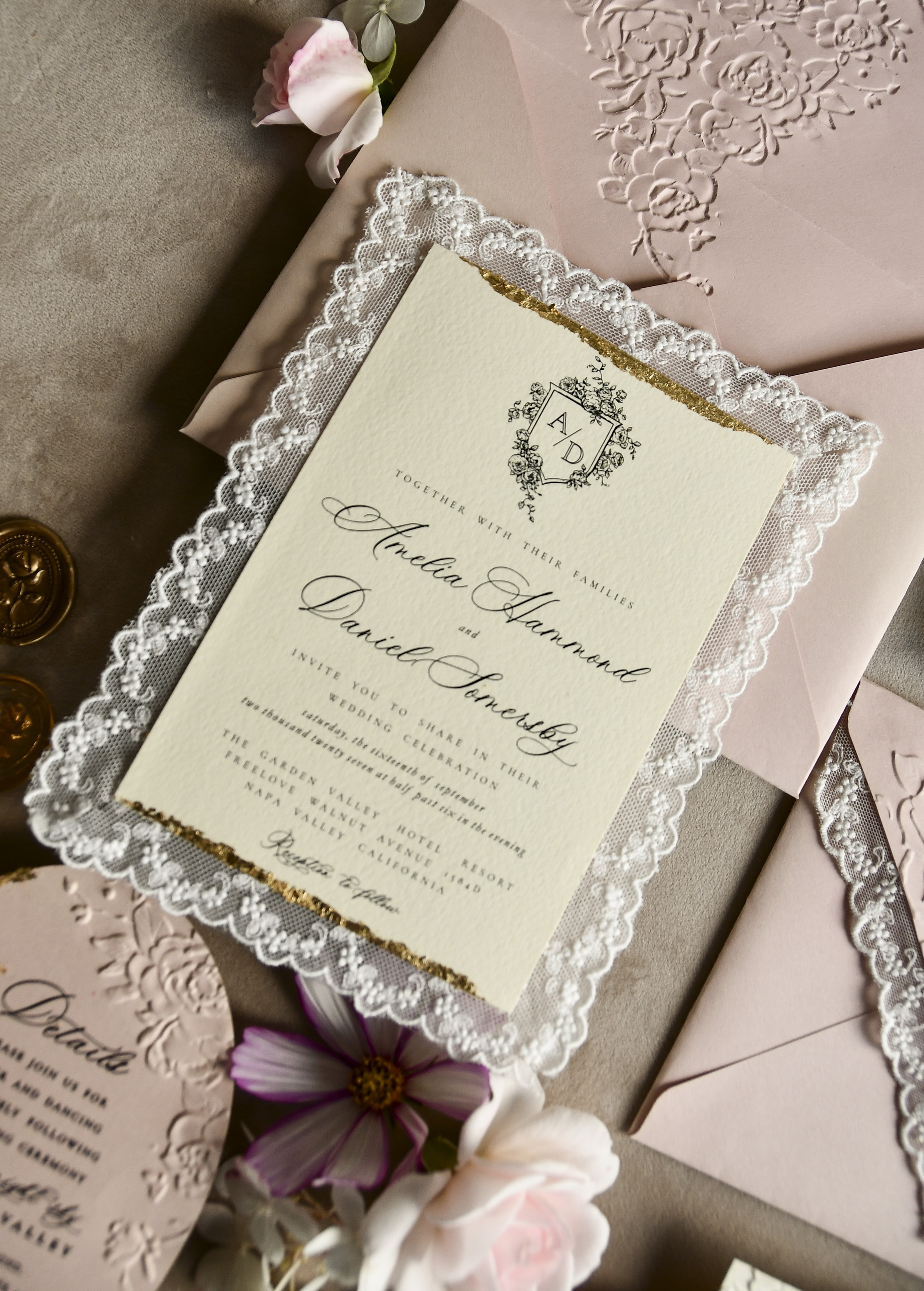
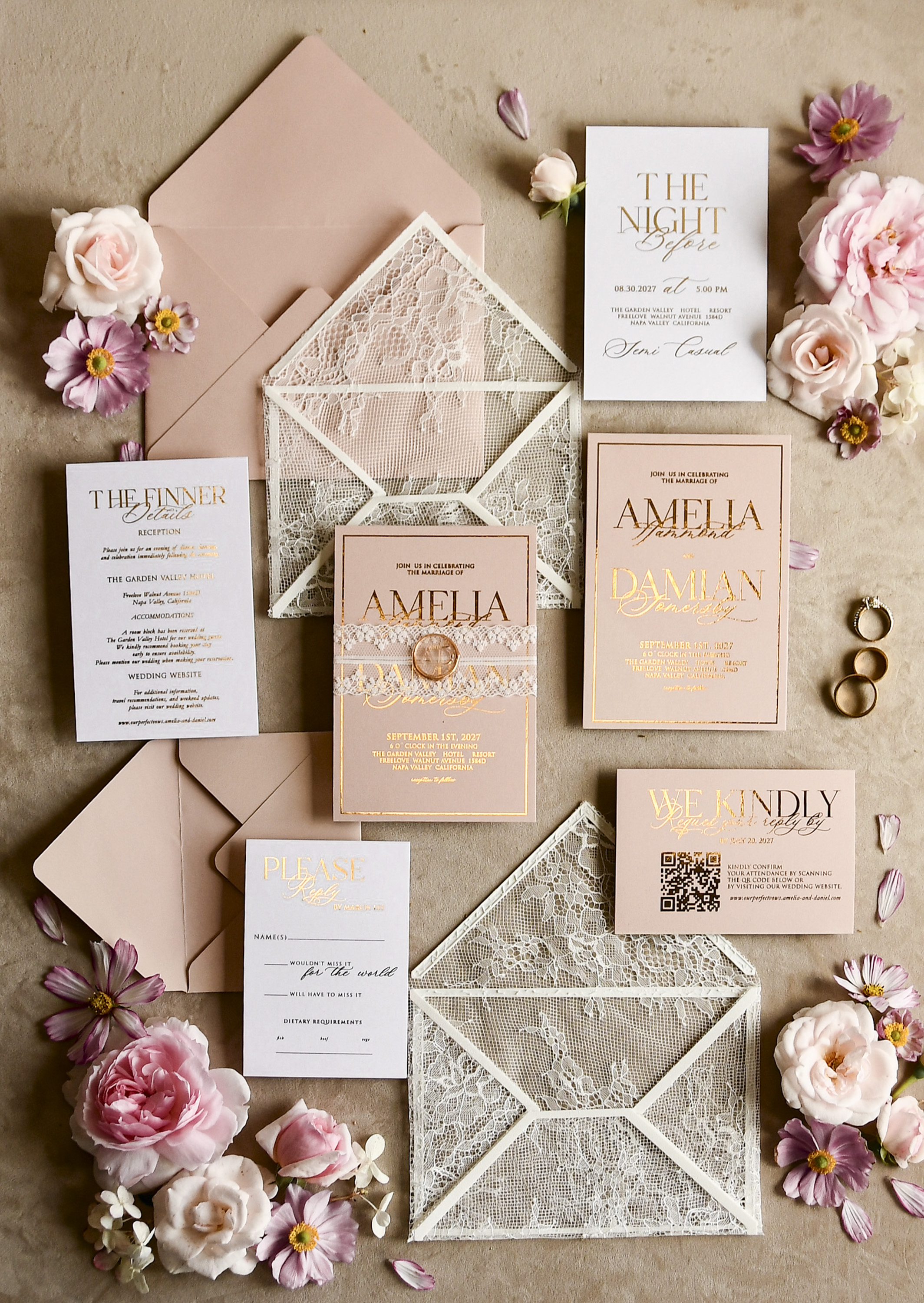
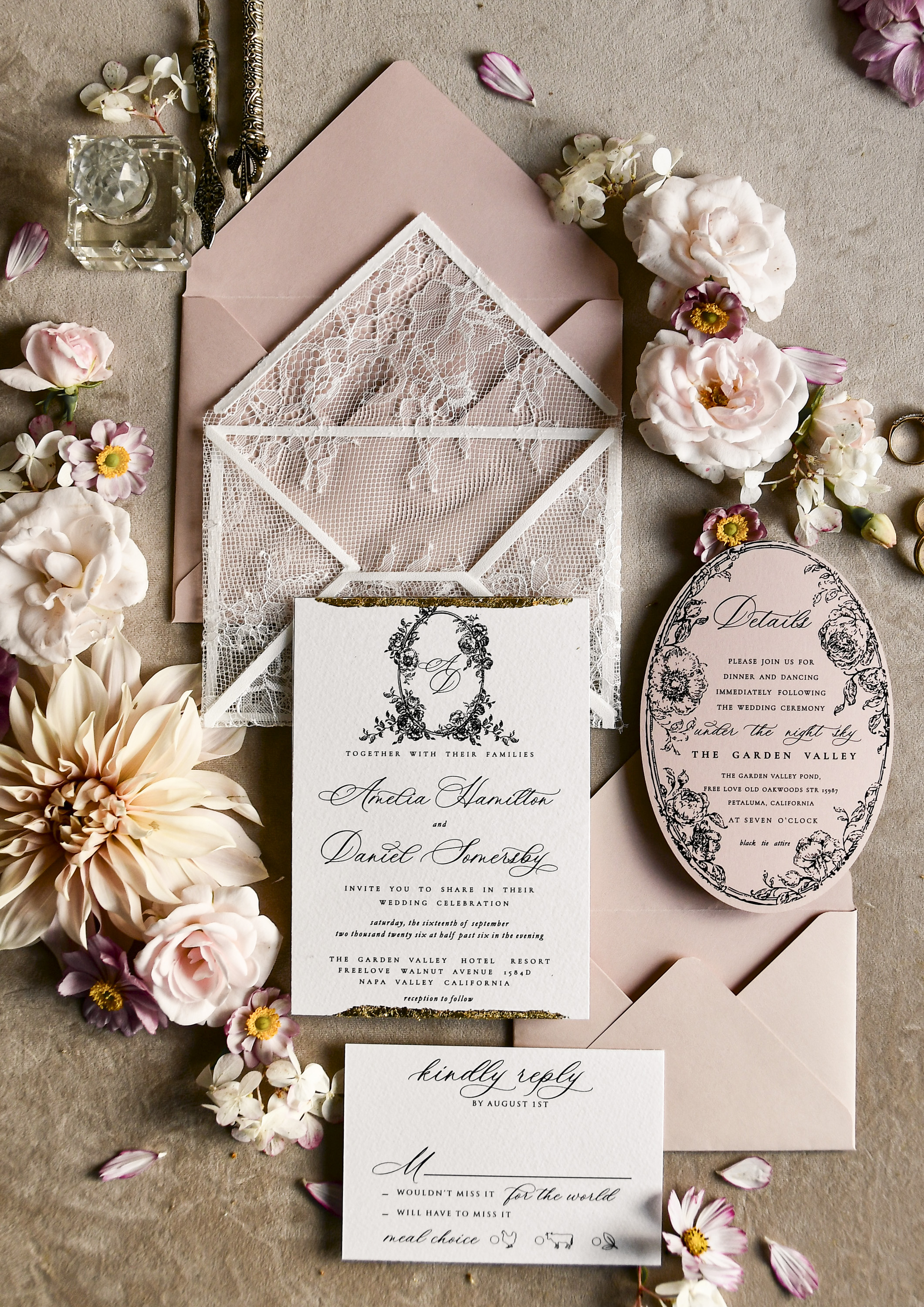
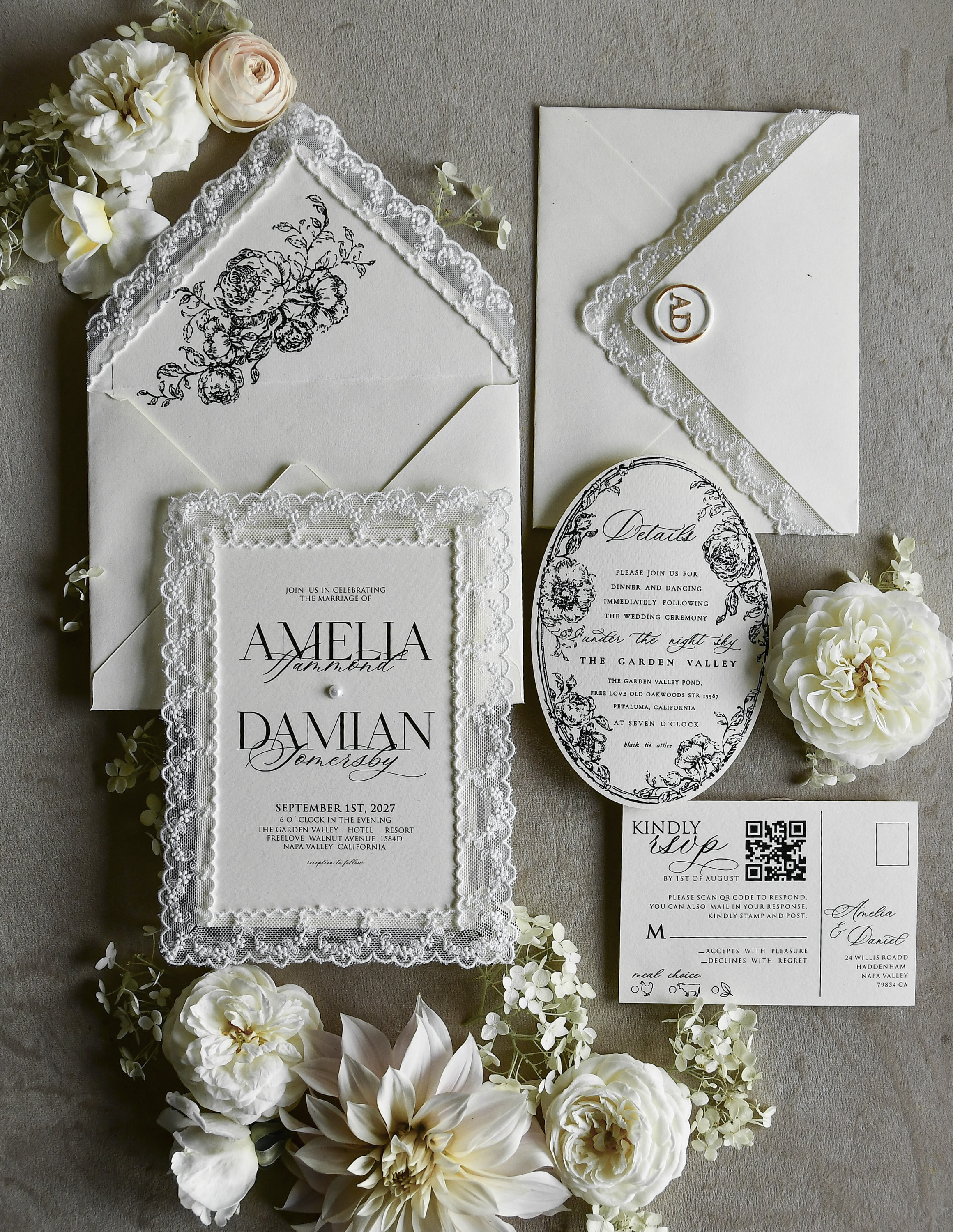
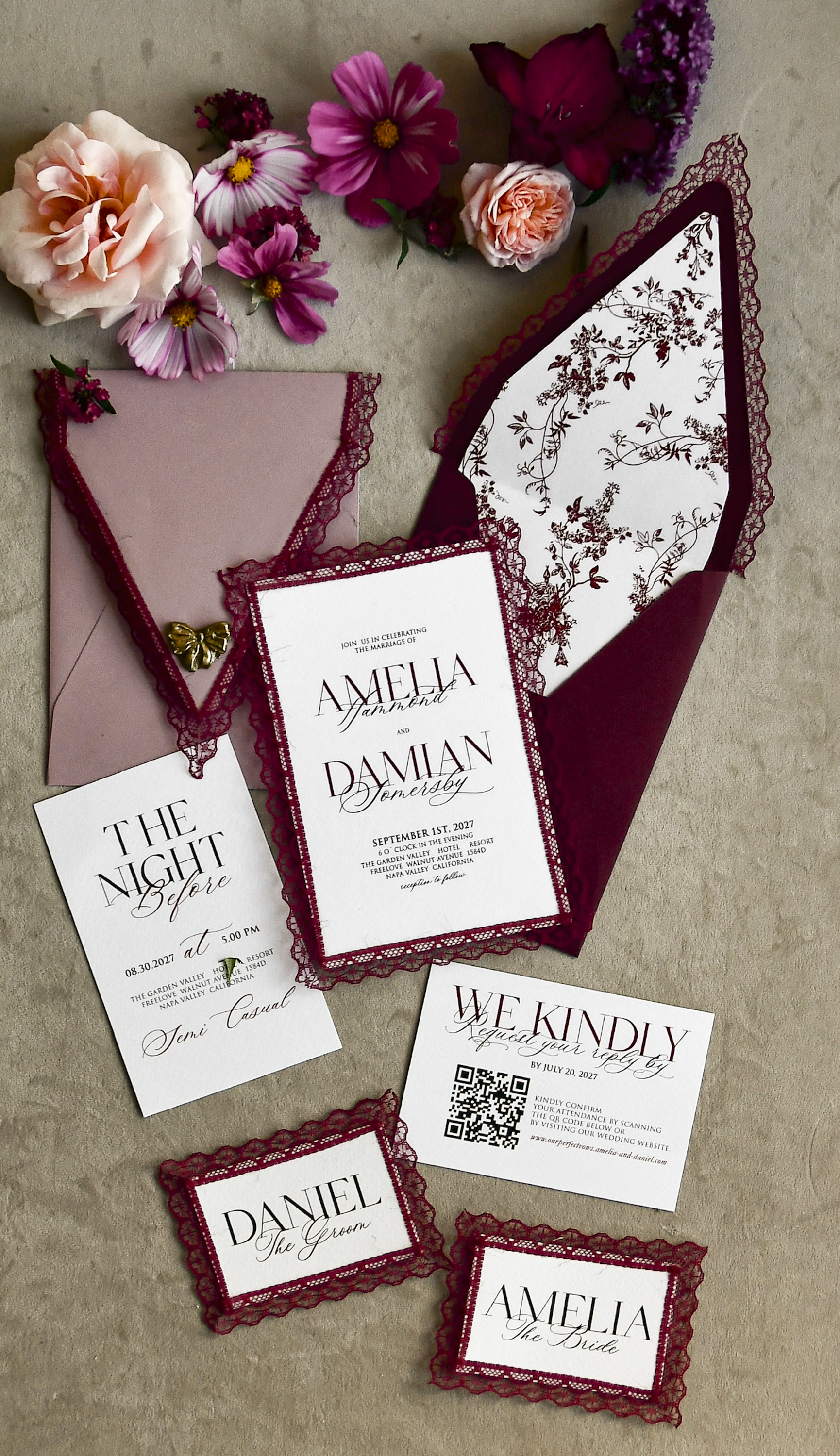
When you're designing your wedding stationery — like our vintage lace wedding invitations from the 01/laceembos/z collection — you can also use your program as a quiet way to list family members in a way that feels inclusive and intentional, without calling attention to any divisions.
How to Have the Conversation With Your Parents
Tell each parent the plan privately and early — ideally two to three months before the wedding. Frame it as a decision you've made thoughtfully, not a question open for debate. Something like: "We've figured out the seating, and I wanted to let you know where you'll be so you can feel comfortable on the day."
If a parent pushes back, listen briefly, then hold your ground. This is your wedding, and managing adult emotions is not your job. If tensions are genuinely high, consider looping in a trusted family member — an aunt, an older sibling — to help keep things calm on the day itself. Designating a point person for each parent means you're not fielding complaints while you're trying to get married.
Finally, once the seating is set, reflect it clearly in your stationery suite. Escort cards, table numbers, and a clear floor plan (shared with your venue coordinator and wedding party) prevent the day-of scramble that's when most awkwardness actually happens. The 01/laceembos/z wedding invitation collection pairs beautifully with coordinating escort cards that keep everything cohesive and organized.
Frequently Asked Questions
Traditionally, the mother of the bride sits in the first row and is the last to be seated before the processional begins — this signals the ceremony is about to start. The father of the bride typically walks the bride down the aisle and then joins his seat. If your parents are divorced, the parent you're closest to or who is more involved in the wedding usually takes the front row.
It's rare but it happens, and your comfort and safety come first. In extreme cases, some couples hold two small celebrations separately, or they work with their venue to create a layout where parents arrive, are seated, and exit through different areas. Talk to your wedding planner or venue coordinator — they've navigated this before.
Generally yes — separating a parent from their current spouse or long-term partner creates its own awkwardness. Unless there's a specific reason to keep them apart, seat partners together and build the rest of the table around them with supportive family or friends.
A groomsman, the bride's brother, another close male relative, or even an older family friend can escort the mother of the bride to her seat. This is completely standard and avoids any uncomfortable optics of divorced parents walking together if they'd prefer not to.
No, you don't. Your escort cards and table assignments speak for themselves. If a relative asks why the seating is arranged a certain way, a simple "We planned it to make sure everyone is comfortable" is all you need to say.
Aim to have your parent seating plan locked in at least six to eight weeks before the wedding, so you have time to communicate it to each parent and make any adjustments before your final stationery order and venue floor plan are submitted.
See This Design Up Close
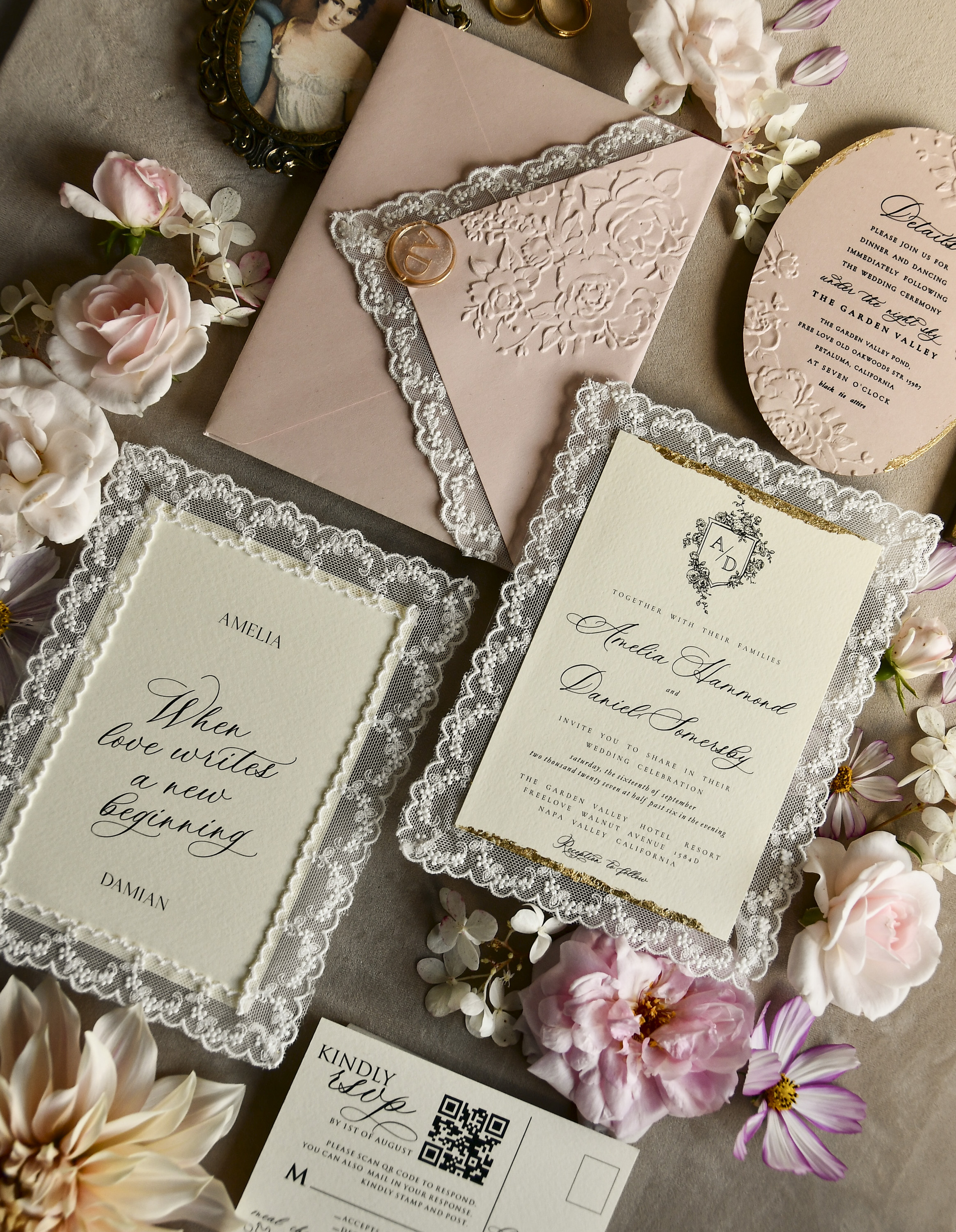
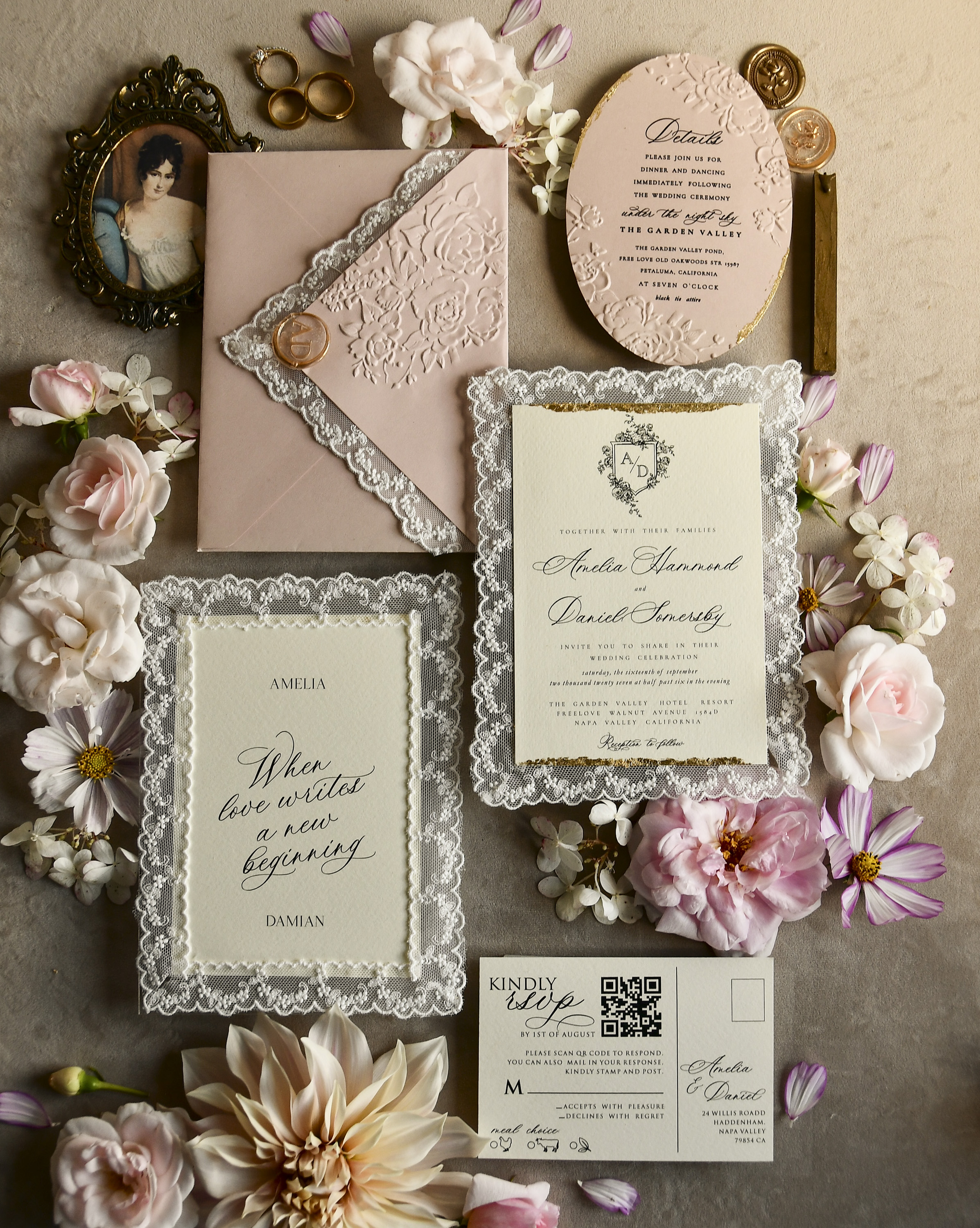
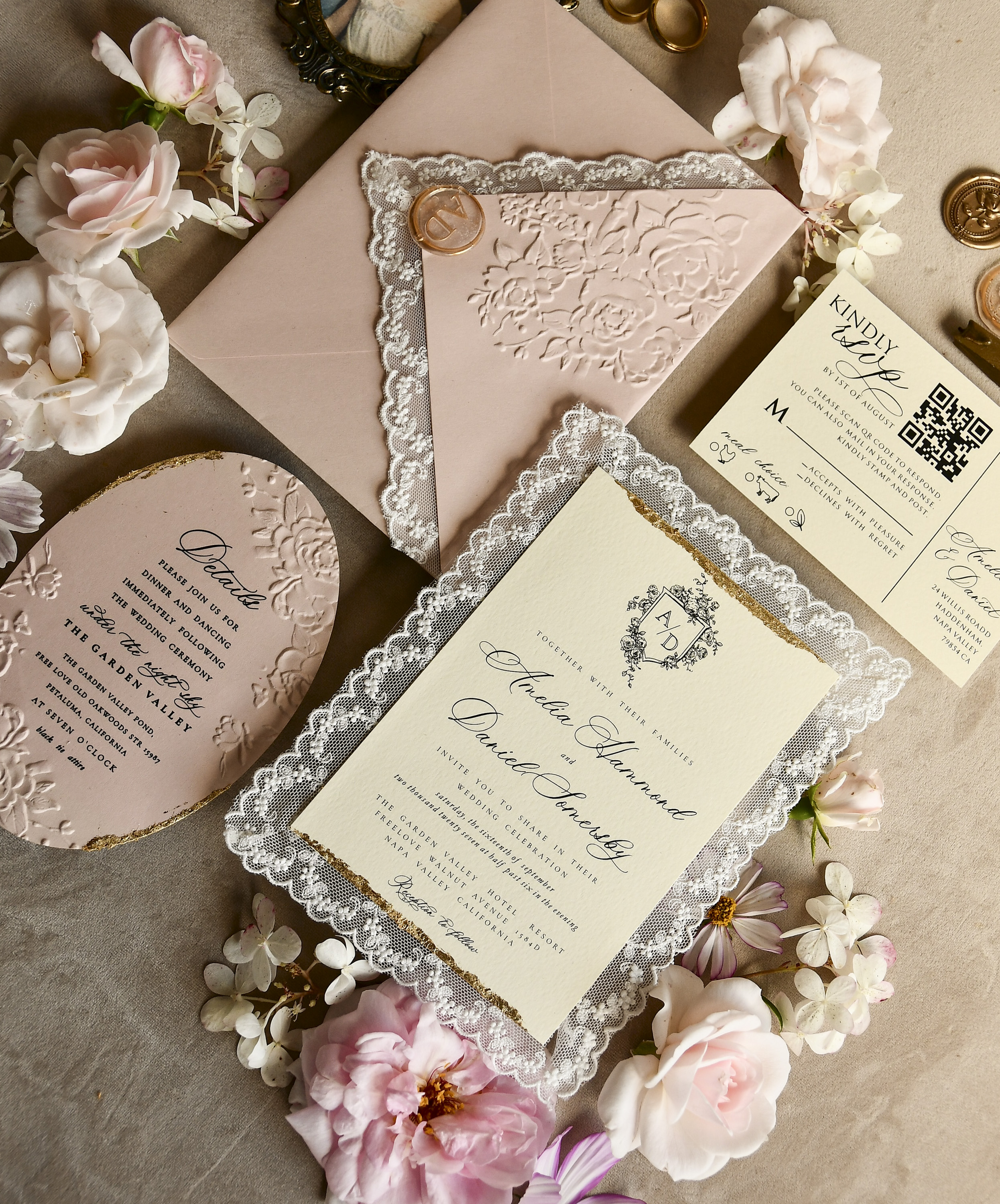
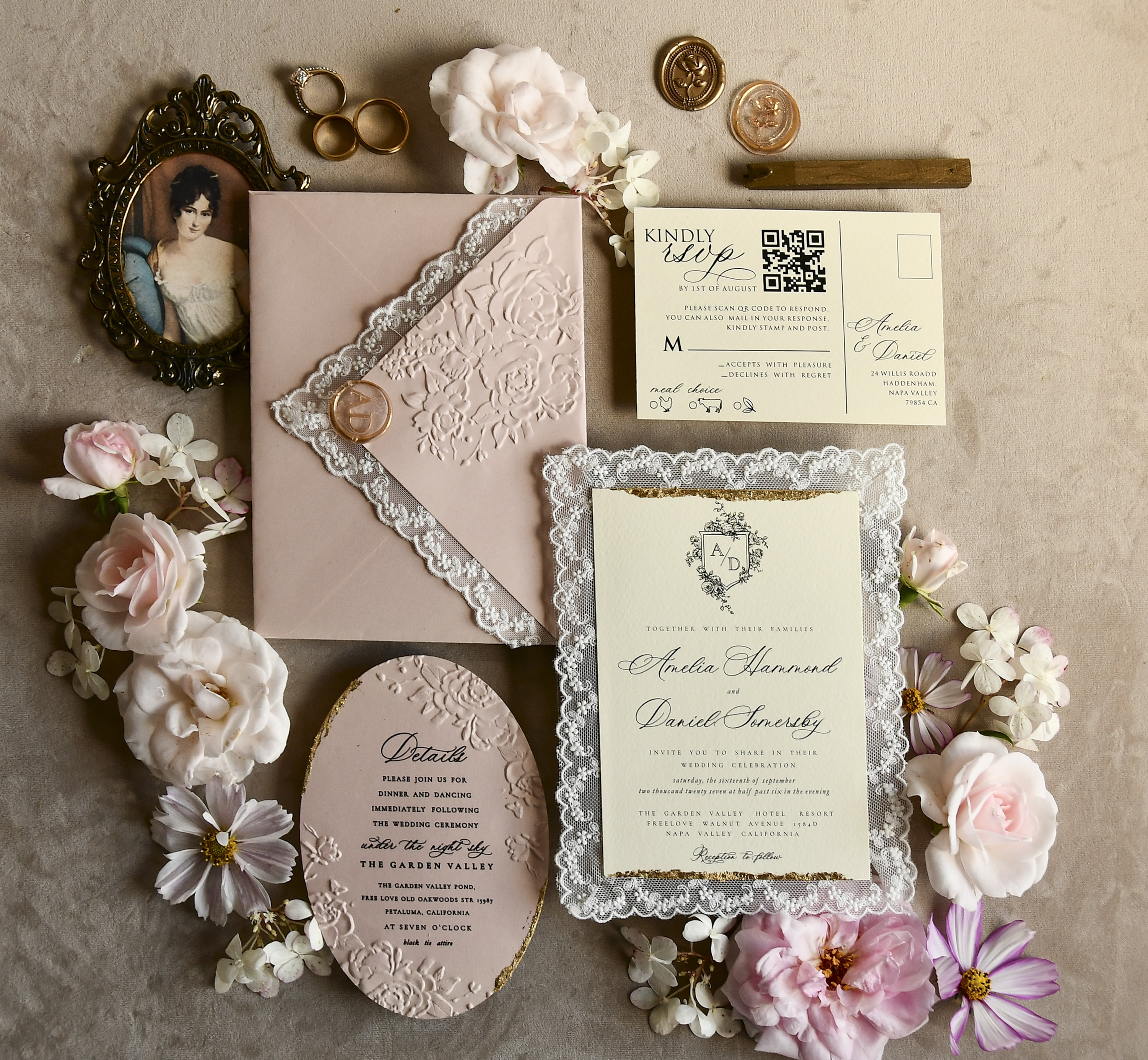
You May Also Like
More Wedding Planning Guides
- → When to Address a Wedding Invitation Directly to a Child
- → Mailed Card or Website Link? How to Handle RSVPs the Modern Way
- → Wedding Invitation Delivery: When to Mail and When to Hand Them Off
- → Navigating a Wedding Guest List When Your Fiancé Wants to Leave Your Family Out
- → Wedding Invitation Wording: Every Essential Detail Couples Need to Include
- → When Your Divorced Parents Can't Be in the Same Room: A Wedding Planning Guide
- → Adults-Only Weddings: Is Leaving Kids Off the List Actually Rude?
- → Wedding Invitation Addressing: Names, Titles, and Every Tricky Situation Solved
- → How to Decide Who Gets a Plus One at Your Wedding
- → Wedding Invitations: How to Count What You Actually Need
- → Yes, You Can Invite Ceremony-Only Guests — Here's How to Do It Gracefully
- → Extra Wedding Guests: Who Pays and How to Handle It Gracefully
- → Big Wedding or Better Wedding: How to Choose What Truly Matters
- → Your Wedding, Your Guest List: The Honest Truth About Inviting Cousins
- → Uninvited Extras: How to Handle Guests Who Bring Someone You Didn't Invite
- → Plus-One or No? How to Decide If Single Guests Can Bring a Date
- → How to Embrace a Small Wedding and Make It Unforgettable
- → To Invite or Not to Invite: Navigating the Ex Question for Your Wedding Guest List
- → Stepparents and Your Wedding Guest List: Making the Right Call
- → Setting Plus-One Boundaries Without Losing Sleep (or Friends)
- → Should Work Friends Come to Your Wedding? A No-Stress Guide to Inviting Colleagues
- → Guests Who Don't RSVP: Your Step-by-Step Plan
- → Save the Date vs. Wedding Invitation: Two Very Different Jobs, One Beautiful Paper Trail
- → When Someone Asks Why They Weren't Invited: Your Honest, Kind Playbook
- → To Call or Not to Call: Tracking Down Guests With Missing RSVPs
- → When the Guest List Must Shrink: The Right People to Remove First
- → Digital Wedding Invitations: When They Work and When to Think Twice
- → How to Handle the Parent Friend Dilemma on Your Wedding Guest List
- → Your Wedding Invitation Deadline: When the Window Officially Closes
- → Uninvited Plus-Ones and Tag-Alongs: How to Keep Your Guest List Intact
- → When Family Feuds Threaten Your Wedding Plans: A Practical Peacekeeper's Guide
- → Inviting an Estranged Brother or Sister: Finding Clarity Before You Seal the Envelope
- → Cousins, Invites, and Hard Choices: A Practical Guest List Guide