
Wedding Invitation Addressing: Names, Titles, and Every Tricky Situation Solved
Addressing wedding invitations feels simple until you sit down with your guest list and realize you have no idea what to write for your aunt who kept her maiden name, your college roommate's live-in partner, or your family doctor. Getting the addressing right matters—it sets the tone for your entire wedding and tells each guest exactly how welcome and seen they are. This guide walks you through every common scenario so you can address with confidence.
The Basics: Outer Envelope vs. Inner Envelope
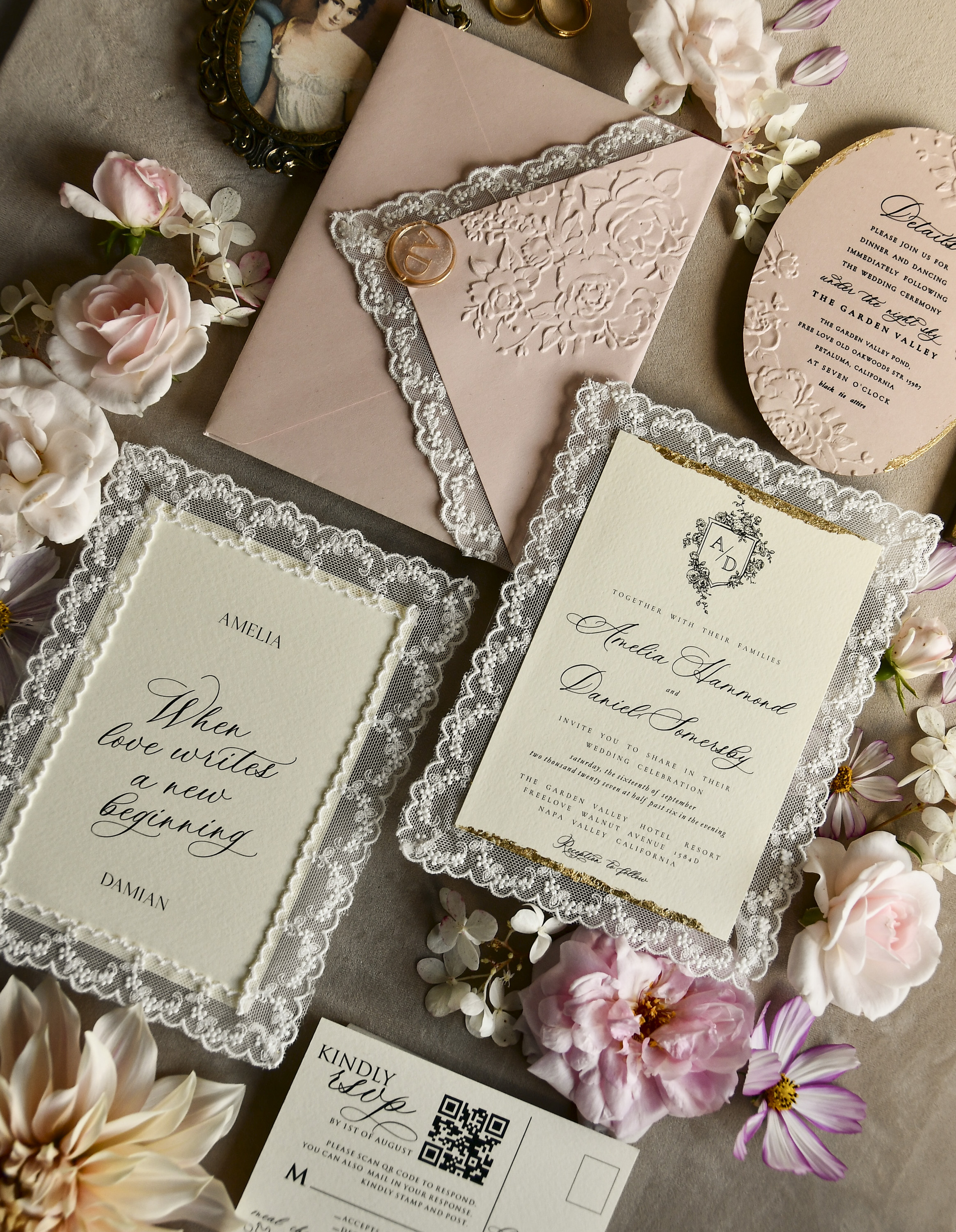
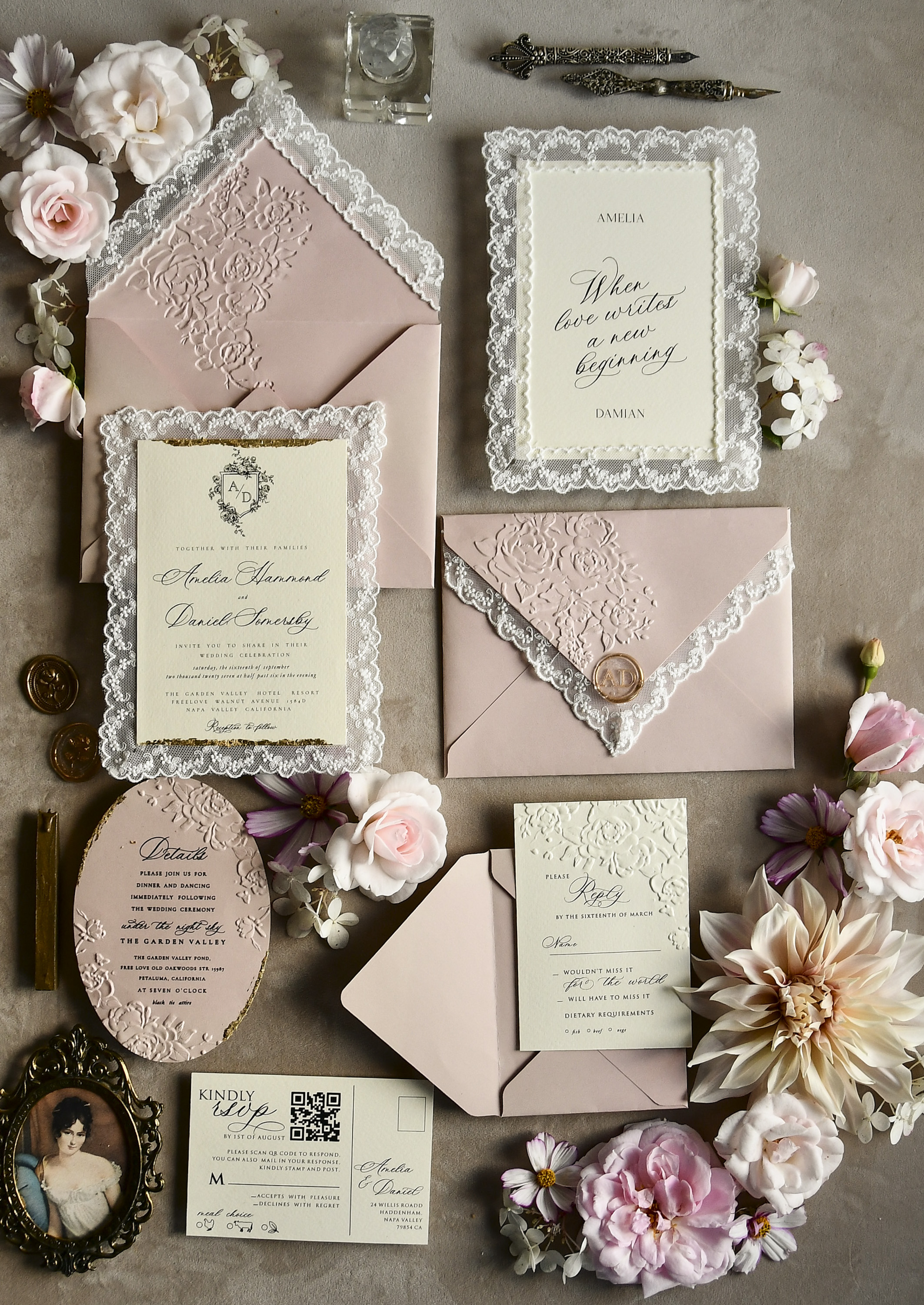
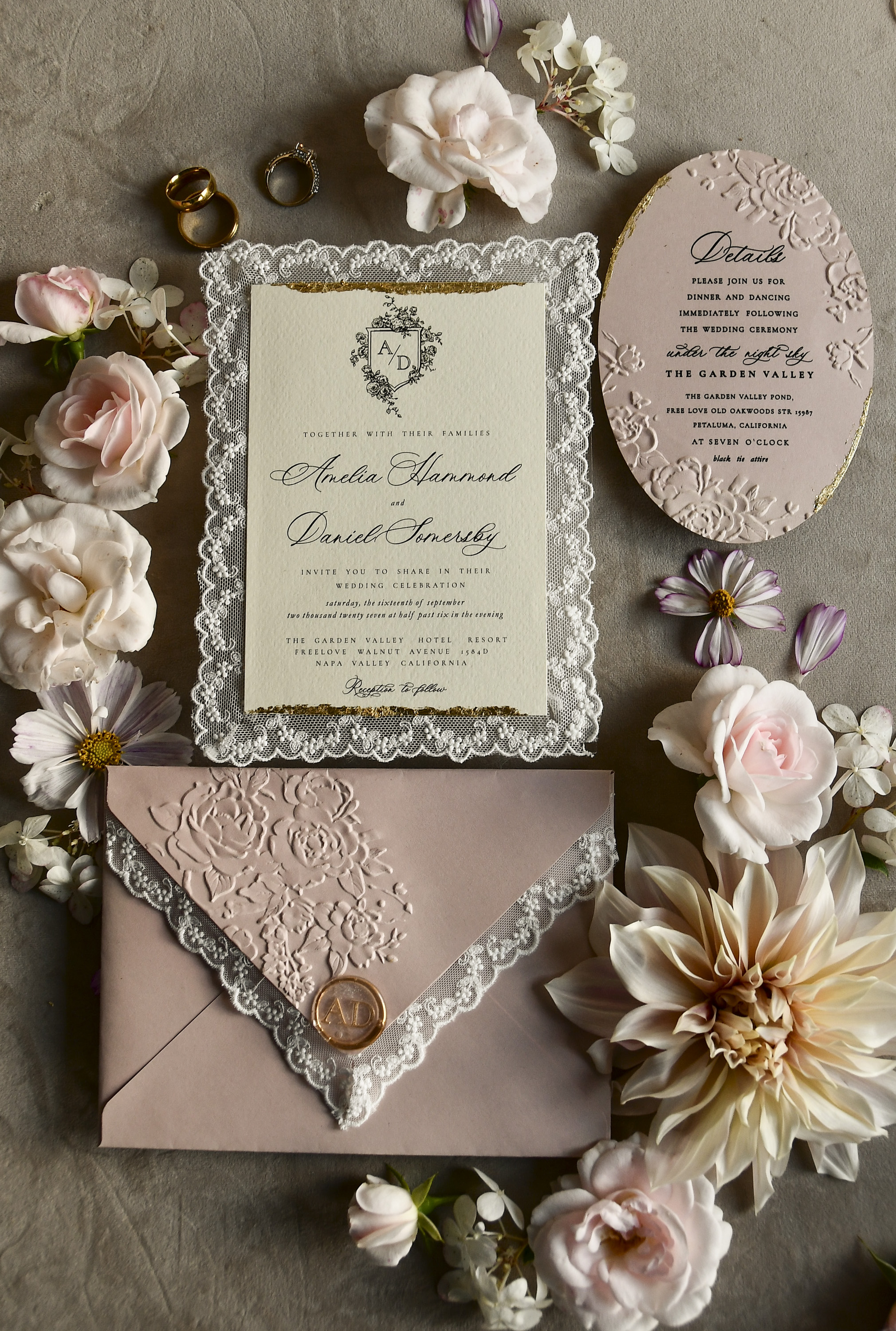
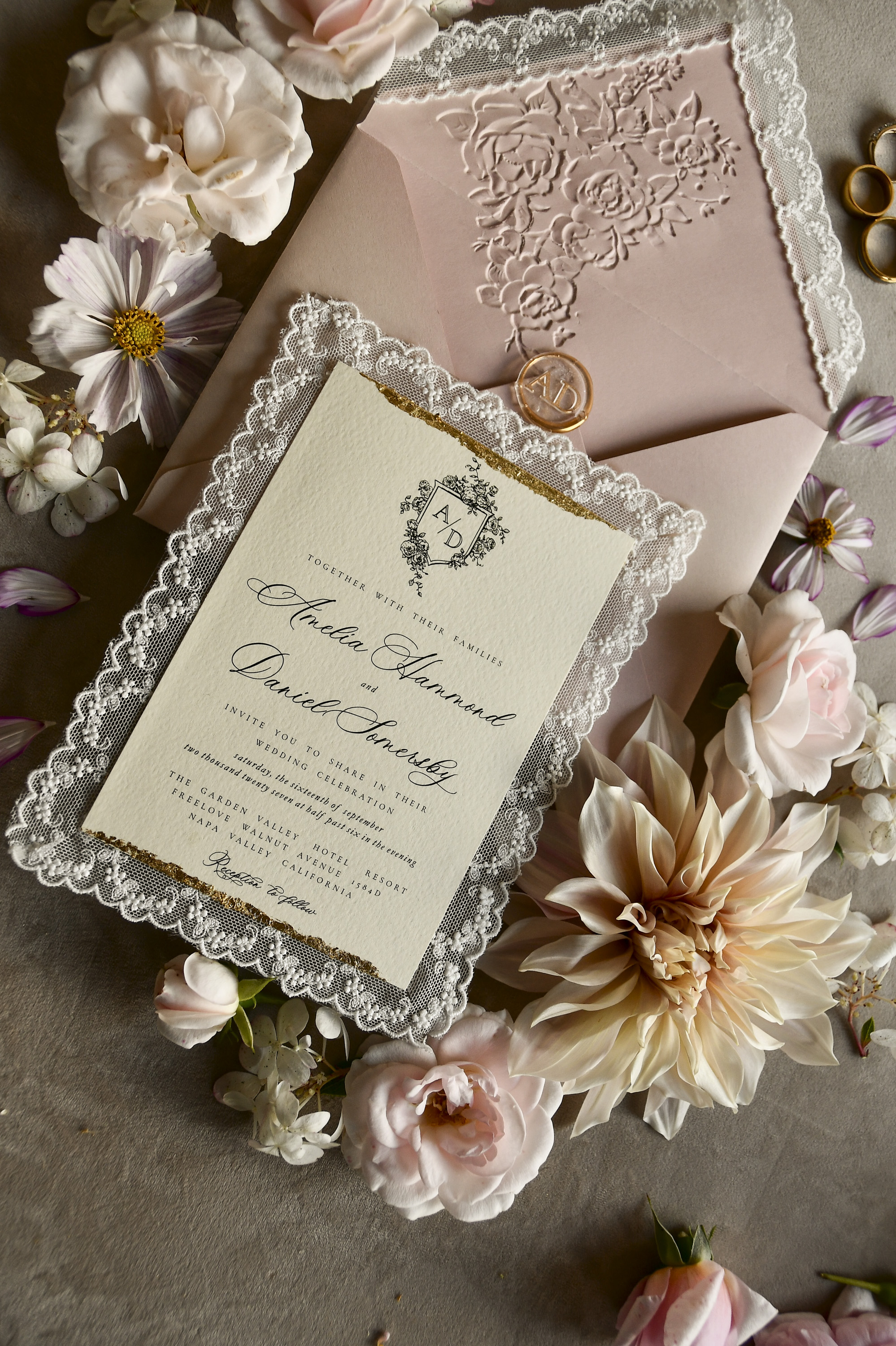
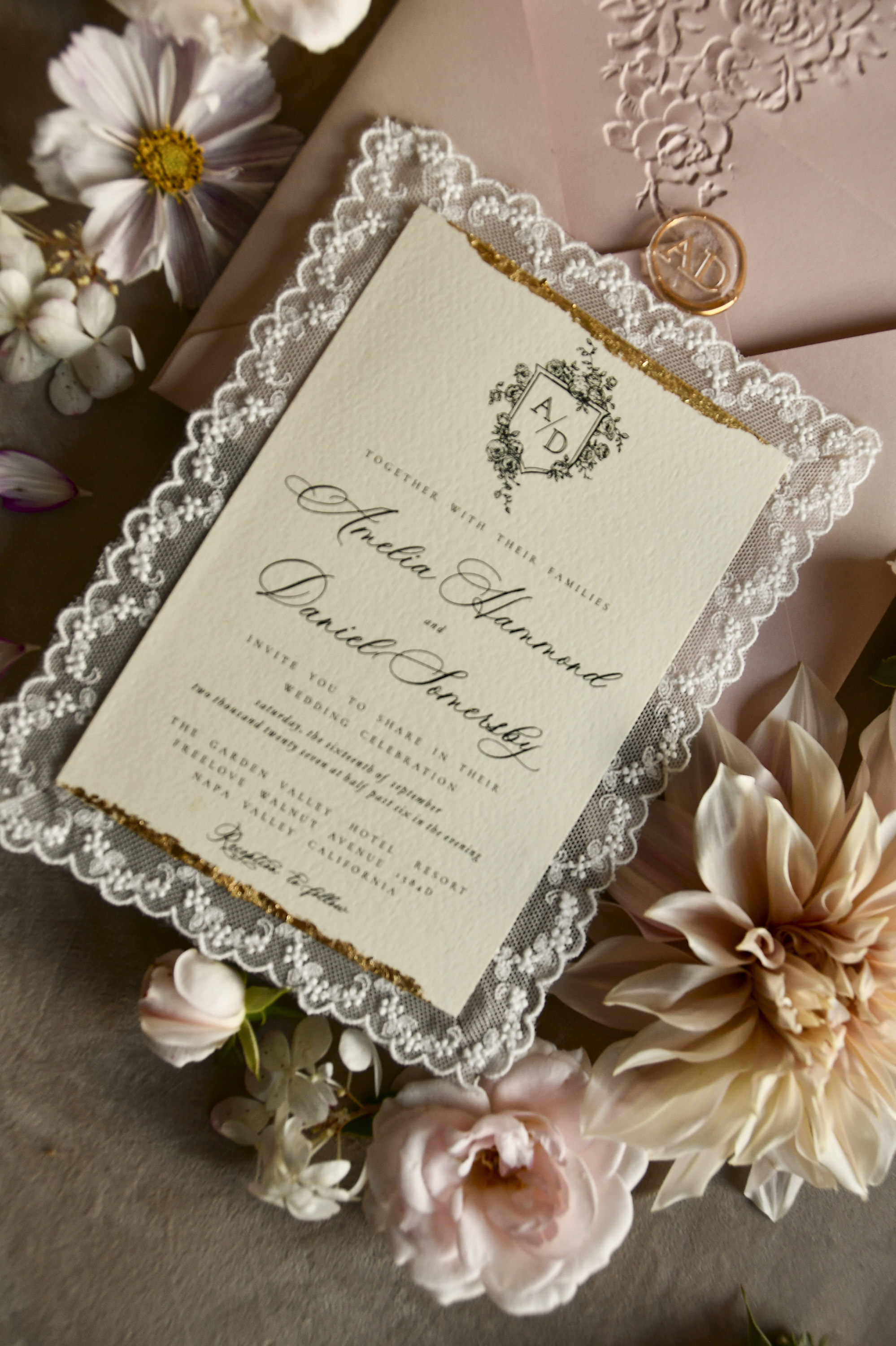
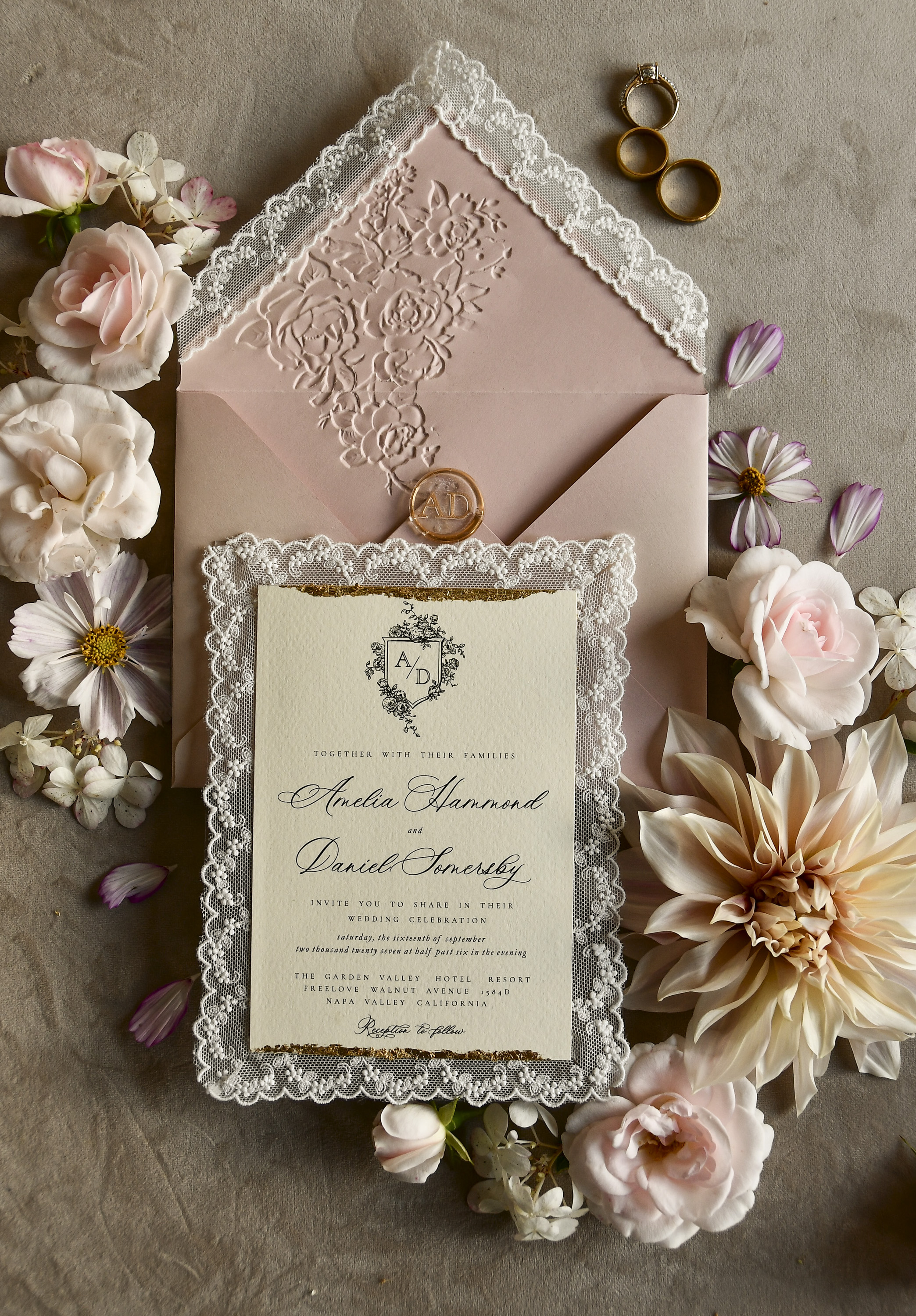
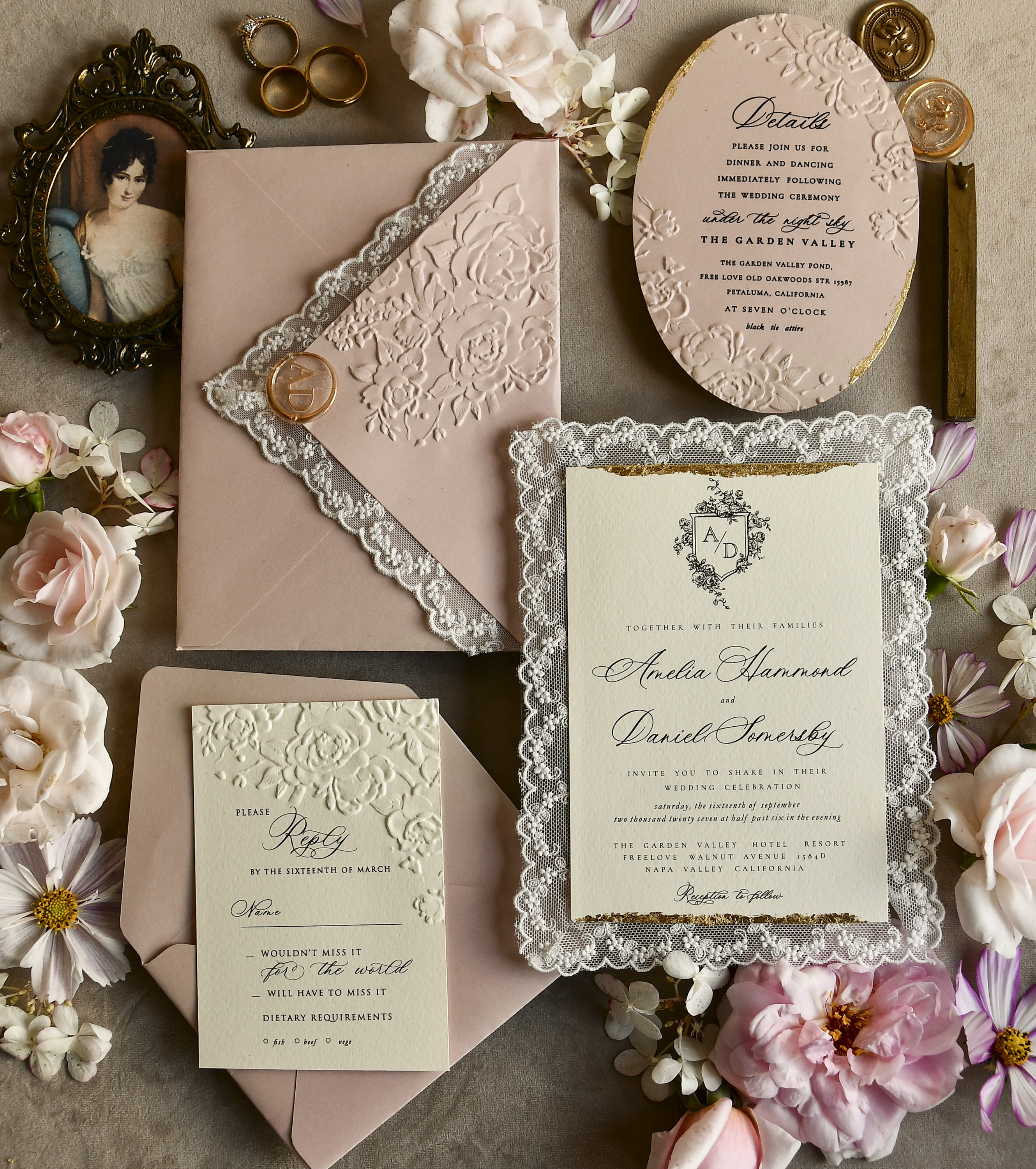
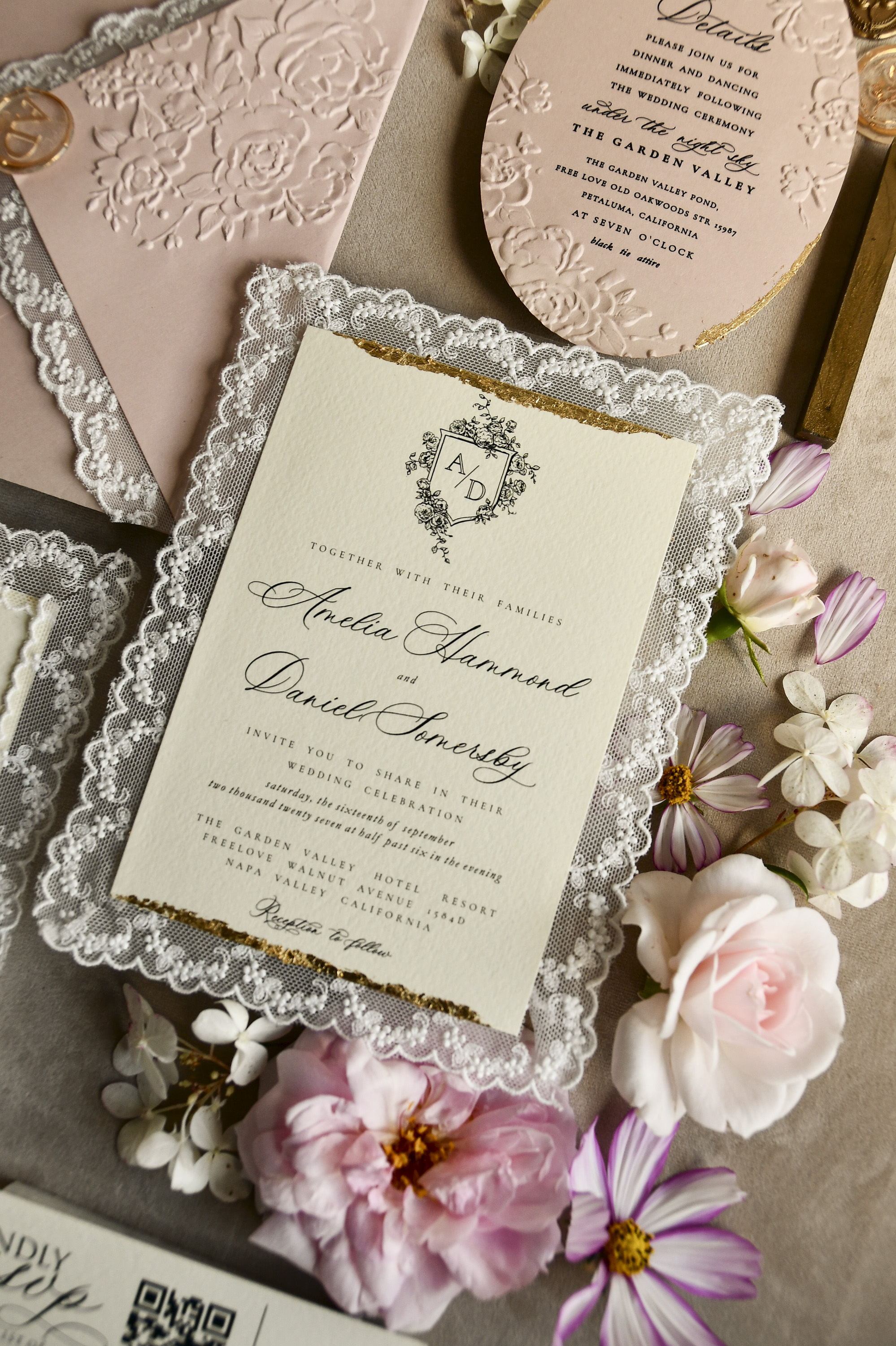
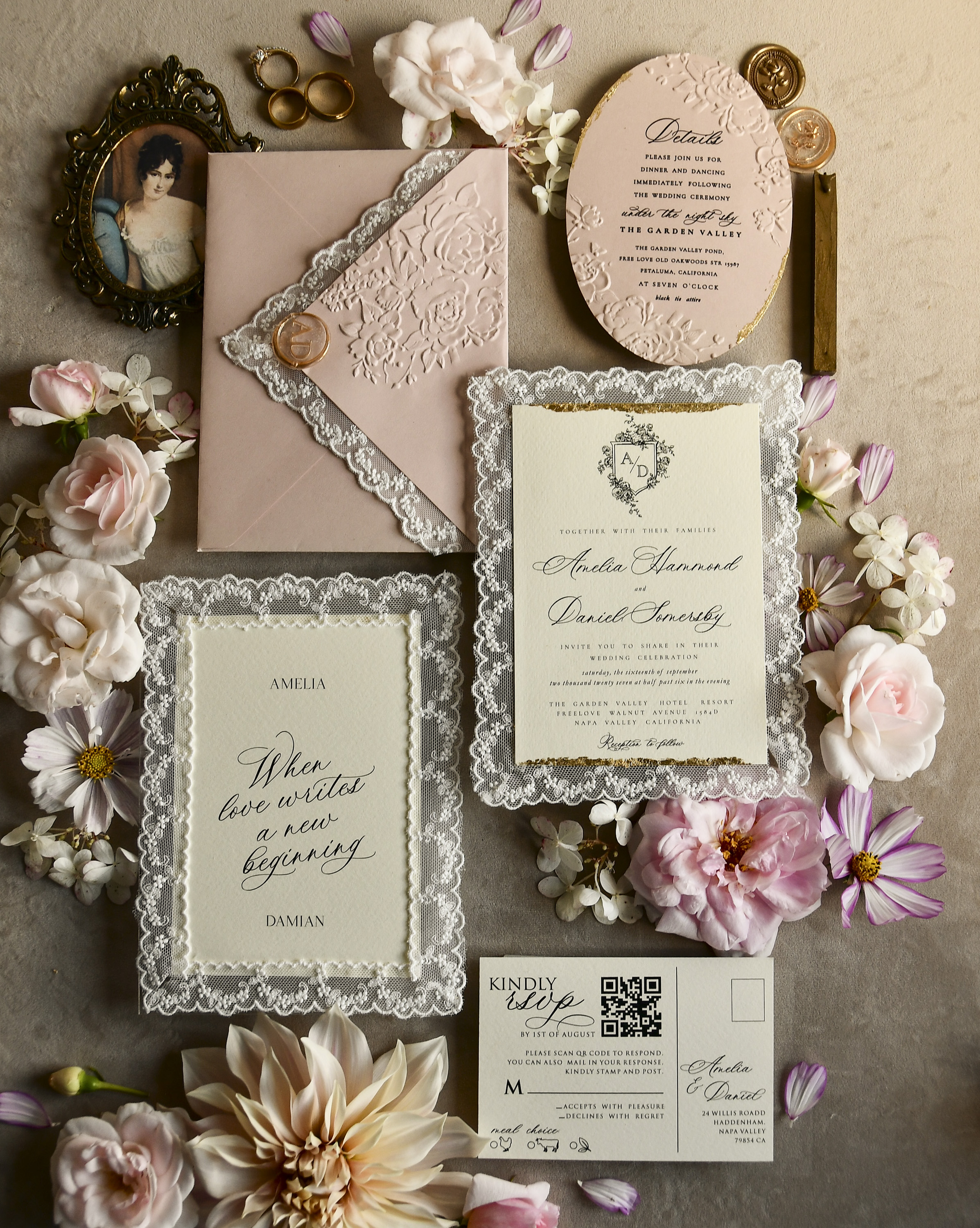
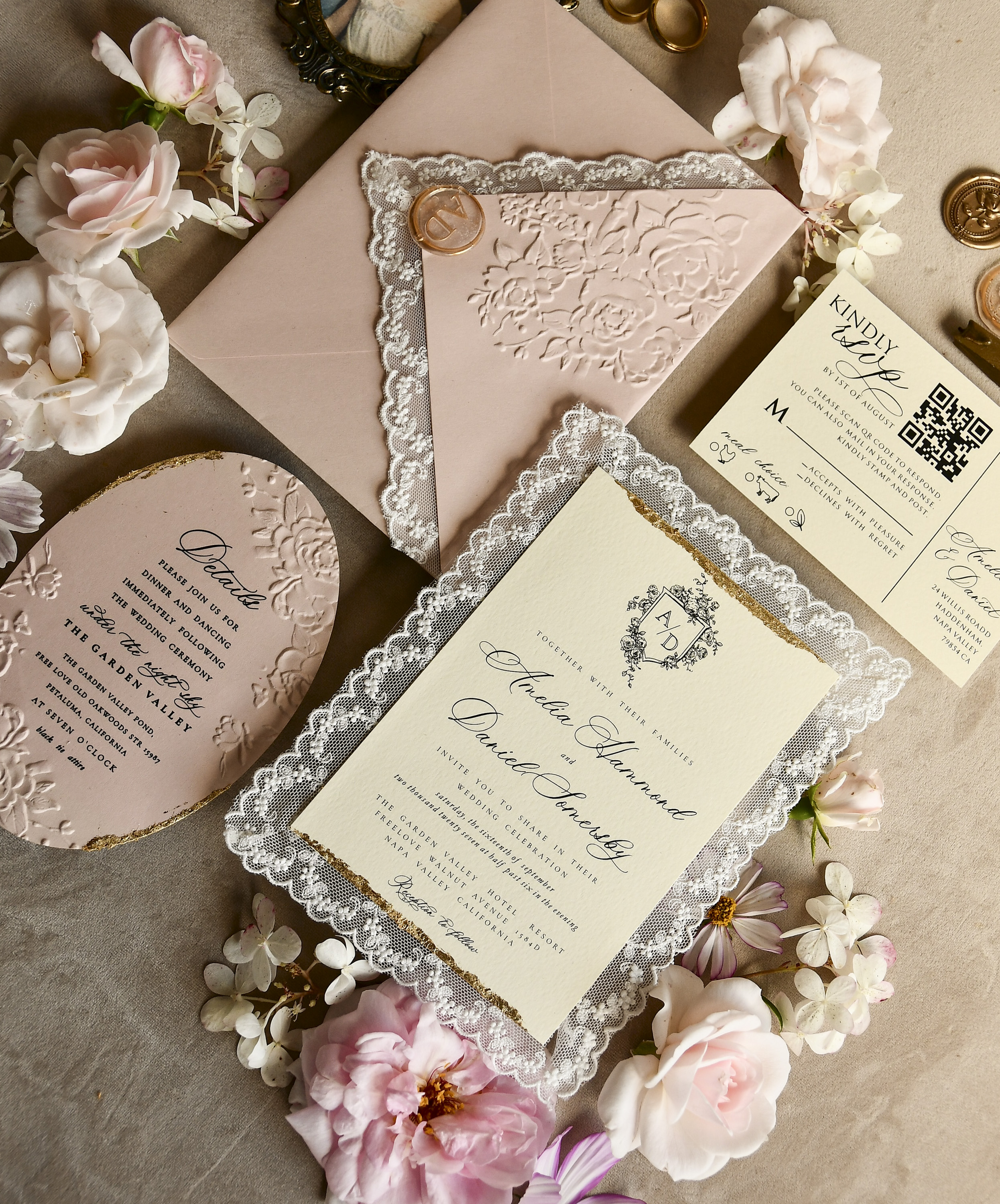
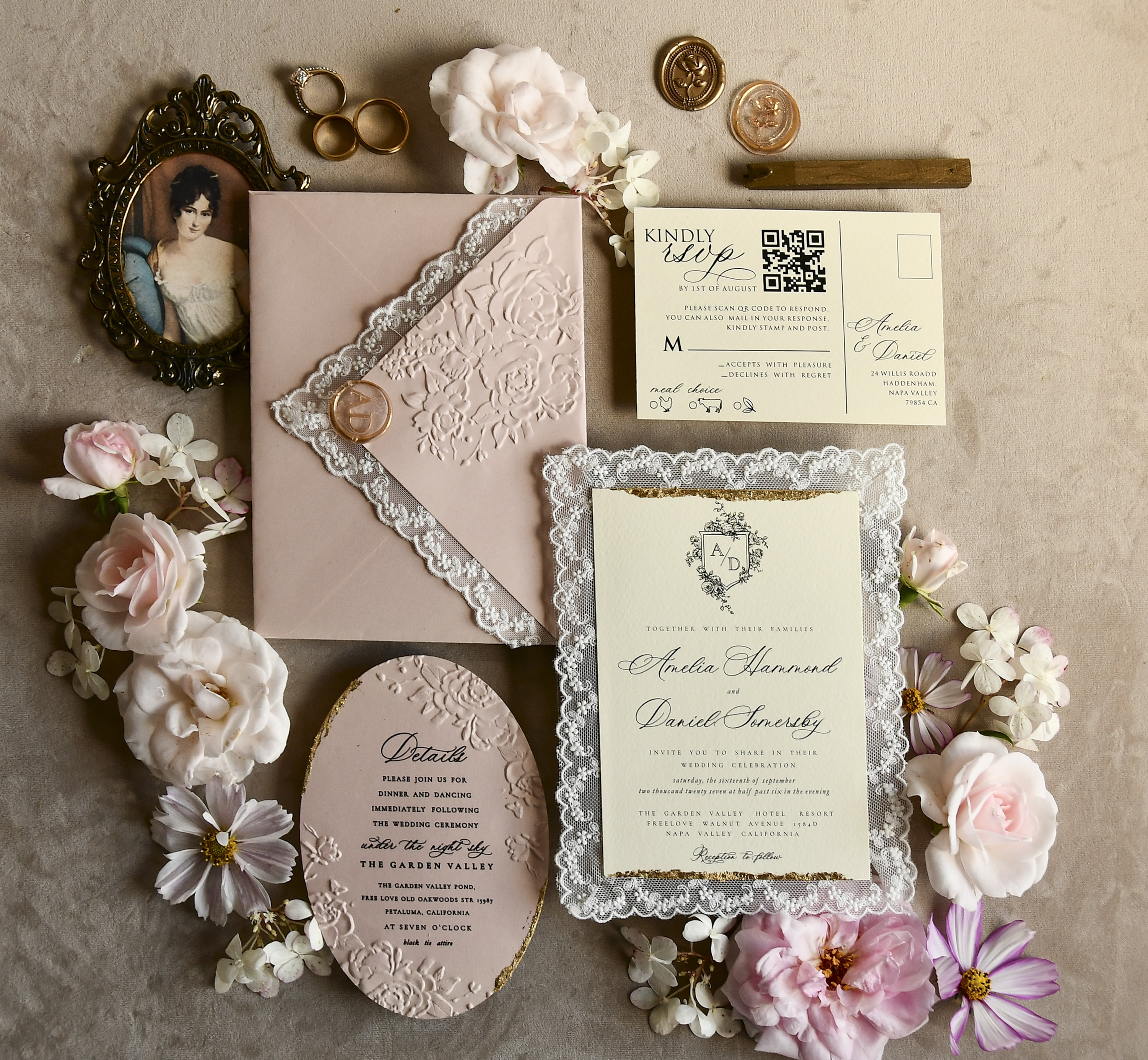
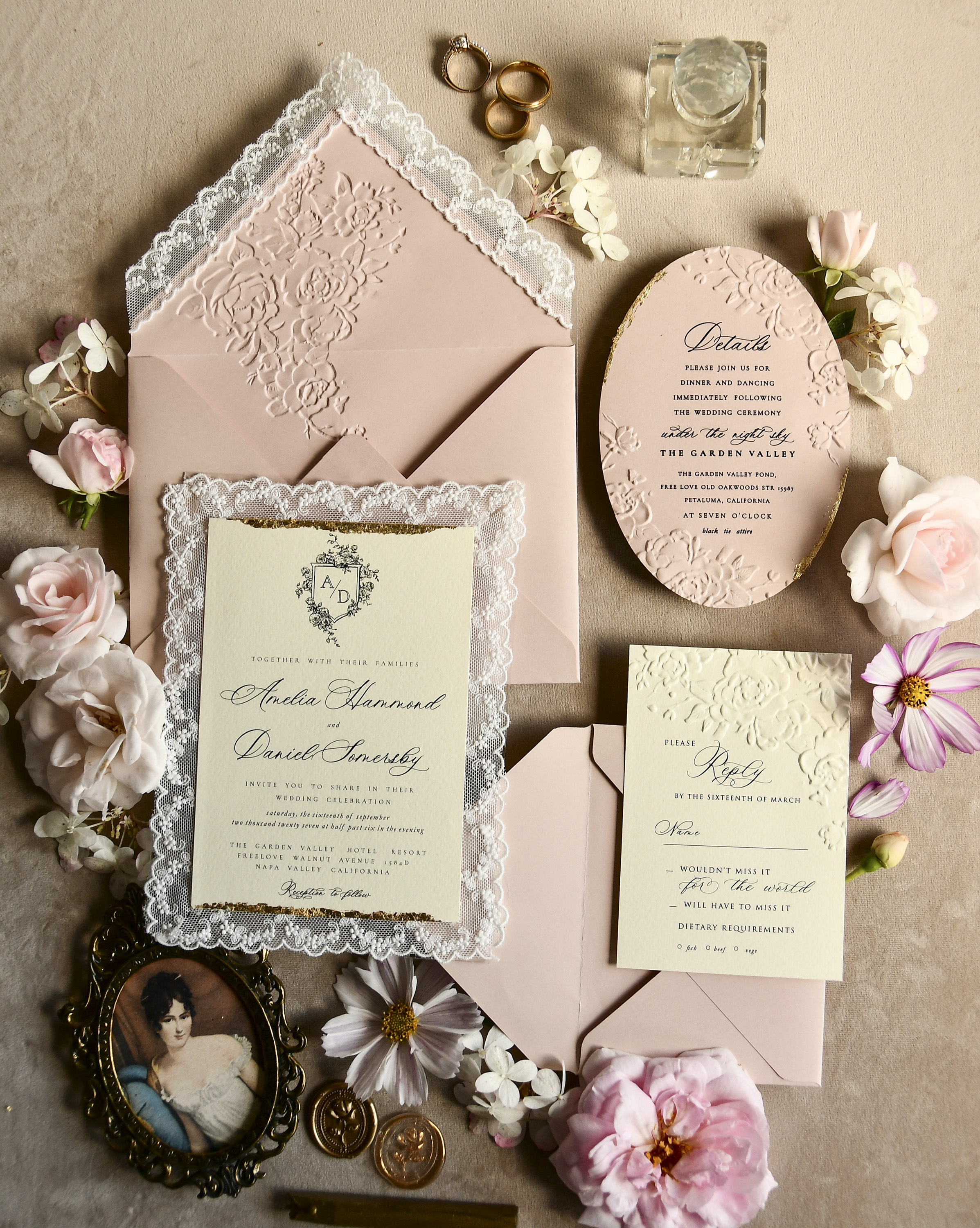
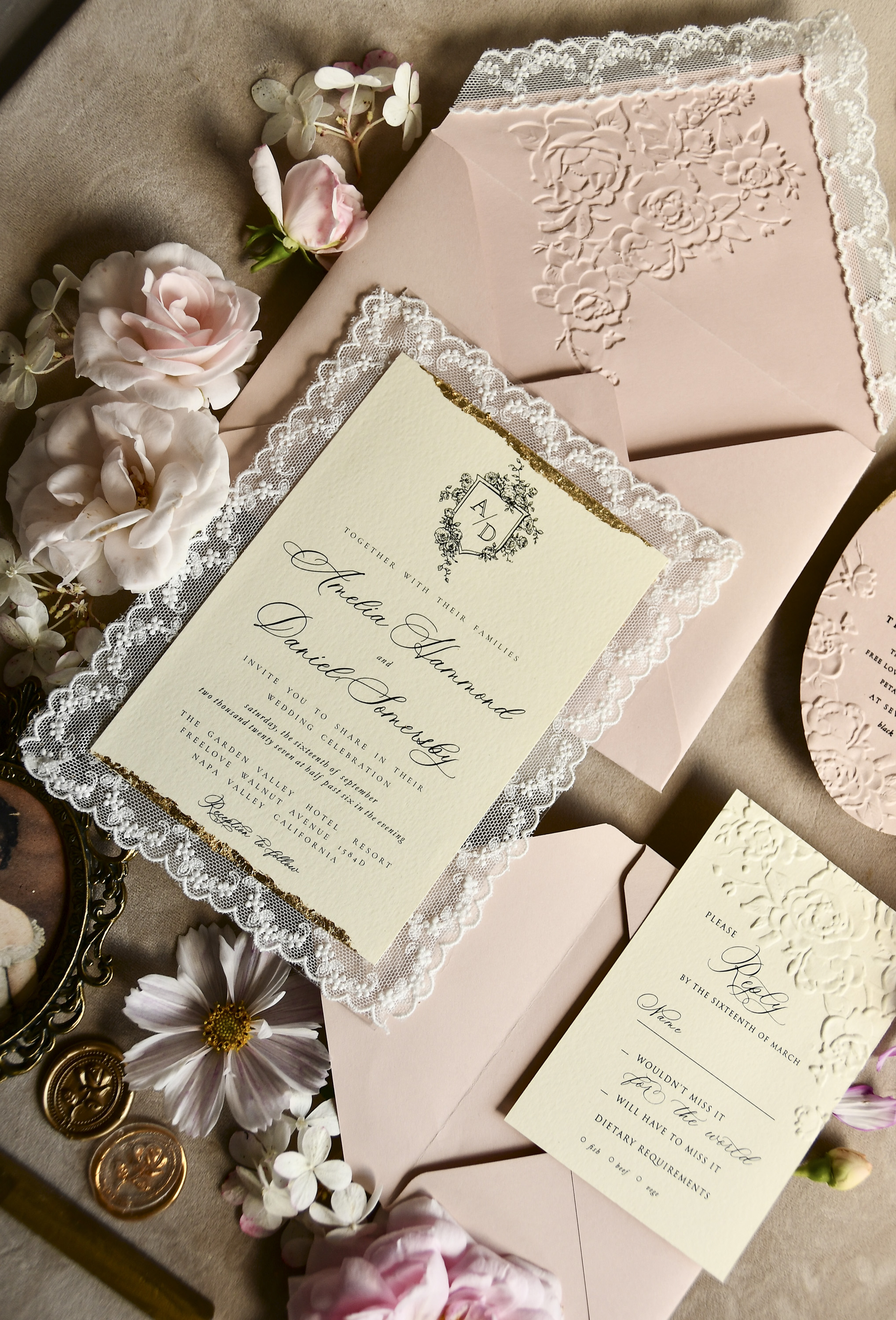
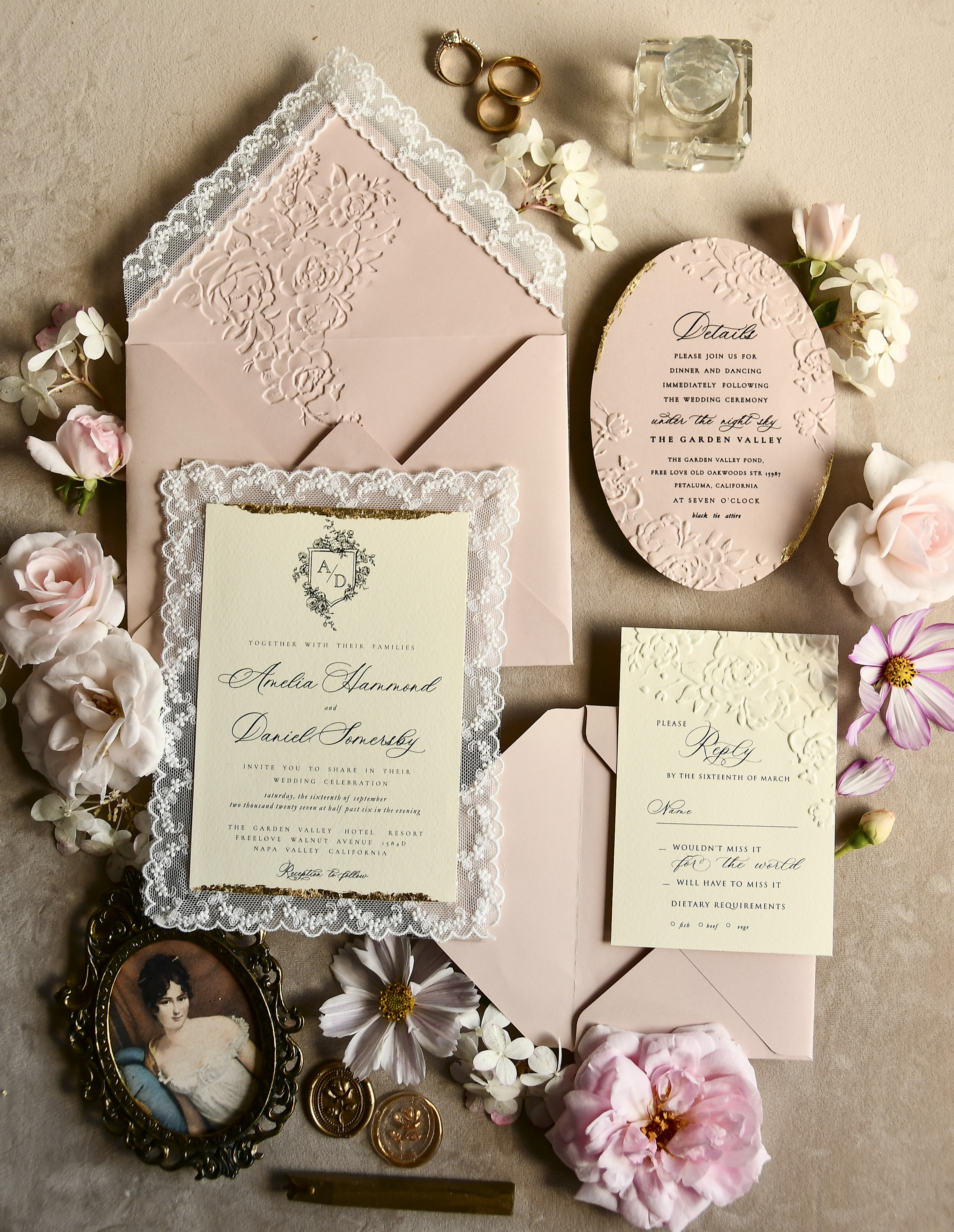
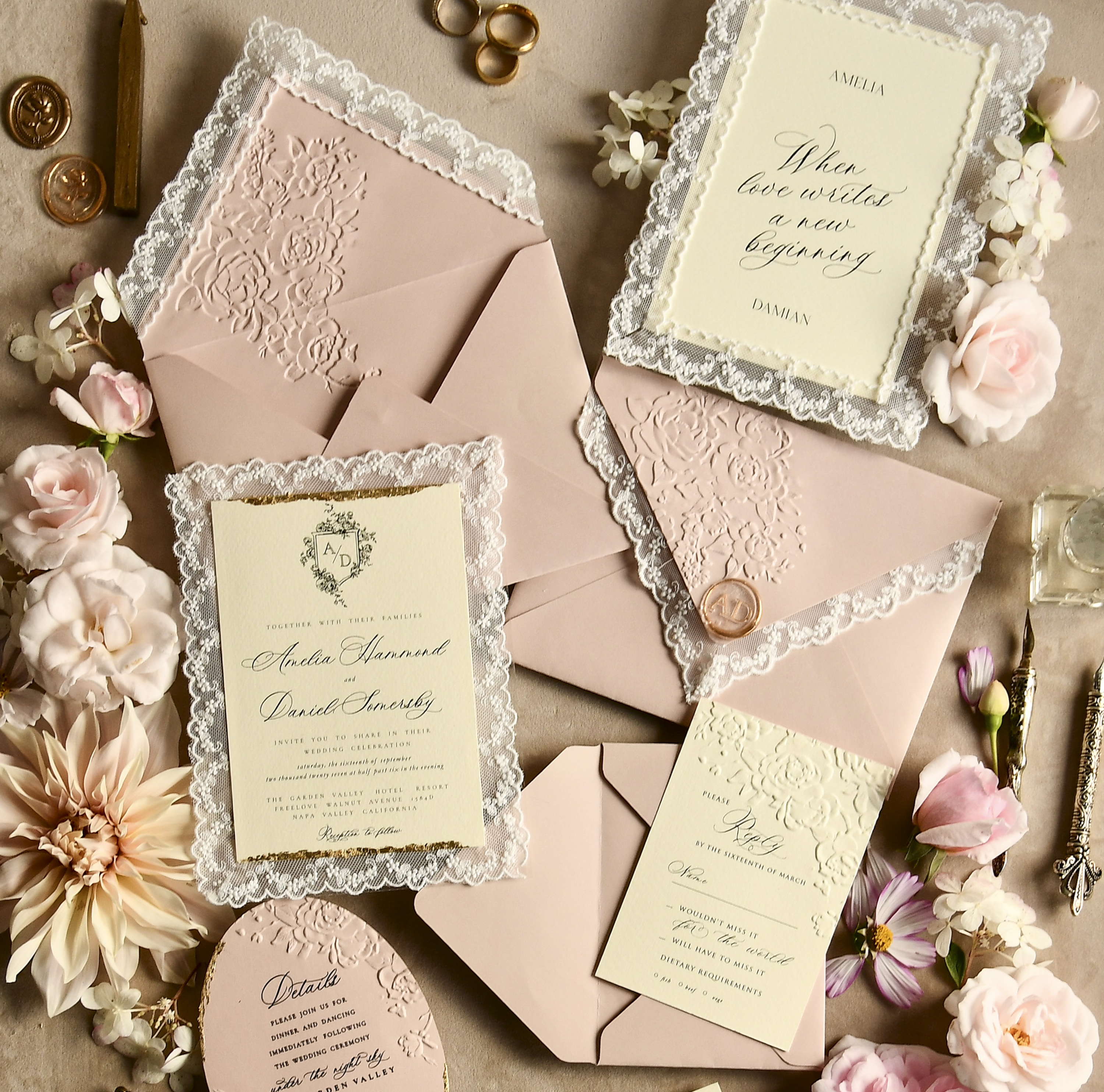
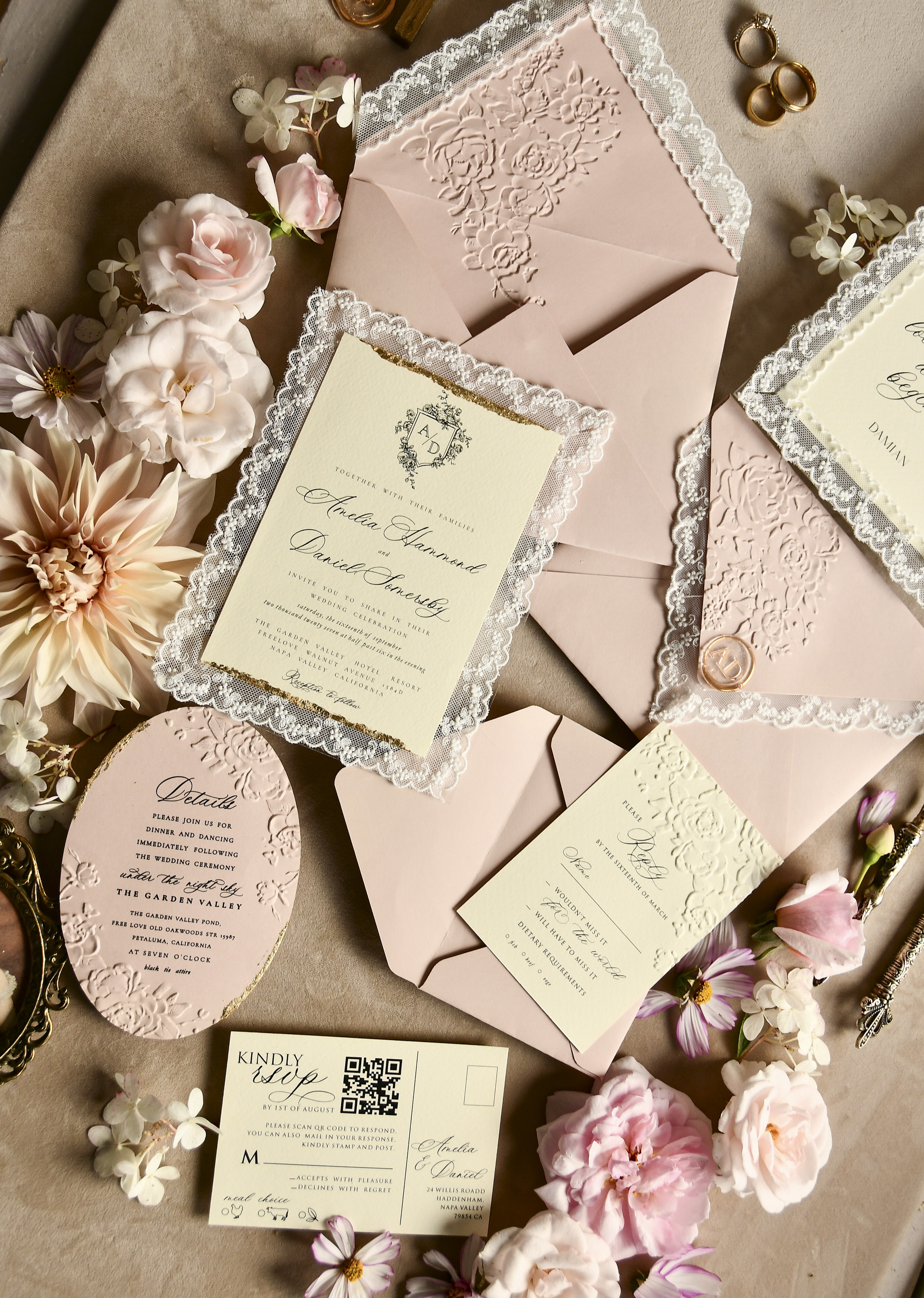
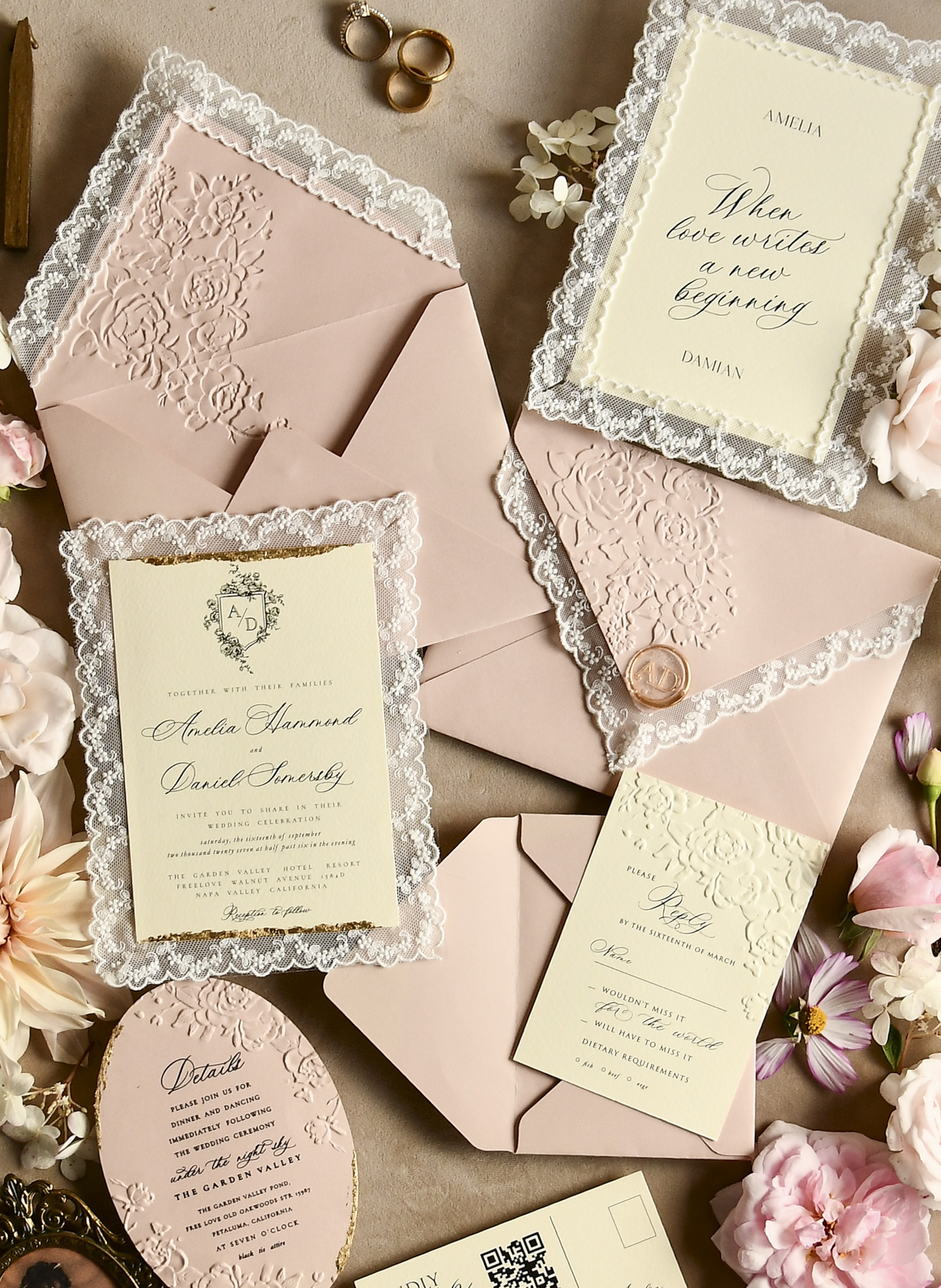
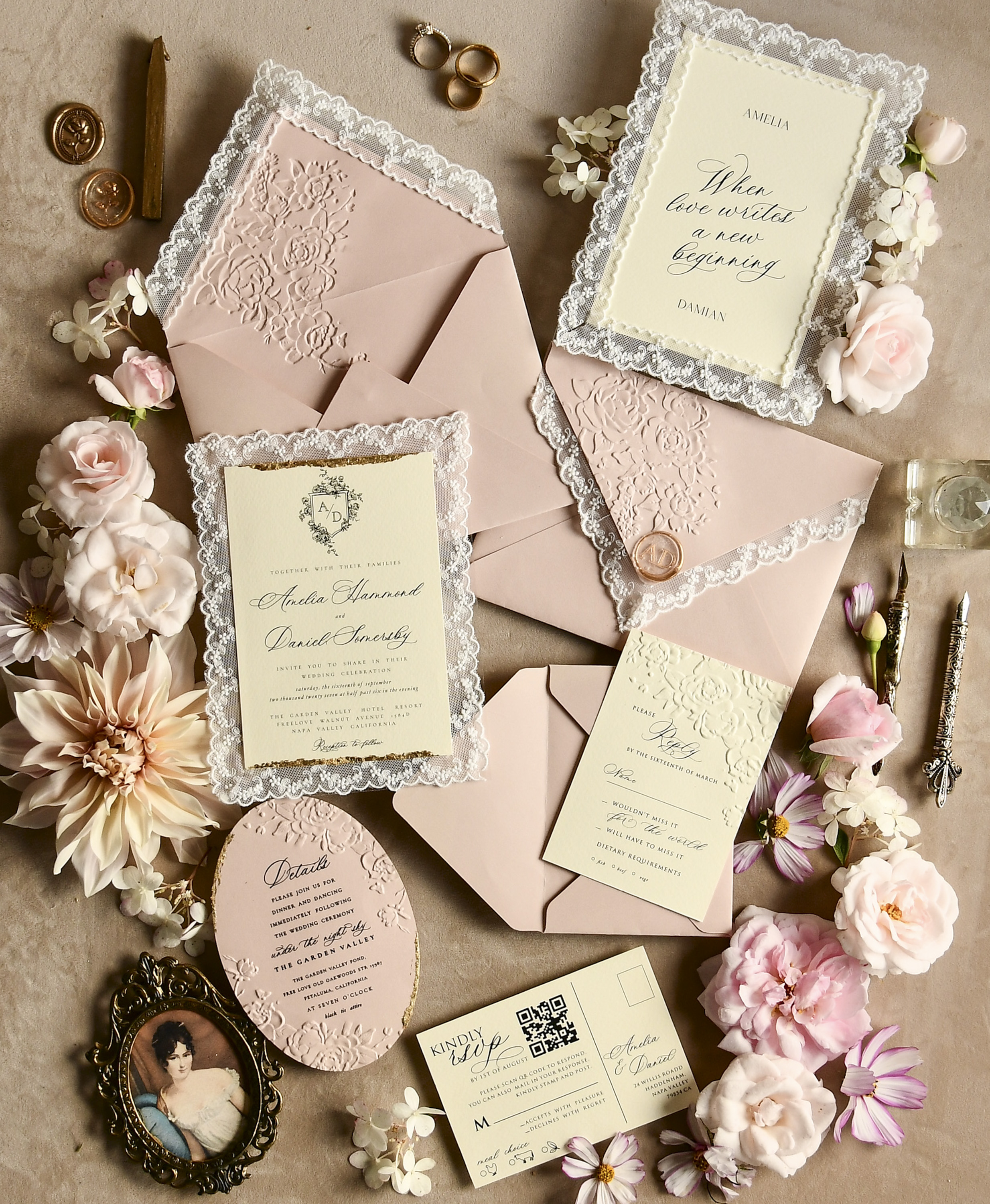
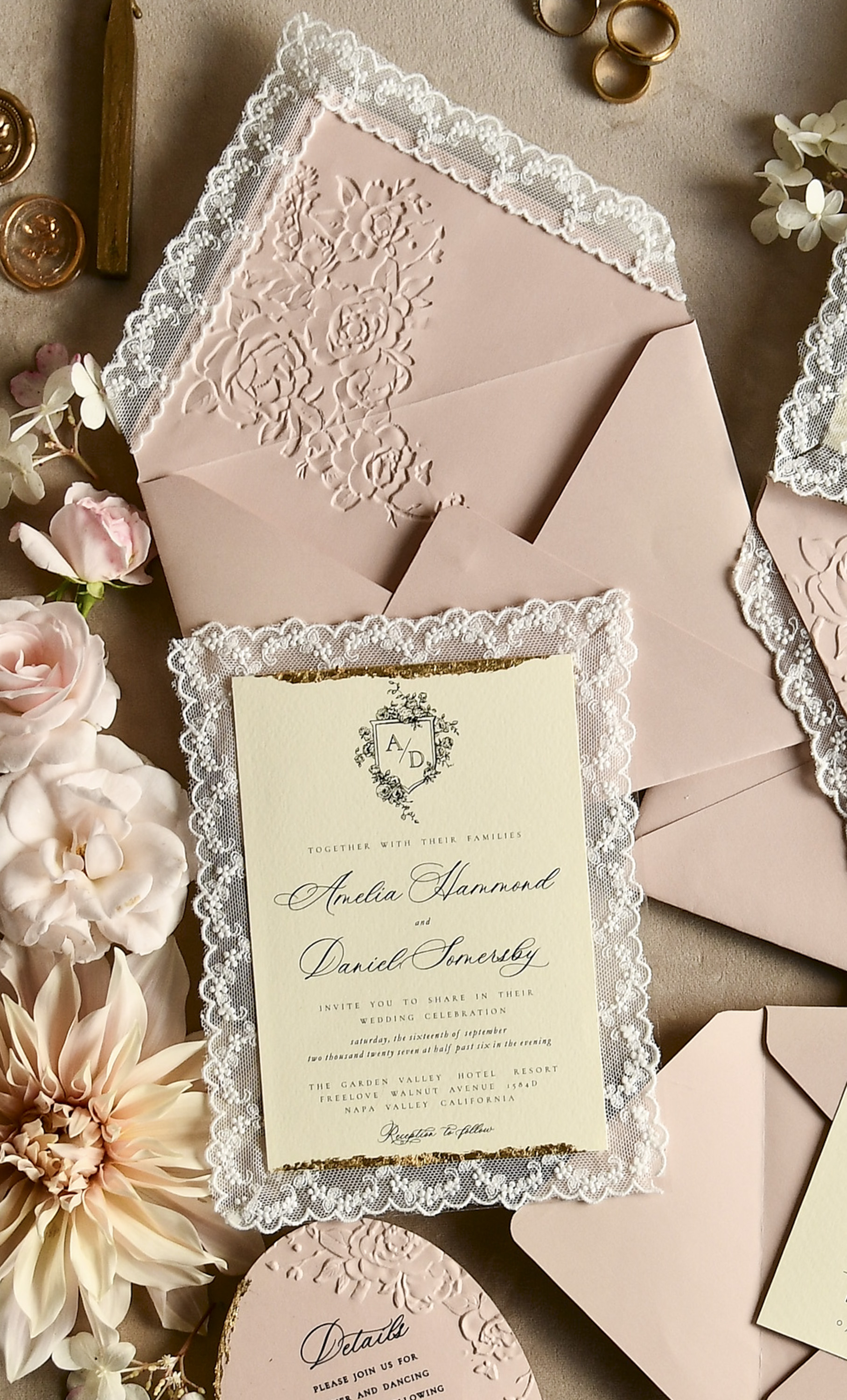
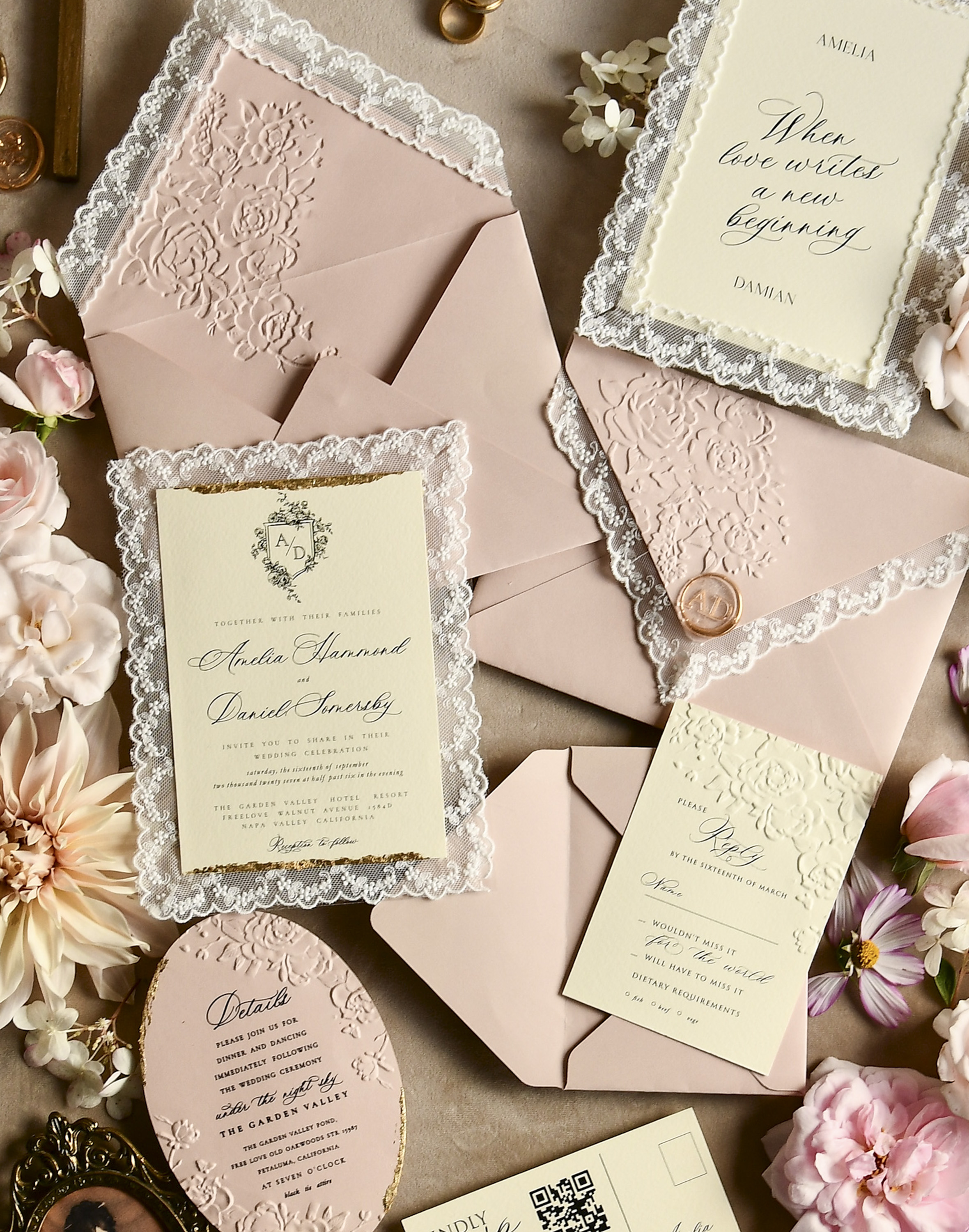
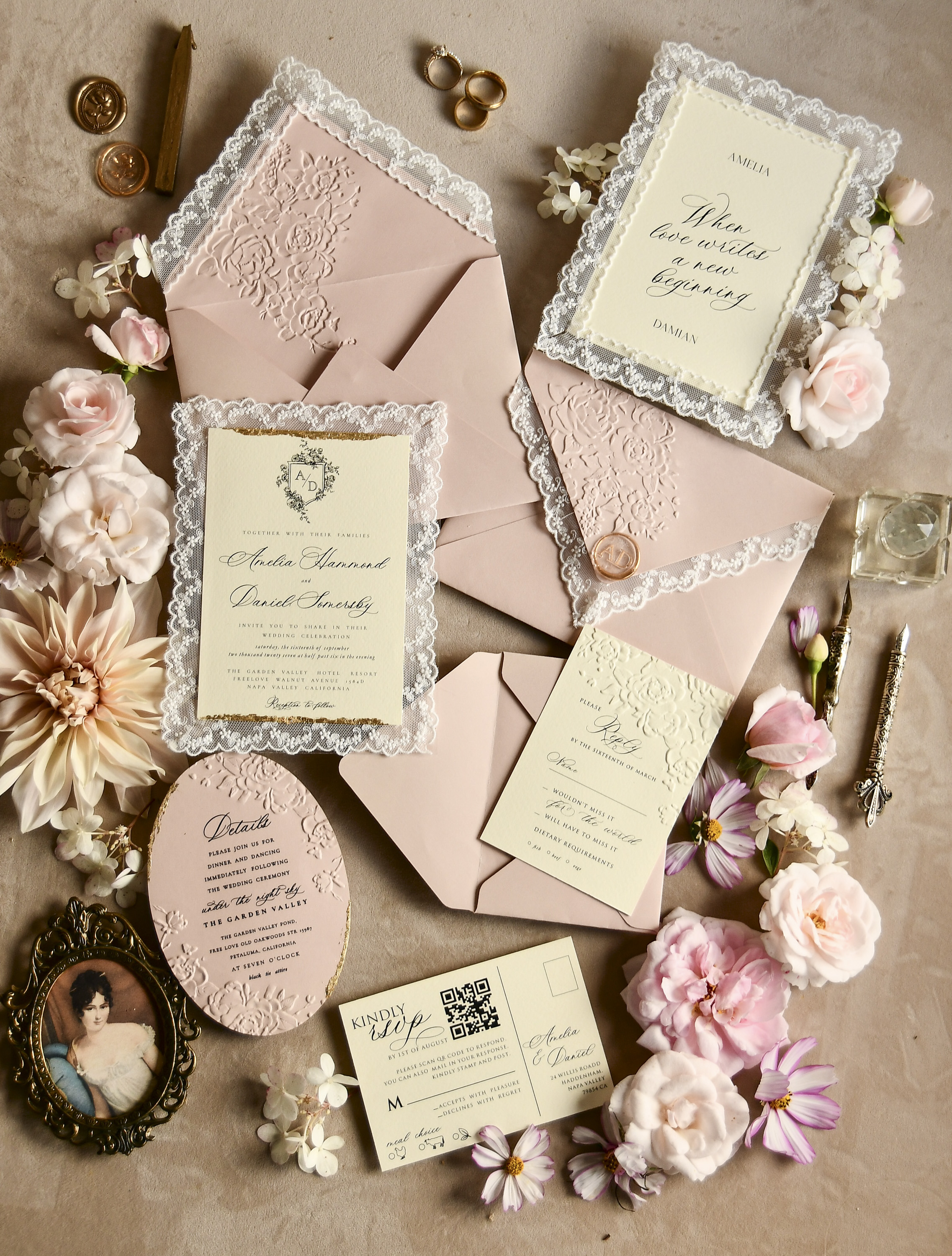
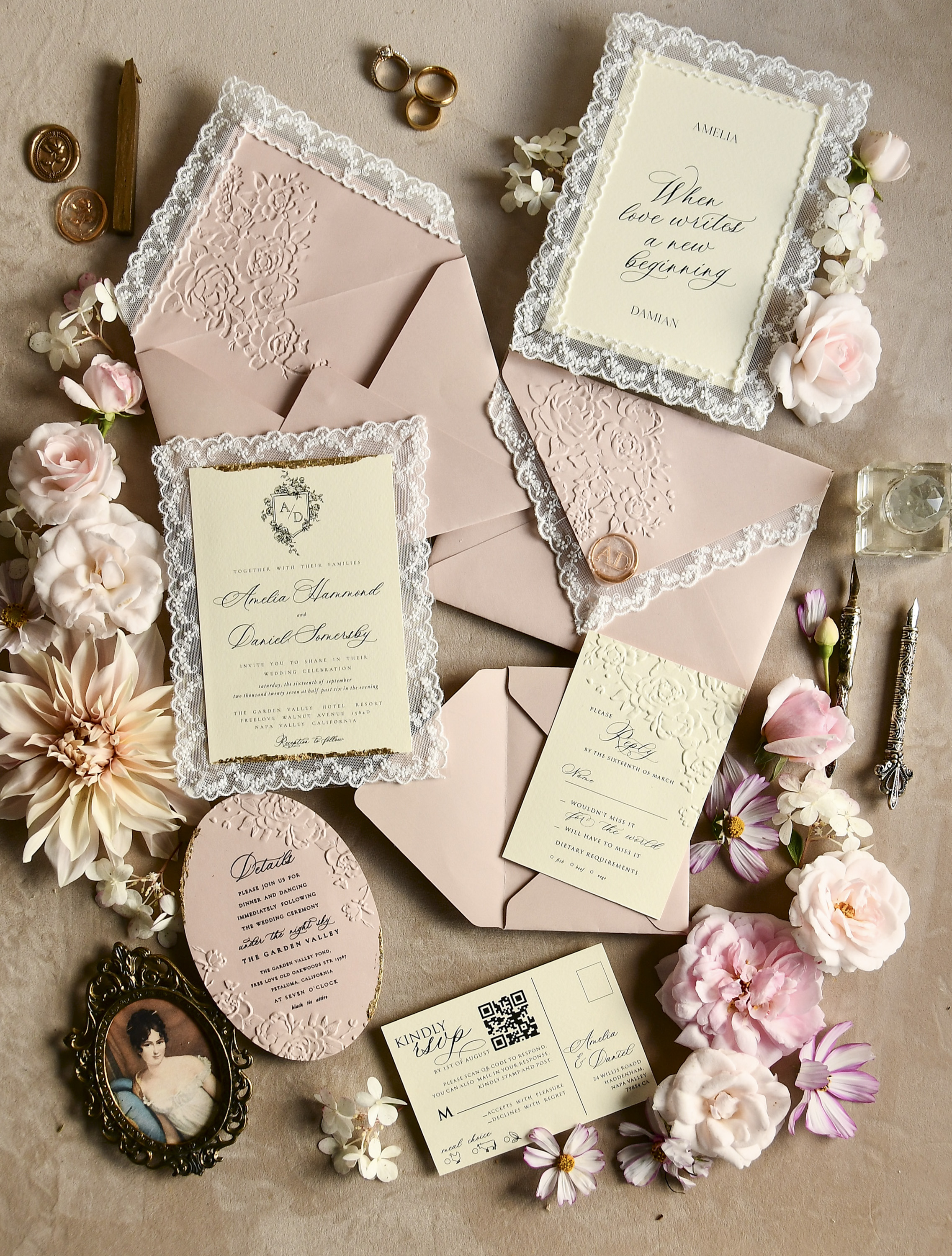
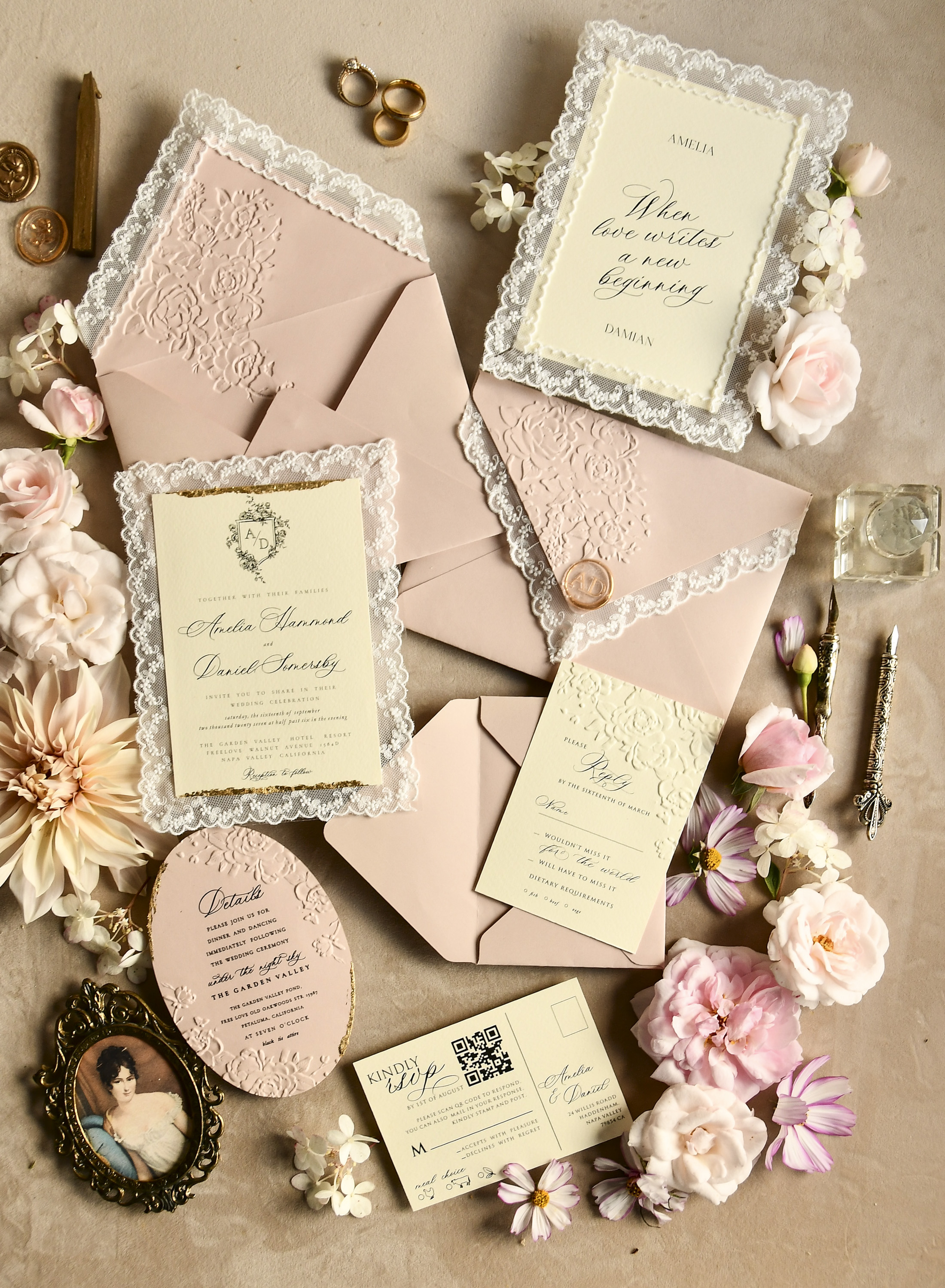
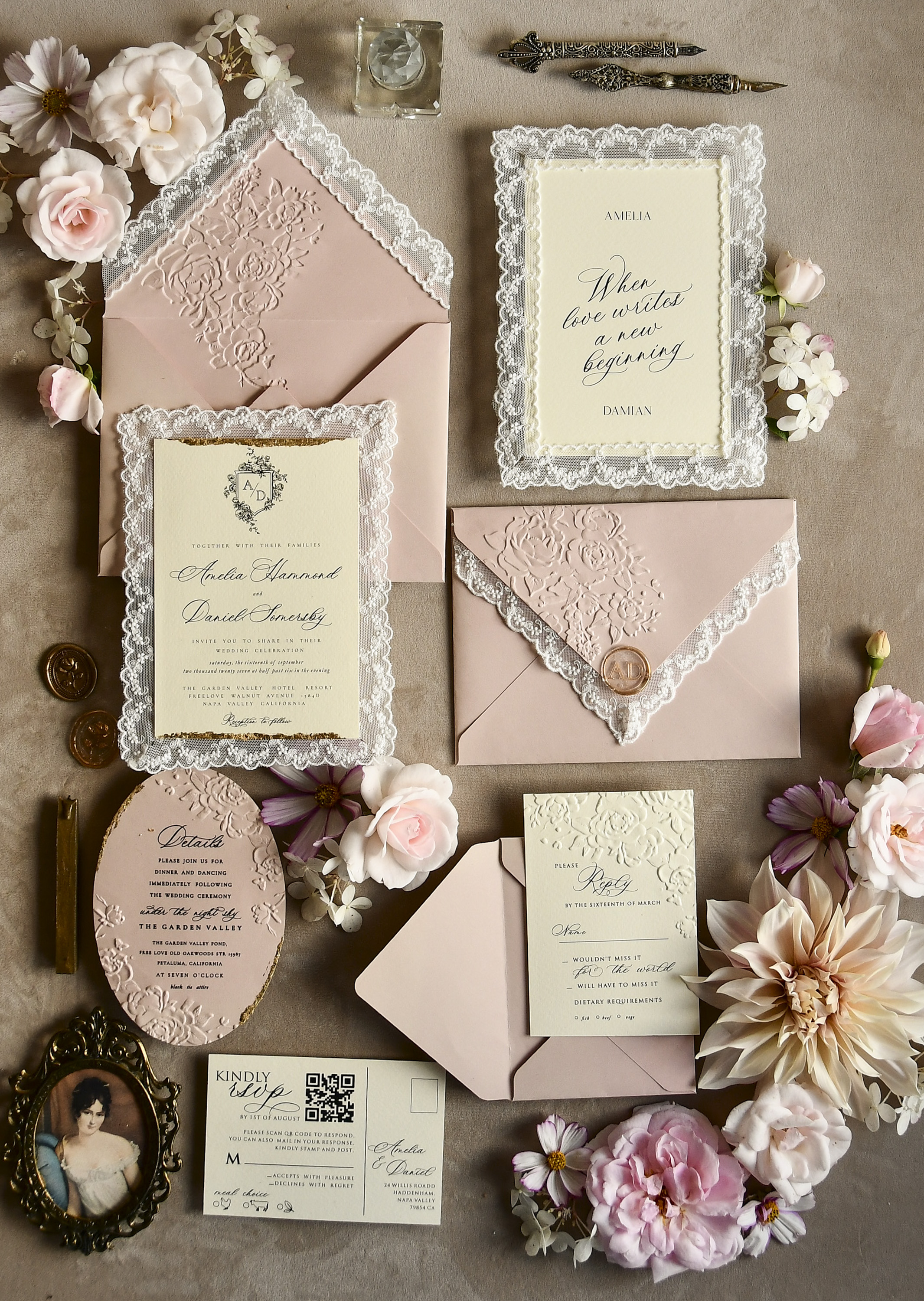
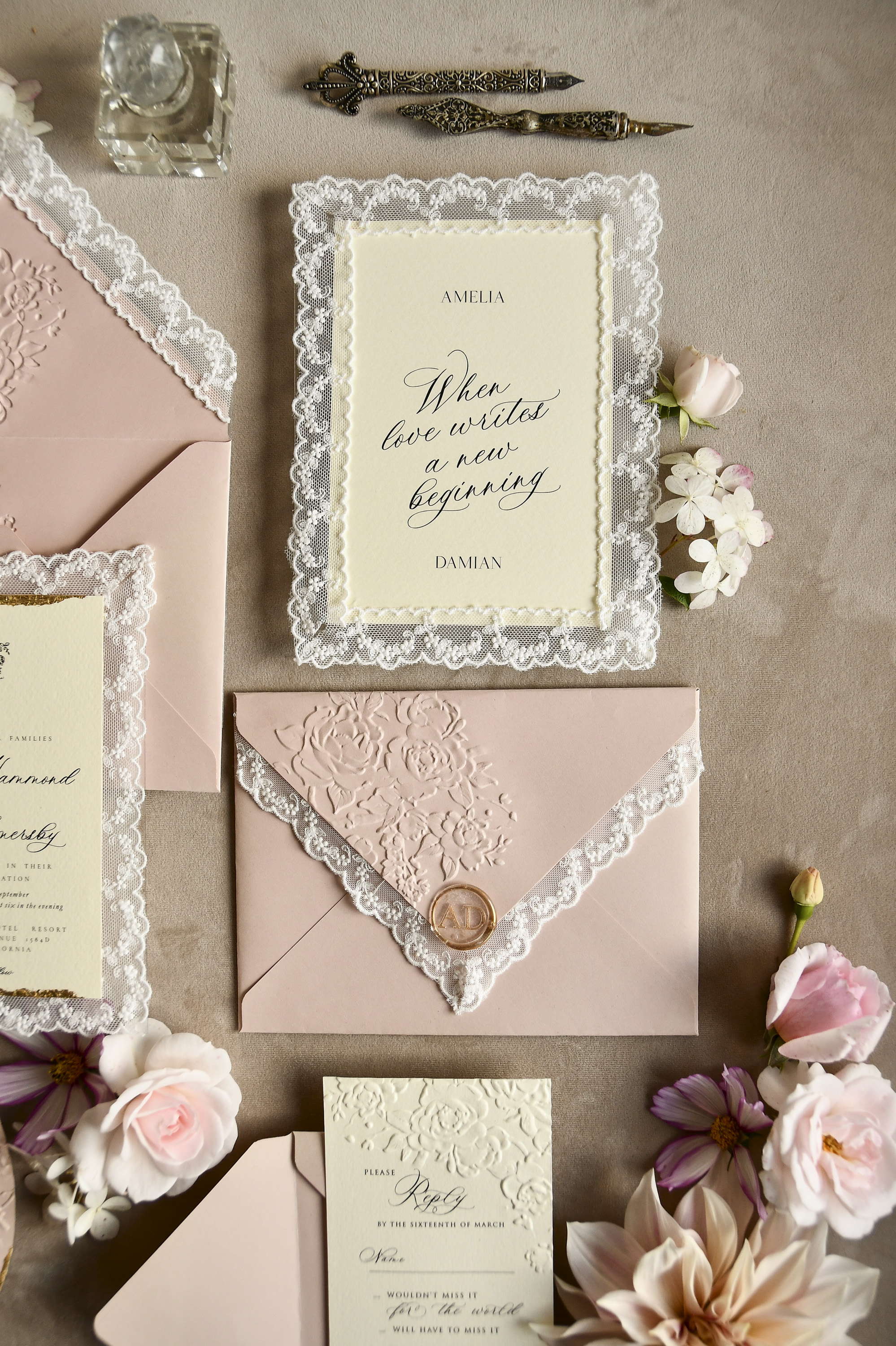
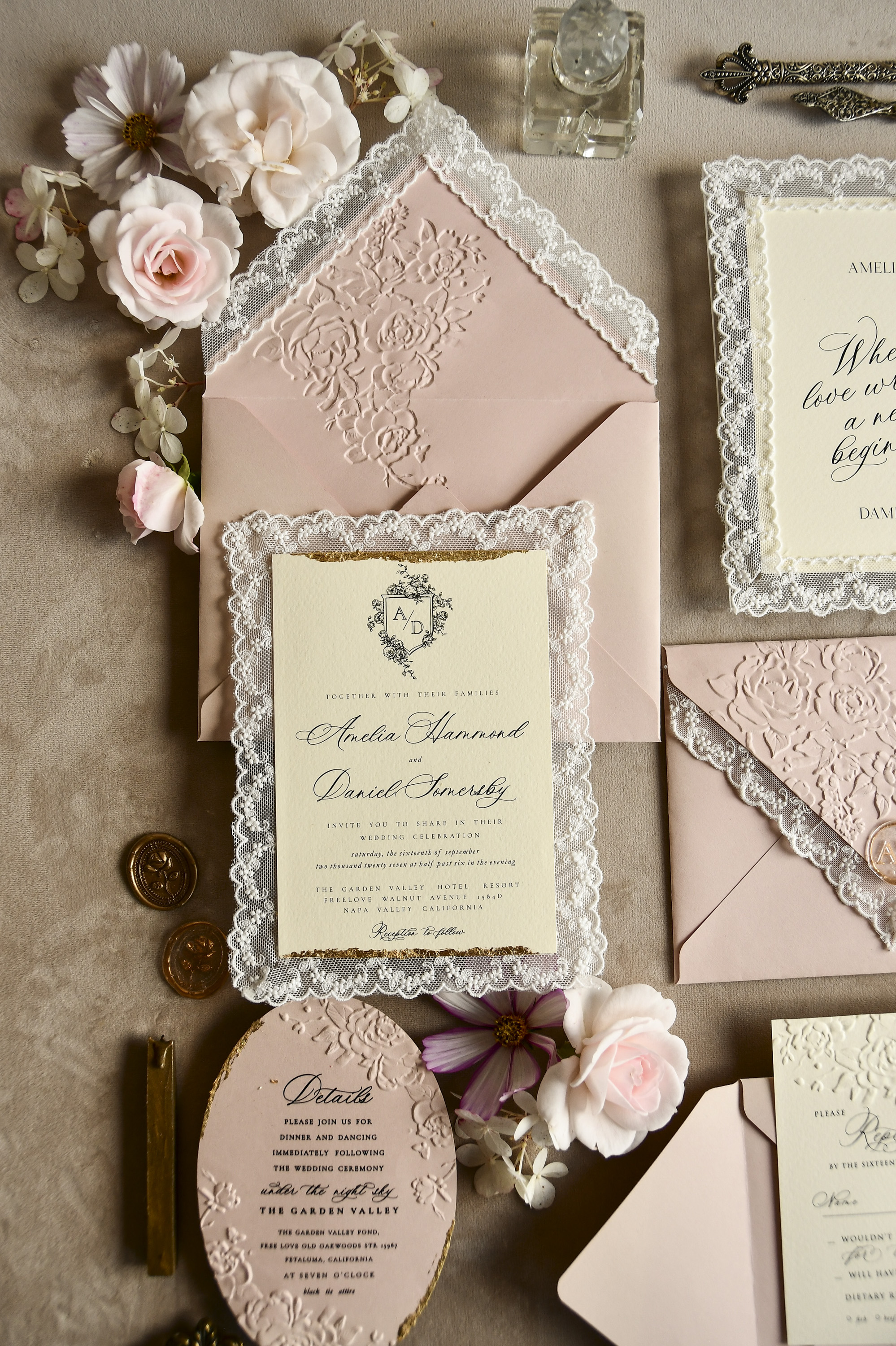
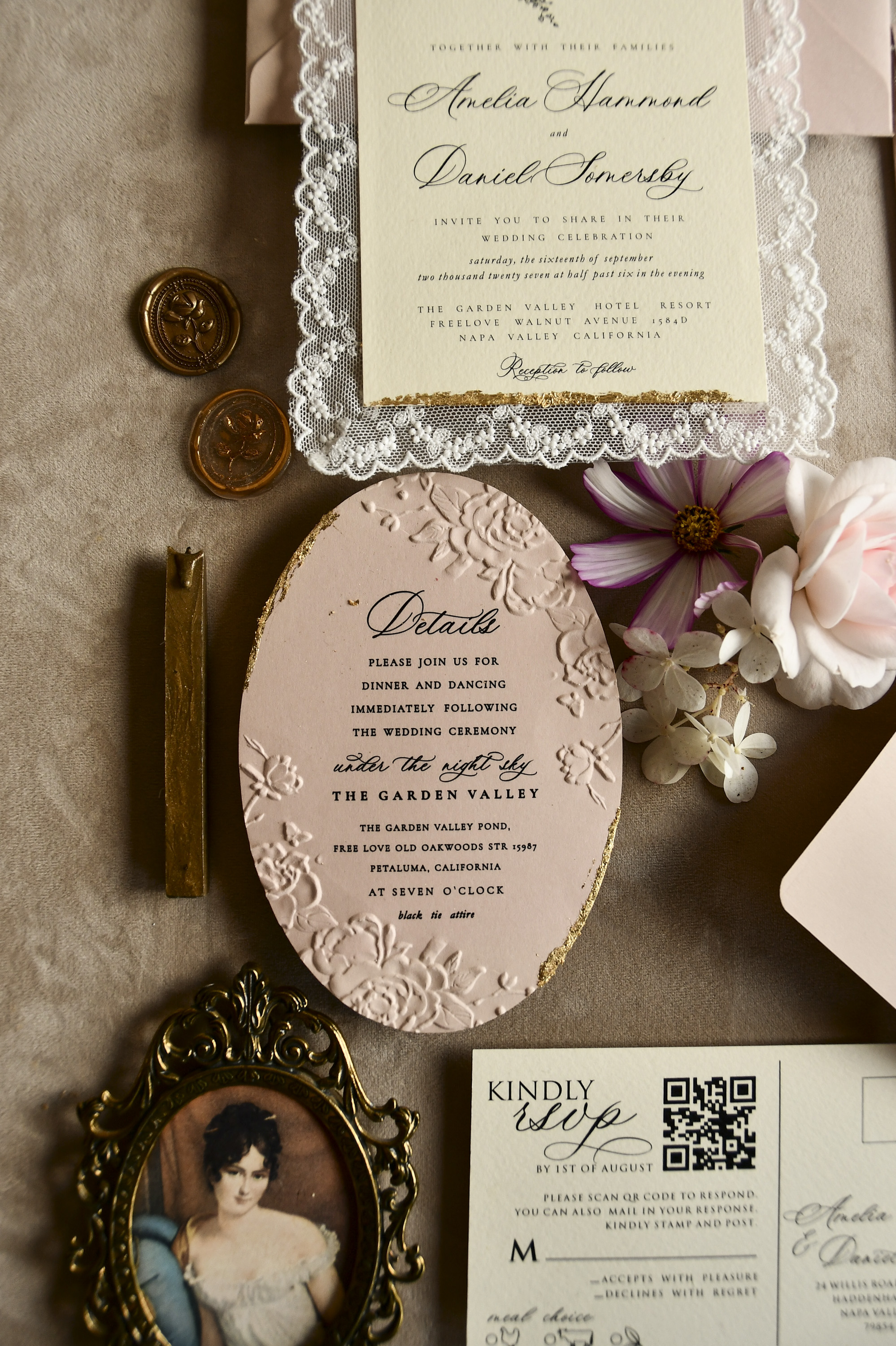
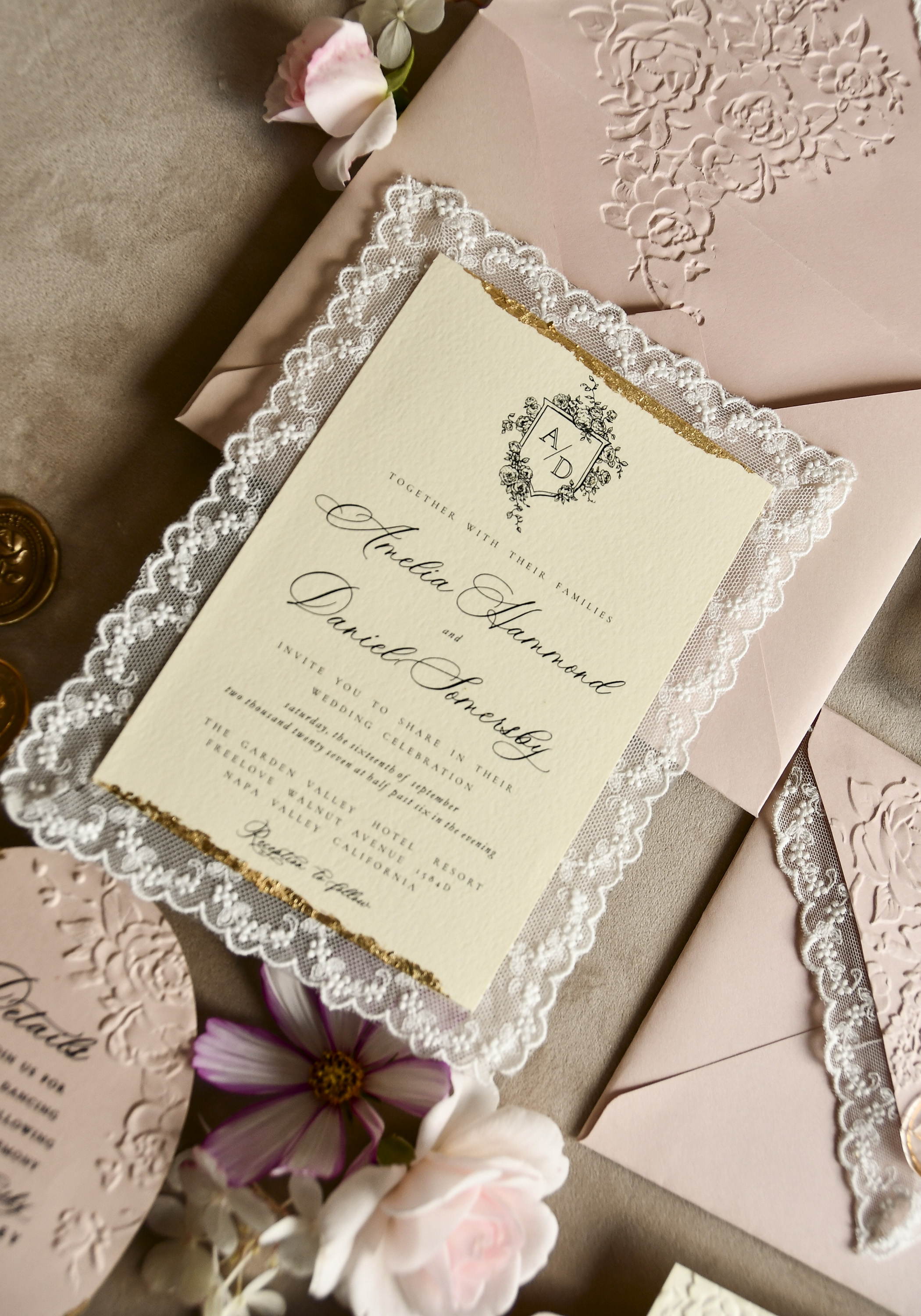
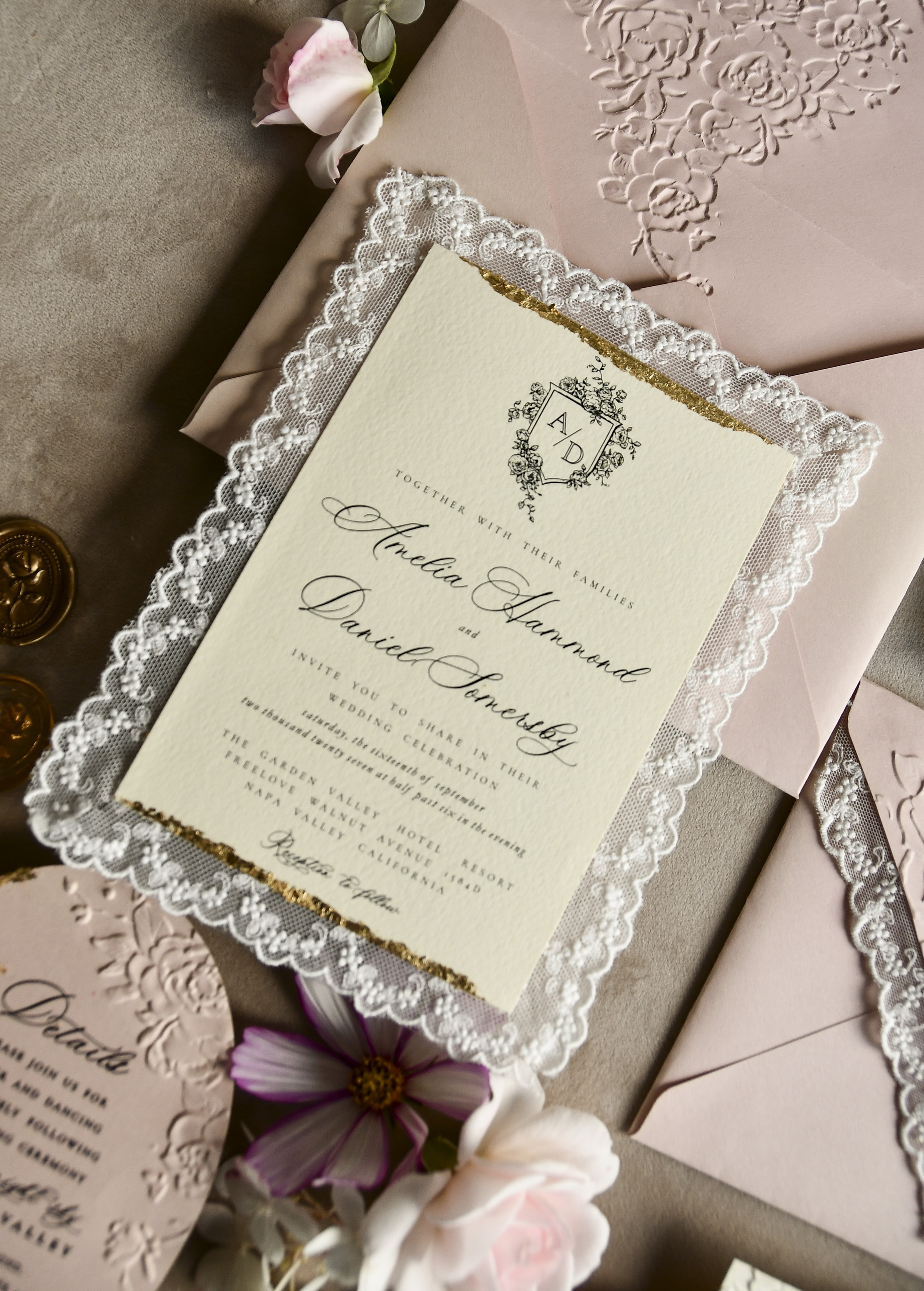
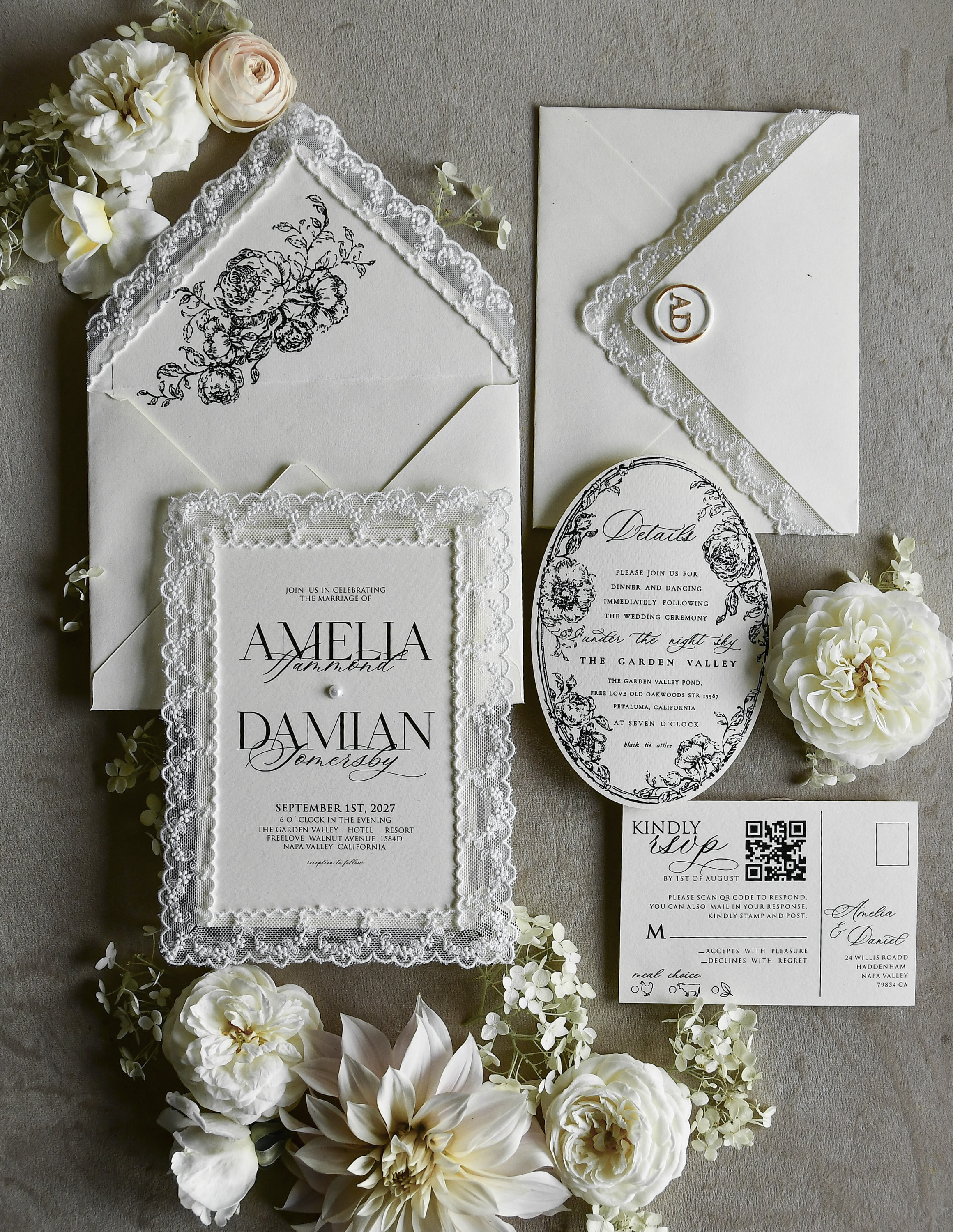
Traditional wedding invitations use two envelopes. The outer envelope is formal and gets mailed—it carries full names, titles, and the complete mailing address. The inner envelope is more intimate and lists exactly who is invited, including children by first name or a note like "and family." If you're using a single-envelope suite (common with modern and rustic styles like the vintage lace designs from our 01/laceembos/z collection), keep the addressing formal but include everyone's name clearly.
- Outer envelope: Mr. and Mrs. Jonathan Reed, 42 Maple Street, Austin, TX 78701
- Inner envelope: Jonathan and Claire, Ella and Max (children's names)
If you're going single-envelope, write out full names and include children's names on a second line below the parents.
How to Address Couples of Every Kind
This is where most couples get tripped up. Here are the most common situations with exact wording:
- Married couple, same last name: Mr. and Mrs. Daniel Park
- Married couple, different last names: Ms. Priya Sharma and Mr. Carlos Mendez (alphabetical by last name, or ladies first—both are acceptable)
- Unmarried couple living together: List both names on separate lines, no "and" on the outer envelope. Ms. Jordan Ellis / Mr. Tyler Brooks
- Same-sex married couple: Use the same rules as any married couple. Mrs. and Mrs. Sofia and Ana Reyes, or Mr. and Mr. James and David Kim
- Same-sex unmarried couple: Same as any unmarried couple—separate lines, both full names
When in doubt, lead with the name of the person you're closest to, or go alphabetical. Either is correct.
Titles, Doctors, and Military Ranks
Professional titles should always be used on formal outer envelopes. Here's how to handle the most common ones:
- One doctor: Dr. Michelle Foster and Mr. Aaron Foster
- Both doctors: Drs. Michelle and Aaron Foster, or The Doctors Foster
- Military: Use the full rank spelled out. Captain James Holloway and Mrs. Holloway. If the spouse also has a rank, list the higher rank first.
- Judge: The Honorable Sandra Kim and Mr. David Kim
If you're unsure of someone's preferred title—especially for non-binary guests or those who've recently changed their name—it's always okay to ask quietly. A quick text is far better than an awkward envelope.
Addressing Families and Solo Guests
When inviting an entire family, the outer envelope goes to the parents with full titles. The inner envelope is where you list the kids by first name. Children under 18 are not addressed on the outer envelope separately.
- Outer: Mr. and Mrs. Thomas Greene
- Inner: Thomas, Rachel, Lily, and Sam
If children are not invited, address the outer envelope only to the adults. The inner envelope reinforces this by listing only the adults' first names. Do not write "No children" on the envelope—handle it through word of mouth or your wedding website instead.
For a solo guest you'd like to bring a plus-one, write their name and "and Guest" on both envelopes: Ms. Vanessa Cole and Guest. This makes the invitation clear without putting anyone on the spot.
Practical Tips Before You Start Addressing
A few logistics that save real headaches:
- Collect addresses early. Send a digital address-collector form 4–6 months before your wedding date. People move more than you think.
- Write out everything fully. Avoid abbreviations like St. or Ave. on formal envelopes—spell out Street, Avenue, and the full state name.
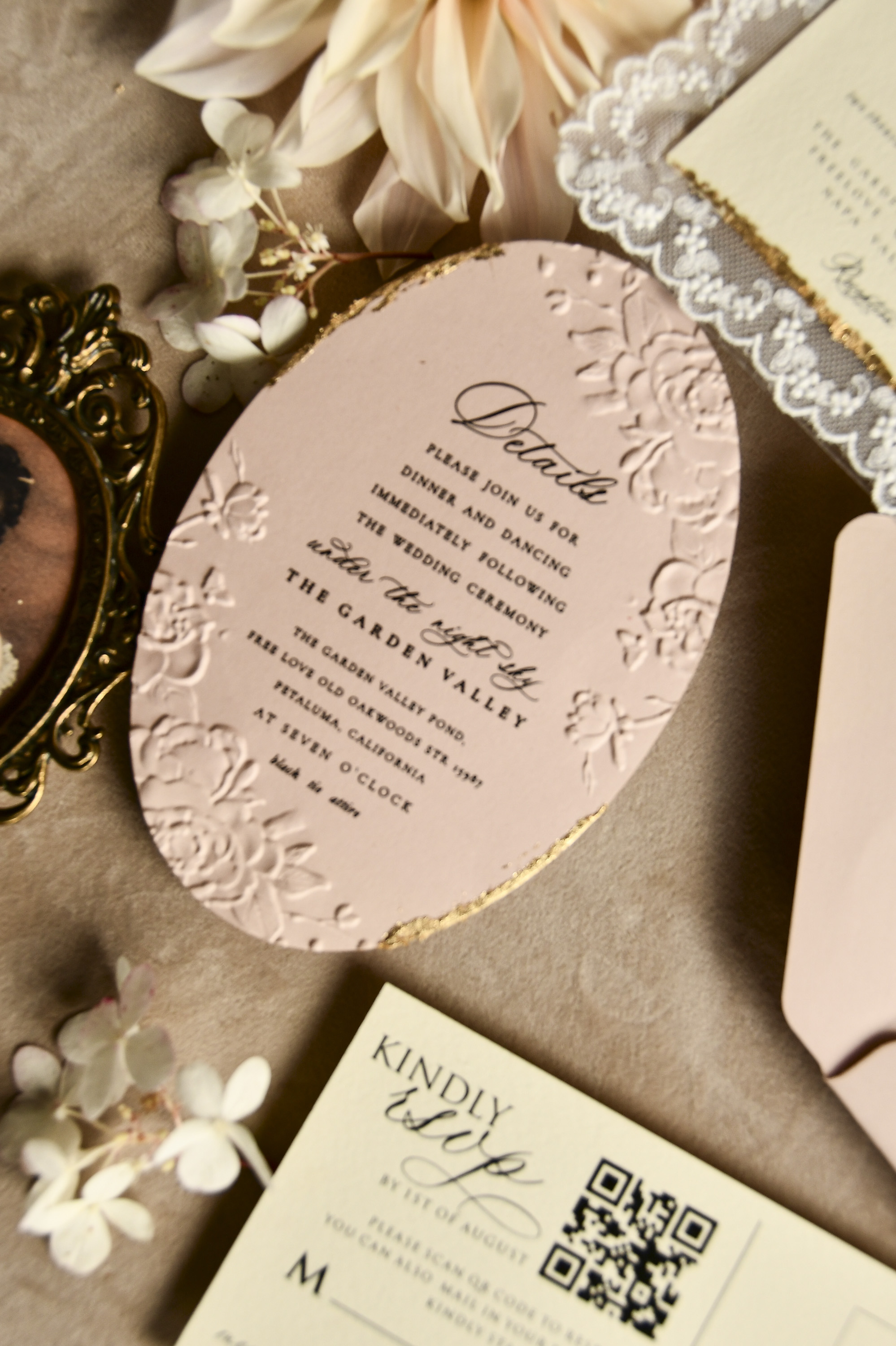
- Order extras. Plan for at least 10–15% more envelopes than you need for mistakes. If you're using a beautifully textured suite like our 01/laceembos/z invitations, you'll want practice envelopes before writing on the real ones.
- Calligraphy or printing? Both are perfectly appropriate. If hand-addressing, use a fine-tip pen and do a test run on plain paper first. If printing, choose a font that matches your invitation style.
- Return address: Goes on the back flap of the outer envelope (or the top-left front for mailing purposes). Use the address where RSVPs or returned mail should land.
Frequently Asked Questions
Traditional etiquette calls for titles on the outer envelope, but many modern couples skip them for a more casual feel. Follow your instincts and the overall tone of your wedding—a backyard celebration can drop titles, while a black-tie affair typically keeps them.
Simply use their full name without any title: Jordan Taylor, 42 Maple Street. This is always respectful and appropriate. When in doubt, a quick and private check-in with the guest is the kindest option.
No—children under 18 are not typically listed on the outer envelope. List only the parents there, and include children's first names on the inner envelope or on a second line if you're using a single envelope.
Write the guest's full name followed by "and Guest" on the envelope: Ms. Lauren Hayes and Guest. This signals clearly that they may bring someone without requiring them to commit a name upfront.
Absolutely. Printed addresses are widely accepted and look polished when the font complements your invitation design. Many couples print addresses directly onto envelopes or use address labels that match their stationery style.
Plan to have all envelopes addressed and ready to mail 6–8 weeks before your wedding date. Start the addressing process 2–3 weeks before that to give yourself plenty of time for corrections and any calligraphy drying time.
See This Design Up Close
You May Also Like
More Wedding Planning Guides
- → When to Address a Wedding Invitation Directly to a Child
- → Mailed Card or Website Link? How to Handle RSVPs the Modern Way
- → Wedding Invitation Delivery: When to Mail and When to Hand Them Off
- → Navigating a Wedding Guest List When Your Fiancé Wants to Leave Your Family Out
- → Wedding Invitation Wording: Every Essential Detail Couples Need to Include
- → When Your Divorced Parents Can't Be in the Same Room: A Wedding Planning Guide
- → Adults-Only Weddings: Is Leaving Kids Off the List Actually Rude?
- → How to Decide Who Gets a Plus One at Your Wedding
- → Wedding Invitations: How to Count What You Actually Need
- → Yes, You Can Invite Ceremony-Only Guests — Here's How to Do It Gracefully
- → Extra Wedding Guests: Who Pays and How to Handle It Gracefully
- → Big Wedding or Better Wedding: How to Choose What Truly Matters
- → Your Wedding, Your Guest List: The Honest Truth About Inviting Cousins
- → Uninvited Extras: How to Handle Guests Who Bring Someone You Didn't Invite
- → Plus-One or No? How to Decide If Single Guests Can Bring a Date
- → How to Embrace a Small Wedding and Make It Unforgettable
- → Where Do Divorced Parents Sit at Your Wedding? Here's What Actually Works
- → To Invite or Not to Invite: Navigating the Ex Question for Your Wedding Guest List
- → Stepparents and Your Wedding Guest List: Making the Right Call
- → Setting Plus-One Boundaries Without Losing Sleep (or Friends)
- → Should Work Friends Come to Your Wedding? A No-Stress Guide to Inviting Colleagues
- → Guests Who Don't RSVP: Your Step-by-Step Plan
- → Save the Date vs. Wedding Invitation: Two Very Different Jobs, One Beautiful Paper Trail
- → When Someone Asks Why They Weren't Invited: Your Honest, Kind Playbook
- → To Call or Not to Call: Tracking Down Guests With Missing RSVPs
- → When the Guest List Must Shrink: The Right People to Remove First
- → Digital Wedding Invitations: When They Work and When to Think Twice
- → How to Handle the Parent Friend Dilemma on Your Wedding Guest List
- → Your Wedding Invitation Deadline: When the Window Officially Closes
- → Uninvited Plus-Ones and Tag-Alongs: How to Keep Your Guest List Intact
- → When Family Feuds Threaten Your Wedding Plans: A Practical Peacekeeper's Guide
- → Inviting an Estranged Brother or Sister: Finding Clarity Before You Seal the Envelope
- → Cousins, Invites, and Hard Choices: A Practical Guest List Guide