
Wedding Invitations: How to Count What You Actually Need
One of the most common mistakes couples make is ordering wedding invitations based on their guest count rather than their household count. Order too few and you're scrambling for a costly reprint. Order too many and you've wasted money. This guide walks you through the exact math, the smart buffer to add, and who else might need a suite beyond your guests.
Start With Households, Not Heads
Your guest list might say 150 people, but that doesn't mean you need 150 invitations. Invitations are addressed to households or couples, not individuals. A family of four living together gets one invitation. A couple sharing an apartment gets one invitation. Two college roommates you're inviting separately each need their own.
Here's a simple way to work through it:
- Go through your full guest list and group everyone by household.
- Count each household as one invitation.
- Add any solo guests who live together but should receive separate invitations (for example, two single friends who are roommates but aren't a couple).
For a 150-person wedding, your household count is typically somewhere between 75 and 110 invitations. Start there before you add anything else.
The Buffer Rule: Always Order Extra
Once you have your household count, add a buffer of 15–20 extra invitations. This isn't waste—it's insurance. Here's why you'll use them:
- Addressing mistakes. Calligraphers and even careful DIYers make errors. You'll want extras to reprint envelopes or replace damaged suites.
- Last-minute additions. Someone gets added to the list after you've already sent a batch. It happens more than couples expect.
- Lost mail. USPS is reliable but not perfect. If a guest says they never received an invitation, you'll want a replacement ready.
- Vendor copies. Your photographer may want to photograph the suite on the wedding day. Your venue coordinator may want one for reference.
Reprinting a small quantity later almost always costs more per unit than ordering extras upfront. A buffer is almost always the cheaper choice in the long run.
Keepsakes: Who Gets a Sentimental Copy?
Beyond guests and vendors, think about who in your life might treasure an invitation as a keepsake. Common recipients include:
- Parents on both sides (even if they live in the same household as another guest)
- Grandparents who would love a copy to display or keep
- Close friends or family members who can't attend but would appreciate being thought of
- One for yourselves—many couples frame their invitation suite or include it in a wedding scrapbook
Add 5–10 invitations to cover keepsakes. It's a small cost for a meaningful gesture, and these tend to be the copies people remember most.
Choosing a Quantity-Friendly Design
When you're finalizing your order, look for invitation suites that are offered in flexible quantity increments. Many stationery brands sell in sets of 25 or 50, so round up to the nearest set rather than the nearest round number.
For example, if your math lands at 98 invitations (85 households + 13 extras and keepsakes), order 100—not 98. The cost difference is minimal and you'll have two more on hand.
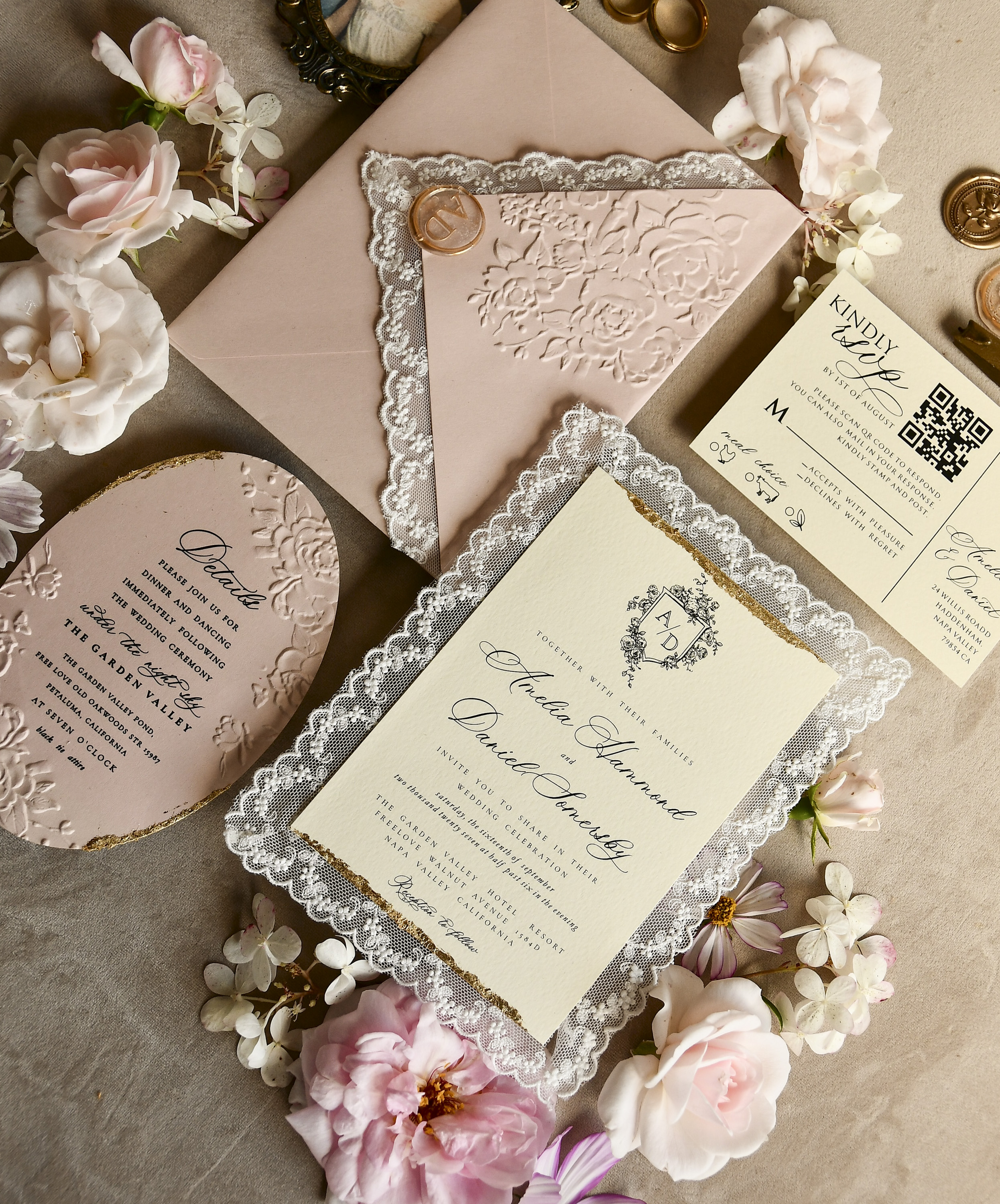
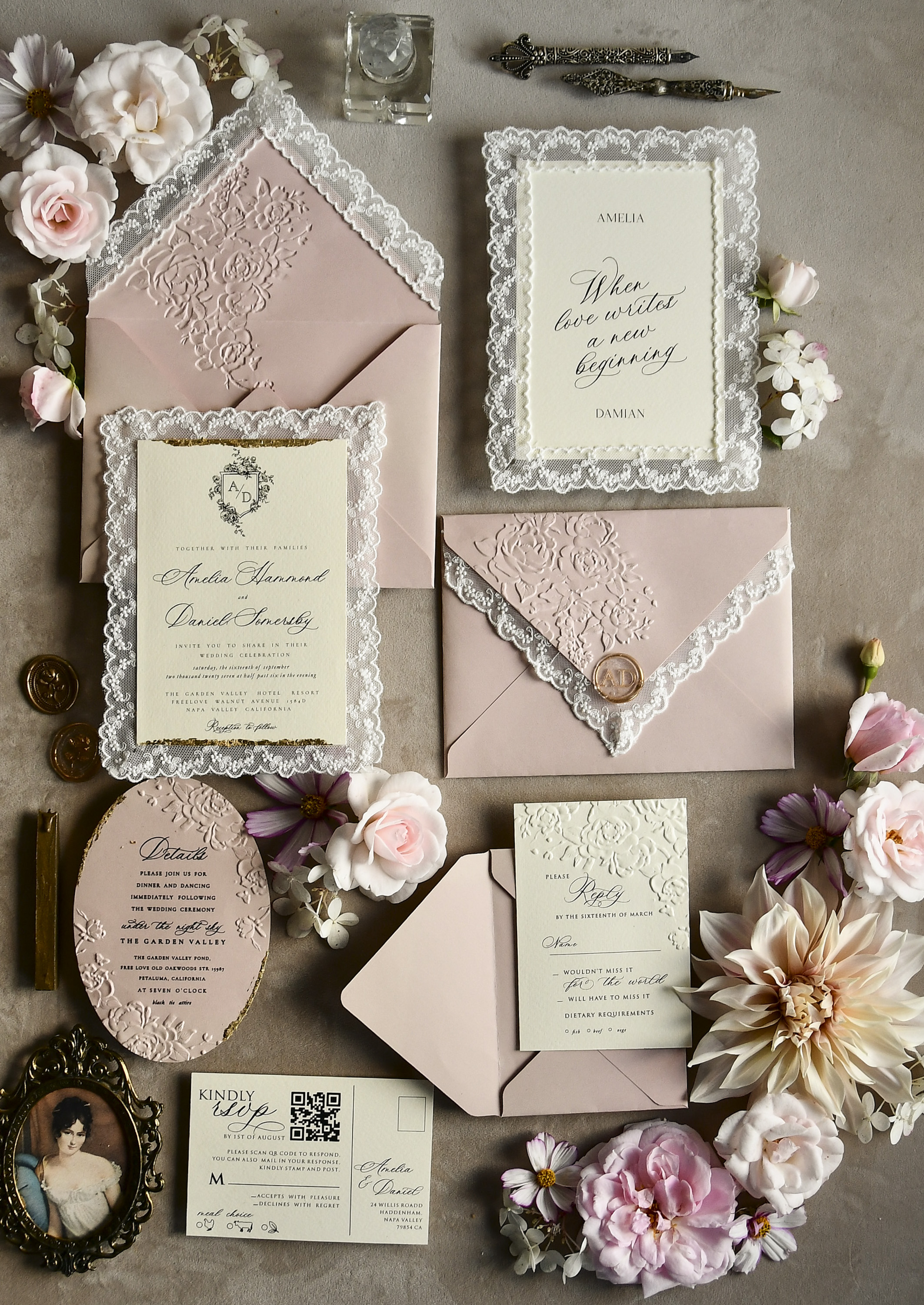
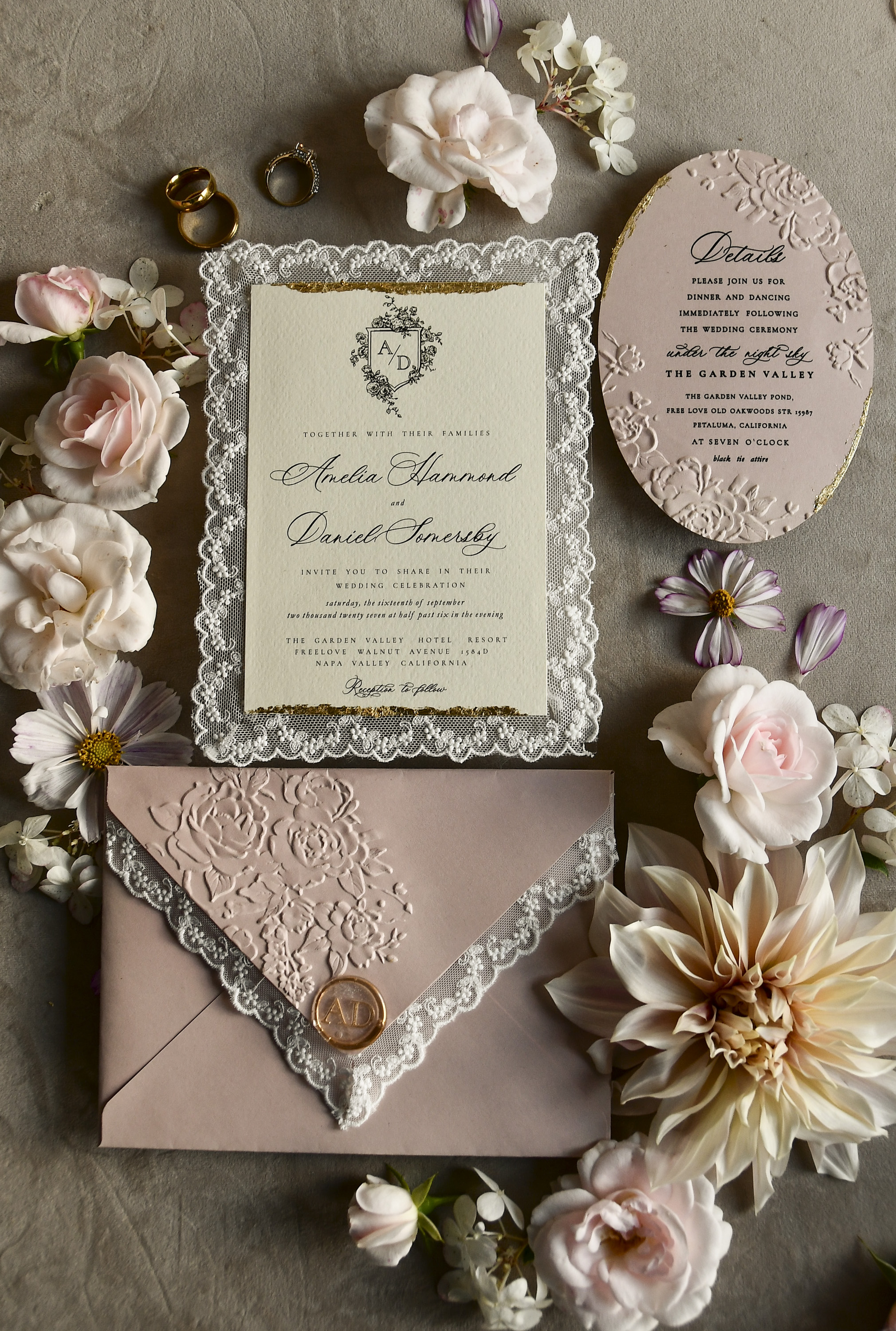
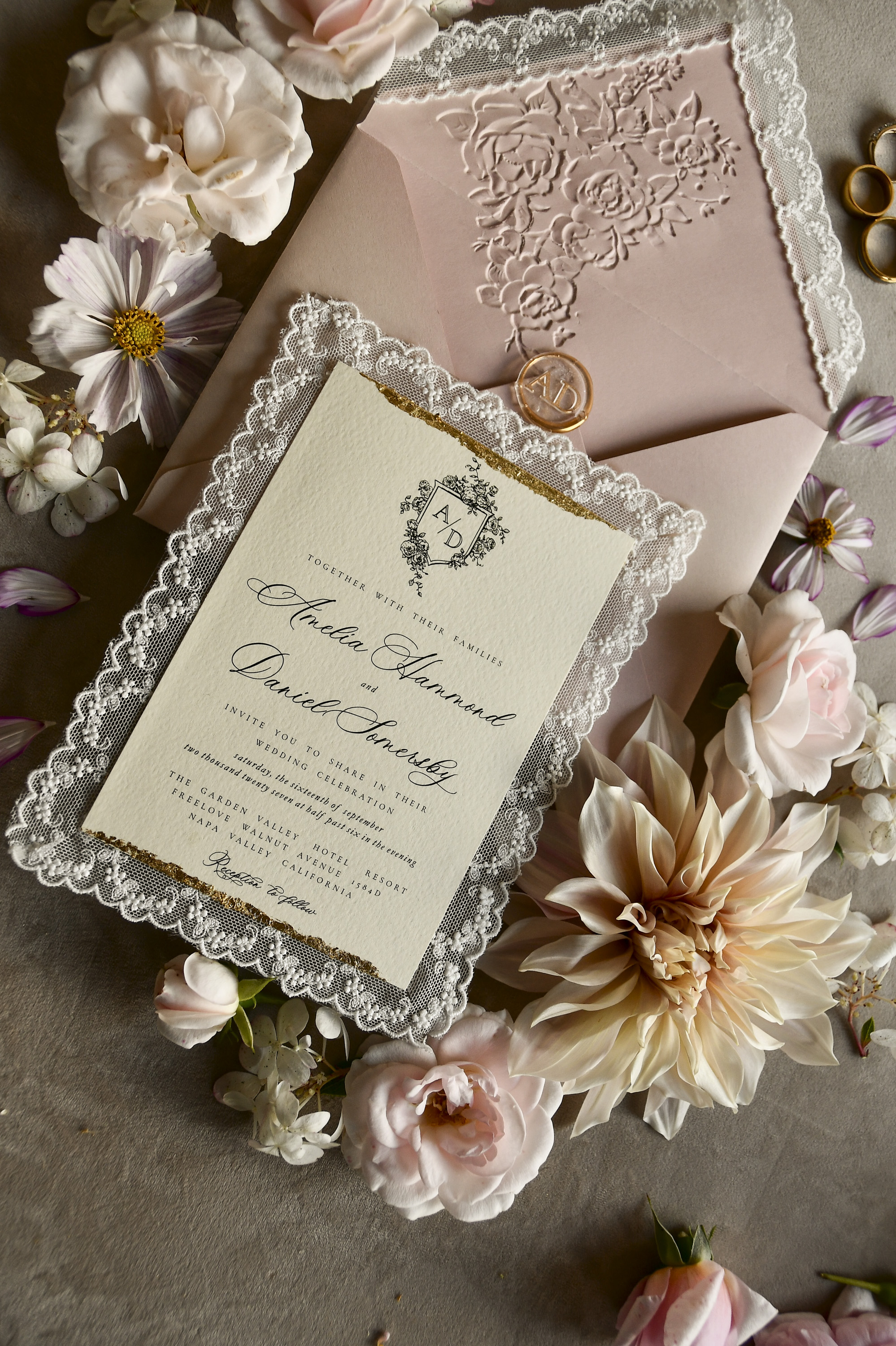
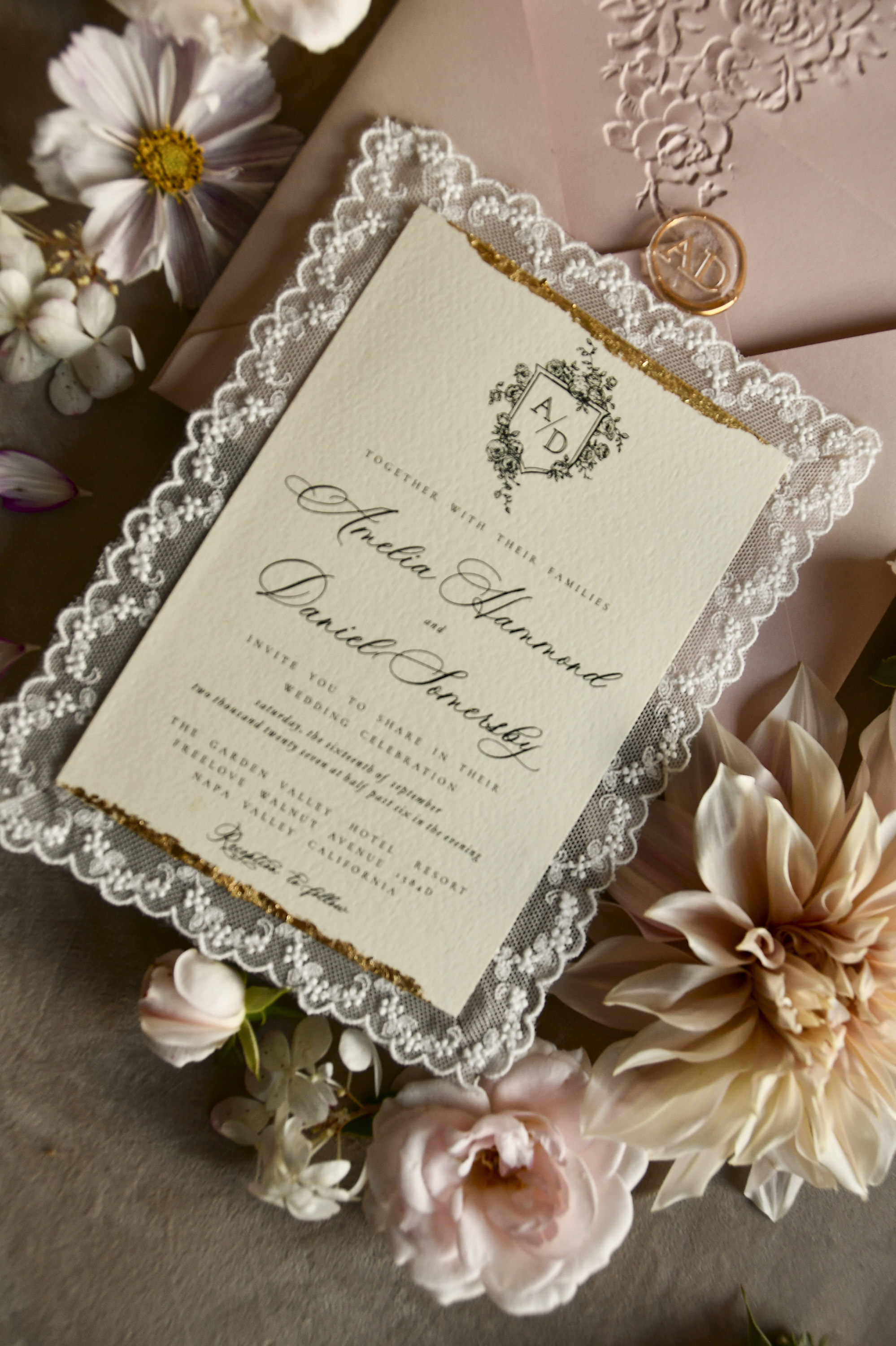
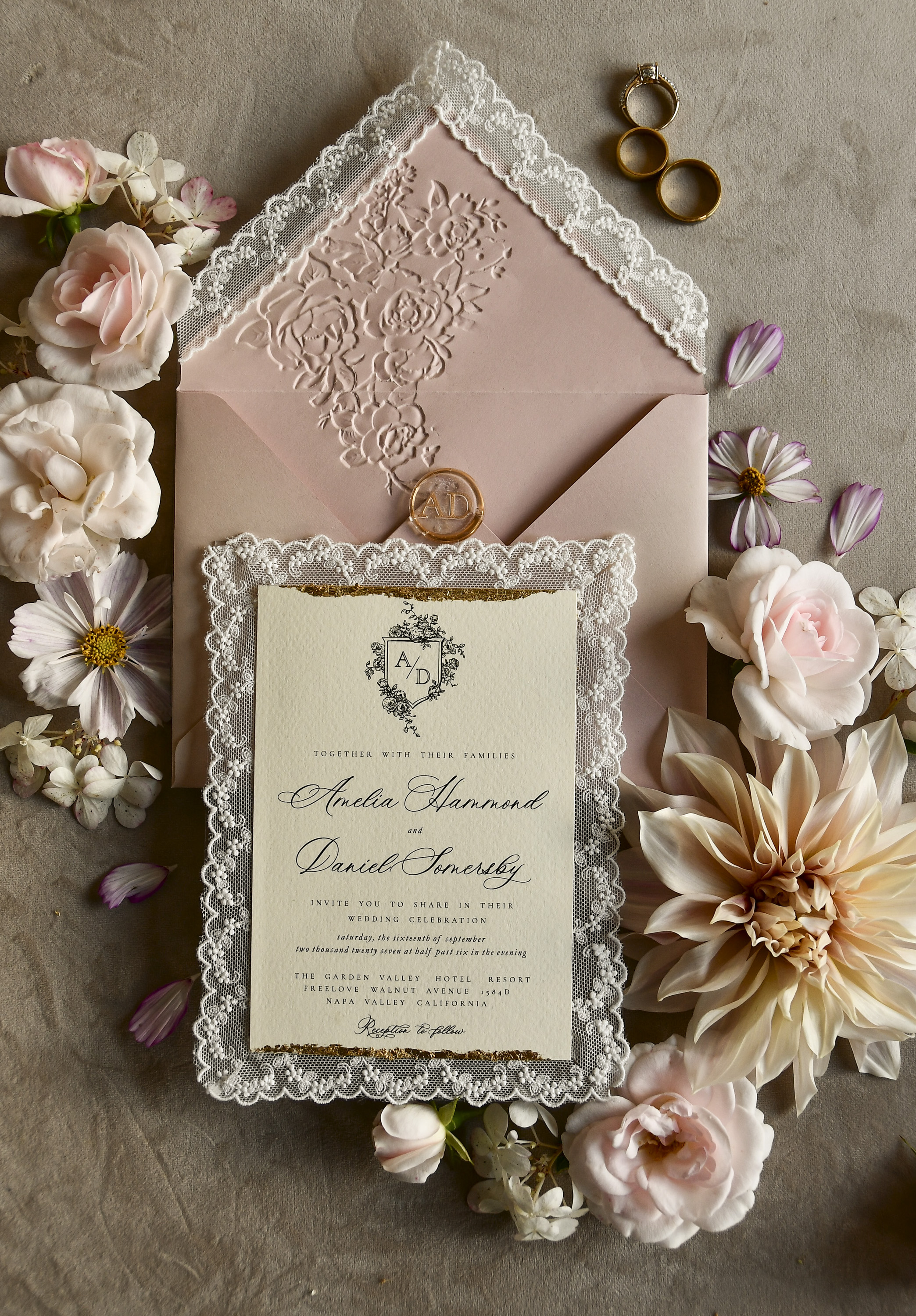
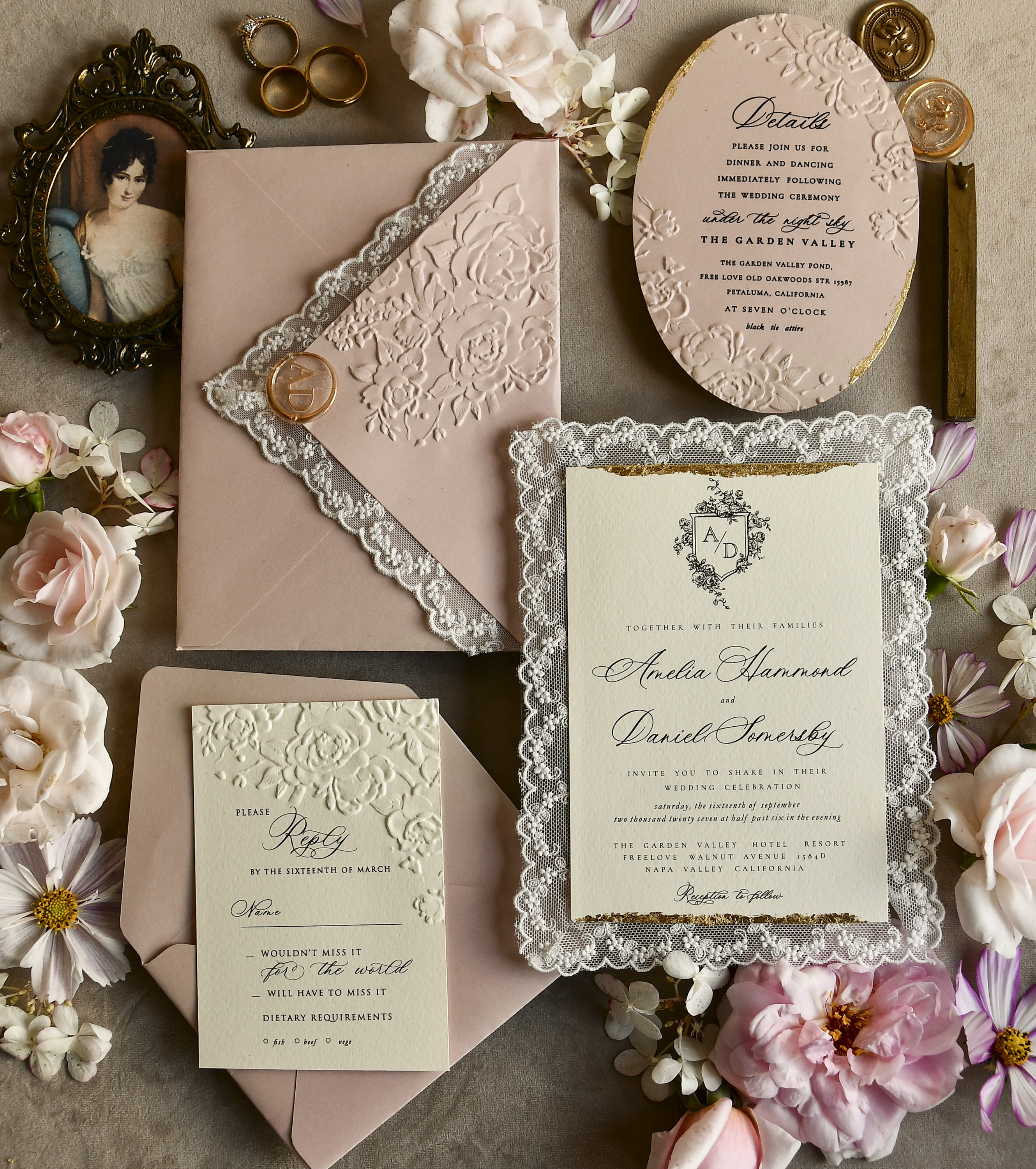
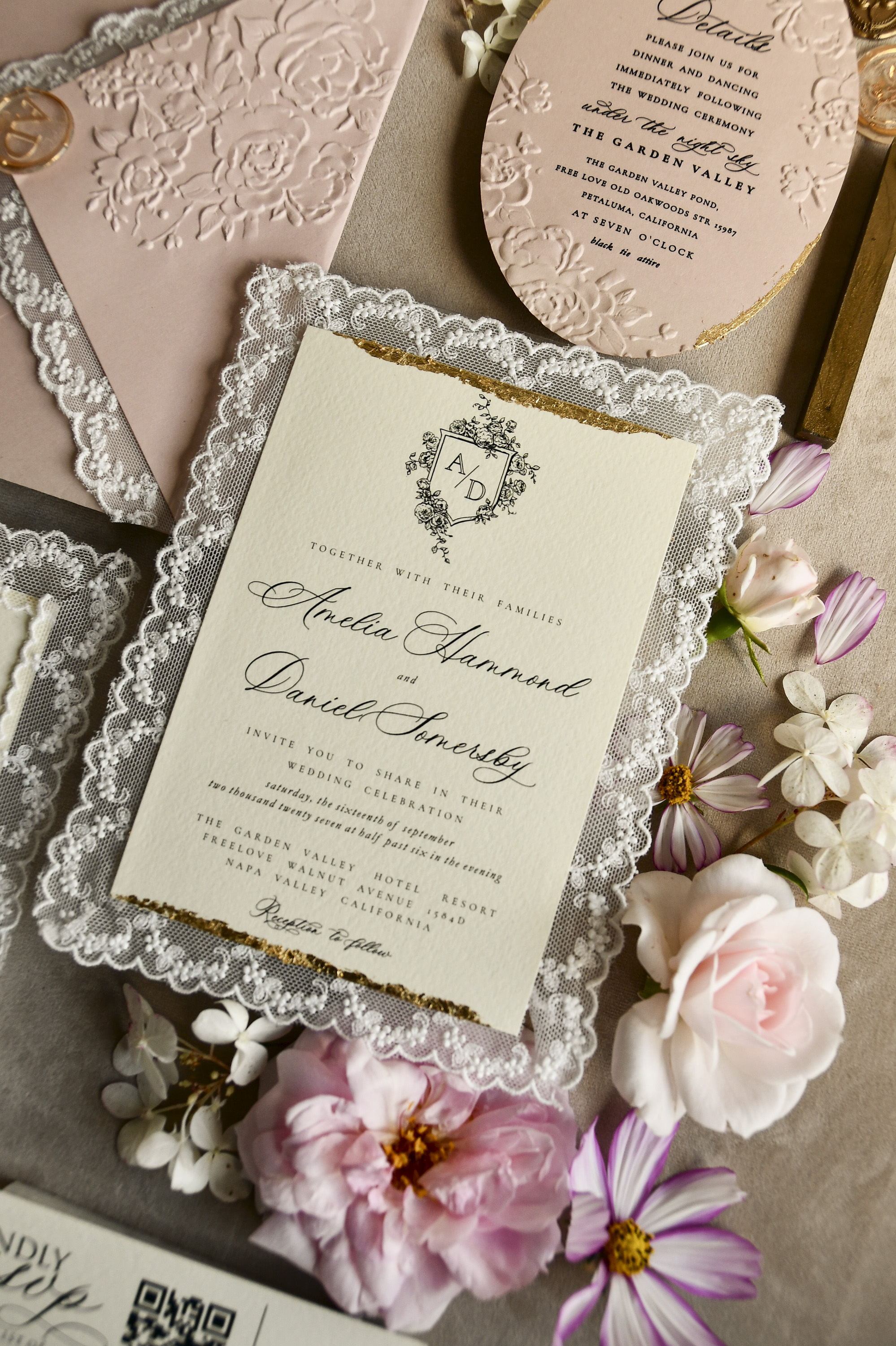
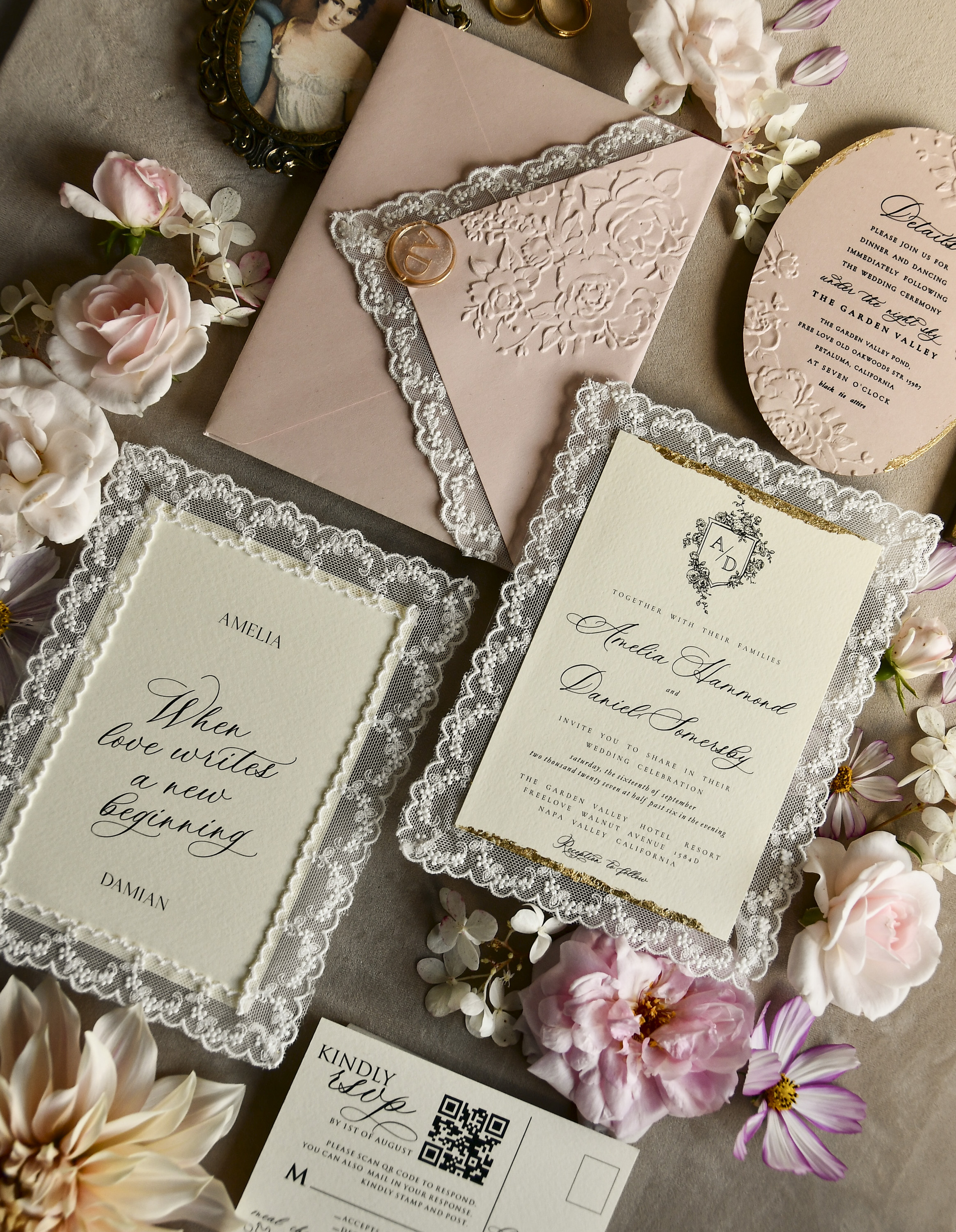
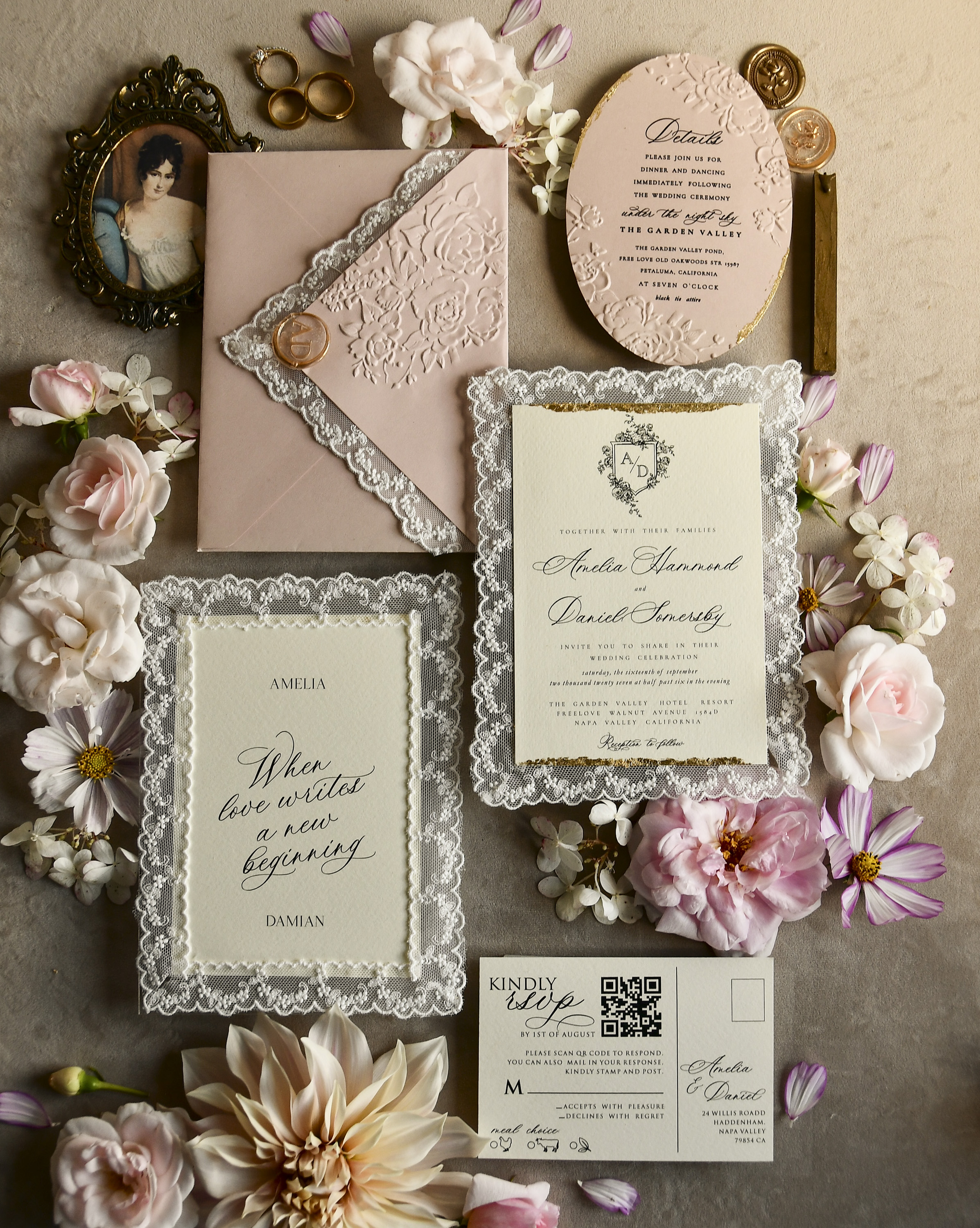
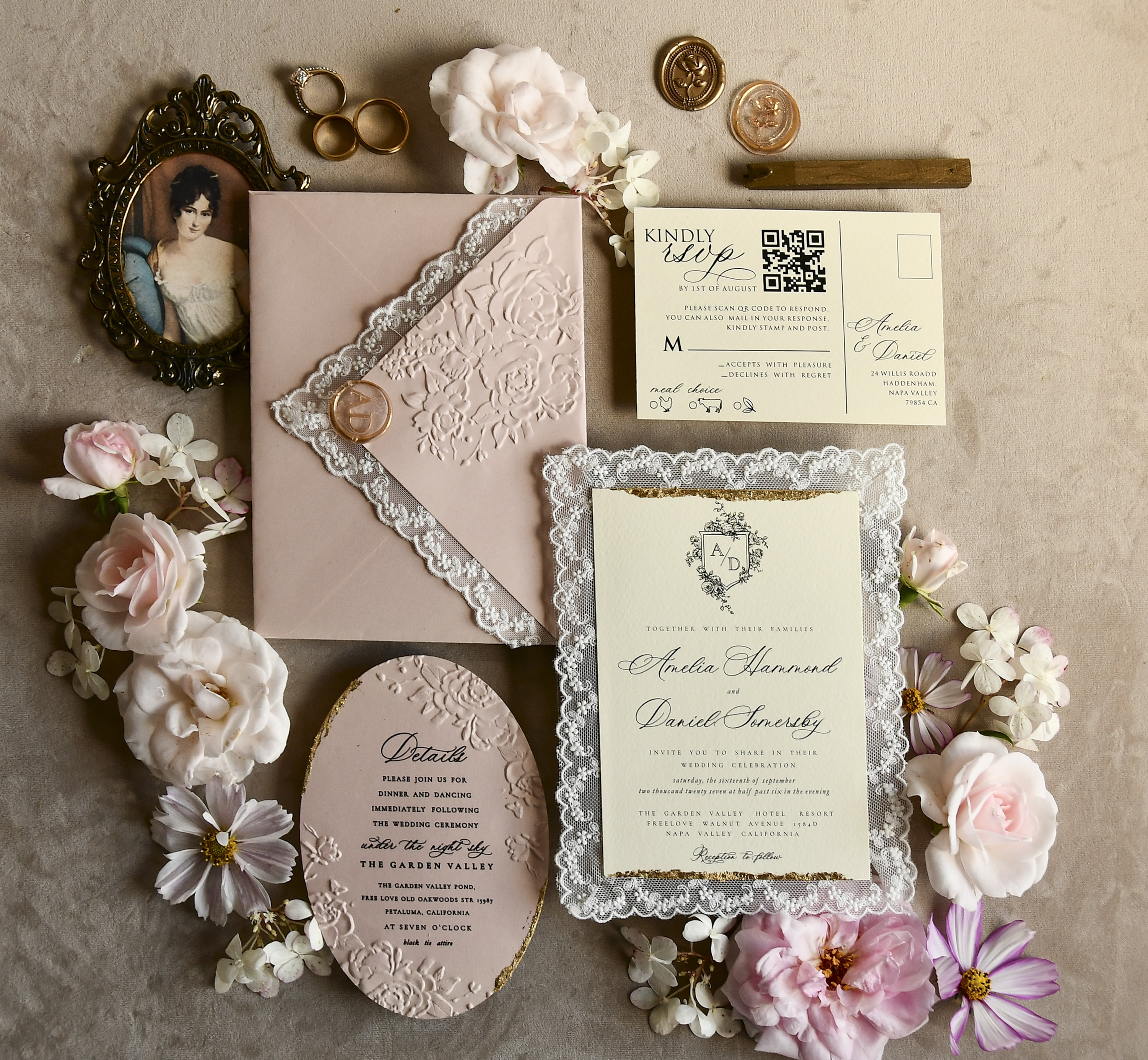
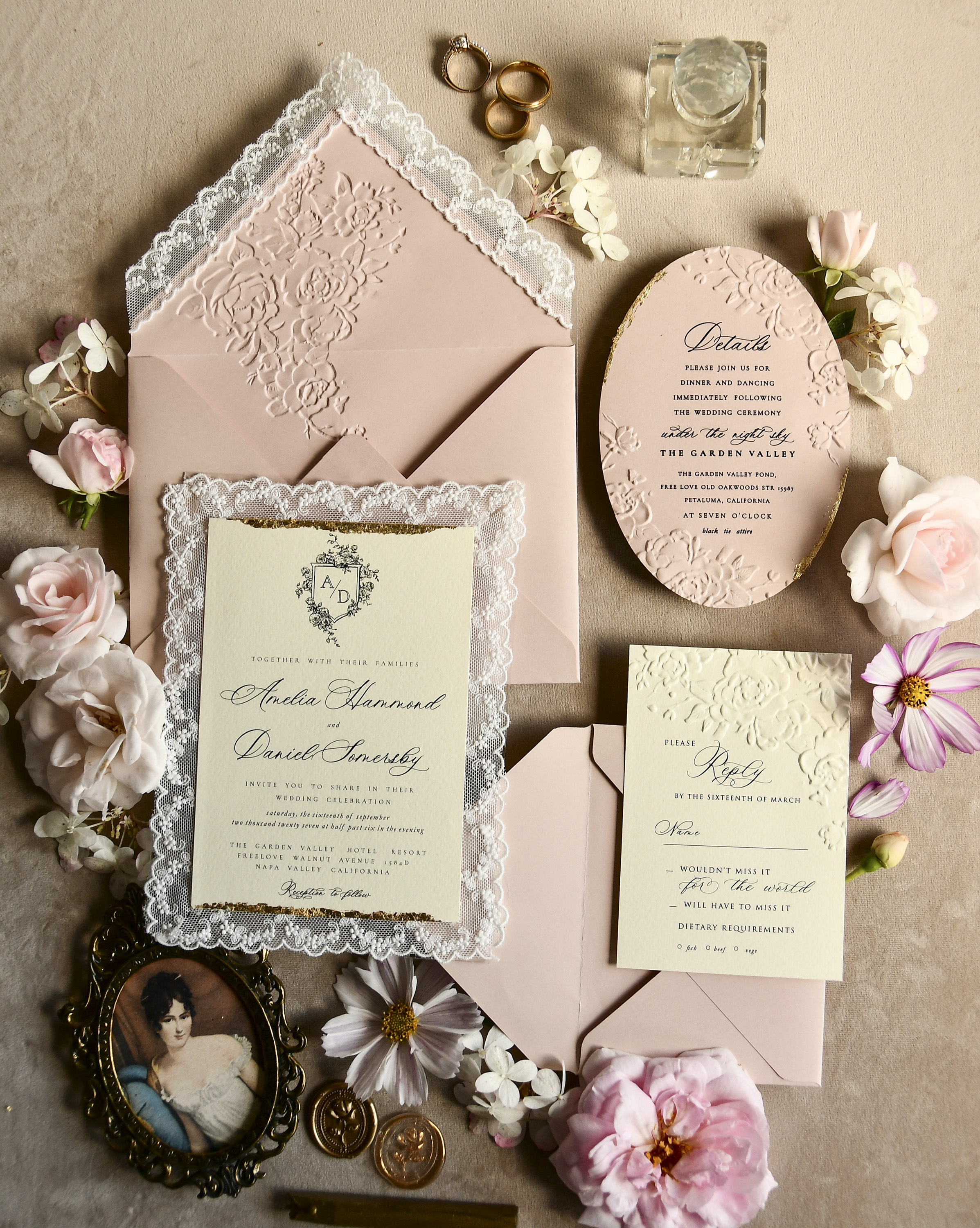
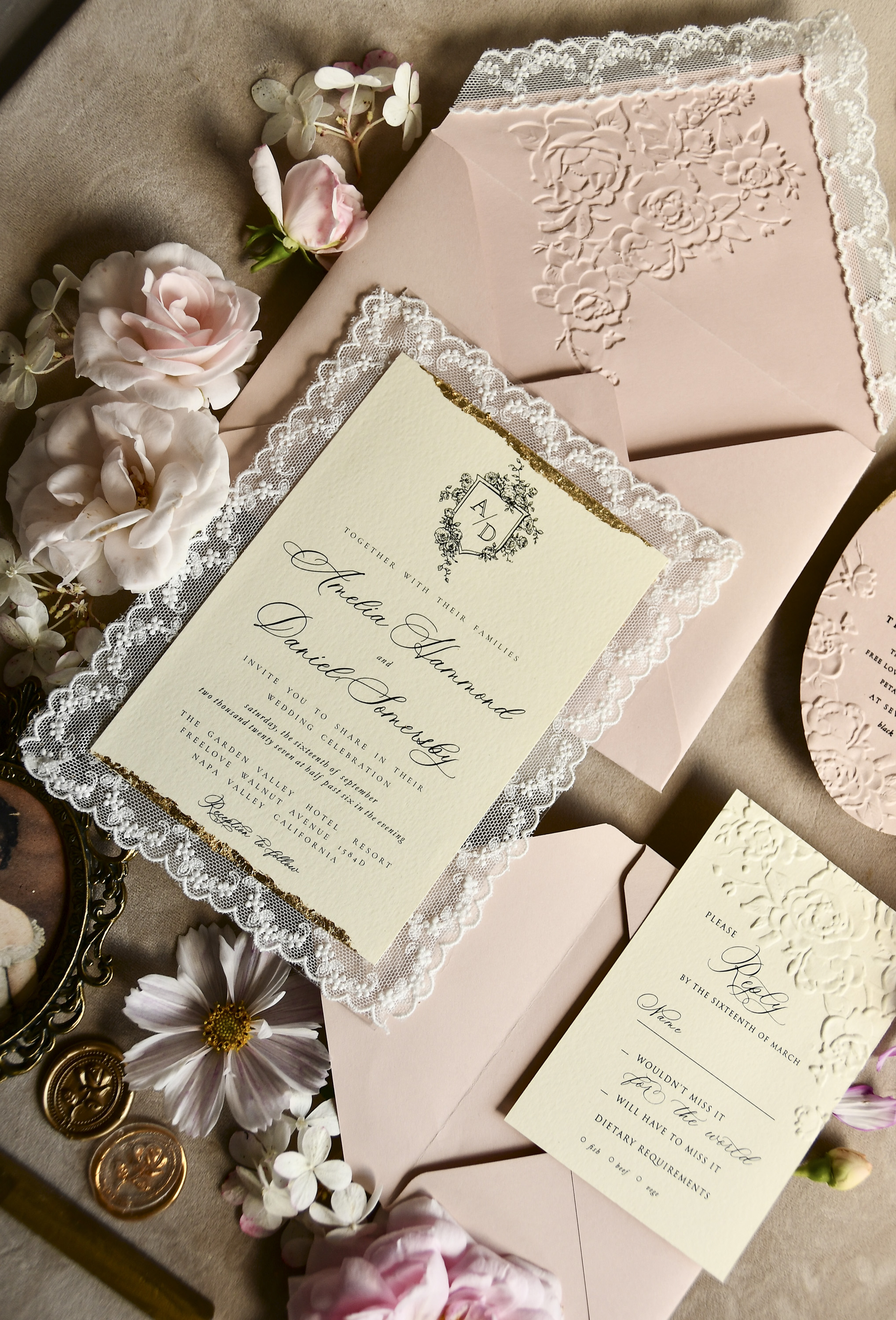
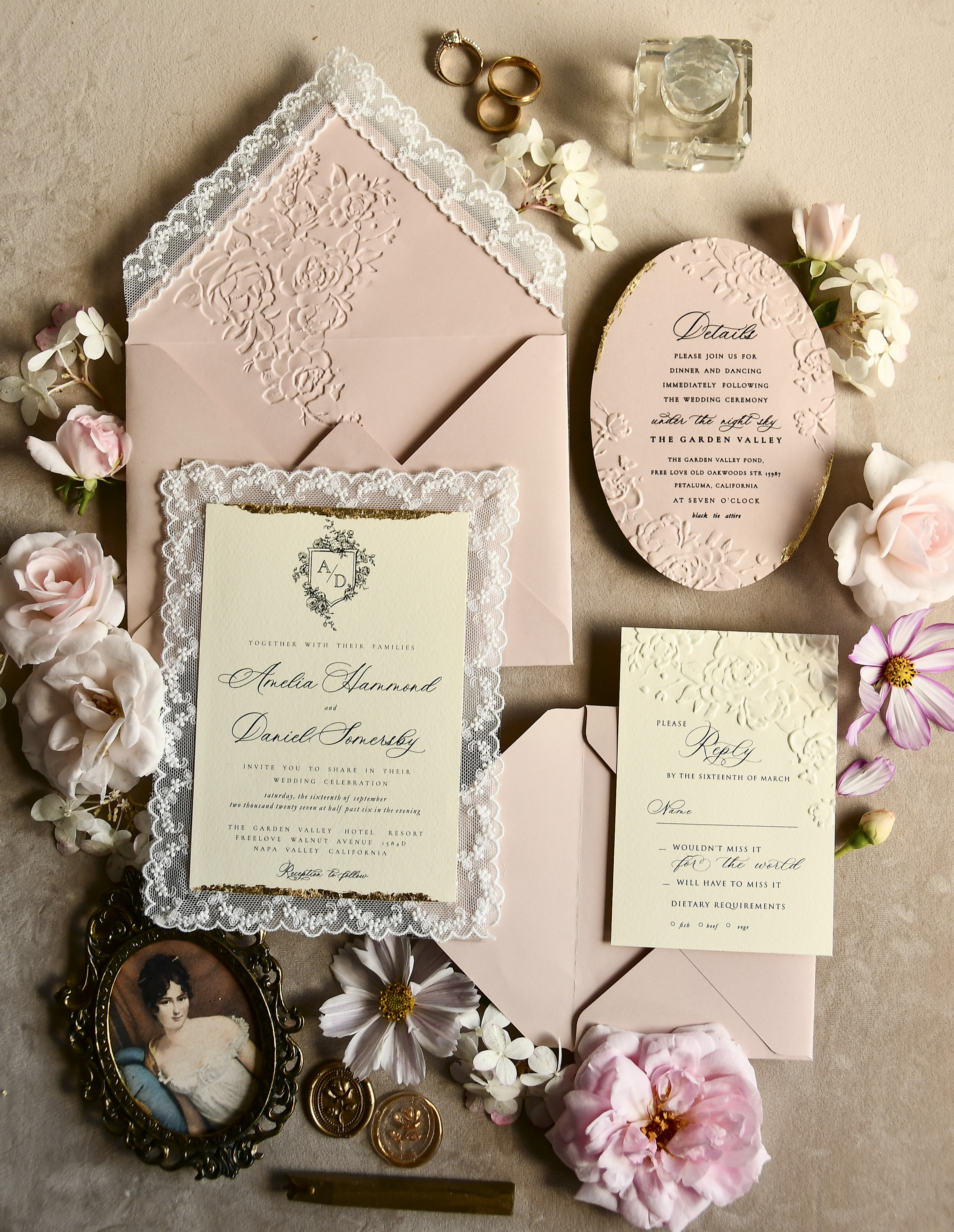
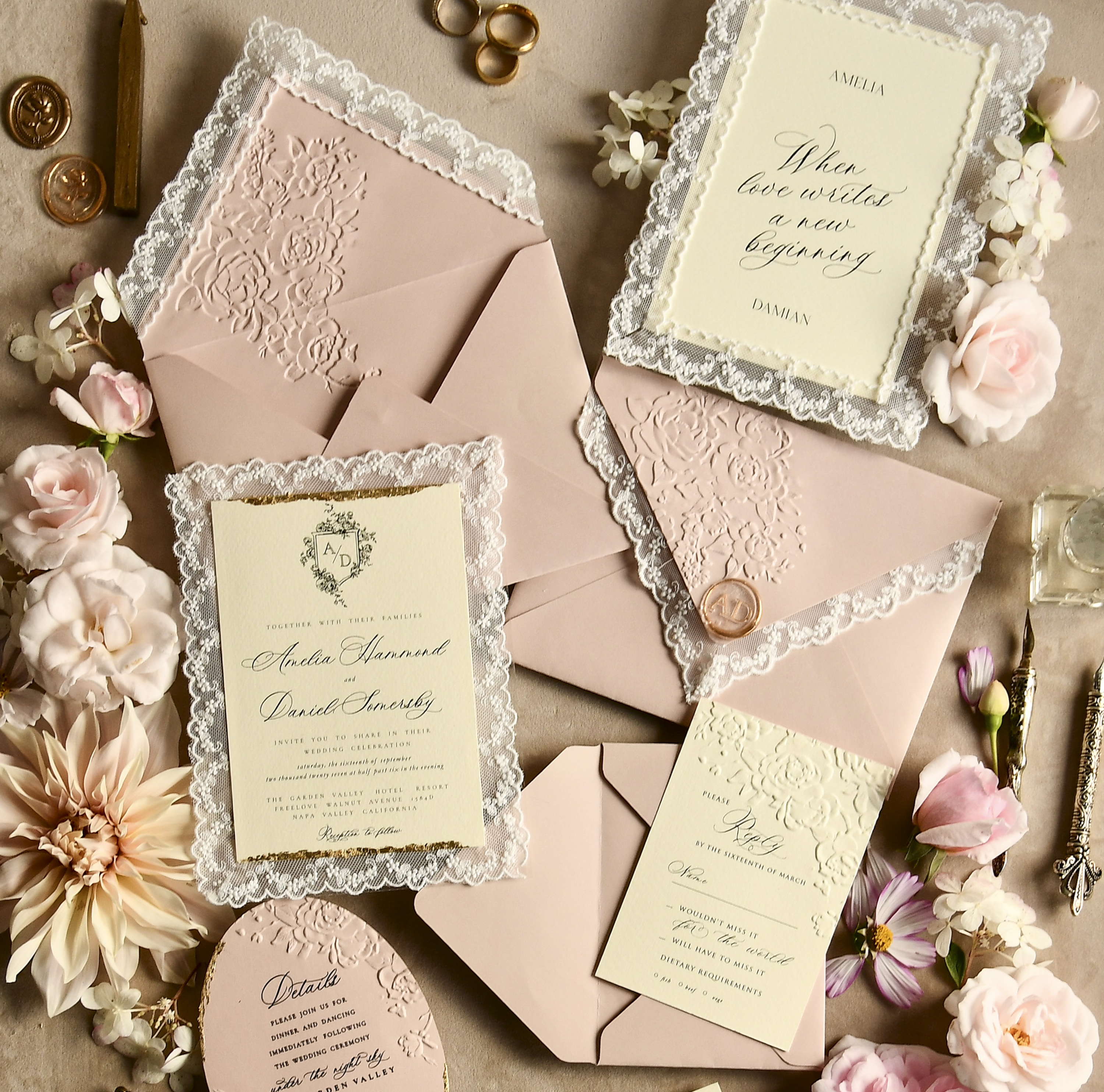
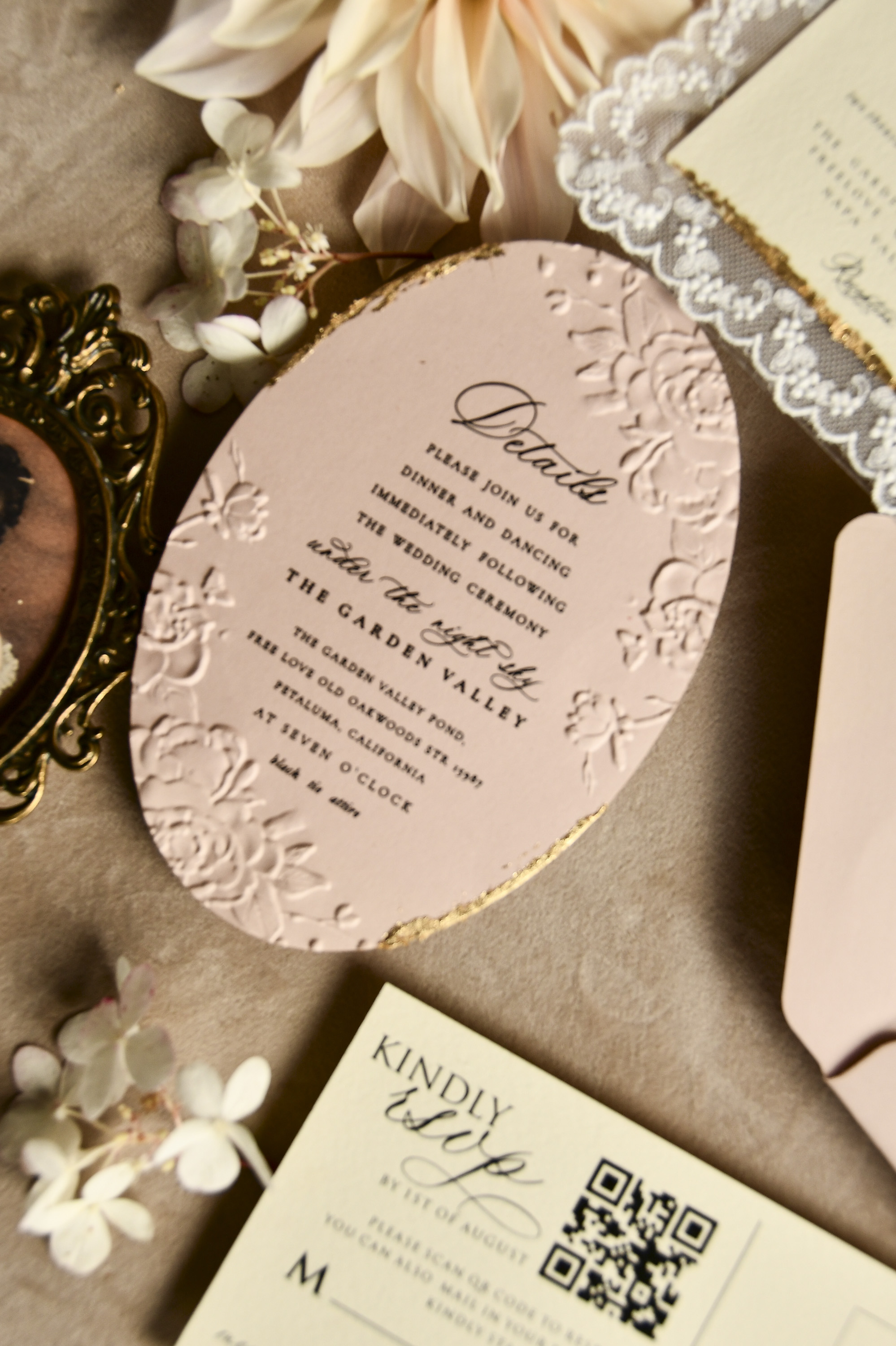
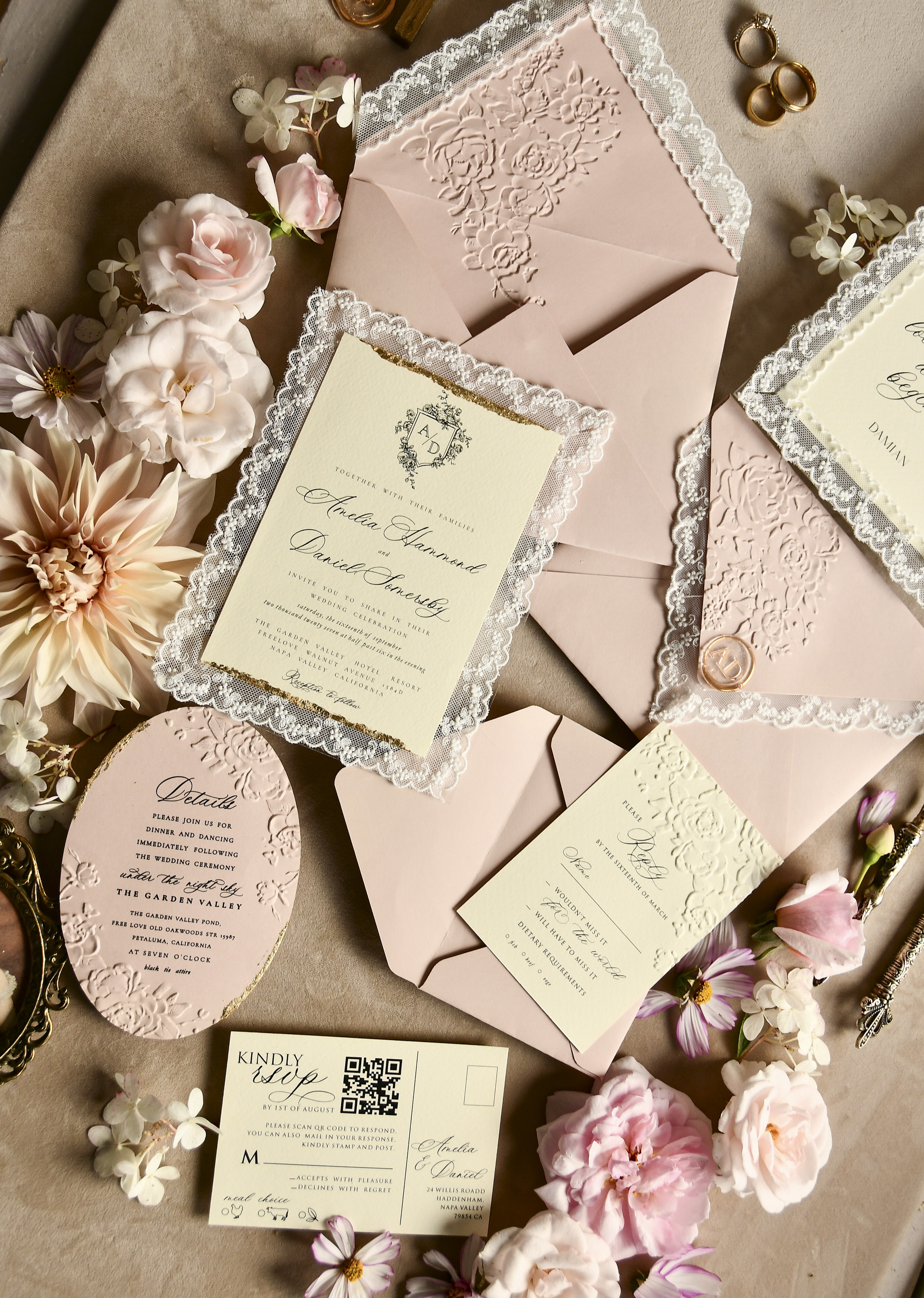
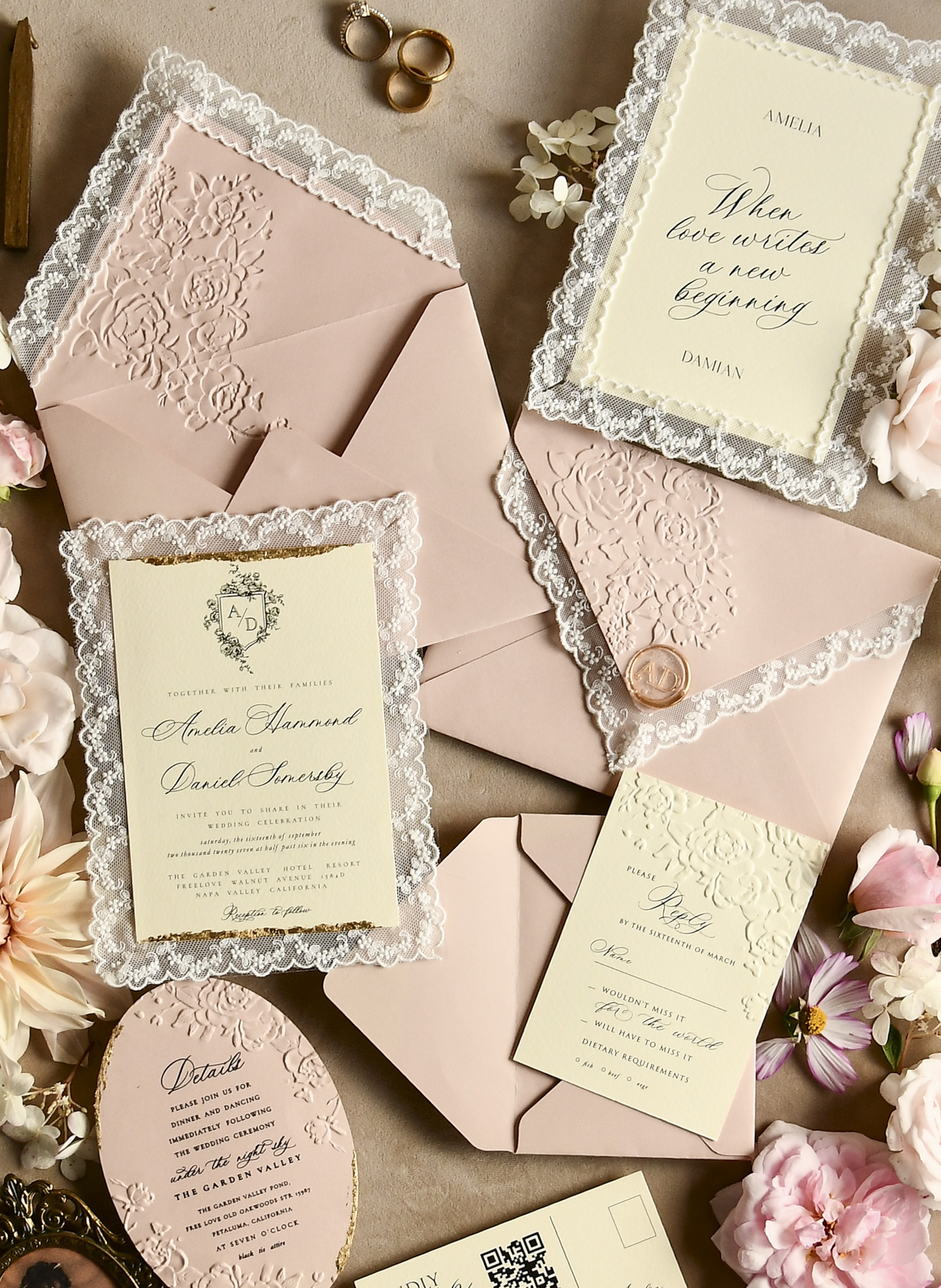
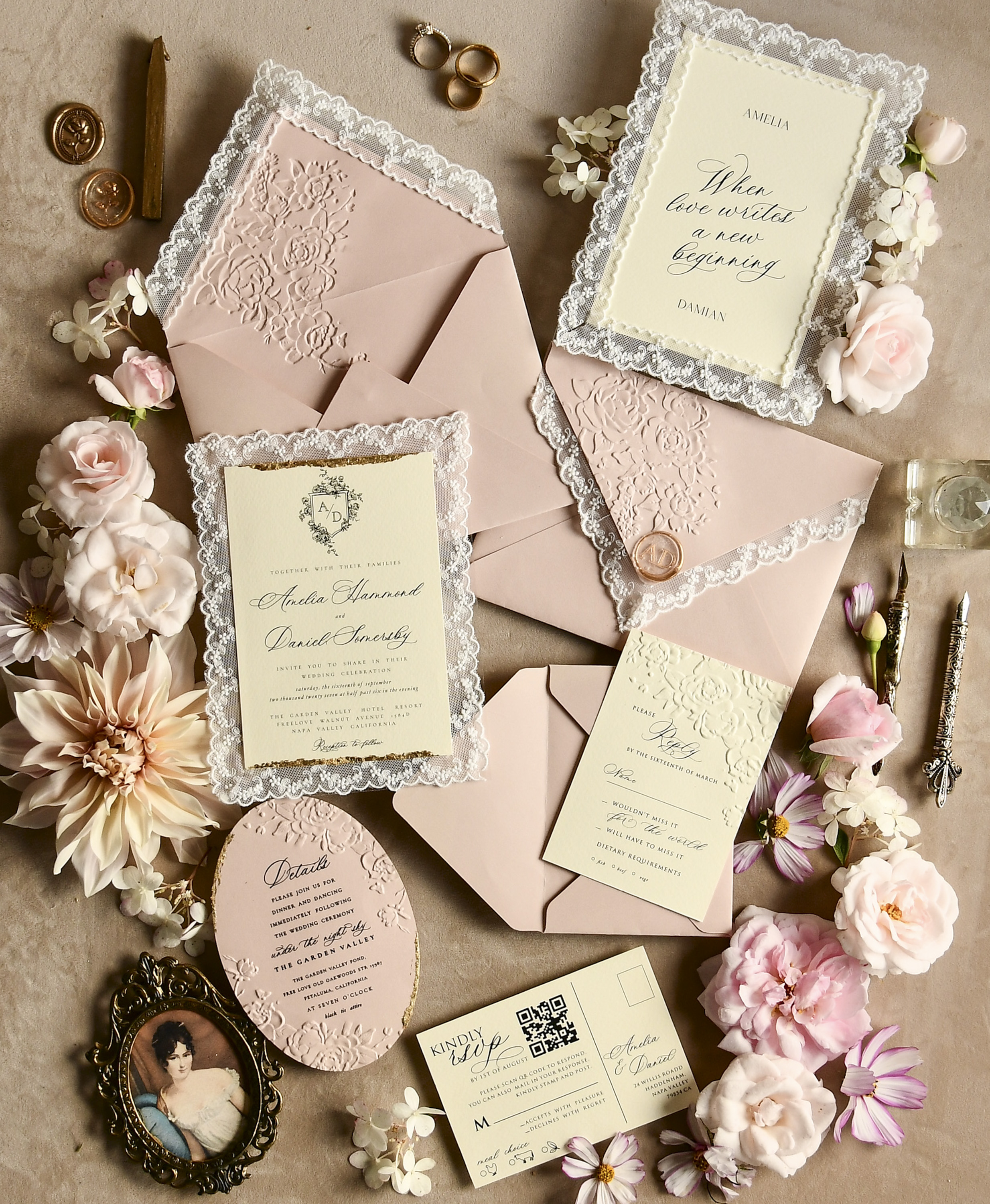
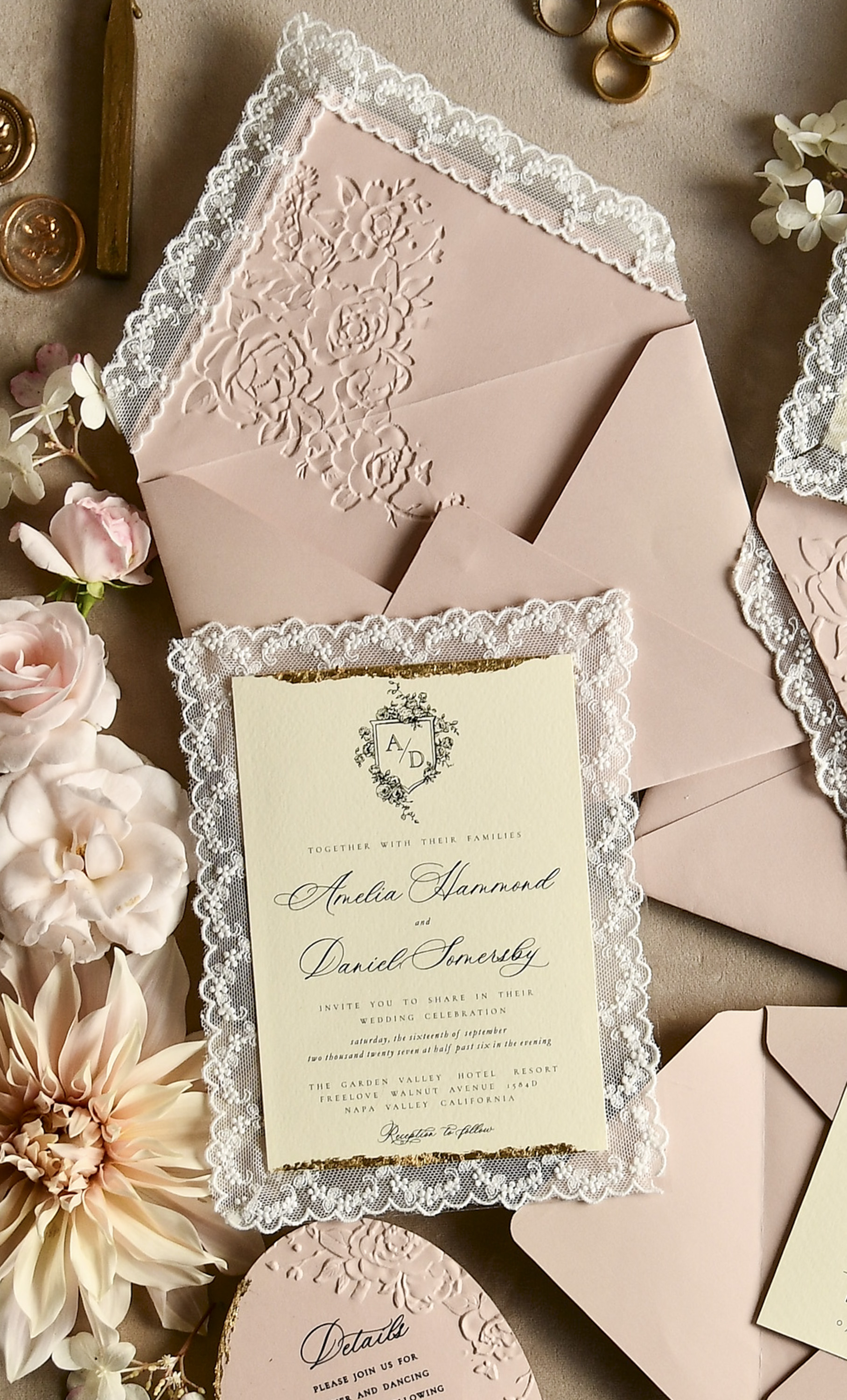
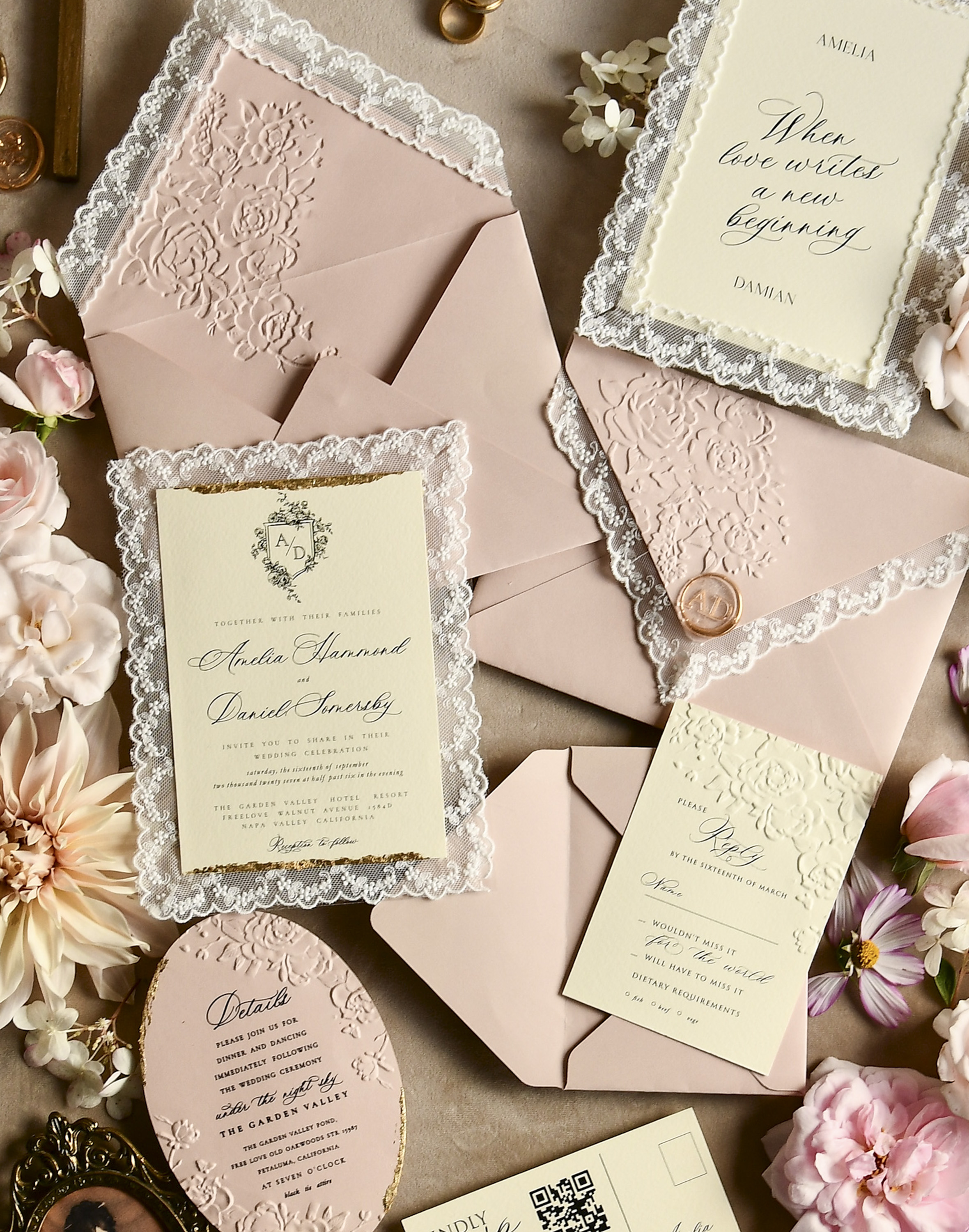
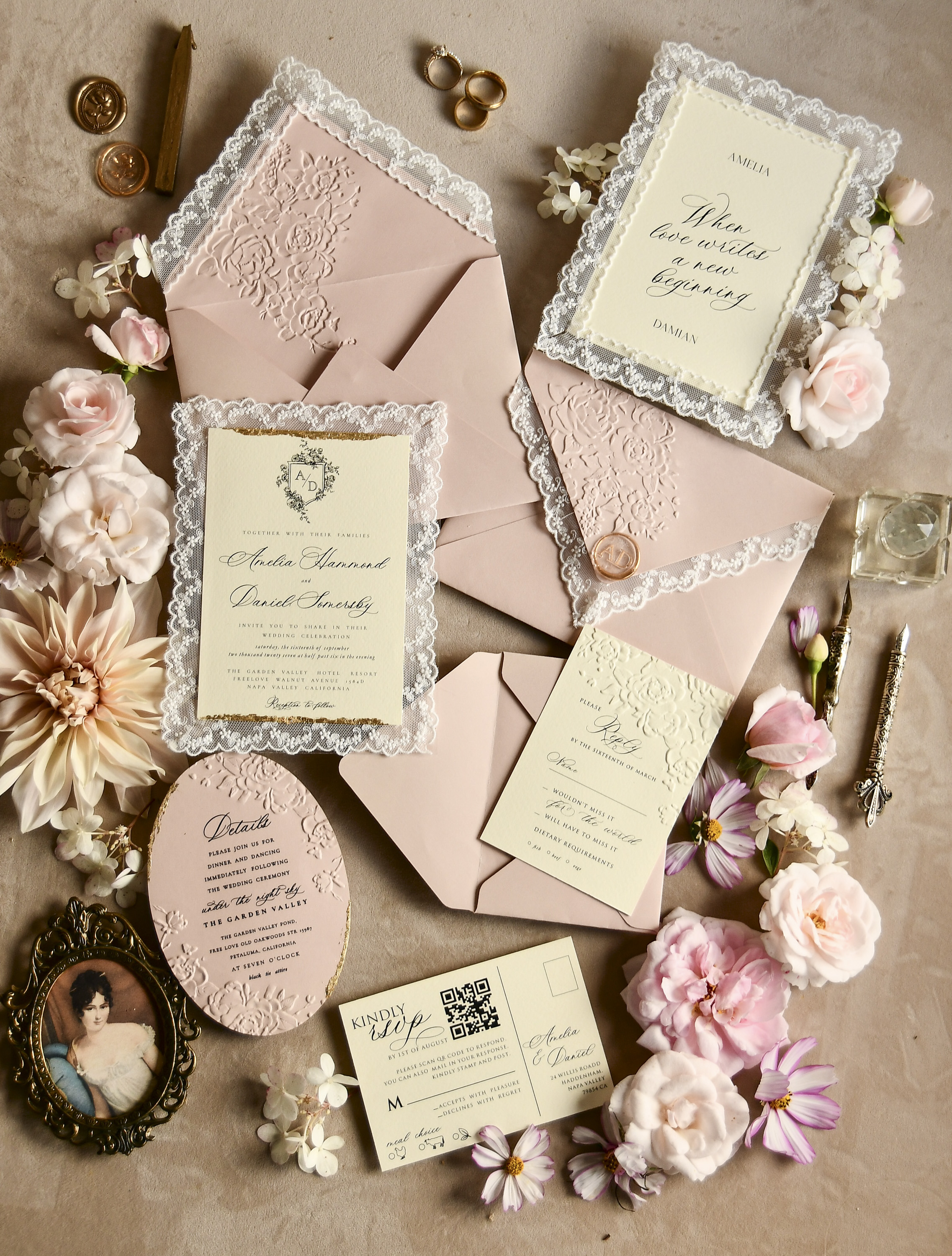
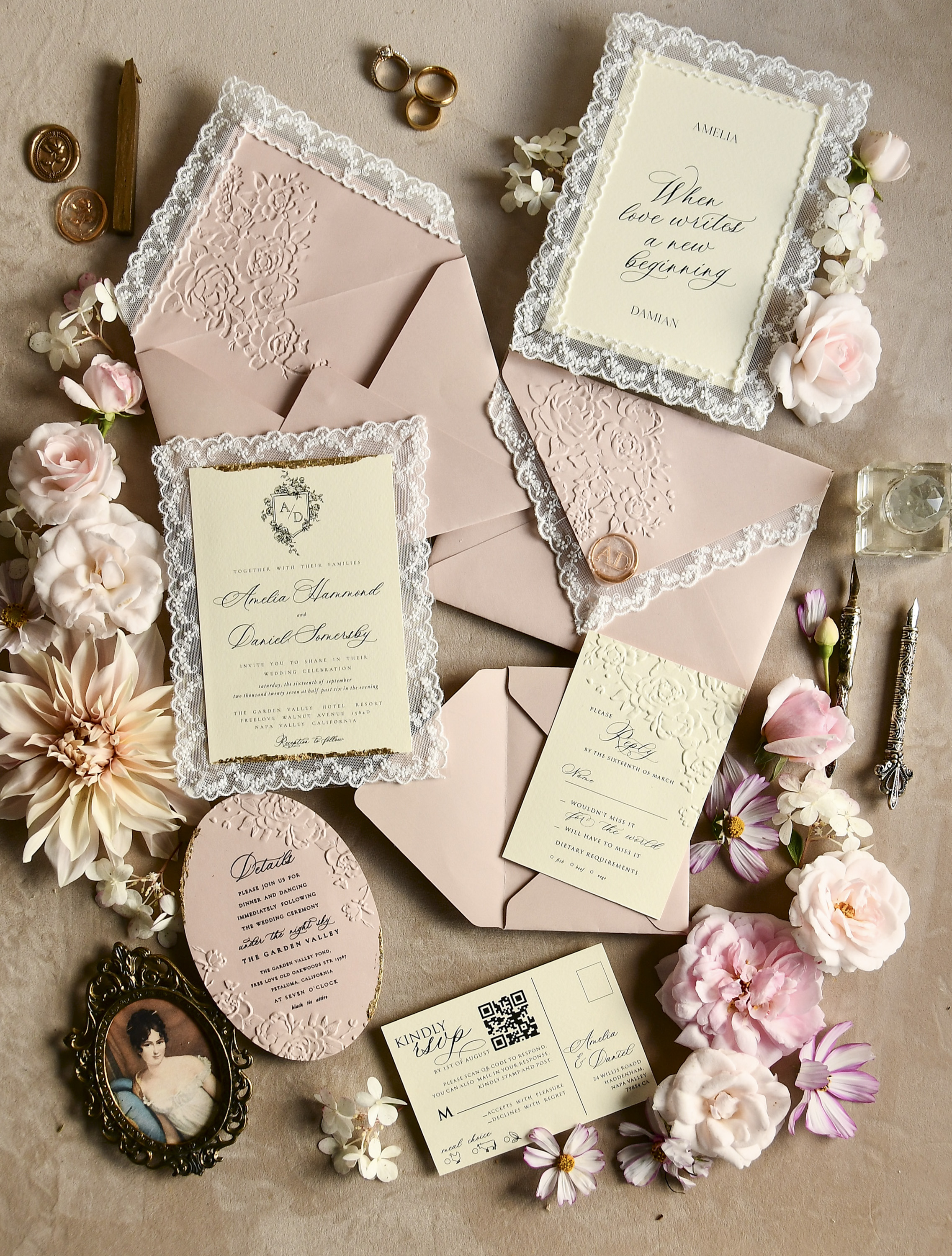
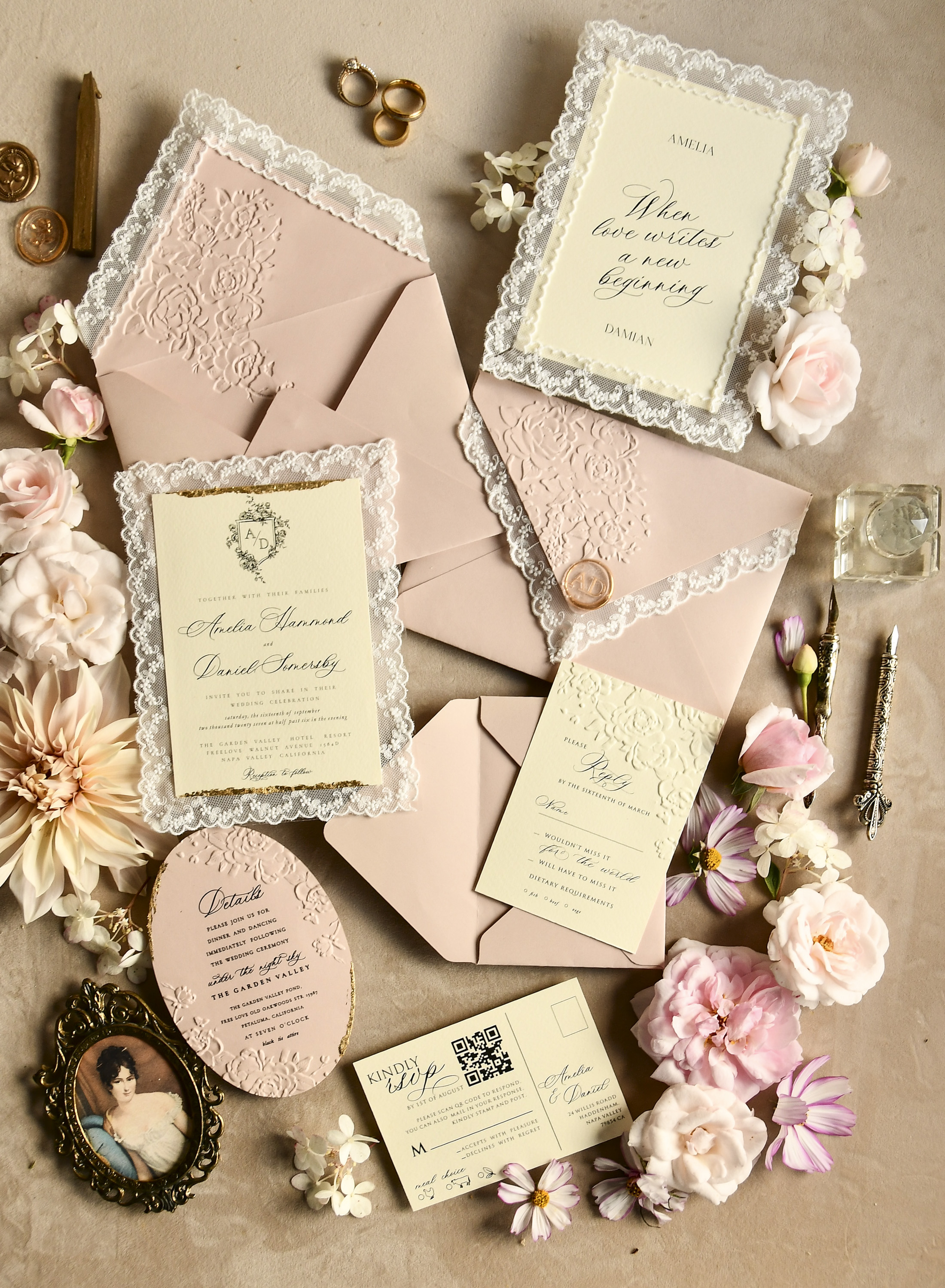
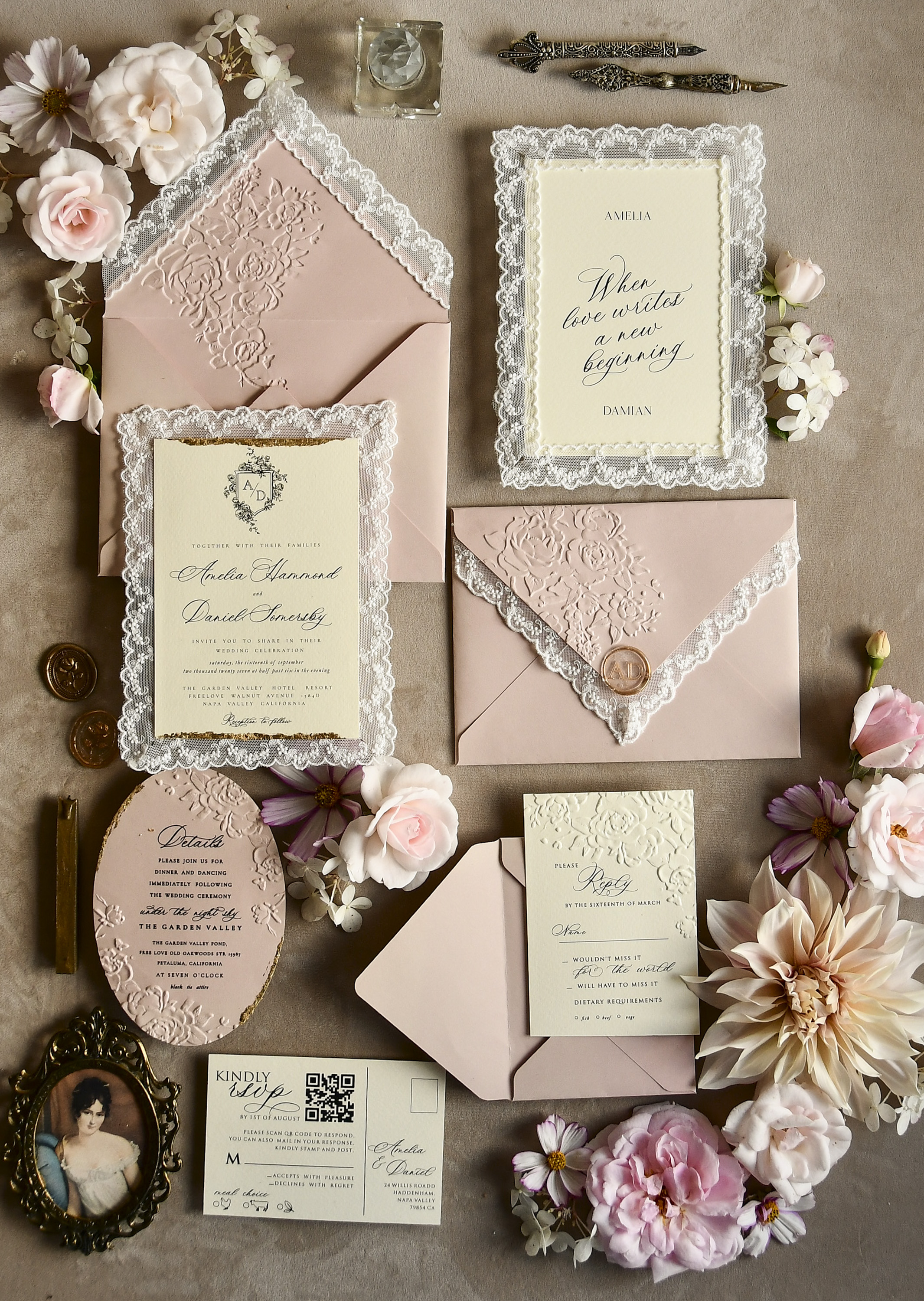
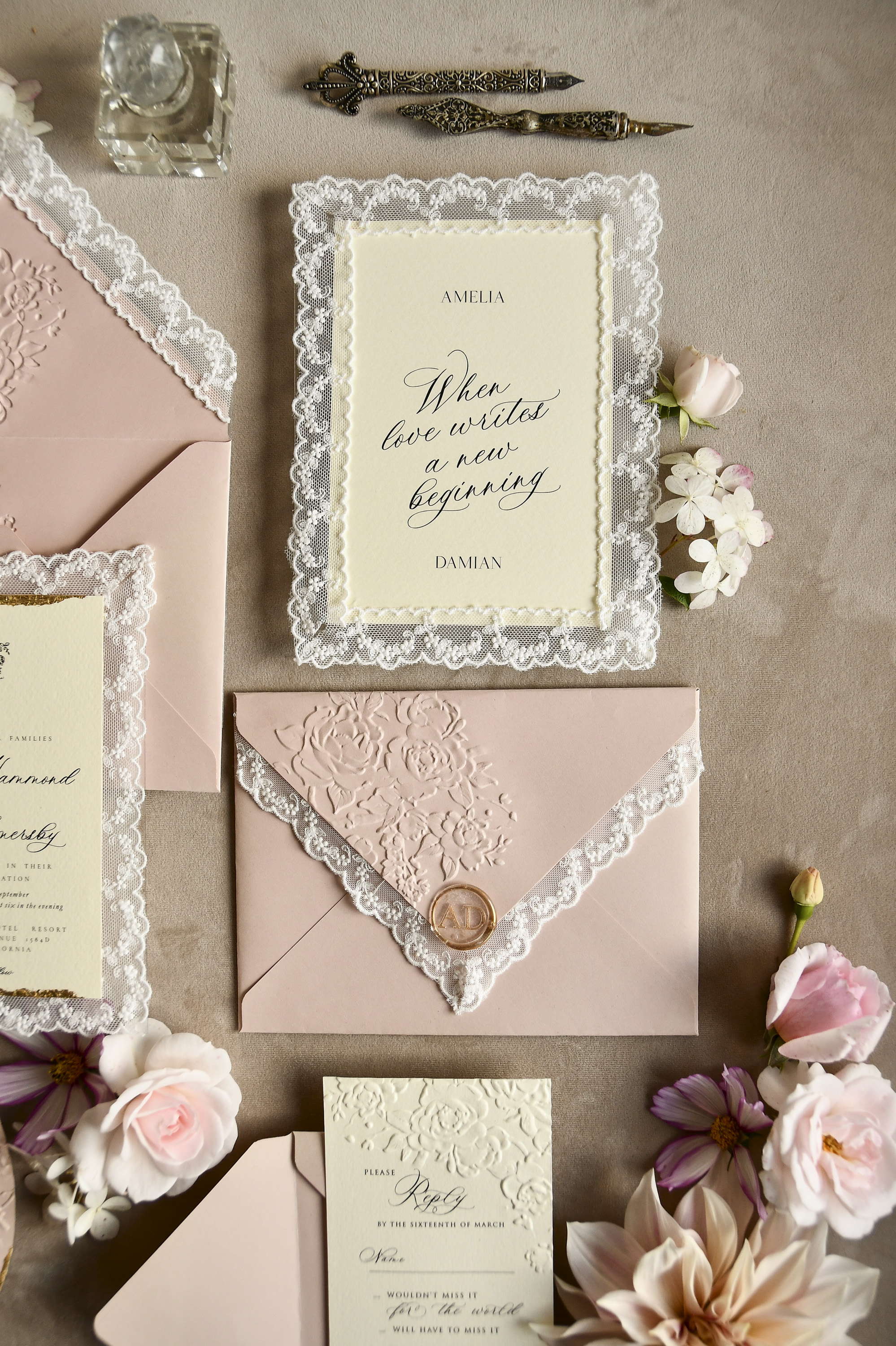
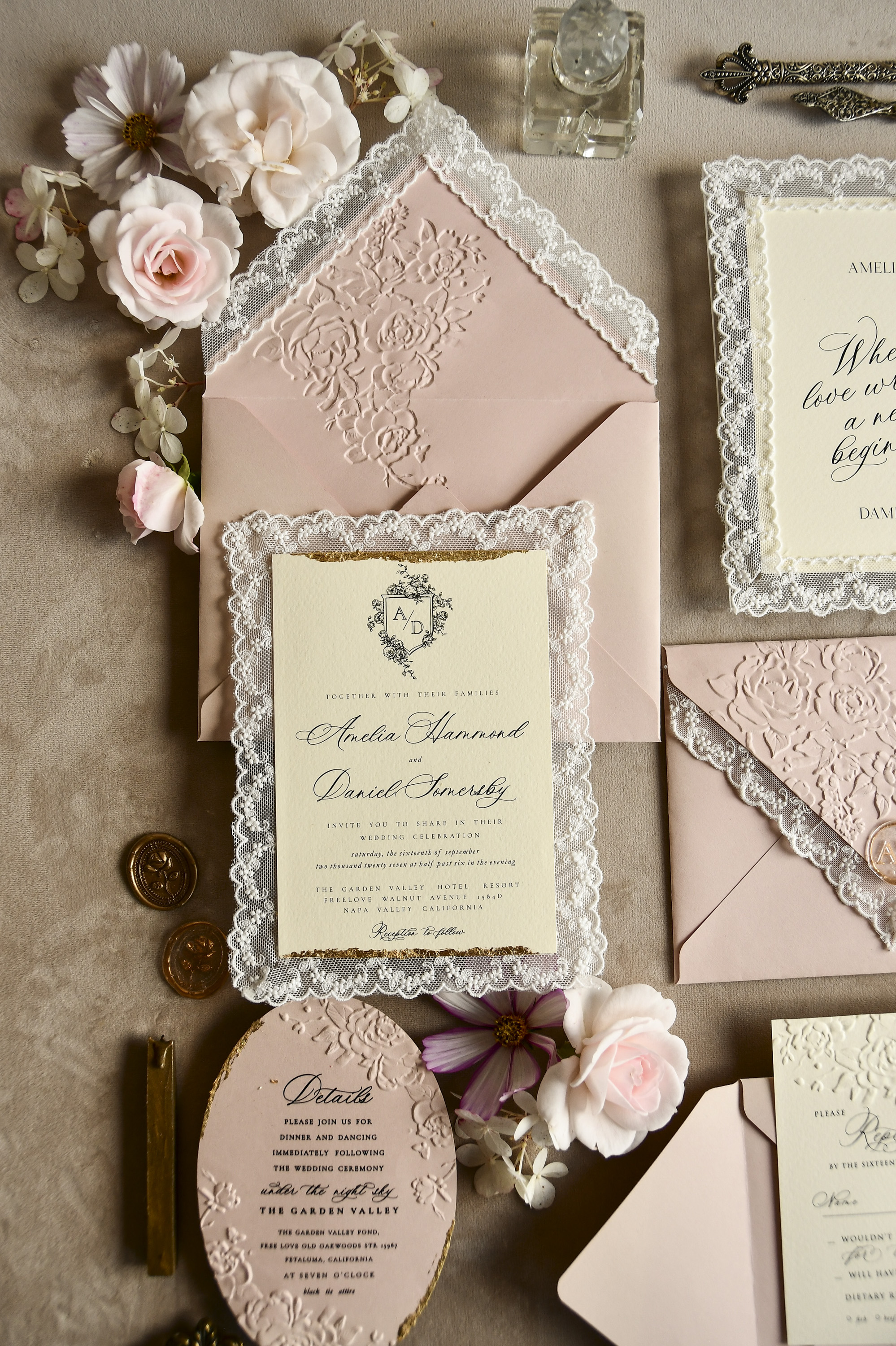
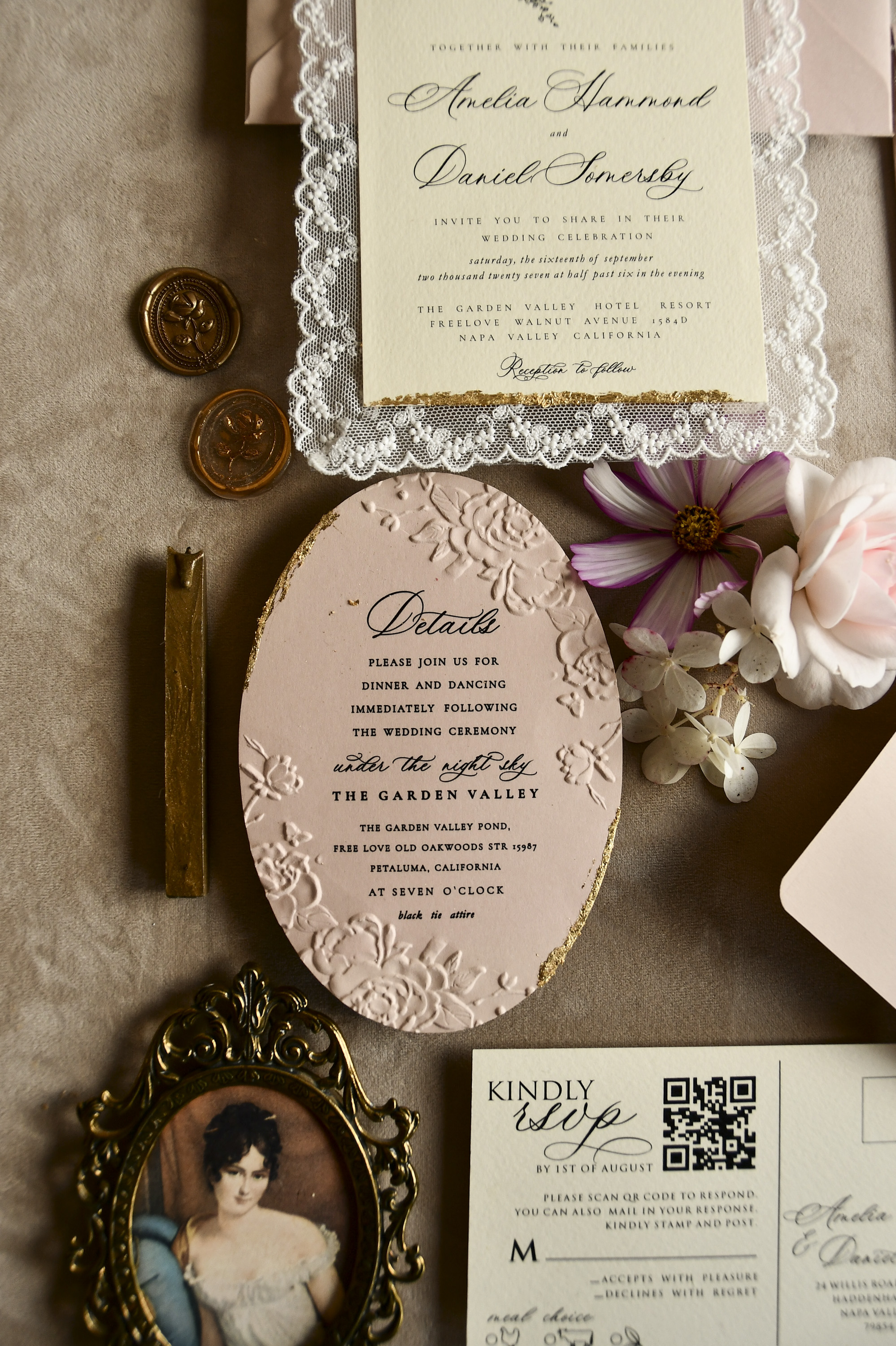
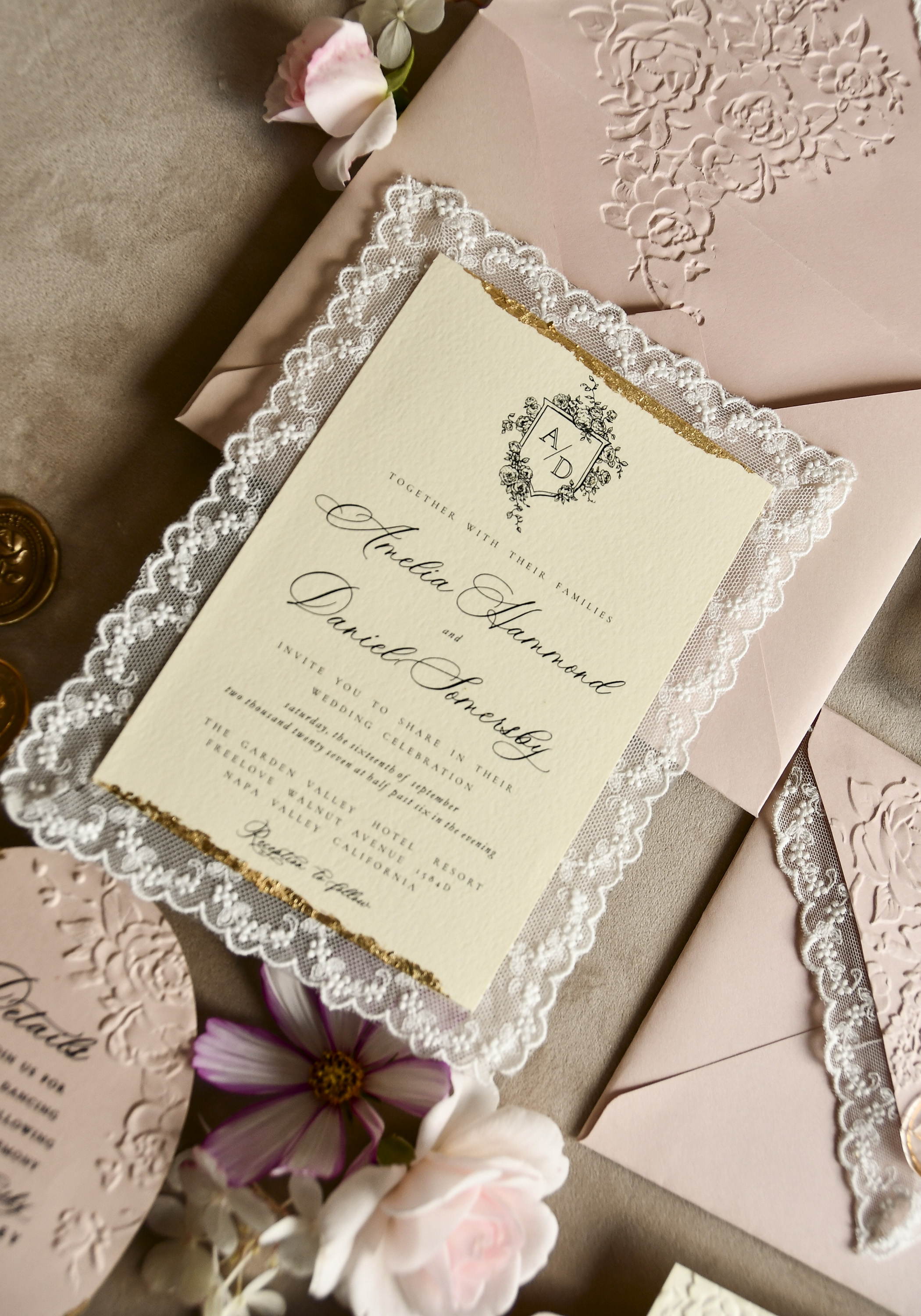
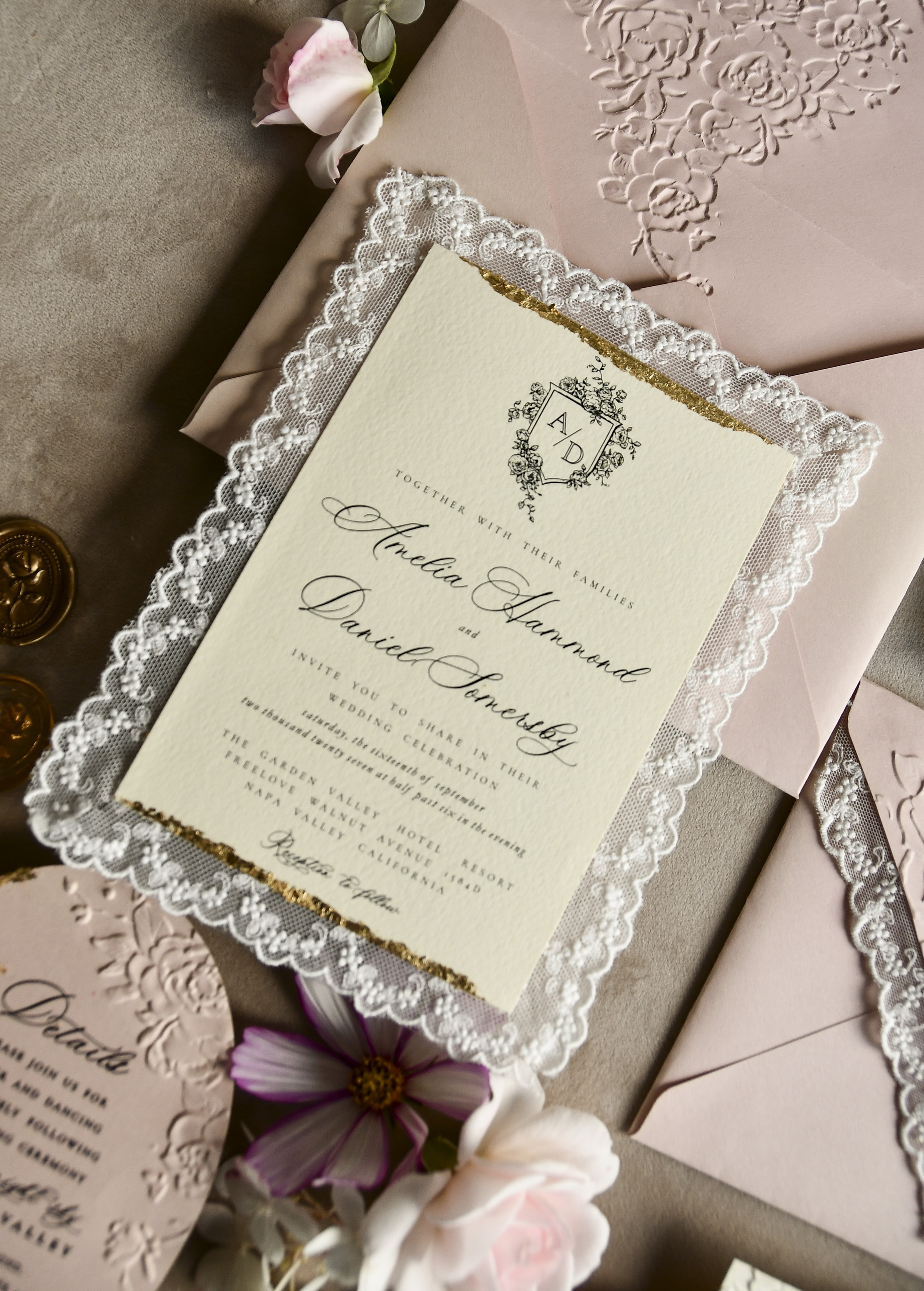
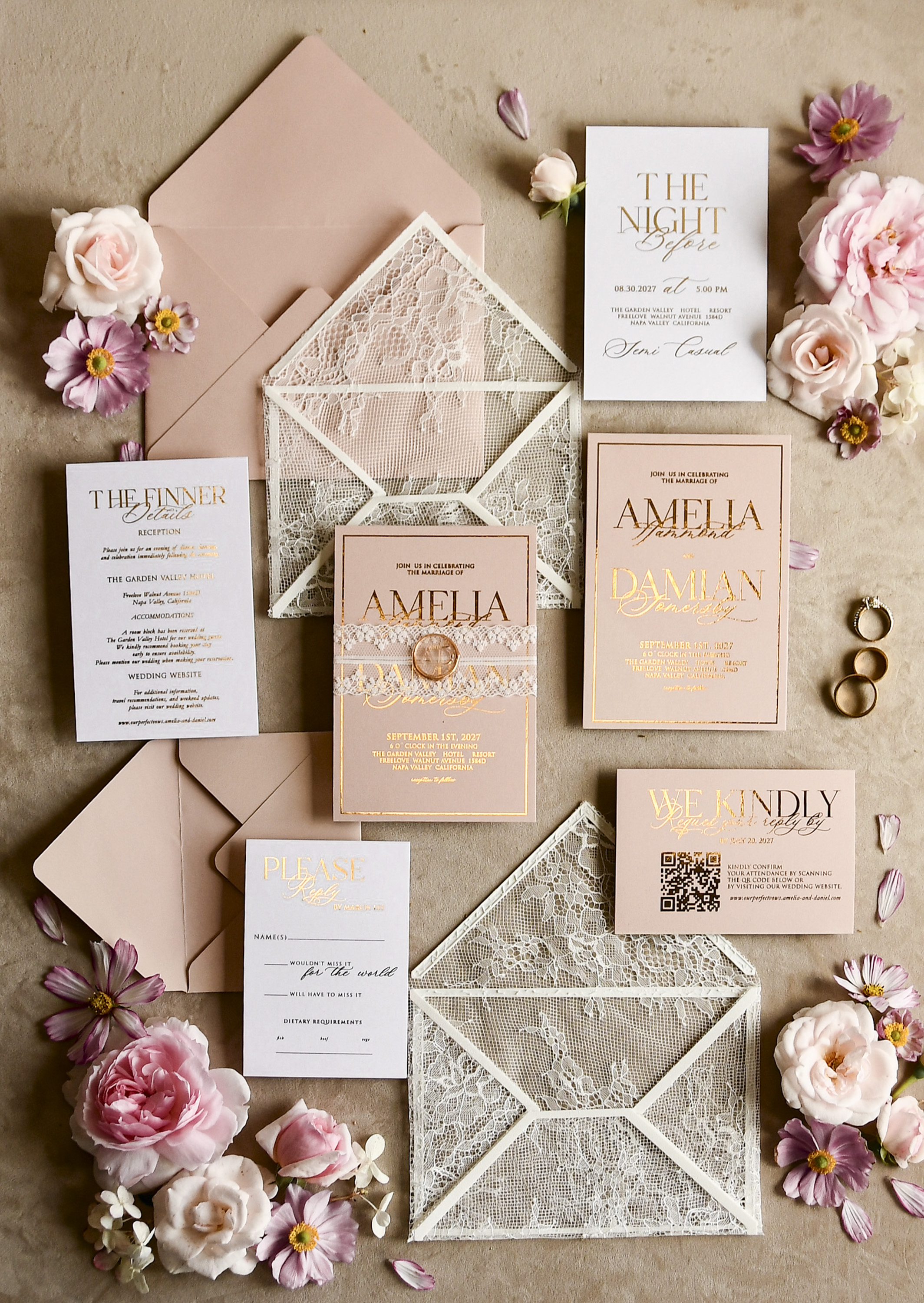
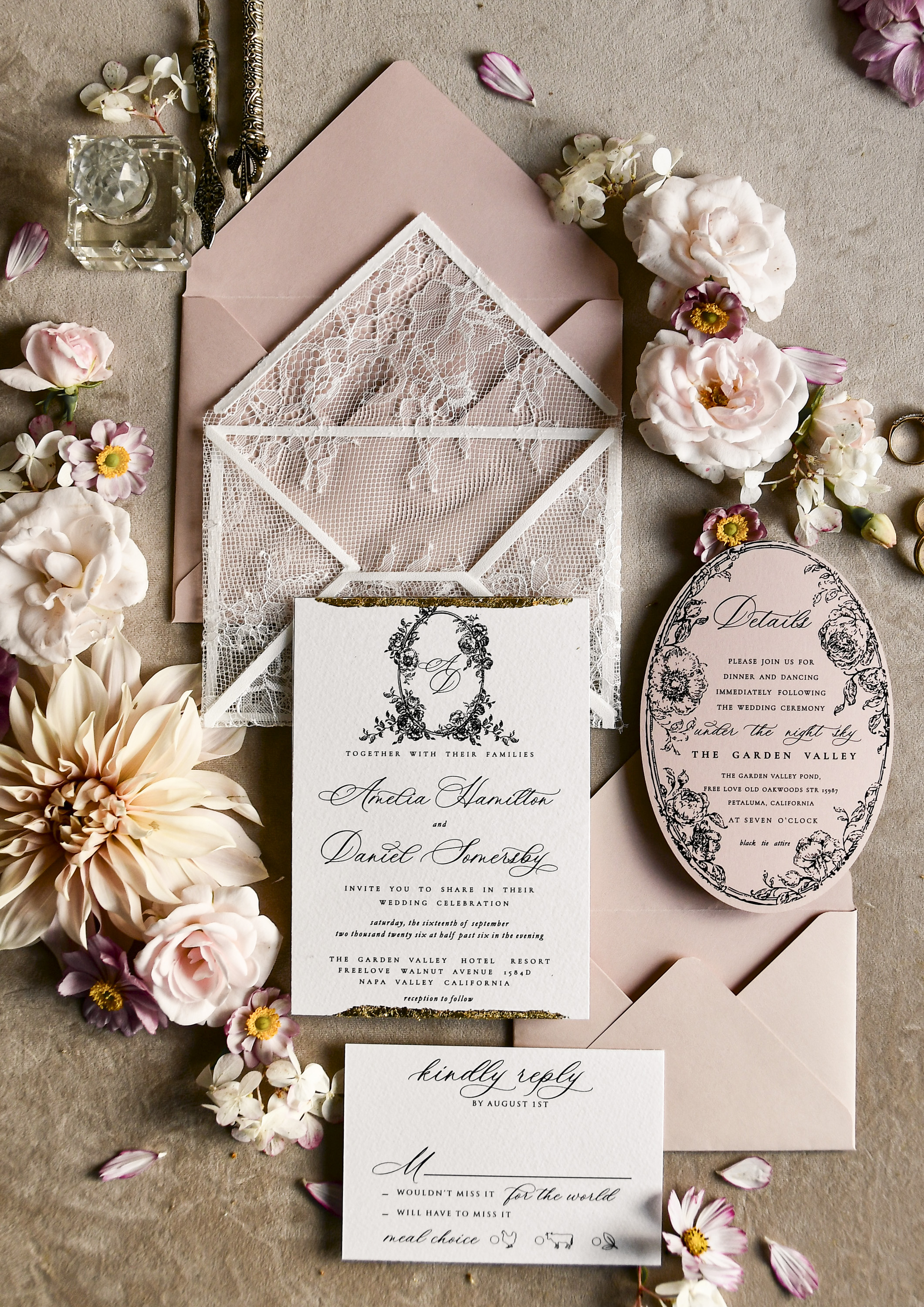
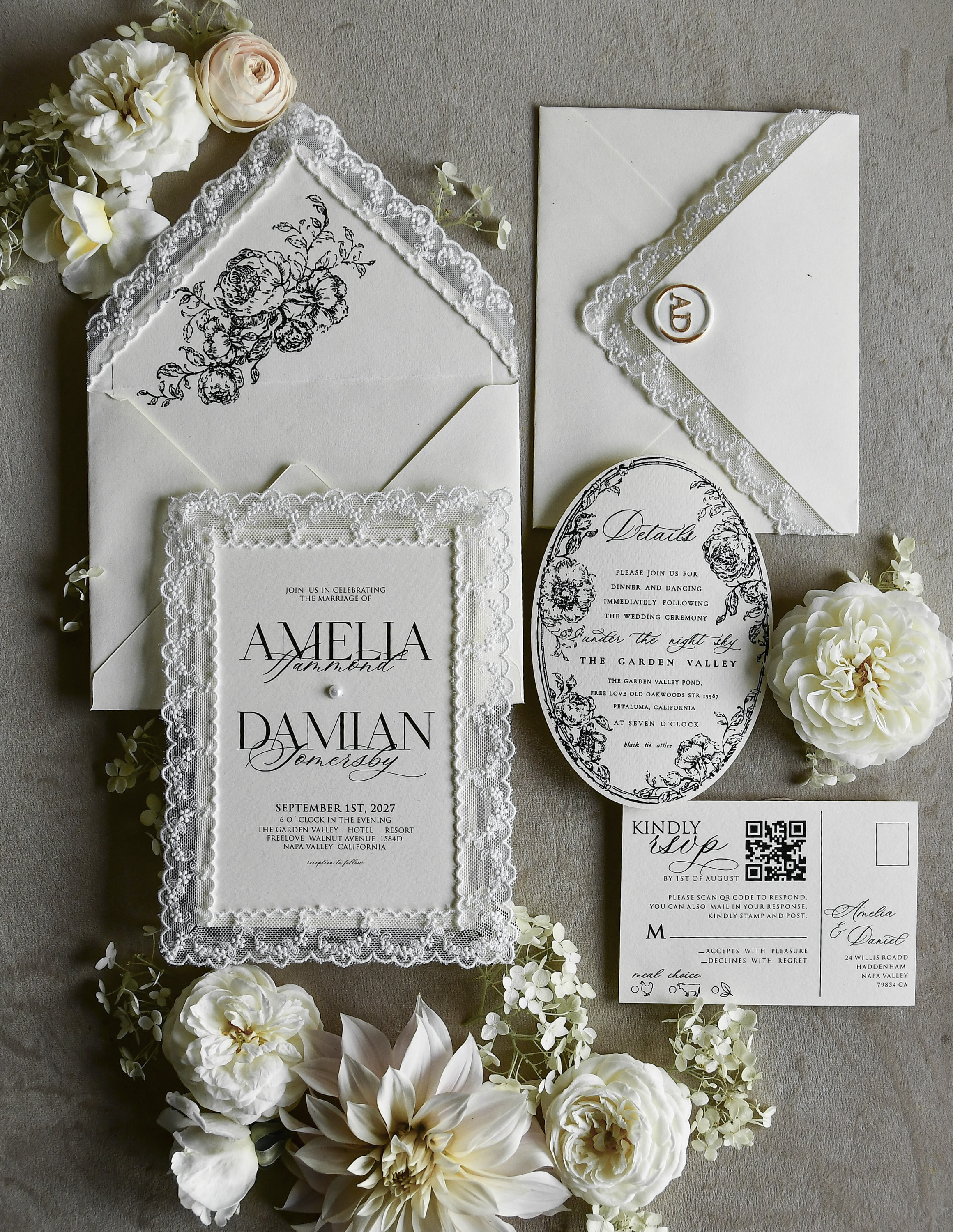
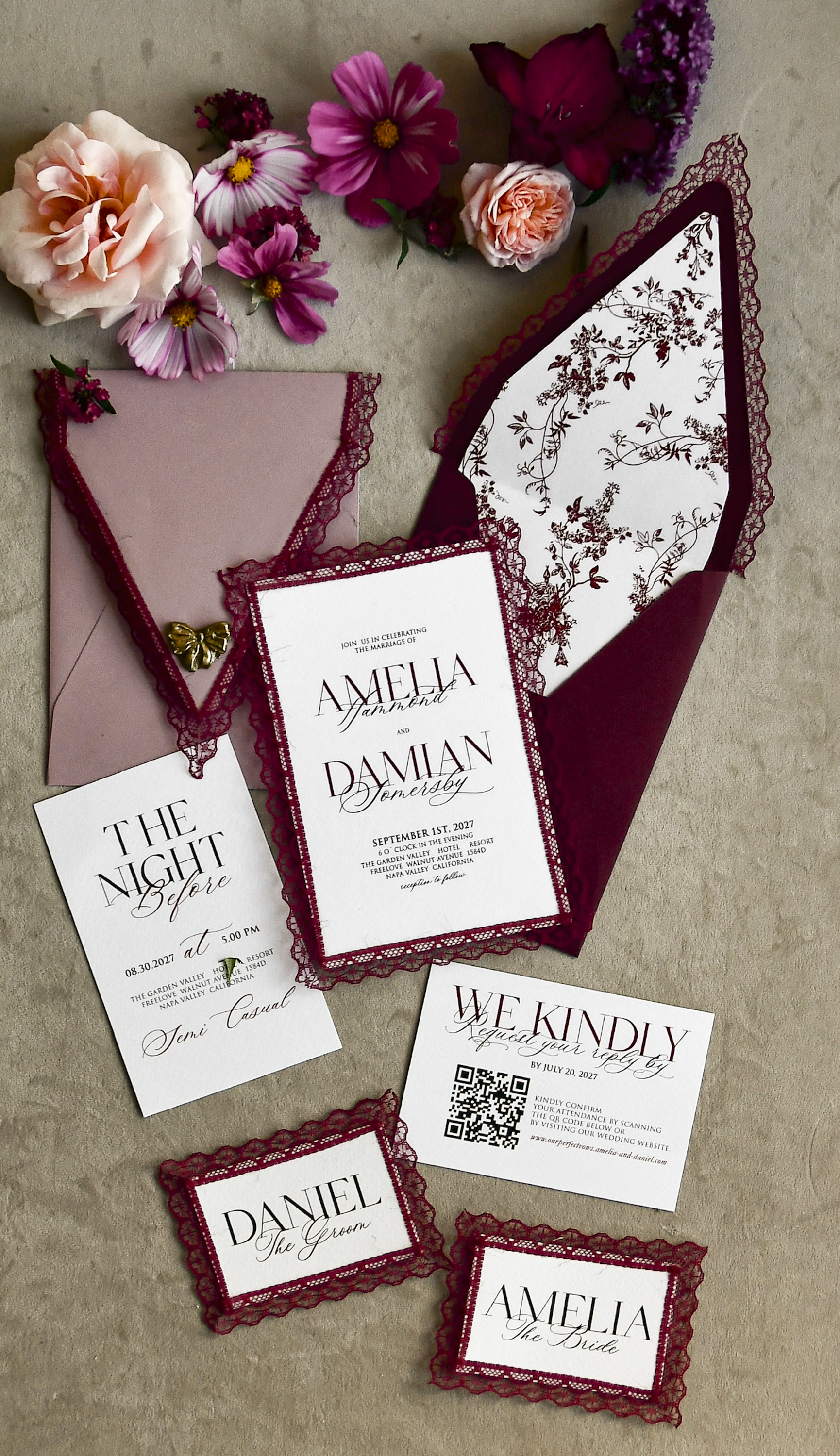
If you're drawn to something elegant and timeless, the 01/laceembos/z suite from Margo&Bees is a beautiful vintage lace option starting from $9.00 per suite. It's well-suited for couples who want a romantic, rustic aesthetic without sacrificing sophistication—and ordering in the right quantity upfront keeps the per-unit cost low.
A Quick Reference Formula
Use this simple formula before you place any order:
- Total households on your guest list
- + 15–20 (buffer for errors, additions, and lost mail)
- + 5–10 (keepsakes for parents, grandparents, yourselves)
- + 1–2 (vendor copies for photographer, planner, or venue)
- = Your order quantity, rounded up to the nearest set of 25
For most weddings in the 100–200 guest range, this puts the final invitation order between 80 and 140 suites. Larger weddings of 250+ guests may need 160–200 depending on household groupings. When in doubt, order more—you'll never regret having extras, but you will regret running short.
Frequently Asked Questions
Always count households, not individual guests. One invitation goes to each household or couple, regardless of how many people live there. This typically cuts your invitation count nearly in half compared to your total guest count.
Plan for at least 15–20 extra invitations beyond your household count. This covers addressing mistakes, last-minute guest additions, lost mail replacements, and vendor copies—reprinting a small quantity later is almost always more expensive per piece than ordering extras upfront.
You can reorder, but expect to pay a higher per-unit price since setup and printing fees are spread across a smaller quantity. Contact your stationer as soon as possible—turnaround times vary, and you may be working against your mailing deadline.
You're not required to, but it's a thoughtful gesture for vendors who will be photographing or coordinating the day. Your photographer in particular may want a copy to style flat-lay detail shots, so set aside one or two suites for that purpose.
Absolutely. Sending an invitation to someone who can't make it—like an elderly relative or a dear friend who lives far away—is a lovely way to include them in your celebration. Just make clear on the RSVP that you understand if they're unable to attend.
Order your invitations at least 3–4 months before your wedding date. This gives you time for design approval, printing, addressing, and mailing—invitations should typically land in guests' hands 6–8 weeks before the wedding, or 10–12 weeks for destination weddings.
See This Design Up Close
You May Also Like
More Wedding Planning Guides
- → When to Address a Wedding Invitation Directly to a Child
- → Mailed Card or Website Link? How to Handle RSVPs the Modern Way
- → Wedding Invitation Delivery: When to Mail and When to Hand Them Off
- → Navigating a Wedding Guest List When Your Fiancé Wants to Leave Your Family Out
- → Wedding Invitation Wording: Every Essential Detail Couples Need to Include
- → When Your Divorced Parents Can't Be in the Same Room: A Wedding Planning Guide
- → Adults-Only Weddings: Is Leaving Kids Off the List Actually Rude?
- → Wedding Invitation Addressing: Names, Titles, and Every Tricky Situation Solved
- → How to Decide Who Gets a Plus One at Your Wedding
- → Yes, You Can Invite Ceremony-Only Guests — Here's How to Do It Gracefully
- → Extra Wedding Guests: Who Pays and How to Handle It Gracefully
- → Big Wedding or Better Wedding: How to Choose What Truly Matters
- → Your Wedding, Your Guest List: The Honest Truth About Inviting Cousins
- → Uninvited Extras: How to Handle Guests Who Bring Someone You Didn't Invite
- → Plus-One or No? How to Decide If Single Guests Can Bring a Date
- → How to Embrace a Small Wedding and Make It Unforgettable
- → Where Do Divorced Parents Sit at Your Wedding? Here's What Actually Works
- → To Invite or Not to Invite: Navigating the Ex Question for Your Wedding Guest List
- → Stepparents and Your Wedding Guest List: Making the Right Call
- → Setting Plus-One Boundaries Without Losing Sleep (or Friends)
- → Should Work Friends Come to Your Wedding? A No-Stress Guide to Inviting Colleagues
- → Guests Who Don't RSVP: Your Step-by-Step Plan
- → Save the Date vs. Wedding Invitation: Two Very Different Jobs, One Beautiful Paper Trail
- → When Someone Asks Why They Weren't Invited: Your Honest, Kind Playbook
- → To Call or Not to Call: Tracking Down Guests With Missing RSVPs
- → When the Guest List Must Shrink: The Right People to Remove First
- → Digital Wedding Invitations: When They Work and When to Think Twice
- → How to Handle the Parent Friend Dilemma on Your Wedding Guest List
- → Your Wedding Invitation Deadline: When the Window Officially Closes
- → Uninvited Plus-Ones and Tag-Alongs: How to Keep Your Guest List Intact
- → When Family Feuds Threaten Your Wedding Plans: A Practical Peacekeeper's Guide
- → Inviting an Estranged Brother or Sister: Finding Clarity Before You Seal the Envelope
- → Cousins, Invites, and Hard Choices: A Practical Guest List Guide